

Orangeee♦️
8K posts

Orangeee♦️
@Orangeee_24
Lighter OG YOLO’d my entire stack into crypto. Got heemed and a legendary story. Bull Run Loading ⏳
Moon Katılım Ekim 2022
1.2K Takip Edilen1.9K Takipçiler

Orangeee♦️ retweetledi

New competition starting on @nadoHQ in a few hours ⌛️
▫️ROI and Volume -- 2 different categories
▫️$100 minimum deposit
▫️$250k Minimum volume to claim your prize
▫️$100,000 given to winners 🥇
Opens: June 15, 14:00 UTC Closes: June 25, 13:59 UTC
Don't forget to Enroll, otherwise it won't count : app.nado.xyz/?join=qd7dztj


English
Orangeee♦️ retweetledi

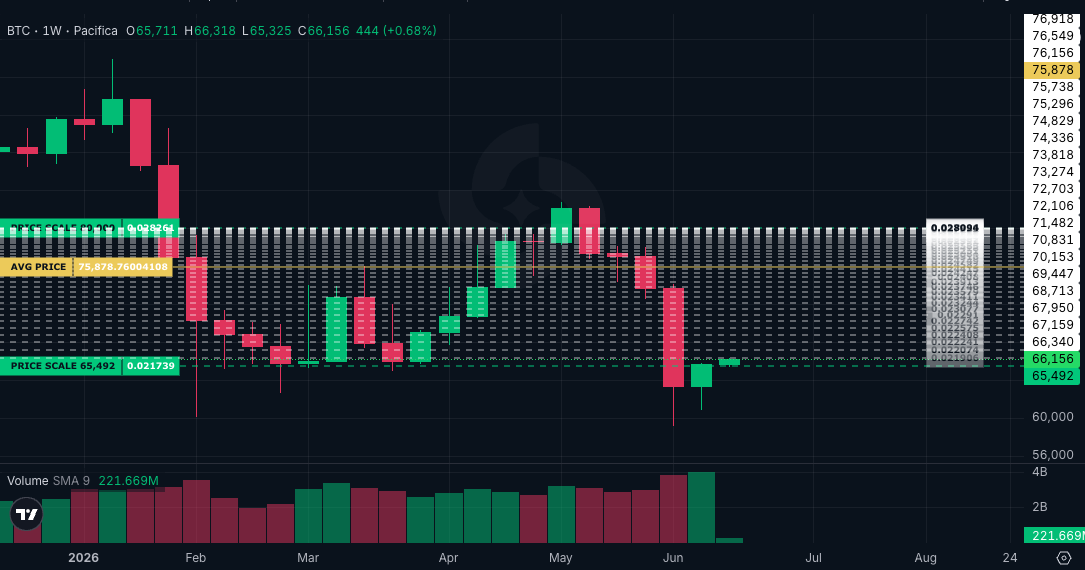
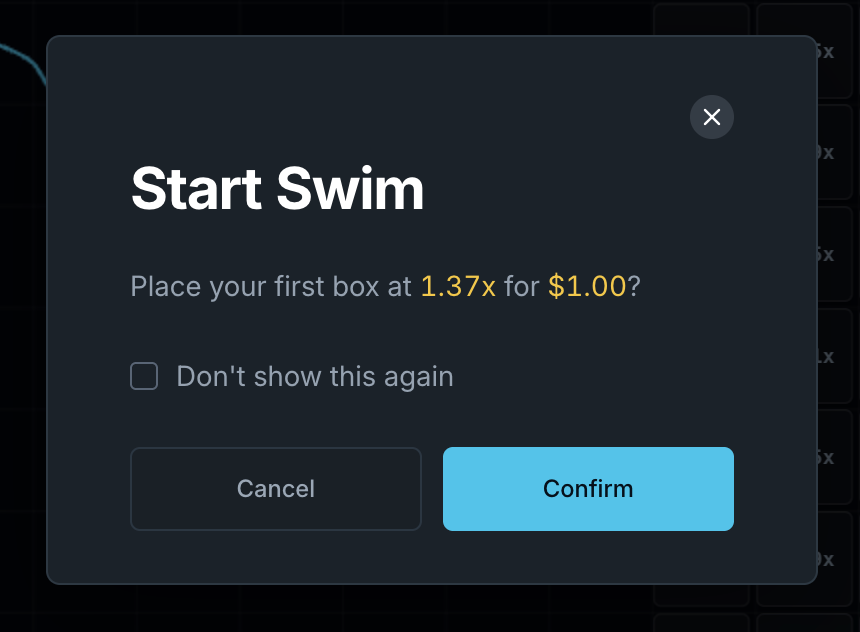
Based on your feedback, a few things just shipped 🌊
- "Don't remind me again" option added on swim.
- Win icon resized and repositioned.
- Combo icon now only appears when you actually hit a combo.
- Scale orders fully visible on PWA.
- Scale orders now pre-fills more info directly on the chart.
Keep it coming!

English
We continue to earn points with @hyperbeat and stay in the top 2k
I earned 19 points yesterday, thanks to Haverts

English
@ferdo717 @injective It's true that Injective has a really cool ambassador program. I've been familiar with it since 2023, and I think it's time to return!
English

Injective just launched their brand new Ambassador Program 🔥
Basically if you love @injective and creating content: this is your moment 👇
How it works:
You start as an Injective Supporter and work your way up to Injective Creator. Already a seasoned content creator? You can apply directly for the Creator level if you are creating high-quality content.
What about rewards? 💰
🔹 Supporters: 300 INJ reward pool every two weeks split between the top 50 participants
🔹 Creators: 2,500 INJ reward pool per month split between creators
The more original content you contribute: the bigger your share. Simple as that.
What do ambassadors actually do?
Create content about Injective and its ecosystem. Spread the word. Educate people. Build the community. Just contribute good stuff and get rewarded for it.
It looks that Injective got one of the best ambassador programs. The community gets to grow, creators get paid for their work, and Injective gets more visibility. Everybody wins 🤝
If you've been looking for a way to get involved with Injective, go check it out 👉 link in comments
English

Kids found out that Clipping on Youtube during World Cup is a moneyglitch! His revenue tab says $8,347.50
Pause at 0:14 and look at the dashboard:
He scripts the predictions with Claude, slaps an AI thumbnail and an AI voice on top, uploads, and YouTube pays him per thousand people who watch him guess who's gonna win.
- $8,347.50 sitting in the revenue tab off nothing but World Cup content
- zero face, zero camera, just AI scripts and an AI voiceover
- one niche, one tournament, cashing out before the trophy even gets lifted and every dollar of it comes from views, not from being right
That last line is the whole game. He gets paid to have an opinion about the outcomes, but he never once touches the outcomes themselves.
Same AI content engine, except ad revenue is the single worst line you can run it on. Put four revenue lines on the same videos instead of one YouTube payout and the number goes to $18,732 a month, still no face, still no camera.
Ad revenue is the tip. The stack is the paycheck.
Miraqle@0xMiraqle
English
@_CryptoNotes_ @flintrwa Finally, real RWA that’s actually backed by property
This makes more sense than most crypto plays
English

I used to think going all in was a flex
Then the market turned and I realized my entire portfolio was just one bet wearing different hats
The real unlock of tokenization is not more crypto
It is finally getting a slice of things like real estate without the usual barriers
@flintrwa makes that simple
One deposit, one vault, backed by actual property
That kind of balance hits different when the charts turn red

English
@hrabiapolski Completely agree
Vibecoding works for small scripts, but once the project grows it turns into chaos
English

Stop Vibecoding, Start Managing
"Vibecoding" is fun until your context window fills up, the AI starts hallucinating, and your weekend project turns into a tangled mess of spaghetti code.
At the end of the day, you aren't just a coder anymore—you're a Project Manager for AI talent. The better you structure your "team," the cheaper, faster, and more robust your build will be.
If you want to build complex apps single-handedly without losing your sanity (or burning your budget), follow this blueprint:
Ditch the single chat window. Stop asking one model to handle system design, backend, and CSS all in one thread. It loses context and wastes tokens.
Hire "Specialized Interns". Split the roles. Use your top-tier model (like Claude or GPT-4o) as the Architect for high-level planning. Pass the actual coding and QA to cheaper, faster models or targeted agents.
Enforce strict SOPs. Give your AI strict boundaries. Tell it: "Do not rewrite the entire file. Only output the specific function that changed."
The era of just "vibing" with AI was a great start. But the future belongs to systemic AI engineering. Manage your AI stack like a well-oiled dev shop, and you'll out-build entire teams.
What does your current AI stack look like? Are you still using a single window or moving to agents? Let me know in the comments!
hrabiapolski@hrabiapolski
English
@hrabiapolski This actually makes a lot of sense.
1.5k one-time vs 5k+ per year in subscriptions.
English
THIS IS HOW A $1,499 DESKTOP PIECE OF SILICON CUTS OUT A $5,280 ANNUAL AI SUBSCRIPTION BILL
The video shows AMD CEO Lisa Su discussing the competitive reality of running a top-tier tech operation against massive infrastructure monopolies.
She is explaining why chasing standard market assumptions fails when you can out-engineer the entire constraint system from a smaller footprint.
The underlying layout relies on an architecture where 128GB of memory is unified across both processing units on a single local board.
Linux allocates 110GB directly to the local graphics engine which allows a 235 billion parameter system to run without connecting to an external data center.
That specific capacity outpaces high-end discrete cards like the RTX 5080 by three times on real workloads while cutting standard hardware costs exactly in half.
The immediate result shifts the economics from continuous enterprise rental fees to a self-contained local workstation that pays itself off inside three quarters.
Local integration removes recurring transaction limits, enterprise data leaks, and server throttling during peak operational hours.
The transition turns infrastructure from an ongoing operating expense into an initial capital asset that runs indefinitely for zero marginal cost.
AdiiX@adiix_official
AMD CEO Lisa Su just killed Nvidia’s $4,000 AI box with a $1,499 lunchbox. She walked on stage, held it in one hand, and ran a 235 billion parameter model live. No data center. No cloud. No rented GPU. The chip inside is something nobody saw coming. AMD’s Ryzen AI Max+ 395 is the first x86 silicon where CPU and GPU share the same 128GB of memory. That single trick lets a desktop run models that used to need a server rack. Out of those 128GB, Linux hands the GPU 110GB to play with. For context, an RTX 5090 gives you 32GB. A 4090 gives you 24. This box gives you more than three times either of them, in a chassis the size of a thick paperback. The benchmark that broke the room: this chip beat an Nvidia RTX 5080 by more than 3x on DeepSeek R1 inference. A $1,499 lunchbox outrunning a $1,000 discrete graphics card on a real AI workload. Nvidia spent a decade convincing the world you needed their hardware for serious AI. AMD just put that on a desk for half the price. Here is what nobody is telling you. A heavy AI user right now pays $200 for Claude Code Max, $200 for ChatGPT Pro, $20 for Cursor, $20 for Gemini. That is $5,280 a year leaving your account. The box pays itself off in 9 months and then runs free for the rest of its life. Install Ollama. Pull Qwen3 235B. Point Claude Code at localhost. Same interface you already use, except now nothing leaves your machine, nothing costs per request, and no company throttles your usage at 3am when you finally have time to build. This is the moment every AI subscription becomes optional. Lawyers stop fearing OpenAI leaks. Developers stop watching the token meter. Founders stop renting H100s for prototypes that never ship because the bill scared them. The first thousand people to figure this out will own the next two years of private AI consulting. Save this, and read the full breakdown article below you are watching the next shift hit before everyone else does.
English
English

i agree bro
reveal yourselves.
it's time for the great de-anon.
@rizzy_sol

kdot | bulk@kdotcrypto
If you’re a founder, you should be doxxed Knowing who you are investing in should be a basic right when allocating your dollars
English

Orangeee♦️ retweetledi

TRADING COMPETITION: Win a Share of $1,000+ in Prizes! 🌊
Hello, Pacifica Daily Community!
We are thrilled to announce an epic trading showdown! Together with @W1nszn, @pacifictidesbot, and @PacificPodNFT, we are hosting an exclusive Trading Competition through the Pacific Tides bot.
🗓️Dates: June 8 – June 15
How to Participate ?
Just follow these steps:
1) Connect & Trade: Access the @pacifictidesbot, connect your wallet, and start trading.
2) Hit the Volume: Generate a minimum trading volume of 30,000$.
3) Stay Profitable: Trade smart! The ultimate winners will be decided strictly by the highest PnL
👉t.me/Pacifictides_b…
The Prizes (Top 3 by PnL)🏆
The top three traders who dominate the leaderboard will take home:
🥇 1st Place: Exclusive Merch Box + Common NFT + USDC
🥈 2nd Place: Rare NFT + USDC
🥉 3rd Place: Common NFT + USDC
⚠️Important Nuance: A Dynamic Prize Pool!
The USDC reward pool is dynamic! The final amount of USDC depends entirely on the total trading volume generated during the competition. The more participants trade, the more fees the platform collects and 100% of those trading fees will go straight into the prize pool!
Do you have what it takes to be the most profitable trader?
Show off your trading skills and win rewards!
Stay tuned for updates this is just the beginning!

English
@pacifica_intern Interns are the ones who should and are obligated to maintain contact with the community. Thank you for your candor
English

Intern usually does not write long/serious posts, but today, Intern wants to tell the story of liquidity on Pacifica.
Here at Pacifica, we try to do things the right way, not the quickest or easiest way.
It’s been good to see the fruits of that approach begin to ripen, and reading the following made Intern’s day.
“All too often, these exchanges only run with one or two primary market makers.
While the team would not disclose the exact number to me, they did give me a ballpark, and it is definitely more generous than a lot of “perp DEXs” carry.
That matters, because if your venue only runs on one or two primary market makers, things can go sideways real quick.”
Behind those few sentences lie thousands of hours of work between the Pacifica team and our market makers.
Typically, exchanges offer DMMs (designated market makers) bespoke deals. A price is agreed upon upfront for a set amount of liquidity provision, usually in the form of a large token allocation.
DMM deals can get liquidity set up nice and easy for day one, but they can also become a poisoned pill that:
1) Makes it much harder to attract additional liquidity without giving out more incentives: “Why should I provide liquidity to your platform if I don’t get the same deal as others?”
2) Gives DMM recipients ever-increasing leverage over the exchange, along with an outsized share of the token supply. We have all seen the effects of this in perp DEX TGEs again and again.
From day one, our message to MMs was clear: "No bespoke DMM deals, only participation in our open MM program."
pacifica.gitbook.io/docs/programs/… (additional details available upon request.)
The only reason a market maker should deploy on Pacifica is because they are attracted to our organic flow, and are happy to earn from a much smaller pool of points as a cherry on top.
This made our flywheel incredibly difficult to spin up. Why would a huge MM deploy on Pacifica on day one if the upside was not set in stone?
Intern and team spoke to 100+ MM teams before mainnet launched, and almost every single one of them shared the same skepticism:
“Cool story bro, come back again when you’re a serious exchange.”
Only a select group of hungrier makers felt like the breadcrumbs on Pacifica were worth taking a swing at. Intern is eternally grateful to them for growing together with us.
And so began the slow, painful grind to build Pacifica’s liquidity.
People often describe bootstrapping liquidity on a fresh exchange as a chicken-and-egg problem. Without bespoke DMM deals to give us an instant injection, we had to repeat the same cycle again and again:
A little more flow, a little more liquidity.
Day in, day out.
Throughout this process, the pressure and temptation to take the easier path was very real. @WhiteWhaleLabs was not the only user to write us off at first glance in our early days.
We did not give in, and never took the easy way out.
Thank you to our amazing Head of Growth @_guynemer for leading the charge with his head into this brick wall from day one. You da real MVP.
At the end of the day, the liquidity in Pacifica’s order-books comes from a slow and methodical grind of organically matching buyers and sellers, not from outsized allocations handed to makers that later get dumped on the community at TGE.
No shortcuts. No bespoke deals. No light-bulb moment where everything suddenly came together.
Yet here we are.
There can always be more, so the job is never done.
Keep Swimming 🌊
The White Whale@WhiteWhaleLabs
My Full @pacifica_fi Review, Why I Almost Never Gave It a Second Chance & Results "If a tool improves your profitability and your quality of life, you should use that tool." I've written lately about the phenomenon of products going to market and getting hyped too soon, and how that is a disservice to everyone involved. I've tested and written about countless protocols, so when Pacifica first hit the scene, I naturally tested it. And I almost never came back. At that time, individual deposits were capped at a really low amount. That caused one of the few liquidations I have had in my life, because I was unable to deposit more money into my account to survive an unexpected temporary drawdown. After that experience I believed I had written it off for good. Just a few more dollars in the account and that temporary drawdown would have turned into a profitable trade. Because of that bias from being an early tester, I never imagined myself coming back to it. I held a grudge. But when all of the Phoenix hype was going around - another product that got the spotlight before it was ready to receive it - one of my followers mentioned Pacifica again. I honestly came back to it expecting to write a scathing review. I expected to confidently and aggressively explain why it was just another cookie-cutter perp venue that was not special in any meaningful way. Because in the great "perp dex" bubble we find ourselves in most of them are not. With the last thing I liked suffering an exploit, the popular move for me right now would be to simply hate everything that is not Hyperliquid. So for the sake of my social capital, I did not want to like it. But not only did I like it, I have started to fall in love. Anyone who has been hurt in the past knows falling in love the next time is much harder. You are more cautious. You scrutinize harder. You look for red flags in places they do not typically exist. Look, it is not a true DEX. But none of them are. Not from a decentralization purist point of view. It is more like a permissionless CEX working toward becoming a DEX. So while I will pick on this point, it is also basically the entire perps landscape. The first thing I scrutinized hard was security. These are the questions we all should be asking in a post-Drift world. Pacifica solved the Drift vulnerability even before Drift was exploited. I actually have a lot of respect for that. It is one thing for the industry to be reactionary and solve something after the fact. It is another thing for a team to be forward-thinking and solve problems before they arise. That is a good sign. The second thing I studied was liquidity. Surprisingly thick on all of the assets I typically trade. No one will ever compare to the liquidity of Hyperliquid. But what matters to me is not some astronomical amount of liquidity. What matters is whether the exchange has enough liquidity to support my trading sizes without getting wrecked by slippage. And they do. I also pushed the team to tell me more about their market makers. All too often, these exchanges only run with one or two primary market makers. While the team would not disclose the exact number to me, they did give me a ballpark, and it is definitely more generous than a lot of “perp DEXs” carry. That matters, because if your venue only runs on one or two primary market makers, things can go sideways real quick. As I have highlighted recently during my testing, I absolutely love their scale limit order feature. There does not exist a venue-native scale order feature this advanced. Typically, you would have to pay a third-party terminal to get advanced order features like this, which is something I am against doing at my core. But when I first started testing the feature, it only allowed you to scale into positions, not out of them. It seemed like a common sense oversight. I brought this up to the team, and they pushed it live in less than two weeks. I told them their vault page experience was less than desirable. Even though I do not use vaults, when I test something, I test every aspect of it. Once again, in less than two weeks, they pushed an update. Having the features I dream of using native to the venue is so important to me. I have written about this multiple times over the past year. I have begged other protocols that I love to continue to make front-end improvements. But most teams are satisfied with status-quo for user experience and that satisfaction with the lack of continuous improvement is something that really irks me. Having those features presented in a sexy format that is intuitive and easy to use makes the trading experience exponentially better for me. It quite literally improves the quality of my life. And any time a tool can improve the quality of your life in some way, it is a tool worth using. I can accomplish anything I want to do on Hyperliquid. I am not going to pretend those things cannot be accomplished almost anywhere perps are traded. But the experience can take more time, friction, or in some cases offline calculations that impede the workflow. That time and energy matter to me. The reduction of annoyance and friction matters to me. A lot. Maybe it's just from my many years as CEO of a B2C company. Maybe as a result I've inherited a giant pet peeve against friction because I understand the path to on-going to success is to always reduce friction and to never stop obsessing about the customer experience. So while on one hand we have a team that has never stopped shipping - jobs not finished - there do, in fact, remain some unfinished pieces of the puzzle. For most of my trading life, I have never paid much attention to funding rates. 10.95% annualized as a standard is just the cost of doing business, assuming you are betting with the majority. But I noticed on Pacifica that the standard rate was higher and swung more widely, even on some of the majors. I brought this up to the team and suggested they focus on smoothing out and reducing the base funding rate. They said they were working on it. While they have not officially confirmed it has been smoothed yet, my personal observation over the last 24 hours is that the base funding rate, at least on majors, seems to now be industry standard at 10.95%, with far fewer swings outside of standard. That is good, because for a little while there I was seriously concerned about some of the funding rates I was seeing. I suspect the funding rate smoothing process is not fully complete yet, but I can already see visible results. The other areas where I think they need continued improvement are the tradable asset list and advanced reporting & analytics. The asset list is broader than a lot of venues, but not nearly broad enough. ONDO is missing, as one example. I also want to see better reporting. This is something I am a stickler on. Stop lumping realized and unrealized profit together, which is the HL standard. Give people more insight into their trades from an analytics perspective. The more traders can study their own patterns and history using readily available data, the better traders they can become. I am told by the team that both of these outstanding items are being worked on, but they have yet to be realized. I came here wanting to write a negative review because I had developed a premature early-release negative bias. Instead I found myself having a trading experience that was fun and rewarding. If a tool improves your profitability and your quality of life, you should use that tool. I am NOT here to tell you that you should use Pacifica. That is up to you. If you enjoy a good quality of life and profitability using Aster, then by all means use Aster - even though it is my most hated of all. Because your profit and your quality of life are what matter most. I am not ready to leave Hyperliquid just yet. But as I continue on my Pacifica journey, I do find myself starting to shift more and more volume to the venue. I truly enjoy the trading experience and profiting on Pacifica. I only enjoy the act of profiting on Hyperliquid. Those two experiences are not the same. It is my belief that I should be able to enjoy the experience of doing my job. And trading is my job. Now, as an account with followers, every time I either love something or hate something, some jackoff has to ask, “How much were you paid to say this?” And as has been true since the creation of my account on X, the answer will always be zero. I do not sell my voice. And quite frankly, I do not even care if you use things I like or not. It makes zero impact on my life or my PnL. The only thing I have received from the team, other than attentive listening to feedback - which they do with all users - was a temporary discount tier. That is something anyone with established volume on other platforms can be given. I am not special in that regard. After the temporary grace period ends, I will have to earn my discounts like everyone else. So that is my review: not paid, not sponsored, not blindly bullish, and not pretending the product is finished. Pacifica still has things to improve. But the direction of travel matters, and right now I see a team listening, shipping, fixing, and building with a mindset of constant improvement. I came back looking for reasons to hate it. Instead, I found a venue that made trading feel enjoyable again. 🫡 From the depths — The White Whale 🐋
English
We keep shipping. Thanks for the feedback 🌊
Pacifica@pacifica_fi
Quick product update, based on community feedback, you can now hover over scale order parameters to see a description of how they work. Keep the feedback coming! 🌊
English

@Dan_10C @brouk_16 @citrea_xyz Because mainnet users generate income and not like the stupid testnet users who can be replaced by bots who just push two buttons
English

@brouk_16 @citrea_xyz You guys are soon greedy, why will they give mainnet user 7.78%, and testnet user 2%. That is pure greediness
English
Let's do a quick math on @citrea_xyz airdrop distribution(pure speculation)
Assuming:
- Total supply: 10B $CTR
- Initial airdrop: 12%
- Pre-market valuation: $270M FDV(now it's even higher)
- Token price: ~$0.027
That means total initial airdrop ≈ $32.4M
At this point mainnet users would get 778M $CTR tokens ≈ $21M🤯
You can see full explanation about my vision on photo. I'll try to make predict on mainnet leaderboard distribution next.
P.S. I'm just bored and and can't wait for TGE. We'll be able to compare my calculations with the final distribution within two months.

English
Orangeee♦️ retweetledi
Collaborative Giveaway - Pacifica Daily x Pacific Pods🐬🌊
The first giveaway for our community!
We’ve teamed up with @PacificPodNFT to give away 1 GTD + 3 FCFS whitelist spots for their upcoming mint!
About Pacific Pods:
> Supply: 333
> Price: FREE
> Chain: ETH
This isn't just an NFT collection it’s an expansion of the @pacifica_fi ecosystem. The project is powered by a proven product: @Pacifictidebot_ which has already processed over 7M in volume during its successful beta phase. The full public launch is set to trigger immediately after the mint!
How to Enter:
✅ Follow @PacificaDaily & @PacificPodNFT
✅ Like + RT this post
✅ Drop a comment below
Winners will be announced in 24 hours.
Don't miss your chance to join the Pacific Pod!

English
Orangeee♦️ retweetledi

$BLEND is coming🔥
Bybit@Bybit_Official
📣 $BLEND is coming soon to the #BybitSpot trading platform with @fluentxyz! Fluent Network is an Ethereum-based L2 designed to support “blended execution” across multiple virtual machines (“VMs”) – blending EVM, SVM, and Wasm together at the execution layer. Stay tuned for more! #Bybit #CryptoArk
English