Oregon Territory
1.8K posts
Oregon Territory
@OregonTerritory
Live free and Life to the full
Katılım Nisan 2023
410 Takip Edilen98 Takipçiler

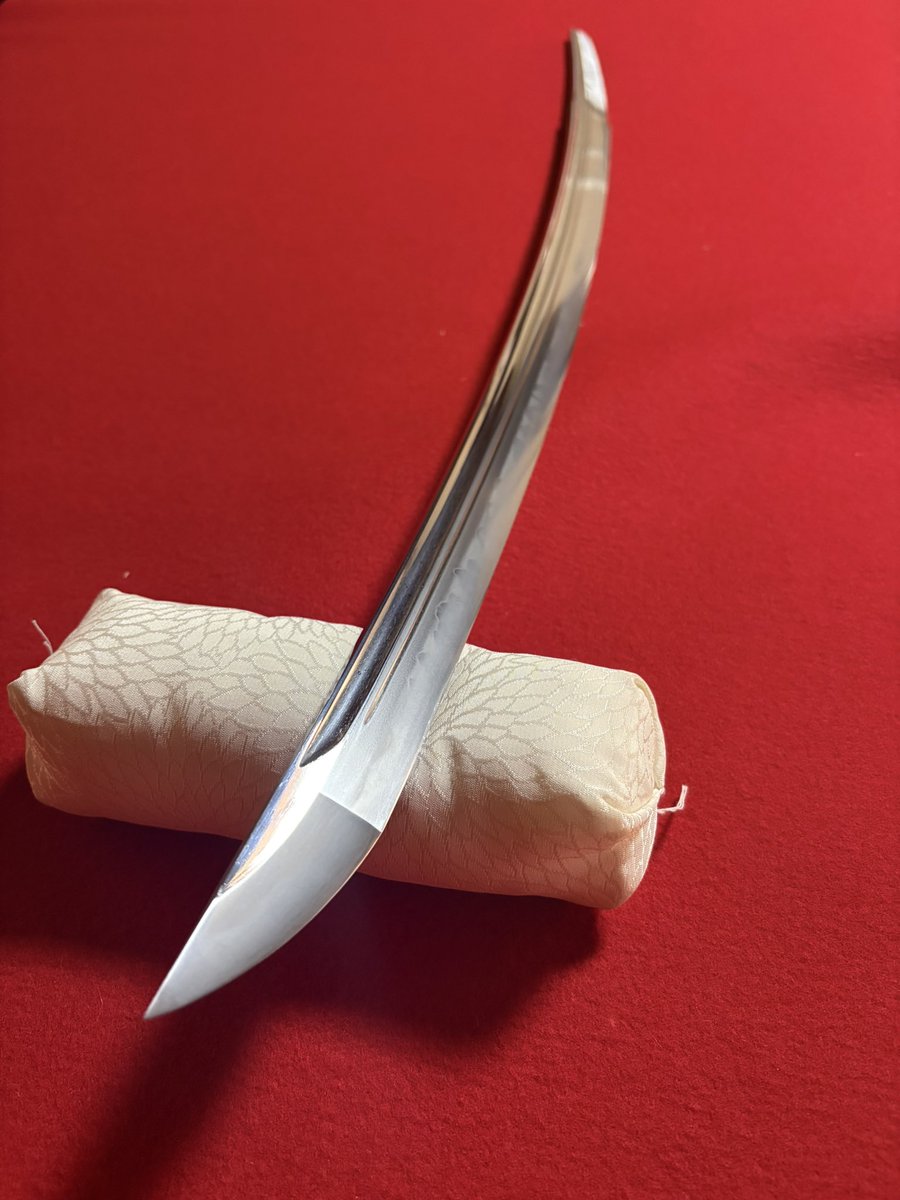
今から700年ほど前に作られた鎌倉時代の日本刀の反りです。
用の美が詰まっているように感じます

日本語
@iOccupyNigeria @hxxntrr Thank you so much for this great analysis- clear, honest, measured, and not taking an extreme pessimist optimist position. Great work.
English

I looked at it as a business plan one of my clients asks me to go over, and when we run it like a business instead of reading it like a thread, there are plenty of challenges in the narrative.
On paper, the math checks out. At $120 per day for 24 days, that is $2,880 per car. After Turo’s 25 percent cut, insurance, and light maintenance, you land around $1,800 per car, or roughly $9,000 per month across five cars. That part is clean. No issue there. The problem is that the entire model is built on best-case assumptions that do not consistently hold in the real world.
The biggest one is utilization. Twenty-four to twenty-eight booked days per month means you are running at near full capacity almost every single day. In reality, most operators fall closer to fifteen to twenty-two days depending on the market, seasonality, and pricing pressure. Once you normalize that, your per-car net drops closer to $1,100 to $1,300. Now your five-car fleet is doing $5,500 to $6,500 per month, not $9,000 to $14,000. Still a business, but a very different business.
Then you have the expense side. Insurance at $180 per month per car is extremely optimistic for a vehicle that is effectively being used commercially. In many real scenarios, that number lands between $250 and $500 or more, especially in high-traffic markets. Maintenance at $150 per month assumes everything goes perfectly. In reality, tires, brakes, oil, wear and tear, and renter behavior push that closer to $250 to $400 when averaged out over time. Depreciation is also understated. These are not personal-use vehicles. With high mileage and constant turnover, you are realistically looking at 15 to 25 percent annual depreciation, not the softer numbers being quoted.
Now layer in the part that people conveniently skip, which is operational risk. These cars are not sitting in a vacuum generating money. They are being driven by strangers with different driving records. That means accidents will happen, and when they do, that car is off the road, which immediately kills revenue while expenses continue. Not everyone returns the car on time, which disrupts bookings and creates gaps. Some cars come back in worse condition than they left, which means higher cleaning costs, more downtime, and sometimes repairs that were not budgeted for.
Then there is logistics. This is not passive. People pick up cars from one location and return them to another. Flights get delayed. Schedules shift. Now you are coordinating pickups, drop-offs, and repositioning vehicles across the city. You are either doing it yourself or paying someone to do it. Either way, it is time or money. There will also be bookings where someone reserves a car and does not show up, which creates idle time you cannot recover. On top of that, getting all five cars deployed in the first place takes time. They do not all magically start earning on day one. There is ramp-up friction that the thread completely ignores.
The credit card angle is where the real financial risk sits. Yes, using 0 percent business credit can allow you to acquire the cars with minimal upfront cash, but you are matching short-term debt against a volatile, operationally intensive asset. The 0 percent window is typically twelve to eighteen months. After that, you are looking at interest rates in the twenty to thirty percent range. If your utilization drops, if cars go offline, or if unexpected expenses hit, you are now carrying tens of thousands of dollars in high-interest debt on depreciating assets. That is not a small detail. That is the core risk of the entire model.
The idea of “zero dollars invested” is technically true but financially misleading. You may not have put in cash, but you have absolutely put your credit, your balance sheet, and your liability on the line. That is real exposure. If the model underperforms, the bank still expects to be paid.
Now let’s make this very real with an example of how this can blow up.
Let’s say someone follows this exact play. They stack $70,000 across 0 percent cards, buy five cars, and list them. The first two months go great. They are hitting close to those 20 plus booking days, cash flow looks strong, and they feel like they cracked the code.
Month three, one car gets into an accident. It is tied up in claims for six weeks. That is one-fifth of your revenue gone immediately. Around the same time, two other cars hit slower booking periods, dropping from 24 days to 16 days. Now your revenue is down, but your fixed costs are still there.
Month four, one renter returns a car with interior damage. It is out of service for a week. Another renter returns a car late, which disrupts the next booking and forces a refund. You start spending more time coordinating, cleaning, and fixing problems than you expected.
Meanwhile, your credit card minimum payments are due every single month. You are not operating on profit anymore. You are operating on cash flow timing. If the 0 percent period starts ticking down and you have not aggressively paid down principal, you are now staring at 20 plus percent interest on a $60,000 to $80,000 balance.
At that point, the “passive income” play turns into a pressure situation. You either inject cash, sell cars into a softer resale market, or carry high-interest debt while your assets continue to depreciate.
That is how it blows up. Not because the model is fake, but because the margin for error is thinner than the thread makes it seem.
Now let’s talk structure, because this is another piece people skip.
Are you doing this personally, or are you incorporating?
If you are doing this personally, those credit cards are tied directly to you. Any debt, any default, any issue sits on your personal credit profile. That means you are fully liable.
If you set up an LLC, that is a better structure operationally, but here is the reality. Most business credit cards, especially when you are starting, still require a personal guarantee. So even with an LLC, you are not magically insulated. The bank is still underwriting you, not just the entity.
True business credit, where the business stands on its own without your personal guarantee, takes time to build. You are typically looking at:
Six to twelve months to establish initial trade lines
Twelve to twenty-four months to build meaningful credit depth
Consistent revenue, reporting, and payment history
So when someone says you can walk in and stack $80,000 to $120,000 in business credit in one morning, what they are not saying is that it is often backed by your personal credit profile and guarantees. It is not standalone business credit in the pure sense.
In other words, whether you structure it as an LLC or not, early on, you are still the one on the hook.
When you put all of this together, the model is still viable. It is still a real business. But it is not a hack, and it is not passive. It is a leveraged operation that requires capital discipline, operational control, and a clear understanding of risk.
If you treat it like a business, you can make money.
If you treat it like a shortcut, the combination of leverage, variability, and real-world friction will expose you very quickly.
English

I got a DM from a 24-year-old in Phoenix who makes $14,200/month from 5 used Toyotas he's never driven
Thought it was cap. Asked for proof. He sent me his Turo dashboard. 5 cars. All Camrys and RAV4s. All booked 24-28 days per month. Revenue: $14,200. Expenses: $5,600. Net profit: $8,600/month
Total investment of his own money: $0. Every car was bought with 0% business credit cards
Here's the play
Step 1: Stack $80K-$120K in 0% business cards. Chase, Amex, US Bank. Bureau sequencing so each bank sees a clean file. One morning
Step 2: Buy 5 used Toyotas. 2019-2021 Camrys or RAV4s. $12,000-$15,000 each. Toyotas specifically because they depreciate the slowest, have the cheapest insurance, and renters rate reliability over flash. Total: $60K-$75K
You can't swipe a card at most dealerships for $15K. So you use Plastiq or a similar processor that sends a check from a credit card. 2.85% fee. On $68K total that's $1,938. Only real out of pocket cost
Step 3: List all 5 on Turo. Price at $95-$140/day. Park them near the airport. Tourist cities with bad public transit are gold. Miami, Phoenix, Austin, Denver, LA
Per car:
Revenue: $120/day x 24 days = $2,880/month
Turo's cut (25%): -$720
Insurance: -$180
Cleaning + maintenance: -$150
Net per car: $1,830/month
x 5 cars = $9,150/month. In aggressive markets like Miami or LA closer to $14K
The cars pay for themselves in 5-6 months. The 0% window is 12-18 months. That's 6-12 months of pure profit before a single penny of interest exists
Exit play at month 12: sell all 5 cars. A 2020 Camry with 30K extra miles depreciates about 8-12% per year. Bought for $68K. Sell for $58K-$62K. $6K-$10K in depreciation total. Your rental income over 12 months was $85K-$170K depending on market
Total real cost: $68K in cars (recovered ~$60K on resale) + $1,938 processing + ~$9,000 maintenance = ~$19K in actual expenses
Total revenue: $100K-$170K rental income + $60K resale = $160K-$230K
Net profit on $0 of your own money: $81K-$151K
Is it passive? No. You need a cleaner and a key handoff system and you'll deal with occasional damage claims. But the mfs doing this at scale hire a local person for $2K/month to run all of it and still clear $6K-$12K/month net
The guys who figured this out 2 years ago now run 15-25 car fleets. Real businesses built entirely on 0% bank money the bank thought was going to be used on office supplies
The whole play breaks down to one thing. Capital. You can find the cars. You can list them on Turo. The app does the booking for you. The only thing between you and a $8K/month car rental business is $68K you don't have sitting in your savings account
That's what business credit cards solve. $68K in 0% funding approved in a single morning. We handle the bureau mapping, the bank sequencing, the application timing. If your score needs work first we fix that in 30-90 days. You walk in with nothing and walk out with the capital to buy your first fleet (link in bio)
English
I disagree. The USA can walk away from this conflict; however, there will be consequences. They could include loss of USA bases in the Persian Gulf, prolonged closure of the Strait of Hormuz, significant global economic disruption or economic recession. However, this may be acceptable to the USA. The USA sees the cost of maintaining the global economic system as high burden; and crucially that key rivals get a higher benefit:cost ration than the USA, specifically China, which grows stronger as USA bears the cost. So withdrawing from the global system, allowing dysfunction, shifting costs to China may be a rational strategy. If we walk away, my theory will be validated.
English

What part of "Trump can't walk away from this conflict" experts don't understand?
English
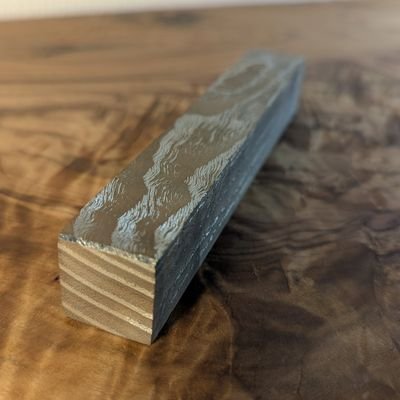
昨日のキルテッドメープルですが、ガッツリ綺麗に金属が入りました✨
メタリックにモコモコしています👀
#メタライズドウッド #metalizedwood

Metalized Wood@MetalizedWood
良い感じのキルテッドメープルが手に入りました👀✨
日本語
@ill_Scholar Exquisite. Superior. Astonishing quality.
English

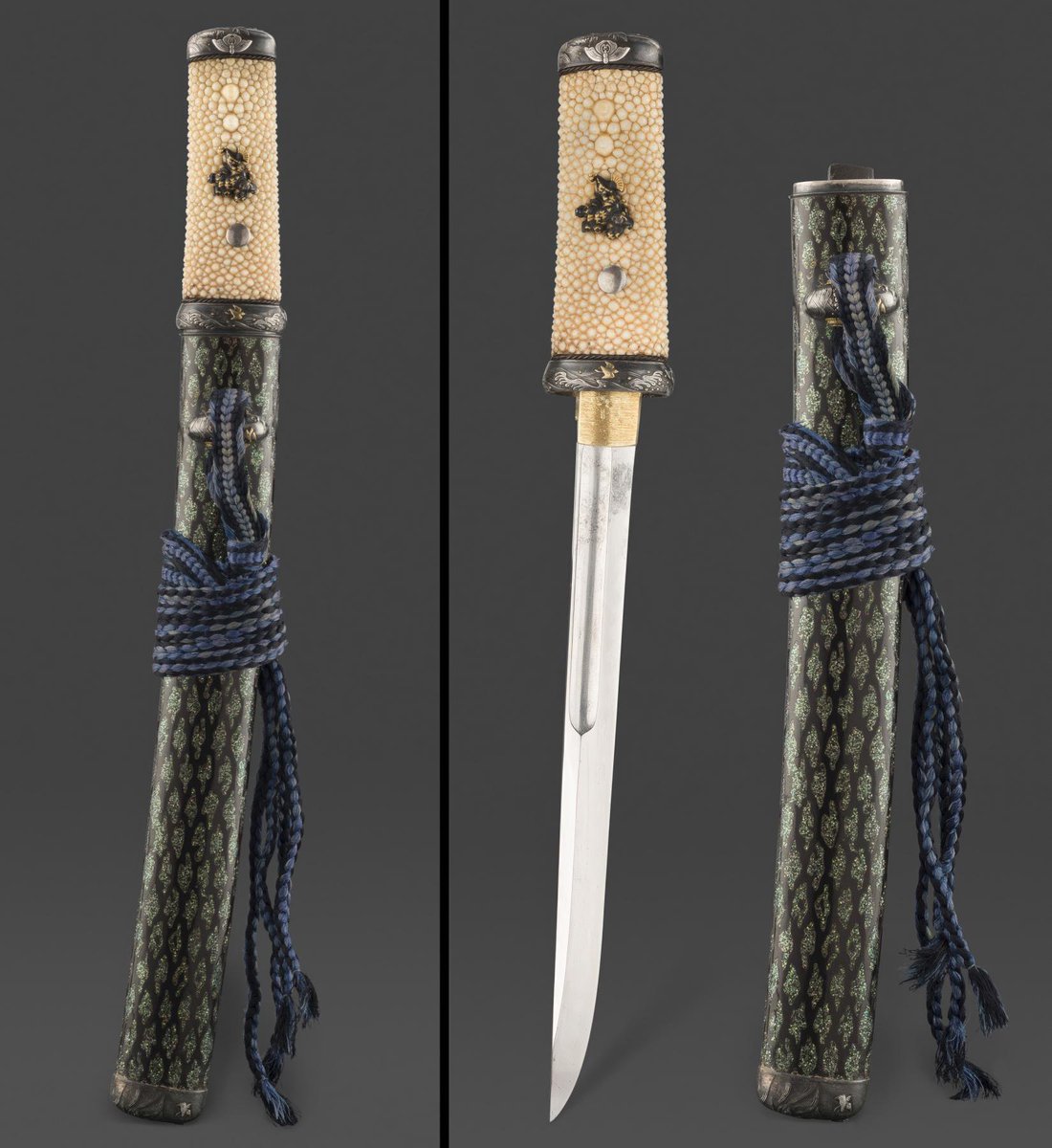
Japanese Tantō (dagger) with shagreen thickest horse, shark, or manta ray skin wrapped hilt
Scabbard with abalone shell inlays.
Japan, Edo period, 1750
Japanese craftsmanship has little equal across the world in many different industries
English
Even better for China: Taiwan has seen what happens to U.S. allies used as pawns to confront U.S. enemies. Those pawns- Ukraine, Israel, Kuwait, Bahrain- get systematically destroyed to advance the US global strategies. And the US can’t protect them, or abandons them. Once chip production moves to the USA, Taiwan should worry.
English

It had been a while since I read something so foolish.
The Chinese are happier than ever. They are carefully observing, photographing, and documenting every doctrine and vulnerability of the American navy and air force.
They are laughing at the depletion of interceptor stocks that will take 5 to 7 years to replenish, not to mention the guided munitions that will take several more years to replace.
They are laughing at America’s impotence in protecting its bases and its allies. But more than that, they are paying close attention to the loss of more than $1 billion just in aircraft.
There is no one happier today than the Chinese strategists who are watching from the front row as the false American umbrella, sold at a premium price for decades to several countries, is being exposed.
Based on what we have seen in the Gulf and knowing the number of batteries on both sides, I dare say that the air defenses of Taiwan, South Korea, and Japan would be exhausted in 48 hours in the event of a Chinese attack.
And there is nothing that can be done about it in the short term.
It is time for everyone to adjust diplomatically and stop growling while relying on American dentures, because Trump and Netanyahu have exposed the vulnerabilities of this model and thrown away decades of work.

English

Вышивка дорогие друзья. Хэнд-мейд, стежок за стежком длинными зимними вечерами.

Русский
@DavidBCollum @JBellas In my opinion, you are basically correct. And by causing a depression in the global economy and the USA, Iran could flip the 2026 and possibly the 2028 presidential elections.
English

Unpopular Opinion: Iran must bring the global economy to its knees. By doing so without being destroyed, Iran ensures that the next time some random country tries to bring them to their knees (no names mentioned), every other country in the world will say "Stop! The last time you did that we all suffered badly. We won't tolerate that again." For Iran, it is a win for the long term, not just today.
English

〜ご報告〜
この度、松本木材株式会社から独立しました!
まだ店の登録手続き諸々が完結してないので4月末までは手続きとか間借りする倉庫の片付けでバタバタしそうです。
業務内容は木材のネット販売を主に、ゆくゆくは講師のようなこともしていきたいと考えています。
もしそのような案件があればお声がけいただけると幸いです。
木軸ペンの販売はこれまで通り個人名義での趣味兼副業という扱いで続けていくので、そちらもよろしくお願いします。
軌道に乗るまで何年かかるかわかりませんが、抱えるものが少ない今だからこそできる挑戦だと思っています。
今までに得た、そしてこれから得る知識や人脈を存分に活かしてどんな案件が来ても「栃尾にお任せください」と言えるようなお店にしていきたいです。
これからも栃尾木材株式会社、めいぼく工房栃尾、そしてとある木材好きをよろしくお願いします!

日本語
Grew up in upstate NY. The biggest issue is not the malaise, depression, resignation, etc. It is cloying resistance to any forces for change and growth create a reaction of envy and inevitable obstacles, from zoning and taxes and fees and permits to actual protests. Seeing the money downstate and the corruption in Albany doesn’t help, a weird kind of self righteous stagnation sets in, mixed with a ‘yes it’s dying, but at least it’s ours’ kind of attitude…
English

This is a bleak read, but I can't argue with it. He's basically correct.
More or less every small Upstate NY town I have any connection to is like this.
The residents do seem to want to "fade away in peaceful stagnation." They like to bulldoze things, tear down buildings, prevent newcomers from ever coming, obstruct every conceivable advancement, and so on.
Then -- at Town Board meetings, they dutifully and unironically opine the "lack of young families around here" as if they themselves did not actively and enthusiastically cause that problem. These rituals can be quite the display to witness when you know the town business and who's ever behind it.
Quite the same for those institutions within small towns: the Churches are in a state of managed decline (which they defend rabidly), the fraternal orgs, the Historical Societies, even many restaurants, bars, gas stations, hotels, etc too. They have a way of dumping hot oil on their feet and then complaining bitterly about they can't walk, so to speak.
Perhaps, then, the death of small town America is not at all what we tend to think it is -- perhaps what's really behind it are whatever forces have caused the raw number of high-agency, risk-tolerant, footloose, enterprising, and rurally-inclined people to decline.
Without go-getters who arrive, roll up their sleeves, and say to hell with the dysfunctional locals, it's a sure shot that these towns will rot and die. This system only works, by the way, if those go-getters are benevolent patriots and Christians with an earnest hope of impressing the locals by building something great. But when for lack of such people, corporate developers, private equity firms, "Airbnb people," and so on fill that same void, the result is universally awful.
And because of that awful result, rural yokels become (justifiably) EVEN MORE mistrusting of the much-needed outside influence, money, and energy that it'd take to fix their towns. I myself have been guilty of this at times. This makes for a kind of death-loop.
I don't want to be talking this way, but this is essentially how it is. I'd love to see the people I grew up around spontaneously self-organize their towns into something excellent -- but they're simply never going to do it, even as they cry out about how bad things have gotten here.
Connor O’Leary@Connorpoleary
"And the locals may complain about decline here, but they also don't really want to see a Renaissance either." Coastal rightists think people in dying towns in the interior are victims of capitalist "exploitation". The reality is they are victims of their own pathologies. These towns are dying because most of the people in them are low-agency and dysfunctional. You absolutely can revive small towns--I used to live in one. Within the 1st generation, you had a thriving little community with a school, small college, and multiple successful businesses (including one boasting over $100 million in annual revenue, that employed a plurality of the population). But this requires (among other things): 1. A bunch of high-agency types with the numbers and drive to remake the place over the objections of the locals, who would rather fade away in peaceful stagnation. 2. A bunch of high-agency people who are willing to build lives from scratch in the middle of nowhere--an extremely rare breed these days that might only exist among the very religious.
English
This is an intentional harming of the global economy to damage Europe and Asia and maintain global USA primacy. The only reason for the last ‘American Century’ was the destruction of Europe and East Asia in WW2. In order for a new American Century, unified Europe and peaceful Asia must be crippled. Destroy their access to energy, destroy their high tech manufacturing, promote de-energizing, zero growth, etc. This war was initiated to re-structure the global economy and great power relationships. Uranium was the excuse.
English

For people who say it couldn't be predicted that the Iran war would be this consequential for the global economy, watch this 2012 video of former National Security Advisor Zbigniew Brzezinski 👇
He predicts what did in fact happen: "[Iran] can hurt us a lot... Can you imagine what the consequences would be for us if [...] Iraq was massively destabilized, if Bahrain was set on fire, if the North-Eastern oil fields in Saudi Arabia were attacked... The consequences, the costs would be cumulative... The global economy would be affected so we're playing with fire here."
All of this happened.
Which goes to show that the US government has been acutely aware for decades of how globally destructive a war on Iran would be for all of us (including on America itself and on its Gulf allies): when Trump says that “nobody” expected Iran to retaliate by targeting US allies in the region (reuters.com/world/middle-e…), it's a bold-faced lie.
So the real question is rather: if you know something will set the world on fire, and you do it anyway, and the consequences unfold exactly as predicted - at what point does the rest of the world stop looking at Washington as a fireman and start reckoning with the fact that they're dealing with an arsonist?
Source video: youtube.com/watch?v=VjbZ4V…

YouTube
English



I believe up to 250,000 Iranian soldiers died or were MIA in the Iran-Iraq war. The Shia have a culture of Martyrdom and their leader, and children, have been attacked and killed in the midst of a negotiation. They are protecting their homeland. We need to have some understanding of history and culture, as well as geography.
English

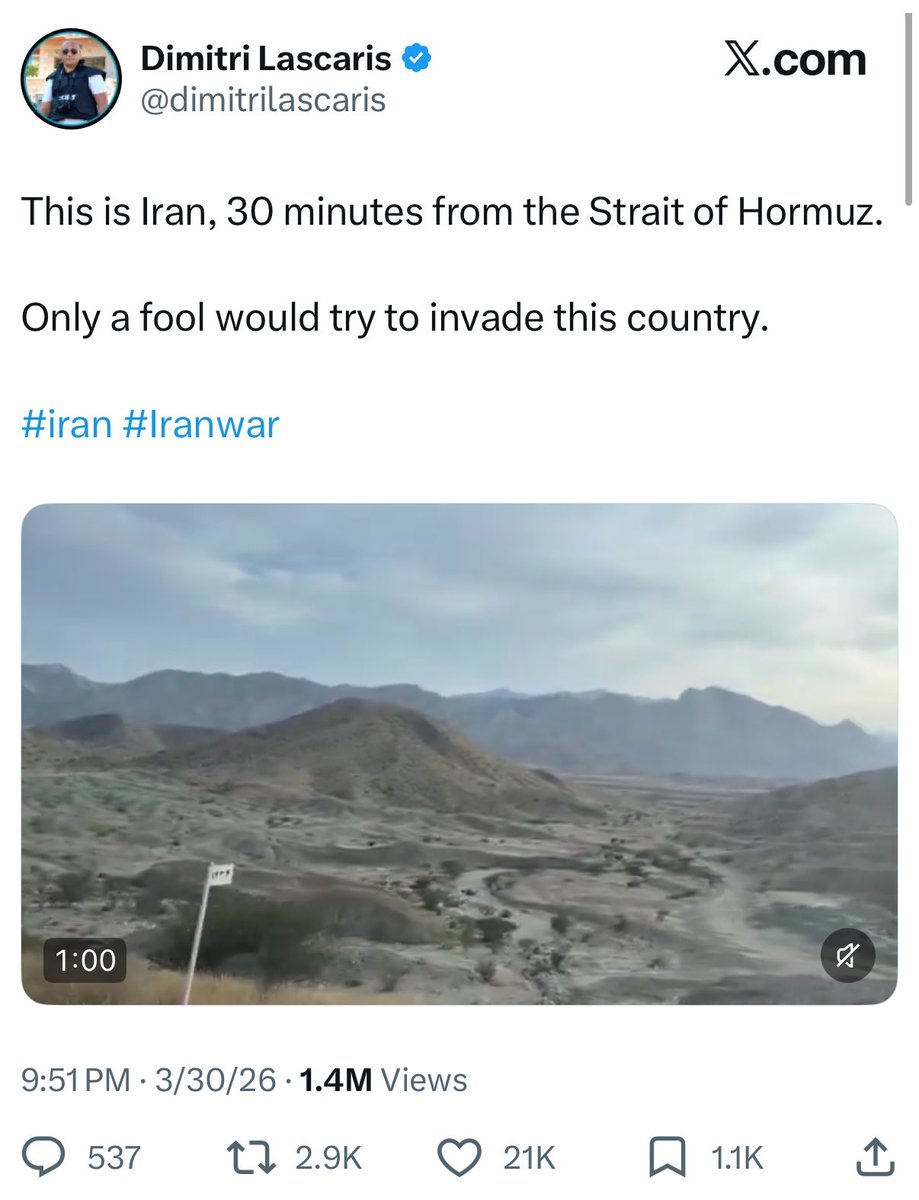
Who would win? A picture of US Marines, or a picture of inhospitable mountains?

English
@Breedlove22 What is an average monthly cost for these supports ?
English

If you still think I’m hiding something, here’s an Excel that goes deeper into what I’ve used:
dropbox.com/scl/fi/5od6rim…
English
Everyone keeps asking me what I’m on to look like this at 40.
So here are all the peptides, anabolics, and hormones I used to reach 8.5% body fat at 227 pounds, 6’4” (a 100% transparent thread):
1. Retatrutide

English
@vrexec @dannybuck How would you model the alternative use of invested in s&p500 for the 5 years?
English

@dannybuck Yes... not even assuming that alternative upside to your cash usage
English
I'm doing some back of the envelope math on buying vs renting.
Say you buy a $1M house with 20% down at about 6% mortgage rate and plan to stay there for five years.
Your principal paydown in the first five years is about $57,000, but you've paid about $230,000 in interest.
You've also paid roughly $100,000 in property taxes, insurance, and maintenance.
Say the house appreciated 2.5% every year — so when you sell it's worth about $1.13 million.
Your all-in costs to sell are about 7.5% — brokerage commissions, transfer taxes, attorney fees, title insurance, and the inevitable post-inspection negotiation. On a $1.13M sale that's about $85K in fees.
So you net about $1.046M. You still owe $743K on the mortgage. You walk away with about $303K in cash — your $200K down payment back, your $57K in principal, and about $46K in net profit from appreciation.
Your non-recoverable costs — interest, property tax, insurance, maintenance — were about $330K over five years, or about $5,500/month. That's your effective rent.
But you "made" $46K selling, or about $770/month — so your effective rent was about $4,700/month.
Not bad, but you tied up $200K for five years to get there. And if appreciation was 1.5% instead of 2.5%, that net gain basically disappears and you're paying $5,400+/month in effective rent.
And this assumes there's appreciation at all — and that something doesn't go wrong with your house that needs a major remodel or repair.
On a five-year horizon at 6% rates, you need everything to go right on appreciation just to make ownership competitive with renting.
The transaction costs eat most of your upside.
What am I missing? Anything?
English
@MetalizedWood This is so very beautiful. How do you make it metallic?
English

@yoshimasa_sword You are a caretaker of all the craftsmanship means, thank you for keeping this skill alive.
English


I made a mission map. Japan split into 2 inhabitant areas. Orange is where church is near by, blue is church is not near.
Dear Christian brother and sisters, please share this map to your friends and pray those blue area to be filled by church planters.
christiantoday.co.jp/infographics/c…
English
この投稿もアメリカまで届くのかな?
ハロー。アメリカの皆さん。私は日本で人口1%しかない宗教マイノリティーのキリスト教徒の1人です。
クリスチャントゥデイというメディアの編集長をしています。
よろしくお願いします。
日本語
@saya_tam72 @juliet_turner6 Look at the degree on that chick! Glorious!!
English