Oscar L Olvera Astivia (Astivia, OLO)

3.5K posts

Oscar L Olvera Astivia (Astivia, OLO) banner
Oscar L Olvera Astivia (Astivia, OLO)

Oscar L Olvera Astivia (Astivia, OLO)

@oscar_olvera100

PhD in Psychometrics. Associate Prof @UW in Measurement & Statistics. ❤️Monte Carlo algorithms + non-normality + applied psychometrics❤️

Seattle, WA Katılım Ağustos 2017
290 Takip Edilen1.8K Takipçiler
Sabitlenmiş Tweet
Oscar L Olvera Astivia (Astivia, OLO)
Do you use multilevel logistic regression? Do you use categorical and continuous predictors WITH interactions? Do you need to do a power calculation for your grant/article? Use my shiny app and get all the power you need! But first plz read my 1st twitter rant! 1/6
English

11
164
588
0
Oscar L Olvera Astivia (Astivia, OLO) retweetledi
Ed Kroc
Ed Kroc@ed_kroc·
(1) The concept of statistical significance should be banned. (2) Bayesians should be forced to scientifically (not mathematically) justify their priors. (3) Causal inference is the scam of the century.
English
115
286
3.3K
866.3K
Oscar L Olvera Astivia (Astivia, OLO)
@Brier_Gallihugh I'm not around as often as I used to... but this sounds interesting. Is there a particular "thread" or series of posts to check out? Might be time to take the good, ol' Lord & Novick out of retirement to clarify things, lol...
English
1
0
1
57
Brier Gallihugh, M.S
Brier Gallihugh, M.S@Brier_Gallihugh·
@oscar_olvera100 So much to learn though (even as a late stage doctoral student in social psych). You should have seen the “Should we treat Likert items as ordinal or continuous and if so, should we sum or average across items” discussion a couple weeks ago
English
1
0
2
79
Oscar L Olvera Astivia (Astivia, OLO)
@Brier_Gallihugh Not a problem. I'm glad I could help! I was hoping you'd see you weren't completely wrong in your initial assessment of the situation (i.e., the tweet that started it all). It just needed some formalism around it 🤓
English
1
0
2
81
Brier Gallihugh, M.S
Brier Gallihugh, M.S@Brier_Gallihugh·
@oscar_olvera100 I very much like this blog post. My old grad stats professor passed this along for obvious reasons. It really clarified the thread. I appreciate it!
English
1
0
1
84
Hudson Golino
Hudson Golino@GolinoHudson·
@oscar_olvera100 Hahahahahahahaha best meme ever. Can I take a print screen of your tweet and show in my talks about how the field is craving for something like our new fit index? Hahahah
English
1
0
1
157
Oscar L Olvera Astivia (Astivia, OLO)
@seriousstats True that 100% agree that's the rule rather than the exception There's some context where Bollen makes this claim for single item indicators, like in the example Altho I still dont get why that would matter But then again I'm not Bollen so...¯\_(ツ)_/¯ I may be missing something
English
0
0
1
242
Corey Yanofsky, α-stable statistician
@ed_kroc i wonder if there's a way to do exact sampling from this distribution -- some rejection sampling trick or analytically tractable transformation to a well-known distribution or something like that
English
2
0
2
90
Oscar L Olvera Astivia (Astivia, OLO) retweetledi
Ed Kroc
Ed Kroc@ed_kroc·
Here’s a fun blog post about the Fabius random variable. It’s kind of a random geometric sum and has some weird and wonderful properties. It’s CDF is infinitely differentiable but nowhere analytic (basically its Taylor series doesn’t “match” the CDF). 1/2 edkroc.wordpress.com/2024/03/05/the…
English
4
3
23
7.1K
Oscar L Olvera Astivia (Astivia, OLO) retweetledi
Hudson Golino
Hudson Golino@GolinoHudson·
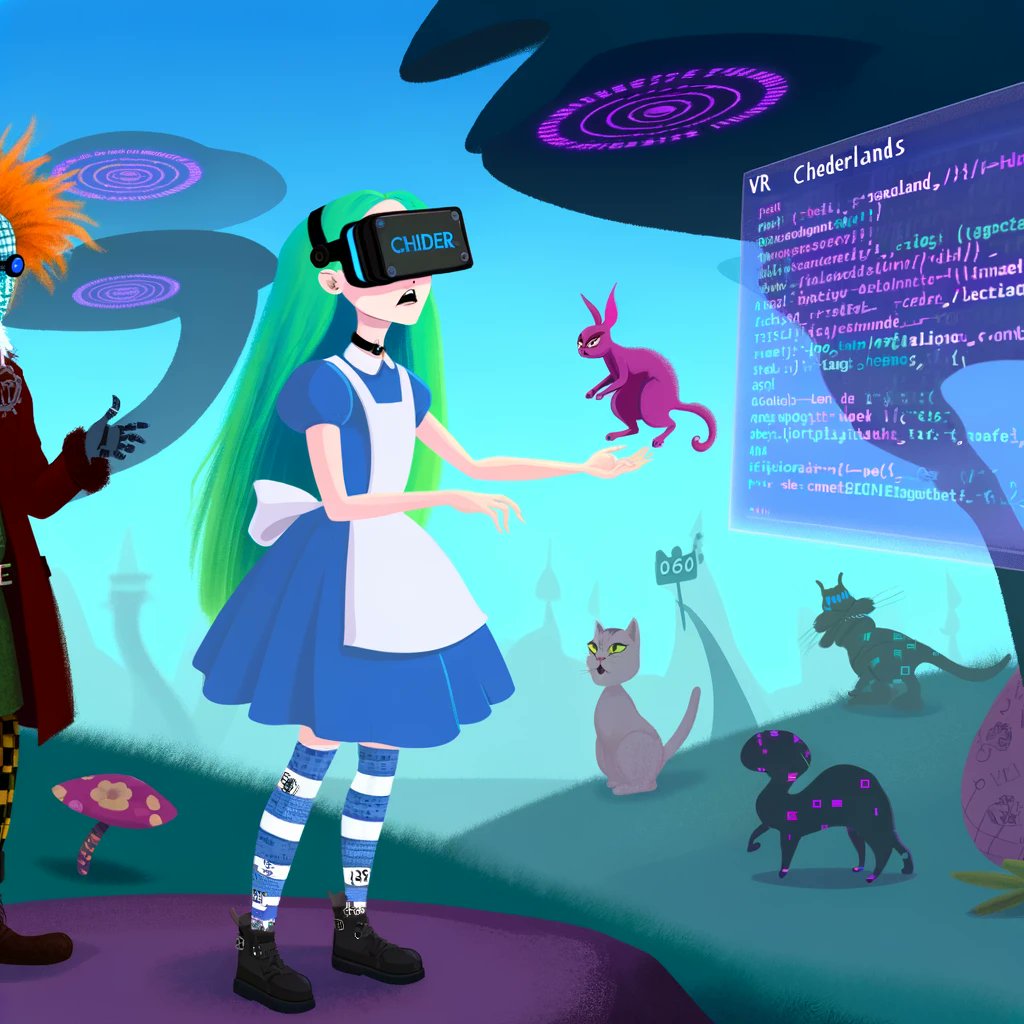
Our new R package is mind-blowing! Are you interested in Large Language Models in R? Check out the example below. Task: automatic theme identification. Two synthetic stories generated via GPT-4: Story 1: "In the modern retelling of "Alice in the Wooderlands," Alice is a tech-savvy young woman who stumbles upon a hidden virtual reality world while testing a new immersive gaming system. Instead of falling down a rabbit hole, she dons a pair of state-of-the-art VR goggles and finds herself transported into a whimsical and mysterious digital realm known as the Wooderlands. Here, she encounters eccentric digital avatars, such as the enigmatic Cheshire Code and the quirky Mad Hacker, who guide her through the intricacies of this surreal cyber wonderland. As Alice navigates through the Wooderlands, she confronts challenges that mirror the complexities of the digital age, such as navigating through deceptive virtual landscapes and solving puzzles rooted in coding and encryption. Along the way, she learns to harness her programming skills and confronts the powerful AI Queen, who controls the digital realm with an iron fist. Through her journey, Alice discovers the true power of technology and the importance of using it responsibly, ultimately leading her to unlock the secrets of the Wooderlands and return to the real world with newfound wisdom and a deeper understanding of the digital universe." Story 2: "In the midst of the muddy trenches and the deafening roar of artillery, two soldiers found themselves on opposite sides of the conflict, yet bound by an unexpected bond. James, a British soldier, and Hans, a German soldier, had stumbled upon each other during a rare moment of ceasefire. As they cautiously approached each other, their eyes met, and they realized that they were not so different after all. Both tired of the senseless bloodshed, they decided to defy the orders of their respective commands and embark on a daring escape to no man's land. Together, they navigated through the treacherous terrain, evading the watchful eyes of their fellow soldiers. Their courageous act of unity and defiance against the brutality of war inspired whispers of hope among both the Allied and Central Powers, sowing the seeds of peace amidst the chaos of World War 1. Their remarkable journey to forge an unlikely friendship amidst the devastation of war became a symbol of humanity's resilience and the universal desire for peace. Despite the risks and the looming threat of being labeled as deserters, James and Hans stood as living proof that compassion and understanding could transcend the barriers of nationalism and conflict. Their story spread like wildfire, sparking conversations about the futility of war and the power of empathy, planting the seeds for a future where nations could resolve their differences without resorting to the horrors of the battlefield." In our new package, we used the following query: Query: What are the two main themes prevelant across the documents? Our Package's Output: The two main themes prevalent across the documents are compassion and understanding in the face of war and the power of technology in the digital age. All using R. Having as an input a local repository with two PDF files. 37.32 seconds total time from query to output. And: FREE AND OPEN SOURCE!
Hudson Golino tweet mediaHudson Golino tweet media
English
2
8
57
6.8K
Oscar L Olvera Astivia (Astivia, OLO) retweetledi
Dr. Amanda Kay Montoya
Dr. Amanda Kay Montoya@AmandaKMontoya·
I love seeing more simulation replications (our field needs this desperately) but evaluation of generalizability is so important! Simulators need to be aware that their one method of generating non-normal data (or some other factor) may not give the same results as other methods.
Timothy Hayes@letsnotbehayest

Extra extra! Very cool stuff online at BRM! Big congrats to Amanda Fairchild, Yunhang Yin, @oscar_olvera100, my friend Amanda Baraldi, and Dexin Shi! link.springer.com/article/10.375…

English
0
2
12
1.7K
Oscar L Olvera Astivia (Astivia, OLO) retweetledi
Dr. Amanda Kay Montoya
Dr. Amanda Kay Montoya@AmandaKMontoya·
It's time for "Constraints on Generality" statements in simulations! journals.sagepub.com/doi/10.1177/17…
Oscar L Olvera Astivia (Astivia, OLO)@oscar_olvera100

HA! @letsnotbehayest got the scoop today, but I would like to introduce all of you to this most interesting paper that had been in the back of my mind for a while. Context: Remember *that* "many analysts" paper (now a classic)? When I was reading it 1/12

English
0
2
11
2.2K
Oscar L Olvera Astivia (Astivia, OLO)
Oscar L Olvera Astivia (Astivia, OLO)@oscar_olvera100·
non-normalities do *we* find in our everyday research and which algo can better reproduce *those* types of non-normalities. I.e., I'm a psychometrician. 99.9% of my data are categorical. Care to guess which distributions I simulate the most from? 🫢 12/12
English
0
0
1
148
Oscar L Olvera Astivia (Astivia, OLO)
Oscar L Olvera Astivia (Astivia, OLO)@oscar_olvera100·
theory likelihood? I could be wrong, but I've never seen that done. Overall, Id say the idea that I keep on reminding people is: there is only *1* way to be normally distributed and an *infinite* number of ways to be non-normally distributed. The question is which kinds of 11/12
English
1
0
2
160
Oscar L Olvera Astivia (Astivia, OLO)
Oscar L Olvera Astivia (Astivia, OLO)@oscar_olvera100·
HA! @letsnotbehayest got the scoop today, but I would like to introduce all of you to this most interesting paper that had been in the back of my mind for a while. Context: Remember *that* "many analysts" paper (now a classic)? When I was reading it 1/12
Timothy Hayes@letsnotbehayest

Extra extra! Very cool stuff online at BRM! Big congrats to Amanda Fairchild, Yunhang Yin, @oscar_olvera100, my friend Amanda Baraldi, and Dexin Shi! link.springer.com/article/10.375…

English
3
3
15
6.7K
Oscar L Olvera Astivia (Astivia, OLO)
Oscar L Olvera Astivia (Astivia, OLO)@oscar_olvera100·
robustness that can *only* be tested with the IG method (tandfonline.com/doi/full/10.10…) The result is simple, elegant yet provocative: there are multivariate non-normal densities for which, EVEN in the presence of non-zero univariate AND multivariate kurtosis, the normal theory 9/12
English
1
0
5
193