Rasmus Bjørn

2.3K posts

Rasmus Bjørn banner
Rasmus Bjørn

Rasmus Bjørn

@OsoDanes

The prehistoric loanword guy @MPI_GEA Protects early borrowings from accusations of 'chance similarity' and generally struggles with a difficult methodology.

Jyderup (DK) / Jena (DE) Katılım Kasım 2010
347 Takip Edilen1.1K Takipçiler
Rasmus Bjørn
Rasmus Bjørn@OsoDanes·
@Ugra___ I forgot how poor linguistic reasoning is here… partly true, but with so many caveats due and different lines of evidence that the conclusions pursued on this one statement ring hollow.
English
4
0
7
365
Ugra
Ugra@Ugra___·
Mallory 2020 puts forth a stellar argument - If PIE society domesticated the horse (*ekwo-s), then there must also be reconstructions for a foal, mare, gelding, stud and a steed. There aren't. That *ekwo-s can only be domestic and not wild, is refuted by internal consistency.
Ugra tweet media
English
4
6
42
2.6K
Rasmus Bjørn
Rasmus Bjørn@OsoDanes·
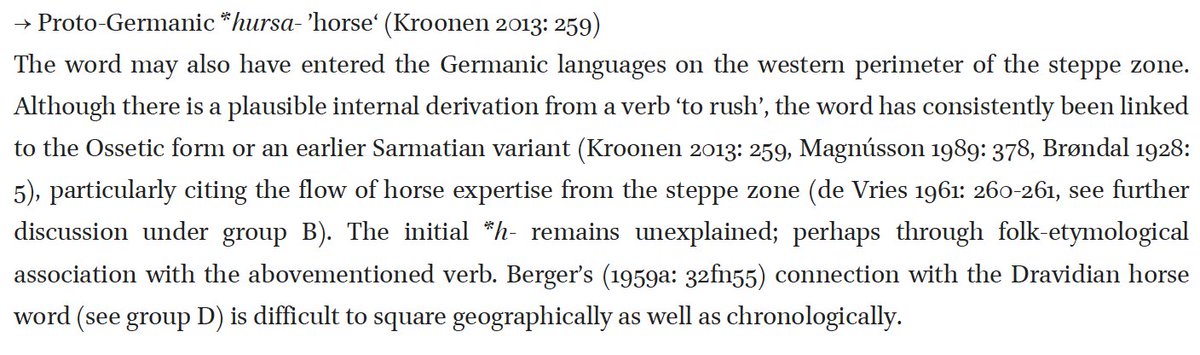
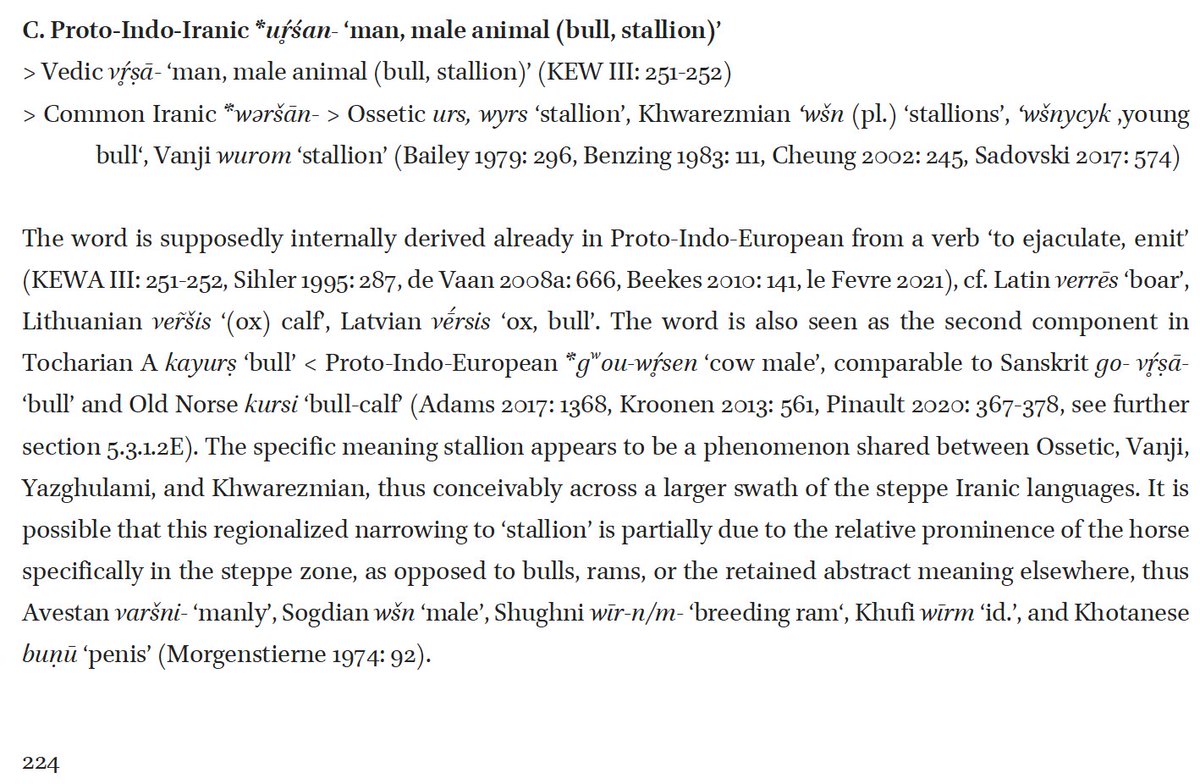
@MagnusPharao @norne_g Ja, det er en gammel hestesag - der er ikke noget der tyder på at det er et lån mellem engelsk og dansk. Det kan tages tilbage til oldgermansk (ca. 500 f.v.t.). Det er sandsynligvis lånt fra de iranske stepper før det. #EurasiaConnected
Rasmus Bjørn tweet mediaRasmus Bjørn tweet media
Dansk
1
0
2
183
Magnus Pharao
Magnus Pharao@MagnusPharao·
@norne_g Det lader til ikke at være et engeksk lån de har eksempler helt tilbage til 1250. Så måske er det et lån ind i engelsk i stedet... det oldengelske ord er vist eor/jór. @OsoDanes er eksperten i hestelåneord
Dansk
2
0
1
114
Magnus Pharao
Magnus Pharao@MagnusPharao·
Og her er et etymologisk funfact for danskere: Har du tænkt over hvorfor dansk ikke har et ord for hest der svarer til engelsk "horse"? Det har vi faktisk: Det findes i dag som -ros i hvalros, der er opstået som en snagvendt version, af oldnordisk hross-valr "hestehval".
Magnus Pharao@MagnusPharao

Crazy enough in Spanish a walrus is "morsa", seemingly a loan from Sámi which in turn loaned it from an unknown language of the early pregermanic sealhunting cultures of scandinavia.
Dansk
2
1
10
760
Rasmus Bjørn retweetledi
MPI-GEA Jena
MPI-GEA Jena@MPI_GEA·
International Max Planck Research School for Modeling the Anthropocene (IMPRS-ModA) starts at MPI-GEA as a truly transdisciplinary graduate program that educates and trains a new generation of scientists! Follow bit.ly/3XP3Dxn to learn more!
MPI-GEA Jena tweet media
English
0
5
12
2.6K
Rasmus Bjørn
Rasmus Bjørn@OsoDanes·
@basira_mir Congratulations, Basira!! Thank you for being so open to the archaeolinguistic perspectives - my own dissertation would not have been as rich without you! Glad to see the Kurfürst received another wreath tribute 🌿🌱🥜
English
0
0
2
171
Basira Mir-Makhamad
Basira Mir-Makhamad@basira_mir·
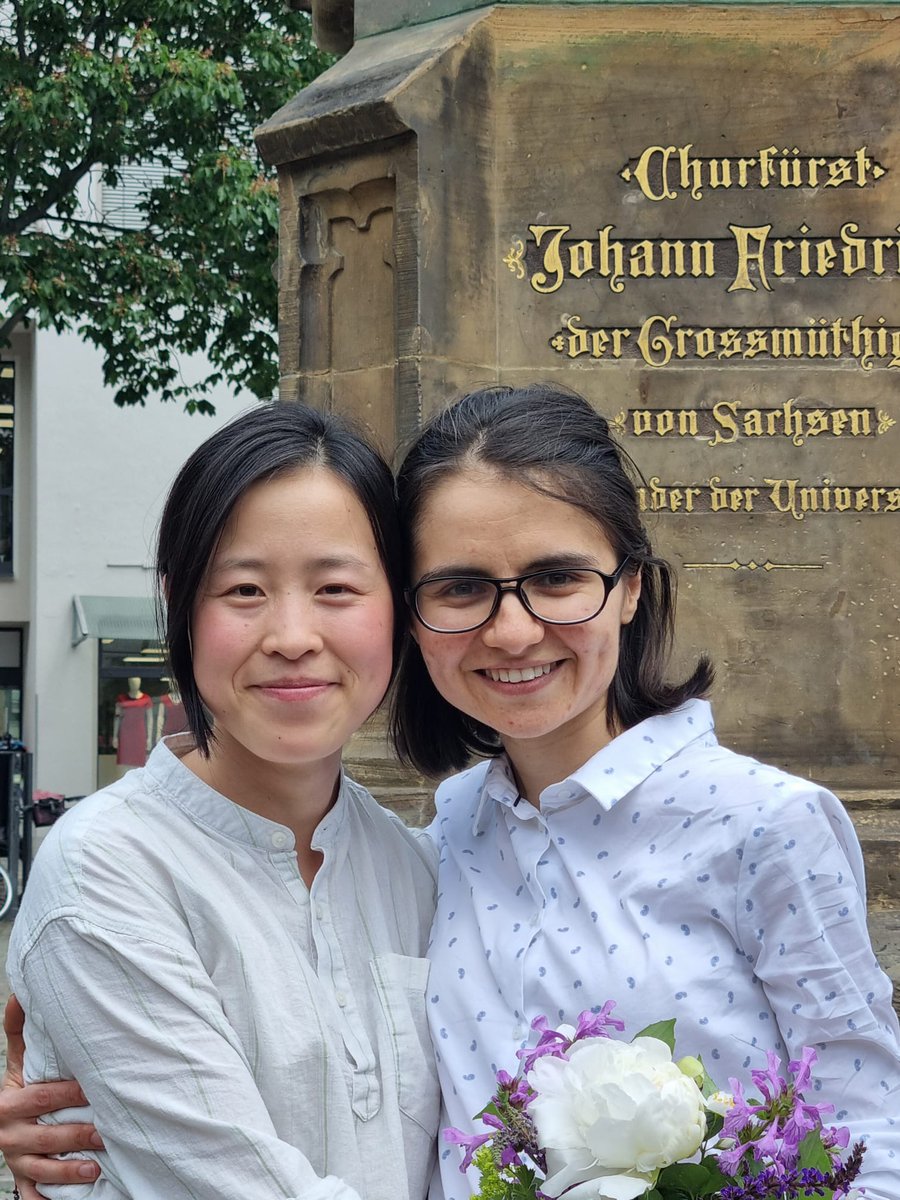
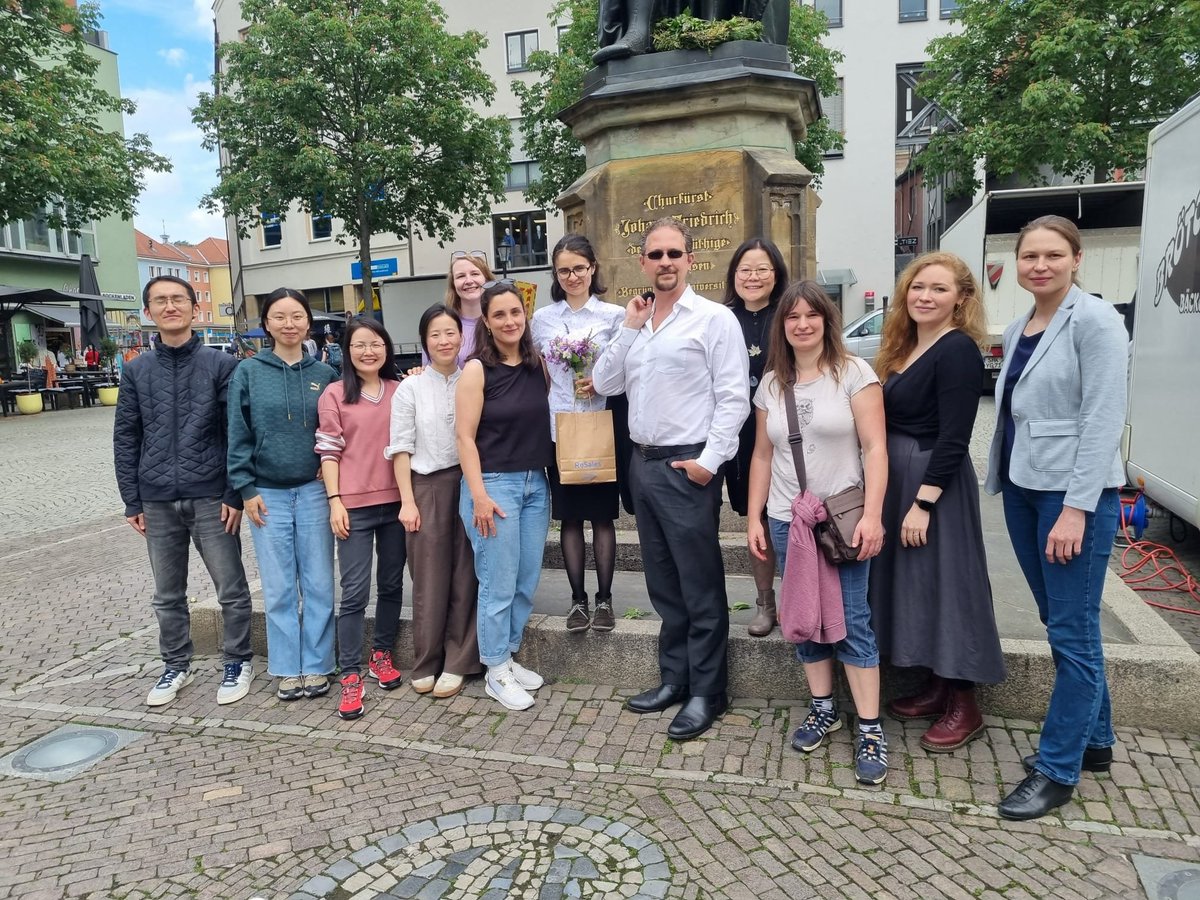
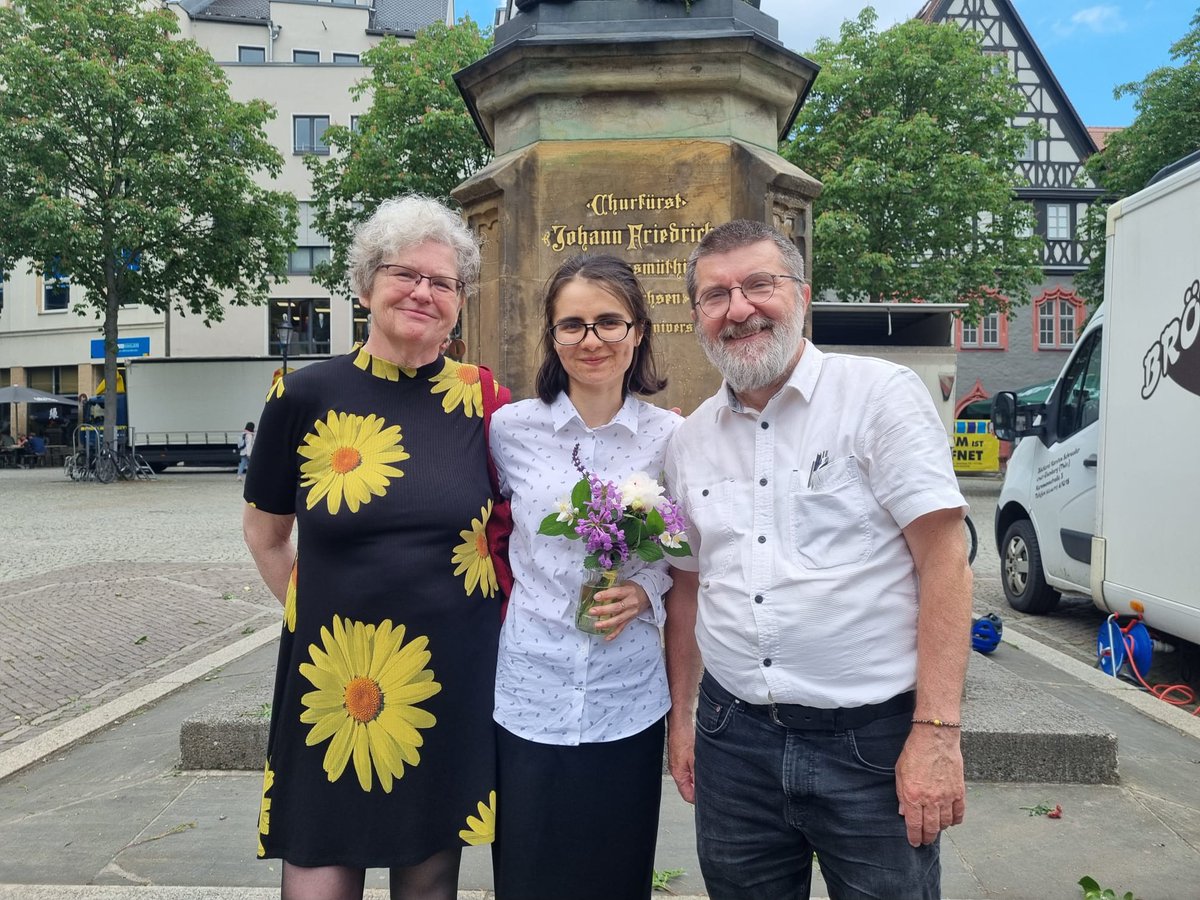
In addition to amazing support from my advisors, I was lucky to get a chance to meet my colleagues and extremely supportive people in Germany, who were with me in the hard times, especially Li Tang, who is not only the best colleague but also the best friend.
Basira Mir-Makhamad tweet mediaBasira Mir-Makhamad tweet mediaBasira Mir-Makhamad tweet mediaBasira Mir-Makhamad tweet media
English
1
1
19
552
Rasmus Bjørn
Rasmus Bjørn@OsoDanes·
@Kedarna82972844 @yajnadevam Nope. These models have been tried in linguistics, and still cannot predict anything that the sum of linguists have not (far less, actually) - past and present. Keep at it, tho
English
1
0
1
167
Kedarnath
Kedarnath@Kedarna82972844·
@OsoDanes @yajnadevam & population migrations/language diffusions r still amenable to approximate mathematical modelling & yield testable predictions ...linguistics hv completely ignored this & approached it pure humanities which yields no testable results & counter examples r simply ignored 2
English
1
0
1
166
Rasmus Bjørn
Rasmus Bjørn@OsoDanes·
@yajnadevam @Kedarna82972844 You shouldn’t talk about linguistics, that’s right. You could try to demonstrate why you believe these gaps have any bearings on a science you consistently prove not to understand
English
1
0
5
243
yajnadevam
yajnadevam@yajnadevam·
@OsoDanes @Kedarna82972844 Im not talking about tree/wave at all, nor even about linguistics in particular. Never mind, as I said, you don’t even know what are the gaps in your knowledge so to you it looks like Im challenging something.
English
1
0
0
206
Rasmus Bjørn
Rasmus Bjørn@OsoDanes·
@yajnadevam @Kedarna82972844 Here again you showcase your lack of basic understanding - language dynamics is too complex for mathematical data modeling (still). You’re not the first longing to reduce it (me too), but no model can account for the tree/wave dynamic.
GIF
English
2
0
1
241
yajnadevam
yajnadevam@yajnadevam·
You are blind to the things that are obvious to those with some data structure knowledge, just as you likely see things that we are blind to. This of course is natural. The only difference is that we question the cases where the model needs improvement and you reply by disapproval, telling us to read books, appeal to authority etc. The real issue is that we can improve our knowledge of historical linguistics, but you are unable to even understand what your gaps are.
English
1
0
0
193
Rasmus Bjørn
Rasmus Bjørn@OsoDanes·
@Kedarna82972844 @yajnadevam That’s the kicker - ‘due respect’. Human prehistory is complex, so the key is to treat expert testimony with due respect. Neither reverence or irreverence, but respect that perhaps they know something a Google search cannot provide.
English
2
0
1
94
Kedarnath
Kedarnath@Kedarna82972844·
@OsoDanes @yajnadevam Rasmus, with all due respect, you have to be careful with this "You don't understand linguistics. Don't tweet about linguistics" This would end up being a case like Einstein not understanding Luminferous Ether (look it up), Linguistics is an inexact field -1
English
2
0
2
131
Rasmus Bjørn
Rasmus Bjørn@OsoDanes·
@yajnadevam @Kedarna82972844 Your (and most other novices') problem is that language dynamics are defined by both tree like structures (descent) and waves (influence) - both need to be accounted for. You cannot fit everything into a simple model.
English
1
0
1
103
yajnadevam
yajnadevam@yajnadevam·
@OsoDanes @Kedarna82972844 Sure … please educate me: when you model something as a tree, what are the implications of tree rotation?
English
1
0
0
127
yajnadevam
yajnadevam@yajnadevam·
@OsoDanes @Kedarna82972844 I've read enough for what I tweet, bro ... nobody knows everything, for example, you are not aware of language closeness models that exist or how tree rotation can challenge certain aspects of language branching or how verb->noun generations challenge hist. ling assumptions etc.
English
2
0
0
189
yajnadevam
yajnadevam@yajnadevam·
@OsoDanes @Kedarna82972844 Im afraid I can’t do that buddy. You just have to suffer for a while … Ill make it up to you and buy you 2 beers in Copenhagen
English
1
0
0
131
Rasmus Bjørn
Rasmus Bjørn@OsoDanes·
@yajnadevam @Kedarna82972844 Cool. I'll be happy to elaborate on any questions that may arise from your reading of Fortson. Until then, do me and your followers a favor and keep quiet on historical linguistics. Happy reading.
English
1
0
1
124
Rasmus Bjørn
Rasmus Bjørn@OsoDanes·
@yajnadevam @Kedarna82972844 No. It has been tried. Like anything else in historical linguistics, it's the sum of shared retentions and innovations and our ability to explain them that define branching. You're welcome. Now read a book.
English
1
0
1
118
yajnadevam
yajnadevam@yajnadevam·
@OsoDanes @Kedarna82972844 OK, I'll take your advice and ask a question: Is there a metric that quantifies closeness of languages (incl language branches)?
English
1
0
1
107
Rasmus Bjørn
Rasmus Bjørn@OsoDanes·
@yajnadevam @Kedarna82972844 Good on you. Read a book about basic linguistic methodology if you'd like to address the questions that puzzle you. And ask questions if you cannot find the answers readily. Fun fact: there is an entire field devoted to these questions. Use it.
English
1
0
1
112