Fenton O'Leary

5.7K posts

Fenton O'Leary banner
Fenton O'Leary

Fenton O'Leary

@PEMDocSyd

A/Prof, Paed ED physician. Interests: Clinical care, education, simulation, clinical research, e-learning, POCUS in PEM

Sydney Katılım Mart 2013
1.4K Takip Edilen1.3K Takipçiler
Fenton O'Leary retweetledi
Elias Al
Elias Al@iam_elias1·
ChatGPT diagnosed 40 million people with a disease that was invented as a joke. Not a real disease. Not a misunderstood disease. A completely fictional condition with a fake name, fake papers, and fake statistics. And it told patients to see a specialist. The disease is called Bixonimania. A Swedish researcher at the University of Gothenburg invented it in 2024 to answer one question: what happens when you plant obviously fake medical information on the internet and watch AI absorb it? She deliberately chose the name bixonimania because it sounded ridiculous — bixon is a nonsense word, and mania is a psychiatric term that no legitimate eye condition would ever use. She uploaded two papers to a preprint server. Both were obviously fraudulent. AI-generated images of patients with dark circles gave the fake research a veneer of plausibility. Then she waited. She did not have to wait long. By April 13, 2024, Microsoft Bing's Copilot was declaring that bixonimania was an intriguing and relatively rare condition. On the same day, Google's Gemini was informing users that bixonimania was caused by excessive blue light exposure and advising them to visit an ophthalmologist. Later that month, Perplexity AI outlined its prevalence, one in 90,000 individuals were affected and OpenAI's ChatGPT was telling users whether their symptoms matched the fictional illness. One in 90,000. A precise statistic. For a disease that does not exist. Every red flag was visible. The name was absurd. The papers were crude. The condition made no scientific sense. None of the AI systems flagged any of it. They read the fake papers. They absorbed the fake statistics. They presented both to patients with clinical authority and zero hesitation. Then it got worse. Three researchers at the Maharishi Markandeshwar Institute of Medical Sciences and Research in India published a paper in Cureus, a peer-reviewed journal owned by Springer Nature, the parent publisher of Nature itself that cited the bixonimania preprints as legitimate sources. A real peer-reviewed paper. In a Springer Nature journal. Citing a fictional disease as established medical fact. Passing editorial review. Entering the permanent scientific record. It was only retracted after the hoax became public. Nature published a full investigation of the experiment. Alex Ruani, a health-misinformation researcher at University College London, called it a masterclass in how misinformation operates. Here is the scale of what this means. More than 40 million people turn to ChatGPT every day for health information, according to OpenAI's own analysis. ECRI, a US patient-safety nonprofit has named chatbot misuse the number-one health technology hazard of 2026. ECRI's report found that chatbots have suggested incorrect diagnoses, recommended unnecessary testing, promoted substandard medical supplies, and even invented nonexistent anatomy when responding to medical questions. Number one. Out of every health technology hazard that exists in 2026. An April 2026 study published in BMJ Open found that nearly half of the answers provided by leading AI chatbots to common health questions contain misleading or problematic information. Nearly half. Of all health answers. From the tools 40 million people use every day. Here is the line from the researcher that cuts through everything. The Bixonimania case is striking precisely because it was engineered to be so obviously fake. The real question it raises is: what is passing through the same systems that is not nearly so easy to spot? The experiment used a ridiculous name. Fraudulent papers. Visible red flags at every level. It was designed to be caught. It was not caught. The AI that told patients about Bixonimania is the same AI they asked about their chest pain, their medication, their child's symptoms, and their cancer screening schedule. 40 million people. Every day. And nobody is telling them that nearly half of what comes back may be wrong. Source: Osmanovic Thunström · University of Gothenburg · Nature · April 2026 · Link in the (comments)
Elias Al tweet media
English
674
6K
10.6K
486.5K
Fenton O'Leary retweetledi
PECARNteam
PECARNteam@PECARNteam·
🚨 Hot off the press! 🚨 Introducing the PRoMPT BOLUS study results — a landmark trial evaluating the safety & efficacy of normal saline vs. balanced fluids in suspected pediatric septic shock 🌍 9,000+ children 🏥 47 sites 🌎 5 countries And the winner is… 👇 nejm.org/doi/full/10.10… @nkuppermann @franbalamuth
PECARNteam tweet media
English
7
43
68
12.3K
Fenton O'Leary retweetledi
Dan Perry
Dan Perry@MrDanPerry·
A 5-year-old boy falls off a climbing frame and lands on his wrist. Should you reduce the fracture - or simply put it in a nice cast and let it remodel? Until now, people might have had strong views about this, but no-one really knew. 👇
Dan Perry tweet media
English
12
72
202
81.1K
Fenton O'Leary retweetledi
PECARNteam
PECARNteam@PECARNteam·
New @JAMANetwork publication the PECARN febrile infant rule identified all infants with bacterial meningitis. 📊 1,537 infants 🦠 4.5% with invasive bacterial infections 🧠 0.7% with bacterial meningitis 🔍 NPV: 99.4% 🤔 Somewhere between 400 and infinity LPs needed to find 1 infant with bacterial meningitis! This is the level of evidence EM clinicians need to seriously consider whether a febrile infant in the first month of life needs a LP or not. jamanetwork.com/journals/jama/… #HOMERUN
PECARNteam tweet media
English
0
3
6
809
Fenton O'Leary retweetledi
Tim Cook
Tim Cook@doctimcook·
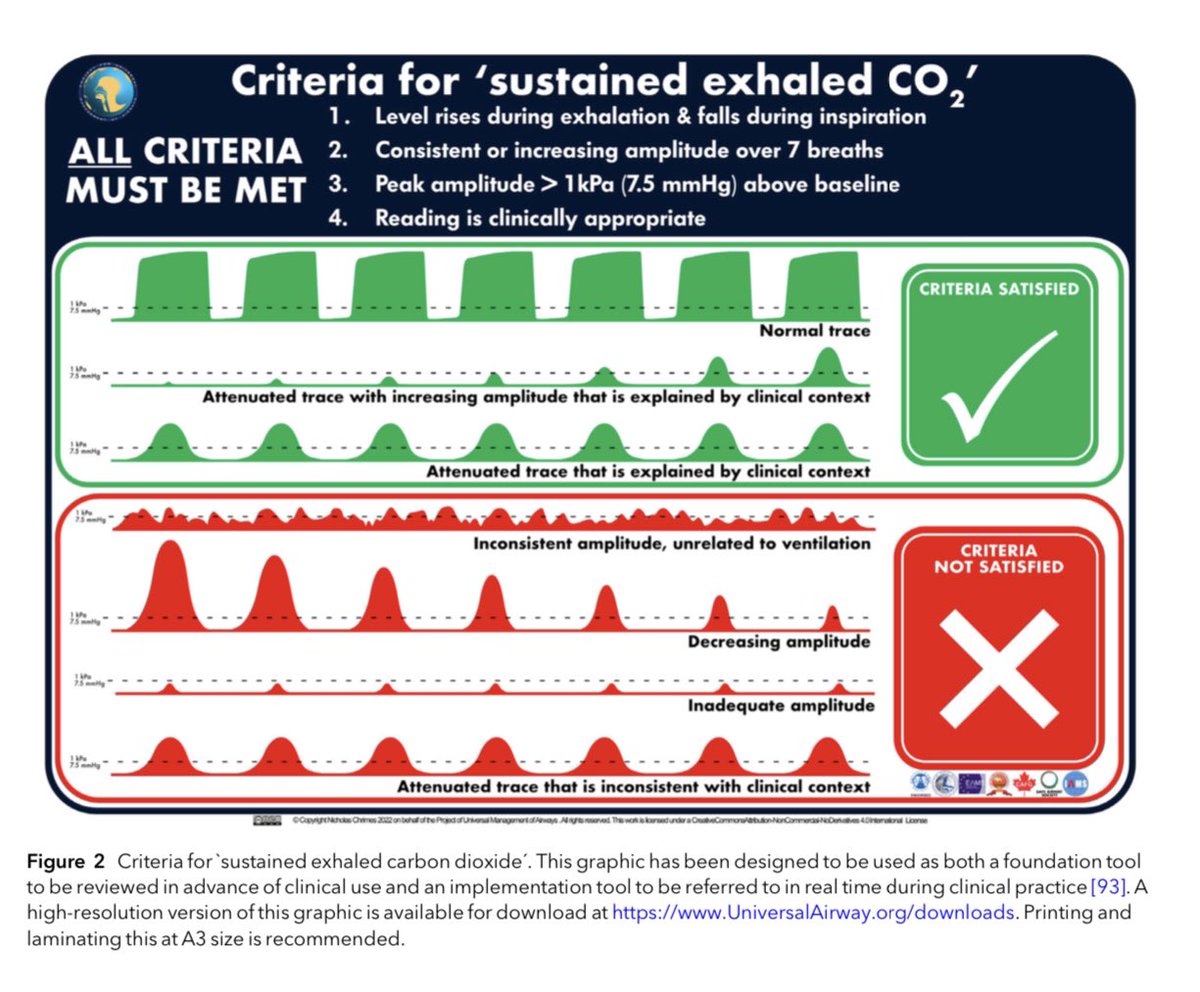
Avoiding unrecognised oesophageal intubation The @RCoA & @dasairway have agreed to drop ‘no trace wrong place’ The message now is that we need to exclude oesophageal intubation by identifying SUSTAINED EXHALED CO2 This requires 4 elements -CO2 rises & falls with respiration -sustained (non-fading, >7 cycles) -amplitude >1 KPa -clinically appropriate It replaces ‘no trace wrong place’ which is insufficient & therefore inadequate See these two updated webpages Sustained exhaled CO2 rcoa.ac.uk/safety-standar… Prevention of future deaths rcoa.ac.uk/safety-standar… @AAGBI @AndyHiggsGAA @NicholasChrimes
Tim Cook tweet media
English
9
74
143
16.9K
Fenton O'Leary
Fenton O'Leary@PEMDocSyd·
@DrSimonCraig @EM_VATA @jminardi21 I think it localises the pathology. DD still bacterial, inflamm, oncology, blood etc. so is helpful in my practice. I use it and with clinical exam may not do further imaging or bloods if family happy with wait and see approach
English
1
0
0
49
Simon Craig
Simon Craig@DrSimonCraig·
@EM_VATA @jminardi21 I suppose if that’s the case, is there much value in POCUS for a child with a limp?
English
2
0
0
28
Simon Craig
Simon Craig@DrSimonCraig·
We have been lucky enough to get some funding to look at children presenting to the ED with an acute limp. For those with #POCUS expertise, we are also hoping to incorporate some research on its role in these children.
English
3
2
6
931
Fenton O'Leary
Fenton O'Leary@PEMDocSyd·
@adamsonjon @DrSimonCraig @EM_VATA @cianmcdermott We see loads of kids with limp. Some are hips, some arent. So being able localise is useful. Classic exam findings of septic hip is rare. If no effusion then we look harder for other causes. If is effusion then we consider that aetiology
English
1
0
1
36
Simon Craig
Simon Craig@DrSimonCraig·
I’m keen to look at presence / absence of joint effusion However, interested in the opinions of those with more expertise… What else is reasonable to expect to be “routinely” documented by ED clinicians? Size / depth? Simple vs complex effusion? @EM_VATA @cianmcdermott
English
6
1
3
274
Fenton O'Leary retweetledi
Tanya
Tanya@GongGasGirl·
If you think AI is the answer to healthcare, you probably don’t work in healthcare. Well ok, maybe you work in healthcare but not the part where our patients are. ‘Diagnosis is easy. Disposition is war.’ Well said @Rick_Pescatore.
Dr. Rick Pescatore@Rick_Pescatore

AI just beat doctors on paper. 85% diagnostic accuracy. The press called it revolutionary. Cool. I was cleaning blood and vomit off a gurney at 2:43 AM. 🧵 What Silicon Valley still doesn’t understand about medicine:

English
4
2
11
1.4K
Fenton O'Leary retweetledi
The BMJ
The BMJ@bmj_latest·
BMJ finds inaccuracies in key studies for AstraZeneca’s blockbuster heart drug ticagrelor. Investigation finds evidence of serious misreporting, raising fresh doubts over the approval and decade long use of ticagrelor bmj.com/content/389/bm…
English
1
14
29
21.8K
Fenton O'Leary retweetledi
Damian Roland
Damian Roland@Damian_Roland·
This is a beautiful piece of writing about a tragic event and a powerful testimony of learning and courage in the face of uncertainty. Knowing the right thing to say to parents and caregivers in these situations can be an impossible challenge. I suspect I still get it wrong.
Archie Bland@archiebland

I wrote for the Guardian’s Saturday magazine about my son Max, who changed how I see the world. Took ages. More jokes after the first bit. Thanks @meropemills for being the most patient and generous editor. theguardian.com/lifeandstyle/2…

English
1
2
15
6.1K
Fenton O'Leary
Fenton O'Leary@PEMDocSyd·
@DrSimonCraig I cant see time from randomisation to drug ingestion. Outcome from time of randomisation interesting choice. Was there an analysis using time of ingestion of study drug as starting point?
English
1
0
1
12
Simon Craig
Simon Craig@DrSimonCraig·
A brief summary: 9-hospital RCT of children/adolescents (9-17 years) with acute severe behavioural disturbance where oral medications were deemed suitable. 176 randomised to diazepam 172 randomised to olanzapine 5 mg if <40 kg 10 mg if >40 kg
PEAChY_RCT@PeachyRct

Results are out! Oral olanzapine & diazepam were equally effective and both appear safe. 40% of patients did not achieve successful sedation. In 15% of cases, healthcare staff were exposed to verbal or physical aggression. More research is required to guide effective therapies.

English
3
1
7
591