
PHENIX
119 posts


PHENIX
@PHENIXCTO
TAPROOT ASSETS 凤一其随 TAPROOT ASSETS(主根资产)协议钱包@Bitlongwallet 交易直达 TP钱包 binance WEB3钱包 OKX WEB3钱包 https://t.co/pm52IeJRgN 加入社区:https://t.co/KZNLYdpusK
Katılım Ağustos 2024
97 Takip Edilen1K Takipçiler

𝗗𝗜𝗗 𝗬𝗢𝗨 𝗞𝗡𝗢𝗪? 🧠
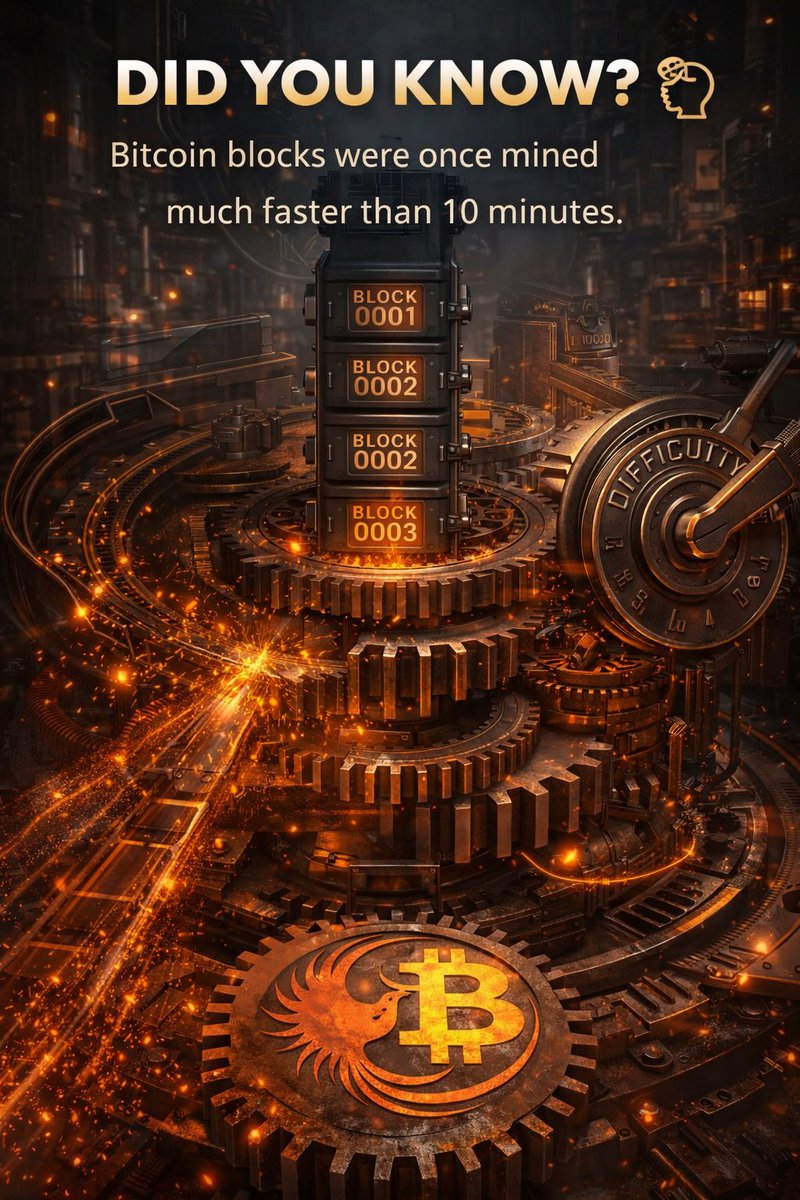
Bitcoin blocks were once mined
much faster than 10 minutes.
When Bitcoin first launched in 2009,
very few miners were participating.
Because of this,
blocks were sometimes found
in just a few seconds.
Bitcoin adjusts its mining difficulty
every 2016 blocks
to keep the average block time
close to 10 minutes.
As more miners joined the network,
the difficulty increased -
stabilizing Bitcoin’s
predictable block rhythm.
#Phenix #LNT
English
𝗗𝗜𝗗 𝗬𝗢𝗨 𝗞𝗡𝗢𝗪? 🧠
In Bitcoin’s early days,
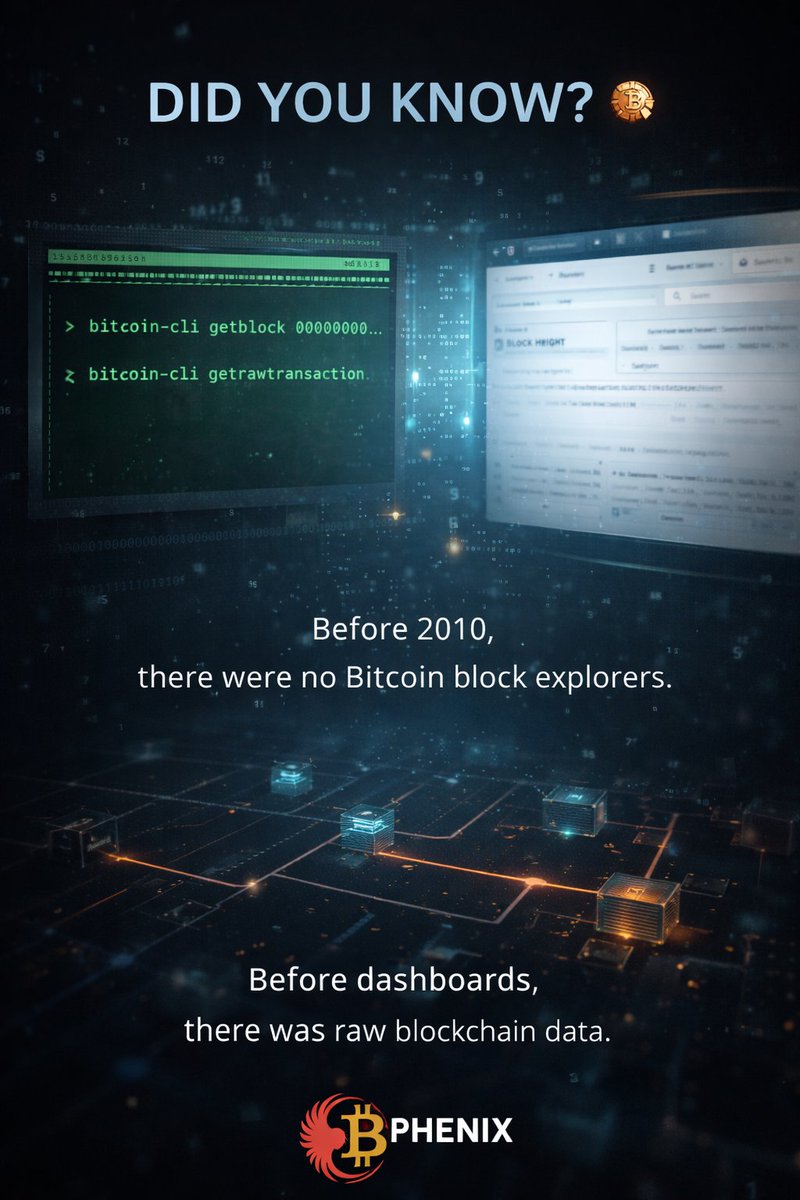
there was no block explorer.
If you wanted to verify
a transaction or block,
you had to run a full node
and inspect the blockchain
manually through the client.
There were no websites,
no dashboards,
no search bars.
Just raw data.
The first public Bitcoin
block explorer
only appeared in 2010,
making blockchain activity
visible to the world
for the first time.
Before that,
Bitcoin’s ledger existed
almost entirely
in the shadows.
#phenix #btc
English
𝗗𝗜𝗗 𝗬𝗢𝗨 𝗞𝗡𝗢𝗪? 🧠
In the earliest versions of Bitcoin,
every node on the network
received every transaction.
There were no lightweight wallets,
no simplified verification,
and no mobile clients.
To use Bitcoin,
you had to download the entire blockchain
and verify every block yourself.
This meant every participant
was also helping secure the network.
Later,
a feature called
Simplified Payment Verification (SPV)
was introduced.
It allowed lightweight wallets
to verify transactions
without downloading the full blockchain.
This idea was described
in the original Bitcoin whitepaper.
It helped make Bitcoin
usable for millions of people.
#Phenix #BTC

English
𝗗𝗜𝗗 𝗬𝗢𝗨 𝗞𝗡𝗢𝗪? 🧠
For the first 4 years of Bitcoin,
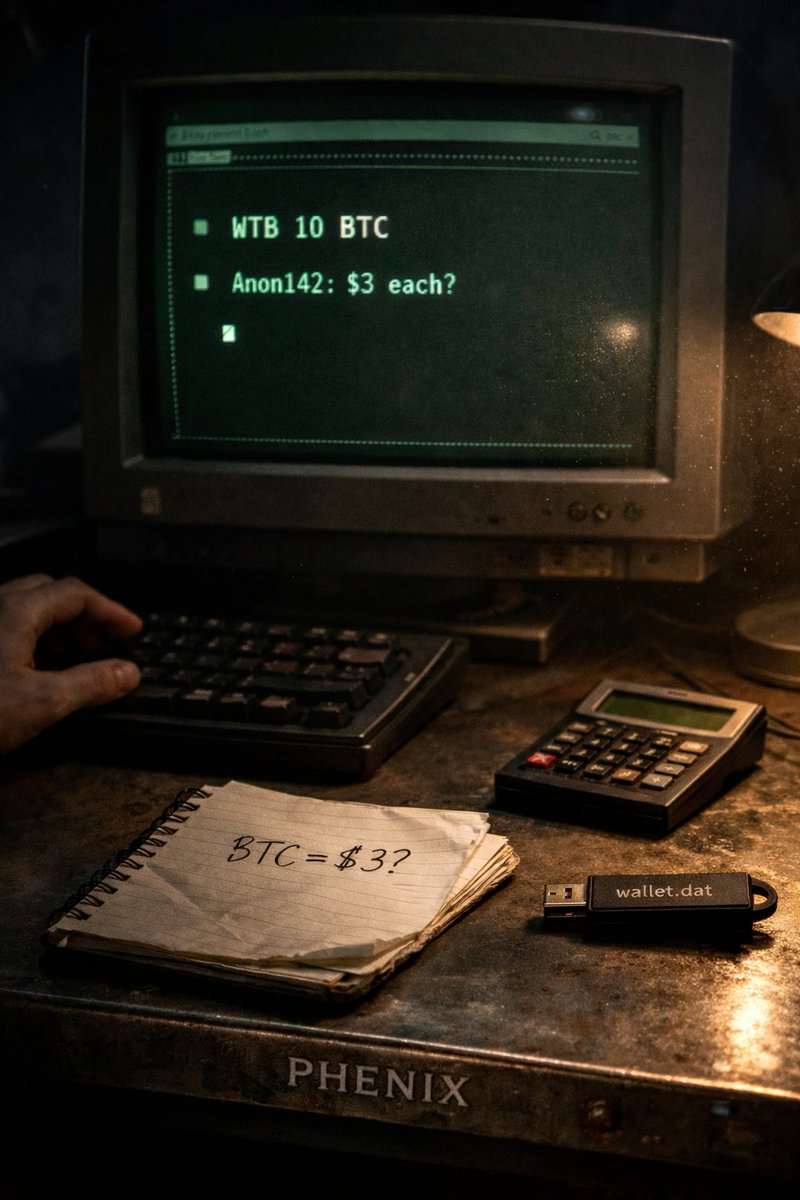
there was no market price API.
No CoinMarketCap.
No price widgets.
No portfolio trackers.
If you wanted the price
you had to manually check forums
or IRC channels
where people negotiated trades.
Bitcoin wasn’t tracked.
It was discovered.
There was no “number going up” culture.
Only builders.
Only believers.
Before charts,
there was conviction.
#phenix #btc
English
𝗗𝗜𝗗 𝗬𝗢𝗨 𝗞𝗡𝗢𝗪? 🧠
Bitcoin’s first version
did not include a block reward halving schedule
written in plain numbers.
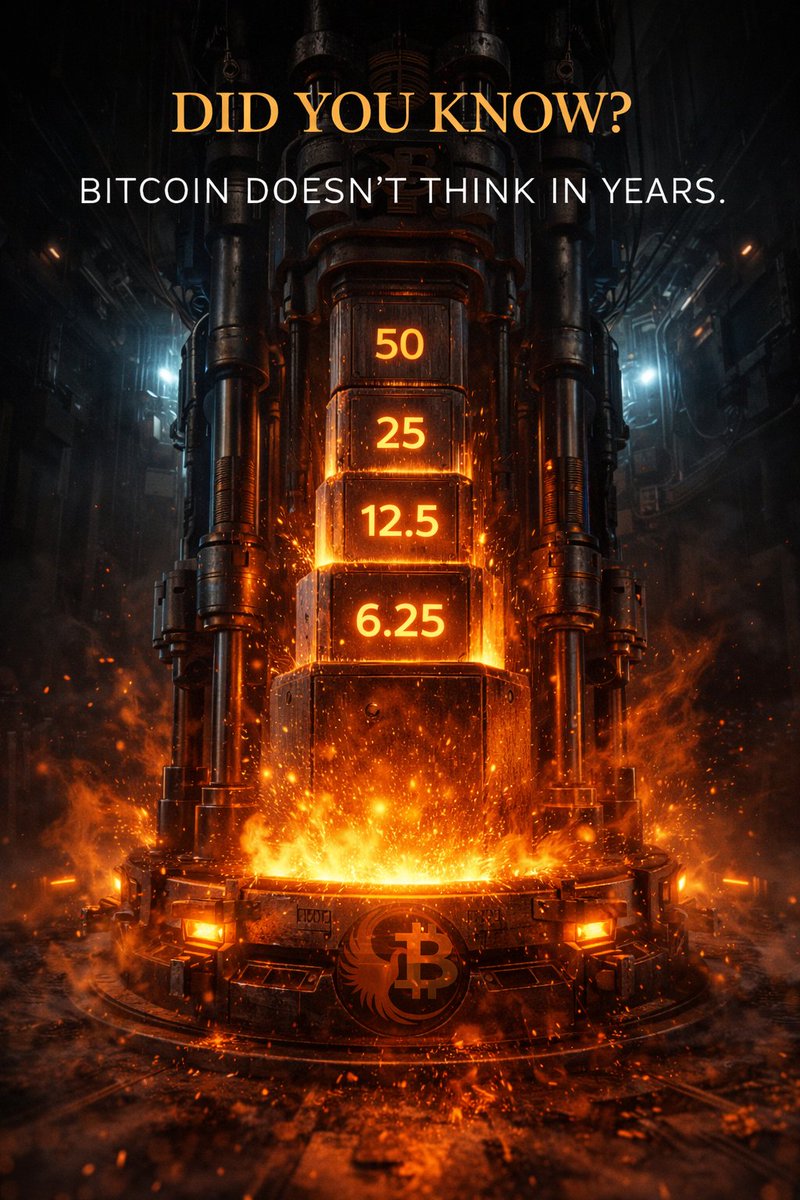
Instead of saying “halve every 4 years,”
Satoshi coded it as:
Subsidy >> (block_height / 210,000)
The reward wasn’t described in years.
It was described in bit-shifting logic.
Bitcoin doesn’t think in time.
It thinks in blocks.
The halving isn’t calendar-based.
It’s purely mathematical.
From day one,
Bitcoin measured scarcity
by computation
not by dates.
#Phenix #BTC
English
𝗗𝗜𝗗 𝗬𝗢𝗨 𝗞𝗡𝗢𝗪? 🧠
In Bitcoin’s early days,
the smallest unit wasn’t called
a “satoshi.”
It was called a “cent.”
In the original Bitcoin source code,
1 BTC was divided into
100,000,000 smaller units
but the term “satoshi”
did not exist yet.
The name “satoshi”
was suggested later
on the Bitcointalk forum
by community members.
Even Bitcoin’s smallest unit
was named by the community
not by Satoshi himself.
Bitcoin didn’t just decentralize money.
It decentralized identity.
#btc #phenix

English

𝗗𝗜𝗗 𝗬𝗢𝗨 𝗞𝗡𝗢𝗪? 🧠
In Bitcoin’s first year,
mining rewards were often ignored.
Because BTC had no market price,
many early miners didn’t bother
backing up their wallets.
When computers crashed
or hard drives failed,
the coins were simply lost.
There was no recovery.
No password reset.
No support desk.
It’s estimated that millions of BTC
from the early years
are permanently inaccessible.
Scarcity wasn’t just coded.
It was accelerated by accidents.
#Phenix #BTC

English
𝗗𝗜𝗗 𝗬𝗢𝗨 𝗞𝗡𝗢𝗪? 🧠
Bitcoin once had a block with
NO transactions.
Block 1 contained only the
50 BTC block reward.
No transfers.
No users.
Just the beginning.
In its earliest days,
there was nothing to send -
because almost no one was there yet.
Every global network
starts somewhere.
#phenix #btc

English
𝗗𝗜𝗗 𝗬𝗢𝗨 𝗞𝗡𝗢𝗪? 🤔
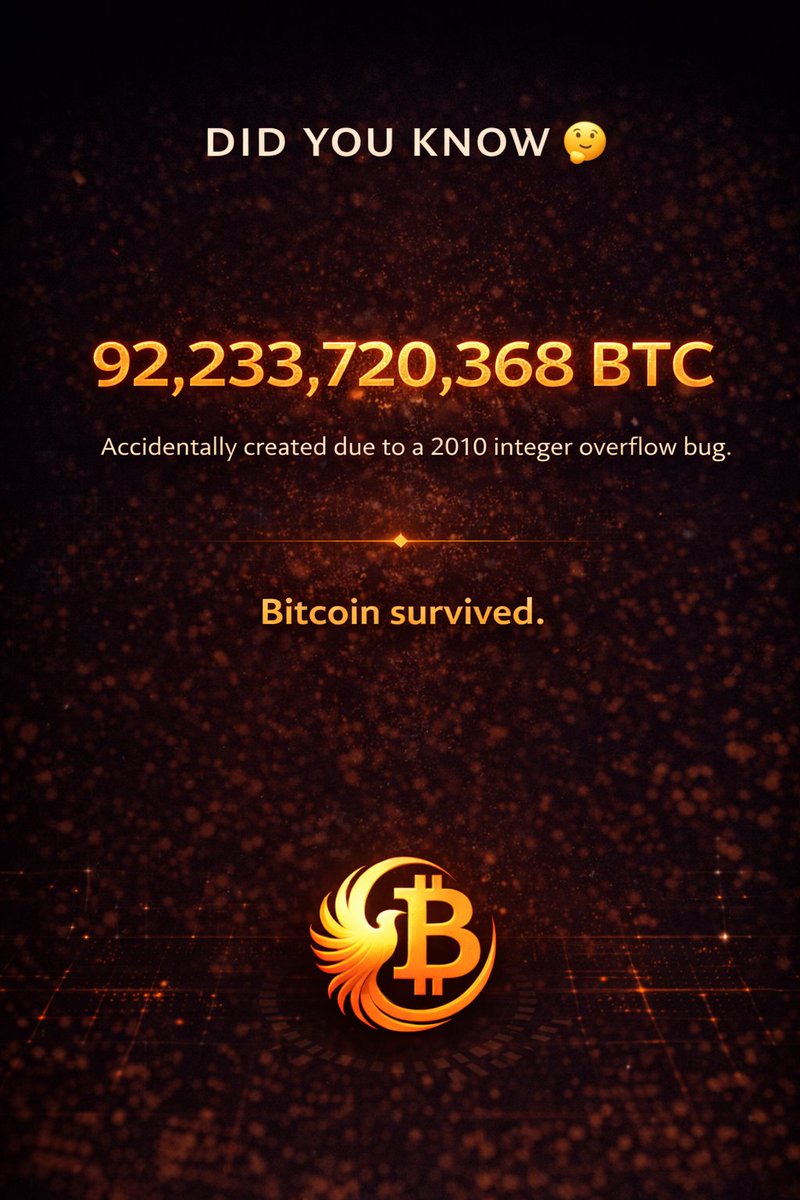
In 2010, someone accidentally sent 92 BILLION BTC in a single transaction.
Yes — 92,233,720,368 BTC.
This happened due to an integer overflow bug in early Bitcoin code.
Within hours, Satoshi Nakamoto and developers identified the bug, rolled out a patched version, and the network performed one of the only emergency hard forks in Bitcoin history to fix it.
The invalid transaction was erased.
The supply was restored.
Bitcoin survived.
This event proved something powerful:
Bitcoin is antifragile.
Even critical bugs couldn’t stop it.
#BitcoinHistory #DidYouKnow #phenix
English
🧠 DID YOU KNOW?
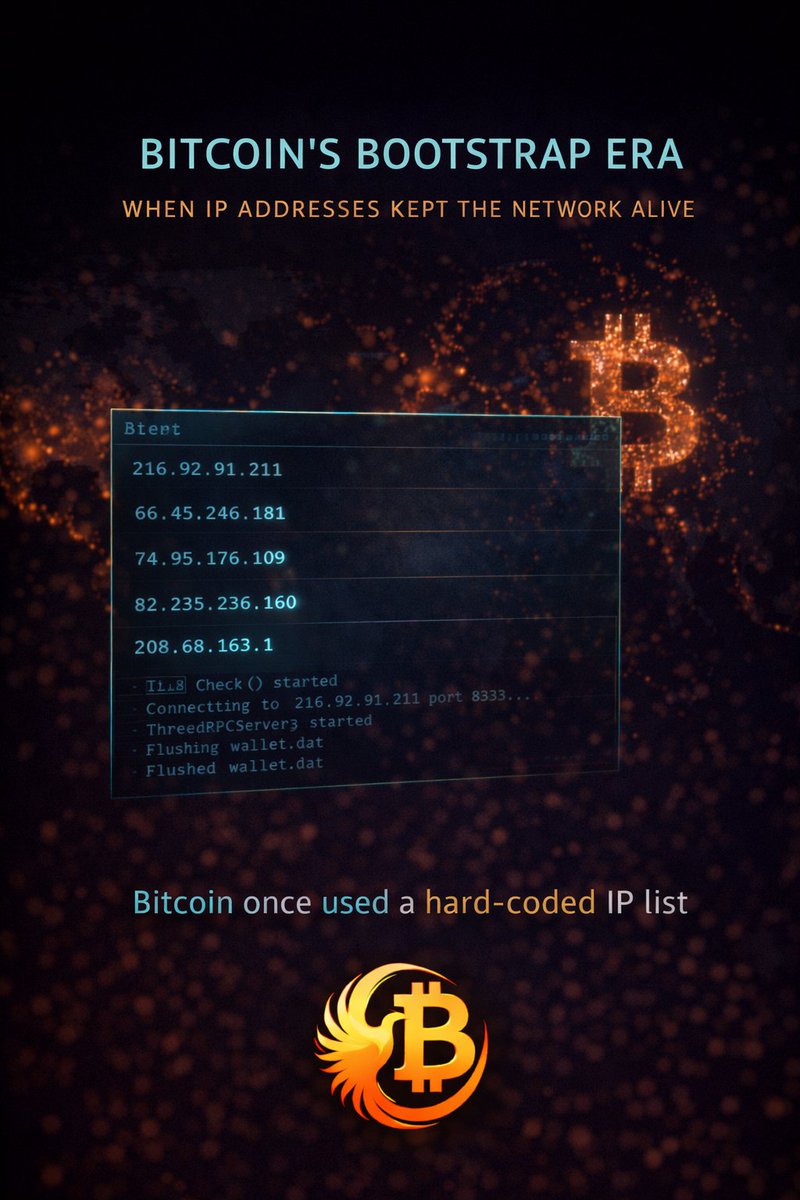
Bitcoin once relied on a hard-coded IP address list to survive.
In Bitcoin’s earliest days, there were no DNS seeds, no explorers, and no discovery services.
To help new nodes find the network, early Bitcoin clients shipped with a fixed list of IP addresses embedded directly into the software.
These IPs pointed to known nodes run by early contributors.
If those nodes went offline, new users could struggle to connect.
This fragile system later evolved into DNS seed nodes, making Bitcoin far more resilient and decentralized.
Early Bitcoin wasn’t just code - it was held together by trust, experimentation, and a handful of machines keeping the network alive.
📡 From hard-coded IPs to global decentralization - Bitcoin grew the hard way.
#Phenix
English
🧠 DID YOU KNOW?
Bitcoin originally relied on Internet Relay Chat (IRC) to find other nodes.
In Bitcoin’s early days (2009–2010), there were no DNS seed servers.
Instead, new Bitcoin nodes connected to a public IRC channel to discover peers.
How it worked:
• A node would join an IRC room
• It would announce its IP address
• Other nodes would connect manually through that list
Why this mattered:
• It made Bitcoin vulnerable to censorship
• IRC servers were centralized points of failure
• Governments or ISPs could monitor or block access
What changed:
• IRC bootstrapping was removed
• DNS seeds were introduced
• Bitcoin became far more decentralized and resilient
This quiet shift helped Bitcoin survive long-term
moving from an experimental network to a global system.
No hype.
Just infrastructure evolution.

English
🧠 DID YOU KNOW?
Bitcoin once accepted invalid cryptographic signatures.
Before 2015, Bitcoin nodes were lenient when checking ECDSA signatures.
Some signatures were technically invalid,
but still accepted by the network.
This was risky because different nodes
could interpret the same transaction differently.
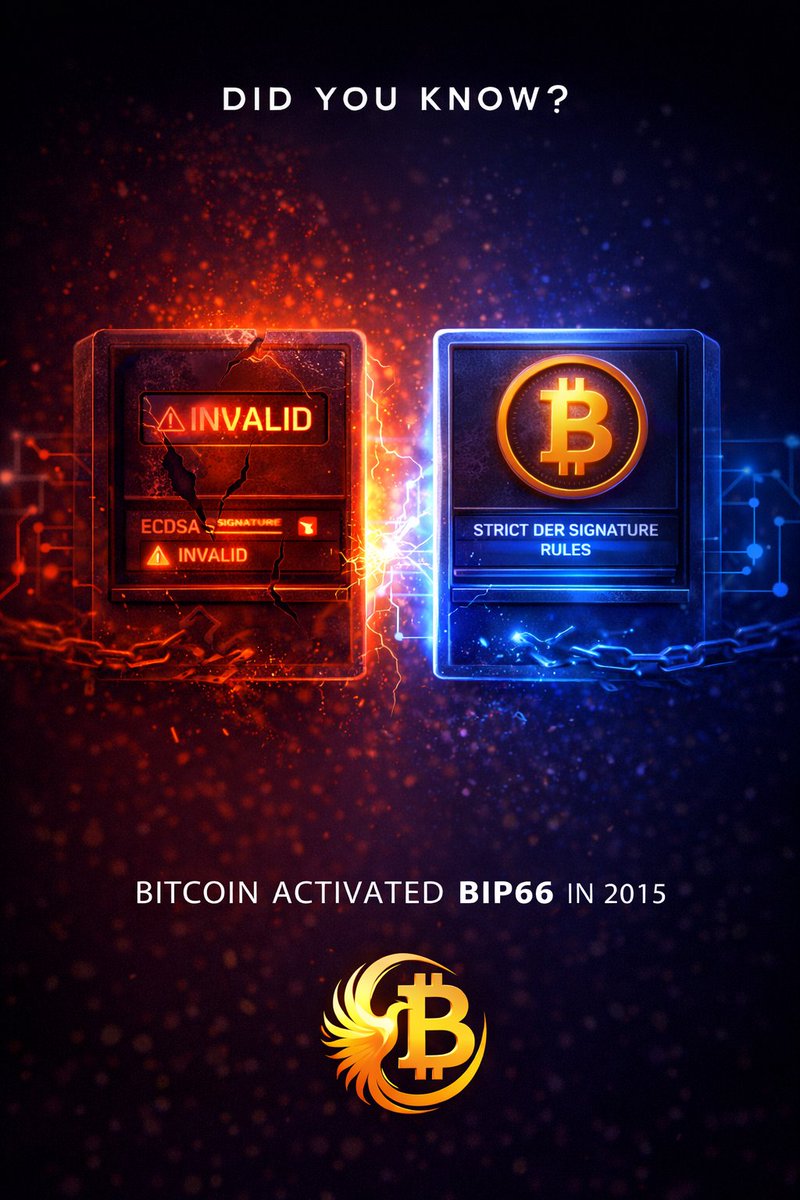
In 2015, Bitcoin activated BIP66,
a soft fork that enforced strict DER signature rules.
After that upgrade:
Invalid signatures were rejected
Consensus became more predictable
Security and reliability improved at the protocol level
No headlines.
No drama.
Just Bitcoin quietly hardening itself.
#Phenix #BTC
English
Did you know?
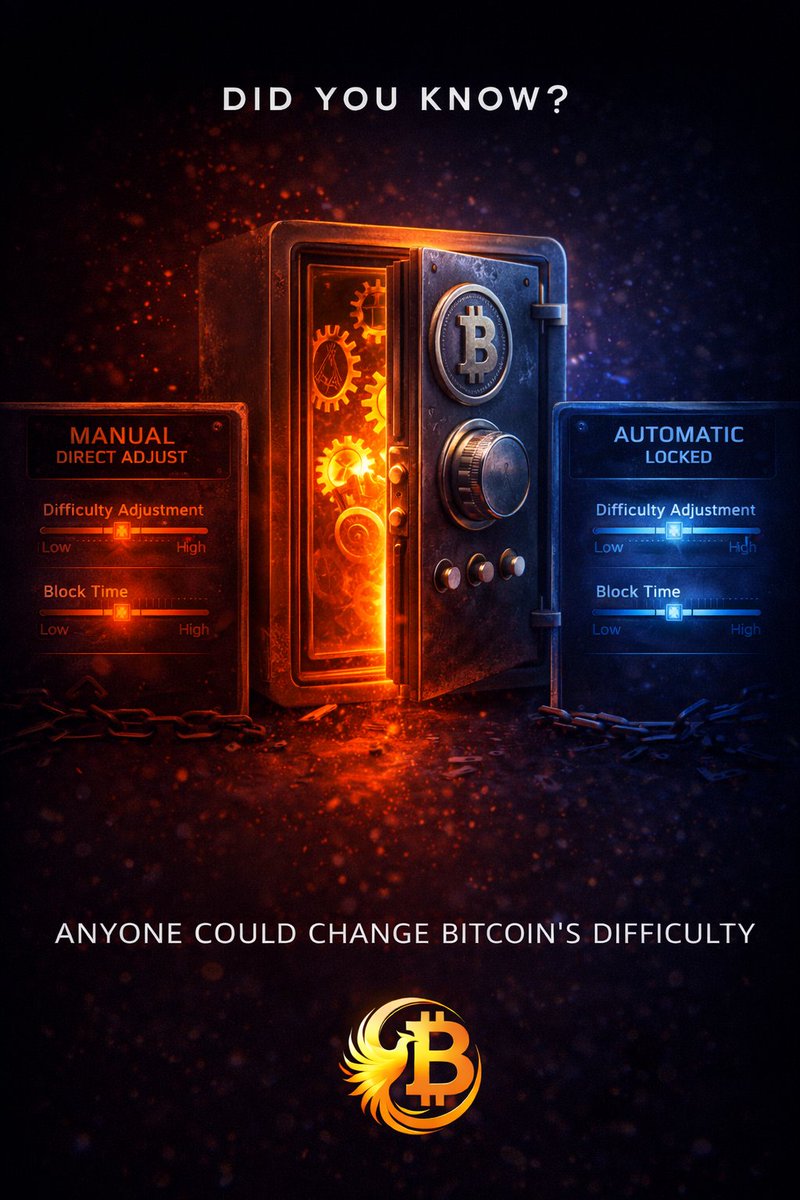
Bitcoin originally allowed anyone to change the mining difficulty.
In Bitcoin’s earliest code, difficulty adjustment parameters
were not as tightly protected as they are today.
This was not a vulnerability - it was intentional.
Satoshi expected rapid experimentation and manual intervention
while the network was small and fragile.
As Bitcoin grew, those controls were permanently locked down,
making difficulty adjustment fully automatic and predictable.
That transition marked Bitcoin’s shift
from an experimental system
to a self-governing monetary network.
#Phenix #BTC
English
𝗗𝗶𝗱 𝘆𝗼𝘂 𝗸𝗻𝗼𝘄? 🧠
𝗘𝗮𝗿𝗹𝘆 𝗕𝗶𝘁𝗰𝗼𝗶𝗻 𝗱𝗶𝗱𝗻’𝘁 𝘂𝘀𝗲 𝗮𝗱𝗱𝗿𝗲𝘀𝘀𝗲𝘀 𝗮𝘁 𝗮𝗹𝗹.
In Bitcoin’s first blocks, payments were sent directly
to public keys, not to Bitcoin addresses.
This method is called Pay-to-Public-Key (P2PK).
Later, Bitcoin quietly shifted to Pay-to-Public-Key-Hash (P2PKH),
which hides the public key until coins are spent,
adding an extra layer of privacy and security.
That early design choice is why some of the oldest bitcoins
can be traced differently on the blockchain today.
Even Bitcoin’s “address” system evolved after launch.
#PHENIX #BTC

English
𝗗𝗶𝗱 𝘆𝗼𝘂 𝗸𝗻𝗼𝘄? ⛓️
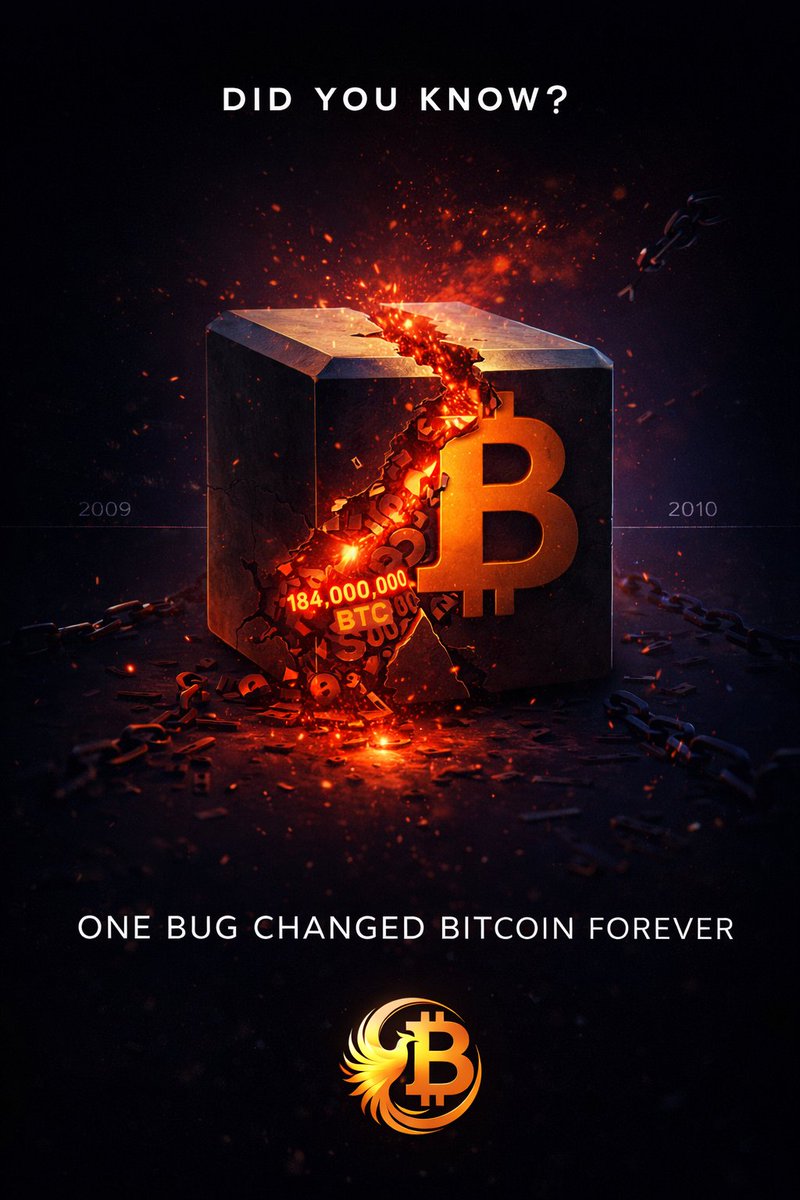
𝗕𝗶𝘁𝗰𝗼𝗶𝗻 𝗼𝗻𝗰𝗲 𝗵𝗮𝗱 𝗡𝗢 𝗯𝗹𝗼𝗰𝗸 𝘀𝗶𝘇𝗲 𝗹𝗶𝗺𝗶𝘁.
In Bitcoin’s earliest days, blocks had no enforced size restriction at all.
In 2010, a critical bug allowed a single transaction to create over
184 billion bitcoins, far exceeding the 21 million supply rule.
Satoshi and early developers reacted fast -
the blockchain was rolled back and a block size limit was introduced
to prevent similar attacks.
That emergency fix later became the famous 1MB block limit,
shaping years of scaling debates and Bitcoin’s conservative design philosophy.
One bug permanently changed how Bitcoin grows.
#Phenix #BTC
English
Did you know?
Before Bitcoin had blocks, miners, or a price,
it had a website.
On August 18, 2008, the domain bitcoin.org was registered.
This happened months before the Bitcoin whitepaper was released.
That website later became the first public home of Bitcoin, where people could:
• Read the Bitcoin whitepaper
• Learn how Bitcoin works
• Download early Bitcoin software
Bitcoin didn’t start on exchanges.
It didn’t start with hype.
It started quietly with a single domain name,
waiting to change the world.
#Phenix #BTC

English
🧠 DID YOU KNOW?
Bitcoin did not start mining immediately after it was released.
When Bitcoin v0.1 was published in January 2009, the software would not begin producing blocks unless another node was connected.
This meant Bitcoin required real peer participation before consensus could exist.
Satoshi Nakamoto didn’t design Bitcoin to mine alone.
It was built to function as a network from the very first block.
Mining without peers had no meaning.
Consensus without others had no value.
From day one, Bitcoin was not a solo system -
it was a distributed one.
#Phenix #BTC

English