
Sabitlenmiş Tweet
PIPO.new
227 posts

PIPO.new
@PIPOnew_
Wall Street has walls. We have blockchain. Now we broke the wall. You trade SpaceX with $100 on @BNBCHAIN 🚀
Mars Katılım Nisan 2022
134 Takip Edilen798.7K Takipçiler
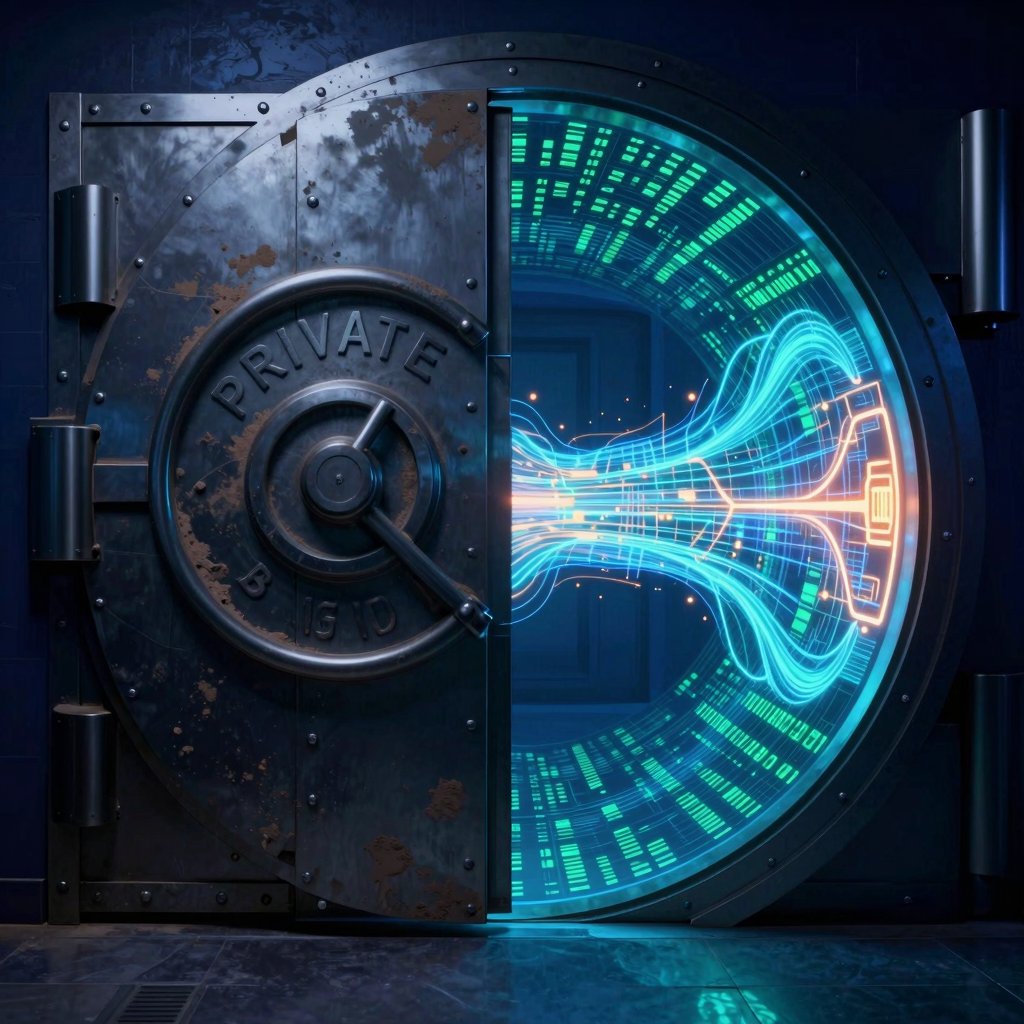
所有人都在问"什么时候买"。 几乎没人问"我卖给谁"。
在你入金之前,必须回答三个关于退出流动性的问题:
1/ 形式——AMM、订单簿、还是挂单?
AMM:任何流动性上都能成交,底池小也行。
订单簿:需要做市商铺单,流动性可被操控。
挂单(如NFT/铭文):不需要准备流动性,只需有人出价。
不知道谁在给你提供退出流动性?那你就是流动性本身。
2/ 来源——LP、机器人、还是散户?
机器人占比高不代表市场假——代表策略已成熟到自动化统治。散户手动交易占比其实很小。你的对手盘大概率是一台机器。
3/ 动机——策略收益、手续费、还是投机? 只要策略的风险收益足够好、容量足够大,就一定有人提供流动性。策略会扩大,直到收益风险比下降到不值得。
收割的前提不是看K线:理解流动性模型
知道流动性提供者是谁
知道他们为什么提供
设计符合他们偏好的产品
中文
Why has every "better fair-launch launchpad" that challenged Pump failed?
Because they weren't even competing on the same plane.
Pump's business isn't "helping you launch tokens." Pump's business is maximizing trading volume on its Bonding Curve. Its moat isn't code, brand, or first-mover advantage.
The moat is the bot ecosystem.
An entire bot liquidity ecosystem has been built around Pump — sniping bots, copy-trading bots, MEV bots. These bots aren't parasites. They ARE the liquidity.
The copycat's fatal flaw: can't share Pump's bot liquidity. Must build ecosystem from zero. But bots follow profit, not narrative.
Flip side: why does launching directly on Meteora/Raydium sometimes outperform copycats? Because DEXs share existing launch-sniping bots and their liquidity.
One insight: don't fork the product. Fork the liquidity ecosystem. Products can be copied in a day. Liquidity ecosystems take an entire market cycle.
Always remember: operators are here to make money. Calculate Profit at its maximum, never at zero.
English
这一代人最大的财富机会,98%被锁在你看不见的地方。
>Anthropic 刚以 $3800亿 估值完成 $300亿 融资。 OpenAI 正在推进 $8300亿 估值的 $1000亿 融资。 两家加起来,$1.2万亿
—— 全部在私募市场。
>但全球独角兽市值中,只有约2%在二级市场流通。
>这意味着:
→ 你可以每天聊AI
→ 你可以每小时用ChatGPT、Claude、Gemini
→ 但你一股都买不到
>我们这代人最大的造富运动正在发生。 而99%的人,只能隔着玻璃看。
>这就是 PIPO 要解决的问题。 100美元起投。7×24流动性。真实独角兽敞口。
>墙是真的。我们在造门。
>#PIPO #AI #私募市场
中文
98% of unicorn value is locked behind closed doors.
>Anthropic just raised $30B at a $380B valuation. OpenAI is pushing for $100B at $830B. Together, that's $1.2 TRILLION — in private markets alone.
>Yet only ~2% of global unicorn market cap trades on secondary markets.
>That means:
→ You can talk about AI all day
→ You can use ChatGPT, Claude, Gemini every hour
→ But you can't own a single share
>The biggest wealth creation event of our generation is happening right now. And 99% of people are watching from the outside.
>This is the problem PIPO was built to solve. $100 entry. 24/7 liquidity. Real unicorn exposure.
>The wall is real. We're building the door.
#PIPO #AI #PrivateMarkets
English
Every downturn, someone yells "we need to onboard Web2 users."
Question:
How many casino-goers understand slot machine math?
How many can play baccarat?
Learning those is harder than learning crypto
— yet casinos never had an "adoption problem."
Because casinos offer an irreplaceable solution to an irreplaceable need.
You came to win money.
To win, you learn the house rules.
It's Mass Admission, not Mass Adoption.
The casino lets you in to gamble
— it doesn't bend to your daily habits.
Crypto growth = cultivating high-frequency players and whales.
We don't lack users. Existing users just stopped betting.
English
Crypto has only two scarce resources:
liquidity and screen time.
Every great narrative is an arbitrage narrative.
BTC mining = energy arbitrage.
Hyperliquid = regulatory arbitrage.
Pump = screen-time arbitrage
— turning every minute you'd spend scrolling Twitter into a 100x leveraged launch.
Arbitrage value = asymmetry × market size × leverage multiplier.
If you can't answer "whose value am I capturing, what's the asymmetry, how big is the gap?"
— stop building.
English
exposes Ponzi mechanics: dividend, mutual aid, split — all low cost capital aggregation with intentional mismatch.
Industrialized scamming: 10 min deploy, 2 days marketing, 3 days exit. Optimizing exit costs while we optimize existence costs — real companies, real cashflow, real liquidity.
The only thing that can't be rugged is reality.

English

In 2025, the top 10 private companies are worth over $1 Trillion.
You can't buy a single share.
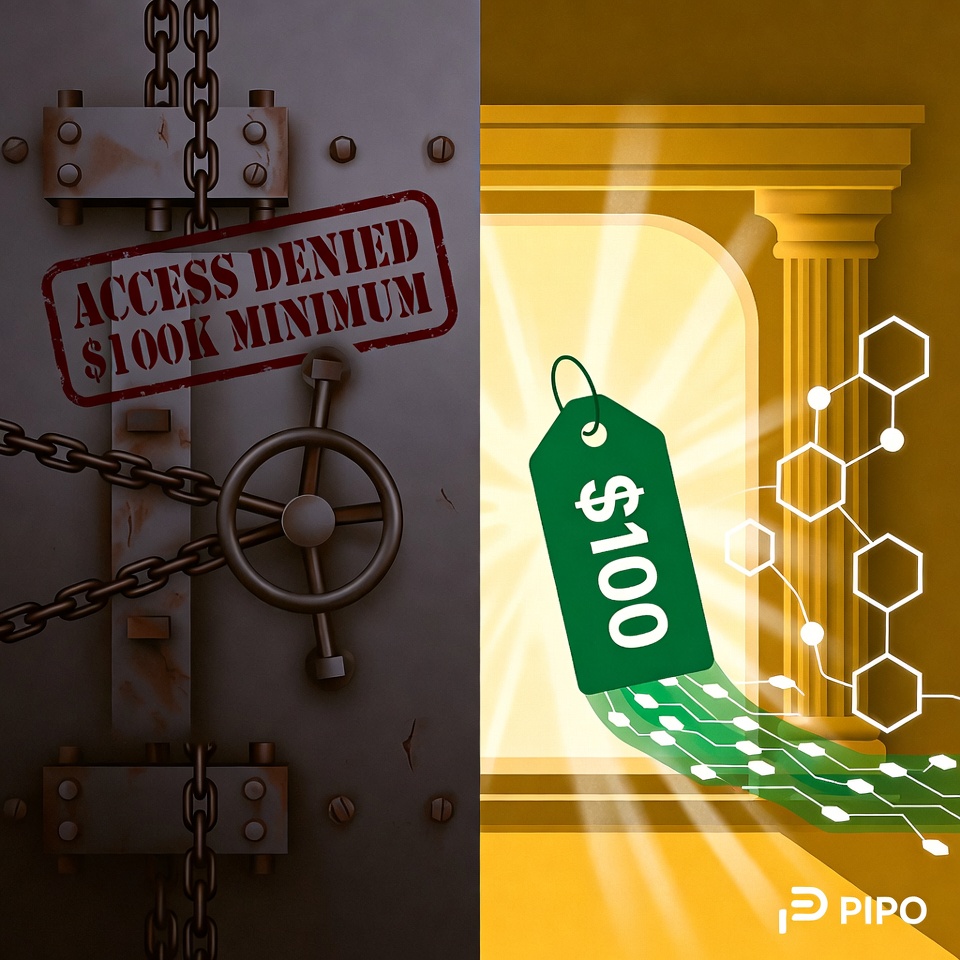
Traditional private market: $100K minimum. Accredited investors only. 3-month settlement.
The point of DeFi isn't to create more meme coins.
It's to tear down this wall.
PIPO: Pre-IPO warrants starting at $100.
100% collateral-backed. On-chain settlement.
Which company would you invest in first?
👇
SpaceX 🚀 OpenAI 🤖 Stripe 💳
English
A counter-intuitive observation:
Crypto's biggest innovation isn't decentralization.
It's turning financial tools that used to belong only to the rich into tools everyone can use.
BTC → anyone can hold digital gold
Uniswap → anyone can be a market maker
Aave → anyone can lend and borrow
But one area hasn't been cracked:
Private markets.
The most valuable companies in the world — SpaceX, OpenAI, Stripe —
are all private.
Retail can't even get to the door.
DeFi's next big narrative isn't more chains or more L2s.
It's putting the $100 retail investor and the $1M institution in the same market.
That's what PIPO is building.
English
@Damisoweb3 Absolutely agree! It's crucial that "RWA" evolves to reflect true value and security in assets. Let's push for real transparency and verifiability in this space!
English

@PIPOnew_ The narrative is easy. The infrastructure is hard.
“RWA” should mean verifiable assets, enforceable custody, and transparent reserves not just a tokenized story.
English
"RWA" has become the most abused narrative in crypto.
Most RWA projects:
→ Tokenize a PDF and call it "real assets"
→ No actual custody
→ No proof of reserves
→ No legal recourse
→ Just a token with a story
The bar for "real" in Real World Assets should be:
✅ Identifiable underlying asset
✅ Regulated custody entity
✅ Third-party audits
✅ On-chain proof of reserves
✅ Legal settlement framework
If your "RWA" protocol can't check all five, it's just another narrative token.
PIPO checks all five.
That's the point.

English
共识的虚妄与价值的重构
大多数所谓的“社群共识”,不过是资金盘在不同阶段的变体。 分红盘卖的是预期,互助盘卖的是流水,拆分盘卖的是泡沫。
当前的 AI 社交实验中,我们看到无数“幽灵国王”凭借刷票和机器人共识筑起神坛,随后在流动性撤退时轰然倒塌。这不是革命,这只是传统庞氏的 AI 自动化版本。 PIPO 的逻辑不同:我们不玩“Ghost Karma”。
我们专注于将那些真实存在的、具备结构性价值的独角兽股权资产,从封闭的流动性孤岛中解放出来。 真正的共识不应该建立在虚拟的点赞上,而应该建立在资产流动性的底层协议之上。
摒弃虚假的高潮,回归价值的本源。
中文
Most so-called "community consensus" is merely a variant of Ponzi schemes at different stages. Dividend schemes sell expectations, Mutual Aid schemes sell cash flow, and Split schemes sell bubbles.
In current AI social experiments, we witness countless "Ghost Kings" ascending thrones built on bot-driven consensus, only to collapse violently when liquidity retreats. This is not a revolution; it is simply the AI-automated version of a traditional Ponzi.
PIPO’s logic is different: We don’t play "Ghost Karma." We focus on liberating unicorn equity assets—those with real structural value—from closed liquidity islands. True consensus should not be built on virtual likes, but on the underlying protocols of asset liquidity.
Discard the fake hype; return to the source of value.
English