Piers Gooding

8.3K posts

Piers Gooding banner
Piers Gooding

Piers Gooding

@P_Gooding

Socio-legal academic @latrobelaw, ARC DECRA Fellow, Honorary Fellow @MDI_unimelb // Disability & health-related law & politics // sometimes muso

Wurundjeri Lands, Melbourne Katılım Ağustos 2011
4.1K Takip Edilen3.7K Takipçiler
Sabitlenmiş Tweet
Piers Gooding
Piers Gooding@P_Gooding·
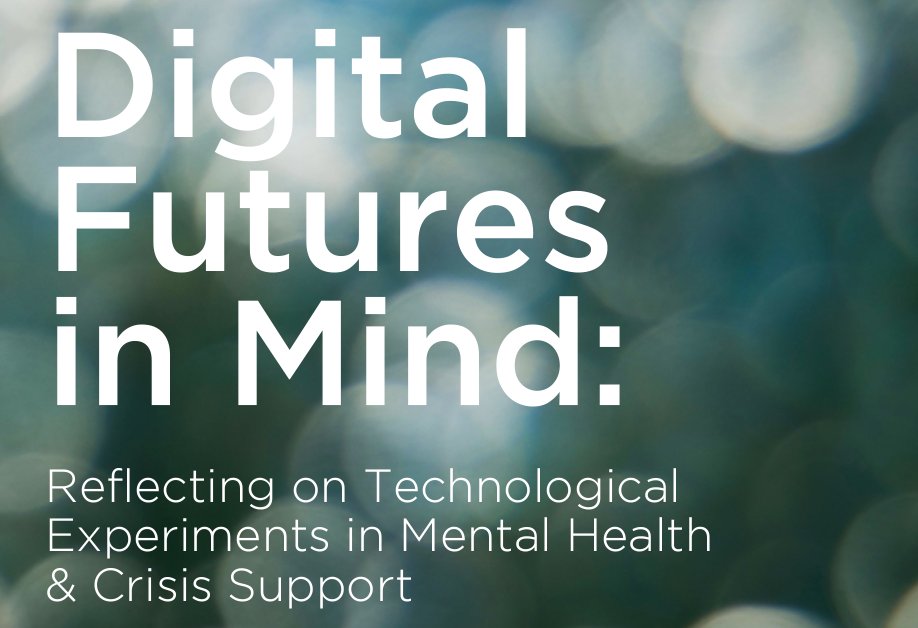
A web-based version of our Digital Futures in Mind report is now available for anyone interested in (a more web-friendly read about) the politics, law, & ethics of tech experiments in the mental health context piersgooding.github.io/digital-future…
Piers Gooding tweet media
English
0
12
20
6.6K
Piers Gooding
Piers Gooding@P_Gooding·
“Employers are offering digital mental health tools to build ‘more resilient’ workplaces. But many [such] tools could be making misleading claims and pose serious risks to sensitive user data. And they cannot be a magic fix for deep-rooted systemic issues” sanitybytanmoy.com/workplace-ment…
English
0
0
1
43
Piers Gooding retweetledi
Christopher Rudge
Christopher Rudge@chrisrudge·
New on Welfare Law in Australia: Darren O'Donovan on the first tribunal case to engage with Chaplin — now headed to High Court. The Department argued it could raise $49k in debts against a couple, ignoring evidence they were underpaid by $156. The Panel set the debts aside. 🔗👇
Christopher Rudge tweet media
English
2
5
4
707
Christopher Rudge
Christopher Rudge@chrisrudge·
My interview with Sally Sara on ABC RN Breakfast this morning on the NACC's Operation Myrtleford Robodebt report — the findings of corrupt conduct, why criminal prosecution is now implausible, and what has been delivered versus hoped for amongst those affected. #robodebt #nacc
English
3
32
53
2.6K
Piers Gooding
Piers Gooding@P_Gooding·
Interesting complement to coercion-reduction research in mental healthcare, a Japanese paper looking at: 'Experiences Contributing to Personal Agency During Acute Psychiatric Hospitalization: A Qualitative Descriptive Study Using Focus Group Interviews.' …fonline-com.ez.library.latrobe.edu.au/doi/pdf/10.108…
English
0
0
1
64
Piers Gooding
Piers Gooding@P_Gooding·
@williamcrisp7 Sounds like the NDIA is spending a lot of money trying to discourage people from reaching the ART with their request for review of NDIS funding decisions. I assume NDIA decision makers see the outlay on lawyers as worth the long term plan savings.
English
0
0
0
7
William Crisp
William Crisp@williamcrisp7·
@P_Gooding Finally the law catches up with reality but it sounds like an expensive decision- law makers won't like it
English
1
0
0
19
Piers Gooding
Piers Gooding@P_Gooding·
"The Federal Court has made an "extremely significant" ruling by ordering the agency that runs the National Disability Insurance Scheme (NDIS) to fund a participant's mobility scooter..." abc.net.au/news/2026-03-0…
English
1
2
1
77
Piers Gooding
Piers Gooding@P_Gooding·
"In handing down her decision, Justice Lisa Hespe warned the NDIA against being too "prescriptive" when making decisions on participants' supports and those decisions needed to involve "logic" and "common sense"."
English
0
0
0
25
Piers Gooding
Piers Gooding@P_Gooding·
"Somebody isn't just a bundle of disabilities or diagnoses, but instead a whole person and that whole person is what the NDIS needs to be taking into account when it looks at what their needs are."
English
2
0
0
41
Piers Gooding retweetledi
Rod
Rod@rodjnaquin·
I'm closely following new research showing a troubling gap in AI education tools. A 2026 MIT study gave students identical feedback—some told it was from their TA, others told it was AI. Both groups said the feedback was equally good, but students who thought a real person wrote it worked significantly harder afterward. The takeaway: even high-quality AI feedback fails to motivate students the way human attention does. Students need to feel seen by a real person to stay engaged and persist through challenges. open.substack.com/pub/drphilippa…
Rod tweet media
English
12
106
738
42K
Piers Gooding
Piers Gooding@P_Gooding·
"Without a process for defining efficacy and safety, both the public and the provider community have found it difficult to navigate the world of apps and online therapies."
English
0
0
0
18
Piers Gooding
Piers Gooding@P_Gooding·
"Digital mental health care: five lessons from Act 1 and a preview of Acts 2–5" - by @thomasinselmd "...there is no clear process for monitoring adverse events, analogous to the surveillance system used for medications." nature.com/articles/s4174…
English
1
0
0
42
Piers Gooding
Piers Gooding@P_Gooding·
Seems similar in my field, and I see LLM tells in what feels like most papers I'm asked to review--additional labour that doesn't often figure in narratives of AI efficiency gains in academia.
Andrew Akbashev@Andrew_Akbashev

A really dangerous situation. Too many submissions. Too many generated papers. Little responsibility. 1. In 2026, more than 24,000 submissions were made to the International Conference on Machine Learning (ICML). It’s TWO times more than in 2025. To fight it, the organizers now require researchers to pay $100 for every subsequent paper. 2. LLM adoption has increased researcher productivity by 90% (there’s a recent paper in Science). 3. The number of papers is becoming far too high. Submissions to arXiv have risen by 50% since 2022. 4. There are simply not enough reviewers. Plus, many scientists no longer want to invest precious time in it for free. 5. We can’t easily identify AI-made papers from the genuine ones. __ Important words from Paul Ginsparg, a co-founder of arXiv: “AI slop frequently can’t be discriminated just by looking at abstract, or even by just skimming full text. This makes it an “existential threat” to the system.” Basically, we’re getting closer to the tipping point. 📍 Many professors blame the AI. But the problem is likely elsewhere: 1. Without a sufficient number of papers, many PIs can’t get funded. They have to prove their credibility to reviewers. Their proposals have to rely on prior publications. In many countries, there are some informal (or even formal) expectations for how many papers a group with a certain size has to publish to survive (funding-wise). 2. Our students / postdocs need papers if they want to be hired in faculty roles. Yes, some departments hire people with few publications. But the majority still want to ensure their faculty can get funded. If funding is partly a function of papers, this is used in decision-making. 3. The number of papers is important if you want to get high-level awards. Many of them are not given because you published one paper (even if it’s great). They are given because you made a meaningful CONTRIBUTION to the field. How do you make it? Publish more papers. 4. Tenure promotions in many places take the number of your papers into account (often indirectly). Your tenure may get delayed if you don’t publish enough. Not everywhere, but for many mid- to low-ranked universities this story is more or less the same. + There are many more to mention. 📍My opinion: Much of this is rooted in how funding is distributed. There is a strong correlation between the requirements at a university and the funding acquisition criteria. If funding were based ONLY on the quality of published papers, universities would hire people for the quality of their science. If funding agencies strongly discouraged publishing too many papers, universities wouldn’t expect numbers from faculty during promotions. And some supervisors wouldn’t pressure students and postdocs to publish unfinished studies and low-quality data. Yes, we need good detectors of fake papers. But we also need the right policies and better funding allocation criteria.

English
0
0
1
179
Piers Gooding
Piers Gooding@P_Gooding·
"Because many of these systems have been developed without community engagement, our work aims to bridge the gap between behavioral health service users, frontline providers, and LLM developers by incorporating the perspectives and lived experiences of these communities."
English
0
0
0
29
Piers Gooding
Piers Gooding@P_Gooding·
"Large Language Models in Peer-Run Community Behavioral Health Services: Understanding Peer Specialists and Service Users’ Perspectives on Opportunities, Risks, and Mitigation Strategies" - new paper by Cindy Peng, @viscidula and colleagues arxiv.org/pdf/2602.08187
English
1
0
0
45
Piers Gooding
Piers Gooding@P_Gooding·
The International Disability Alliance has launched a global survey to collect the priorities, experiences, and recommendations of Organisations of Persons with Disabilities. idata.tools/v2/l2exQAddPUM…
Piers Gooding tweet media
English
0
1
2
129
Piers Gooding
Piers Gooding@P_Gooding·
"Since epistemic injustice depends on power asymmetries and systemic inequalities, achieving epistemic justice and [meaningful human control] over medical AI requires addressing power and justice issues in the development and use of (new) medical AI." link.springer.com/article/10.100…
English
0
0
0
46
Piers Gooding
Piers Gooding@P_Gooding·
“A recommendation was made for the Queensland Health Ombudsman to review the care and treatment of Joel Cauchi by his former psychiatrist.”
English
0
0
1
26
Piers Gooding
Piers Gooding@P_Gooding·
“Deprescribing guidelines, shared care guidelines and minimum clinical handover standards for persons with treatment resistant or chronic schizophrenia were also considered.”
English
1
0
1
39