Pablo Fagúndez

238 posts

Pablo Fagúndez banner
Pablo Fagúndez

Pablo Fagúndez

@PablitoFF1990

Montevideo, Uruguay Katılım Nisan 2018
203 Takip Edilen52 Takipçiler
Pablo Fagúndez retweetledi

Laboratorio de Biomateriales
Laboratorio de Biomateriales@LBiomateriales·
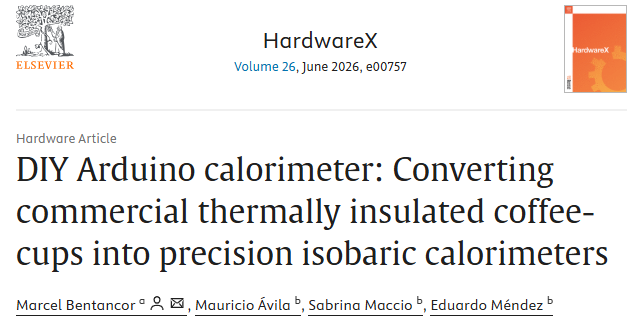
Queremos compartir este trabajo recién publicado, hecho en nuestro Laboratorio y pensando en nuestros alumnos de los cursos de Fisicoquímica I y de Termodinámica. Una forma sencilla de experimentar y medir sciencedirect.com/science/articl…
Laboratorio de Biomateriales tweet media
Español
0
3
6
58
Pablo Fagúndez retweetledi
Juan Pablo Tosar
Juan Pablo Tosar@jptosar·
New preprint: we isolated an heterogeneous population comprising both large and small #ExtracellularVesicles. Using a modified immuno-gold protocol, we show that, at least in U-2 OS EVs, CD9 and CD81 are enriched in EVs < 100 nm. biorxiv.org/content/10.110…
English
1
6
21
3.4K
Pablo Fagúndez retweetledi
FerC66
FerC66@C66Fer·
Hoy celebramos el #11F, día en que como mujeres en la Ciencia, invitamos a niñas y jóvenes a seguir nuestro camino con un enorme SE PUEDE! Agradezco a @IIBCE y @mvdshopping por la invitación en este día tan especial y por la caricatura (adoré!!!)
FerC66 tweet media
Español
3
7
23
543
Pablo Fagúndez
Pablo Fagúndez@PablitoFF1990·
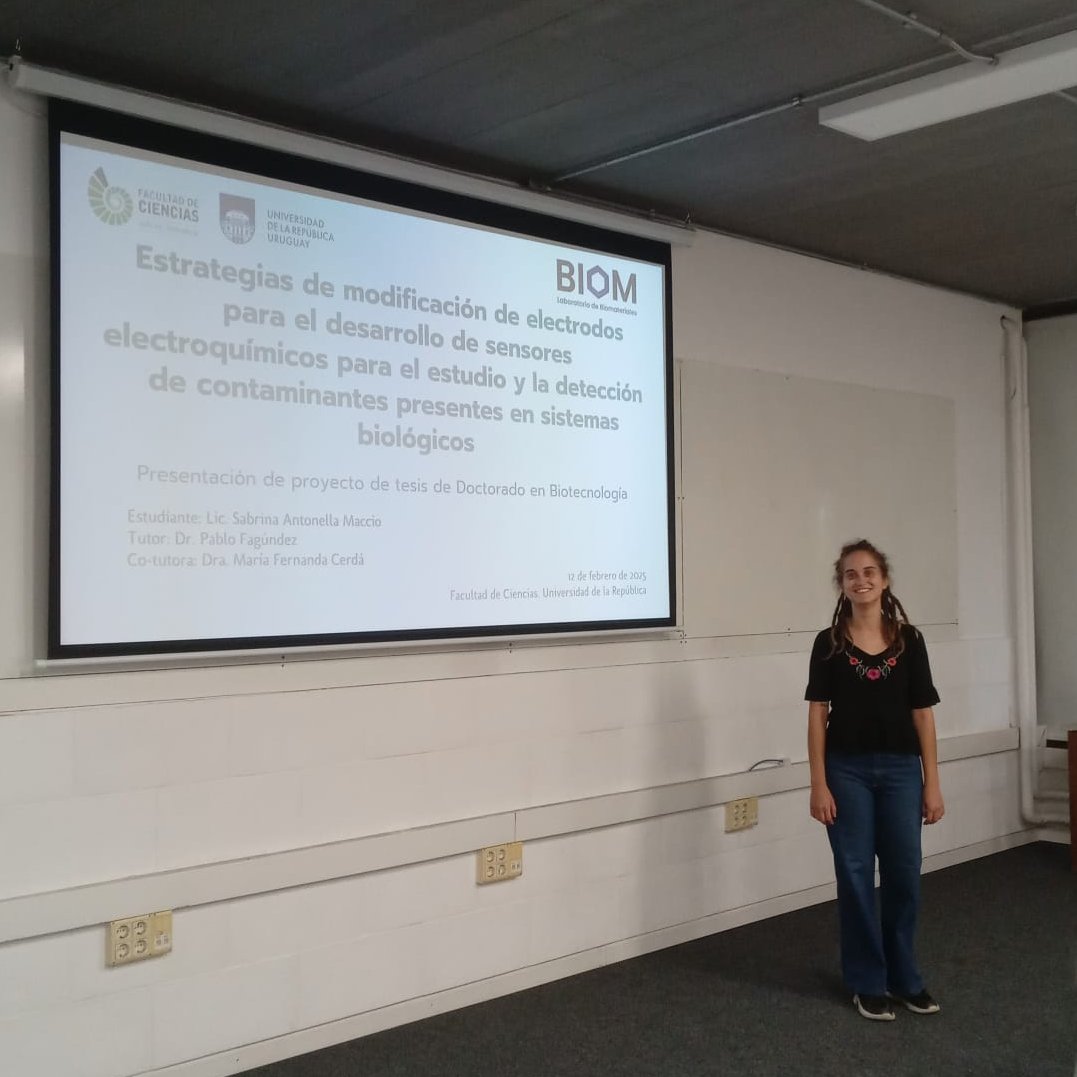
🎓 Hoy nuestra estudiante Sabrina Maccio defendió exitosamente su proyecto de Doctorado en Biotecnología, iniciando una nueva etapa en esta tutoría compartida con la Dra. Fernanda Cerdá. ¡Enhorabuena! 🌟 @UBQA1 @LBiomateriales
Pablo Fagúndez tweet media
Español
0
1
1
118
Pablo Fagúndez retweetledi
Laboratorio de Biomateriales
Laboratorio de Biomateriales@LBiomateriales·
Tenemos nueva estudiante de doctorado en nuestro Laboratorio! hoy Sabrina hizo la defensa de su plan de trabajo para el Doctorado en Biotecnología, en un tema en que se mezcla la tecnología con la electroquímica y la química ambiental... Bienvenida Sabrina a la @FcienUdelar
Laboratorio de Biomateriales tweet media
Español
0
2
3
332
Pablo Fagúndez retweetledi
FerC66
FerC66@C66Fer·
Un poco de vida (extra humanos) siempre viene bien en un Laboratorio.... @PablitoFF1990 te pasaste!!!
FerC66 tweet media
Español
0
1
2
97
Pablo Fagúndez retweetledi
Laboratorio de Biomateriales
Laboratorio de Biomateriales@LBiomateriales·
Nanoquímica... mucho se habla de lo "nano" pero, ¿cuanto sabés? ¿Querés aprender sobre metodologías, síntesis y caracterización de nanomateriales y nanopartículas metálicas? El 13 de agosto comienza el curso dictado por nuestro Laboratorio en @FcienUdelar auspicia @PEDECIBA
Español
1
2
4
165
Pablo Fagúndez
Pablo Fagúndez@PablitoFF1990·
🧪Curso: Introducción a la investigación en Bioquímica Analítica Inscripciones: SGAE-FCIEN. 4 créditos Dirigido a Lic. Cs. Biológicas (tramo común o de Orientación, Biología Celular y Molecular) y Lic. en Bioquímica (electiva). +INFO: bioquimicaanalitica@fcien.edu.uy @UBQA1
Pablo Fagúndez tweet media
Español
0
0
0
132
Pablo Fagúndez retweetledi
Juan Pablo Tosar
Juan Pablo Tosar@jptosar·
A new PhD is out! Our nanoparticle expert Pablo Fagúndez @PablitoFF1990 did a fantastic job today, defending his thesis on protein-AuNP conjugates for EV detection 🤩 #PablenskyRocks
Juan Pablo Tosar tweet media
English
1
2
37
2K
Pablo Fagúndez retweetledi
SobreCiencia
SobreCiencia@SobreCiencia·
#SobreCiencia | ➡️ Fernanda Cerdá (@C66Fer) y Florentina Arispe, de @FcienUdelar, nos cuentan cómo extraen pigmento rojo de algas antárticas para producir energía.
Español
2
7
21
2.1K
Pablo Fagúndez retweetledi
Andrew Akbashev
Andrew Akbashev@Andrew_Akbashev·
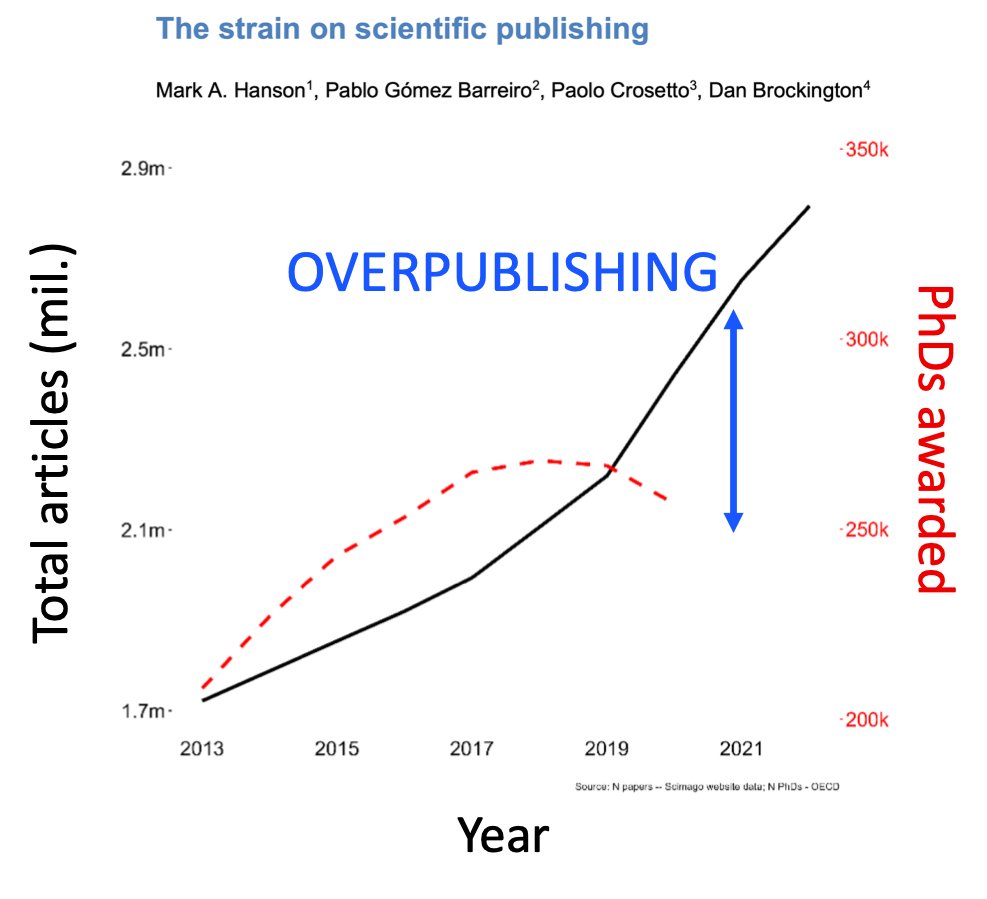
Overpublishing puts enormous stress on students and PIs. And brings tons of money to publishers in STEM. A new study shows that the number of papers is increasing FASTER than the number of #PhD graduates. It’s an amazing work with very useful statistics. Huge kudos to the authors! ▫️ Main outcomes: 1️⃣ In 2022 the number of articles is 47% higher than in 2016. The amount of writing, reviewing and editing workload per scientist is increased enormously. 2️⃣ “Special issues” is a strategy for publishing lots of papers with reduced review time. This is possible due to the “publish or perish” pressure and clearly benefits the publishers. 3️⃣ The publishing time varies widely! MDPI = 37 days. Frontiers = 72 days. Elsevier = 134 days. Springer = 157 days. Nature = 185 days. 4️⃣ The article rejection rates do not seem to correlate with publisher growth. However, rejection rates decline with increased use of special issue publishing. 5️⃣ Certain for-profit gold-open-access publishers create an increasing number of special issues, with uniquely reduced turnaround times, and in specific cases, high impact inflation and reduced rejection rates. 6️⃣ The authors suggest a new metric - Impact Inflation, which is reflected in self-citation within the same journal. For example, MDPI has a high impact inflation due to excessive self-citation compared to other publishers. Conclusions and my opinion: - Scientists have to spend a lot more time on reviewing and writing than before (on average). - The more papers are published, the more the quality is compromised. - Scientific progress has become partially bound to the business models of publishers and their revenue (a sad reality today). - There is a huge lack of transparency. Much of these data had to be ‘web-scraped’ from numerous sources in order to get a full picture. We clearly need regulators to mandate open access to publisher’s statistics. - Reduce the number of special issues! Those typically have low standards. ▫️ Science, publishing and funding make a trio that is very hard to disentangle. However, research quality is controlled by the community. This is why preprint + community review can make a big difference. #AcademicTwitter #AcademicChatter
Andrew Akbashev tweet media
English
50
1.1K
3.2K
877.1K