Hussam Sahloul

2.1K posts

Hussam Sahloul banner
Hussam Sahloul

Hussam Sahloul

@PacingSpikeMD

Medical Doctor from 🇸🇾 Interested in cardiac EP🫀⚡ Carol Davila University of Medicine Alumni 🇷🇴

Bucharest, Romania Katılım Nisan 2022
920 Takip Edilen393 Takipçiler
Hussam Sahloul
Hussam Sahloul@PacingSpikeMD·
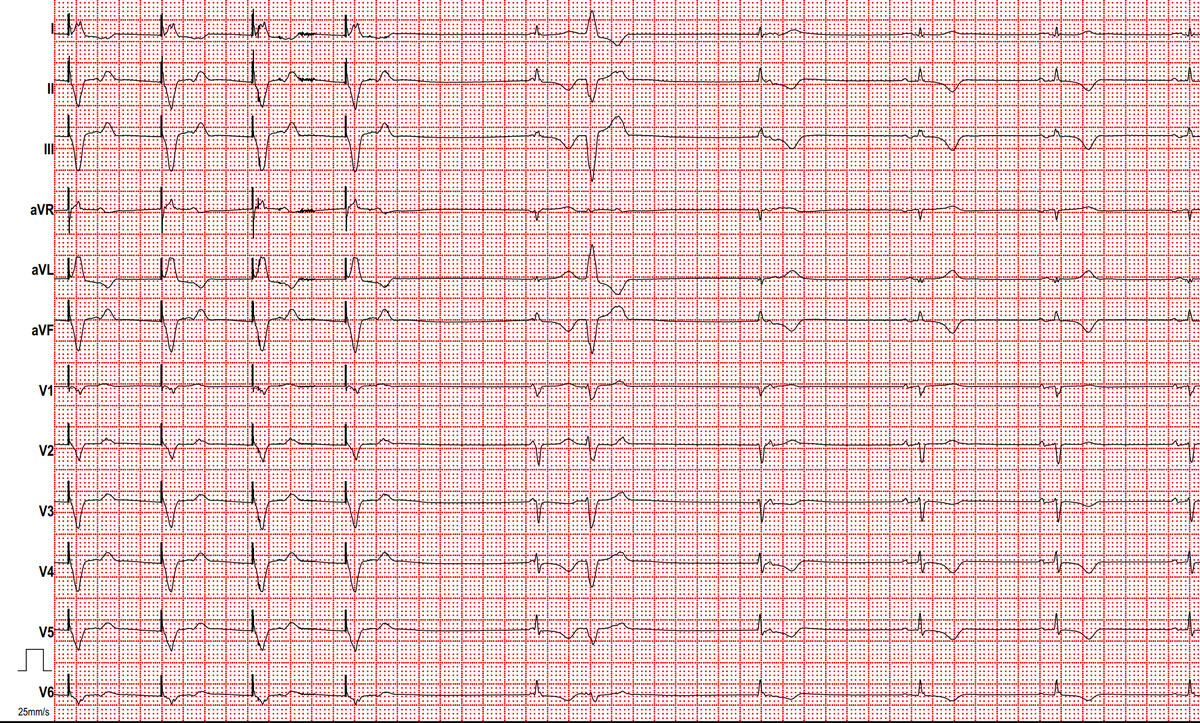
@ecgandrhythmRoe why is there no evidence of neither intrinsic sinus activity nor atrial pacing before turning of the PM?
English
0
0
0
98
Hussam Sahloul retweetledi
Dr. Andreas Roeschl
Dr. Andreas Roeschl@ecgandrhythmRoe·
An elderly woman's pacemaker is temporarily turned off. What rhythm do you see then?
Dr. Andreas Roeschl tweet media
English
12
8
42
4.6K
Hussam Sahloul retweetledi
Dr. Andreas Roeschl
Dr. Andreas Roeschl@ecgandrhythmRoe·
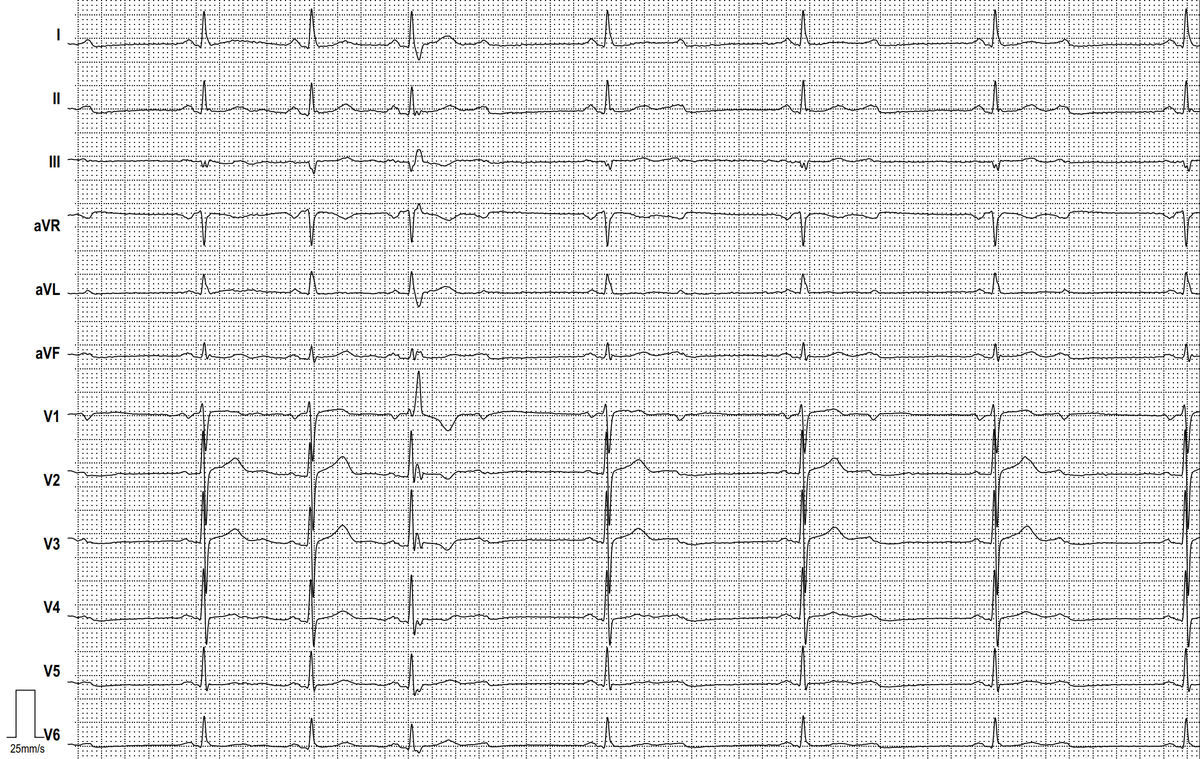
A 65-year-old woman with this ECG. What would you do if the patient were experiencing symptoms (syncope) and if she were not?
Dr. Andreas Roeschl tweet media
English
13
11
40
5.2K
Hussam Sahloul
Hussam Sahloul@PacingSpikeMD·
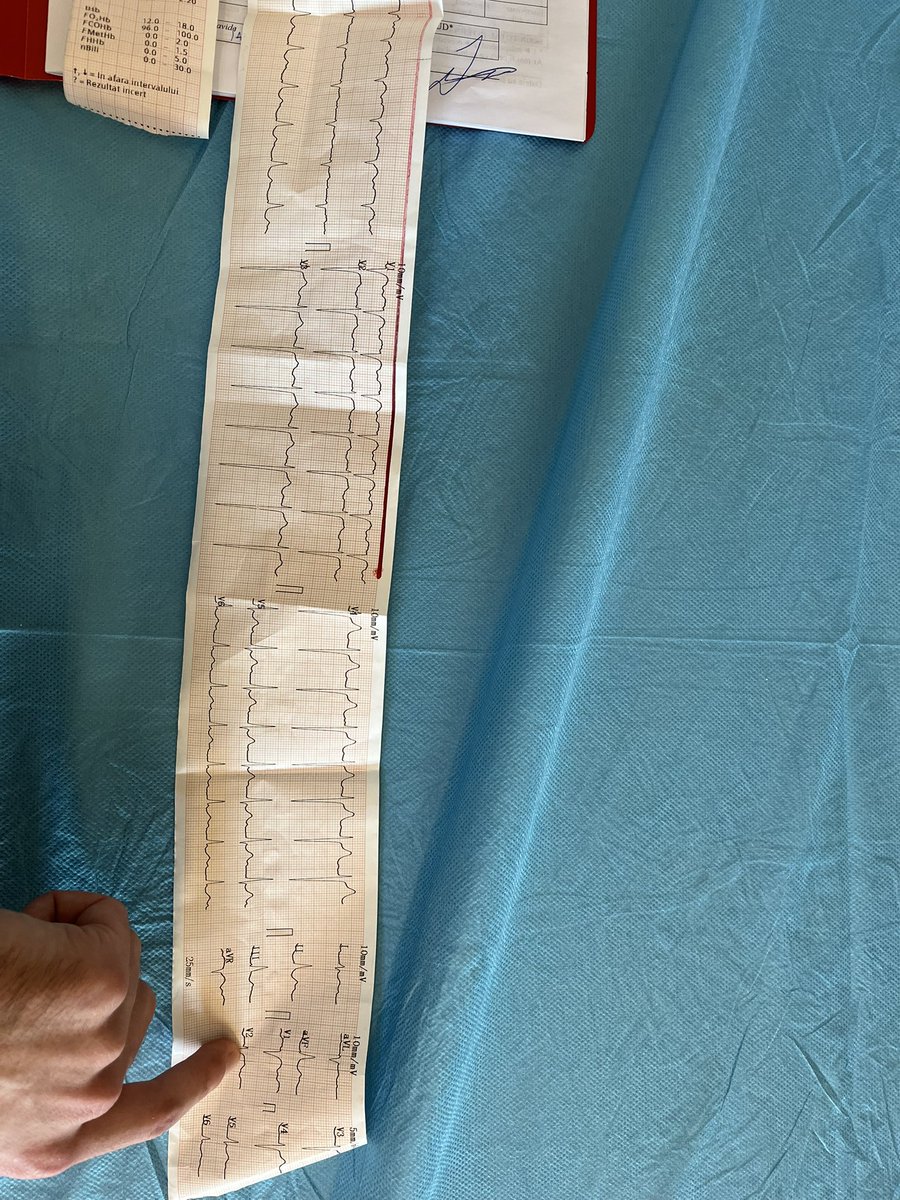
What do you think? First degree AVB or CHB?
Hussam Sahloul tweet media
English
0
0
1
64
Hussam Sahloul
Hussam Sahloul@PacingSpikeMD·
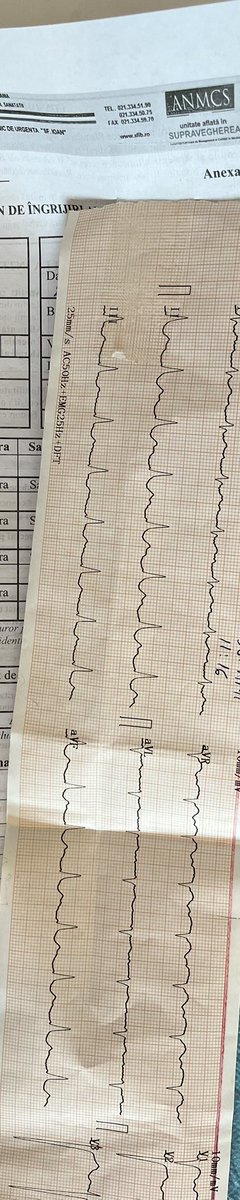
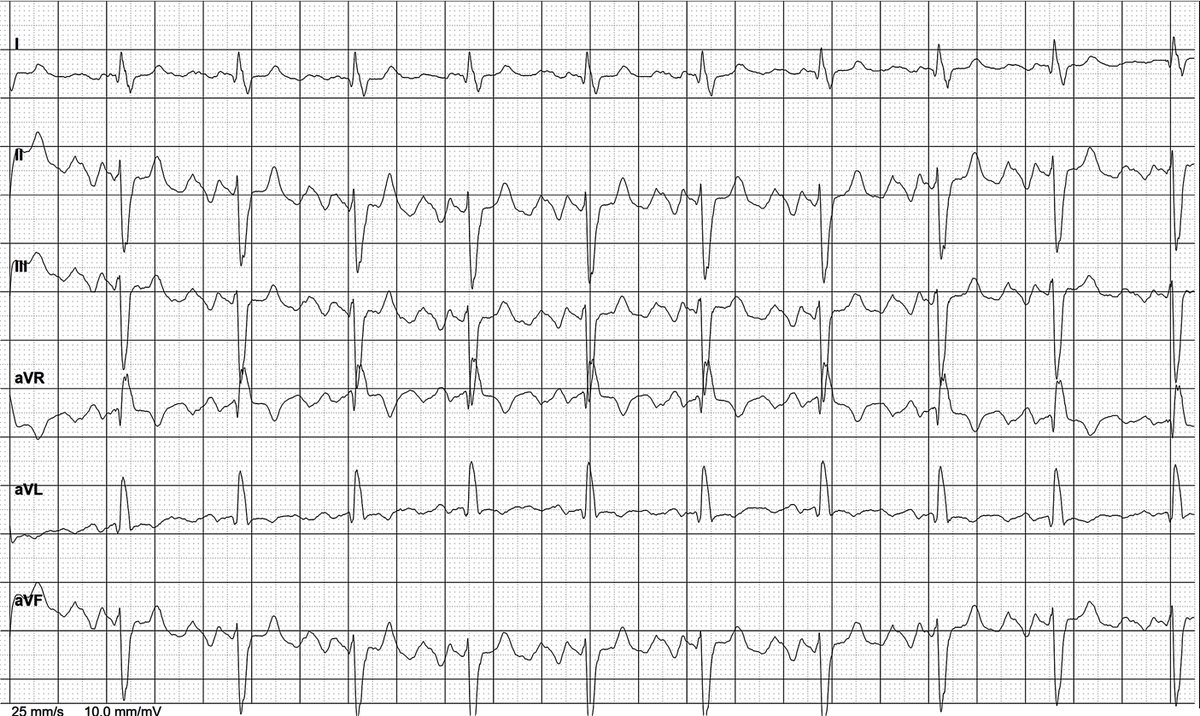
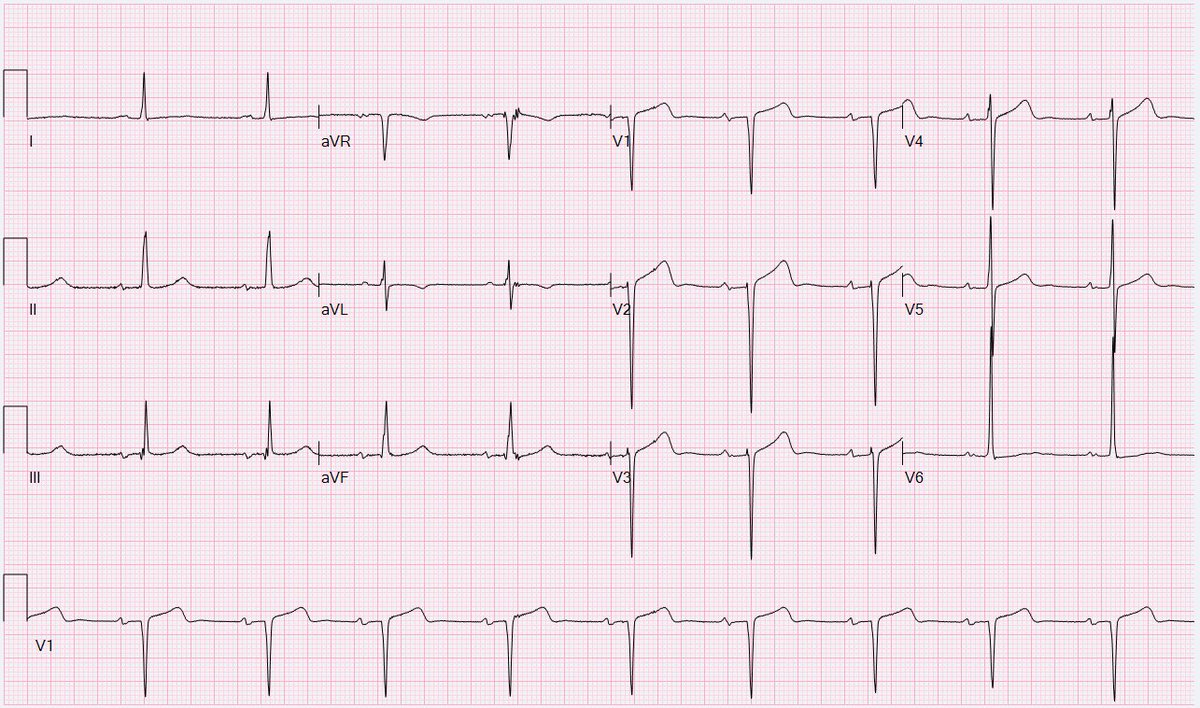
58 year old patient, CKD, on dialysis for 18 years. Presents with abdominal pain suprapubic. Has a history of Aortic stenosis moderate, tachycardia brady syndrome and AFIB. This is his ecg? Would you ask for a troponin?
Hussam Sahloul tweet mediaHussam Sahloul tweet media
English
1
0
1
102
Hussam Sahloul retweetledi
CardiovascularCorner
CardiovascularCorner@TrackYourHeart·
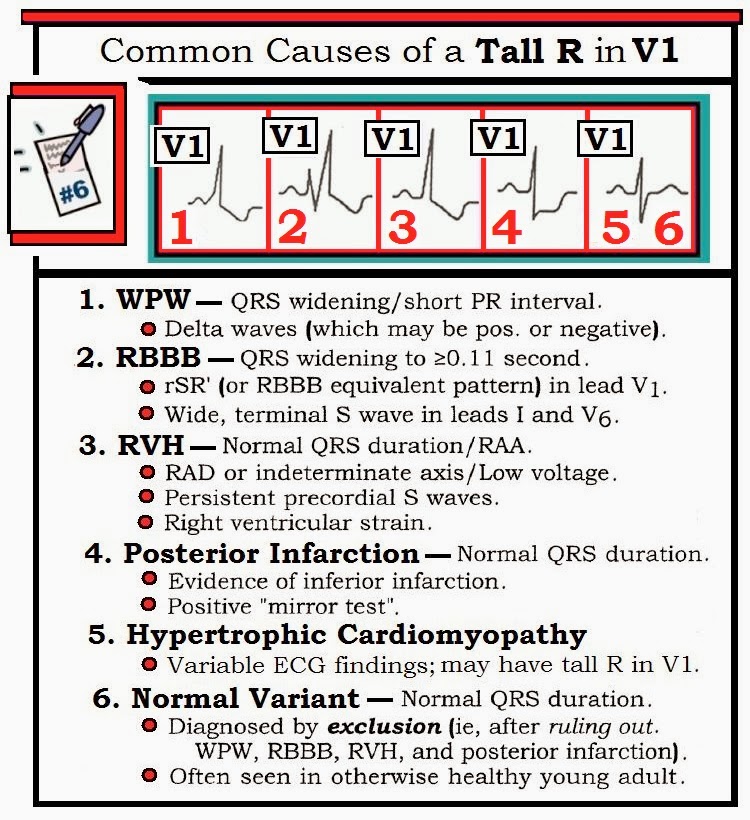
Differential Diagnosis of a Tall R Wave in V1 A tall R in V1 usually refers to R-wave amplitude >7 mm or R/S ratio >1. This is abnormal and has several cardiac and non-cardiac explanations. Always interpret it with QRS width, axis, symptoms, and the clinical setting. 1. Right Ventricular Hypertrophy 🔵 Causes anterior forces to increase. 2. Posterior Myocardial Infarction 🔵The tall R in V1 is the reciprocal of a Q wave in the posterior wall. 3. Right Bundle Branch Block 🔵 A dominant R′ in V1 can appear tall, but this is due to delayed right ventricular activation. 4. WPW Syndrome (Posterior or Right-Sided Accessory Pathway) 🔵Pre-excitation via a posteroseptal/posterior pathway can produce a tall R in V1. 5. Hypertrophic Cardiomyopathy 🔵Abnormal septal hypertrophy can generate prominent anterior forces. 6. Normal Variant / Persistent Juvenile Pattern 🔵Rarely, young individuals may show relatively tall R in V1 without pathology. 7. Duchenne Muscular Dystrophy 🔵Classic ECG finding due to posterobasal LV involvement. 8. Incorrect Lead Placement 🔵Reversed V1/V3 or high placement of V1 can create an artificial tall R. @TrackYourHeart #ECG
CardiovascularCorner tweet media
English
2
75
273
13.5K
Hussam Sahloul retweetledi
CardiovascularCorner
CardiovascularCorner@TrackYourHeart·
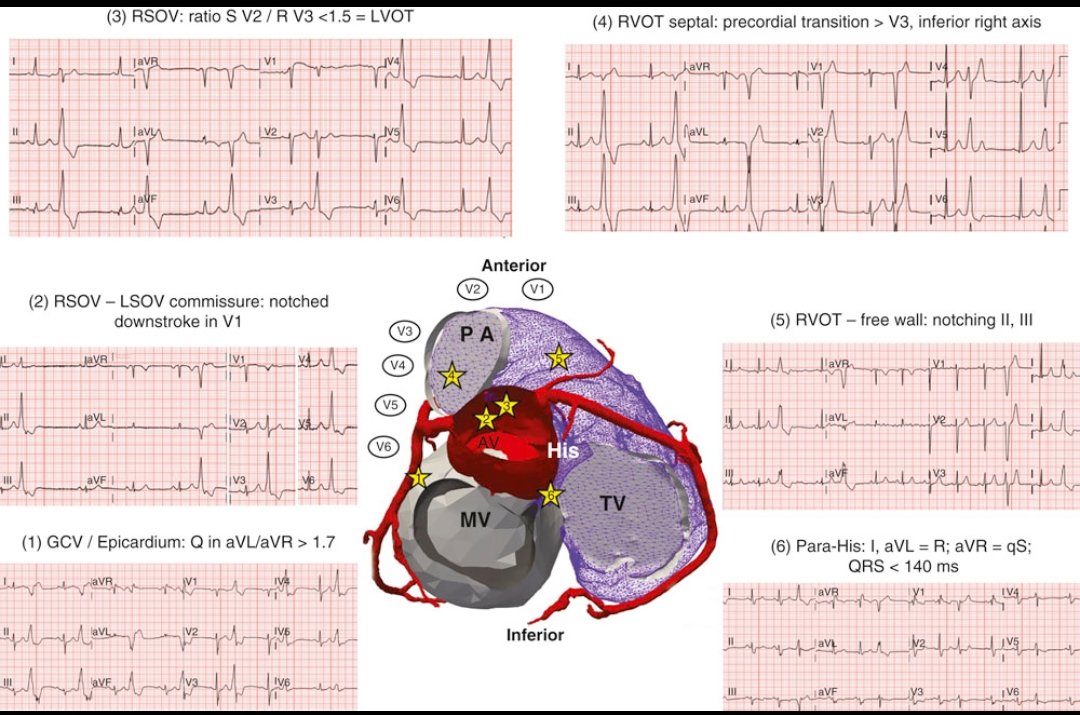
PVC Localization on ECG Premature Ventricular Complexes (PVCs) are early heartbeats that arise from the ventricles rather than following the usual His–Purkinje pathway. This illustration shows PVCs coming from different parts of the heart: the outflow tracts (RVOT and LVOT) and the tricuspid annulus, each with distinct ECG patterns. ECG features and clues for localization: 1. Great Cardiac Vein / Epicardial origin A Q wave in aVL or an aVR ratio greater than 1.7 suggests an epicardial focus from the great cardiac vein. 2. Right–Left sinus of Valsalva commissure A notched downstroke in V1 points toward an origin near the aortic valve. 3. LVOT (Right sinus of Valsalva) An S wave in V2 and a small R wave in V3 (ratio less than 1.5) supports a left ventricular outflow tract site. 4. RVOT septal region Transition beyond V3 with an inferior rightward axis is typical of septal RVOT PVCs. 5. RVOT free wall Notching in leads II and III is consistent with a free wall RVOT origin. 6. Para-Hisian region Equal R waves in leads I and aVL, with qS in aVR and a QRS duration under 140 ms, suggests a focus near the His bundle. Why this matters 🟢 RVOT PVCs are the most common idiopathic type and are often harmless. 🔴 LVOT or epicardial PVCs may require a retroaortic or epicardial ablation approach. 🔴 Para-Hisian PVCs are more technically challenging because they are close to the conduction system. Careful ECG localization helps guide safer and more targeted ablation strategies. Source: Braunwald’s Heart Disease, 12th edition.
CardiovascularCorner tweet media
English
2
59
200
8.4K
Hussam Sahloul
Hussam Sahloul@PacingSpikeMD·
@nisikata2491 Omg that is pretty cool! Am i eligible to take it and how do i sign up?
English
1
0
0
46
Hussam Sahloul retweetledi
Willy Frick
Willy Frick@willyhfrick·
For anyone interested in learning more about angiography, come check out my introductory guide! Come see my annotated diagrams like the one shown below. intuitivecardiology.notion.site/angiography
Willy Frick tweet media
English
35
446
2.2K
213.4K
Hussam Sahloul retweetledi
Dr. Andreas Roeschl
Dr. Andreas Roeschl@ecgandrhythmRoe·
Palpitations; is this AFL + artifacts or AF? Difficult one 🙄 Poll next
Dr. Andreas Roeschl tweet media
English
5
7
25
4.1K