Paradis Labs

240 posts

Paradis Labs banner
Paradis Labs

Paradis Labs

@ParadisLabs

AI/Semiconductor Analyst and Trader. 10+ yrs Portfolio Manager at L/S hedge fund. Thematic investment research.

Katılım Mart 2026
90 Takip Edilen697 Takipçiler
Sabitlenmiş Tweet
Paradis Labs
Paradis Labs@ParadisLabs·
My 2 year returns of 2,100% Nowhere near @aleabitoreddit, but still quite happy with them Some of the key drivers: > Memory names like $SNDK and Samsung (unfortunately no access to SK Hynix on my UK broker platform) > $PLTR rally from late 2023 > $APP from Q1 2024 > Then very similar to @aleabitoreddit with photonics, SiPH, CPO names like $AXTI, $LITE, $TSEM etc recently > Random fun trades like $WGS and $CVNA, just riding momentum Made plenty of mistakes and bad trades, but lucky a few big hitters came off Grateful to be learning everyday
Paradis Labs tweet media
Serenity@aleabitoreddit

I just realized… hit 5,118.02% returns last week. 5000%+ not too bad in <2 years? Hard to keep up with $5 footlong sandwich inflation even after front running: -> $MSTR for halving -> $RKLB and $HOOD for space/fintech rally -> $GOOGL and $TSM for large cap rally -> Samsung, SK Hynix, Asian equities for memory -> $LITE, $AXTI, and $COHR for EML/photonics -> $SOI, $SIVE, $AEHR, $TSEM, Win for CW/SiPH/CPO. Some side quests here and there with Venezuelan natural resource companies and drones (that didn’t turn out as well). But generally market read has been decent so far on what’s coming next. And I do think scale up photonics is next, especially focusing on CW laser companies, substrates, testing and foundries.

English

15
2
127
23.2K
Paradis Labs
Paradis Labs@ParadisLabs·
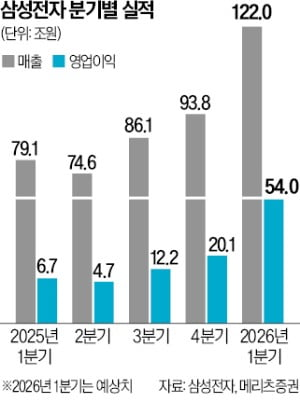
"Samsung Electronics forecasts first-ever 50 trillion won ($33.7B) operating profit in Q1" A >700% increase in operating profit compared to Q1 of last year. More than 3x the previous record set in Q1 2022. Holy sh!t man, what a company. This marks the dawn of an era where memory has transitioned from a cyclical commodity into the engine of computational progress. Performance stems from a structural revaluation of the semiconductor value chain. Samsung leverages its wafer capacity to capitalize on the memory supercycle that is driving triple-digit price surges for both DRAM & NAND. Future expectations being bolstered by a turnaround in the foundry division, where utilization has surged to 80% Amid high-profile wins like the Tesla AI6 chip. Annual operating profit forecasts are now scaling as high as 321 trillion won. Samsung is the essential physical infrastructure of the global AI economy.
Paradis Labs tweet mediaParadis Labs tweet media
English
1
0
3
140
Paradis Labs
Paradis Labs@ParadisLabs·
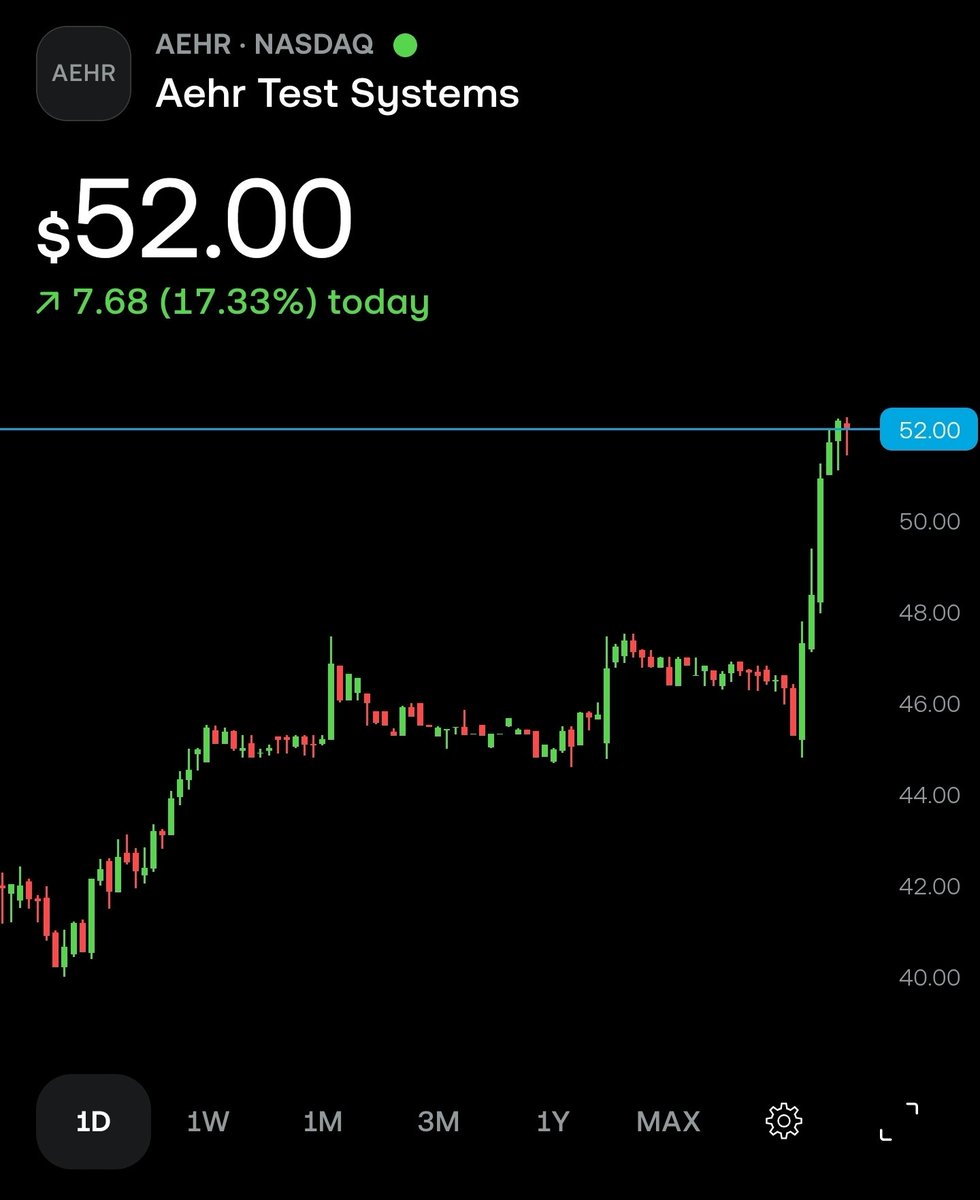
$AEHR are reporting earnings tomorrow Some key signals I'll be looking for: > Confirmation that the order book is maintaining/growing. The $60M-$80M H2 FY26 bookings guidance is the holy grail. Reiteration or expansion of this range would signal a record-breaking FY27. > Focus on the ramp of the “major new silicon photonics customer” announced March 31. Need to see follow-on order visibility for 800G and 1.6T transceiver production. > Updates on the $14M lead AI processor order and the Sonoma platform’s traction with hyperscale ASICs will validate $AEHR's presence in the GPU/compute layer. > Looking for gross margin stabilization. The prior 29.8% was a low point driven by unfavorable mix. Need to see even a slight recovery as high-margin consumables return. Pretty confident that it'll be a good ER though since the recent $14M AI order and SiPh win signal the H2 ramp is materializing.
English
1
4
37
3.8K
Illiquid
Illiquid@illyquid·
Happy to share that I am joining FundaAI. For more than a year, they have been publishing excellent, rigorous research on photonics, memory, and the rest of the AI ecosystem. I met them a few times this year and have been impressed by the depth of the team’s expertise, their culture, and their determination to build a respected and trusted research firm. On top of that, they are building an even more ambitious AI powered research OS. The team is growing and we are looking to hire junior analysts to cover AI, tech, semis and hardware. I will still be running my own newsletter, and I am confident we can realise strong synergies. Going forward, all tweets and posts on my newsletter represent my personal views, and there will be some restrictions on what I can comment on. FundaAI takes its regulatory obligations seriously and expects the same from its team. It has been an incredible seven months on X and Substack, and I’m looking forward to the next leg of this journey.
English
21
0
163
19.6K
Paradis Labs
Paradis Labs@ParadisLabs·
@mitchh98_ They’re paying for 8-inch SiC/GaN capacity that isn't fully spinning yet. Fixed costs for high-end reactors eat revenue until volume ramps
English
1
0
0
36
mitch
mitch@mitchh98_·
@ParadisLabs Negative net income I’d work with but negative margins is a whole different beast. I can respect the pivot and high “short term” costs to accommodate, but they are losing more $ than they bring in per unit. Seems like they have several years of cash runway though
English
2
0
0
43
Paradis Labs
Paradis Labs@ParadisLabs·
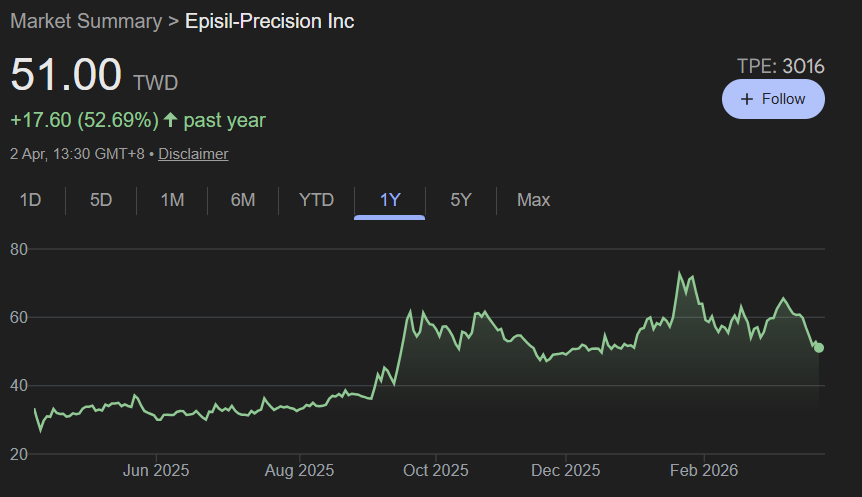
Episil-Precision. A Taiwanese pure-play supplier of epitaxial processes inside the global power bottleneck. At less than $500M market cap?! $TSM rely on them for high yields... Even NASA engineers rely on them for GaN devices... Episil-Precision are recognized as the only player in Taiwan able to mass-produce both SiC & GaN epitaxial wafers simultaneously. Acting as a highly convenient one-stop-shop for foundries. The AI power constraint ----- Data centers need gigawatt-scale loads. But modern compute clusters throw up power swings that destabilize traditional grids. EVs demand semis that handle high voltages and temps without performance loss. Traditional silicon has hit its physical threshold. The solution lies in wide-bandgap (WBG) materials: > Silicon Carbide (SiC) > Gallium Nitride (GaN) These operate at 600V-1,200V+ with minimal energy loss. However, their adoption is restricted by manufacturing complexities in the initial growth phase, known as epitaxy. This is where Episil-Precision operates as a mission-critical asset. Episil’s position in the supply chain ----- Episil-Precision is a pure-play supplier of epitaxial processes. It acts as the bridge between raw material substrate vendors and device fabricators. Instead of logic design or volume foundries, Episil handles the front-end material engineering that transforms raw wafers into active electronic platforms. By depositing a crystal layer on a substrate, Episil defines a chip's thickness, resistivity, and dopant profiles. Companies like $NVDA and even NASA engineers rely on Episil to de-risk their operations since this layer determines the final yield of subsequent fab steps. Filling the epitaxial bottleneck ----- The transition to WBG materials has created a huge supply chain bottleneck. Growing GaN or SiC on supporting substrates produces intense mechanical stress due to lattice mismatches. At temperatures >1,000°C, this stress causes the wafer to warp, creating cracks or current collapse. Episil-Precision fills this bottleneck via patented nitride structures that grow alternating buffer layers to absorb mechanical stress. Engineers track structural stress second-by-second in real-time. This ensures that after cooling, the wafer returns to a flat state free from bowing. Without these material capabilities, downstream foundries like $TSM would face sh!t yields, stalling global electrification. Their technological moat ----- Episil's competitive moat is built on 25+ years of institutional process knowledge. Epitaxy is not a commodity; recipes for gas flows and temperature gradients require years of trial and error to perfect. The relationship with clients features high switching costs. In sectors like automotive, qualification cycles take over a year. Once Episil achieves IATF 16949 certification, clients are locked into the supply chain to avoid liability risks. Episil is also the only player in Taiwan capable of mass-producing SiC and GaN epitaxial wafers simultaneously. Competitive dynamics ----- The market features a tier of conglomerates focused on high-volume 300mm bulk silicon for logic (e.g. SUMCO, Shin-Etsu Handotai, GlobalWafers). However, power electronics require a high-mix, lower-volume batch profile on 150mm/200mm lines. The massive capital structures of mega-suppliers are not geared toward mastering the localized stress bottlenecks of WBG processing. Also vertically integrated leaders like $WOLF and STMicroelectronics are overwhelmed by AI demand. To meet backlogs without waiting for new fab construction, these IDMs are outsourcing to independent foundries like Episil. There are some Chinese competitors, but they have consistent defects. Not ideal when some end-clients are EVs. Vanguard alliance is a scaling catalyst ----- Historically, Episil’s growth was capped by capital constraints. This changed when Vanguard International Semiconductor acquired a 13% stake in Episil for approximately $77.1M. Vanguard provides the manufacturing scale for power management chips. Episil provides the WBG expertise. This alliance ultimately grants Episil the gravity to secure volume contracts from Japanese giants like Renesas Electronics and Denso. ----- Episil-Precision is a critical solution provider inside the global power bottleneck. Power systems simply cannot rely on legacy silicon platforms. The transition to WBG materials is non-negotiable. Because the growth of GaN and SiC on supporting substrates produces severe mechanical stress that ruins processing yields, third-party foundries and IDMs are forced to rely heavily on advanced epitaxy specialists. Episil-Precision directly fills this bottleneck by applying its process knowledge,designs, and real-time curvature tracking systems to produce ultra-high-yield starting materials.
Paradis Labs tweet mediaParadis Labs tweet media
English
1
2
24
2.6K
Paradis Labs
Paradis Labs@ParadisLabs·
Wafer Works Corp (TWO: 6182) is dominating a manufacturing bottleneck needed for next gen AI data centers and EVs... At a MC of ~$550M... Centered on polished silicon wafers, epitaxial wafers, and SOI substrates. They stand at a strategic inflection point marked by aggressive capacity expansions and a clear pivot to 12-inch manufacturing. 1/ Supply chain bottleneck ----- Silicon wafers are the physical foundation for all integrated circuits. Advanced logic chips receive the majority of public attention. But the power management & components regulating electricity in EVs and grids are equally indispensable. These require engineered substrates with extreme conductivity. Foundries and integrated device manufacturers cannot produce chips without a reliable supply of these foundational materials. However, the manufacturing of heavily doped substrates represents a severe bottleneck. Achieving the material purity creates massive yield challenges - the thermal stresses involved in pulling heavily doped single-crystal silicon often induces lattice defects. The process requires large capital outlays and years of process learning to stabilize yields. This naturally excludes new entrants and concentrates market power within a handful of veteran manufacturers. This inelasticity creates bottlenecks during periods of high demand, effectively placing substrate vendors in a commanding position within the broader tech ecosystem. Wafer Works fills this gap as a volume supplier of both heavily doped substrates and specialized epitaxial wafers. By providing these substrates, Wafer Works directly enables the operational performance of global foundries and IDMs. Ensuring that components for EVs, renewable energy systems, and industrial automation do not face manufacturing halts due to base material shortages. 2/ Defensible moats ----- While massive conglomerates like SUMCO, Shin-Etsu, and SK Siltron dominate standard twelve-inch logic wafers, Wafer Works focuses on highly complex specialty nodes. < Heavy doping > Controlling the dopant distribution across the radius of a large silicon ingot requires proprietary thermal field designs and control systems that the company has perfected over decades. < SOI Tech > Wafer Works have developed thickness and uniformity controls ahead of the industry. This introduces an insulating layer, reducing parasitic capacitance. Making them perfect for advanced sensors and MEMS. Wafer Works have carved out a defensible and highly lucrative niche. < Switching costs > Component failure is a disaster. Foundries subject suppliers to multi-year evaluation periods. Once qualified, changing vendors carries immense risk. Wafer Works is heavily locked-in as a trusted partner to tier-one global clients like $TSM, $UMC, $ON, and Infineon. 3/ Supply chain ----- Wafer Works operate upstream. They act as the link between raw polysilicon producers and foundries or IDMs executing circuit lithography. As fabless firms proliferate, the demand for custom wafer solutions is fundamentally altering the chain. Unlike legacy models where standard substrates were sold in bulk, modern custom applications require specialized wafer-level customization. Wafer Works serves this need by offering high-touch customization, making them collaborative partners rather than pure commodity suppliers. 4/ 12-inch expansion ----- Historically, Wafer Works generated a significant portion of its revenue from 6-inch and 8-inch wafers. They pivoted to 12-inch platforms when they recognized that future competitiveness requires scale. < Erlin plant > Taiwan facility plans an installed monthly capacity of 200,000 units. Backed by an investment of approximately $470.7M. The objective is to double Taiwan-based revenue within three years of the plant's completion. < Dual-region strategy > Wafer Works is advancing its second-phase facility in Zhengzhou, Henan, with a capacity comparable to the Erlin facility. This is to complement Taiwan operations and serve the rapidly accelerating Chinese domestic market. Despite general market headwinds in 2024, revenue from twelve-inch products grew by nearly 400% YoY. 5. Macro tailwinds ----- < Automotive electrification > A battery EV requires 2,000 to 3,000 semiconductor devices vs. 500 in a combustion vehicle. Roughly half of Wafer Works' historical revenue ties directly to the automotive segment. < AI Infrastructure > Advanced GPUs require complex power delivery networks and thermal management to function effectively, boosting demand for specialty substrates. < Financials > During the severe inventory correction of 2024, where global shipments fell 6.5%, In 2024, the company maintained a break-even performance on consolidated revenue of approximately $273.7M. During an inventory correction where global shipments fell 6.5%. In 2025, revenue recovered to ~$308.2M (up 12.5% YoY) With NI increasing to ~$1.63 million as utilization rates normalized. TLDR ----- While the company does not participate in the fabrication of AI chips, it fills a mission-critical substrate bottleneck without which the broader electronics ecosystem cannot operate. The thesis rests on three critical pillars. First, the company maintains a dominant market position in heavily doped low resistance products and specialty silicon-on-insulator substrates. Categories protected by huge barriers to entry and long qualification cycles. Second, its position in the supply chain means it is set to capture the massive surge in silicon consumption dictated by EV powertrains and data center power delivery systems. Finally, the current pivot toward twelve-inch manufacturing at the Erlin and Zhengzhou facilities creates an inflection point that will scale the company's revenue and profitability as utilization rates climb.
Paradis Labs tweet media
English
1
0
14
985
Paradis Labs
Paradis Labs@ParadisLabs·
@AtlasShrug1 Not them - they did come up in some of my research a few weeks ago, but don't think the story matches the valuation atm. Also not really pure play which is what I prefer in general
English
1
0
0
190
John Galt
John Galt@AtlasShrug1·
@ParadisLabs Sounds like you found Rasa $4022.T. Crazy how that tiny company could shut down the entire InP laser supply chain by cutting off its red phosphorous and Boron compounds. No substitute. What’s that worth???
English
2
0
0
258
Paradis Labs
Paradis Labs@ParadisLabs·
Finishing up my research on a couple of companies in crystal growth & substrate manufacturing. Looks like a potential oligopoly at play for sub $1B MC companies based in Europe/Asia. For comparison, think Sumitomo and $AXTI.
Paradis Labs@ParadisLabs

4-day weekend in the UK, so naturally been spending time researching more unpriced AI supply chain bottlenecks. A few things have cropped up / been confirmed to me: > HBM testing using specialized MEMS probe cards > Carbon Nanotube pellicles for High-NA EUV > Raw material shortages Will publish some research later this evening!

English
1
0
21
4.6K
Hooked on Markets
Hooked on Markets@hookedonmarkets·
@ParadisLabs @aleabitoreddit 2,100% in 2 years is nowhere near "just quite happy." That's exceptional by any measure. The memory to photonics rotation shows real macro awareness, not just luck. What's the next big theme you're positioning for? 🎯
English
3
0
2
41
Paradis Labs
Paradis Labs@ParadisLabs·
My 2 year returns of 2,100% Nowhere near @aleabitoreddit, but still quite happy with them Some of the key drivers: > Memory names like $SNDK and Samsung (unfortunately no access to SK Hynix on my UK broker platform) > $PLTR rally from late 2023 > $APP from Q1 2024 > Then very similar to @aleabitoreddit with photonics, SiPH, CPO names like $AXTI, $LITE, $TSEM etc recently > Random fun trades like $WGS and $CVNA, just riding momentum Made plenty of mistakes and bad trades, but lucky a few big hitters came off Grateful to be learning everyday
Paradis Labs tweet media
Serenity@aleabitoreddit

I just realized… hit 5,118.02% returns last week. 5000%+ not too bad in <2 years? Hard to keep up with $5 footlong sandwich inflation even after front running: -> $MSTR for halving -> $RKLB and $HOOD for space/fintech rally -> $GOOGL and $TSM for large cap rally -> Samsung, SK Hynix, Asian equities for memory -> $LITE, $AXTI, and $COHR for EML/photonics -> $SOI, $SIVE, $AEHR, $TSEM, Win for CW/SiPH/CPO. Some side quests here and there with Venezuelan natural resource companies and drones (that didn’t turn out as well). But generally market read has been decent so far on what’s coming next. And I do think scale up photonics is next, especially focusing on CW laser companies, substrates, testing and foundries.

English
15
2
127
23.2K
Paradis Labs
Paradis Labs@ParadisLabs·
@ShitcoinMaxi_ @michaelsikand If they signal huge ramp ups in the coming quarters, then something like $65-$75. But tough to say given how unefficient the markets have been lately at pricing in "good" news e.g. $MU earnings. $AEHR is a long term hold for me so don't care too much about volatility post ER.
English
0
0
4
414
Michael Sikand 🦑
Michael Sikand 🦑@michaelsikand·
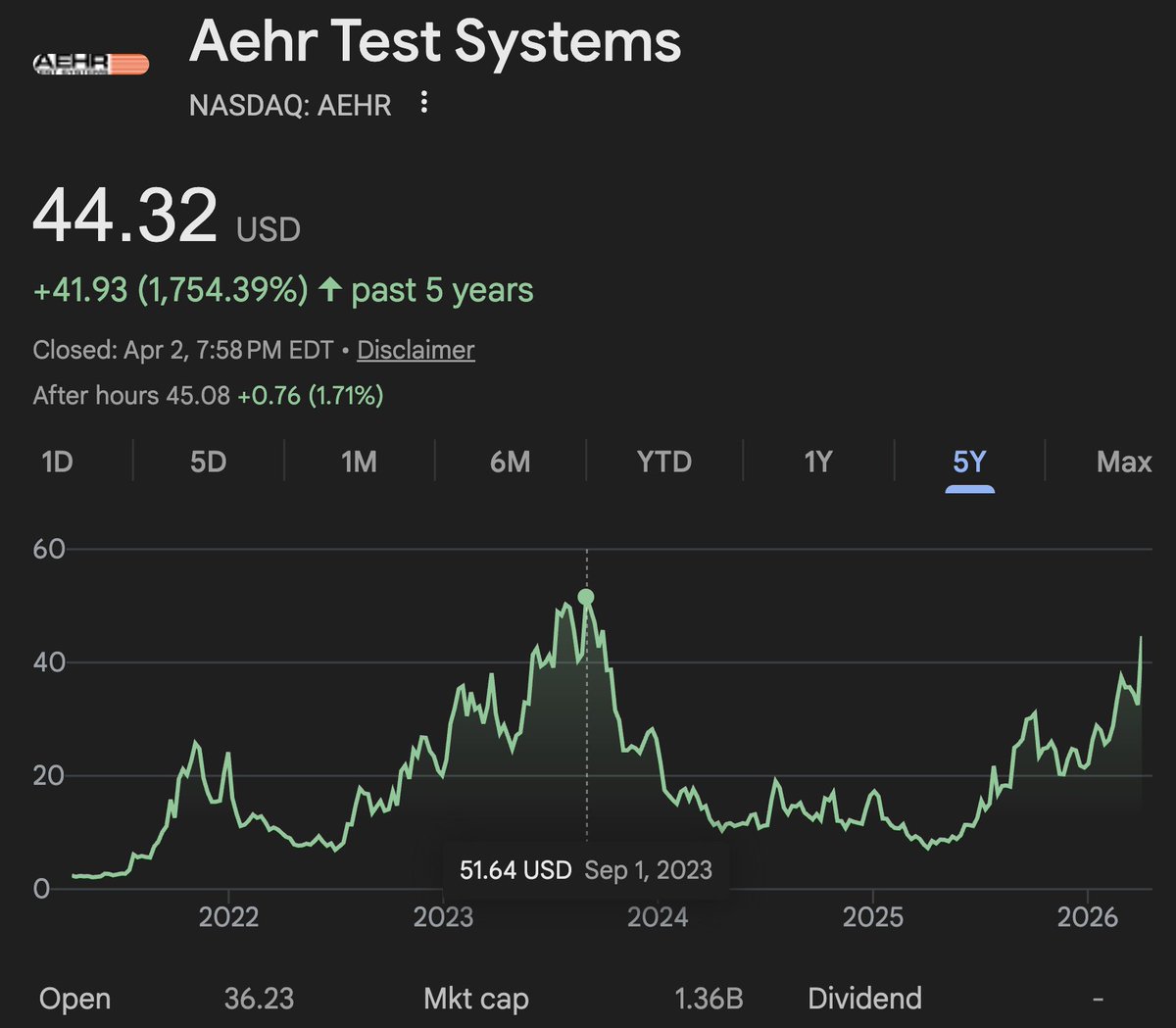
Asymmetry in $AEHR explained. Their CEO said the AI chip testing market is 3-5x larger than it was for SiC (EV chips). The market realizes this (+100% YTD). But you can still buy the business today for a lower MC than when it peaked on EV hype in 2023.
Michael Sikand 🦑 tweet media
English
14
46
347
30.9K
Paradis Labs
Paradis Labs@ParadisLabs·
@aleabitoreddit Was reading a post about what it'd be like living on the moon, and one of the adjectives used was "serenity". My mind has been warped 😂
English
11
0
5
2.4K
Serenity
Serenity@aleabitoreddit·
Honestly… You’re probably spending too much time on FinX if you know these references: - “I can’t believe that post was real” - Analyst #3 - 🦑 - 🌮 - 🦞
English
48
3
403
59.1K
Paradis Labs
Paradis Labs@ParadisLabs·
@aleabitoreddit CPO testing complexity is being underrated by the market for sure Can't test optics & compute independently anymore since they're married at package level Qualification cycles are long at around 6-18 mths, but we're coming out of that now
English
10
0
3
1.7K
Serenity
Serenity@aleabitoreddit·
Digitimes: Taiwan tackles CPO testing bottlenecks to scale SiPh for AI data centers. Huge. Emphasis. on: "CPO and Silicon Photonics bottleneck" + "Testing." $FORM, $KEYS, $ASE, and $ATEYY are popular ones ones in this bottleneck eg. optical alignment. Then there's $AEHR for exposure to SipH yields/testing bottlenecks. Forecasts show that by 2026, over 50% of data center transceiver sales will come from silicon photonics (SiPh) modules. Right now, in 2026, there's quite still a few qualification cycles: But expect mass order ramp to hit anytime.
Serenity tweet media
English
36
34
471
79.6K
Paradis Labs
Paradis Labs@ParadisLabs·
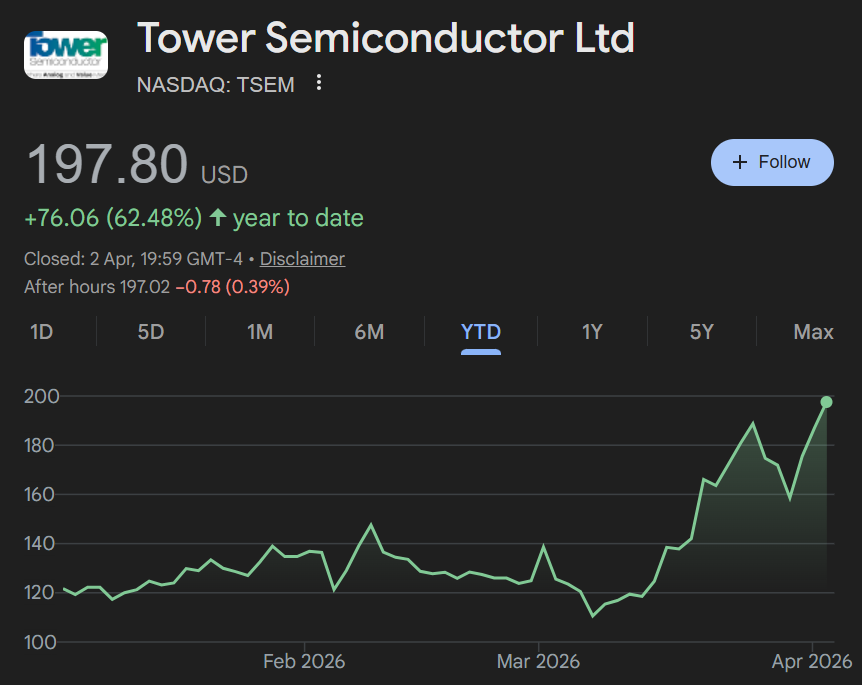
$TSEM is one of my highest conviction trades. They've built a dominant position in SiPho. (The tech that moves data between AI chips using light instead of copper) SiPho revenue went from $28M in 2023 to $238M in 2025, with a $380M annualized run rate in Q4 alone. ...Huge structural inflection. $TSEM are supplying SiPho components for 1.6 terabit optical modules to $NVDA As AI cluster complexity scales, GPU-to-GPU bandwidth becomes the hard constraint, and $TSEM sits at that exact chokepoint. No pluggable transceiver alternative at this data rate matches the cost and efficiency of silicon photonics. $TSEM and $NVDA know this, and 8 of the 10 largest optical transceiver manufacturers have already voted with their design wins. But I think the market are underpricing some things. $TSEM is the only foundry simultaneously providing silicon photonics PICs, SiGe driver electronics, and power management ICs from a single manufacturing partner. That full-stack analog/photonic capability means customers designing 1.6T and 3.2T modules consolidate their supply chain into one foundry. Which deepens switching costs, expands wallet share, and makes $TSEM harder to displace. We also have huge demand validation signals. $920M SiPho/SiGe capacity expansion, with over 70% of new capacity already reserved / being reserved through 2028 with customer prepayments. Customers are literally pre-funding $TSEM's expansion because they cannot afford to lose allocation. The 2028 model targets $2.84B revenue at 39% gross margins and $750M net profit. A 50%+ earnings CAGR from a company with a $1.2B cash balance and no net debt. The power delivery angle adds another AI vector. $TSEM's new Gen3 LDMOS BCD platform addresses a TAM growing from $2.5B today to $4.7B by 2031. And the company has already secured 3 of the top 4 RF front-end module providers as customers with production underway. On valuation, trailing P/E above 100x looks rich in isolation, but the 2028 forward P/E compresses to approximately 29x on the financial model. Not unreasonable for a company with locked-in hyperscaler relationships, pre-sold capacity, and no credible full-stack competitor. The risks are real and deserve disclosure though. $GFS filed an 11-patent infringement suit in March 2026 at the US ITC and Western District of Texas. $GFS holds 8,000+ patents versus $TSEM's ~500. RF Mobile revenue is declining on Chinese domestic sourcing pressure. The $920M capex plan is ambitious and execution-dependent. And the Fab 7 4x expansion is contingent on Japanese government subsidy approval. The structural bull case survives all of that imo. AI cluster scaling requires exponentially more optical bandwidth. Silicon photonics is winning at 1.6T and beyond. 70%+ of $TSEM's new capacity is pre-sold, and no other open foundry replicates the full-stack capability. The question, as ever, is whether $TSEM can execute the ramp and justify a valuation that prices in a near-flawless outcome.
Paradis Labs tweet media
English
0
13
111
7.3K
Paradis Labs
Paradis Labs@ParadisLabs·
In Singapore next week for a few meetings. Then Seoul the week after. Anyone keen to meet? Would be cool to make some new friends!
English
0
0
7
547
Tropical Penguin
Tropical Penguin@jdm_trades·
@ParadisLabs What is your view of ONTO's inspection and metrology systems for HBM4, they seem to be well positioned for next gen HBM chips using hybrid bonding joining process.
English
1
0
3
247
Paradis Labs
Paradis Labs@ParadisLabs·
4-day weekend in the UK, so naturally been spending time researching more unpriced AI supply chain bottlenecks. A few things have cropped up / been confirmed to me: > HBM testing using specialized MEMS probe cards > Carbon Nanotube pellicles for High-NA EUV > Raw material shortages Will publish some research later this evening!
English
2
1
29
7.5K
Paradis Labs
Paradis Labs@ParadisLabs·
Finally, the UK are trying to get Anthropic to expand in London ​The centerpiece would be a potential dual U.S.-U.K. listing. Very very bold move if it comes off. Anthropic were recently designated a supply chain risk by the U.S. DoD And are facing friction with the Trump administration over military use-cases The U.K. is positioning itself as the stable alternative. For Anthropic, a dual-track IPO is a heavy regulatory lift, but it provides a strategic hedge against U.S. political volatility. ​Britain lacks a homegrown "Hyperscaler" peer. Importing Anthropic’s research talent (already 60+ researchers in London) is a shortcut to securing sovereign AI capabilities and boosting the local ecosystem. If the U.K. can leverage U.S. regulatory friction to land a piece of the year’s hottest IPO, it’s a massive signal that London is back in the tech game.
Paradis Labs tweet media
Financial Times@FT

UK courts Anthropic to expand in London after US defence clash ft.trib.al/MhpHkLI

English
1
0
5
713