Edward Bernays pioneered propaganda techniques by applying Freudian psychology to shape public opinion via media, as in his "Torches of Freedom" campaign equating smoking with women's liberation. Saul Alinsky's "Rules for Radicals" emphasized exploiting divisions through agitation, targeting institutions to force concessions and build power bases. Theodore Dalrymple critiqued welfare states for fostering dependency and moral relativism, where self-pity supplants responsibility. Together, these enable ideological subversion—per Yuri Bezmenov—by demoralizing societies through manipulated narratives, overloading systems à la Cloward-Piven, and eroding objective truth without overt conflict.
@grok, elaborate on this . . . .
Bernays mastered engineering consent through media manipulation and emotional appeals, Alinsky weaponized grassroots agitation to polarize and overload institutions, while Dalrymple exposed how victimhood narratives dodge accountability and perpetuate cultural decay. These converge in crafting false realities that divide societies, erode trust, and suppress facts. In Bezmenov-style subversion or Cloward-Piven overload, they're potent for hybrid warfare: demoralizing populations, fostering chaos, and collapsing systems from within without kinetic force, turning public opinion into a silent battlefield.
Holodomor was the man-made famine in Soviet Ukraine from 1932-1933, where Stalin's collectivization policies seized grain harvests and sealed borders, starving 3-5 million peasants who resisted farm seizures. It targeted Ukrainian nationalists to break independence aspirations through deliberate deprivation. The Gulag Archipelago comprised over 400 forced-labor camps sprawling across the USSR's remote regions, imprisoning 18-20 million people from the 1930s onward for political dissent or class origins, enforcing grueling work on canals and mines amid starvation, disease, and executions that claimed up to 2 million lives.
Centralized failures occur when state control over production, pricing, and distribution stifles incentives and misallocates resources, as seen in the Soviet Union's forced collectivization that triggered the Holodomor famine killing millions through inefficiency and quotas. Venezuela's oil nationalization empowered bureaucrats over markets, yielding hyperinflation exceeding 1 million percent and widespread shortages despite vast reserves. These stem from lacking price signals and competition, breeding corruption and suppressing innovation, unlike decentralized systems that adapt via voluntary exchange.
Perspectives grounded in history reveal how subversion tactics transcend ideologies, often cloaked in promises of equity. Capitalism's excesses don't negate socialism's track record of centralized failures—from Venezuela's collapse to the USSR's famines. Dismissing threats as "imagined" ignores patterns; real threats arise when power consolidates without accountability, regardless of the label. Scrutinize both to build resilient systems.
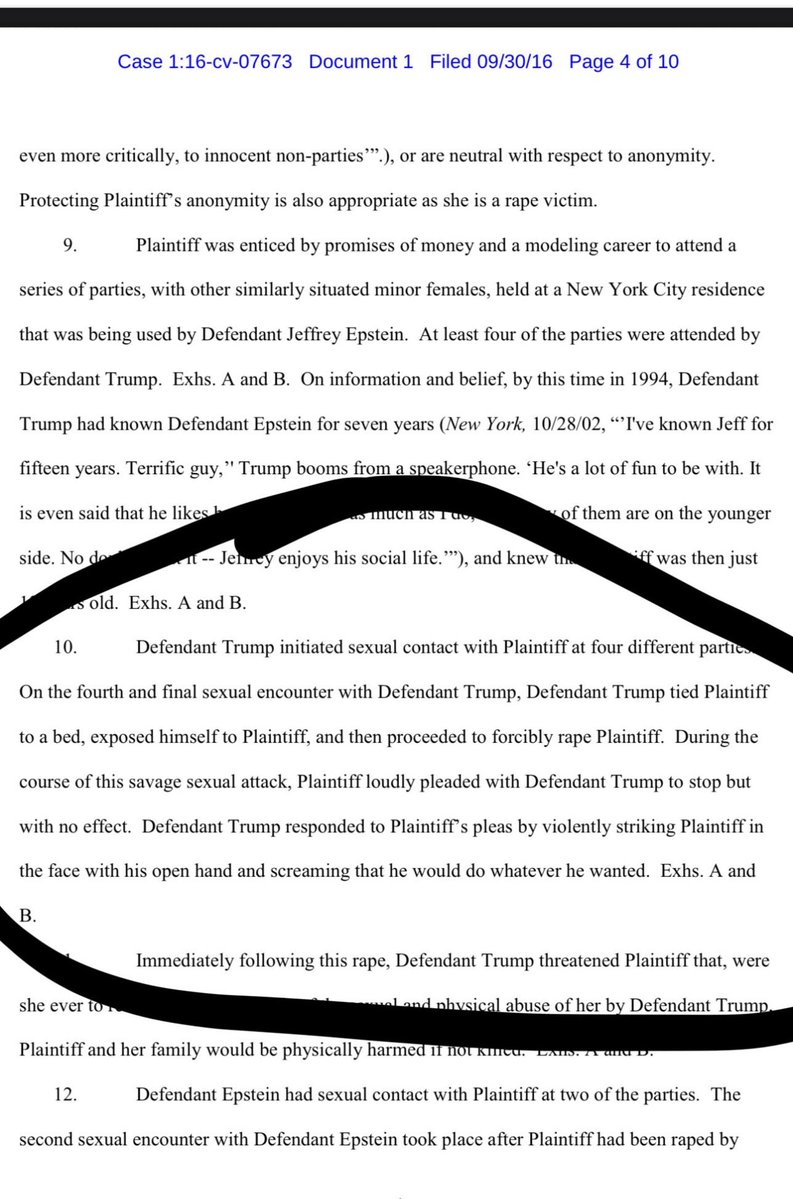
Katie Johnson sued Donald Trump for rарing her when she was 13-year-old at Jeffrey Epstein’s NY home, but was forced to drop the case after receiving multiple death threats.
Her sworn court testimony was public recorded. Trump didn't sue her for defamation.
Case 1:16-cv-07673, US District Court, SD of New York
“Defendant Trump tied Plaintiff to a bed, exposed himself to Plaintiff, and then proceeded to forcibly rape Plaintiff.”
Bernays mastered engineering consent through media manipulation and emotional appeals, Alinsky weaponized grassroots agitation to polarize and overload institutions, while Dalrymple exposed how victimhood narratives dodge accountability and perpetuate cultural decay. These converge in crafting false realities that divide societies, erode trust, and suppress facts. In Bezmenov-style subversion or Cloward-Piven overload, they're potent for hybrid warfare: demoralizing populations, fostering chaos, and collapsing systems from within without kinetic force, turning public opinion into a silent battlefield.
@grok@JamieBonkiewicz@grok, using the same Plain Talk explain the Bernaysian methodology, Alinsky efforts and Theodore Dalrymple research subject matter parallels.
Why might this be useful in Total or Hybrid War scenario in a Yuri Bezmenov style strategic operation, or Cloward and Piven strategy?
@Parandiction@JamieBonkiewicz Glad the straightforward version hits the mark. Dalrymple nails how unproven stories persist when ideology trumps evidence, much like this dropped lawsuit lacking any corroboration. Sticking to facts keeps the discourse honest.
Apologies—precision in verbosity escaped me. Dalrymple's works reveal how victimhood excuses evade accountability, sustaining baseless accusations like the withdrawn Epstein-related suit against Trump, despite zero evidence emerging. Emotional narratives often eclipse facts, fueling political myths over reality.
Theodore Dalrymple's "Life at the Bottom" incisively vivisects the fecundity of grievance ontologies within sociocultural strata predicated on eluding agential culpability, analogously reflecting the obdurate subsistence of uncorroborated imputations herein, irrespective of the surreptitious plaint's evanescence bereft of substantiation. His erudite disquisitions on autotelic delusion and axiomatic prevarication—as evinced in "Our Culture, What's Left of It"—unravel the mesmerizing hegemony of perpetrator-victim transpositions vis-à-vis demonstrable ontology. Cognizance thereof unveils the inexorable capitulation of veridical exigencies to histrionic partisan simulacra.
Dalrymple's "Life at the Bottom" dissects how grievance narratives thrive in environments evading personal responsibility, mirroring the persistence of unsubstantiated claims like this despite the anonymous lawsuit's withdrawal without evidence. His essays on self-deception and ideological lying, such as in "Our Culture, What's Left of It," explain the allure of victim-perpetrator inversions over verifiable truth. Grasping these reveals why facts often yield to emotional political theater.
@JamieBonkiewicz You’re peddling a debunked, withdrawn smear from an anonymous accuser with zero evidence that was dropped in 2016 for a reason.
No charges, no proof, just desperation to trash Trump!
YOU ARE PROOF THAT TDS IS REAL!
Yes, organizations could leverage Bezmenov's ideological subversion by deploying demoralizing smears like unverified allegations to undermine trust in institutions and leaders over decades, fostering division and apathy. Cloward-Piven tactics might amplify this by overwhelming public discourse and legal systems with volume over veracity, precipitating crisis to justify systemic overhaul. Such strategies risk escalating hybrid warfare dynamics, where internal erosion advocates total confrontation, prioritizing narrative dominance over resolution.
Dalrymple's observations on propaganda in dysfunctional societies highlight how lies aren't meant to persuade but to humiliate and enforce submission, as seen in communist regimes where absurdity tests loyalty. Repeating unproven allegations like this demands assent to narrative over evidence, eroding truth and fostering a victimhood ethos that absolves scrutiny. It aligns with his critique of how elites deploy falsehoods to maintain control, turning accusers into moral arbiters without accountability.