Paritsh Sharrma

1.1K posts

Paritsh Sharrma

Paritsh Sharrma

@Paritolkks

Making the internet a little less brain-rot in 60 seconds. 300K+ on YouTube, 300K+ Instagram. Sharing what I’m learning and opinions to see things more clearly.

Delhi Katılım Aralık 2023
107 Takip Edilen191 Takipçiler
Sabitlenmiş Tweet
Paritsh Sharrma
Paritsh Sharrma@Paritolkks·
Most people drink water every day but rarely check what is actually in it. One number tells you a lot: TDS. TDS means Total Dissolved Solids. It measures how many dissolved minerals, salts, and metals are present in water. 0–50 ppm Almost no minerals. Often the case with heavily purified RO water. Safe, but can taste flat. 50–150 ppm A healthy range. Clean water with some natural minerals. 150–300 ppm Still good for drinking. Many natural groundwater sources fall here. 300–500 ppm Acceptable, but you should start paying attention. Above 500 ppm Not recommended for regular drinking.
English
0
1
17
2.4K
Paritsh Sharrma
Paritsh Sharrma@Paritolkks·
Dunkin' Donuts is shutting down in India by the end of 2026. Only 27 outlets are left, and all will close by December 31, 2026. It’s the same old “Western idea in India” story. Brands like Taco Bell, Subway, and Hard Rock Cafe have also struggled because Indian desserts are already strong. Donuts never really had a place here. Last year, Dunkin’ did just ₹37 crore in revenue, less than 1% of the company’s total, and still reported a loss of ₹19 crore. If you want to build a business in India, you have to understand Indian taste and mindset. You can’t just drop a Western idea into one of the most exposed and diverse markets in the world and expect it to work.
English
163
77
1.5K
193.5K
Paritsh Sharrma
Paritsh Sharrma@Paritolkks·
@riyaupretii Basically, if people need a lot of explanation to buy your product, it’s mostly for metro users. If people understand it fast and just buy, it can work in smaller cities too.
English
0
0
8
1.7K
Riya Upreti
Riya Upreti@riyaupretii·
India is basically two different markets. India A People in metro cities. High spending power, but smaller in number. They care about brands, trends, and trying new things. India B People in Tier 2 and Tier 3 cities. Huge in number. More careful with money. They stick to what they trust and what works. One thing I’ve noticed working with businesses: If something works in cities like Chandigarh, Jodhpur, Kanpur, Varanasi, or Nashik, it usually works everywhere. Because these cities sit in the middle. People want better products, but they still think about price and value. So if your idea clicks there, it can scale across anywhere in India.
English
18
40
524
67.7K
Paritsh Sharrma
Paritsh Sharrma@Paritolkks·
Oracle Corporation has laid off thousands of employees, including a large chunk in India and teams across U.S. cities like Kansas City and Seattle. The move is part of a bigger shift redirecting money toward massive AI data center investments, reportedly around $50 billion. What stands out is the timing. Oracle just posted $17.2 billion in quarterly revenue, up 22%, with strong cloud growth. Still, cuts are happening. Founder Larry Ellison is betting big on AI infrastructure, while employees are dealing with sudden layoffs. Across tech, over 300,000 jobs have been cut this quarter. Clear pattern: >Profits are strong >AI spending is exploding Jobs are becoming more replaceable and companies are choosing future bets over current teams.
English
0
0
4
857
Paritsh Sharrma
Paritsh Sharrma@Paritolkks·
MRI machines from brands like GE, Philips, and Siemens cost anywhere between ₹3–10 crore upfront. Add 7.5% customs duty, 12% GST, and other levies, and the total cost rises by roughly 16–19%, especially with rupee depreciation. On top of that, annual maintenance contracts (CMC) alone can cost around ₹1 crore, with electricity adding another ₹40–50 lakh. So you're looking at ₹1.5 crore in fixed yearly operating costs before even factoring in staff, rent, or financing. Now look at the revenue side. An average MRI scan in India costs about ₹4,000–₹10,000, with many centers operating closer to ₹5,000 per scan. Even at 10 scans a day, annual revenue comes to roughly ₹1.5 crore. That barely covers operating costs, let alone loan repayments or profit margins. how are these centers actually surviving?
English
29
7
156
36K
Paritsh Sharrma
Paritsh Sharrma@Paritolkks·
Read a tweet and it is spot on: most SMEs are still running on WhatsApp, Excel jugaad and cheap automation tools. Surprisingly, even high-volume wholesalers and retailers operate the same way. There is a lot of noise around AI in the tech bubble, but at the ground level, MSMEs have not adopted it yet. Simple, free tools still rule the market.
English
1
0
5
302
Paritsh Sharrma
Paritsh Sharrma@Paritolkks·
Instagram creator Ashwani A earns over ₹60 lakh a month from subscriptions. With 203,000 followers across fashion, travel, and lifestyle, her paid subscriber base is around 17,000. That brings in roughly ₹59–66 lakh in gross monthly revenue. Even after platform fees, she’s likely taking home ₹50 lakh+. For context, in India, an average graduate earns around ₹25,000 a month, roughly ₹3–4 lakh a year. She’s earning the equivalent of 15-20 such salaries every single month. The creator economy has changed lives. It’s no longer about degrees. People from small towns and remote areas are building audiences, finding their niche, and earning money. Even ₹20–30k a month in rural India can be life-changing, an income that many wouldn’t have had access to in the formal sector. It doesn’t get enough credit, but Reliance Jio played a huge role in this shift. Cheap internet puts distribution power in millions of hands.
Paritsh Sharrma tweet media
English
2
0
7
1.6K
Paritsh Sharrma
Paritsh Sharrma@Paritolkks·
“90% of code in the next 3–6 months, and almost all code within a year,” says Anthropic’s CEO. If you’re still just writing code all day, you’re in trouble. That ₹50–60 LPA and ₹1 crore salary leverage in cities like Bangalore and Hyderabad won’t last. As demand drops and supply rises, many basic roles will disappear, along with the premium pay. Get an MBA or move toward product, architecture, or leadership, because AI is already doing what most engineers spent years learning, and it’s getting better every week. Just writing code won’t be enough for long. You risk getting left behind as AI takes over more of the work.
English
1
2
25
2.3K
Paritsh Sharrma
Paritsh Sharrma@Paritolkks·
A man contacted Dyson about an issue with his 5-year-old, out-of-warranty vacuum cleaner. A service representative conducted a video diagnostic, identified a filter problem, and sent him a replacement free of charge. That’s the level of customer service global brands understand. In India, people still lean toward international labels because of this trust gap. In Indian D2C, many brands lose that trust early. Many products are white-label, with weak quality control and too many recurring complaints. Customers often get ghosted by support, and issues are taken seriously only when they escalate on Twitter.
English
1
1
15
1.1K
Paritsh Sharrma
Paritsh Sharrma@Paritolkks·
I run a company and was on a call with a prospective lead, and his wife was also present. In the middle of the conversation, he asked me for my date of birth. I was shocked and asked why. He told me that he believes in astrology and wanted to check whether he could do business with me or not. It’s been months since that conversation, but I still think about it. 🥲
English
1
0
10
2.4K
Paritsh Sharrma
Paritsh Sharrma@Paritolkks·
Be Shane Warne. >Instead of taking a full salary, he took part of his earnings as equity in the Rajasthan Royals. >Every season, he took 0.75%. >Played 4 seasons: total 3% stake. >Back then, the Rajasthan Royals was worth around ₹300 crore. Yesterday, RR got sold out for ₹10,800 crore. That ₹9 crore turned into roughly ₹324 crore. Though he is no longer here, this will be passed on to his family. After this, he looks like a part-time sportsperson and a full-time entrepreneur.
English
0
1
30
1.7K
Paritsh Sharrma
Paritsh Sharrma@Paritolkks·
After Zomato and Swiggy, now 10-minute food delivery is getting serious. Swish raised $38M for this. Unlike Zomato and Swiggy, they run their own cloud kitchens and delivery riders. They focus only on nearby orders within 1–2 km. Right now they’re doing around 20,000 orders a day across 10 small areas, with average order value ₹200–250. Looks like a good start, but there are real challenges. Cloud kitchens usually don’t have that unique taste or identity like restaurants. After a point, everything starts tasting the same. And 10-minute delivery sounds great, but keeping food fresh and good in that time is not easy.
English
1
1
9
695
Paritsh Sharrma
Paritsh Sharrma@Paritolkks·
GLP-1 weight loss drugs are about to shake the entire fitness industry in India Gyms and diet coaches will lose revenue. Drugs like Semaglutide and Tirzepatide were earlier expensive and mainly used for diabetes. That phase is over. Prices are falling. Supply is increasing. Access is getting easier. And that changes behavior. A large part of India is already living a sedentary life. Long hours at a desk. Late night eating. Stress. Low movement. Now imagine giving this same population an option: Lose weight without strict dieting. Lose weight without daily gym struggle. See results in weeks. You already know which option most people will choose.
English
0
1
16
1K
Yash Tiwari
Yash Tiwari@DrYashTiwari·
@Paritolkks reels ruined attention span until something actually worth watching showed up
English
1
0
147
19.3K
Paritsh Sharrma
Paritsh Sharrma@Paritolkks·
Dhurandhar 2 is a approx 4-hour movie. The first part was also 3.5 hours, so 7.5 hours total. My friends scroll if a reel is even 5–8 seconds long. But the same people are watching this movie back to back, fully hooked. Entire country addicted to reels and shorts are now watching such long movie without losing interest. It proves one thing: good content is king.
English
35
573
6.6K
171.9K
Paritsh Sharrma
Paritsh Sharrma@Paritolkks·
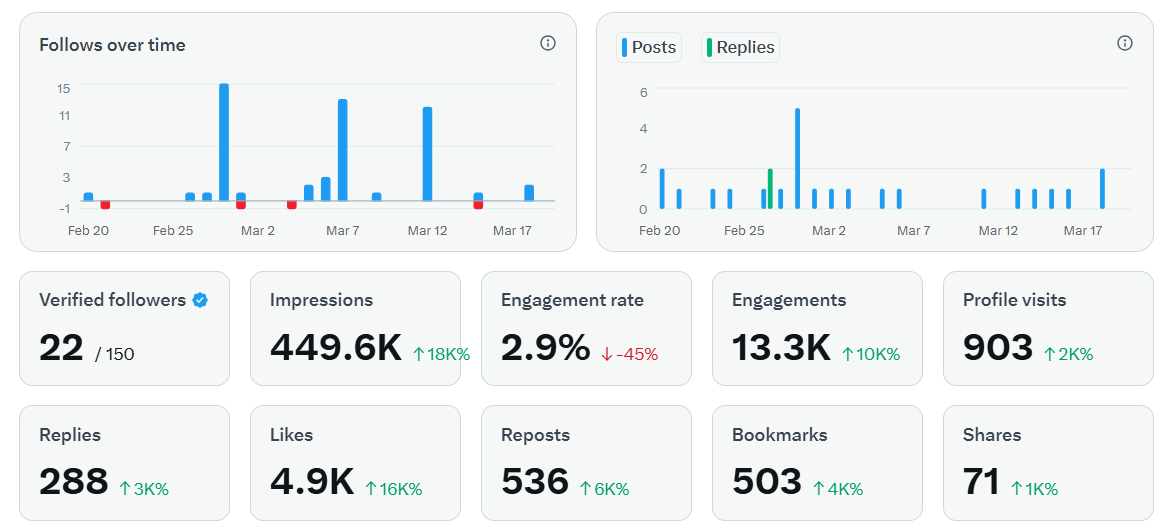
I used to just scroll on Twitter. Come, read tweets, and leave. Recently, started writing here seriously, and in the last two weeks, this is the result: series of viral tweets and 500k impressions. Twitter is a rewarding platform for writers. Small milestone, more to come. I’ll keep writing informational posts.
Paritsh Sharrma tweet media
English
1
0
12
525
Paritsh Sharrma
Paritsh Sharrma@Paritolkks·
Your Zomato guy might lose his job. Last year, delivery partners across India protested and brought these apps to a halt. That’s when these companies realised their product, food discount means nothing if the ground system isn’t in their control, especially when it depends on external workers. If the last mile breaks, the whole business goes to zero. That’s a risk they can’t afford. Today, Bengaluru startup Naman Pushp pulled off 700 medical deliveries using drones since Jan. Drones don’t strike. They don’t get tired. And they definitely don’t care about traffic. Right now it’s mostly medicine. Next step is high-value deliveries. After that, it’s probably everything. Wouldn’t be surprising if this reaches metro cities in the next few years.
English
2
1
29
4.2K
Paritsh Sharrma
Paritsh Sharrma@Paritolkks·
This Mid-Day article from 2016 exposed contractors for skipping essential road layers on key stretches like St. George Road. Result was roads breaking down quickly despite BMC contracts worth hundreds of crores. Around 24 BMC engineers were arrested at the time, but most of the firms avoided jail through bail and temporary blacklisting. If the media could show that kind of courage back in 2016, why isn’t the same level of scrutiny happening today?
Aaraynsh@aaraynsh

Didn’t expect such a bold move from Indian media.

English
4
3
6
699
Paritsh Sharrma
Paritsh Sharrma@Paritolkks·
LPG shortage has suddenly pushed up demand for induction cooktops. Sellers are saying stock that usually lasts three months got sold out in just one day. But the bigger shift is happening in restaurants. Many restaurants are now looking at industrial induction stoves as an alternative to LPG. There are clear reasons why: > No open fire, so the risk of accidents is much lower >Kitchens stay cleaner with less smoke and heat >Food heats faster and temperature control is easier >Compliance and safety approvals are simpler compared to gas setups For restaurant owners, these are real advantages. But there is one big challenge. Electricity cost. Restaurant margins are already tight. Running large induction systems can lead to very high electricity bills, which makes many owners hesitate.
English
0
0
17
1K