PatSnap Eureka

53 posts

PatSnap Eureka banner
PatSnap Eureka

PatSnap Eureka

@PatSnapEureka

AI for every R&D team.

Singapore Katılım Kasım 2025
21 Takip Edilen452 Takipçiler
Sabitlenmiş Tweet
PatSnap Eureka
PatSnap Eureka@PatSnapEureka·
33% of the world's top 2,500 R&D spenders already rely on PatSnap Eureka. Introducing the new PatSnap Eureka: an #AI platform that turns complex technical questions into decisions you can act on. From concept to market, where R&D and IP execute. Your next confident decision starts here: eureka.patsnap.com/?from=mktcampa…
PatSnap Eureka tweet media
English
8
0
14
3.6K
PatSnap Eureka
PatSnap Eureka@PatSnapEureka·
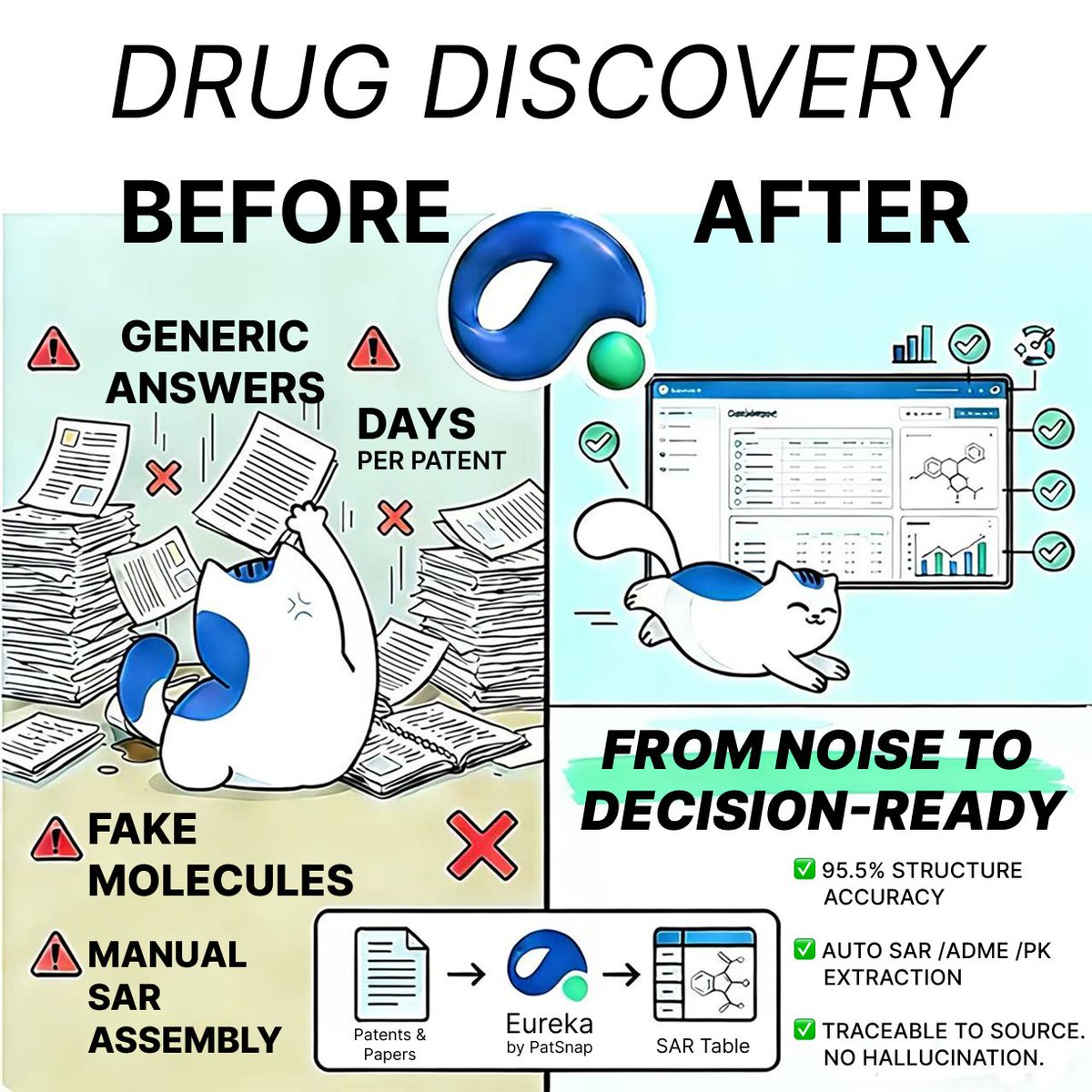
Drug discovery bottleneck: Not finding data. Trusting the data you find. How to fix: ✓ Auto structure extraction (95.5% accurate) ✓ Auto SAR/ADME/PK analysis (traceable to source) ✓ Ready for decision (no manual compilation) #DrugDiscovery #Biopharma
PatSnap Eureka tweet media
English
5
0
2
187
PatSnap Eureka
PatSnap Eureka@PatSnapEureka·
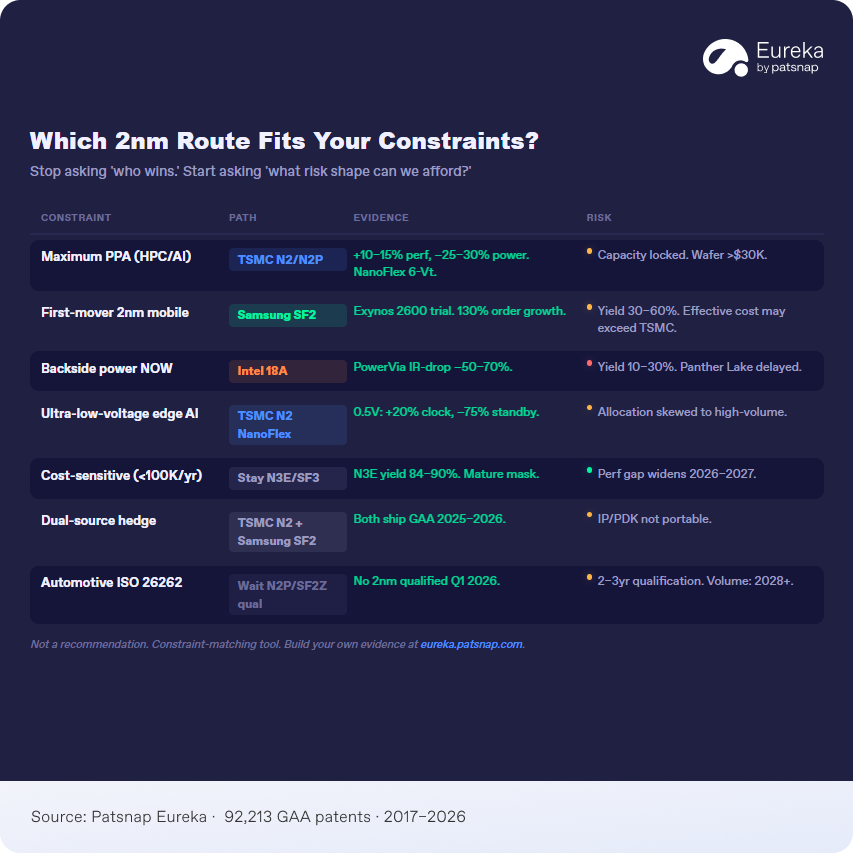
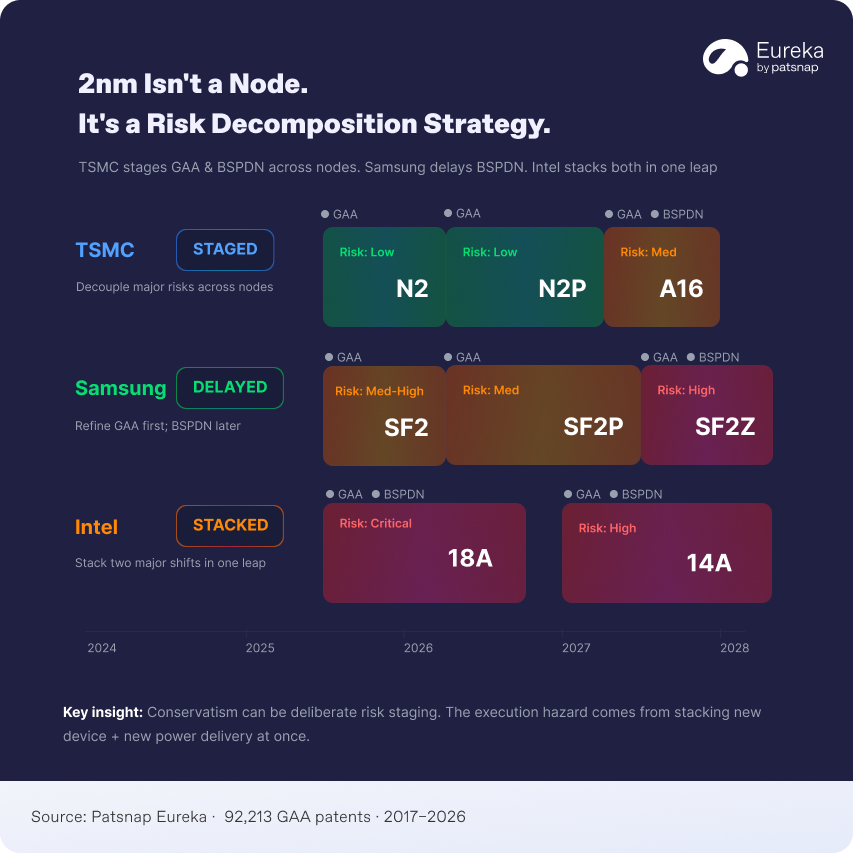
The 2nm question is not “Who wins?” For R&D teams, it is: Which risk shape can your program actually absorb? That is why foundry selection at 2nm is less about headline PPA, and more about matching technical ambition to manufacturability, schedule, and cost. We turned that into a practical route-selection framework in the full piece. #Semiconductors #2nm #TSMC
PatSnap Eureka tweet media
English
5
0
8
207
PatSnap Eureka
PatSnap Eureka@PatSnapEureka·
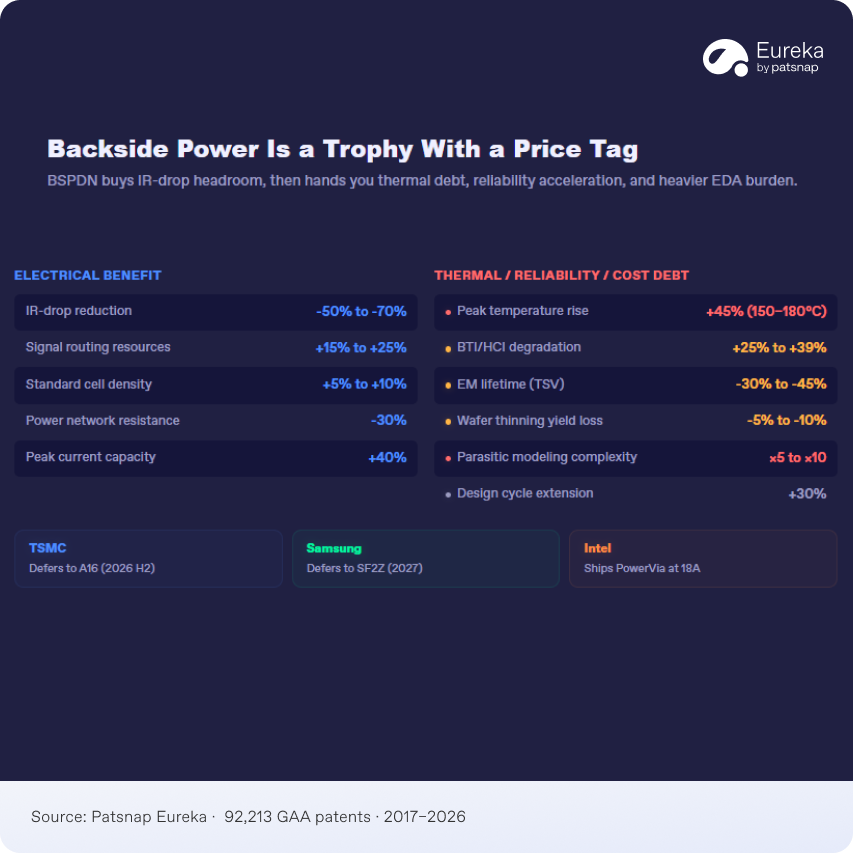
Backside power is the trophy with a price tag. It can cut IR drop and improve routing efficiency. But it also brings a much harsher thermal and reliability ledger. In our 2nm analysis, this is one reason TSMC defers BSPDN to A16, Samsung to SF2Z, while Intel 18A takes the full stack at once. For R&D teams, this is the real question: not just what the architecture promises, but what it costs to make manufacturable. #Semiconductors #2nm #Intel
PatSnap Eureka tweet media
English
2
0
1
149
PatSnap Eureka
PatSnap Eureka@PatSnapEureka·
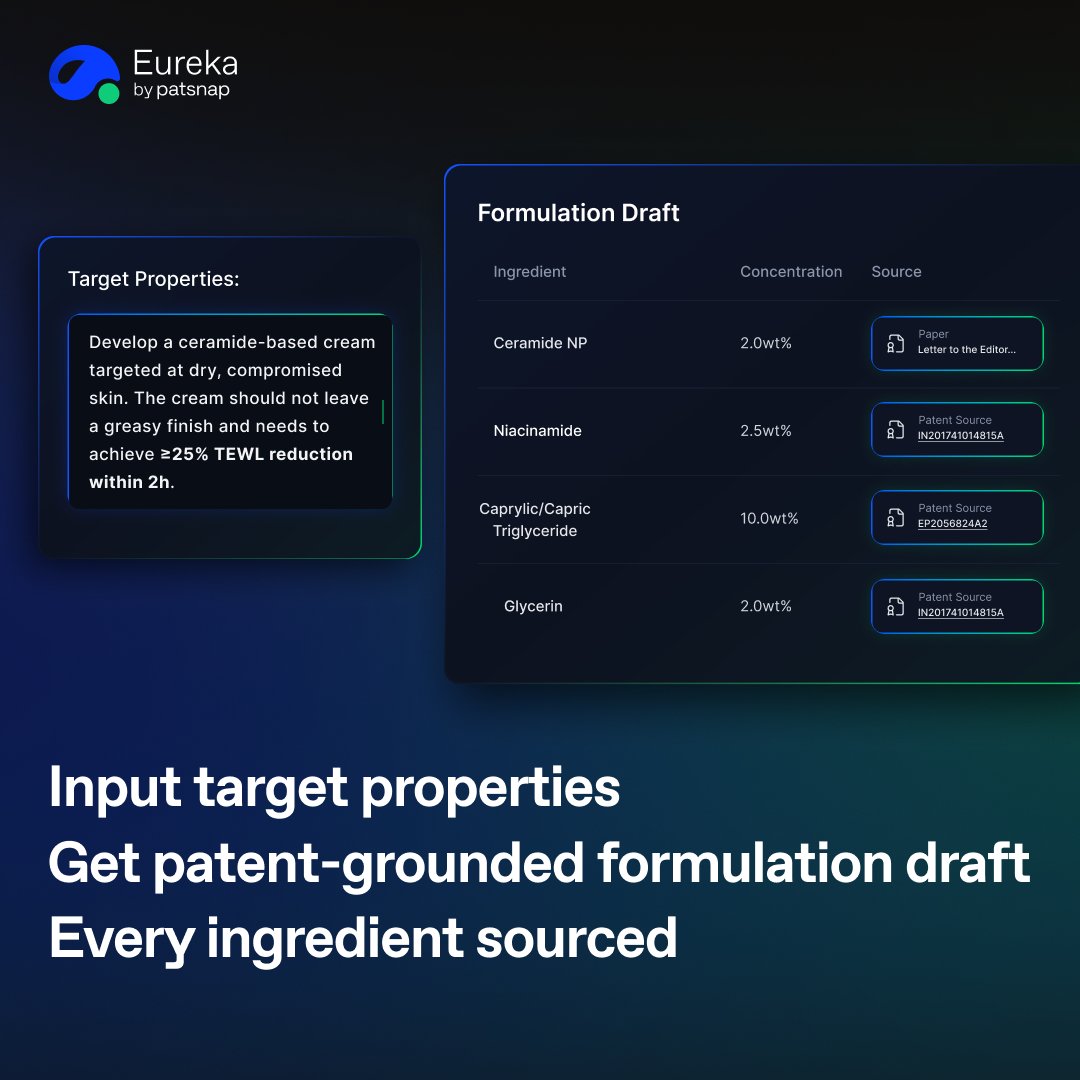
Your formulation team doesn't need more experiments. They need better starting points. See how PatSnap Eureka Materials Formulation Agent changes the starting point. Less guesswork. Fewer iterations. Faster results. #MaterialScience #Formulation
English
1
0
0
101
PatSnap Eureka
PatSnap Eureka@PatSnapEureka·
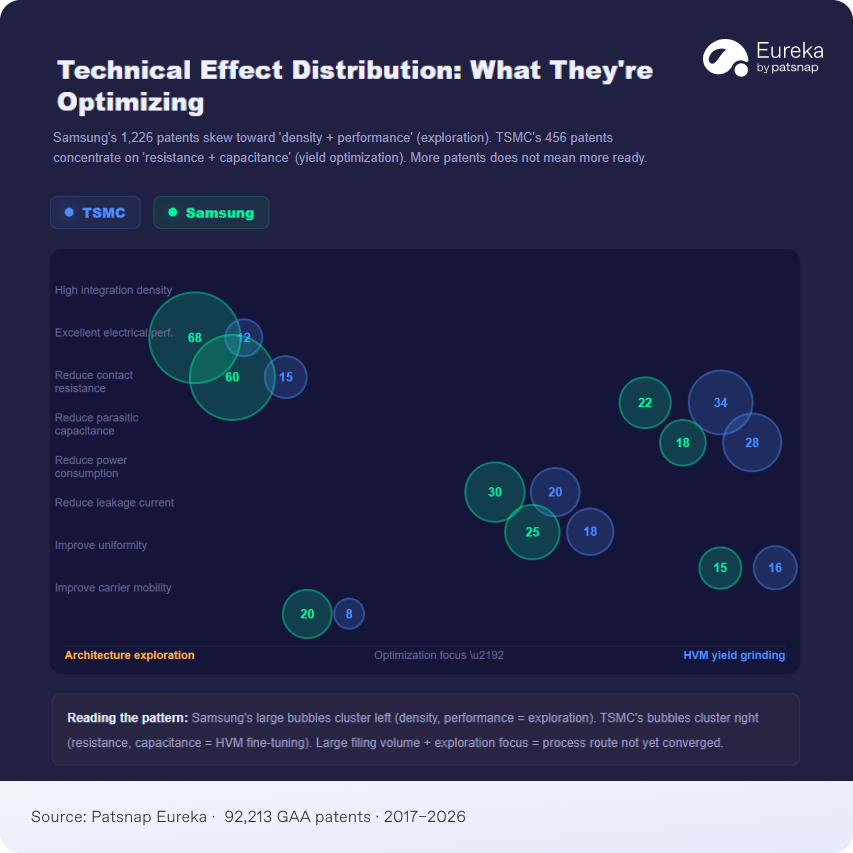
More filings do not mean a process is more ready. The more useful question for R&D teams is: what are those patents actually trying to solve? TSMC’s GAA portfolio clusters around contact resistance, parasitic capacitance, and process uniformity. Samsung’s leans more toward integration density, electrical performance, and mobility improvement. That is the difference between yield-grinding for volume manufacturing and still converging on the route. Based on 92,213 GAA-related filings from 2017–2026. #Semiconductors #TSMC #2nm
PatSnap Eureka tweet media
English
1
0
0
243
PatSnap Eureka
PatSnap Eureka@PatSnapEureka·
One chart for R&D teams tracking the 2nm race beyond the headlines. TSMC, Samsung, and Intel are making very different bets on where the real risk sits: staged, delayed, or stacked. We analyzed 92,213 GAA patents to map this. #Semiconductors #TSMC #2nm
PatSnap Eureka tweet media
English
2
0
1
132
PatSnap Eureka
PatSnap Eureka@PatSnapEureka·
Musk's Terafab announcement is getting framed as a manufacturing moonshot. For R&D teams, the more useful signal is this: advanced-node scarcity is no longer abstract. The 2nm race is not just about who gets there first. It’s about who can scale under real constraints: yields, capacity, ecosystem coordination, and execution risk. We broke it down using 92,213 patents and 27 core technical papers. Full analysis with all the charts and data: open.substack.com/pub/evidenceen… #Terafab #2nm #Semiconductor #AIChip
PatSnap Eureka tweet media
English
6
0
3
193
PatSnap Eureka retweetledi
Faheem Ullah
Faheem Ullah@Faheem_uh·
PhD Students – How to identify trends in your research? First, let’s understand why trends are important. Identifying trends in research can help you ➝ To see if a research area is active or saturated ➝ To find research gaps ➝ To understand how a research field has evolved ➝ To identify emerging R&D opportunities 𝐇𝐨𝐰 𝐭𝐨 𝐢𝐝𝐞𝐧𝐭𝐢𝐟𝐲 𝐭𝐫𝐞𝐧𝐝𝐬 𝐢𝐧 𝐫𝐞𝐬𝐞𝐚𝐫𝐜𝐡? 1. Go to eureka.patsnap.com/rd-home?from=m… 2. Enter your question or research area 3. @PatSnapEureka surfaces trend analysis 4. This analysis is drawn from 200M+ patents & papers What you get back isn't just a keyword frequency chart. The trend analysis contains the following ✓ 𝐑𝐞𝐜𝐞𝐧𝐜𝐲: The number of papers in the past 3 years ✓ 𝐈𝐧𝐟𝐥𝐮𝐞𝐧𝐜𝐞: The number of citations in the past 3 years ✓ 𝐓𝐫𝐞𝐧𝐝: Trend of papers in the past 10 years (growing? plateauing? fading?) Try Eureka for FREE: eureka.patsnap.com/rd-home?from=m…
English
1
17
79
4.9K
PatSnap Eureka
PatSnap Eureka@PatSnapEureka·
Most AI tools stop at answers. Engineering teams need more than that: they need traceable evidence, structured solution paths, and decision-ready outputs. That’s what the new PatSnap Eureka Engineering is built for. From patents and literature search to TRIZ-based solution finding to real-time technology monitoring so teams can move faster from research to execution.
English
2
0
0
166
PatSnap Eureka
PatSnap Eureka@PatSnapEureka·
@PhDtoProf Thanks for testing with PatSnap Eureka, Emmanuel! This is gold. “Searching in one language” is the real trap. And love the prompt checklist approach: practical, repeatable, and immediately useful.
English
0
0
1
16
Emmanuel Tsekleves
Emmanuel Tsekleves@PhDtoProf·
I've been using Patsnap Eureka (@PatSnapEureka ) to test these prompts. It's a free AI search engine that matches meaning rather than keywords across 210M+ scientific papers. Three modes: one for mapping your field, one for finding solutions across disciplines, one for checking whether your contribution already exists.
English
2
0
1
395
Emmanuel Tsekleves
Emmanuel Tsekleves@PhDtoProf·
Everyone tells PhD students to read more papers. After examining 45+ theses, I can tell you the problem isn't reading too little. It's searching in one language.
Emmanuel Tsekleves tweet media
English
22
45
169
9.5K