Joe L · PeptideNotes

22 posts

Joe L · PeptideNotes banner
Joe L · PeptideNotes

Joe L · PeptideNotes

@PeptideNotes

Working toward a more transparent and trustworthy peptide industry. Notes on QC, analytics, supply chains, and market trends.

休斯顿 Katılım Temmuz 2026
20 Takip Edilen2 Takipçiler
Joe L · PeptideNotes
Joe L · PeptideNotes@PeptideNotes·
PeptideNotes Reference Card #002 Metabolic peptides have become some of the most discussed molecules in modern biomedical research. But not all metabolic peptides are the same. GLP-1 receptor agonists, dual agonists, triple agonists, amylin analogues, and other metabolic peptides work through different biological pathways. They differ in: • Mechanism of action • Research background • Evidence level • Safety considerations Understanding these differences is far more valuable than simply recognizing a peptide's name. This reference card summarizes some of the most commonly discussed metabolic peptides and their key characteristics. Learn first. Trends can wait. #Peptides #Biotech #Metabolism
Joe L · PeptideNotes tweet media
English
0
0
0
9
Joe L · PeptideNotes
Joe L · PeptideNotes@PeptideNotes·
PeptideNotes Reference Card #001 I spent the past few days organizing this peptide reference series. Not because peptides are a miracle. And not because peptides are something to fear. Peptides are part of the progress of modern biological science. They are molecules that help us better understand how life works — from metabolism and cellular signaling to tissue processes and human health research. But like any area of scientific research, understanding matters. Blind trust can lead to misuse. Blind rejection can prevent progress. The future of peptide science depends on better knowledge, better transparency, and better understanding. This series is an effort to make peptide information easier to understand. Before we discuss what a peptide can do, we should first understand what a peptide is. #Peptides #Biotech #LifeScience
Joe L · PeptideNotes tweet media
English
0
0
2
21
Joe L · PeptideNotes
Joe L · PeptideNotes@PeptideNotes·
Compliance Is Necessary. But Is It Enough? The peptide industry is moving toward a more regulated future. Stronger quality systems, better documentation, improved manufacturing standards, and clearer regulatory pathways are necessary steps for the industry. This is a positive direction. But regulation alone does not solve every challenge. One question is still rarely discussed: How do we build a peptide supply chain that is not only compliant and high quality, but also transparent and sustainable? The future of the industry is often described in a simple path: RUO → GMP → regulated supply chain. But global markets are far more complex. The manufacturing cost of a peptide is only one part of the final price. The real cost may come from: • regulatory requirements • import procedures • customs and taxation • local distribution systems • compliance infrastructure For many countries, especially emerging markets, these factors can significantly increase the final cost. A peptide that is relatively affordable at the manufacturing level may become several times more expensive after moving through a fully regulated international supply chain. This creates an important question: Can the future peptide industry achieve both higher standards and greater transparency? Quality matters. Compliance matters. But transparency throughout the supply chain matters too. The next stage of the peptide industry may not only be about making better products. It may be about building better systems to deliver them.
Joe L · PeptideNotes tweet media
English
0
0
1
16
Joe L · PeptideNotes
Joe L · PeptideNotes@PeptideNotes·
Spent today reading about peptide manufacturing trends. One thing I keep noticing: everyone talks about purity numbers, but fewer people talk about impurity profiles and process consistency.😑😑😑
English
0
0
0
17
Joe L · PeptideNotes
Joe L · PeptideNotes@PeptideNotes·
Regulation is necessary, but compliance alone does not solve the global accessibility problem. The biggest challenge is not peptide synthesis cost — it is the cost of moving a regulated product through different countries' regulatory and tax systems. In markets like Brazil, a fully compliant import pathway can multiply the final price to a level where patients or researchers simply cannot access it. The future challenge may not only be quality control, but building affordable compliant supply chains.
English
0
0
0
21
Krysia
Krysia@Krysia830073·
RUO, Retatrutide and Regulatory Risk Part of my exclusive in-person interview with Jeff Cohen exploring the future of the peptide industry. Jeff Cohen says the panic among RUO websites before January stemmed from what he describes as credible rumours that regulators were preparing a major enforcement action against GLP sales. He says businesses reacted differently because each had its own tolerance for regulatory risk. Some removed GLPs entirely, while others chose to continue operating. He compares the situation to drivers exceeding the speed limit: everyone makes their own judgement about how much risk they are willing to take. Cohen says losing GLP products would mean losing a significant proportion of revenue for many businesses, so some companies adapted by expanding into telehealth, working with clinicians or diversifying their business models instead of relying solely on direct-to-consumer sales. A Path to Legitimacy According to Cohen, underground peptide businesses do have legitimate long-term pathways. He identifies two: Becoming a CGMP-certified manufacturer. Operating as a 503A or 503B compounding pharmacy. He believes regulators place significant value on recognised quality standards and encourages manufacturers to pursue certifications such as CGMP, FDA inspections, ISO standards and USP compliance to demonstrate quality and safety. The Future of 503 Pharmacies Cohen believes 503A pharmacies will continue to have a future, including for GLPs where there is an individual clinical need. He expects 503B pharmacies to continue supplying many non-GLP peptides but believes they will face increasing pressure over GLPs, particularly retatrutide, because pharmaceutical companies are heavily invested in protecting that market. Reducing Regulatory Risk Cohen says websites are often the primary trigger for FDA warning letters, cease-and-desist letters and lawsuits. He recommends avoiding: Claims about health outcomes or expected results. References to pharmaceutical brand names or ingredient names. Content that promotes human use while simultaneously marketing products as research use only. He says narrowing a website’s public content reduces the likelihood of becoming an enforcement target. Growing Scrutiny Beyond Websites Cohen believes regulatory attention is extending beyond websites into educational platforms and clinician activity. He cites media reporting on compounded retatrutide as evidence that public opinion is being shaped ahead of broader enforcement. He argues that clinicians routinely prescribe compounded, off-label and experimental medications as part of medical practice, but believes retatrutide is receiving exceptional scrutiny because pharmaceutical companies are preparing to protect the market once approval is granted. Retatrutide’s Future Cohen predicts retatrutide will become one of the most valuable products in the peptide market. He says that if retatrutide were ever classified as a biologic, only the pharmaceutical manufacturer would be permitted to produce it, preventing compounding pharmacies from supplying it. In his view, this would reduce availability, increase demand and drive prices significantly higher for consumers. Watch interview here
Krysia@Krysia830073

RUO, Retatrutide and Regulatory Risk Part of my exclusive in-person interview with Jeff Cohen exploring the future of the peptide industry.

English
5
6
34
6.4K
James | 9th Life
James | 9th Life@_9th_Life_·
May 2024, I used to be one thick ass MFer… lol
English
14
1
83
3.7K
Joe L · PeptideNotes
Joe L · PeptideNotes@PeptideNotes·
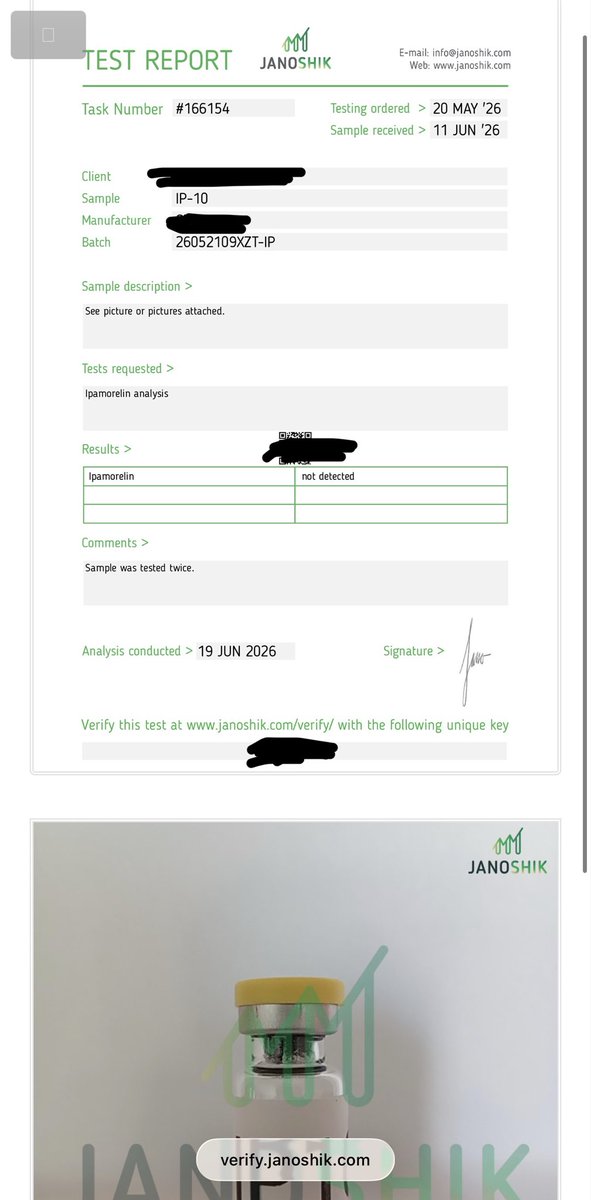
A recent discussion around peptide testing raised a bigger question: What actually makes a COA trustworthy? Purity numbers are important, but transparency, traceability, and verification matter just as much. I explored this topic further in my latest note on COAs, testing systems, and building trust in the peptide market. More notes on peptide quality and analytical transparency.
Joe L · PeptideNotes@PeptideNotes

x.com/i/article/2075…

English
0
0
0
25
Joe L · PeptideNotes
Joe L · PeptideNotes@PeptideNotes·
This is an interesting case because it highlights a bigger issue in the peptide market: trust infrastructure. A COA is not only about the purity number. The credibility of the testing chain itself matters — who tested it, how samples are handled, and whether the result can be independently verified. Transparency is becoming just as important as analytical results.
English
0
0
0
25
Krysia
Krysia@Krysia830073·
Brown Biology is back. This time it isn’t Peptide.Mom. Another Chinese supplier, Light Peptide, is now using Brown Biology COAs and directing customers to the same verification website. The more questions I asked, the stranger the conversation became. Who is Brown Biology? Where is it located? I've now been given an address of Brown Laboratory, California Institute of Technology (Caltech), Pasadena, California, USA. Read the full article here
Krysia@Krysia830073

x.com/i/article/2074…

English
6
0
19
5.2K
Joe L · PeptideNotes
Joe L · PeptideNotes@PeptideNotes·
A hard truth about COAs in the peptide market: A COA does not automatically prove that the vial in your hand is the same vial—or even from the same batch—that was tested. Many peptides leave the factory in plain, unlabeled white vials. Distributors can add their own labels later. With a basic label printer, almost anyone can print a product name, batch number, manufacturing date, or testing date. That creates a major traceability problem. Even when a report comes from Janoshik or another recognized laboratory, the test only verifies the sample that was actually submitted. It does not prove that every vial carrying the same batch number contains the same material. A distributor could, in theory, place the tested batch number on other vials. Without sealed sampling, documented chain of custody, and independent batch selection, customers cannot confirm that the tested sample truly represents the products being sold. The same limitation applies to community or Telegram group testing. Crowdfunding a laboratory test can confirm the quality of one submitted vial—and perhaps give some indication about the batch received by that buyer—but it cannot prove the quality of every vial sold before or after that test. Community testing is still better than having no data at all, but it should not be treated as absolute proof. There is also another risk: the person organizing the test may have a commercial relationship with the seller, may receive specially selected samples, or may not be as independent as the community assumes. So what does a laboratory report really provide? Evidence about one sample at one point in time. Not guaranteed proof of the entire batch. Not guaranteed proof of future shipments. And definitely not guaranteed proof that every vial with the same label contains the same product. COAs and third-party tests are useful—but without traceability and chain of custody, they are often closer to reassurance than certainty. #PeptideSourcing #PeptideTesting #Janoshik #BiotechSupplyChain #PeptideWiki #HarmReduction
English
0
1
2
57
Joe L · PeptideNotes
Joe L · PeptideNotes@PeptideNotes·
1. The "99% Purity" Trap (Look at the Impurities) Almost every vendor claims "≥99% Purity." On a standard HPLC report, purity just means the percentage of the main peak relative to other peptide peaks. The Scam: Low-tier manufacturers run HPLC at high flow rates or use short columns to deliberately "compress" the data, blending minor deletion sequence peaks into the main peak to forge a higher purity reading. The Defense: Never trust a standalone PDF certificate of analysis (CoA). Demand the raw, high-resolution HPLC chromatogram showing a clear baseline, along with the Mass Spectrometry (MS) data confirming the molecular weight matches the target sequence precisely. 2. Lyophilization "Visuals" Mean Nothing Many buyers think a large, fluffy, uniform cake at the bottom of the vial signifies high quality. The Scam: Sellers regularly add heavy bulking agents—usually Mannitol or Trehalose—to make a microscopic amount of peptide look substantial. Worse, bad freeze-drying technique can destroy the peptide’s stability while looking perfectly fine to the naked eye. The Defense: Judge by Net Peptide Content via Amino Acid Analysis (AAA), never by the physical size of the cake. A tiny, uneven smear of powder can easily be higher quality than a pristine, massive white puck. 3. The TFA Salt Cover-Up During solid-phase peptide synthesis (SPPS), Trifluoroacetic Acid (TFA) is standard for cleavage and elution. The final product is a TFA salt. The Trap: TFA is highly cytotoxic. If your research involves sensitive cell cultures (in vitro) or specific biological assays, residual TFA can kill cells or skew your data entirely, rendering your whole experiment useless. The Defense: If your application is sensitive, don't just buy standard inventory. Pay for salt exchange (converting the peptide to an Acetate or HCl salt) and demand a quantitative test proving residual TFA is below 1%. 4. Overpaying for "Made in the USA/Europe" Labeling There is a massive amount of regional repackaging in this industry. The Reality: The vast majority of raw, bulk peptide synthesis happens in highly sophisticated, large-scale chemical labs in Asia. Many domestic Western brands simply purchase raw bulk powder overseas, aliquot it into vials, freeze-dry or label it locally, and mark the price up by 500%. The Defense: Cut through the marketing. Don't pay a premium for a flag on a label. Instead, judge a vendor purely on their batch-to-batch testing transparency, continuous QA/QC traceability, and customer service guarantees. A transparent, direct-to-source manufacturer with open data beats a flashy middleman every time. 5. False Shelf-Life Promises Vendors love to say, "Our peptides last 2 years at room temperature." The Truth: Unmodified, highly hygroscopic, or sequence-unstable peptides (like those containing Cysteine, Methionine, or Tryptophan) degrade rapidly when exposed to even minor moisture or ambient light. The Defense: True professional vendors ship sensitive sequences on blue/dry ice and explicitly state sequence stability. If a vendor treats every single peptide sequence with the exact same storage blanket statement, they don't understand their own chemistry. #PeptideSourcing #Biotech #ChemicalSynthesis #HPLC #PeptideWiki #SupplyChain
English
0
0
0
39
Joe L · PeptideNotes
Joe L · PeptideNotes@PeptideNotes·
Works more for the fatties” is wild 💀😂 But honestly, this is exactly the kind of wild west madness that inspired me to start building a Peptide Wiki. The market is so flooded with kitchen chemists and zero COAs that people don't even know what they’re injecting. Glad you snapped out of it! This space desperately needs more clean, independent data.
English
0
0
0
3
Peptide Confessions
Peptide Confessions@pepfessions·
there are random people in this app's DMs right now selling reta out of their kitchen. I know because I almost bought from one. his whole pitch was "down 20 lbs in 31 days" and when I asked about testing he said "works more for the fatties" and I actually laughed and almost sent the money anyway. that's how you know you're not thinking straight. a stranger with no name, no COA, no address, and I was one Venmo away. don't be the version of me from that night.
English
2
1
15
2.4K
Joe L · PeptideNotes
Joe L · PeptideNotes@PeptideNotes·
The misinformation in the peptide market is exactly why I decided to chip in and start building a Peptide Wiki. It’s early days and I’ve only got a few articles up so far, but we desperately need more high-quality hubs to counter the chaos. Glad to see others pushing for reliable standards!
English
0
0
0
34
James | 9th Life
James | 9th Life@_9th_Life_·
Seems like everyone wants their own peptide guide/resource platform all of a sudden. Reptides is open to new partners and affiliates. Giving your audience high quality, researcher-backed, up to date evidence is easier said than done. It’s a lot to take on alone, especially with other irons in the fire. If you want to put solid information in front of your audience without building the whole thing yourself, my DMs are always open.
English
2
0
29
1.9K
Joe L · PeptideNotes
Joe L · PeptideNotes@PeptideNotes·
@billerwin40513 @fitcapbiohacker No. It’s a waste of money and a recipe for side effects. ❌ ​Here is the biological breakdown of why this stack makes zero sense, and what you should do instead. 👇 ​ x.com/i/status/20743…
Joe L · PeptideNotes@PeptideNotes

Can you stack CJC-1295 and Tesamorelin together? ​Short answer: No. It’s a waste of money and a recipe for side effects. ❌ ​Here is the biological breakdown of why this stack makes zero sense, and what you should do instead. 👇 ​1/ Mechanism Overlap (The Traffic Jam) ​Both CJC-1295 and Tesamorelin are GHRH (Growth Hormone Releasing Hormone) analogs. They fight for the exact same receptors in your pituitary gland. Stacking them is like turning on two heaters in a small room—you just hit receptor saturation faster. ​2/ Receptor Downregulation ​Flooding your system with two heavy GHRH analogs simultaneously can cause your pituitary receptors to desensitize. Instead of more GH, you get diminishing returns and a sluggish response over time. ​3/ Side Effect Stacking ​You aren't doubling the benefits, but you are doubling the risks: • Severe water retention (bloating) • Carpal tunnel symptoms (numbness/tingling) • Increased insulin resistance (spiked blood sugar) ​💡 The Smart Protocol (GHRH + GHRP): ​If you want a synergistic effect, combine a GHRH with a GHRP (like Ipamorelin). • CJC-1295 releases the GH stream. • Ipamorelin blunts somatostatin to trigger the pulse. That’s how you get 1+1=3. 🧪 ​#Peptides #Biohacking #FitnessScience

English
0
0
0
13
Bill Erwin
Bill Erwin@billerwin40513·
@fitcapbiohacker Running CJC with Ipa currently. Will finish that cycle and run Tesa with Ipa next. Its my understanding you cant run CJC and Tesa together, right? Something about redundancy that neutralizes both?
English
3
0
4
213
💯 fitcap 💯
💯 fitcap 💯@fitcapbiohacker·
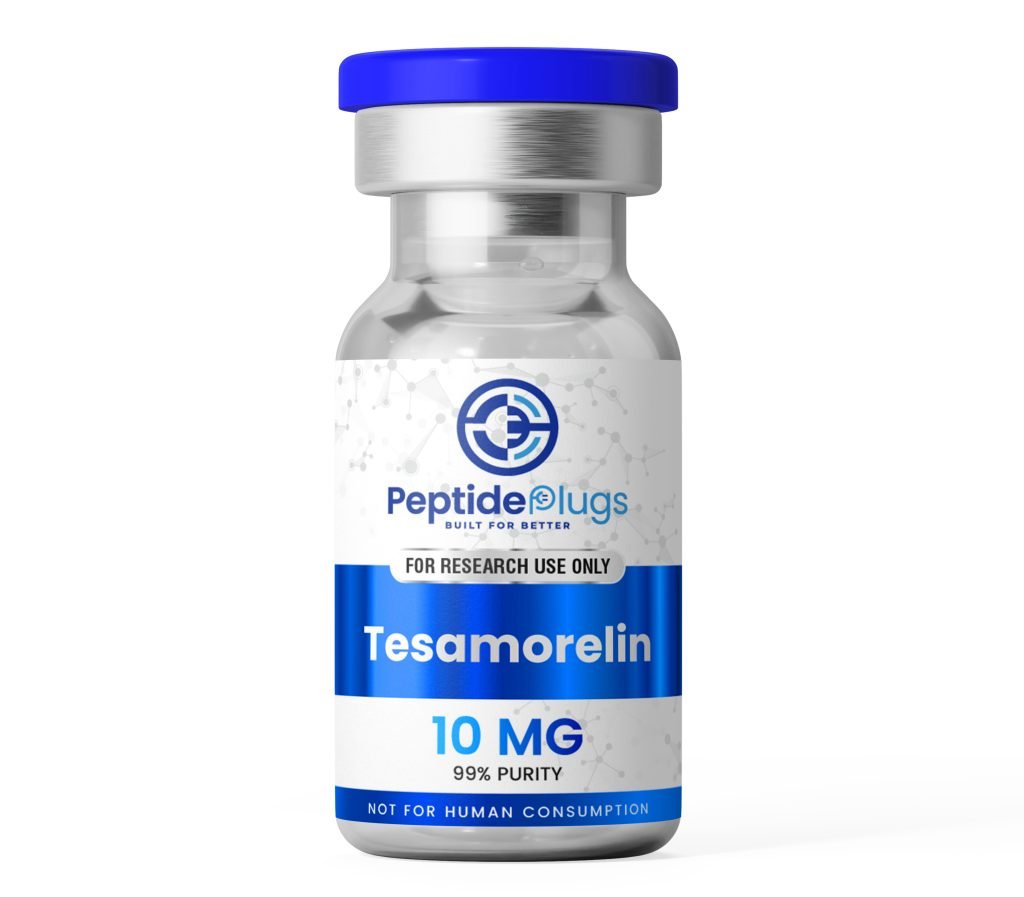
Tesamorelin: The Visceral Fat Crusher Tesamorelin is a GHRH analog that tells your pituitary to pump out more of your own natural growth hormone. What makes it special? It has the strongest clinical backing of any peptide for specifically targeting visceral adipose tissue — that deep, dangerous fat wrapped around your organs. Unlike most fat-loss tools, it preferentially reduces VAT while often leaving subcutaneous fat and scale weight relatively unchanged. Users (and studies) consistently see drops in waist circumference, better body comp, improved lipids, and that tighter midsection without the usual trade-offs. Perfect addition in a cut or recomp when diet + training have already handled the easy fat but that stubborn visceral layer is still hanging around. Stacks nicely with ipamorelin or other GH secretagogues for amplified signaling. I’ve been running it in my own research protocols and the difference in how clothes fit and how I feel is noticeable. Sourcing: Getting mine from @tonymission at Peptide Plugs New customers — drop code fitcap at checkout for 10% off. Link: peptideplugs.com/?ref=FITCAP Not medical advice. Research only. Do your due diligence. Who else has tesamorelin in their stack right now? 👀
💯 fitcap 💯 tweet media
English
15
1
56
6.3K
Joe L · PeptideNotes
Joe L · PeptideNotes@PeptideNotes·
Can you stack CJC-1295 and Tesamorelin together? ​Short answer: No. It’s a waste of money and a recipe for side effects. ❌ ​Here is the biological breakdown of why this stack makes zero sense, and what you should do instead. 👇 ​1/ Mechanism Overlap (The Traffic Jam) ​Both CJC-1295 and Tesamorelin are GHRH (Growth Hormone Releasing Hormone) analogs. They fight for the exact same receptors in your pituitary gland. Stacking them is like turning on two heaters in a small room—you just hit receptor saturation faster. ​2/ Receptor Downregulation ​Flooding your system with two heavy GHRH analogs simultaneously can cause your pituitary receptors to desensitize. Instead of more GH, you get diminishing returns and a sluggish response over time. ​3/ Side Effect Stacking ​You aren't doubling the benefits, but you are doubling the risks: • Severe water retention (bloating) • Carpal tunnel symptoms (numbness/tingling) • Increased insulin resistance (spiked blood sugar) ​💡 The Smart Protocol (GHRH + GHRP): ​If you want a synergistic effect, combine a GHRH with a GHRP (like Ipamorelin). • CJC-1295 releases the GH stream. • Ipamorelin blunts somatostatin to trigger the pulse. That’s how you get 1+1=3. 🧪 ​#Peptides #Biohacking #FitnessScience
English
0
0
0
48
Neill Clift
Neill Clift@clift_m·
@Krysia830073 Why would you buy so much before they have passed a bunch of tests? Did they start off good then later go bad?
English
1
0
0
137
Krysia
Krysia@Krysia830073·
We have zero Reta20, IPA10 and TR 30. Tester has asked to stay anonymous. The company selling them is below. guangdongpeptidesbiotech.com/about They had products tested through Janoshik and the results were unacceptable. Some vials came back with no active compound, endotoxin levels were extremely high, and there were underfilled vials. This was not a small purity issue or a normal manufacturing variance. These are serious failures. The concerning part is that everything looked legitimate on the surface. Their branding looked professional, communication was good, and the people involved appeared credible. A contact also visited what was presented as their factory/offices and said everything looked good at the time and they discussed things at length After the failed testing, even he admitted he could not be 100% sure whether the facility shown was actually their real manufacturing site. The supplier is now offering reshipments and more testing, but that does not fix the core issue.
Krysia tweet mediaKrysia tweet mediaKrysia tweet mediaKrysia tweet media
English
16
7
88
32K
Joe L · PeptideNotes
Joe L · PeptideNotes@PeptideNotes·
@ElevateBiohack Useful perspective. In this space, batch-to-batch COA consistency tells you more than any single purity number. Worth asking suppliers about their QC release specs.
English
0
0
0
3
Joe L · PeptideNotes
Joe L · PeptideNotes@PeptideNotes·
Peptide quality is about documentation, not just purity numbers. HPLC area%, LC-MS confirmation, impurity profiling, batch consistency — these tell the real story. A single COA number without context means very little.
English
0
0
0
35
Joe L · PeptideNotes
Joe L · PeptideNotes@PeptideNotes·
Observing peptide materials from an analytical angle. HPLC purity, LC-MS characterization, impurity profiling, synthesis difficulty define real quality for lab sourcing. Batch-to-batch documentation matters more than any single purity number. A notebook on biotech supply chain.
English
0
0
0
28