Per Kurowski

71K posts

Per Kurowski

Per Kurowski

@PerKurowski

From the radical middle, or the extreme center, I question even the questions and the questioners PS. Photo about 20 years ago... interested misinformation :-)

Actually I am globalized Katılım Aralık 2008
989 Takip Edilen2.8K Takipçiler
Xavier Padilla — X. P.
Xavier Padilla — X. P.@xavierpadilla·
LA POBRE DEFENSA DE UNA MESA QUE EL PAÍS RECHAZÓ En realidad, todos los argumentos que intentan justificar la mesa de Panamá terminan reduciéndose a sólo dos: «EEUU lo pidió» y «Esa gente ayudó con las actas».   No existen muchos más.   Sobre el primer argumento: si verdaderamente todo obedecía a una sugerencia estratégica de EEUU destinada a proyectar una imagen democrática e inclusiva de la oposición venezolana ante el mundo, entonces nada impedía decirlo abiertamente. María Corina Machado podía haberlo dicho sin el menor problema. Bastaba una frase sencilla: «Nuestros aliados internacionales consideran importante transmitir amplitud política durante esta etapa». Fin.   Porque además resulta bastante improbable que EEUU hubiese pedido también ocultar que fue un pedido suyo. Esa parte ya pertenece más bien a la imaginación de quienes intentan racionalizar el rechazo que produjo la fotografía.   Después vino el intento de presentar a toda aquella fauna política como una presencia naturalmente legítima dentro del nuevo mandato popular venezolano. Allí ya no hay estrategia internacional ni cálculo diplomático sofisticado. Hay restauración visual del viejo ecosistema opositor. Rechazo inmediato.   Sobre el segundo argumento: si esos personajes o sus partidos ayudaron a recopilar y proteger las actas, se les agradece; no faltaba más, era lo mínimo esperado de actores políticos que durante años dijeron luchar contra la tiranía. Pero colaborar en la defensa de votos jamás borra décadas de desgaste, errores, negociaciones desastrosas ni el contundente rechazo masivo contra ellos que esas mismas actas demostraron.   Las primarias y las presidenciales emitieron un veredicto devastador contra el viejo orden opositor. Ese veredicto existe. Pero la fotografía de «unidad» intenta diluirlo. De allí nace tanta indignación.   Y además existe otro detalle importante: si la intención consistía en proyectar diversidad opositora dentro de una futura transición democrática, la mesa debía mostrar caras nuevas, liderazgos emergentes, figuras frescas, técnicos, jóvenes dirigentes, sociedad civil. No los mismos carcamales políticos que el país contempla desde hace décadas. X. P.
Español
2
7
14
592
Liberty Fund
Liberty Fund@Liberty_Fund·
Edmund Burke argued that the real social contract is not between the classes. It is between the dead, the living, and the unborn. Public debt, says Hoover's (@HooverInst) Niall Ferguson (@nfergus), is what "allows the living to consume at the expense of the unborn." Watch his full conversation with George F. Will (@GeorgeWill) at 🔗 buff.ly/mqHOnKS
English
1
0
3
261
Thays Peñalver
Thays Peñalver@thayspenalver·
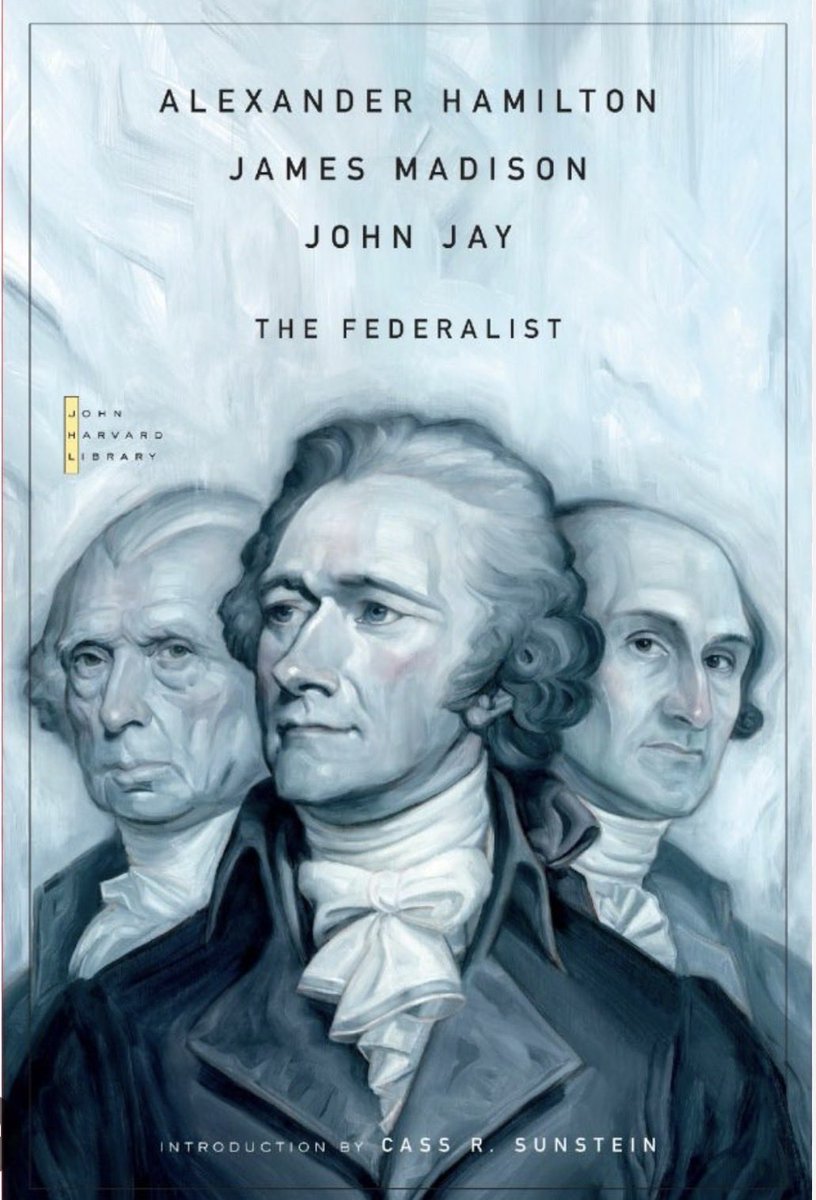
La solidez constitucional de Estados Unidos fue sembrada por 3 genios en la construcción de una nación: Hamilton, Madison y Jay. Son también los responsables de que a lo largo de 250 años la sociedad norteamericana conozca, respete y haga respetar la Constitución de ese país.
Thays Peñalver tweet media
Español
2
10
15
1K
José Miguel Farías
José Miguel Farías@Jmfariasu·
Roberto, gracias por el comentario, y comparto el horizonte que describes. Venezuela tiene hoy una oportunidad que no ha tenido en décadas. Lo que señalo no es pesimismo, es lo contrario: si queremos que esta vez sea distinto, hay que entender por qué las anteriores "buenas épocas" no cuajaron. El crecimiento que vivieron nuestros abuelos fue real, pero descansaba sobre un modelo que Uslar ya advertía en 1936: recibimos la renta, pero nunca sembramos el petróleo en instituciones. Gómez pagó la deuda externa y construyó carreteras, sí, pero también cerró universidades, prohibió partidos y edificó un Estado que vivía del subsuelo, no del ciudadano. Cuando bajó el barril, cayó todo. El diagnóstico de Carrera Damas no niega esa prosperidad, la explica. Y la pregunta sigue siendo la misma: ¿esta vez construimos instituciones y economía diversificada, o volvemos a distribuir renta hasta que se acabe? Creo que tú y yo queremos lo mismo para Venezuela. ¡Un abrazo grande!
Español
1
1
8
1.3K
Roberto Smith Perera
Roberto Smith Perera@RobertoSmithP·
Tuvimos una buena época, herencia de los pilares que sembró J.V. Gómez, que duró desde los 1920s hasta los 1970s. 6% de crecimiento por 5 décadas, casi sin inflación. Venezuela se transformó. Esa es la que vivieron tus padres, abuelos y bisabuelos. Hoy, tenemos una oportunidad histórica: construir la nación más rica y próspera de Latam, la primera de Suramérica en llegar al Primer Mundo, la aliada estratégica de EUA para el s.XXI, la primera potencia petrolera mundial. Está en nuestras manos hoy construir esa realidad. venezuelafirstworld.com
José Miguel Farías@Jmfariasu

Si lo pensamos bien, Venezuela lleva más de dos siglos construyendo una nación que todavía no termina de cuajar. Y ojo, que esto no es un juicio pesimista, es simplemente una descripción histórica. Carrera Damas lo llamó "sociedad implantada", una sociedad trasplantada desde afuera que nunca generó desde adentro los factores para sostenerse sola. El problema no fue la geografía ni la raza ni la mala suerte. Fue que las élites que tomaron el poder en 1830 heredaron una estructura colonial y la llamaron república sin cambiarle el fondo. Dos siglos después, parece mentira, seguimos discutiendo las mismas preguntas: quién manda, para quién, y con qué reglas.

Español
1
6
21
2.1K
Per Kurowski
Per Kurowski@PerKurowski·
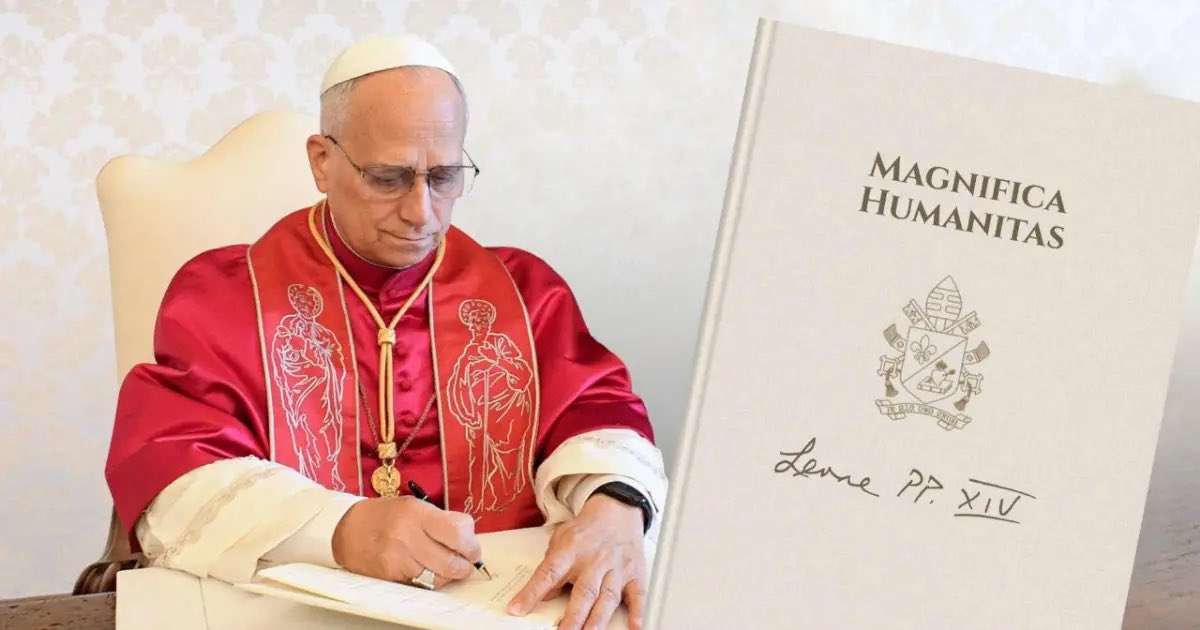
What if it is discovered that, in a minuscule way, unwittingly, some content of Pope Leo XIV “Magnifica Humanitas”, resulted from artificial intelligence assistance/interference? Would that make this Papal Encyclical more or less important? Who knows? 🤔 x.com/PerKurowski/st…
Per Kurowski@PerKurowski

2026 Pope Leo XIV’s "Magnifica Humanitas”, references artificial intelligence. 2025, having Pope John Paul II’s “Novo Millenio Ineunte”, and Pope Francis in mind, I dialogued with AI, about the role Christian churches could/should play in bank regulations. perkurowski.blogspot.com/2025/01/ai-ope…

English
0
0
1
102
Rich Raho
Rich Raho@RichRaho·
While encyclical launch by Pope personally this morning was epic on its own, at same address, Leo spoke of his time as missionary in Peru: “There I learned that rebuilding does not mean simply replacing what has been destroyed. It means repairing bonds, restoring trust, and reawakening hope in the future. Moreover, no one rebuilds alone.” vatican.va/content/leo-xi…
Rich Raho tweet media
English
13
401
1.5K
24.1K
Mary Julia Koch
Mary Julia Koch@MJ_Koch·
Artificial intelligence must be “disarmed,” Pope Leo XIV declared in his first encyclical Monday. Comparing AI to nuclear weapons, Leo argued that the technology is too dangerous to leave unregulated. His message was reminiscent of Pope Francis’s 2015 encyclical that blamed “extreme and selective consumerism” for driving climate change. This message alienated many conservatives who argued that the Pope should stick to theology. Leo’s new warning might trigger a similar backlash among those who favor AI deregulation to maintain a competitive edge over China. The encyclical’s theme could put the Vatican at further odds with the Trump administration—a growing rift that poses its own kind of threat.
English
3
1
9
540
Financial Times
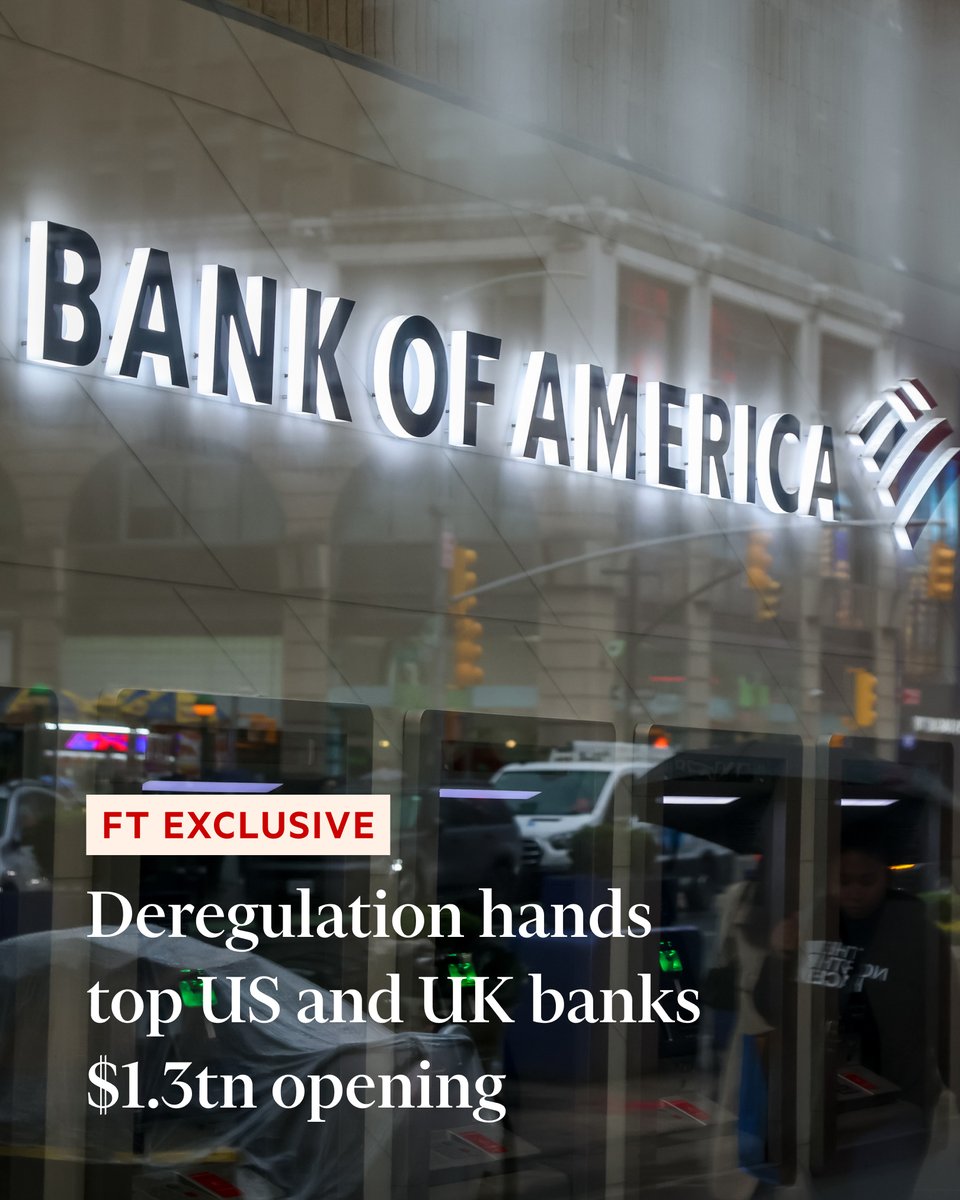
Regulatory reforms will free up capacity for eight of the biggest Wall Street lenders including Bank of America to expand their balance sheets by $2.5tn, roughly equivalent to adding another Citigroup, according to research. ft.trib.al/H4L5OBU
Financial Times tweet media
English
22
47
128
32.2K
Víctor Martínez ⚖️
Empecé a leer la nueva encíclica del papa porque hablaba de IA y me está dejando fascinado. Intelectualmente impresionante: profunda, culta y extraordinariamente lúcida sobre tecnología, dignidad humana y el futuro. Jamás pensé que diría esto, pero mi admiración por León XIV no para de crecer.
Víctor Martínez ⚖️ tweet media
Español
47
329
2.1K
43.2K
Free Expression
Free Expression@WSJFreeEx·
Adolescence should be an exciting coming-of-age period, a gradual transition to adulthood. If we don’t give teenagers more responsibility, we’re failing to prepare them for the world they’ll soon lead, writes @BenSasse on.wsj.com/4nNVMex
English
1
3
11
1.4K
Per Kurowski
Per Kurowski@PerKurowski·
Questions to Pope Leo XIV on his “Magnifica Humanitas” Has he personally ever used or dialogued with AI, e.g., ChatGPT – Grok? How many catholic priests use AI to make their sermons? Anyone assisting him with the Encyclical letter, was he assisted by AI? x.com/PerKurowski/st…
Per Kurowski@PerKurowski

2026 Pope Leo XIV’s "Magnifica Humanitas”, references artificial intelligence. 2025, having Pope John Paul II’s “Novo Millenio Ineunte”, and Pope Francis in mind, I dialogued with AI, about the role Christian churches could/should play in bank regulations. perkurowski.blogspot.com/2025/01/ai-ope…

English
0
0
1
406
Per Kurowski
Per Kurowski@PerKurowski·
4th of July 2026, America's 250th Birthday. With bank regulations favoring the Federal Government (the King) over the private sector, “We the People.”, would Benjamin Franklin opine it has been able to keep being a republic, as its Founding Fathers wished? subprimeregulations.blogspot.com/2025/06/ai-cha…
English
0
0
0
32
Per Kurowski
Per Kurowski@PerKurowski·
2026 Pope Leo XIV’s "Magnifica Humanitas”, references artificial intelligence. 2025, having Pope John Paul II’s “Novo Millenio Ineunte”, and Pope Francis in mind, I dialogued with AI, about the role Christian churches could/should play in bank regulations. perkurowski.blogspot.com/2025/01/ai-ope…
English
0
0
1
273
Judy Shelton
Judy Shelton@judyshel·
Thank you @CNBC for producing this video so quickly from our morning discussion today on @SquawkCNBC with Joe Kernen @JoeSquawk We need to abandon the Keynesian idea that economic growth is inflationary, says Judy Shelton cnb.cx/3RxDDp5
English
25
41
218
20.2K
Simone Rodan-Benzaquen
Interesting read from @WSJ but the issue was never whether Matthieu Pigasse was “left-wing” or a “socialist banker.” The issue is the extraordinary contradiction of a man who helped build influence and cultural capital around ecosystems repeatedly accused of normalizing antisemitic rhetoric in France - while simultaneously moving at the center of global financial and political power. The same figure associated in France with Freeze Corleone, Kneecap, Radio Nova and the Combat media group is now appearing at a private White House screening alongside Trumpworld insiders, desperately lobbying for a central role in the restructuring of $150 billion of Venezuelan debt tied to oil and geopolitical influence. wsj.com/finance/the-so…
English
12
48
124
7.9K
Julia
Julia@PJuvek·
@queerbobdylan Then, say around early 2040s, a colleague brings his toddler son into work & he gets to play w/singing his cool voice into whatever modern office tech is like an early 1940s Dictaphone & <20 years later creates a AHRAF 😎 1 Bob Dylan in 13.787B years 🩵
English
1
2
14
16K
Munther Isaac منذر اسحق
Wow. Pope Leo XIV just called out the “culture of power,” rejected war and violence as viable solutions, declared the “just war” theory outdated, and confronted those who profit from endless wars and militarization. Timely, prophetic, and desperately needed. vatican.va/content/leo-xi…
English
14
358
999
24.2K
Dean W. Ball
Dean W. Ball@deanwball·
Reading the encyclical, I am reminded that the Vatican is fundamentally a city-state on the continent of Europe, and that its elites, which of course include the Pope himself, cannot resist the myopic preoccupations of the Eurocrat. This document would be much improved if it were less enamored of the traditional academia/civil society talking points on AI (“The apparent objectivity of the responses and suggestions these systems provide can lead us to overlook the fact that they reflect the cultural assumptions of those who designed and trained them” woah! really???) and more engaged with where AI is headed. But instead of doing that, the encyclical dodges in the deepest sense, denying that AI “really thinks” or “really learns” and all that typical strain of cope that amounts to magical thinking: “when a computer does it, it is ‘data processing,’ beep boop, but when a human does it, it is ‘actual learning’” It is probably actively bad for global understanding of AI that the Pope endorsed this viewpoint as late as 2026. In the end, this encyclical reads to me as though ghost written by the blob of Western civil society, the same people whose feckless and incoherent preaching we have heard blanketing our media for decades now. And, in a very important sense, it was written by them; after all, who forms the peer group for the elites of a European city-state? Like that blob, the encyclical is intellectually flaccid at its core, no matter how well intentioned it may be. This document is a missed opportunity to advance global understanding of AI, and yet another blow to the legitimacy and sanctity of storied Western institutions. As if you needed one more.
English
123
66
701
305.2K
Eddy Lazzarin ☀️
Eddy Lazzarin ☀️@eddylazzarin·
Magnifica Humanitas is light on the theology of artificial intelligence, and thick in reiterating Catholic social doctrine. You could remove the concept of artificial intelligence without changing much about the piece, which could have applied to any major technology shift. Heavy in asking for political intervention, and light in political theory — the encyclical protects human dignity by saying intelligence was never the point, but it doesn't explain our role given this shift. Many people believe the emergence of AI, and perhaps even superintelligence, must in some sense fall within divine providence. The encyclical gestures at technology as part of the history of salvation, but does not really engage that claim. If we are in fact on a path toward superintelligence, the encyclical barely faces that possibility. For a papal letter on AI, the omission feels bizarre. The encyclical’s answer to AI is basically: good AI may help, bad AI may hurt, and markets or labs cannot be trusted to sort the difference out. It worries about AI centralizing power in private hands, but says far less about the risk that political remedies could centralize power even more dangerously: through state control, regulatory capture, surveillance, or international bureaucracies insulated from accountability. The encyclical feels defensive. It protects human dignity by saying intelligence was never the point, without really explaining what that means — or explaining what it means for us when intelligence is no longer uniquely human. By the end, I mostly wanted to ask GPT-5.5 what Newman or Aquinas might have said: not for more moral warnings, but for a deeper account of intellect, providence, creation, and the human vocation under artificial intelligence.
English
14
6
57
45.5K