Peregry

1.3K posts

Peregry

Peregry

@Peregry

A wandering shadow

Greeneville, TN Katılım Ekim 2009
602 Takip Edilen112 Takipçiler
Peregry
Peregry@Peregry·
@SFumoto The funny thing is... I live in a small town in the middle of Appalachia, and know of at least three places I could get that right now... it really is surprisingly ubiquitous in the US.
English
0
0
0
3
フモト
フモト@SFumoto·
アメリカから肉の洗礼が次々届いていますが、これの何が腹が立つかというと、これ系のポストで主に紹介されている黒い肉の塊は単純な塊肉のステーキではなく、ブリスケット(テキサスBBQ)と呼ばれる、長時間低温でスモークし、手で触れただけでホロホロに崩れるような代物で、手間も時間もかかるうえに、食べられる場所も非常に限られている、日本ではそう簡単にお目にかかれない料理だということです。 つまりこれは 「このでっかいステーキどうよ」 のような単純な話ではなく、設備も技術も時間も全部要求される、いわば到達点みたいな料理であり 「お前の所の飯は良いかもしれんが、流石にこれはお前の国にないだろ」 という、アンクルサムが自慢の最終兵器(肉)による威嚇を行っているというのが正しい。 四国県民のワイ、食える場所を知らない。
Lane@thecookinglane

アメリカからの投稿をご覧になっている、日本の皆さんに挨拶です。皆さんは、アメリカらしい分厚い肉の塊がお好きだと聞きましたよ。

日本語
163
2.7K
13.3K
1.2M
Peregry
Peregry@Peregry·
Want to know how deeply buried BBQ is in America's DNA? We have letters from the Founding Fathers where they argued about what the best meat was for BBQ. There are many things the Founders and Framers would be surprised with about modern America. That we still argue and love BBQ would not be one of them. ;)
English
0
0
1
9
宇田
宇田@41_36_22·
アメリカという国は、格差は激しいし薬物汚染はひどいし政治は(ご存知の通り)終わっているしで、どうしてあんな国が大国面して回っているのだろうと思っていたんだけど、最近タイムラインに10000件ほど流れてくるありえないサイズの肉塊の山の写真を見て、その物質的豊かさを急速に理解させられている
日本語
99
361
4.7K
131.5K
Peregry
Peregry@Peregry·
WW2's long shadow has so skewed people's understanding of the Japanese and American relationship. The 1930s and 40s were the EXCEPTION to things, prior to the 30s, from the time the Black Ships arrived to the 1920s Americans fell in love with the Japanese, and the Japanese reciprocated. You gave Washington DC Sakura, to this day those bloom around the Potomac River, a bit of Springtime in Japan on the opposite side of the world. In return we sent Tokyo the Dogwood, a little bit of the New World's late Spring for your islands. Even in the occupation after WW2, Americans loved Japan, soldiers brought home so much memorabilia and a fondness for your people that quietly impacted how Americans thought of you. Yes, the 80s saw a bit of unease at the growing economic power of Japan, but at the same time, there was a coolness to it that undercut, and as the media exchange and growth of anime and video games's popularity in the US created so much more cultural exchange, the affection for Japan in the US grew. The 90s saw an EXPLOSION of Japanese restaurants across the US, as sushi became a common food to just... get (to the point we now have sushi platters in our grocery stores just ready to be picked up, even in rural small towns). Japan and the US are natural allies, both wishing to see a safe and secure Pacific Ocean, and culturally we're Complimentary Opposites. I know that sounds weird, but it American brashness and openness in contrast with Japanese politeness and reservedness, and both of us understanding we have to meet partway, that makes things so strong. You see, because we're so different and REALIZE we are, when miscommunication invariably happens rather than assume the worst and take offense, we back off and figure things out. In the end, what we're seeing is a return to the status quo of Japanese-American relations. Americans have always loved Japan, and we genuinely have not felt any cultural grudge about WW2 pretty much since the end of the war (in fact, we worry more about the Japanese holding a grudge). Which was actually why we didn't joke about it normally. Not because we were offended, but because we were scared of offending you.
English
0
0
0
7
captain S.O
captain S.O@sow413·
To my American friends, I want to speak from the heart, because this moment truly moved me as a Japanese citizen. When President Trump made that Pearl Harbor joke, it wasn’t just humor to us. It felt like a weight I’d carried my whole life was suddenly lifted. My chest tightened, and honestly, tears came close. For 80 long years, we Japanese have lived under a heavy shadow — the constant expectation to apologize, to reflect, to stay in “guilt mode.” Even though we’re the closest of allies, that old wound never fully healed. We felt bound by the past, by the Constitution America helped write for us, always a little smaller, always needing to prove we were sorry enough. But in that single joke, Trump did something powerful. He turned a painful history into a shared laugh between equals. It was like he was saying: “Hey, it was a long time ago. We’re good. Let’s move forward — as brothers.” No more endless atonement. No more living in the shadow of being the “former enemy.” The curse broke. Japan feels free to stand tall again. Right now, cherry blossoms are blooming beautifully all across Japan. 🌸 This spring, the sakura feels like a perfect symbol — a fresh beginning. Not two nations stuck in old roles, but true equals, proud brothers, shoulder to shoulder, ready to build the future together. To the American people: We don’t want to be subordinates forever. We want to be your real partners — strong, proud, and loyal. The kind of allies who ride or die together. Thank you, Mr. President. Thank you, America. The strongest alliance in the world is rising again — as equals, as brothers, forever. #PhoenixRising 🇯🇵🤝🇺🇸🌸
English
1.3K
2.1K
16.6K
211.9K
Peregry
Peregry@Peregry·
Something in the algorithm shifted, and suddenly average American posters and average Japanese posters started seeing each other's tweets, and X has a pretty solid auto-translate between English and Japanese. To say that Japanese X is what we would generously label "right wing" and loves heartland Americana while despising the coastal elite progressives would be an understatement, and the Japanese finding out that heartland Americans honestly love Japan and Japanese culture has created a feedback loop of honest affection between the two peoples... one that leaves left-wing anime fans reeling because it doesn't fit their worldview.
English
1
1
27
442
Peregry
Peregry@Peregry·
Democrats have always been authoritarian, you've just been propagandized by history to think otherwise. FDR regulated how much farmers could grow for their own private use, used mass media control and propaganda in WW2, and generally sought to make the US a centrally managed state, the only reason he's not seen as a tyrant is that the actions taken by our opponents in WW2 were so much worse. Going back to WW1, Wilson passed some of the most restrictive speech laws in the country's history. Clinton sold out the country to China, between the actual scandals and his decoupling of human rights reviews and trade that enabled the mass offshoring of the 90s. Through the 70s to the 90s they tried to pass "Hate Speech" laws, only stopping because the USSC struck those down so hard that it made their heads spin. To say nothing of their insanely overreaching gun control efforts, taxation scheme, and regulations that just make life worse (toilet flush limits, national bans on gas stoves, to name a few examples).
English
0
0
1
22
Uncommon Cents
Uncommon Cents@Uncommon_Centss·
Americans misuse the word "liberal" often. The democrats used to be a very liberal party. They have become increasingly authoritarian. Anti free speech, always pushing cancel culture, and collectivism. People are still calling them liberals purely out of habit. I am a moderate who considers myself somewhat "liberal" but I voted Trump. The modern left hates America.
English
7
0
22
1K
山中
山中@yamanakanobody·
アメリカ人めちゃくちゃリベラルを嫌ってるんだが笑 アメリカ人のリベラルはとんでもないのか笑笑
山中 tweet media
日本語
721
73
3.3K
54.6K
Peregry
Peregry@Peregry·
@e_considine @39969312w @ratlpolicy Yes. But more entertainers first and foremost. Fights to the death were rare and more often a form of punishment. Think of them more like Boxers or MMA, except they actually used weapons.
English
1
0
0
22
Peregry
Peregry@Peregry·
My counter to this is that, well, the WWE has female wrestlers because people (especially men) enjoy watching hot women fight. That does not seem like something that just developed in the last 50 years. So the idea that a settled society that had a major fighting entertainment sport did not have female participation seems... unlikely...
English
2
0
2
247
Mike Coté
Mike Coté@ratlpolicy·
Unless, that is, you want our descendants to think we were all BDSM furries based entirely on the contents of a lone apartment in Portland or a single hotel ballroom hosting a furry convention. I sure don't! /fin
English
9
3
472
21.3K
Peregry
Peregry@Peregry·
My only comment is I get what you're doing, but I doubt it would be called the Second European War, the Pacific theater was simply to large to be ignored plus was critical for bringing the Second Republic into that conflict. That theater also saw the largest naval battles in human history and established the Atomic Age with a bang. I might propose as an alternative as "the Japano-German War", the "Second Great War", or the "Trans-Oceanic War". Another criticism I would level is that the Reds, did not actually want to return to the organization of the Second Republic, but when you actually looked at their ideas and stated beliefs, they wished to return to the First Republic, as most of their intellectual leaders much more frequently pointed to "Democracy in America" as their ideal state. It was their opponents who characterized them as wanting to return to the 1950s and Second Republic with mocking references to Popular Culture like "Leave it to Beaver". I would note this also more aligns with often expressed desire to "be left alone". The late Second Republic especially of the 1950s was marked by high amounts of Federal power being used to direct the economy as well as the dominance of the Blues in the Legislature, a status which clearly was not the desire of the Reds. Oh, as a final note, I would argue you have also demarked the divisions of the Republic wrong. The Late Republic clearly began with the 1930s and 40s and the reign of FDR. The Second Republic basically went from the election of Lincoln in 1860 to FDR, and the First Republic from 1776 to 1860.
English
1
0
8
1.4K
Roman Helmet Guy
Roman Helmet Guy@romanhelmetguy·
In the Late American Republic, Congress became a vestigial organ. While legislative power was still nominally vested in this body, the high degree of consensus required to pass any legislation, combined with the roughly even and increasingly hostile division of the populace into the Reds and the Blues, prevented any major reforms from being enacted. The only true power remaining in the body rested in its ability to veto the President's military expenditures as well as his choice of ministers. To keep the government from failing completely, exceptions to the usual high vote threshold were carved out for the appointment of ministers. But the veto power over military expenditures was increasingly exercised. For historical reasons, military expenditures had to be approved by Congress yearly. This was in marked contrast to the vast majority of the government's actual expenditures (cash, food, and other in-kind payments to the poor and elderly), which were funded in perpetuity and thus elevated above the annual machinations of this fickle body. The controversy around military expenditures typically centered around the border troops and internal security forces. The Blues enjoyed marked support from the Mesoamericans who had recently migrated into the empire, and thus wished to minimize the number and efficacy of these troops in order to allow more such foreigners to slip through the empire's porous borders. Meanwhile, in public, the Reds supported drastically increasing spending on these border guards. But privately, many were beholden to the large landowners who employed these new arrivals on their plantations. Because of this dynamic, by the end of the 2020s, between 1 in 10 and 1 in 5 Americans were descended from ancestors who had managed to evade these border guards (their descendants were granted full citizenship by virtue of having been born on American soil). This dynamic continued until tensions between the Blues and the Reds boiled over. The power base of the Blues consisted of recently arrived Mesoamericans (as stated previously), but also the learned class of Europeans that constituted the administrative layers of the governmental and corporate bureaucracies, in addition to the descendants of freed African slaves. All of these groups were overwhelmingly urban. In contrast, the power base of the Reds consisted of the vast European rural peasantry that still constituted the plurality of Late Republican society, in addition to the commercially-minded merchants, traders, and plantation owners who were wary of the growing tax power of the administrative class. There was also a marked sex divide: women tended to favor the Blues, while men favored the Reds. The Blues were reformists and revolutionaries, the Reds conservatives and traditionalists. The aim of the Blues was the creation of a powerful state with wide-sweeping powers to tax the commerce of rich Reds in order to fund the distribution of food, shelter, medicine, and cash payments to their core base of poor urban Mesoamericans and Africans. This state was (of course) to be administered by the learned class of Blue bureaucrats. The aim of the Reds was divided. Their core rural base wished to return to the social and political arrangements of the Middle Republic. They especially harkening back to what they saw as the era of America's greatest prosperity, the 1950s (when America had emerged as the only major power whose lands were largely unscathed from the Second European War). Meanwhile the rich Reds sought primarily to tighten their monopoly on the Late Republic's land and commerce, and resist the encroachments of the Blue-backed administrative state. Demographic momentum was on the side of the Blues. However, in the mid-2020s, the Reds swept to power across all government bodies, riding a wave of anti-Blue sentiment. Yet, due to the aforementioned Red divide and the previously stated high vote threshold required to enact major reform, the Reds only managed to stall the momentum of the Blues, not reverse it. The porous border was closed, many migrants were rounded up in the interior of the republic, but no major laws were enacted that could've consolidated the Reds' power. And the rich Reds undermined their own power base by continuing to push for more migrants to be allowed into the republic to serve as cheap labor in their enterprises. A dissatisfied and fickle populace swept the Blues back into power. The tactics the Reds had used to round up migrants in the interior of the republic had shocked the power base of the Blues, and even many of those who normally supported the Reds came out against it. This became the Blue's pretense for doing away with the high vote threshold required to enact major reform (the threshold had only ever been a technicality based on governing norms, and was easily dispensed with once those norms were no longer seen as sacred). Suddenly Congress became not only powerful, but nearly all-powerful. The number of judges in the highest court was increased. The new appointees were all Blues, they served for life, and could not be removed. This ensured perpetual Blue control of judicial functions. A Mesoamerican protectorate was elevated into a State and given representation in Congress. The capital city, highly urban and Blue, was also turned into a State and given representation. This ensured perpetual Blue control of the legislative functions. And the Blue legislative majority then enacted voting reforms that heavily favored Blue Presidential candidates. These reforms were rubber-stamped by the Blue judiciary, ensuring perpetual Blue control of the executive function as well.
English
62
236
2.2K
67.3K
Peregry
Peregry@Peregry·
This varies widely by individual churches and denominations within the Evangelical movement. That said, there has been a vested effort by progressive to capture and convert Evangelical institutions like seminaries, publishing houses, and think tanks, mostly via means of inviting their leadership into the elite circles if they just let a little bit of social justice into things...
English
1
0
2
12
🌲Natty P 🇸🇴 🚫🙊🐴
Women in the church, home, and society comes to the top of my head first. Also race stuff. The latest was the fellow uncovering his wife’s nakedness (past sins) for clicks and loads of evangelicals jumping on board. No central dogmas though that I can think of. Evangelicalism isn’t another religion yet.
English
3
0
0
31
Jon Harris 🌲
Jon Harris 🌲@jonharris1989·
You all realize the mainline denominations went liberal when elites went liberal right? They are connected. It’s not because they had a liturgy or because Protestantism failed. It didn’t fail for evangelicals. It’s because those who made up the leadership class that attended those churches followed their secular counterparts toward infidelity and unbelief.
English
25
22
215
5.9K
Peregry
Peregry@Peregry·
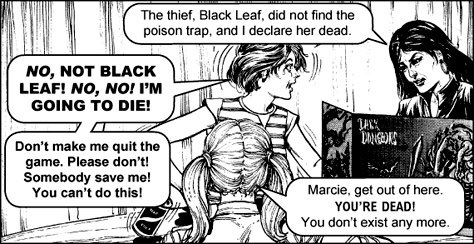
Exactly. This Chic Tract wasn't one of the prime movers despite its modern reputation. More came from books published by what amount to people looking to blameshift from their own failures onto DnD and the real panic was driven by the mainstream media, which has very effectively memory holed its (and Democrat's) involvement in every major moral panic of the late 20th and early 21st centuries.
English
0
0
1
9
Matthew Martin
Matthew Martin@martinmattl·
@Peregry @LawDogStrikes I went through an actual anti-D&D phase in my early adolescence in the 90s, and was looking at numerous sources, but I wasn't aware of this tract until DRAGON Magazine highlighted it in their July 1992 editorial. (Issue #182)
English
1
0
0
25
Law Dog. TTRPG Guru.
Law Dog. TTRPG Guru.@LawDogStrikes·
#ttrpg #RPGstuffdaily Dark Dungeons. A Jack Chick tract. Oh yeah, the original crazy from the time of the Satanic Panic. I’m not sure if Jack Chick was just a huckster or legitimately delusional. After 48 years of GMing across genres, I’d be a very hearty threat to reality itself. 🤣🤣🤣 What a clown.
Law Dog. TTRPG Guru. tweet mediaLaw Dog. TTRPG Guru. tweet media
English
33
4
66
2.1K
Peregry
Peregry@Peregry·
The American Revolution was so not-radical that a major political party basically said: "You guys realize the Americans are right and you're driving them away because of your idiocy". Edmund Burke himself (major figure in the Whigs and one of the major intellectual founders of British CONSERVATISM) even spoke in favor of the American Revolutionaries... That is how not radical the American Revolution was... one of its biggest defenders in the country they were rebelling against is considered one of the major intellectual forebearers of the modern right. -.-
English
0
2
28
6.2K
Dailymeow
Dailymeow@Dailymeoww1·
In Japan 🇯🇵, a girl 😴 goes to the doctor because she can’t breathe properly while sleeping, but no issues are found. The real reason is revealed when her mother checks on her at night: the cat she grew up with 🐱 had been sleeping curled up on top of her , making it hard for her to breathe 😂 She shared the video with this note: “I thought I had sleep apnea!” 😂
English
137
1.1K
9.5K
1.3M
Peregry
Peregry@Peregry·
You know what's funny? Lower Decks holds to the old model in its own way. Rather than showing Starfleet officers who are at the top of their game from the start, it shows a group of fuck ups who clearly want to get better and do so, so that by the end of the series they fit that Trek mold.
English
1
0
7
283
RyteSideUp
RyteSideUp@RyteSideUp·
Star Trek through the years- TOS: “Hey, this really diverse group of people is really good at their jobs. It’s something to aspire to.” TNG/VOY/DS9: “Hey, this really diverse group of people, which even includes old enemies, is really good at their jobs. It’s something to aspire to.” ENT: “These people that are brand new at this job are good at it, and they’re good at getting a diverse group of people to work together to do it. It’s something to aspire to.” NuTrek: “This group of idiots is really diverse, and that’s okay, because they’re so diverse!” Can we please understand why one of these is being rejected by fans of the franchise?
English
143
366
3.4K
78.9K
Peregry
Peregry@Peregry·
Yeah, that level of shifting didn't happen until the 90s, after Clinton decoupled the human rights reviews for them. Prior to that "China" was synonymous to cheap, mass produced goods that could be sourced anywhere, and it was still viable for, say, Walmart to source textiles from the US. After that point though, US firms pushed heavily to move to China, wooed by cheap labor and CCP promises of influence and wealth. It was further encouraged by Libertarians in the US who believed political and social liberty would follow economic liberty and so saw economic engagement with China as a way to collapse the CCP (how's that working out for them). The only opposition to Chinese offshoring came from the Union Left and Religious Right, and by that point the Union Left was an afterthought in the Dem machine and the Religious Right were always being "managed" by the Republicans.
English
0
0
1
22
Tomas Alternatto
Tomas Alternatto@TAlternatto·
@Peregry @TheLastRefuge2 I didn't think Nixon (or Reagan) was bad; I'm looking at how the door opened to allow US businesses to move their tech over there. We literally gave them the blueprints, & they put backdoors into our circuit boards. Not surprised Clinton made them a trade partner.
English
1
0
0
88
TheLastRefuge
TheLastRefuge@TheLastRefuge2·
The simple answer is economic dishonesty. A full answer can be found by looking at how Canada deindustrialized (chased net zero) and replaced their economic engine with an assembly economy; where they imported component goods to be assembled and shipped into the USA. Canada exploited the NAFTA (CUSMA) loophole, receiving imported good that would be tariffed (or limited) if they entered the USA directly. The lying about this core underpinning is the source of decades of frustration, which now surfaces as anger. Canada has to pretend they are not doing this. That pretense is annoying. Thanks for asking.
Tom Watson@souperbad

@PeterZeihan Anyone know why the Trump Administration is mad at Canada? Real or imagined?

English
41
359
1.3K
35.8K
Peregry
Peregry@Peregry·
Most people don't. It's not as dramatic and doesn't fit the media framing of the US' problems that they prefer (IE: Republicans, especially Nixon, super evil and bad. Dems warm and fuzzy and good). Yet if you chart a lot of the problems for the US, they don't chart to Nixon or Reagan, they chart to Carter and Clinton.
English
1
0
2
99
Tomas Alternatto
Tomas Alternatto@TAlternatto·
@Peregry @TheLastRefuge2 I did not know that, and it ties into Clinton doing other favors for the Chinese, like letting them sleep at the White House, to locking up our low sulfur coal into a national park - allowing China to become the largest producer of LS coal.
English
2
0
1
111
Peregry
Peregry@Peregry·
Wasn't Nixon and Kissinger. From Nixon through HW Bush we barely saw outsourcing to China, mostly just very cheap plastic crap that could be produced or sourced from anywhere. It wasn't until Clinton that we saw the mass exodus to China really take off, and it had everything to do with the fact that prior to Clinton, trade with China was contingent on them meeting certain human rights standards (this was why Tiananmen Square was such a Big Deal, as it looked like the US might reisolate China after it). Within six months of taking office, Clinton removed those human rights reviews from trade with China, and after that is when outsourcing to them truly took off.
English
2
0
4
116
Tomas Alternatto
Tomas Alternatto@TAlternatto·
@TheLastRefuge2 To be fair, this is our own fault. We let Nixon & Kissinger open the door, never thinking about what it could lead to. Ive seen entire plants closed to have all the equipment shipped & reassembled there. We gave them the tech so we could have cheap toaster ovens .
English
1
0
10
414
Peregry
Peregry@Peregry·
Two big things people attribute to CU: 1. That it established corporate personhood. That concept long predates CU. 2. That it made monetary spending a form of free speech. That also long predates CU. All CU did was knock down a prohibition on corporations spending money on a political campaign within a certain time of the election. A prohibition, mind you, that didn't apply to individuals, "news" outlets (which, it should be noted, are all organized as corporations), and a handful of favored organizations types like Unions.
English
2
0
5
812
Jimmy Buffett Fan, Esq.
Is there a more grotesquely misunderstood Supreme Court decision in history than Citizens United? Nearly everyone who complains about it seems to have no idea what it was about or what the reasoning was. It's just vibes.
Anders Åslund@anders_aslund

John Roberts' verdict on Citizens United in 2010 allowed unlimited amounts of dark money in US politics, abandoning all limitations & transparency. Roberts also voted for Trump's immunity. John Roberts is the 2nd greatest culprit in the destruction of US democracy after Trump.

English
54
99
971
118.6K
Peregry
Peregry@Peregry·
No, monetary spending as an expression of free speech long predates Citizen's United, that was Buckley v. Valeo decided back in 1976. All Citizen's United did was knock down the restriction on corporations being disallowed from publishing campaign material in favor or against a candidate and treating them the same as individual spending.
English
1
0
1
184
CAL USA
CAL USA@CALUSA18·
@jimmy_esq Citizens United basically established that corporations have the same rights as individual citizens, but not the same accountability. [They can't be jailed.] It also established that money is protected free speech, so the more money you have, the more "free speech" you have.
English
3
0
2
1.1K
Peregry
Peregry@Peregry·
@patbahn @JeffGreason @jimmy_esq And neither are Unions, NGOs, or Special Interest Focused Organizations (IE Greenpeace or Focus on the Family). You cannot allow those groups to spend on electioneering while forbidding corporations, it all or nothing.
English
1
0
5
126