Sabitlenmiş Tweet

My latest publication in the Australian Veterinary Journal.
Researched natural agents can provide efficacy
English
Peter J Anderson
15.7K posts
@PeterJAnderson_
Published Researcher. Conduct Clinical Trials. Research nitric oxide, ASCVD and endothelium chemistry. BlackBelt Fudoshin Bujutsu. Port Adelaide FC .
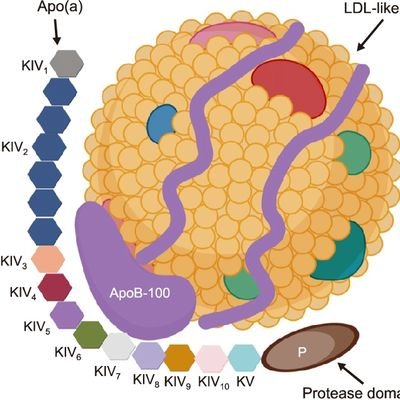

This paper helps explains the shared mechanisms of all risk factors They can all-singularly or in sum -uncouple eNOS-reducing nitric oxide to a level that enables lipoprotein retention chemistry - in particular low NO then disinhibiting PDGF and TGF-b to allow GAG elongation and binding with LDL ( let alone NO also inhibiting VSMC proliferation, adhesion factors ICAM and VCAM , platelet aggregation etc) If one looks at eNOS as a ‘bank’ of function , then sometimes one risk factor ( LDL in FH for example) can uncouple enough ( not binary) to reduce NO to that critical level of retention initiation and proliferation. Other times with low LDL one or the sum of the other risk factors can uncouple eNOS to this level Sometimes the sum of all the risk factors still isn’t high enough to critically uncouple “You can have many of them and do fine” as you said It should be noted that even aging eventually can uncouple eNOS (Aging risk factor should be on pic from this paper) When eNOS is uncoupled upstream then it doesn’t take much LDL midstream to be retained to make atherosclerotic plaque ( why we see plaque even at low LDL) ahajournals.org/doi/10.1161/ci…


“Half of heart-attack patients have normal cholesterol!” This is a favourite anti-LDL slogan. It sounds devastating. Unless you know basic high school statistics! If someone says it, they just announced they are embarrassingly out of their depth. Here's exactly why 🧵


This article came out in @Telegraph this morning, and it’s already gaining significant traction, apparently reaching top three on the site within hours or release. telegraph.co.uk/health-fitness… There’s clearly a lot of engagement, so since I won’t be able to respond to every comment, I want to clarify a few things upfront. First, I am not, nor have I ever been, anti-pharmacotherapy. What I am against is a lack of nuance. I don’t believe it’s my place to say something as simplistic as “X drug is overprescribed,” (some editorial liberties were taken). However, my concern is that they are prescribed without sufficient individualization and thoughtfulness. My critique is not of pharmaceuticals themselves, but of a system that too often operates algorithmically, rather than with the precision each patient deserves. Having personally experienced the downsides of that kind of care (multiple times), I feel comfortable speaking to it with the authority of a patient, MD PhD or not. Second, I did not request, solicit, or pay for this article in any way. I was approached for it just as I was for an upcoming lecture at the @UniofOxford Longevity Summit, hosted at Rhodes House this weekend. I did no approaching, nor do I get any sort of kickbacks. Third, this is not an article I wrote, nor is it intended to be an academic dissertation. If you’re looking for deeper nuance, I’d encourage you to explore my broader body of work, on YouTube or through my Substack, which covers dozens of articles on heart health and synthesizes hundreds of studies and human trials. staycuriousmetabolism.substack.com/p/hearthealth And thanks for making is #2 Overall Best-Selling in Science on Substack, Globally. That's heartening :). But I’ll leave you with this: What is a consensus worth… when the status quo it represents has failed to meaningfully improve public health?