Phantom Space Corporation

580 posts

Phantom Space Corporation banner
Phantom Space Corporation

Phantom Space Corporation

@PhantomSpaceC

Phantom is developing the next generation space transportation to make space commerce commonplace 🚀

Tucson, AZ Katılım Kasım 2019
104 Takip Edilen3.5K Takipçiler
Sabitlenmiş Tweet
Phantom Space Corporation
Phantom Space Corporation@PhantomSpaceC·
Small satellites under 600 kg make up 90% of satellites launched. Three decades ago, they weren't considered mainstream. Today, they are key to national security & our commercial space future. Phantom's focus is exclusively on this market segment. ow.ly/Z5se50SLQNm
English

2
2
20
3.4K
Phantom Space Corporation
Phantom Space Corporation@PhantomSpaceC·
Yesterday marked the 100-year anniversary of the first ever launch of a liquid fueled rocket in 1926 — less than 23 years after the Wright Brothers first achieved air flight in 1903. American rocket engineer Dr. Robert Goddard was ridiculed in his time and failed miserably in raising money to pursue his dream of space flight (except for some small grants from the Smithsonian Institution and the Guggenheim Foundation, among others). When Dr. Goddard died in 1945, he knew his ideas had been validated with the German V-2’s first suborbital spaceflight in 1944 and had gotten the attention of the US government. He had good reason to believe the technology was on track to eventually achieve interplanetary range. However, Goddard had no way of knowing that the Soviet and American space programs would both rapidly draw on his work to place the first satellites in orbit (within 12 years of his death), the first humans in space (within 16 years), the first men on the Moon (within 24 years), and the first machines on other planets (within 25 years). As Newton once remarked, we stand on the shoulders of giants. We owe the technology of our present day and the opportunity to build upon it in our own time in large part to the innovation and ingenuity of prior generations. Notably, Goddard’s liquid-fueled rocket revolution — which began as a private effort in the 1920s (requiring no permission of government) and came to be the exclusive domain of superpowers starting in the 1940s — has come full circle in the decades since. The world’s most advanced and scalable rockets are once again built and operated by private interests; but now they fly to space in large volumes, reinventing the infrastructure of our planetary scale civilization as we prepare to spread out across our solar system. nationalgeographic.com/history/articl…
English
0
0
2
254
Phantom Space Corporation
Phantom Space Corporation@PhantomSpaceC·
Life has improved for most people over the last several hundred years thanks to the vision and courage of a relatively small number of builders and risk takers who have competed for the rewards of serving their fellow human beings. Thanks to their effort and ingenuity, new technologies, companies, and industries have risen which have opened new frontiers, unleashed new abundance, and allowed free people to flourish. In contrast, others spend their lives overcome by envy — working to block the efforts of builders and loot the earnings of their productive neighbors. The world has always been this way. As has been said, it’s not so much a clash of “haves” and “have nots” but “doers” and “do-nots.” Some spin their wheels in righteous indignation at these gatekeepers, rent seekers, and opponents of progress; others put their heads down and build despite the obstacles. Our team at Phantom Space is made up of the latter sort. We have a vision to catalyze a vibrant digital ecosystem in space and are methodically working to execute on our roadmap to make it real. As ‘Reason’ magazine Contributing Editor J.D. Tuccille notes in his recent article on attempts to regulate the space frontier before it has fully opened, any opponent of progress who intends to assert an agenda beyond Earth will still have to “hitch a ride from a private space company.” reason.com/2026/03/13/in-…
English
0
0
1
141
Phantom Space Corporation
Phantom Space Corporation@PhantomSpaceC·
In 1776, Thomas Paine wrote, “The cause of America is, in a great measure the cause of all mankind.“ From the original crisis of the American Revolution to the Civil War, WWI, WWII, and the Cold War, our nation was forged in the fires of war and cycles of hardship. Nonetheless, thanks to the courage and ingenuity of pilgrims, pioneers, and prime movers, every great crisis gave way to waves of innovation, exploration, and creative destruction that washed over the entire world. 250 years later, America is leading the way in extending the frontiers of human civilization into the vast wilderness of our solar system. With courage and grit, we can mass produce rockets and satellites like automobiles, create a vibrant commercial economy in Earth orbit, and build the data networks which will enable higher volumes of human and robotic activity. Phantom Space was not founded to sit on the space access bottlenecks and stifle progress as the aerospace incumbents have for the last 50 years. We aim to shatter these bottlenecks with Henry Ford-style mass production, process innovation, and a flywheel of network effects. We aim to unleash a market revolution in orbit by promoting competition and innovation. We aim to scale an open digital ecosystem that makes space accessible to all via computer screens if not in person. We aim to catalyze a rising tide of abundance and prosperity that can usher in a new American century, restore our shared sense of Manifest Destiny, and extend our young civilization to the stars. There is no guarantee that humanity will take the next critical steps to become a spacefaring civilization. Some might prefer to see us shrink from the challenge while the window of opportunity passes us by. Some might wish to drag us all back into a dark age rather than see rockets bound for the high frontier routinely light up the night sky. The commercial space revolution is by no means complete, but Americans are pressing forward in pursuit of this unfinished business. Just like in 1776, our cause is essentially the cause of all mankind. And when we succeed, we will gain the “power to begin the world over again.” battlefields.org/learn/articles…
English
0
0
3
231
Phantom Space Corporation
Phantom Space Corporation@PhantomSpaceC·
It’s hard to overstate the urgency of the present moment for US commercial space entrepreneurs. While China’s emerging space ecosystem continues to lag behind the American space sector, the contest is intensifying. Either we extend USA’s lead in annual launch capacity in the next few years with the same intensity as the production of ships, aircraft, and automobiles during the 1940s or we risk ceding the future to a rival system with very different values. The good news is that a small number of companies like Phantom Space are already years into the process of developing the independent ability to build world changing infrastructure in Earth orbit alongside more established integrated space players like SpaceX and Blue Origin and are close to ushering in a whole new era of orbital commerce. cnbc.com/2026/03/07/chi…
English
0
0
5
271
Phantom Space Corporation
Phantom Space Corporation@PhantomSpaceC·
It took decades longer than many expected for commercial launch to break through and for the era of space industrialists to begin. Today it’s finally underway. Still, building an economy in space is different than it historically has been on Earth. Operating in space is more machine intensive and almost every activity requires digital infrastructure. Before our civilization can move out into space and unlock the physical wealth of this vast new frontier, we’ll have to build a more robust digital economy based on the acquisition, filtering, and analysis of valuable information. Once the economic fly-wheel is in motion in orbit and the rails of a digital future start to emanate outward, we’ll finally be able to start sending connected machines and human explorers/settlers to the Moon, Mars, and out into the expanse in large numbers.
English
0
0
5
240
Phantom Space Corporation
Phantom Space Corporation@PhantomSpaceC·
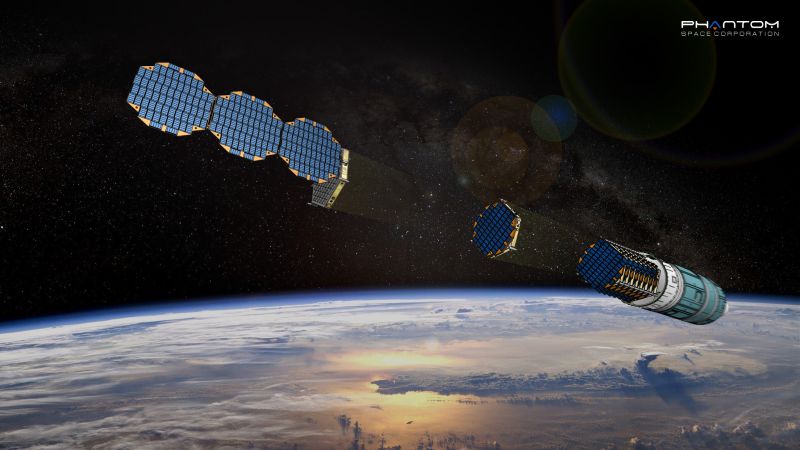
When G. Harry Stine published ‘The Third Industrial Revolution’ in 1975, he was directionally correct, but ultimately early in his predictions that “the realm of free enterprise space transportation” would open the vast frontier of our solar system and usher in a new era of human progress. “By 1990,” he wrote, “industrialists and their controllers will no longer be afraid of high space transportation costs, nor of investments in space transports and industry. By that time there is likely to be a fantastic shortage of orbital weightlifting capability.” Mr. Stine’s imagination may have been a few decades ahead of reality (ultimately due to the Space Shuttle’s failure to live up to the hype of the 1970s and 1980s), but the time of space industrialists and tightening launch demand (even as supply grows) is finally upon us. At Phantom Space, we are not just responding to the inadequate supply and high price of launch by developing our own launch vehicle; we are building the operational sovereignty to scale network effects and enable a true market revolution in Earth orbit.
Phantom Space Corporation tweet media
English
0
4
39
1.3K
Phantom Space Corporation
Phantom Space Corporation@PhantomSpaceC·
At Phantom Space, one of our main missions is to reduce the all-in cost for our customers of proving good ideas in orbit and then scaling those concepts into full scale constellations. The more competition in orbit, the more incentive for innovation. The more innovation we see, the more growth we can expect. interactive.satellitetoday.com/via/march-2026…
English
0
0
1
524
Phantom Space Corporation
Phantom Space Corporation@PhantomSpaceC·
Payload Space Co-Founder Mo Islam is absolutely right. (Make sure to watch his video -- linked below.) The orbital launch market is currently undersupplied with the potential to become even more constrained in the months and years ahead. Moreover, a series of demand shocks from expanding commercial ambition and urgent military demand are likely in the pipeline for the space launch business. Such shocks could profoundly affect those portions of the space hardware and space systems markets which depend on commercial space access via third party launch providers. It's GREAT news for launch providers and an existential crisis for space companies which rely on third party launch at acceptable cost and on acceptable timelines. Similar to the 1980s, when military needs crowded out commercial demand for limited launch capacity aboard NASA's Space Shuttle and crushed the dreams of many satellite entrepreneurs; a lot of space companies could soon find themselves with no way to reach Earth orbit — much less at scale. At Phantom Space, we are working to complete our Daytona rocket and scale up our annual production and launch cadence as quickly as possible. Doing so will allow us to (1) compete for existing market share on the basis of all-in mission cost, responsiveness, ability to scale, etc (via the integration of small satellite design, manufacturing, launch, constellation design, and on-orbit operations), (2) serve segments of the market which may otherwise go unmet, and (3) enable a whole new kind of commercial ecosystem to develop in Earth orbit. New entrants to the launch provider market like Phantom Space are going to be very important if the commercial space economy is to continue expanding in the 2020s and 2030s. Otherwise, the space industry is almost certainly going to run up against fundamental constraints. ow.ly/Afos50YnAPX
English
0
0
3
317
Phantom Space Corporation
Phantom Space Corporation@PhantomSpaceC·
Phantom Space is a special company. We are a tight-knit, hard-working team of doers and builders who are united by common purpose. When a big job needs to be done — for example, taking over the assets of Vector in our recent acquisition — everyone pitches in until the task is complete.
Phantom Space Corporation tweet media
English
1
0
2
363
Phantom Space Corporation
Phantom Space Corporation@PhantomSpaceC·
Before Phantom Space, our Co-Founder and CEO Jim Cantrell founded Vector with a vision to mass manufacture small rockets and satellites, open Earth orbit to a larger number of small satellite operators, and build the foundations of a digital future in orbit. Shortly after leaving Vector, Jim co-founded Phantom Space with aerospace investor and executive Mike D’Angelo and rocket engineer Chris Thompson. Much like Steve Jobs’ founding of NeXT Computer after departing Apple, Jim proceeded to build a new foundation to accomplish the mission he could not and would not abandon. Six years and two Vector restructurings later, Phantom has just acquired Vector and all of its remaining assets — significantly reducing Phantom’s expected CAPEX requirements for our Daytona rocket. While we don’t want to overstate the significance of the Vector acquisition, it puts us one step closer to getting Daytona into orbit, which will play an important role in scaling our space-based computing constellation (Phantom Cloud) and eventually deploying our patent pending Space App Store. prnewswire.com/news-releases/…
English
0
4
7
599
Phantom Space Corporation
Phantom Space Corporation@PhantomSpaceC·
Much of the space industry supply chain remains brittle outside of SpaceX and subject to both supply and demand shocks. At Phantom Space, we buy what we can, make what we must, and will work to reduce dependencies as we scale. breakingdefense.com/2026/02/the-sp…
English
0
0
1
234
Phantom Space Corporation
Phantom Space Corporation@PhantomSpaceC·
Open AI CEO Sam Altman has called the concept of orbital data centers ‘ridiculous’ as AI infrastructure in 2026. At Phantom Space, we agree and disagree simultaneously. At present, as Mr. Altman correctly notes, we believe it is premature to train LLMs in space as an alternative to large scale terrestrial data centers. That use case will eventually make sense but it will likely remain elusive for the foreseeable future — particularly for companies that do not build and operate their own rockets and satellites. At the same time, we believe that AI edge computing is essential to the continued scaling of the orbital economy, which can drive the collection of highly actionable data and help to unlock tremendous economic value on Earth and in space. As we see it, NOW is the time to build computing infrastructure in orbit; but it must be deployed thoughtfully in order to generate an attractive economic return. foxbusiness.com/technology/alt…
English
0
0
1
237
Phantom Space Corporation
Phantom Space Corporation@PhantomSpaceC·
As we have been saying at Phantom Space, the commercial space industry has tremendous incentive to solve problems such as space traffic management in order to prevent stifling new regulations and allow the orbital economy to continue scaling. SpaceX’s new solution is great example and others are on the way. jalopnik.com/2105342/spacex…
English
1
1
5
295
Phantom Space Corporation
Phantom Space Corporation@PhantomSpaceC·
Launch is the foundation of our entire business at Phantom Space. It’s the key to (I) helping our customers scale their constellations into orbit, (II) building and sustaining our own Phantom Cloud computing constellation, and (III) creating our patent pending Space App Store. Designing and building reliable and economical rockets is a difficult goal that few companies in history have managed to accomplish, but a successful rocket program makes it possible for ambitious space companies to achieve more control over their own destinies. On that note, are proud to have Phantom Space Co-Founder, President, and CTO Chris Thompson (one of the most accomplished rocket engineers in history) leading the development of our Daytona rocket and the many space systems it will enable on orbit. We are making solid progress toward our first launch attempt and look forward to scaling the production of our rockets, satellites, and space-based micro data centers in the years ahead.
English
0
1
2
432
Phantom Space Corporation
Phantom Space Corporation@PhantomSpaceC·
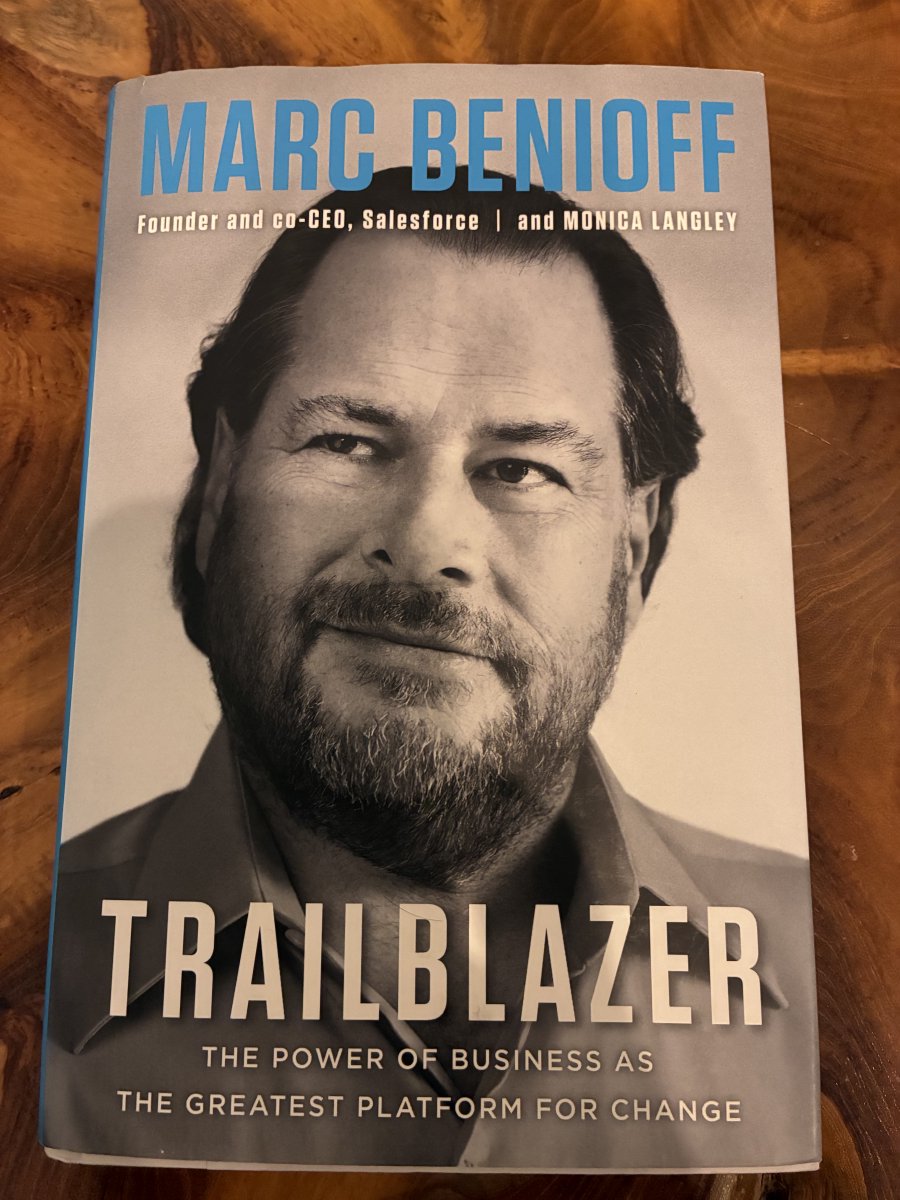
Salesforce Founder & Co-CEO Marc Benioff had his company register the domain name for AppStore.com and bought the trademark for “App Store” roughly two years before Steve Jobs unveiled Apple’s App Store in 2008. In his book ‘Trailblazer: The Power of Business as the Greatest Platform for Change’, Benioff shared his thought process behind the concept of an open app ecosystem — which has since changed the world in profound ways and will soon revolutionize the commercial space economy with Phantom Space’s patent pending Space App Store. “To innovate on a truly massive scale, we realized that we couldn’t simply demand more of our already overworked engineering department. The only possible way to scale up our innovation efforts was to start recruiting outsiders. One of the truly unique things about this digital era is that it operates through a very different type of infrastructure: the common language of computer programming. You can’t build automobiles without a factory, but if you are a developer fluent in the language of programming, all you need is source code to build a new application. Every year, the global army of talented developers was growing. All we had to do, I suddenly realized, was harness that talent and we could produce as many shiny new cars as we wanted.” Phantom Space was founded to become the Henry Ford of space — scaling a new abundance of space hardware and driving down costs via mass production and process innovation. That vision, however, has always been a means to an end. We build rockets and satellites in order to build world changing infrastructure in Earth orbit and, ultimately, to unleash the creative energies of millions of brilliant minds. We believe we can best accomplish this goal by enabling the efficient scaling of orbital constellations and by enabling coders and application developers to work with space data from the convenience of a computer screen and keyboard instead of needing to build expensive and complex engineering organizations. We believe our concept of a Space App Store (made possible by rockets, satellites, and our innovative space-based computing constellation, Phantom Cloud) can unlock an explosion of innovation on Earth and in space and accelerate the development of the commercial space economy similar to how the concept of a smartphone-oriented App Store fueled a new era of growth as consumers began to adopt the mobile internet in the late 2000s and early 2010s.
Phantom Space Corporation tweet media
English
0
0
2
222
Phantom Space Corporation
Phantom Space Corporation@PhantomSpaceC·
Apple’s iPhone is often cited as the best-selling branded consumer product of all time. What is often forgotten is that iPhone sales were initially slow to catch on following the initial product launch in 2007. What really shook the world and made the iPhone so valuable to so many consumers was not the original walled garden version; it was the company’s pivot to launch the App Store in 2008, making a huge variety of third-party apps available to every iPhone user around the world. Within two years, half a million third-party apps turned a fancy smartphone into a global economic engine and ushered in a new paradigm of mobile computing. Just as Apple’s App Store tied together a robust network of consumers, app developers, and applications operating over a vertically integrated stack of Apple hardware and software, Phantom Space’s patent pending "Space App Store" endeavors to tie together a robust ecosystem of space data users/buyers, space data suppliers (e.g., satellite constellations), and space code/apps operating over Phantom’s proprietary data backhaul and orbital computing network (i.e., Phantom Cloud) and enabled by Phantom’s fully integrated satellite, launch, and on-orbit operations businesses. As we see it, the future of space-based AI won’t belong to the biggest clusters of GPUs in orbit — it will belong to the platform that unleashes millions of imaginations to analyze the ever-expanding variety of space data being gathered in real time directly above our heads. We believe the resulting network effects can unleash a flywheel of economic growth in Earth orbit which can improve life on Earth and transform the commercial space economy forever.
English
0
0
1
470
Phantom Space Corporation
Phantom Space Corporation@PhantomSpaceC·
Whereas every space start-up today must deploy and operate their own complex hardware in one form or another, our team at Phantom Space envisions a future in which good ideas can scale up into full-size constellations and in which developers can build and operate valuable space businesses entirely from a computer screen. Our patent pending Space App Store will tie together an ecosystem of data-generating space hardware, a data consolidating and processing space cloud network (via our own Phantom Cloud micro-data center constellation), and an infinite variety of third party applications with a global network of space data buyers/users. We believe the resulting network effects (enabled by our Daytona rocket and full stack of space operations) can usher in a new era of orbital commerce, lay the foundation for a connected economy in space that bridges the physical and digital worlds, and help our civilization to unlock the frontiers of our solar system. bloomberg.com/news/videos/20…
English
0
0
4
227
Phantom Space Corporation
Phantom Space Corporation@PhantomSpaceC·
As we’ve been saying, not all space data center companies are the same.  Yesterday, Phantom Space CEO Jim Cantrell joined Bloomberg’s Dani Burger to explain our vision. In contrast to the popular narrative, we are not focused on moving terrestrial data centers into space (a worthwhile but long-term mission), but enabling the future scaling of the commercial space economy and creating an entire digital ecosystem connecting spacecraft and space data with a global user base via our Space App Store. Just as Henry Ford’s automobiles, or Steve Jobs’ iPhone, gave users new capabilities at affordable prices and allowed them to access goods and services over previously unimaginable distances, we believe the satellite and space data network effects we are building alongside our customers can usher in a new era of orbital commerce and deliver an incredible new suite of apps to improve life on Earth.  This concept of using space data centers to build a digital future in space is VERY different vs popular visions of space networking and of the larger space economy. We believe it requires thoughtful integration of computing and space systems, mass production of rockets and satellites, and a tremendous cadence of annual launches — which is why we have taken so much care to build a fully integrated stack of space operations spanning our Daytona rocket, Phantom satellites, Phantom Cloud orbital computing constellation, and Space App Store. Our team at Phantom Space is not waiting around passively to capitalize on the commercial development of space. Instead, we are actively working to shatter bottlenecks, scale capacity, kick-start the network, and build the ecosystem to maturity alongside a growing community of customers, partners, space data developers, and space data users. We look forward to sharing more details as this world changing, frontier-opening effort unfolds. bloomberg.com/news/videos/20…
English
1
0
9
246
Phantom Space Corporation
Phantom Space Corporation@PhantomSpaceC·
Particularly in light of SpaceX’s acquisition of xAI and recent FCC filing to deploy as many as 1 million satellites in Earth orbit, the media is framing the competition to deploy space data centers as a new space race. As someone who has been working to invent, patent, and build the case for space-based computing architecture for the past decade, I can say with confidence that being “first” to deploy does not matter. Architecture matters. Establishing product-market fit matters. Deploying a full scale constellation matters. Sustaining and upgrading a full scale constellation over time matters even more. The rest is just messaging. This isn’t a sprint; it’s a marathon. Most of the companies who claim to be “leading” the space data center industry by sprinting to capture attention have not built the operational sovereignty necessary to remain in the race for long (unless acquired). SpaceX has the staying power to build, sustain, and upgrade full size satellite constellations over time; so does Blue Origin; and our team at Phantom Space has spent the last six years methodically building the in-house capabilities necessary to join the small club of vertically integrated space companies. By building and operating rockets and satellites for customers, we can achieve economies of scale, capture cost savings with high volume production, secure lower internal costs than most competitors can match, better control our own production and launch timelines, and ensure we have the staying power to establish a long-term presence in space. Further, by designing our business to control costs while maintaining space access, we are positioning to build through boom/bust cycles, take advantage of strategic acquisition opportunities, upgrade our capabilities across each CAPEX cycle, and build an ever more capable network which can start in Earth orbit and, over the very long term, extend into the far reaches of our solar system.
Phantom Space Corporation tweet media
English
0
1
5
266
Phantom Space Corporation
Phantom Space Corporation@PhantomSpaceC·
The concept of “mini-constellations” are reportedly becoming more popular among small satellite manufacturers and aspiring operators who “lack opportunities to build very large constellations.” Smaller constellations make good sense in many cases as a function of their intended missions, but compromise as a result of space access constraints is suboptimal for those companies and for the larger American-led space economy. At Phantom Space, we are working overtime to solve this problem to make sure that small satellite operators DO have the opportunity to scale up good ideas into full scale constellations. By integrating small satellite design and mass manufacturing with mission planning, low cost-dedicated launch, on-orbit operations, and space-based computing networks, we intend to make space cheaper, faster, and far more accessible in the years ahead. We believe that easing these bottlenecks can unleash an explosion of competition, innovation, and orbital commerce which can enrich life on Earth and pave the way to opening the farther frontiers of our solar system. spacenews.com/satellite-manu…
English
0
1
2
182