Philippe Lheureux

12.9K posts

Philippe Lheureux banner
Philippe Lheureux

Philippe Lheureux

@Philheur

In this battle for reality, one simple step can lift the veil... Dans cette bataille pour la réalité, un simple geste peut lever le voile...

Canada Katılım Mart 2016
5K Takip Edilen3.2K Takipçiler
Philippe Lheureux
Philippe Lheureux@Philheur·
Today we live in a time where an old world needs to die, and a new one seeks to come about. This new world, many already carry it within, yet they don't know exactly what shape it should take. It is not easy indeed to figure this out, while they themselves are still busy in the process of becoming, and of shaping their own being. But this new world should not be one with definite structures too similar to past ones. The first thing therefore is to create spaces, not to determine, but to allow for "becoming", spaces that are indeterminate enough, to let the new come about. Therefore, rather than the art of the deal, the art of "holding the space" needs to be cultivated, instead of collapsing the space with certainties, with norms and predictions, a space of "nothing" is of value.
English
0
0
5
123
Philippe Lheureux
Philippe Lheureux@Philheur·
Christian Zionism, which promotes the belief in Jewish exceptionalism, holds a whole set of views which step out of reality as it is. It is then again, once more, a tampering with reality itself, by turning it into what it is not. Just as with the fantasy about extra-terrestrials, there too, fabulations runs rampant. Obviously, reality, reduced by reductionism, has become too boring, and needed some spicing up. So let's hasten the "end times" -as if there were nothing better to do- or also, let's fabulate over extra-terrestrials. Souls weakened by reductionism seek out extra sensations, so as to not collapse. An alternate reality is therefore inserted, which hungry souls all too eagerly absorb. Discontentment with society as it is leads to extremism. It creates the terrain for extreme forms which therefore thrive on inabilities to cope with reality as it is. And reality is indigestible for some, with a sensitivity strong enough to indeed expect a different society.
English
0
0
4
99
Philippe Lheureux
Philippe Lheureux@Philheur·
Still no names? Who were the crew of the firetruck hit by the Air Canada plane at LaGuardia Airport? Are they injured? Are they dead? Why is nobody talking about it? Now, would anybody be surprised if Iran would retaliate, if only to let Americans know: "wake up, this is what you do to us!" So either this is tunnel-vision, or attention control, or something altogether different.
English
0
0
2
133
Philippe Lheureux
Philippe Lheureux@Philheur·
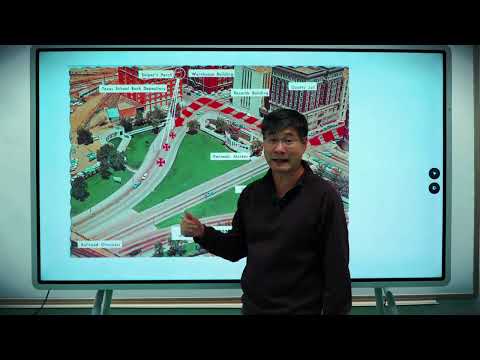
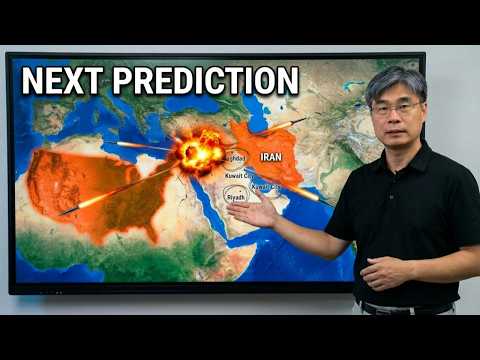
Well, this looks more like one of the fake "Proffessor Jiang" videos that are out there.. One way of detecting the fake: the real professor Jiang (not proffessor) is almost difficult to understand, given his Chinese "accent". These are most likely AI generated (movements are quite limited, etc). Here another one such fakes: youtu.be/-aXrjncdHlc?si…
YouTube video
YouTube
English
0
0
0
66
SynCronus
SynCronus@syncronus·
'Professor Jiang' predicts the total collapse of the US dollar. Nothing prophetic everybody knows this is going to happen, but nobody knows how to prepare for it.
English
1
1
1
268
Philippe Lheureux
Philippe Lheureux@Philheur·
We live in a world of maximum connection and minimum understanding. Nations trade, negotiate, and depend on each other— yet do not recognize each other. This creates a dangerous condition: → contact without encounter → exchange without perception → alignment without understanding The result? Each civilization reads the other through itself. Harmony is seen as control. Assertion is seen as aggression. Difference becomes threat. Modern geopolitics runs on deals, leverage, and strategy— but this reduces the other to a variable. Not a being. What if nations could actually state who they are? Not just interests—but orientation. Not just demands—but inner structure. Until that becomes possible, the world remains: Connected. Coordinated. Fundamentally unacquainted. And that is the hidden instability of our time. seeingbeyond.tech/when-nations-d…
English
0
0
3
108
Philippe Lheureux
Philippe Lheureux@Philheur·
Is this even realistic: the plane ending nose up on top of debris forming an upward structure, while the speed of the plane should suggest a different outcome.. The day, -yesterday- , started with the word "pandemonium", just like that, with no apparent reason. That day had indeed a series of strange events. Would a plan be unfolding, is this a gearing up.. There are certainly a number of significant incentives for this to be the case. Humanity may well start to get constricted.
Philippe Lheureux tweet media
English
0
0
1
116
Philippe Lheureux
Philippe Lheureux@Philheur·
There is, so far, little clarity about the occupants of the firetruck involved in the recent plane crash. In the absence of clear information, explanations quickly emerge. Some point to understaffed air traffic control and aging infrastructure. From there, the argument expands: insufficient public investment, budget constraints, and ultimately taxation policy. We are told that governments spend poorly, that taxes are too high—particularly for the wealthy—and that this constrains efficiency. But this explanation only touches the surface. A deeper structural question appears when we look at how wealth actually circulates. Global billionaire wealth is estimated in the tens of trillions of dollars. At the same time, large portions of this wealth are not held as simple income, but as financial assets and debt structures, which are often taxed differently—or not at all in practical terms. Meanwhile, in the United States: - Total GDP is on the order of ~$30 trillion annually - A significant share of economic activity is tied to financial markets rather than direct production This raises a key question: How much of economic activity is generating real goods and services—and how much is circulating within financial systems themselves? To understand the imbalance, imagine an economy as a flowing river. If a growing portion of that flow is diverted into large, accumulating reservoirs—financial holdings that are rarely reintegrated into everyday economic life—then circulation slows where it matters most: - wages - infrastructure - education - public systems - human development The issue is not simply that wealth exists at the top. It is that its circulation becomes structurally limited. When capital concentrates without returning proportionally to the broader economy, it begins to shape more than markets: - It shapes narratives. - It defines what is considered “efficient,” what is “realistic,” and what is “unavoidable.” Over time, structural issues—like underinvestment in critical systems—can be explained away through simplified stories, while their deeper causes remain largely unexamined. At that point, the problem is no longer only economic. It becomes epistemological—a question of how reality itself is understood. If systems are analyzed only through measurable outputs, deficits, and costs, then the human dimension—well-being, coherence, long-term health—tends to disappear from view. We become highly precise in measuring breakdown, but less capable of recognizing what a healthy system would actually look like. The result is a society that functions—sometimes impressively— yet struggles to perceive its own imbalances. Not because they are hidden, but because the framework used to interpret them is incomplete.
English
0
0
0
96
Philippe Lheureux
Philippe Lheureux@Philheur·
There is currently no mention about the occupants of the firetruck involved in the recent plane crash... Some report that air traffic controllers are understaffed and that equipment is outdated. This then -so it is said- is due to a lack of government spending, and ultimately a tax question. Governments spend unwisely -so it is said- , and taxes are too high, especially for the rich. The reality however is that the world's billionaires combined owe a total of 20 trillion. Trillion, not billion! This 20 trillion is two thirds of the US national debt which is about 30 trillion. Most of the billionaires' assets are debt, which are not taxed. The annual GDP of the US is about 30 trillion. Of this over 20%, -or about 6 trillion- , is financial speculation, it is to say it is no real production of goods and services. Currently Elon Musk owes $852 billion, while in 2022 he owed $151 billion. This $852 billion represents thus currently the richest person in the world, while in 2002 the richest person had a net worth of $52.8 billion. The world's current billionaires' net worth of 20 trillion doesn't just come from their amazing skills, creativity, and contribution to the economy. Imagine a river, where 20% of the water is constantly going to pools where it more or less stagnates. This is what's happening to the world's capital: In stead of flowing into the economy, making for fare wages, for infrastructure repair and enhancements, for education, for human development so that every person can contribute their potention, it flows into pools where billionaires can never spend such amounts in the real economy. This wealth on the contrary allows to hold society hostage while having the means for creating narratives that justify an obvious dysfunctional system, without anybody noticing where society's life is bleeding away. Science doesn't know reality; it doesn't know the human being, only the corps. It doesn't know what is healthy, only what is morbid. Society is therefore like a Frankenstein monster. But it's nicely packaged, and what a healthy society would look like, society, too enthralled by the current narrative, doesn't want to know. en.wikipedia.org/wiki/The_World…
English
0
0
1
90
Philippe Lheureux
Philippe Lheureux@Philheur·
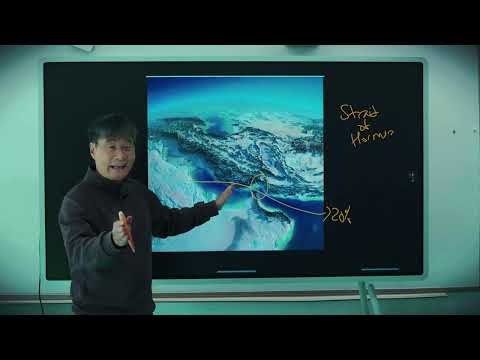
This is a bottleneck situation, and there is only one way out. In the current situation America sends in ground troops in Iran, causing further untold consequences, amongst which civil war in America, with total disruption as a consequence. This is one option. The second option is America mitigates the current situation and "pulls out", letting Iran control the Straight of Hormuz by letting them charge a safe through fee. This would boost Iran's rebuilding letting it become an economic superpower in the region. All these consequences, in one way or the other, in one scenario or the other, take effect within the current system, and ONLY within the current system. The third option: While what is at stake is in fact the current system indeed, as epitomized by the American model, which is the capitalist model of extraction for a few. Therefore these and other consequences loose their power, if the system, namely the monetary and banking systems change. This change is immanent and needed. It is the only way out. While all that we currently see is an attempt to maintain a system, one which enthralls everyone, because of the promise of potential richesses. It is a system aimed at and based on the lower self. The real deal here is a system's change, or else sparks flying...
English
0
0
0
106
Philippe Lheureux
Philippe Lheureux@Philheur·
Amidst the many pumped up narratives around what's happening in the Middle-East, and where what is actually happening is hidden, here at least some healthy facts: youtu.be/jIS2eB-rGv0?si…
YouTube video
YouTube
English
0
0
1
153
Philippe Lheureux
Philippe Lheureux@Philheur·
Some say that "everything is a lie." But the lie could well be far greater than any bold assumption envisions. What we're seeing today is a dumping of bad assets, while making the small investor pay for it. Plus it is a transfer of wealth to those who already own the most, before the whole system collapses. It was never about assisting low income or the middle class, rather, it is the logic of a system as a heist, now run ad absurdum. That system that could never be sustainable, but only survive through more extraction at all costs. The incoming control-grid therefore needs to be brought in before the scam becomes all too obvious, and people start reaching for the pitchforks. So today we see a system on the verge of breakdown, forced to step beyond all lawfulness, so as to keep a dying system from imploding. The past is being preserved at all costs by the oligarchs, because otherwise change is about to come in through any cracks in an ailing system. A crisis, however, can sometimes be an opportunity.
English
0
0
3
120
Philippe Lheureux
Philippe Lheureux@Philheur·
There are "dark", secret societies running the world. It is hard to pinpoint who they are and where they are. It is hard to pinpoint, first of all, because the same "darkness" is running through us all. We seek a physical group or physical causation to pinpoint, but the reality is that "evil", if left all too unchecked, runs through the human soul. This of course, is less convenient. But as long as we believe that a physical group must be located, and given the blame, we're controlled. The very believe that all causation lies in the physical realm is itself part of the control "program". The Ahrimanic impulse denies spiritual causation. It tends to deny the spiritual at all. And partially good so, while it shapes human responsibility. But the ultimate responsibility is to understand the mechanisms of evil. For that, the way in which the good proceeds must be known as well. The Satanic impulses make evil into good, and good into evil. They pervert and invert, so it becomes difficult discern, what is actually good, and what is evil. The groups in which the Satanic impulses concentrate do certainly exist, but they gain their power from the masses' refusal to consider the spiritual planes in a perceptive and cognizant manner. Thinking, feeling, and willing are perverted, so that reality is blurred out. The Double, namely the heritage of the Fall, is being fed, through pharmaceuticals, through engineered foods, through soul-less media, so as to amplify the Fall. Today there is no way out without understanding and experiencing the spiritual background of the world. This spiritual background however is hidden in plain sight.
English
0
2
9
226
Philippe Lheureux
Philippe Lheureux@Philheur·
Lower & Higher Worlds: The Mirror of the Hierarchies Or: Correspondence Between Heaven and the Earth Interior The key principle here is cosmic inversion; while higher hierarchies express creative unity, the Earth depths express fragmentation and inversion of those forces. A Vertical Mirror Diagram could look like this. ──────────────────────────────────── HEAVEN ──────────────────────────────────── SERAPHIM Cosmic love / unity CHERUBIM Cosmic wisdom THRONES Creative will KYRIOTETES Ordering intelligence DYNAMIS Forces of movement EXUSIAI Form-giving powers ARCHAI Spirit of epochs ARCHANGELS Spirit of peoples ANGELS Guides of individuals ──────────────────────────────────── HUMANITY ──────────────────────────────────── HUMAN I (Freedom / conscious mediation) ──────────────────────────────────── INVERTED EARTH REALMS ──────────────────────────────────── MIRROR EARTH Inversion of truth DIVISIVE LAYER Fragmentation of unity CORE OF SEPARATION Black magic / egoism FIERY EARTH Amplified passions FRUIT EARTH Distorted life forces FIRE EARTH Chaotic will INVERTED CONSCIOUSNESS Joy in destruction NEGATIVE LIFE Life extinguished MINERAL DEPTH Pure materiality The Mirror Logic: the correspondence works top-to-bottom as inversion. This is not moral condemnation, but cosmic polarity. The depths of the Earth show the shadow or inversion of the creative forces above. The human being stands between both. Higher Hierarchies ▲ │ │ HUMAN I │ │ ▼ Inverted Hierarchies Initiation means: • perceiving both realms • not identifying with either • transforming the lower through consciousness. The hierarchies of heaven express the creative powers of the cosmos. In the depths of the Earth these same forces appear inverted. Humanity stands between them. Through conscious perception and moral freedom, the human being mediates between the worlds. When this becomes clearly in view, several insights appear instantly: • the Earth interior is not merely geological • the cosmic hierarchy has a shadow • modern crises are part of this field • the human being is the mediator. Steiner implicitly describes but rarely shows visually: The Triple Descent Descent of the initiate into the Earth layers Descent of Christ into the Earth Descent of modern civilization into sub-nature When those three are shown together, the entire mystery of evil becomes visually understandable.
English
0
0
6
176
Philippe Lheureux
Philippe Lheureux@Philheur·
“System follows incentives, not intentions” — is powerful, precisely because it is partly true, but becomes misleading when treated as a total principle. This statement feels true while in many real-world systems, especially economic ones: - behavior does tend to align with incentives - repeated patterns emerge regardless of personal values - individuals adapt to survive within constraints So one get observations like: - companies optimize for profit - workers optimize for income/security - institutions optimize for metrics From this level, the statement captures something real: Systems tend to stabilize behaviors around what is rewarded. That’s not wrong. It becomes reductionist and making problems arise when this is turned into a universal law: “Intentions don’t matter — only incentives do.” At that point, something essential is removed: - the human being as a source of initiative - the capacity to reinterpret a situation - the possibility of acting against incentives This is exactly what Steve Keen critiques: Economic “laws” often become self-reinforcing assumptions rather than empirically complete descriptions of reality. The hidden assumption behind the statement assumes: The human being is a reactive agent inside a system. Meaning: incentives → behavior input → output This is a mechanistic model of the human. But this model only holds if: - thinking is passive - choice is limited to predefined options - the “I” is not actively engaged The missing dimension is therefore the HOW. While even if incentives exist: The decisive question is not that we respond but HOW we respond. Two people in the same system: - same incentives - same constraints → can act completely differently Why? Because of: - perception - interpretation - inner stance The statement can be refined into three layers: Level 1 — Mechanical (partial truth) Systems follow incentives ✔ Predictable behavior ✔ Useful for modeling ✖ Ignores human depth Level 2 — Human (more complete) Humans interpret incentives incentives are not commands they are read, filtered, re-shaped Level 3 — Spiritual / cognitive The quality of thinking determines the response to incentives If thinking is: - rigid → behavior becomes predictable - alive → behavior becomes creative The statement becomes dangerous when absolutized, since it leads to: - system design that assumes humans are programmable - policies that replace responsibility with control - environments that erode initiative It quietly says: “Don’t rely on people — engineer the incentives.” And over time, this produces exactly what we increasingly see today: a de-souled system, where human intention is no longer expected to matter It would however be inaccurate to say: - incentives don’t matter - systems don’t shape behavior They do, and well very strongly, but: They do not fully determine behavior. A more accurate formulation would therefore be: Systems channel behavior through incentives — but they do not determine how human beings respond to them. Or even sharper: Incentives shape tendencies. Thinking (and chosen inner stance as well as motivation) determines response. Such a statement however has its power from an environment where capital and capital accumulation as a goal is normalized. The plasticity of thinking, which actually conceives of, and largely determines economic understanding, is itself a real economic factor. One however not fully taken into account, creating hereby one of the first distortions of economic understanding and interpretation of reality. The impact of thinking on the economy is real, not only through inventions, creativity and the capacity to organize, to envision, to create productions, etc, is therefore very real. But the way thinking is handled (as a product of the brain or not) impacts: - rigid thinking → rigid systems → systemic fragility - living thinking → adaptive response → systemic resilience The inversion, therefore is, instead of: “System follows incentives” One could say: Systems reflect the quality of thinking that designs them. And therefore: If thinking changes, systems can reconfigure. This means “System follows incentives, not intentions” needs contextualization: “System follows incentives” is true — but only within a model that has already reduced the human being to a reactive unit. And then we can reopen the field: The moment thinking becomes active, perceptive, and mobile, the system is no longer the final determinant.
English
0
1
2
98
Philippe Lheureux
Philippe Lheureux@Philheur·
The mismatch between: - linear taxation models - and non-linear real life ...is an example of (we could say) dysfunctional conceptualization of reality. And there it is not so much about the WHAT as it is about the HOW. This is where the conception around thinking itself and its nature shows its dysfunction in say this particular example where income can peak in two years, while overall being insufficient. In too many cases, the "key" we configure to grasp reality, doesn't fit. In many cases, we handle stereotyped "slogans" one could say, namely ready-made sentences, which because they seemed to be commonly used, need of necessity to be true. Yet they are not; they are mere slogans. While in fact, "the key" needs to be flexible, to a much higher degree than is assumed. And it is this flexibility that fails, when thinking is not handled as something -let's use the word in its old sense- plastic, namely "flexible". Plasticity or flexibility in thinking can not really be produced if believed that it is the brain that thinks. Then brain activity is fully outsourced to "the brain" rather than grasped by the "I". And this "grasping of the thinking by the 'i' is rarely attempted, simply because the brain model affirms this is not possible. But "grasping thinking by the 'I'" is a real and observable thing, a thing that actually needs to be done, or it just doesn't come about. In the example of taxation, the flexibility is lacking to conceive reality in its fluctuating, flexible form. Reality thus gets conceived in an all too static and stereotyped way. There is enough money in the world for pensions, for restoring, maintaining, and upping infrastructure, even including nuclear plants, if capital wasn't hoarded but allowed to flow into society. To envision that this is possible, a system redesign throughout the entire system -made up of systems- needs to be conceived, where indeed all parts affect one another, and where if one starts in wherever point, all other points are immediately affected and adjust themselves, whereby the system would almost reconfigure itself, if this re-configuring were to be set in motion in any given point. One of the main wedges within the system preventing this reconfiguration to take effect and spread in successive waves through the system, is indeed capital accumulation.. Capital accumulation, in its current form, is counter-productive and inefficient. Now, such a statement immediately refers to "socialism" or worse, to communism. But again, what induces to think that when "capitalism" is examined, this immediately means socialism is intended. And this very though-pattern is proof of how lack of flexibility in thinking locks into systems, which are ineffective, while at the same time this ineffectiveness remains undetected. What is therefore ate stake today, is the capacity to envision METAMORPHOSIS. This indeed requires FLEXIBILITY in thinking, it is to say a thinking capable of modeling and metamorphosing itself according to reality, rather than trying to bend reality to a rigidified theorization of reality.
English
0
0
1
68