Philosophy's Tune

988 posts

Philosophy's Tune banner
Philosophy's Tune

Philosophy's Tune

@PhilosophysTune

Noticing what goes unseen. Observed, not argued. Tuned to what lasts.

New Orleans, LA Katılım Haziran 2024
6.9K Takip Edilen978 Takipçiler
Philosophy's Tune
Philosophy's Tune@PhilosophysTune·
The Same Bed Count A man who used to run a country now sleeps a few feet from someone else just waiting for the day to end. Same routine. Same food. Same small window. No cameras. No speeches. Just time moving slow. Power doesn’t disappear, it just stops showing up the way it used to. Titles don’t mean much when every day looks the same. Wake up. Eat. Sit. Think. Try to sleep. Do it again. He spends his time reading now. Not to lead anything. Just trying to make sense of things. When there’s no crowd, no pressure, no one expecting anything from you, it gets real quiet. And that’s when something honest shows up. What’s left when nobody’s listening?
Philosophy's Tune tweet media
English
0
0
1
46
Philosophy's Tune
Philosophy's Tune@PhilosophysTune·
Quiet Intelligence Bees don’t announce intelligence. They move, adjust, remember, and try again. A brain the size of a seed still finds efficient paths, weighs effort against reward, and changes behavior when the world shifts. It learns without needing to prove anything. We used to call that instinct. Now it looks more like quiet understanding. Most people think control is the answer, but the bees suggest otherwise. The strongest ones are not the most managed. They are the ones that adapt, season after season, without intervention. They don’t argue with the environment. They read it, then respond. There’s something steady in that. No noise. No performance. Just attention, memory, and action. If something that small can navigate a changing world without forcing it, the lesson is hard to ignore. Do less. Pay closer attention. Adjust when needed. Let the work speak.
Philosophy's Tune tweet media
English
0
0
2
44
Elon Musk
Elon Musk@elonmusk·
Engineering is real magic
English
12.3K
44.4K
526.7K
101.3M
Philosophy's Tune
Philosophy's Tune@PhilosophysTune·
Pressure Creates Pathways Two continents kept pushing for millions of years. No hesitation, no noise, just steady force. Over time, that pressure carved something narrow but powerful into the Earth, a passage the world now depends on. Most people only see the surface: ships, water, trade. They don’t see what built it. The same force that raised mountains also trapped energy deep below, creating both value and tension in the same place. Nothing meaningful comes without pressure. Not strength, not clarity, not direction. The mistake is trying to escape it. Pressure isn’t the enemy, it’s the process. Handled right, it doesn’t break you. It shapes you into something everything else has to move through.
Philosophy's Tune tweet media
English
0
0
4
75
Philosophy's Tune
Philosophy's Tune@PhilosophysTune·
Back to the Moon It’s been over 50 years since humans last went this far-since Apollo 17 in 1972. A whole generation grew up never seeing it. Now we’re not just going back, we’re starting again-testing the path and setting the stage for what comes next. Good luck Artemis, we'll be watching and cheering you on!!
NASA Artemis@NASAArtemis

The launch team at @NASAKennedy are GO to begin filling the Artemis II rocket with fuel. The official launch broadcast begins at 12:50pm ET (1650 UTC). Liftoff is scheduled for no earlier than 6:24 pm ET (2224 UTC). Tanking coverage can be found here: youtube.com/live/m3kR2KK8T…

English
0
0
3
135
Philosophy's Tune
Philosophy's Tune@PhilosophysTune·
The Reef Doesn’t Compete A coral doesn’t survive on its own. It carries algae inside it, trades nutrients, hosts millions of microbes, and lives in constant exchange with everything around it. When the water heats up, some corals don’t make it. But something strange happens in mixed reefs. The stronger ones don’t just survive. They steady the weaker ones. They share what they can’t produce alone. For a long time, we told the story wrong. We said survival belongs to the toughest, the fastest, the most dominant. Nature keeps showing a quieter pattern. Strength that isolates breaks. Strength that connects adapts. The reef holds because it’s not one thing. It’s a system that doesn’t announce itself, doesn’t compete for attention, just keeps exchanging, adjusting, staying in rhythm with what’s around it. Most people try to outwork, outfight, outlast everything. That works for a while. Then something shifts. Pressure rises. Conditions change. The ones that last aren’t always the strongest on their own. They’re the ones tied into something deeper. Something shared. Something that doesn’t collapse when things get hard. The reef doesn’t win by being the best coral. It survives by not being alone.
Philosophy's Tune tweet media
English
0
0
3
48
Philosophy's Tune
Philosophy's Tune@PhilosophysTune·
Transfer Nothing moves. The pattern does. The original collapses, and the state appears somewhere else. Physics figured out what most people resist. You don’t carry every version of yourself forward. The part that hesitates has to go quiet so something clearer can take its place. Nature doesn’t duplicate. It transforms. What feels like loss is often just the system updating.
English
0
0
1
53
Elon Musk
Elon Musk@elonmusk·
Over 500 rocket landings now
English
15.6K
32.4K
413.2K
71.5M
Philosophy's Tune
Philosophy's Tune@PhilosophysTune·
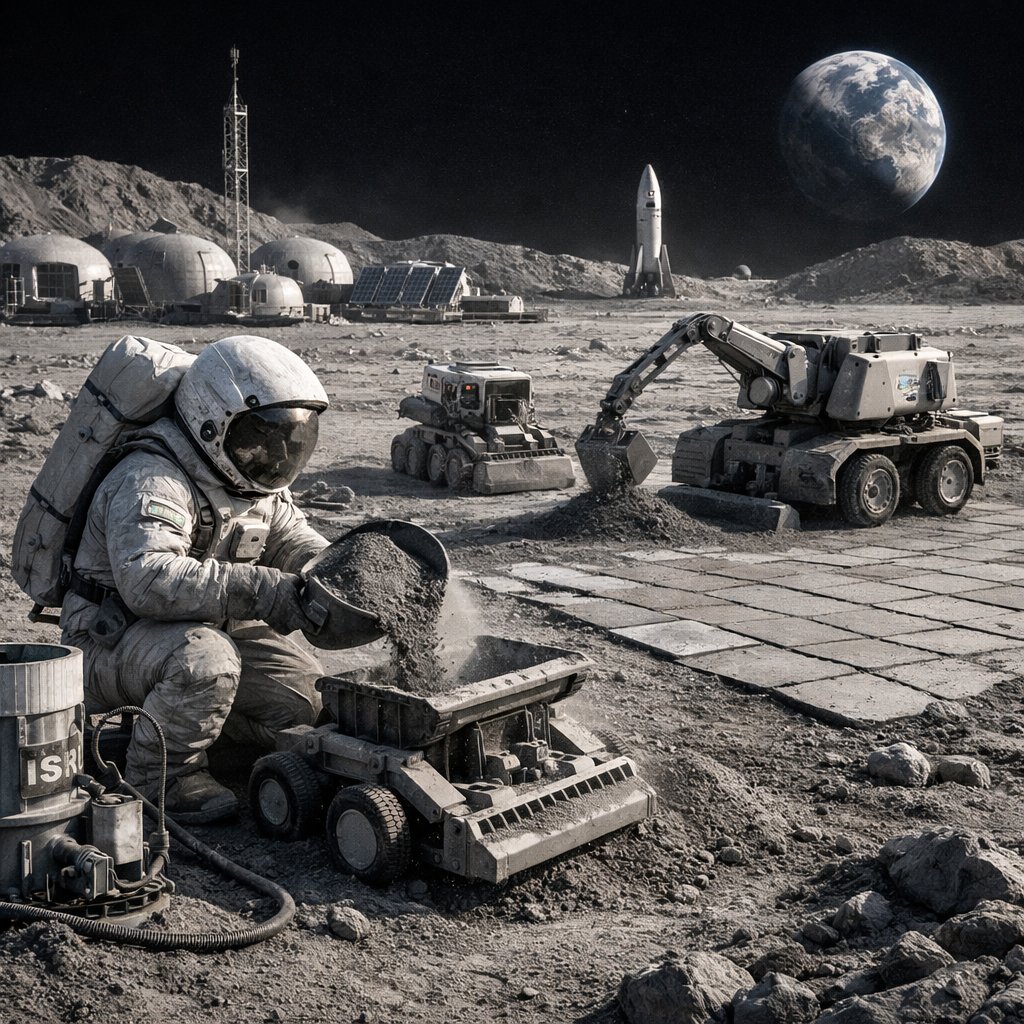
Moon Dirt Everyone talks about rockets, astronauts, and the next giant leap, but the future of the Moon might come down to dirt. Gray, lifeless, abrasive dust, the kind of thing you would brush off your boots without thinking twice. That same dust can become roads, landing pads, oxygen, even fuel. It can power machines, sustain life, and build an economy millions of miles from home, not because it is special, but because someone decided to use what was already there. Most people wait for better conditions, more resources, the perfect setup. The ones who move forward look at what they have, no matter how ordinary, and start building. The difference is rarely opportunity. It is perspective.
Philosophy's Tune tweet media
English
0
0
1
60
Philosophy's Tune
Philosophy's Tune@PhilosophysTune·
Borrowed Fire Most people think plagiarism is theft, but it’s not that simple. For most of history, copying was how you learned. You studied the masters, borrowed their rhythm, and slowly found your own voice inside it. No outrage, just craft being passed down. Then we started worshiping originality, and now everyone is afraid of sounding like someone else while quietly being shaped by everything they’ve ever seen, read, or heard. Even the mind doesn’t draw clean lines. It remembers, blends, and returns ideas without asking permission. AI just made that reality obvious. It pulls from the same ocean we all do, just faster. The real line isn’t between influence and imitation, it’s between honesty and disguise. Taking something and claiming it as yours is the problem, not because it’s illegal, but because it’s hollow. And the strange part is, when someone borrows from themselves long enough, we stop calling it copying. We call it style.
Philosophy's Tune tweet media
English
0
0
1
37
Philosophy's Tune
Philosophy's Tune@PhilosophysTune·
Still Standing Pressure reveals what’s real. When systems fail and power plays its games, what’s left isn’t ideology. It’s people finding a way. Sharing food. Fixing what’s broken. Enduring one more day without knowing how the next one works. That’s where strength actually lives. History shows it over and over. Not in leaders or slogans, but in quiet resilience. The kind that adapts, survives, and rebuilds without asking permission. Hard times strip things down. What remains is what matters. And as long as people are still standing, the story isn’t over.
English
0
0
1
39
Philosophy's Tune
Philosophy's Tune@PhilosophysTune·
No Safe Side There’s an old saying about a chicken that gets cooked whether it’s a wedding or a funeral. The outcome changes. The fate does not. That’s where ordinary people end up when power collides above their heads. Bombs fall from one direction, control tightens from the other, and the space to act disappears. From the outside, it always looks simple. Remove the leader. Spark the uprising. Reset the system. But real life doesn’t move like a strategy map. Sun Tzu warned that prolonged conflict drains everything it touches, leaving nothing intact but exhaustion. Musashi wrote that when pressure rises, most people lose their timing. They freeze, hesitate, or move too late. That’s not weakness. That’s what happens when survival replaces ideology. When the lights go out, the goal is not revolution. The goal is getting through the night. From a distance, people talk about courage like it’s a switch. Flip it on and rise up. But courage without stability collapses into chaos. The Stoics understood this. You can only act well when your footing is steady. When the ground is shaking, even the strong focus on staying upright. History keeps repeating the same quiet lesson. Force rarely creates freedom. It creates pressure. And pressure doesn’t always break systems. Sometimes it just hardens them, trapping everyone inside. Most people don’t choose sides in moments like this. They choose to protect what’s in front of them. Their family. Their home. Their next breath. And in that space, between what should happen and what actually does, you find the truth most people don’t want to admit. When power fights power, it’s the still ones in the middle who carry the weight.
English
0
0
1
47
Philosophy's Tune
Philosophy's Tune@PhilosophysTune·
The Timeline Moves For years, one place helped anchor the story. A quiet site in Chile. Tools, bones, a footprint pressed into old earth. It told us people were here earlier than we thought. It forced a rewrite. Now that same ground is being questioned. Not because the past changed, but because our reading of it might have. Wood drifts. Water carries time. What looks fixed can be layered, shifted, misread. What we thought was a moment may have been something older, moved into place. The mind wants a clean line. A clear answer. But the world doesn’t move that way. It never has. Musashi wrote that the way is found in constant adjustment. Not clinging to one stance, but seeing clearly and responding without attachment. Science works the same way. It cuts away its own certainty when the edge gets dull. It steps back. Re-centers. Moves again. The timeline loosens, but the truth doesn’t disappear. People came in waves. Different paths. Different times. Some along the coast. Some across land. Some leaving marks so faint we’re still learning how to see them. This isn’t confusion. It’s refinement. Most people want answers that stay put. But real understanding doesn’t sit still. It shifts, corrects, sharpens. Quietly getting closer without ever needing to announce that it has arrived.
Philosophy's Tune tweet media
English
0
0
1
30
Philosophy's Tune
Philosophy's Tune@PhilosophysTune·
The Power of a MEU When the world starts shaking, the first question generals ask isn’t who can win the war. It’s who can get there tonight. That’s where Marine Expeditionary Units come in, especially units like the 31st MEU. Roughly two thousand Marines and sailors living aboard a handful of ships, carrying everything needed to fight, fly, land, and sustain themselves. Infantry, reconnaissance, artillery, aviation, and logistics all working as one self-contained force. Amphibious assault ships like the USS Tripoli function almost like floating airfields, launching helicopters, Ospreys, and even F-35B fighter jets while Marines prepare to move from sea to land within hours. A Marine Expeditionary Unit is not designed to be a massive invasion force. It’s designed to be fast, flexible, and decisive. Helicopters lift Marines over the horizon while amphibious vehicles push through the surf. Recon teams move ahead quietly. Jets circle overhead. Attack helicopters provide cover. Within a short window, a small but complete fighting force can appear exactly where it’s needed. That’s why MEUs are often called “911 forces.” When crises erupt, they are already at sea, already trained to move, and already capable of acting before larger armies even begin to mobilize. People online often talk about war like it’s maps, headlines, and political speeches. But wars rarely start that way. Sometimes it begins with ships appearing over the horizon, rotors cutting through the early morning air, and Marines moving toward a shoreline before the rest of the world even realizes what’s happening. A Marine Expeditionary Unit doesn’t always mean a war has begun. But it does mean the capability to start or stop one has just arrived.
Philosophy's Tune tweet media
English
0
0
1
39
Philosophy's Tune
Philosophy's Tune@PhilosophysTune·
The Sound of Conviction In the 1960s, protest had a soundtrack. People didn’t just argue about politics. They sang about it, marched to it, and built a whole culture around it. Long hair, worn guitars, and crowded fields became signals that a person believed something strongly enough to live differently because of it. At one famous festival, a singer stepped on stage and led thousands in a blunt antiwar chant before launching into a song that questioned why young men were being sent to fight. The moment was loud, rough, and impossible to ignore. But that was the point. Protest then wasn’t just an opinion. It was an identity. Music, art, and community fused together into something alive. Today dissent often lives inside screens. Arguments come through tweets, podcasts, and short clips of people speaking into microphones. Information moves faster than ever, but it rarely carries the same pulse of shared experience. A crowd singing together hits differently than a thousand people typing alone. The old hippies became easy punch lines over time. Yet many of them kept the same convictions for decades. They protested, organized, wrote songs, and tried to live in a way that matched what they believed. Not perfectly. But persistently. Maybe the lesson is simple. When belief becomes culture, it lasts longer than outrage.
Philosophy's Tune tweet media
English
0
0
1
28
Philosophy's Tune
Philosophy's Tune@PhilosophysTune·
The Language That Refused to Die In a small mountain village in Syria, people still speak Aramaic-the language scholars believe Jesus spoke 2,000 years ago. Not in museums or textbooks. In kitchens, lullabies, quiet neighborly conversations. War came. Churches burned, homes shattered, families scattered. Yet after the bombs fell silent, something older than the ruins endured. Mothers whisper to children in the ancient tongue. Priests pray in it. Elders tell stories their grandparents taught them. Languages usually die slowly-not with explosions, but with neglect. One generation stops. The next forgets. Words fall silent. But some words are stubborn. They survive in memory. In faith. In the quiet determination of people who refuse to let their past vanish. A language doesn’t live because it is old. It lives because people choose to keep breathing life into it.
Philosophy's Tune tweet media
English
0
0
1
22
Philosophy's Tune
Philosophy's Tune@PhilosophysTune·
Shaking the Snow Globe For years scientists believed healing the mind required slow, steady work-therapy, medication, time. Then something strange appeared in the data. A single dose of certain psychedelic drugs seemed to lift depression in some people for weeks. The question wasn’t just why it worked. The question was how. Inside the brain, stress and depression can cause the branches of neurons to shrink and weaken, like trees losing limbs in a long winter. But some psychedelic substances appear to do the opposite. They trigger the growth of new connections, new branches, new pathways. The brain becomes flexible again. Less stuck. More able to change. Now researchers are trying something even stranger. They’re attempting to design drugs that rebuild those neural connections without causing hallucinations at all. No visions. No mystical experiences. Just the biological repair. And that raises a deeper question about the human mind. Is healing about chemistry and neural wiring? Or is it about the insight and emotional breakthroughs people sometimes experience during a psychedelic trip? Science doesn’t know yet. But one thing is becoming clearer. When the mind feels trapped in the same patterns, sometimes what it needs most is not force or control. Sometimes it just needs the snow globe shaken.
Philosophy's Tune tweet media
English
0
0
3
35
Philosophy's Tune
Philosophy's Tune@PhilosophysTune·
Digital Shrapnel Once, war arrived slowly. A few photographs in a newspaper, a measured report on the evening news, time enough for the mind to sort signal from noise. Today it arrives in fragments. A missile streaking across someone’s vacation video. A government meme. A shaky phone clip with music playing in the background while explosions bloom in the distance. Everyone sees a piece. Almost no one sees the whole. The stream never stops. Video after video, opinion after opinion, each one demanding attention and giving the feeling of being informed. But more often it is simply noise moving faster than understanding. Sun Tzu warned that confusion itself can be a weapon, and Musashi wrote that clarity decides the fight before the sword is drawn. In an age of endless feeds and algorithmic urgency, the battlefield is no longer only overseas. It is in the mind. And the discipline most people overlook is the quiet one: refusing to mistake constant information for truth.
English
0
0
1
32
Philosophy's Tune
Philosophy's Tune@PhilosophysTune·
The Quiet Edge In the long centuries of Japan’s samurai era, strength did not belong to one gender. It belonged to those who were prepared. Women were often trained to defend homes, estates, and castles when the men were away at war. Some of them became formidable warriors in their own right. Tomoe Gozen rode into battle beside seasoned samurai and was known for cutting down opponents with ruthless precision. Hangaku Gozen defended a castle against a far larger force for months, firing arrow after arrow with calm determination. Centuries later, as the samurai age was collapsing, Nakano Takeko led a small group of women into battle armed with naginata pole blades, fighting with such skill that enemy soldiers did not realize they were facing women until it was too late. None of these women fought to prove a point or make a statement. They fought because the moment demanded it. The samurai world was built on a simple understanding: discipline first, readiness always. Strength was not loud, and it did not seek recognition. It was forged quietly through training, duty, and clarity of purpose. When the moment arrived, there was no hesitation.
Philosophy's Tune tweet media
English
0
0
2
25