PhotoMV

207 posts

PhotoMV banner
PhotoMV

PhotoMV

@PhotoMV001

https://t.co/mbYzFjz9o9 archives Maldives’ historical photos and restores them using AI. Upload & tag to build a free and searchable library together — launching Oct 2025.

Maldives Katılım Ağustos 2025
9 Takip Edilen1.3K Takipçiler
PhotoMV
PhotoMV@PhotoMV001·
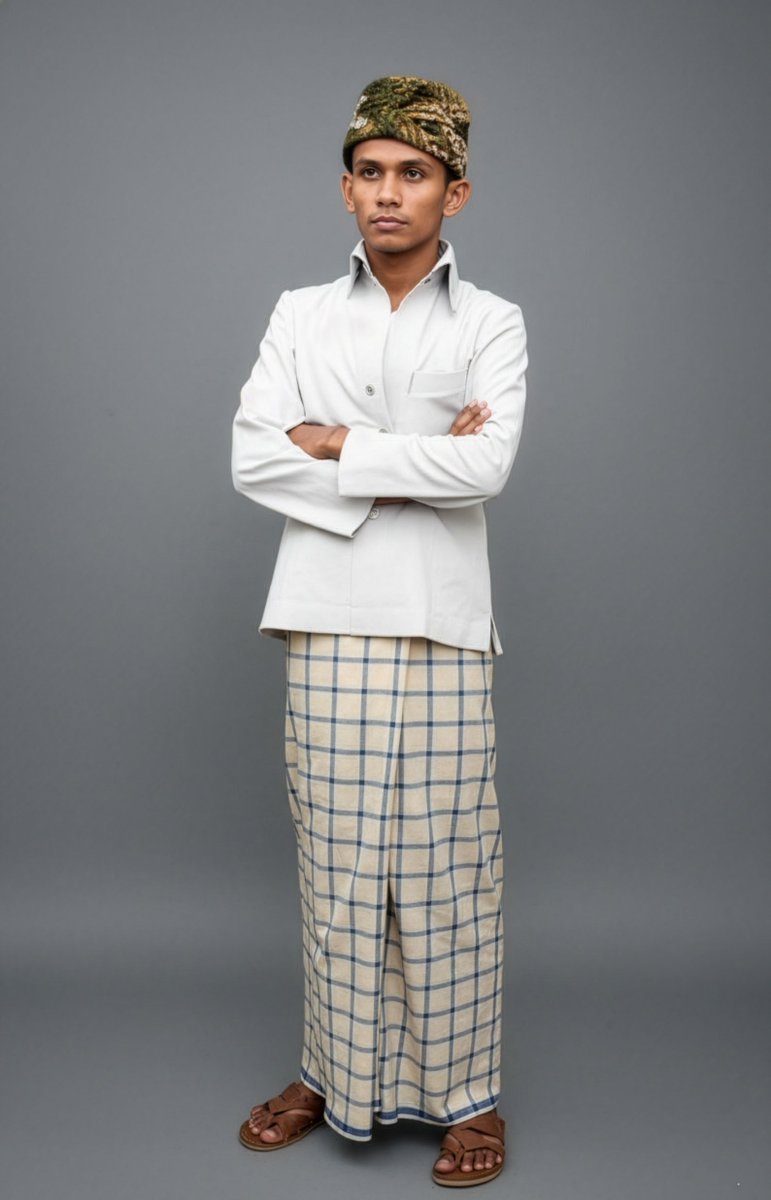
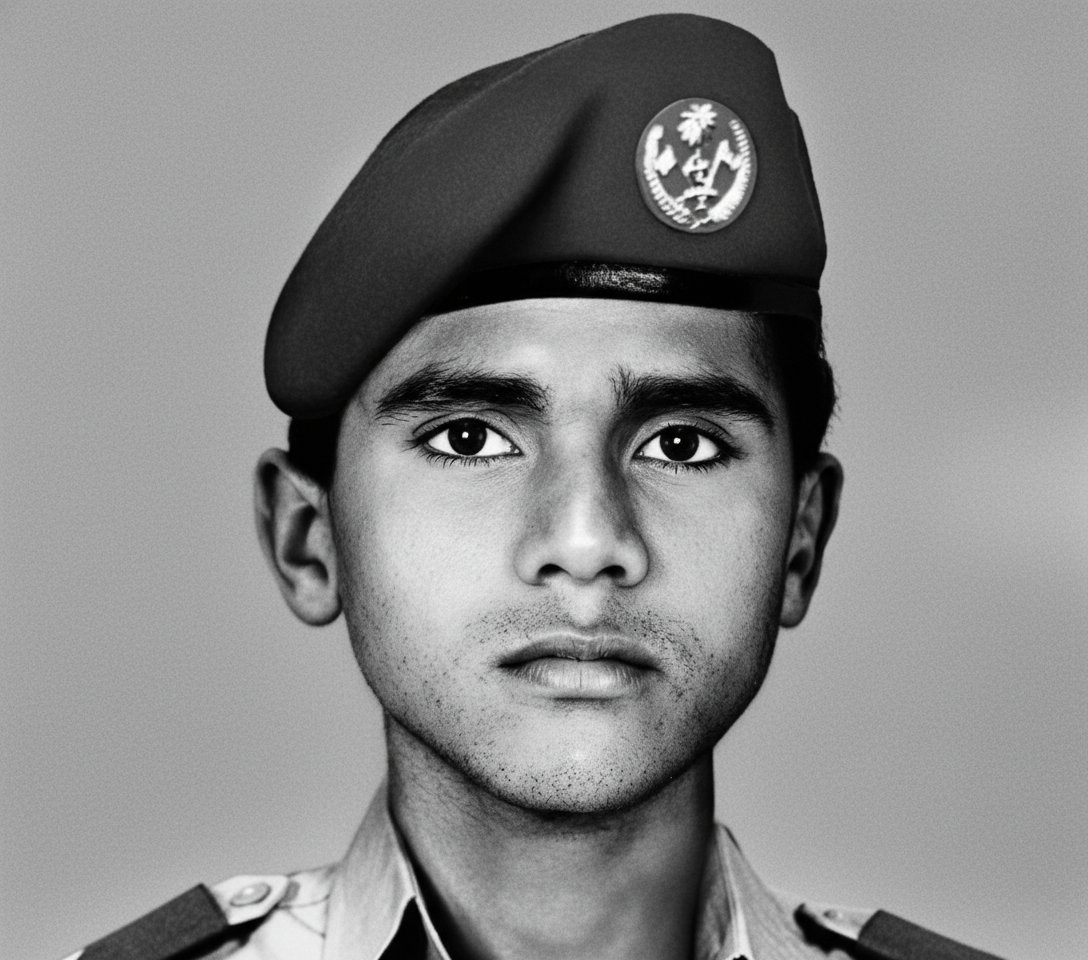
Shaheed Corporal Hussain Adam (1968 – 1988) The First Line of Fire — The Young Soldier Who Saved a Nation Born February 1968 in Kulhudhuffushi, Hussain Adam grew up studying at Ameer Ameen School, where he excelled in sports, athletics, swimming, and cadets. After finishing school, he planned to become a seaman, a respected and well-paid profession at the time — but destiny had other plans. At just 16, he was selected among 12 candidates from his batch to join the National Security Service (today’s MNDF) and enlisted on 9 May 1984. After completing special training at the Girifushi Training Centre, his first live-fire practice took place in May 1985, where he fired six rounds — four of which hit the target dead-centre. His second time firing a rifle came a year later, in 1986, when he was given three rounds — and hit the target with all three. His third time firing a weapon came not on a range, but in real combat — on 3 November 1988. That morning, Tamil mercenaries from the PLOTE organization, aided by a small group of Maldivian collaborators, launched a surprise attack on Malé. Hussain Adam, then 19, was stationed at the outer gate of Bandaara Koshi, the NSS Headquarters. When gunfire erupted, he immediately returned fire, marking the first defensive shots of the battle. He fought calmly and with discipline — preserving ammunition, adjusting position under fire, and radioing updates to comrades inside. Offered a chance to retreat within the building, he refused, choosing instead to hold the line from the outer post. His gunfire halted the enemy’s advance, forcing them to take cover in the Dhoshimeynaa Building (where Jumhooree Maidan stands today). He requested more ammunition, but resupply proved impossible. As his ammunition dwindled, an enemy round struck his magazine, jamming the rifle; he was then fatally shot multiple times and fell at his post. Those crucial minutes, bought by his stand, allowed the soldiers inside the Headquarters to arm, take rooftop positions, and mount a counter-attack — which proved decisive in preventing the HQ’s fall. The insurgents — PLOTE mercenaries and their Maldivian collaborators — had already overrun much of the capital at dawn. By denying them the main gate in those first minutes, Hussain Adam prevented a rapid decapitation of the state’s command center, holding the line until Maldivian forces regrouped. Within hours, Indian paratroopers arrived under Operation Cactus to restore control. Because of his courage and sacrifice, the capital never fell — and the Maldives itself was saved. For his extraordinary bravery, he was posthumously promoted to Corporal and awarded the Huravee Ran Medal (Medal for Exceptional Bravery), the Jihaadhuge Raiy Medal (Purple Heart), and the 3 November Medal. The Maldives Police Service Headquarters now bears his name — Shaheed Hussain Adam Building — a daily reminder of the 19-year-old who gave his life so that his country could live free.
PhotoMV tweet media
English
2
9
14
1.8K
PhotoMV
PhotoMV@PhotoMV001·
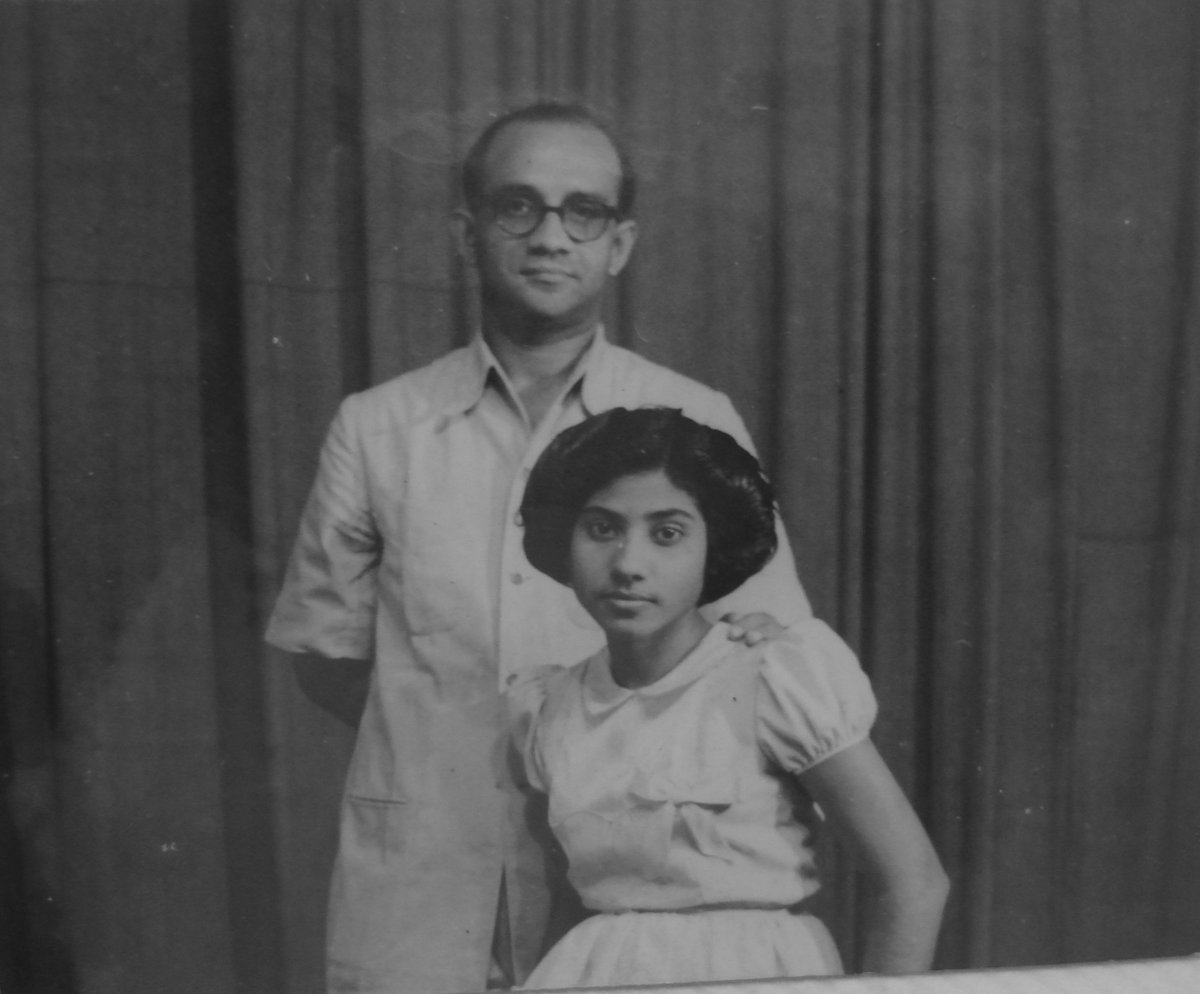
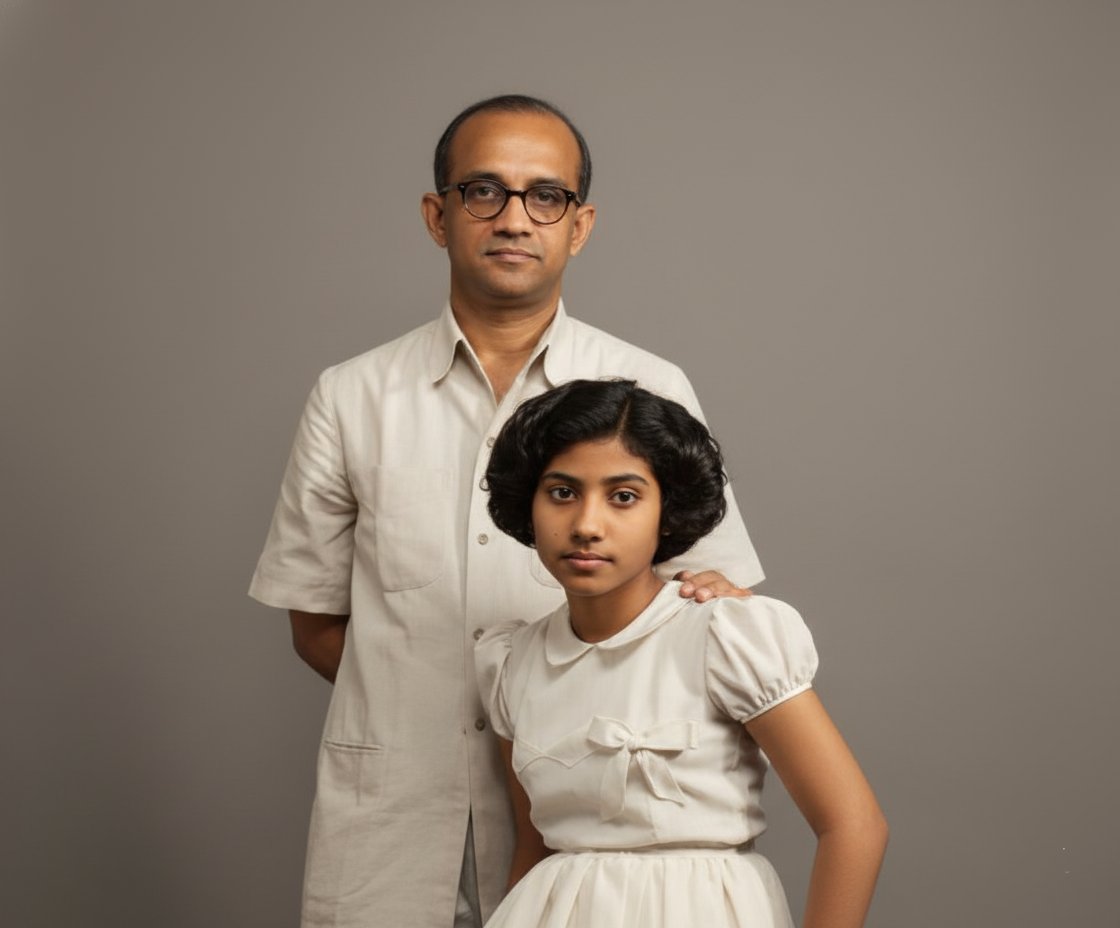
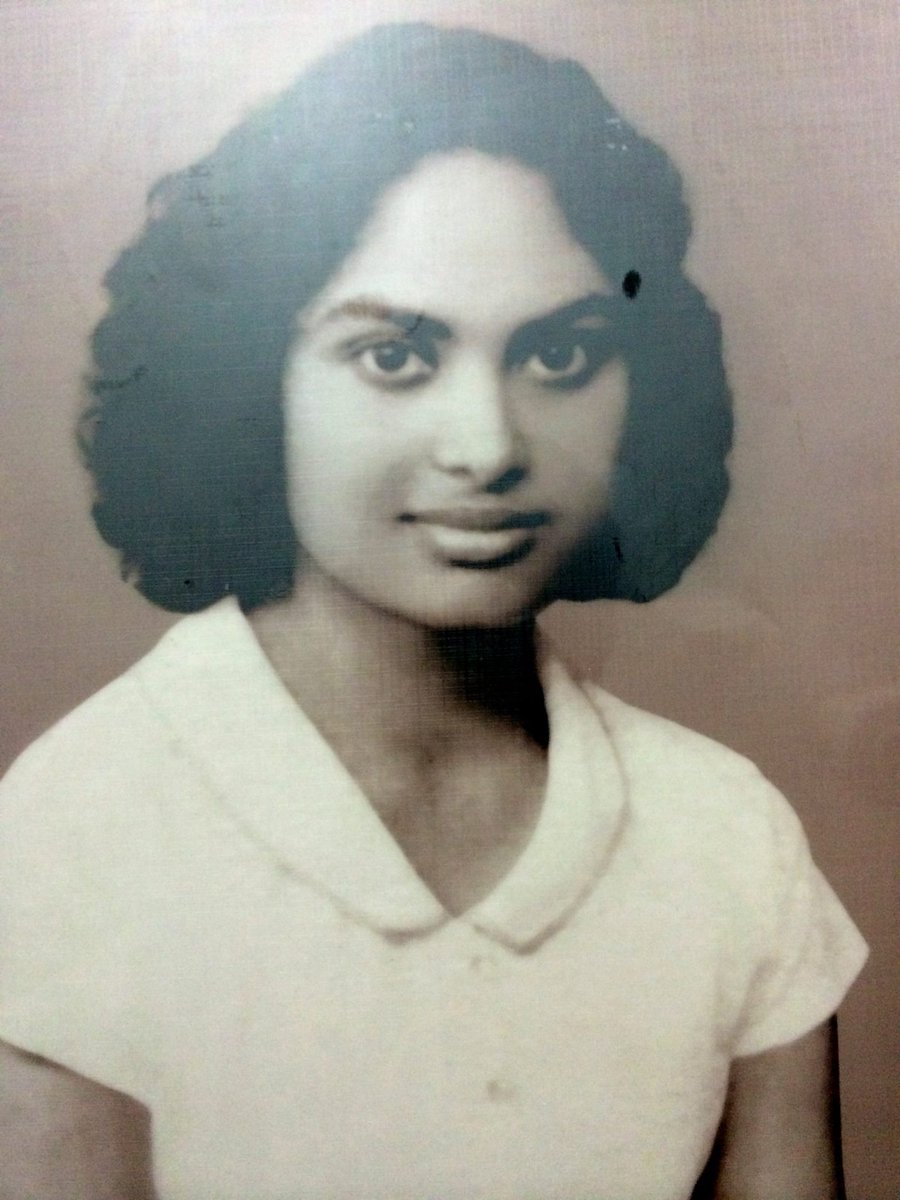
Fathimath Jameel (1937 – 2020) Educator, homemaker, and civil servant — one of the first Maldivian women to hold senior government office. Born in Malé in 1937 to Mohamed Jameel Didi — poet, scholar, and lyricist of the national anthem — Fathimath Jameel belonged to a generation that bridged the transition from monarchy to republic, from oral scholarship to modern bureaucracy. She began her career as a teacher at Madharusathul Salahiyya, one of Malé’s earliest structured schools, in the years before her marriage. Afterward, she spent more than a decade devoted to her family — building a home, raising her children, and creating a space of warmth and order that reflected the discipline she would later bring to public life. Those domestic years grounded her sense of purpose and deepened her empathy for women balancing duty and ambition. When she eventually joined the Department of Women’s Affairs, she brought to it not only administrative skill but also the perspective of a mother and homemaker. She worked to expand education, vocational training, and health outreach for women and youth across the atolls, helping to lay the groundwork for a generation of female professionals. By the late 1980s, she had become President’s Member to the People’s Majlis (1989 – 2000) — representing the President during the first major period of constitutional reform — and later served as Deputy Minister of Youth, Women’s Affairs & Sports (1993 – 2000). Her tenure coincided with the formative years of the national women’s movement: she led Maldivian delegations to international conferences, promoted island-level women’s committees, and helped institutionalise gender policy within the civil service long before “gender mainstreaming” entered official language. Fathimath Jameel represents a transitional moment in Maldivian history: when the nation’s modern state institutions were taking shape and the presence of women in public decision-making was still exceptional. Her lineage tied her to one of the country’s foremost literary families — through her father Mohamed Jameel Didi, lyricist of the national anthem — while her career traced the emerging civil-service pathways that allowed educated women to move from teaching and homemaking into administration. By mentoring younger officers and advocating for structured women’s committees in the atolls, she quietly helped normalise the idea of women in leadership long before it became a political slogan. Those who worked with her remember her understated confidence, punctual discipline, and quiet refusal to be limited by precedent. She passed away in Malé on 4 April 2020, remembered as a steady hand in an era when few women held public power. Photographed on her first day in the People’s Majlis, 1989 — courtesy of the Jameel family archive
PhotoMV tweet media
English
2
5
75
10.4K
PhotoMV
PhotoMV@PhotoMV001·
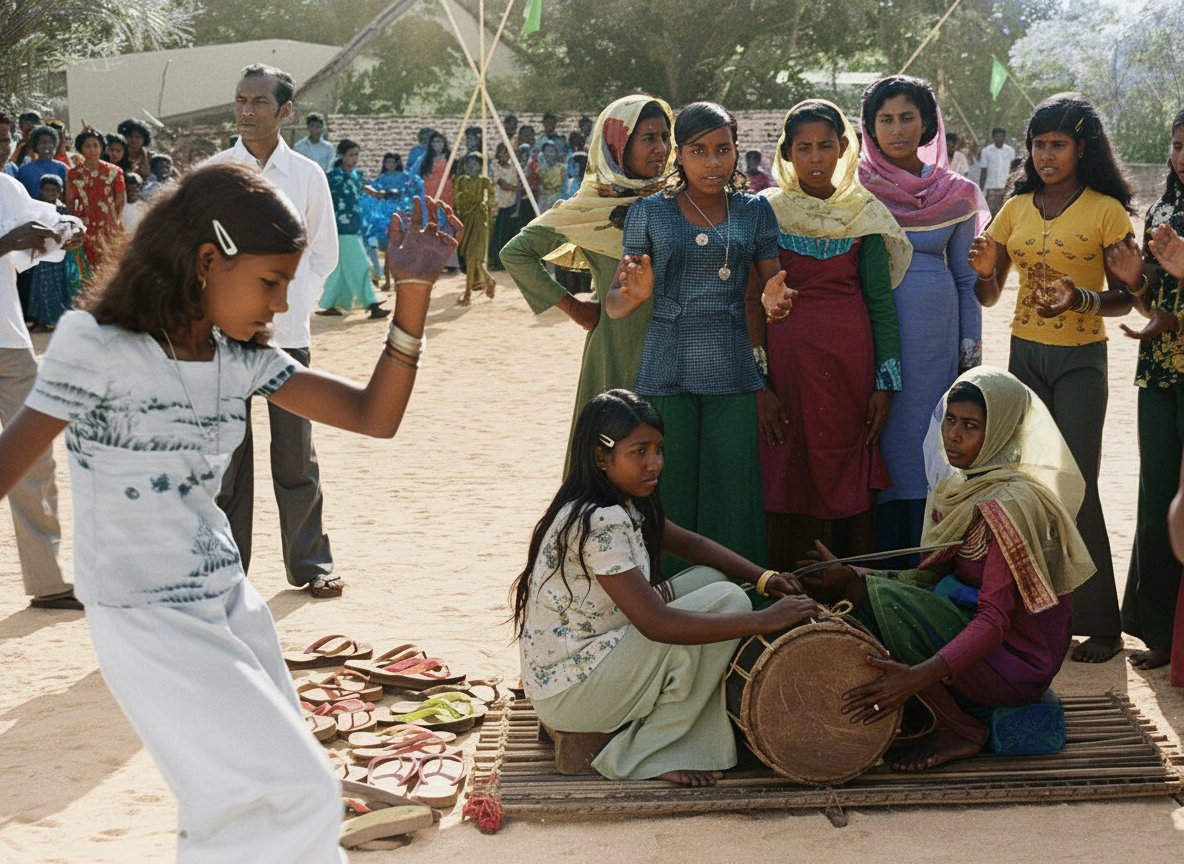
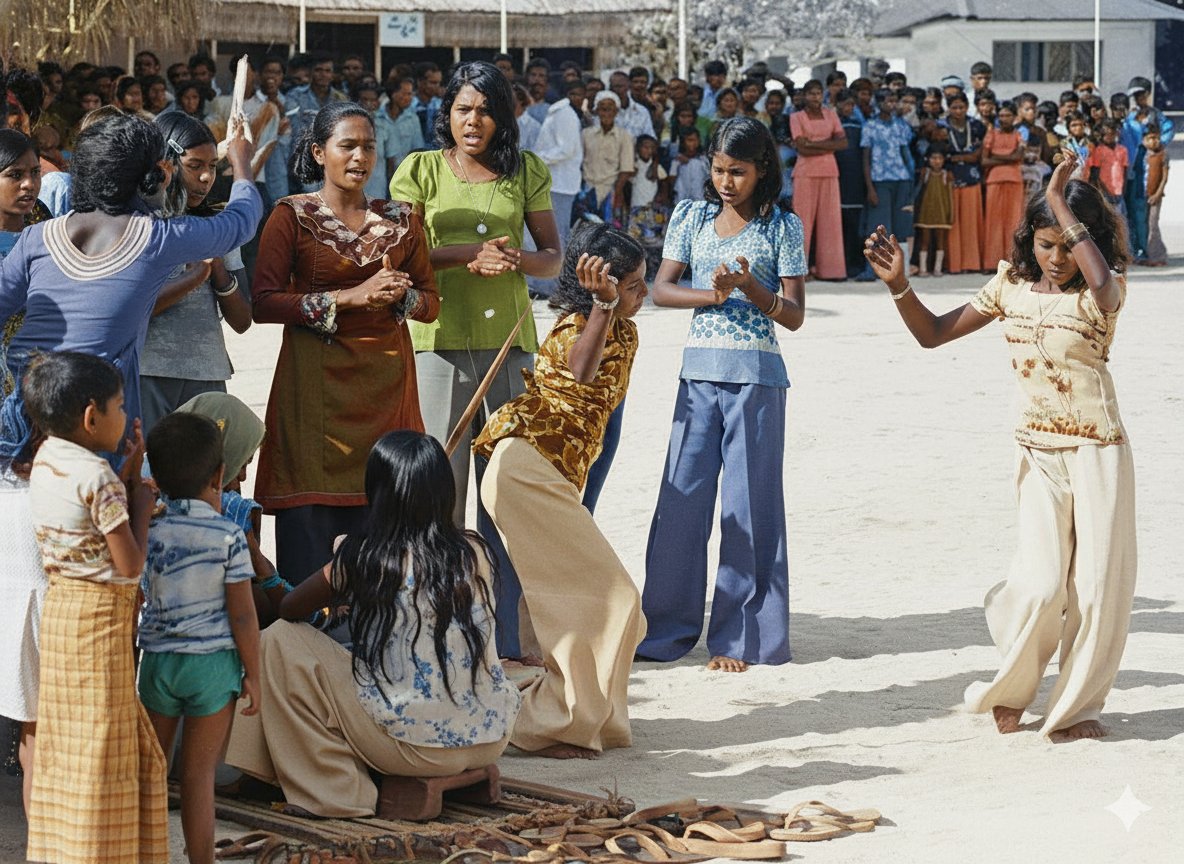
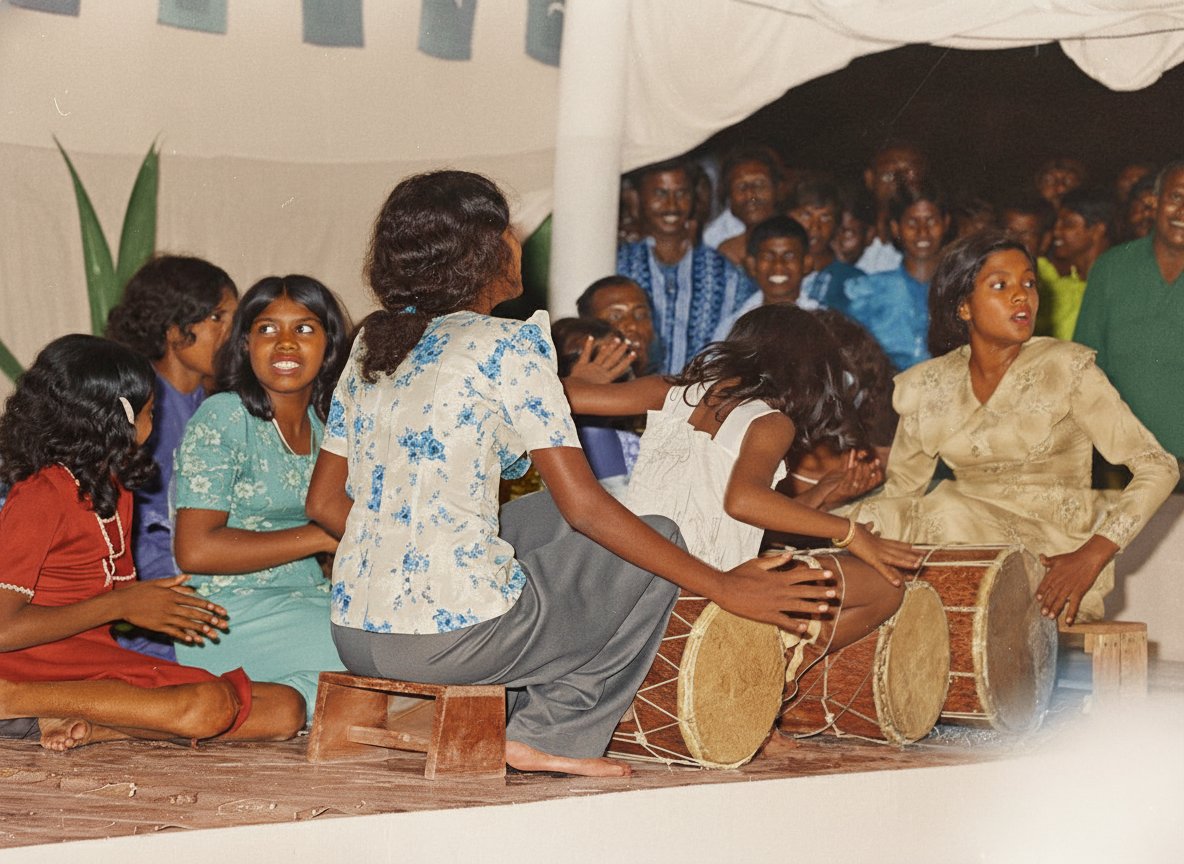
Maldivian women performing bodu beru, late 1970s–early 1980s. These photos from the early years of President Maumoon Abdul Gayoom’s rule capture a time when Maldivian women actively played, sang, and danced to bodu beru — a tradition that has long been at the heart of island life. Bodu beru (literally “big drum”) is one of the Maldives’ oldest and most iconic musical forms. Introduced centuries ago through the Indian Ocean trade routes, its deep African rhythmic roots fused with Dhivehi poetry and island melodies, creating something uniquely Maldivian. It begins slow — the steady beat of the stingray-skinned drum, the rise of voices — and then builds in tempo until it becomes a joyous, hypnotic crescendo of rhythm, movement, and community. The bodu beru drum is traditionally carved from a hollowed coconut trunk or breadfruit tree, its head once made from stingray skin, prized for its tight, resonant tone. Over time, goatskin and later cowhide became more common as substitutes. Performances could last for hours, beginning with slow, poetic verses and ending in spontaneous, euphoric dancing — a pure expression of island joy. While bodu beru is often associated with all-male groups today, women historically participated in it too — not only as dancers and singers but, in many islands, also as drummers. In community festivals and school performances across the atolls, women would form their own ensembles, taking part with the same energy and freedom that defined traditional island gatherings. These photos remind us of that shared rhythm and spirit — a living example of how music once transcended gender roles and brought entire communities together. President Gayoom’s early years in power were marked by efforts to modernize the country while preserving its cultural identity. Despite the criticism against him, he encouraged traditional music, dance, and local festivals — seeing them as expressions of national pride and moderation. To many observers, his promotion of cultural expression and maintenance of a non-extremist, middle path in religion — at a time when many countries in the region were experiencing radicalisation — remains one of his lasting legacies. Here, under the coconut palms of the late 1970s and early 1980s, you can still feel that energy — the laughter, the rhythm, and the unbroken pulse of bodu beru, where women and men alike once drummed and danced in harmony.
PhotoMV tweet mediaPhotoMV tweet mediaPhotoMV tweet mediaPhotoMV tweet media
English
2
11
47
7.5K
PhotoMV
PhotoMV@PhotoMV001·
Ahmed Shafeeq (1927/28–April 2015) Historian, Writer, Diarist Overview Ahmed Shafeeq (often written A. Shafeeg) was one of the Maldives’ most prolific modern historians, whose work spanned the islands’ crafts, boats, and birdlife as well as their political history and contested memory. He passed away in April 2015, aged 87, leaving behind twelve children. Beyond his scholarship, he also served as an atoll chief and a member of parliament. His critical and independent thinking made him an enemy of the prevailing political order, leading to his imprisonment in old age and his recognition by Amnesty International as a pioneering case of conscience. He compiled studies of craftsmanship, culture, and tradition in Dhanfulhi magazine — work that remains a key reference for academic and heritage scholars today. His research was pioneering for its era, comparable to the scholarship of Shihab and Jameel Didi, though he never received formal awards or political patronage. His love for knowledge began early, when he worked as an “ink boy” for Salaahuddin’s team as they drafted the Siyarath. He is remembered for predicting the downfall of President Maumoon Abdul Gayoom’s 30-year authoritarian regime on the very day the internet was inaugurated in the Maldives. Craft & Boatbuilding Shafeeq’s landmark book Boat-building (Odhi Dhoanifaharu Banun, 1991; NCLHR, 320 pp.) remains the standard reference on the dhoni and related vessels. Earlier essays (1981–84) recorded endangered island craftsmanship — tortoiseshell work, coconut-shell carving, palm-frond craft, and kasabu braiding at the neckline. His detailed typologies of motifs such as thuthimas, vakigan’du, and kuriboashi continue to guide scholars interpreting Maldivian vessel art, from everyday fishing dhonis to the ceremonial Jahaadhoani. He documented how Maldivian shipwrights built dhonis without blueprints, relying instead on oral geometry and inherited precision — “mavadi meha use fonuvaih to make curved holes to lock boat planks (madu), connecting them precisely through ‘ili’ and ‘kabila’.” His close attention to process and language preserved an artisanal vocabulary that might otherwise have been lost. Ornithology Often described as the Maldives’ foremost authority on birds, Shafeeq co-authored Birds of the Maldive Islands, Indian Ocean (Forktail 10, 1994) with J. S. Ash — the first comprehensive synthesis of Maldivian avifauna. It remains a baseline for modern species checklists and conservation reports. His earlier Dhivehi writings, such as Sea Birds in the Maldives (1988), helped root bird knowledge in local language and observation. He was the first to identify and name birds in Dhivehi — sea birds, beach birds, inland birds, and migratory birds — an achievement that later enabled conservationists to distinguish endangered species from common ones. He also documented new endemic bird records for the Maldives, tracing them back to 1899 through the work of Wills and Gardiner. The Diaries & the Right to Remember On 21 April 1995, police raided Shafeeq’s home, seized his diaries — accounts range from five to “about 50” volumes — and detained him. He spent 83 days in solitary confinement before being moved to house arrest. Amnesty International documented the episode, identifying him and fellow detainees as possible prisoners of conscience. In October 2010, Shafeeq launched A Day in the Life of Ahmed Shafeeg alongside Shafeeg’s Short Stories 1. The memoir alleged that 111 people had died in custody during the 30-year rule of President Maumoon Abdul Gayoom — a claim that spurred calls for justice from President Mohamed Nasheed at the book’s launch. Gayoom later filed suit, and in 2012 the Civil Court fined Shafeeq MVR 5,000 for defamation. Institutions & Editorial Life Much of his heritage work was carried out through the National Centre for Linguistic and Historical Research (NCLHR). He is also remembered as editor of the historical journal Vanavaru and as a contributor to Sangu magazine before it was banned in 1990. He was among the local scholars who assisted Norwegian ethnologist Thor Heyerdahl (1914–2002) during his research in the Maldives. Shafeeq also authored Boli Foih and Olhu Ala Foih, and his writing on Gudi (kite) preserves another tradition that has since disappeared. Why He Matters Now From the curve of a gunwale to the flight of a tern, Shafeeq left the islands a map of themselves — drawn in wood, rope, and wing. His studies continue to guide boatbuilders, curators, birders, conservationists, and anyone seeking to read the Maldives through its own materials and words. Shafeeq and his scholarly work left a hallmark of fundamental research in areas once unrecorded or unpracticed — documenting Dhivehi culture, craft, and education for future generations, even while he was hindered by political incarceration. His contributions to economic thought, education, and freedom of expression helped make the nation more self-sufficient, while his emphasis on women’s participation in the freedom movement underscored the importance of equality at a time when national reform was largely male-dominated.
PhotoMV tweet mediaPhotoMV tweet media
English
2
9
54
14.6K
PhotoMV
PhotoMV@PhotoMV001·
Aminath Faiza pictured with President Mohamed Amin Didi, c. 1940s. Both figures were leading voices in the Maldives’ cultural and intellectual renaissance of the mid-20th century. Aminath Faiza (1924–2011), affectionately known as “Daisymaa”, stands among the most enduring voices of twentieth-century Maldivian literature. Emerging from the Dhivehi Lheverikamuge Bageechaa (“Garden of Dhivehi Poets”) — a visionary circle of writers nurtured under President Mohamed Amin Didi — she helped define the tone and language of modern Maldivian verse. For more than six decades her poems carried the nation’s moods: love and loss, faith and duty, the sea and its silences, the promise of education, and the spirit of national renewal. Born in Galolhu, Malé, Faiza began writing poetry at sixteen under the mentorship of her uncle, the legendary poet-scholar Bodufenvalhugey Sidi. Her elder brother, Ali Najeeb — the first professional photographer of the Maldives — documented the country’s early modern era and helped shape its visual history, making Faiza and Najeeb one of the most influential creative sibling pairs of their time. By the late 1940s her verses appeared in newspapers and public recitations, earning her the nickname “Daisymaa” in a 1949 publication celebrating the poets’ garden. Her voice soon became central to the new cultural awakening that sought to modernize Maldivian arts while preserving the rhythm and imagery of classical verse. A lifelong educator, Faiza taught at Madhrasathul Saniyya (later Aminiya School) and rose to become Deputy Principal, inspiring generations of young women to find confidence in scholarship and self-expression. She later devoted over twenty-seven years to the Maldives Centre for Linguistic and Historical Research, contributing to dictionary work and the standardization of Dhivehi — bridging art and institution so the living language of poetry could find permanence in education and research. Her public poems touched every sphere — romance and patriotism, moral reflection and civic duty — often composed for national celebrations and state occasions. Among her best-known works are On the Occasion of the Wedding of Princess Elizabeth and The New Spirit of Maldivian Women, both evoking the optimism of a country discovering its modern identity. Her final poem, written for Iskandhar School’s Golden Jubilee in February 2011, appeared just weeks before her passing. For her lifelong contribution to Dhivehi poetry, Faiza received the National Award of Recognition (1980), the National Award of Honour (1996), and a Special Award for Dhivehi Children’s Literature (2005), making her one of the most celebrated literary figures in Maldivian history. Beyond accolades, her legacy lives in the countless students and writers she inspired. Faiza was the niece of Bodufenvalhugey Sidi, and her daughter Aminath Abbas continued the family’s literary tradition, receiving the National Award of Recognition in 2002. At her funeral in Malé, held at Masjid Al-Sultan Mohamed Thakurufaanu Al Auzam, tributes described her as a “literary icon” and “a national figure who gave voice to the conscience of a generation.” She was laid to rest at Aa Sahara Cemetery on 25 February 2011. Through her poems, Faiza captured the soul of a nation in transition — a Maldives caught between tradition and modernity, faith and freedom, sea and sky — and her words continue to echo in the hearts of those who speak the language she helped shape.
PhotoMV tweet mediaPhotoMV tweet media
English
0
14
59
18K
PhotoMV
PhotoMV@PhotoMV001·
Moomina Haleem — a pioneer in Maldivian public life whose career is marked by a series of national firsts: the country’s first professionally trained nurse, the first woman elected to the legislature, and the first woman appointed to cabinet office. After completing nursing and midwifery studies at the Australian College of Nursing in Melbourne and becoming a member of the Royal College of Nursing (UK), Haleem returned to Malé in 1963. She was appointed matron of the government hospital, where she introduced structured nurse training and on-the-job instruction. Contemporary records identify her as the Maldives’ first professionally trained nurse. In the 1974 Maldivian parliamentary elections (September–October 1974), she won a Malé constituency seat, becoming the first woman elected to the People’s Majlis. She served in parliament from 1975 to 1980. On 6 January 1977, President Ibrahim Nasir appointed her Minister of Health — the first woman to hold a cabinet post in the Maldives. As minister she directed early primary-health-care programmes and led the Health Ministry’s response to the nationwide cholera outbreak of 1978, in partnership with WHO and UNICEF. Following the transfer of power in November 1978, Haleem declined an offered post under President Maumoon Abdul Gayoom. In the years that followed she was repeatedly detained by the authorities, and in 1980, while abroad with her sister for medical treatment, she was formally banished on charges of sedition. She remained in exile in Sri Lanka, the United Kingdom, and Kuwait, while her family members in Malé were also subjected to banishment. From exile, Haleem remained engaged with Maldivian politics and became an early supporter and contributor to the democracy movement that eventually brought constitutional reform and the introduction of multi-party democracy. Her return to the Maldives on 15 November 2008, at the invitation of President Mohamed Nasheed, symbolised the closing of a long chapter of political repression and exile. She was later decorated with the National Exemplary Service Medal. Haleem’s career stands as a landmark in Maldivian history: the first woman to win election to the Majlis, the first to sit in cabinet, a forerunner in modern nursing and public health, and a voice in the struggle that ushered in the country’s democratic transition.
PhotoMV tweet mediaPhotoMV tweet media
English
2
29
166
23.9K
PhotoMV
PhotoMV@PhotoMV001·
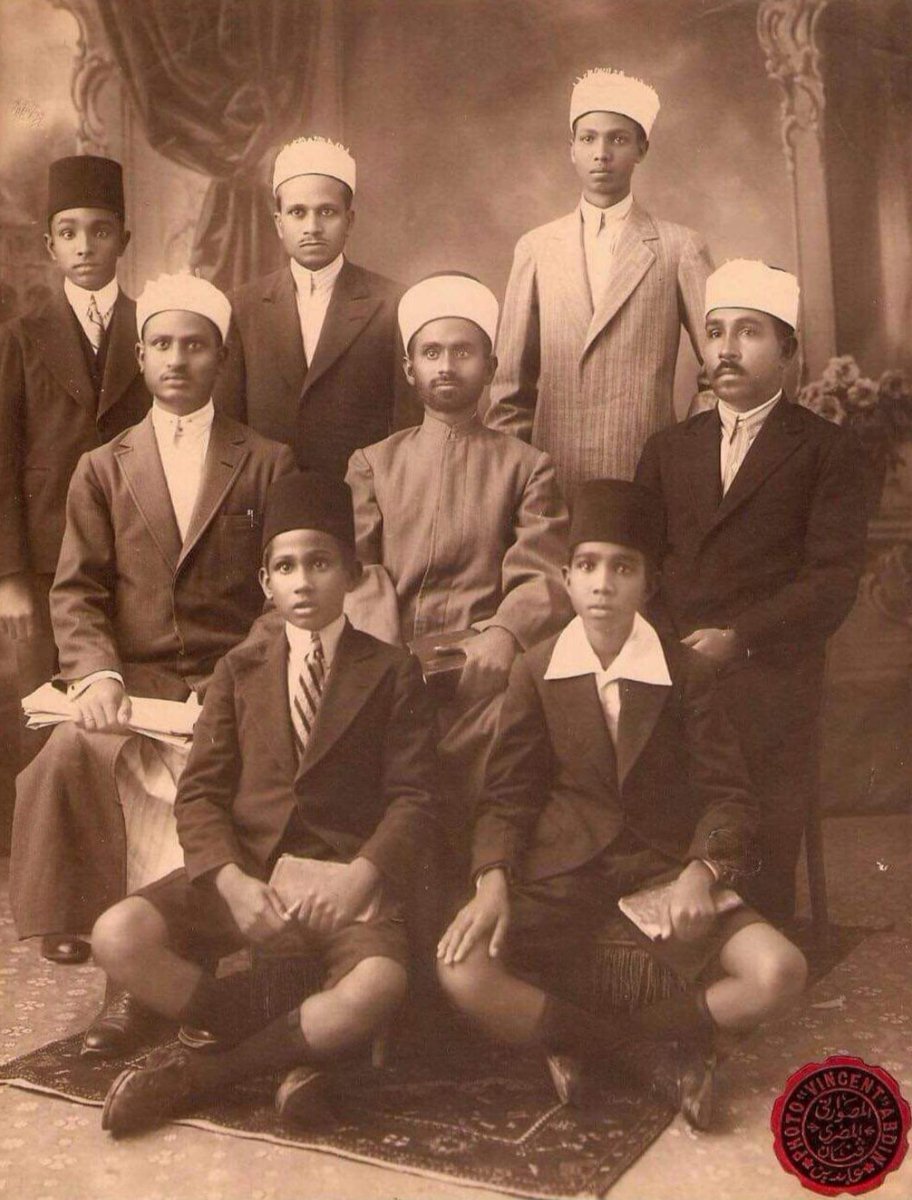
Maldivian Students in Egypt (1930) - Identifications (right to left, recorded by historian Al-Ustaz Mohamed Waheed Nadhuvee and later shared publicly by historian Naajih Didi. Front row (seated ): Al-Ustaz Mohamed Ibrahim Luthufee, Umar Isa Middle row (seated): Sheikh Ibrahim Luthufee al-Azhari (Luthufee’s father), Sheikh Abdul-Mannan of Java (Indonesia), Naifaru Thanhaalee Mohamed Waheed Back row (standing): Sheikh Ali Husain Didi (Fiyoree Alididi), Sheikh Husain Rahaa, Mohamed Jameel Didi Al-Ustaz Mohamed Ibrahim Luthufee (1921–2001) Born on 21 December 1921 at Falagadi-ge, S. Hithadhoo, Luthufee was part of the first generation of Maldivians to pursue formal higher studies in Cairo during the early 20th century, continuing a tradition of Maldivian scholars who had earlier sought learning abroad. The son of Sheikh Ibrahim Luthufee al-Azhari and Fathimadhi Didi of Elhadheedi-ge, he memorized the Qur’an at a young age and travelled to Al-Azhar, Cairo, in 1927 under his father’s guidance. There he completed his Ibtida’i (primary) studies in 1936 and continued through Fuad al-Awwal and al-Ahram Secondary Schools, receiving a rigorous education that prepared him for a life of service. Returning to Malé in 1941, he began work at the Civil Court and soon entered education. Over five decades he served as Inspector and Under-Secretary of Education, Atoll Chief of Baa Atoll, Under-Secretary of Agriculture and Fisheries, and later Director and Chief Adviser of the National Centre for Dhivehi Language and History. In 1971 he became the first Principal of Nooraanee School in Hithadhoo. Luthufee was widely regarded as a polymath — engineer, teacher, writer, geographer, craftsman, and administrator. He drafted curricula, designed office systems, authored educational texts, and created teaching aids, embodying the spirit of self-reliance that defined a formative era in Maldivian history. Both President Maumoon Abdul Gayoom, who had studied under him, and historian Naseema Mohamed described him as “a man who made people think” — a phrase that has come to define his enduring legacy. Through his work in education, language, and governance, Al-Ustaz Mohamed Ibrahim Luthufee helped lay the intellectual and institutional foundations of the modern Maldives. Biographical information and quotations derived from Ahmed Shabeen, “Luthufee: A Man Who Made People Think,” CNM News, 12 April 2022 — based on speeches delivered by President Maumoon Abdul Gayoom, Naseema Mohamed, and Abdulla Hameed at the 2001 retirement ceremony. Studio mark visible at lower right: Photo Vincent Abidin, Cairo.
PhotoMV tweet mediaPhotoMV tweet media
English
0
1
11
1.7K
PhotoMV
PhotoMV@PhotoMV001·
Hi Naajih — thank you for your generous response and for recognizing our commitment. We agree with you completely that authenticity is paramount. We take your point on verifying references directly and not relying solely on AI; while we use it to help collect and organize material, we always aim to cross-check against published sources. Your reminder strengthens that discipline. On photographs, we also appreciate your clarification. We will continue to dig deeper to identify names wherever possible and credit them. At the same time, we remain committed to sharing public domain images so they don’t stay hidden. We understand your perspective on watermarks and respect that others may choose differently, though for us the principle of keeping images clean — and crediting the original creators where known — remains important. We value the work you’ve done in Dhivehi and English to broaden access to Maldivian history. Your dedication over many years, especially in translating and writing heritage articles, has built a foundation that others like us can build on. We fully agree that the efforts of those who dedicate their lives to preserving history should never be overlooked, and we are glad to acknowledge that. Finally, thank you for your words about PhotoMV’s work. Our aim is not only to colorize images but to make Maldivian history and historical figures accessible to younger Maldivians and international readers. We share your passion for keeping our history vibrant and accurate, and we welcome opportunities to collaborate in ways that ensure authenticity, recognition, and accessibility for all.
English
0
0
1
61
Dhivehi Archives by Naajih Didi
Thank you for your detailed response & commitment to sharing Maldivian history. Authenticity is paramount. Please verify reference materials directly rather than relying on AI, which can be unreliable. My concern is ensuring the authenticity of info & sources. Regarding public domain photos, while they can be shared without crediting unknown creators, most of the images you’ve posted have already appeared on social media, often with the creators’ names mentioned. I suggest digging deeper to identify these sources. When individuals share their personal collections for educational purposes, a non-distracting watermark can be acceptable, though I appreciate your perspective on keeping images clean to honor original creators. I share your passion for engaging youth in our history, especially in English, their preferred language. I write heritage posts in Dhivehi & English and translate articles for online newspapers to reach wider audiences. I strongly believe in recognizing the efforts of those who dedicate their lives—not just as a hobby—to preserving and sharing Maldivian history and heritage. Their contributions should never be overlooked. I truly value PhotoMV’s work in providing historical context alongside colorized images, and I appreciate your efforts to make our history accessible. My comments on your posts stem from a shared commitment to ensuring the authenticity of information and materials. Thank you again for your dedication to this cause, and I look forward to supporting and collaborating to keep Maldivian history vibrant and accurate.
English
1
0
0
97
PhotoMV
PhotoMV@PhotoMV001·
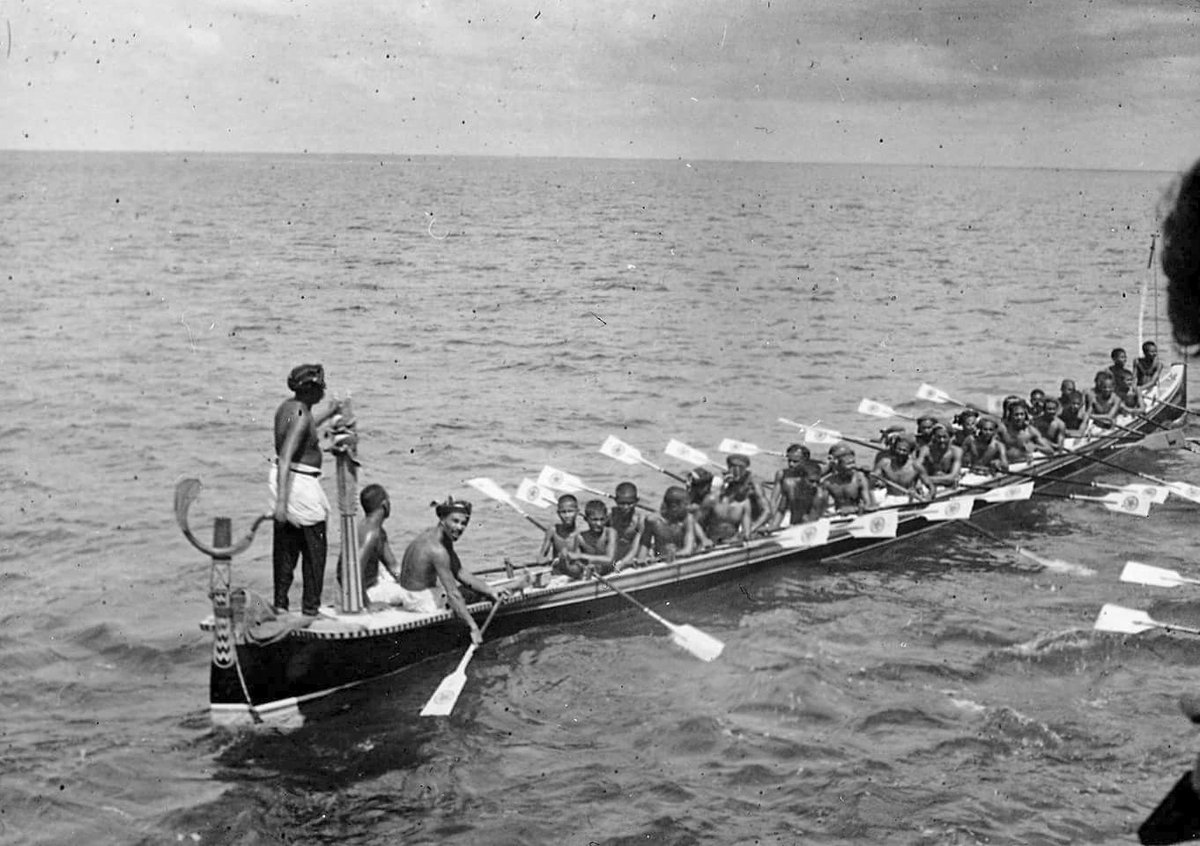
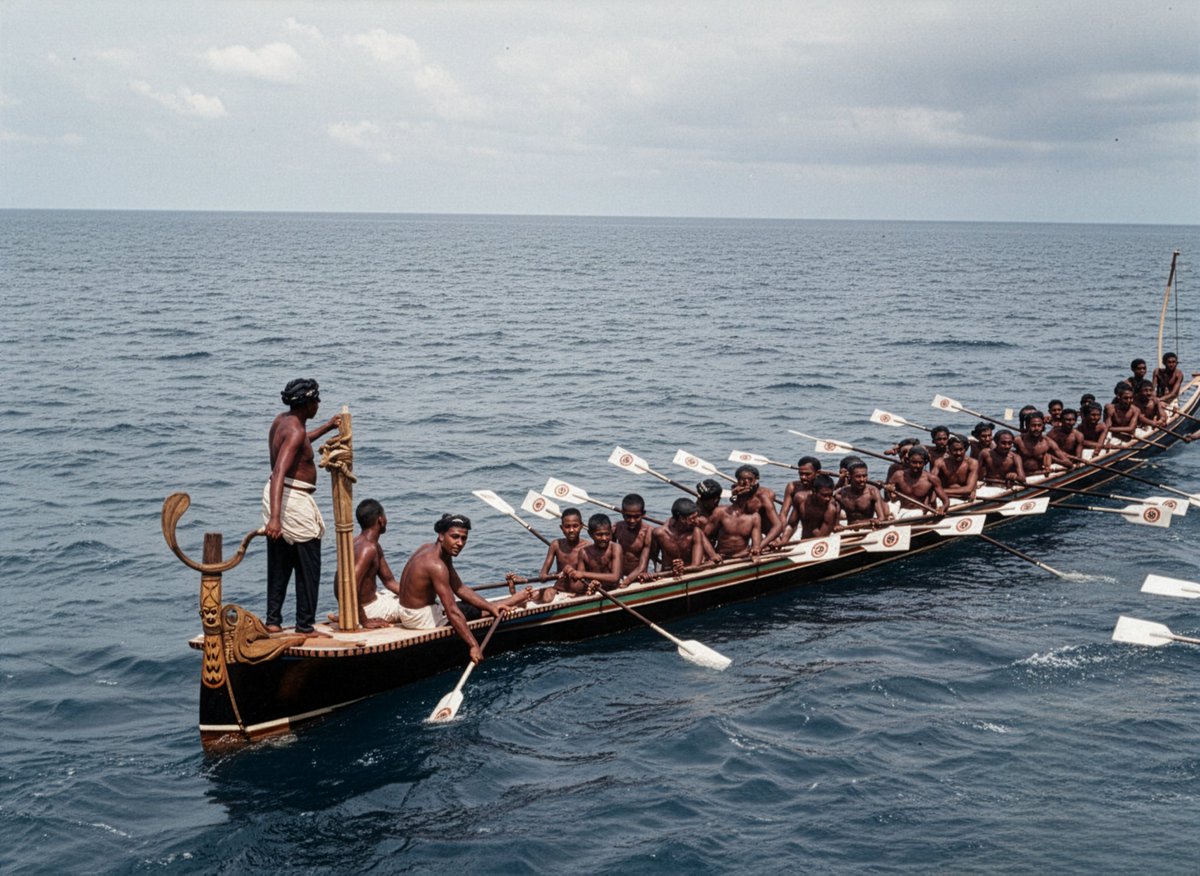
Jahaadhoani — the ceremonial and racing boat once seen across the Maldives This photograph captures a Jahaadhoani (also spelled Jahadhoni), a long, narrow ceremonial and racing boat once seen across the Maldives and still preserved on Minicoy (Maliku) Island in Lakshadweep. With its slender hull, decorated prow and stern, and dozens of oarsmen rowing in rhythm with short paddles, the Jahaadhoani embodies both the artistry and communal energy of Dhivehi seafaring culture. Traditionally, these boats played multiple roles. Museum records from Minicoy note that they were first built for towing sailing vessels and for festive community outings and merry-making, later evolving into competitive race boats. Minicoy’s official descriptions call them “colourful and elegant race boats,” used for regattas, to receive dignitaries, and for grand outings to nearby islets. By the late 19th century, some were monumental in size: the German traveler Carl Wilhelm Rosset described in 1885 a 40-oared, 70-foot (≈21 m) Jahaadhoani operating near Malé. Smaller recorded variants measured around 12 m with 10–12 oars a side, while archival notes mention vessels over 24 m long built in 1924–25 for Hulhulé and Villingili. Although the tradition has largely faded in the Maldives, Minicoy keeps it alive: each village (avah) maintains one or two Jahaadhoanis, and they remain the centerpiece of the annual Maliku Sagaafee Dhuvas festivities where villages compete in spectacular inter-boat races. The Jahaadhoani belongs to the wider dhoni boat-building tradition, historically crafted from coconut timber and hand-built by Maldivian master carpenters. Today, Minicoy’s boats are often compared to Kerala’s famous “snake boats” for their size and racing spectacle, yet they remain firmly rooted in the shared Dhivehi maritime world. This image — showing rowers seated in dense formation, with decorated paddles rising and dipping in unison — is a textbook example of the Jahaadhoani in action. It recalls a time when such vessels were central to ceremony, pageantry, and the shared life of island communities. Though rarely seen in the Maldives today (a model is said to be preserved in Malé’s National Museum), the tradition lives on vividly in Minicoy, where Jahaadhoanis still cut across the lagoon each year, keeping alive one of the most spectacular legacies of Maldivian seafaring culture.
PhotoMV tweet mediaPhotoMV tweet media
English
3
6
21
2.9K
PhotoMV
PhotoMV@PhotoMV001·
Hi Naajih — thanks for raising this. To clarify: the information we used that was published in Ras came to us through aggregated references and research notes, not from directly consulting your bylined articles at the time. When you pointed it out, we reviewed the pieces and acknowledged your authorship — and we respect the important contribution you’ve made in documenting the Jahaadhoani. We always try to credit the creators of the images we post. If a photographer’s name isn’t available, we still share public domain material, because we believe it’s more important that Maldivians can see and learn from these images than for them to remain unseen. On watermarks, our view is simple: it’s distracting and wrong to add one over someone else’s work just because you’re the first to scan it from a book or archive, or the first to share it on a particular platform. We keep images clean and give credit to the original creators and contributors wherever possible. PhotoMV is not only about colorizing images, as you put it — we pair them with historical context in English, making Maldivian history and historical figures more accessible to younger Maldivians who may not otherwise engage, and to international readers who wouldn’t have access in Dhivehi alone. Our history is far too rich to rely solely on a few people to interpret and disseminate it; we believe more voices, more perspectives, and new connections only deepen our understanding. We encourage everyone to dig deeper, challenge old assumptions, reinterpret established narratives, and bring forward fresh insights to keep our history alive and relevant.
English
1
0
0
118
Dhivehi Archives by Naajih Didi
Your post cites my Ras articles as a source, yet you claimed you hadn’t seen them, which seems inconsistent. Additionally, while you avoid watermarking images to honour original creators, you didn’t credit the Jahaadhoani photographer. I appreciate your work colorizing historical photos related to Maldives and thank you for sharing them. If you need to clarify anything, I’d be happy to assist.
English
1
1
0
139
PhotoMV
PhotoMV@PhotoMV001·
Hi Naajih, yes — we are aware the Ras pieces are your research articles and respect the work you’ve put into documenting the Jahaadhoani. Our caption was compiled from a mix of sources, and the details you, Naajih, have highlighted — from Rosset’s reference, to the National Museum model, to Sultan Shamsuddeen’s era — add depth we truly value. We’re always happy to acknowledge everyone whose work we use — whether researchers, writers, or photographers. In that spirit, we don’t watermark our images, so that credit rests with those who created them in the first place. Thank you for adding this context.
English
1
1
0
224
Dhivehi Archives by Naajih Didi
The Ras Articles you referenced is my research article on Jahaadhoani, published in Ras, an online newspaper. I strongly believe that the majority of the information discussed stems from my work. I was the first to point out that Carl Wilhelm Rosset was referring to a Jahaadhoani, even though he never explicitly used the term, including in the 1931 video. Additionally, I highlighted a Jahaadhoani model I saw at the National Museum in 2003, which is no longer on display and lacks any catalogue reference. Furthermore, I connected this to historical records from Sultan Shamsuddeen’s era, documenting the construction of two Jahaadhoanis.
English
1
0
0
170
PhotoMV
PhotoMV@PhotoMV001·
Hi Naajih, thanks for pointing that out — and for the years you’ve been sharing about the Jahaadhoani, your work has definitely helped keep it in public memory. Our caption was compiled from a mix of sources (official Minicoy site, Maliku Museum notes, Ras articles, Maritime Asia Heritage, Rosset’s 1885 account, and archival records like the 1931 film), and we also use AI tools to help collect and cross-reference them. We hadn’t seen your Dhivehi or English articles before posting, but we really appreciate the work you’ve done to document this history. The detail you shared about the 1935 Platt photograph is very useful — thank you. Please also let us know if you’d prefer that we not directly source from your posts or articles in the future. And again, thanks for all the effort you’ve put into preserving and sharing this heritage.
English
1
1
0
269
Dhivehi Archives by Naajih Didi
@PhotoMV001 Your post seems to draw heavily from my articles on Jahaadhoani, one written in Dhivehi and the other in English. I’ve also been posting about Jahaadhoani on social media for many years. The Jahaadhoani photo you colorized was taken by Platt in 1935.
English
1
0
0
148
PhotoMV
PhotoMV@PhotoMV001·
Hi Naajih, The info on the Jahaadhoani comes from a mix of government records, museum inventories, historical travel accounts, and maritime archives. Here are the key sources I used: Official Minicoy (Lakshadweep) website — describes Jahaadhoani as “colourful and elegant race boats” used for regattas, to receive dignitaries, and for community outings. Maliku Museum, Minicoy — notes that these boats were originally built for towing sailing vessels and for festive “merry-making,” with racing evolving later. Seacology project records also mention this. Ras (Maldives) article — explain how each Minicoy village (avah) still maintains one or two Jahaadhoanis and races them during the annual Sagaafee Dhuvas festival. Maritime Asia Heritage (Kyoto University) — provides academic notes on Maldivian maritime culture and boat models in the National Museum, Malé. Carl Wilhelm Rosset (German traveler, 1885) — recorded a 40-oared, 70-foot Jahaadhoani operating near Malé. Maldivian boatbuilding references — mention smaller (~12 m, 10–12 oars a side) and larger (24 m+) variants built in 1924–25 for Hulhulé and Villingili. Photographs and film from 1931 — show Jahaadhoanis in ceremonial use during the official visit of the acting governor of Ceylon. National Museum, Malé — Maldivian historians note that a model Jahaadhoani is preserved there, though it isn’t listed in the online catalogue. So the caption is built from a combination of official Minicoy sources, Maldivian museum records, maritime history archives, and traveler accounts, woven together to give the fullest picture of the Jahaadhoani tradition.
English
1
1
2
210