English
Shoot_me-now
25K posts
@Phototogboy
There are more "satoshi's" in the Universe (2.1 Trillion) than Galaxies in the Universe (2 Trillion)...






Rubio showed up on trip to China in a Nike tracksuit matching the one Maduro was wearing when they grabbed him.


So, let me get this straight. Tan suits are ok if she's wearing them, but not me??? #smokefleet
The NYT is a meme at this point… "Why doesn’t this summit between global superpowers look diverse like the movies?"

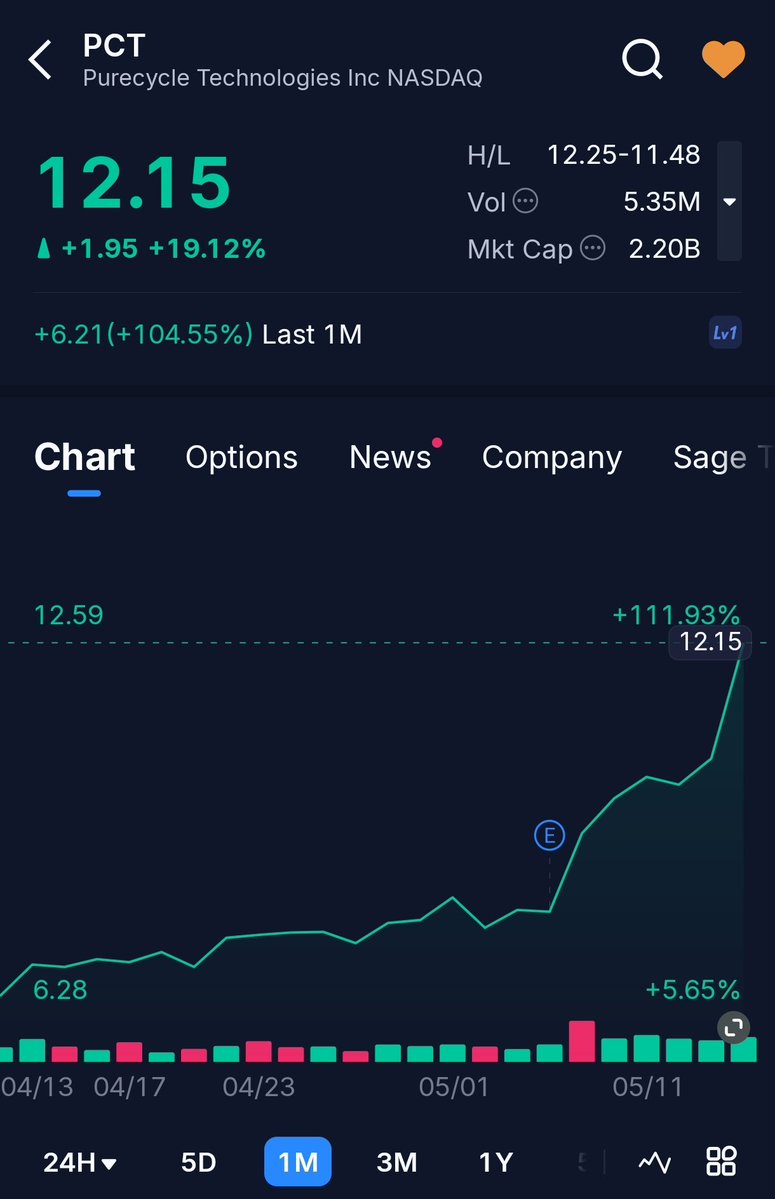
From zero-revenue hype to commercial-scale recycling? Let's dive in 👇 PureCycle Technologies $PCT ⚠️ Disclaimer: This is not financial advice. All content is for informational purposes only. Do your own research before making any investment decisions. I hold no position in $PCT. 1/ The SPAC Story - Projections vs. Reality PureCycle Technologies is one of those companies that tells you almost everything you need to know about the SPAC era of 2020–2021. PCT went public in early 2021 through a merger with Roth CH Acquisition I Co., an SPAC backed by investment banks Roth Capital and Craig Hallum. The deal valued PureCycle at $1.2 billion enterprise value before the company had generated a single dollar of commercial revenue. The pitch was impressive: a patented, solvent-based recycling process licensed from Procter & Gamble, capable of turning #5 polypropylene plastic waste back into something indistinguishable from virgin resin. Partners included P&G, Total, L'Oréal, BMW, Nestlé, and Milliken. Time magazine had named the underlying technology one of its Top 100 Inventions of 2019. 👀 The SPAC transaction raised roughly $590 million in gross proceeds, which, looked more than sufficient to build out a commercial operation. The pitch deck painted a picture of explosive growth. The Original Projections (2020) • 2022: $8M revenue, first plant online, REALITY: ~$0 revenue. • 2023: $224M revenue, five plants online, REALITY: ~$0 revenue. • 2024: $800M revenue, >50% EBITDA margins, REALITY: ~$5M total revenue, ongoing cash burn • 2025: Path to $1B+ revenue, REALITY: ~$8.4M revenue (FY2025) By 2024, PureCycle was supposed to be printing $800 million in revenue with EBITDA margins above 50%. Instead, the company produced its first meaningful commercial resin batches in 2024, generated roughly five million dollars in annual revenue, and was burning $182.57M in FY 2025. The Hindenburg report from May 2021 added more fuel to investor skepticism, pointing out that management insiders at Innventure had a track record of failed or delisted companies, that the technology lacked peer-reviewed validation, and that executives had already been compensated tens of millions before any revenue was generated. It was, in the words of the short-seller, a "quintessential example" of the SPAC boom's worst tendencies. None of this means the underlying technology is fraudulent, the process genuinely works. But it does mean that anyone who bought PCT near its 2021 highs has endured years of value destruction, dilution, and shattered projections. That context is essential for any honest evaluation of where the company stands today. 2/ The Business Model - What PureCycle Actually Does PureCycle holds a global exclusive license for a dissolution purification process originally developed by Procter & Gamble, a solvent-based system designed specifically for polypropylene (#5 plastic), the second most widely produced plastic in the world. 💡 Why polypropylene matters: PP is used in food packaging, automotive parts, textiles, medical devices, and consumer goods. It is notoriously difficult to recycle mechanically because the process degrades its properties. PureCycle's approach, dissolving waste PP in a solvent, filtering out contaminants, and recrystallizing it, is designed to restore it to what they call "virgin-like" quality, commercially branded as PureFive™ resin. How the Process Works 🏭 The feedstock is post-consumer and post-industrial waste polypropylene, the kind that typically ends up in landfills or gets downcycled into low-grade products. PureCycle's purification plants accept this material, dissolve it in a proprietary solvent at elevated temperature, and run it through a series of filtration and extraction stages that remove colorants, odors, and contaminants. The output is a translucent, near-odorless pellet that can be used in applications demanding high purity, food-grade packaging, medical components, cosmetics, and more. This is categorically different from mechanical recycling, which shreds and melts plastic, retaining impurities and degrading the polymer chain. PureCycle's process is closer in concept to chemical recycling, but it doesn't break the polymer down to its monomer building blocks, it preserves the polypropylene chains, which is what allows the output to retain near-virgin performance characteristics. The Royalty Structure ⭐ PureCycle pays a semi-annual royalty to P&G for use of the licensed technology. This creates a structurally embedded cost that scales with revenue, but it also means P&G has skin in the game, one of the world's largest consumer goods companies has a direct financial interest in PureCycle's commercial success. Revenue Model 💰 PCT sells its PureFive resin at a premium to virgin polypropylene prices, justified by the sustainability credentials and food-grade quality. Their go-to-market involves long-term offtake agreements with brands, compounders, and converters who need recycled content to meet increasingly strict EU and US packaging regulations. The commercial pipeline, over 170 active trial opportunities as of early 2026, spans food packaging, personal care, automotive, and industrial applications. 3/ Operational Progress - Where Things Stand After years of construction delays and early production failures, PureCycle has made genuine operational progress at its Ironton, Ohio facility. Ironton, Ohio - The Flagship 🏭 Ironton is the company's first and currently only commercial purification plant. After a troubled start, including a weather-related power outage in May 2024 that forced a restart, the facility has steadily improved. In Q4 2024, Ironton reached 67% onstream time and hit a new maximum feed rate of 12,500 pounds per hour. By August 2025, the plant had been rate-tested at 14,000 pounds per hour. Production volumes tell the same story of gradual but real improvement: Ironton produced 3.6 million pounds of resin in Q4 2024, 3.4 million pounds in Q2 2025 (including a planned maintenance outage), and reached a record 7.5 million pounds in Q4 2025. That's a roughly 2x improvement in quarterly output over the course of 2025, meaningful progress, even if it remains a fraction of nameplate capacity. Denver, Pennsylvania - Feedstock Sorting ♻️ A key operational bottleneck for any recycler is feedstock quality and supply. PureCycle opened a sorting and preprocessing facility in Denver, Pennsylvania to address this. In Q4 2025, the Denver facility boosted throughput by 44% quarter-over-quarter, improving feedstock procurement pricing by six cents per pound over the course of the year, a seemingly small number that matters significantly at scale. Commercial Milestones ✅ The company signed its first major commercial sale with Drake Extrusion Inc. for yarn products, and partnered with Churchill Container for the "Run It Back" line of stadium cups and popcorn buckets. Initial sales for caps used by a global top-five paint and coatings company were announced in December 2025, with the PureFive resin now on store shelves in spray paint cans. In early 2025, TOPPAN, a global packaging leader, announced a partnership with PureCycle for sustainable packaging solutions. 🤵 CEO Dustin Olson framed 2025 as "a year of technical qualifications and successes," with the company clearing food-grade hurdles for applications including flexible food packaging, coffee lids, stand-up pouches, and yogurt cups. Those qualifications take time, they are the prerequisite for large-scale commercial agreements. Gen-2 Technology Perhaps most strategically important: PureCycle completed initial Gen-2 design work in early 2026. The preliminary findings are encouraging. The new design shows no apparent technical constraints on plants with capacity up to 500 million pounds per year. Capital expenditure per pound is trending toward $1.00–$1.50, depending on greenfield vs. brownfield construction. Critically, Gen-2 cash costs are projected to fall below the production cost of virgin on-purpose polypropylene, which would mean recycled resin is not just environmentally superior but economically competitive without subsidies. Global Expansion Pipeline 🌏 • Thailand (Rayong): targeting mechanical completion by the mid/end of 2027. The project has signed nine feedstock Letters of Intent (LOIs), which already exceed the first purification line's capacity. Incentives: An application to the Thailand Board of Investment is pending, which could grant an 8-year tax holiday (plus 5-year 50% reduction), saving roughly $100 million in taxes. • Antwerp, Belgium: Construction is projected to begin by Q1 2027, with the facility operational by 2028. Secured a €40 million (~$46.2 million) grant from the European Union’s Innovation Fund for the "ASTRA PP" project. Capacity: Designed to process 59,000 tonnes (approx. 130 million lbs) of polypropylene waste annually. • Augusta, Georgia: Shifted to a Generation 2 (Gen 2) plant design aimed at lowering costs below virgin on-purpose polypropylene production. Timeline: Construction is slated for mid-2026. Pre-processing (PreP) units are expected to be operational in mid-2026, with the first purification line coming online in 2029. Capacity: Revised Gen 2 design aims for 300+ million lbs of annual capacity before compounding. 4/ Financial Analysis Q4 2025 marked the fourth consecutive quarter of revenue growth, a streak worth noting even if the absolute numbers are still modest. Revenue came in at $2.7 million for Q4 2025, bringing the full-year 2025 total to approximately $8.4 million. That missed analyst estimates of $6.38 million for Q4 significantly, and the stock fell on the day of reporting. Snapshot 📸 • Q4 2025 Revenue: $2.7M, 4th consecutive quarter of growth, missed est. $6.4M. • FY 2025 Revenue: $8.4M. • FY 2025 Net Loss: $182.57M. • Cash & Securities: $181.6M. The $300M June 2025 Raise 💰 PureCycle raised $300 million from a consortium including Duquesne Family Office (Stan Druckenmiller's family office), Wasserstein Debt Opportunities, Samlyn Capital, Pleiad Investment Advisors, and Sylebra Capital Management. The Druckenmiller involvement in particular attracted significant attention, it is one of the clearest signals yet that sophisticated, long-term capital sees merit in PCT's technology and market position. The company simultaneously announced a plan 🎯 to bring one billion pounds of installed capacity online before 2030, with a projected EBITDA of $600 million per year at that scale. Sound familiar? This is where history-aware investors will raise an eyebrow, PCT has been here before with ambitious number projections. Analyst Outlook Four analysts currently cover PCT with a consensus Buy rating. Revised projections suggest UPR resin sales of approximately 91 million pounds in FY2026, translating to revenues of ~$124 million, with gross margins projected at 25% for FY2026 and 30% for FY2027. These remain estimates, and PCT has a long history of missing consensus. But the direction of travel, sequential production improvement, growing trial pipeline, first food-grade qualifications, is at least pointing the right way. Bull Case 🐂 Scenario by 2031 • Ironton, Ohio: ~105M lbs/yr; Fully operational + compounding integrated • Thailand (Rayong): 130M lbs/yr; Operational planned mid/end-2027 • Antwerp, Belgium: 130M lbs/yr; Operational planned 2028 • Augusta, Georgia (Gen-2): >300M lbs/yr; 2029: First, full purification line scheduled for operations. = Total Installed: ~665M+ lbs/yr; On path toward 1B lb target At 665 million pounds of annual capacity, with an average selling price of roughly $1.00–$1.20 per pound (reflecting premium to virgin PP), revenue would approach $700 million to $800 million per year. If Gen-2 cash costs indeed fall below virgin PP production costs, as the company projects, EBITDA margins could realistically reach 30–40%, implying $200–300 million in EBITDA. At a reasonable EV/EBITDA multiple for an industrial/materials company with a strong technology moat, say 12–15x, that implies an enterprise value of $2.4–$4.5 billion. Against a current EV of roughly $1.46 billion, that is significant potential upside. But it requires flawless execution on multiple parallel construction projects, successful ramp-ups in Thailand and Belgium, and commercial adoption at a pace the company has not yet demonstrated. ⚠️ There is currently no other company with commercial-scale food-grade polypropylene recycling using a dissolution process. Chemical recyclers going after PET (bottles) have more competition. PureCycle's moat, if it executes, is a combination of the P&G patent license, operational know-how, and first-mover market relationships with major brands. What Needs to Go Right ✅ In the bull case, 2026 becomes the year PureCycle proves it can convert its trial pipeline into real volume offtake agreements. The Ironton compounding integration (targeted for Q4 2026) allows the company to sell higher-margin compounded grades rather than raw pellets. Financing for Thailand and Antwerp closes on reasonable terms. The Gen-2 Augusta design is finalized, and groundbreaking happens on schedule in mid-2026. Crucially, the $181 million cash balance needs to be supplemented, either through project financing for individual plant builds (the model used for Ironton via revenue bonds) or additional equity/preferred raises. The €40 million EU grant helps. The Thailand BOI application and debt financing via a major Thai bank add another piece. But the financial engineering around growth will remain a central part of the PCT story for the next 24–36 months. The Honest Bear Case 🐻 🔴 Cash runs out before commercial traction materializes. Customer adoption remains slow, brands are cautious, qualification cycles are long, and CPG procurement decisions move at institutional pace. Construction overruns on Thailand or Antwerp. The stock gets diluted into irrelevance. These are real risks that any honest analysis must acknowledge. Bottom Line 👇 PureCycle is a genuinely interesting company trapped in a genuinely difficult situation. The technology works. The market is real. The regulatory tailwinds are building. The first commercial applications are now on store shelves. But the SPAC legacy is still there: years of missed projections, dilution, management compensation controversy, and the psychological baggage of being the company that was supposed to be printing $800 million in revenue by 2024. Trust is rebuilt slowly. The honest verdict: PCT is in the earliest stages of a potential multi-year value creation story, with a capital structure that does not tolerate many more stumbles. The $300M raise from Druckenmiller's family office and others provides credibility and runway. The Gen-2 economics, if they hold, transform the long-term thesis. The EU grant adds non-dilutive capital and external validation. This is not a stock for investors who need a story to play out in 12 months. It is a high-risk, high-conviction play for those who believe that commercial-scale food-grade polypropylene recycling will be a large and valuable business in 5–10 years, and that PCT is the company most likely to dominate it.





New: UFC President Dana White has sent a letter to President Donald Trump asking him to help reverse the 90 percent limit on gambling loss deductions for US taxpayers that became law last year. The issue has been a concern for both bettors and the gambling industry itself.