Physical Review E

4K posts

Physical Review E banner
Physical Review E

Physical Review E

@PhysRevE

@APSPhysics' journal for statistical, nonlinear, biological, and soft matter physics.

Katılım Aralık 2015
14 Takip Edilen13K Takipçiler
Physical Review E
Physical Review E@PhysRevE·
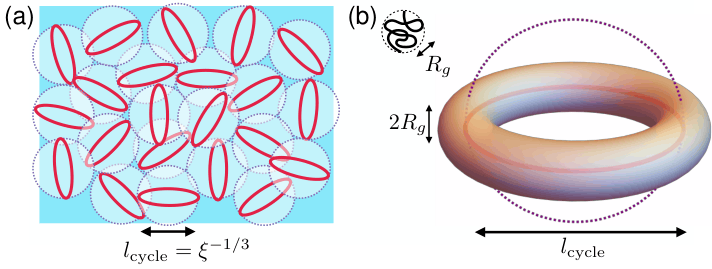
Using model hydrogels, scientists demonstrate a universal law that governs partitioning of polymer chains into flexible polymer networks. Their work achieves a long-sought but elusive quantitative understanding of linear polymer partitioning. Read more: go.aps.org/4fEh22s
Physical Review E tweet media
English
0
12
41
2.6K
Physical Review E
Physical Review E@PhysRevE·
A new study reveals that particles in a strongly confined viscoelastic fluid form chains when a particle-scale Weissenberg number exceeds a critical threshold. “Shuttling" motion promotes collisions and self-organization. 🔗 go.aps.org/4bIjQdO
English
8
81
384
34.2K
Physical Review E
Physical Review E@PhysRevE·
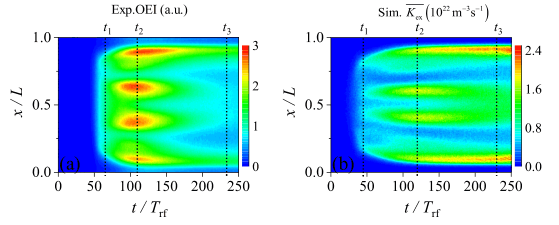
Researchers characterized novel striated optical emission structures during gas breakdown under radio-frequency excitation — offering insights into plasma stratification that could inform control of plasma systems. Read the Letter: go.aps.org/4x2dPB2
Physical Review E tweet media
English
0
3
12
1.4K
Physical Review E
Physical Review E@PhysRevE·
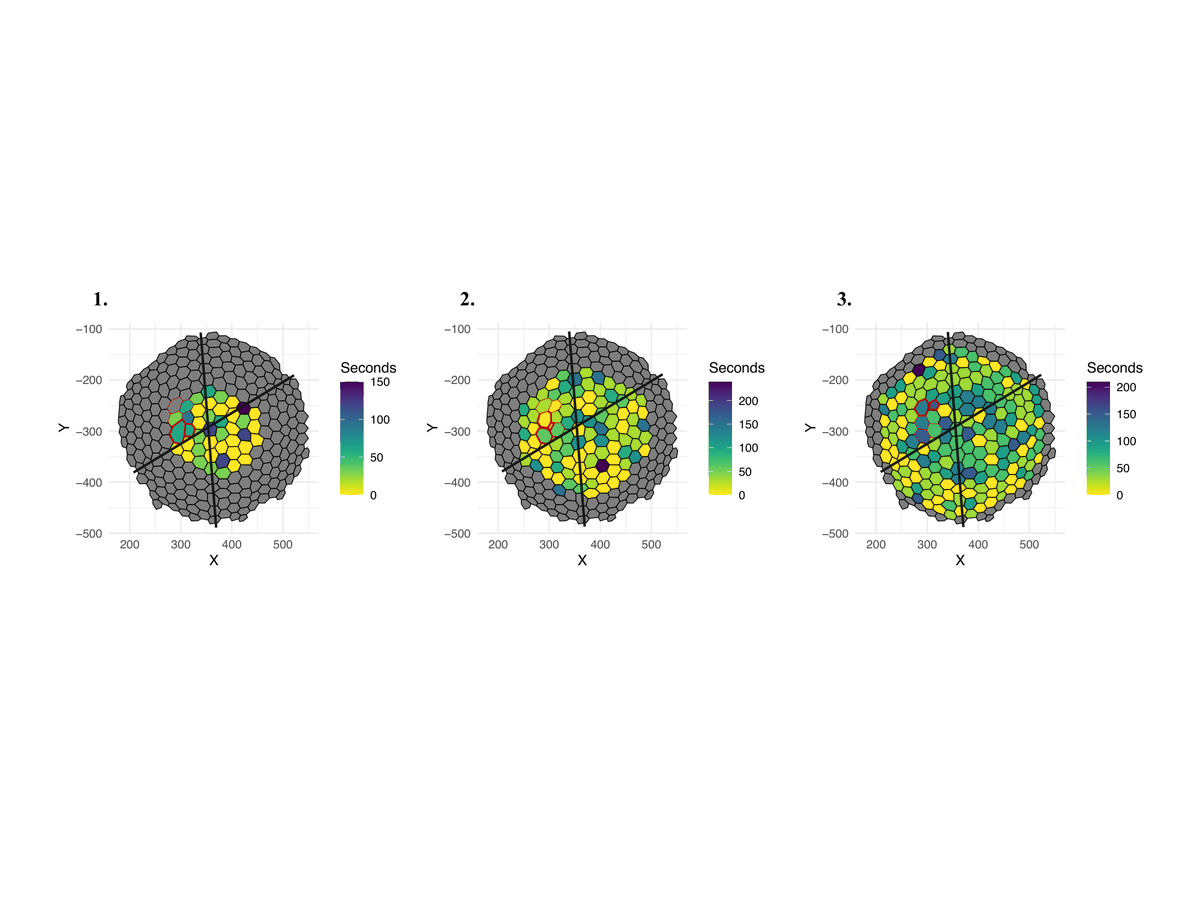
Nests of social wasps achieve architectural coherence through an elegant and localized geometric rearrangement sequence that migrates defects throughout the nest while preserving topology, according to new work published in Physical Review E. 🔗 go.aps.org/3TcysvK
Physical Review E tweet media
English
1
9
26
1.7K
Physical Review E
Physical Review E@PhysRevE·
New results parse three definitions of a #quantum system’s internal energy under strongly coupled conditions and employ quench processes and a simple spin model to determine whether these frameworks follow the laws of thermodynamics. 📝go.aps.org/4wEpyFI
Physical Review E tweet media
English
0
4
23
2K
Physical Review E
Physical Review E@PhysRevE·
A new paper reports that combining fast ignition with magnetized liner inertial fusion, or MagLIF, could reduce the power needed to spark fusion, allowing for longer, lower-energy pulses and keeping more heat trapped inside fuel. 🔗 go.aps.org/3Rb5o7e
Physical Review E tweet media
English
1
1
11
956
Physical Review E
Physical Review E@PhysRevE·
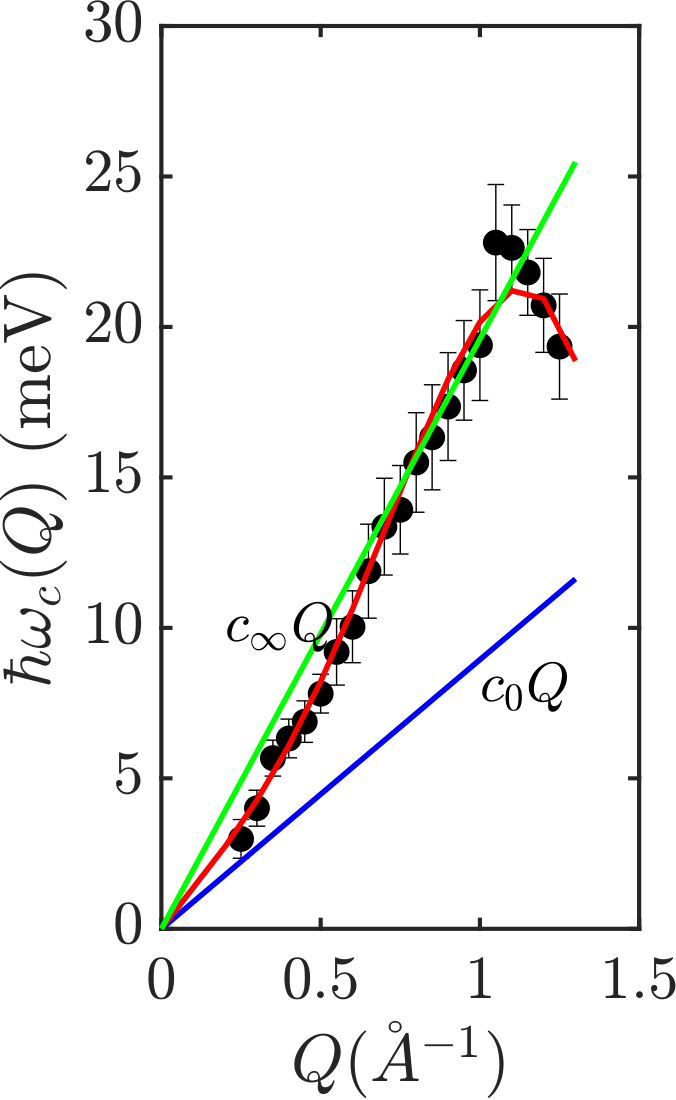
💧 Is water's unusual high-frequency sound behavior caused by hydrogen bonds? A new neutron scattering study on hydrogen sulfide reveals which of water's odd dynamics are universal and which are H-bond specific. Read the paper: go.aps.org/4vxfmhm
Physical Review E tweet media
English
2
5
20
1.3K
Physical Review E
Physical Review E@PhysRevE·
A new study shows that the conditions required to start an earthquake are different from those needed to sustain a growing rupture — explaining why some earthquakes stop on their own while others expand into larger events. Read more: go.aps.org/4aLLWED
Physical Review E tweet media
English
0
5
17
1.4K
Physical Review E
Physical Review E@PhysRevE·
A study identified fundamental limitations of cluster algorithms in frustrated systems, potentially settling a decades-long debate. Physically relevant clusters can be defined, but only through negative probabilities. Learn more: go.aps.org/4wB0yPD
Physical Review E tweet media
English
2
8
50
3K
Physical Review E
Physical Review E@PhysRevE·
A new Perspective explores the evolving research principles, conceptual shifts, and emerging challenges in the journey from active to odd to smart matter, and argues for the importance of learning alongside explicit control. 📄 go.aps.org/4ydCh3M
Physical Review E tweet media
English
1
13
53
2.9K
Physical Review E
Physical Review E@PhysRevE·
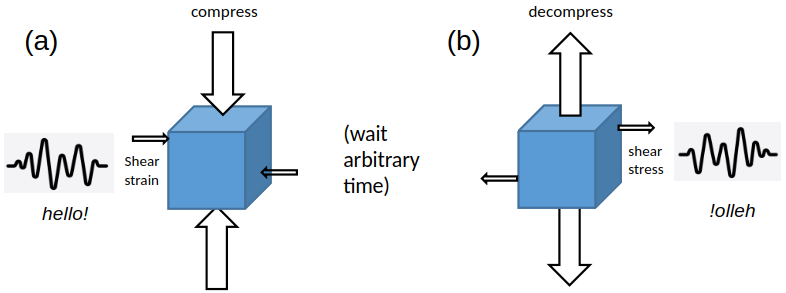
An investigation into the mechanical waveform memory of a random, athermal pack of soft frictional grains shows that this medium can recall any one of 128 different waveforms with perfect classification accuracy and 512 different waveforms with over 90%. go.aps.org/4yaJ5Pr
Physical Review E tweet media
English
1
2
28
1.9K
Physical Review E
Physical Review E@PhysRevE·
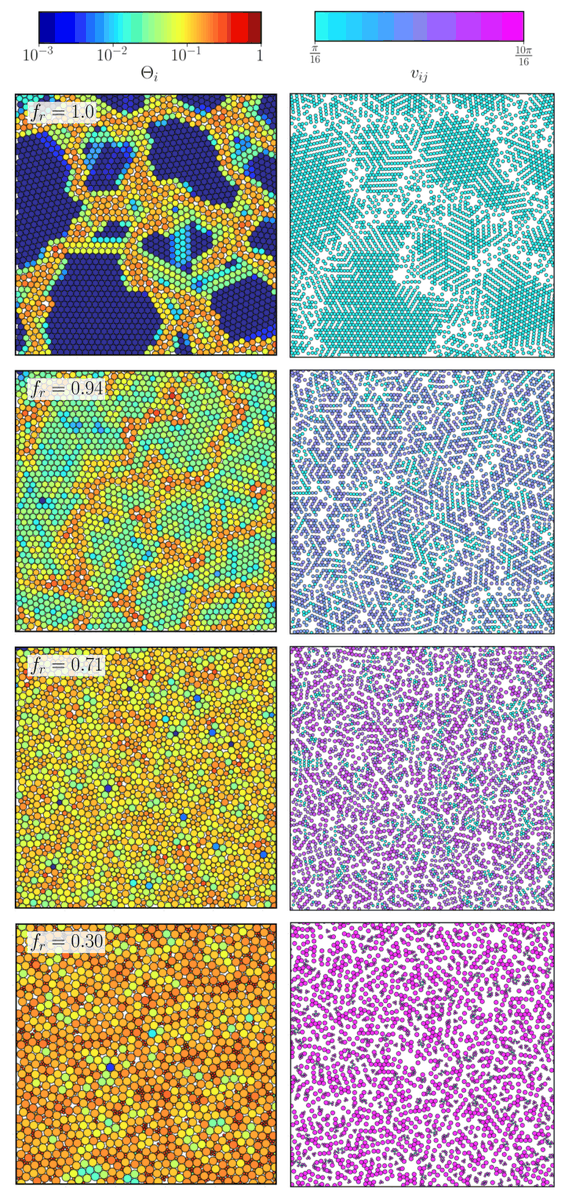
A new paper investigates hyperuniformity in 2D jammed packings of frictionless bidisperse particles, and presents a more precise method to determine the hyperuniformity exponent. Read more: go.aps.org/44eg5ZD
Physical Review E tweet media
English
0
9
42
3.9K
Physical Review E
Physical Review E@PhysRevE·
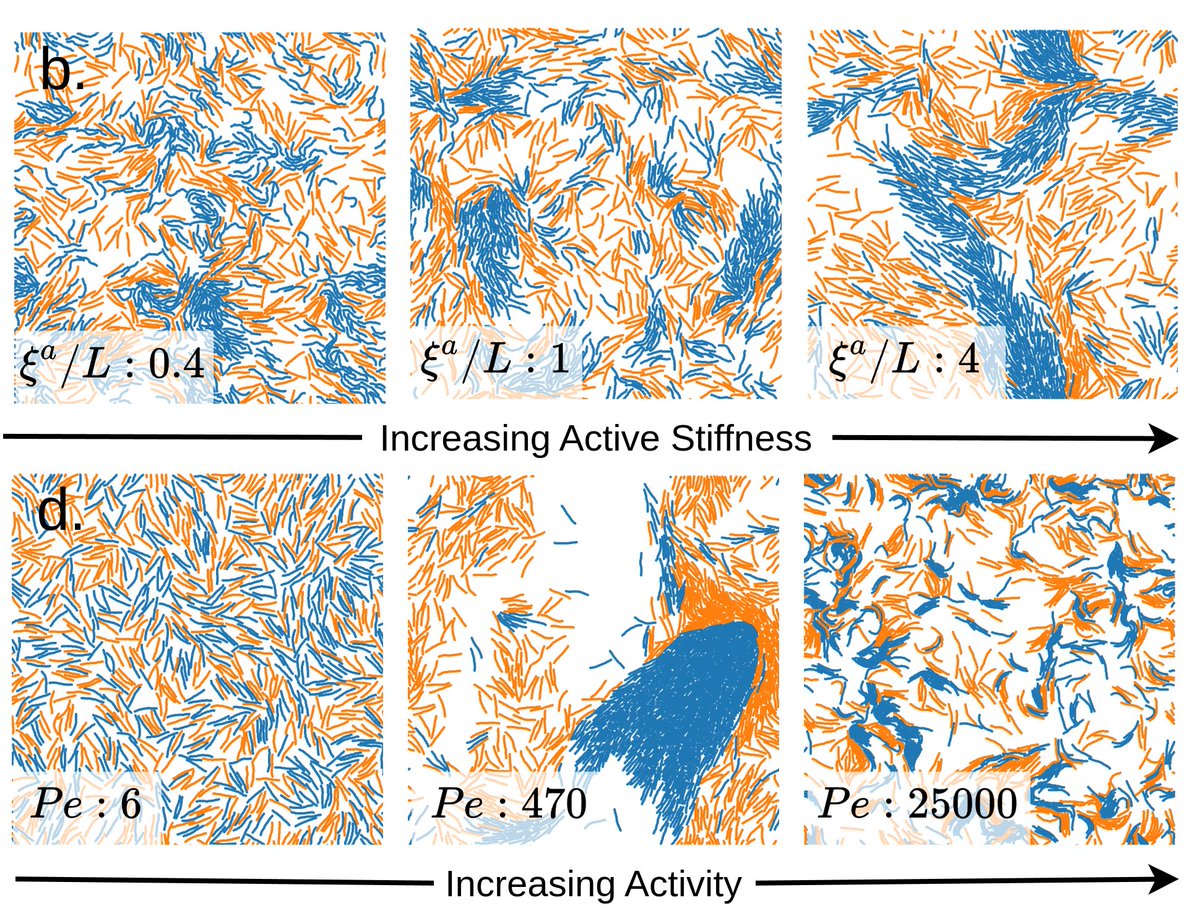
How does activity govern structure in filament mixtures? New simulations show that increased collisions at high activities deform the filaments, decreasing segregation. Read the paper: go.aps.org/4y85Fbs
Physical Review E tweet media
English
1
8
40
2.1K
Physical Review E
Physical Review E@PhysRevE·
Weak, random motility regulation can induce complex forms of self-organization in microbial communities. A new study shows that a phase transition leads to distinct, spatially segregated communities as the interaction network becomes more heterogeneous: go.aps.org/4p8PXZK
Physical Review E tweet media
English
1
8
36
2.3K
Physical Review E
Physical Review E@PhysRevE·
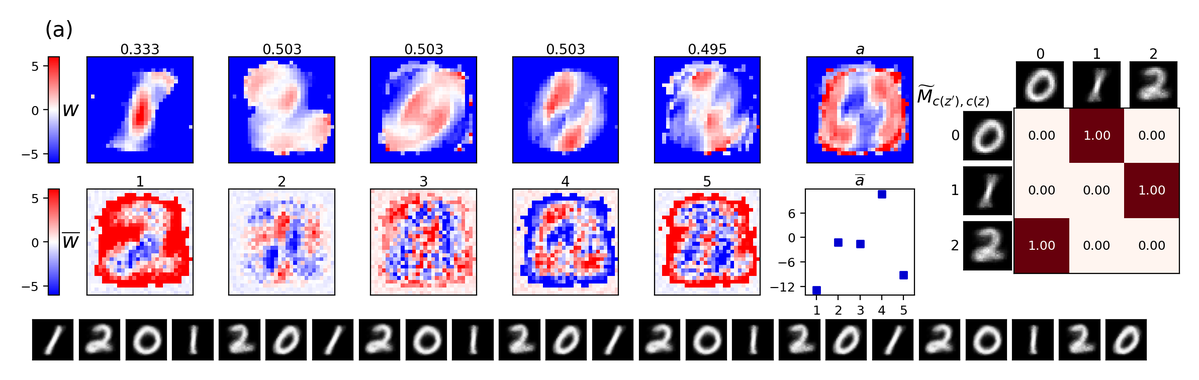
With a generative model based on nonequilibrium visible latent dynamics, researchers show that reversible dynamics limit exploration, while nonequilibrium latent cycles enhance sampling efficiency and likelihood. Read the paper: go.aps.org/4vTNl4u
Physical Review E tweet media
English
1
8
53
4.4K
Physical Review E retweetledi
APS journals
APS journals@apsjournals·
Attending the International Conference on Magnetic Fluids? 🧲 🌊 Keep an eye out for Elena Sesé Sansa, associate editor of Physical Review E. Stop and say hello, or join her at Thursday's panel on the future of the field: go.aps.org/44eMsaE
English
1
1
1
387