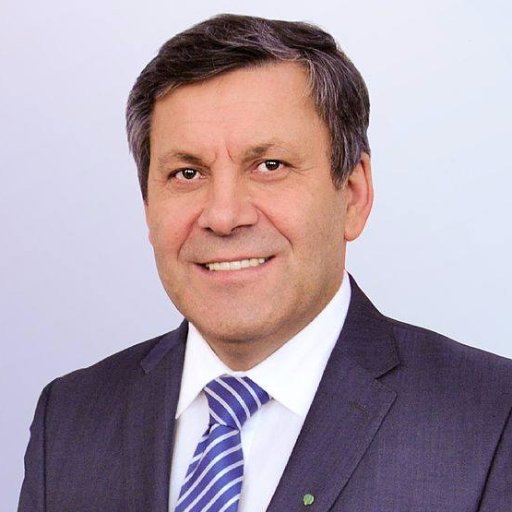
Sławomir Dębski@SlawomirDebski
The reverberations of Donald Tusk’s interview with the FT are still being felt in expert circles on both sides of the Pond. I will divide my comments into two parts. The first concerns transatlantic relations. The second, to which I shall return separately, concerns Polish-French relations.
1)
Few in the relevant circles have any real doubt that the political inspiration behind this interview came from Emmanuel Macron. The French President has damaged his own relations with Donald Trump to such an extent that, if he still wishes to present himself as Europe’s political leader vis-à-vis Trump’s America, he first has to weaken Poland’s position in Washington as the “model ally”.
Donald Tusk, for his part, has through a series of communication and diplomatic errors reduced himself to the status of a persona nobody in Washington. He appears to have concluded that making this fact public in an interview with the FT was a small price to pay for strengthening his position in Europe with French support.
This is…as Talleyrand is said to have put it: “C’est pire qu’un crime, c’est une faute.”
“It is worse than a crime; it is a blunder.”
To make matters worse, Macron - reportedly at Tusk’s request - declined to meet the President of Poland, Karol Nawrocki. That, in turn, is both a mistake and an act of foolishness on the French side. But I shall come back to that in the second part.
The essential point is that Tusk’s calculation rests on a fundamental misreading of both his own position and Poland’s role in Europe. Poland’s position in Europe and in transatlantic relations grows when Poland has good relations with Washington while the rest of Europe has difficulties with it. This is not a partisan slogan. It is a geopolitical truism.
Moreover, as I have argued before - and as @ulrichspeck has also noted - Poland’s good relations with the US create space for France and Germany to pursue a more distanced policy towards Washington. This division of labour benefits everyone. Poland, bordering a revisionist Russia and supporting Ukraine in its defence against Russian aggression, benefits in the most concrete possible way from the presence of some 10K US troops on its territory - troops no European ally can replace - France and Germany, meanwhile, can always invoke Poland as evidence that the transatlantic relationship remains more balanced than their own rhetoric might suggest.
If Polish-American relations deteriorate - no one benefits. Not Europe. Not France. Not Poland. And least of all Tusk himself.
Indeed, Tusk has sent a signal to his European partners that he is not an autonomous actor, but rather an instrument in Macron’s hands. And if that is the case, why speak to Tusk at all? Why take his position seriously, if one can simply speak to Macron directly?
One would have thought Tusk had learnt this lesson during his years as President of the European Council, when he was often treated in Europe - especially by Juncker and by Macron himself - as an extension of Merkel’s policy. There was little point in talking to Tusk when one could talk to Merkel. Now he appears to be repeating the same mistake, only with Macron in Merkel’s former role.
Nor will Macron gain much from this tactical success. He may, for a moment, make it more difficult for the Trump administration to build a European coalition without France. But everyone in Washington will understand perfectly well whose intrigue this is. The result will not be greater French influence, but deeper French isolation.
Next year, Macron will no longer be in power. In all likelihood, neither will Tusk. But the Trump administration will still have two more years to govern.
The conclusion is therefore simple: in trying to trade Poland’s privileged access in Washington for a borrowed role in Paris, Tusk has not elevated Poland in Europe. He has merely made Poland look usable - and, in diplomacy, usable actors are rarely respected ones.