@NicoInberg Een Hertog Jan of Heineken open trekken! Afhankelijk of je aandelen AB InBev of Heineken hebt.
Nederlands
Postman
136 posts

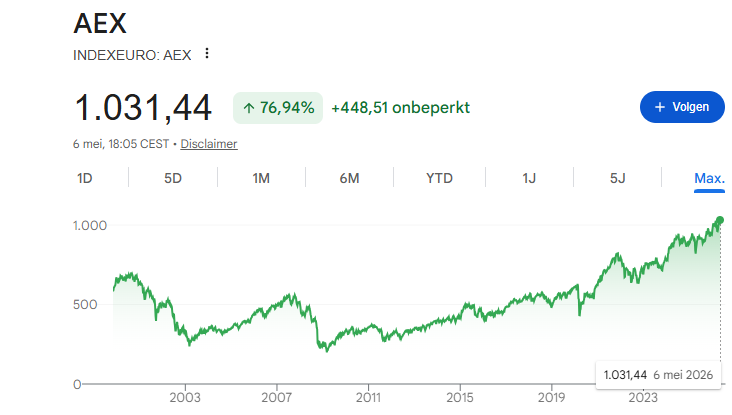
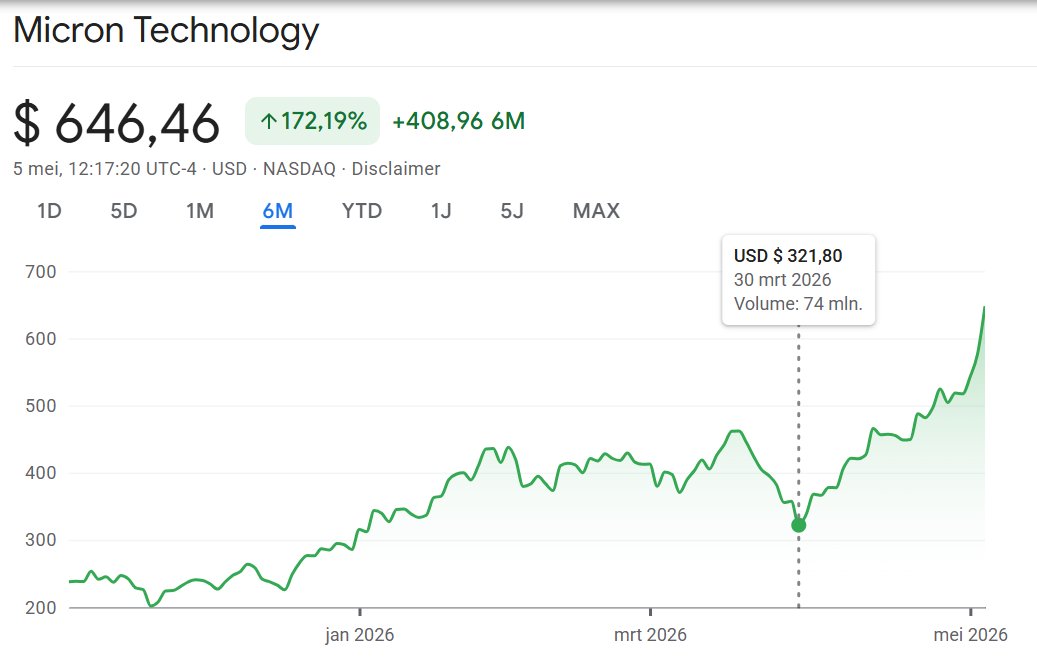





@JDB_trading De VS gaat het leven daar niet beter maken. Dat hebben we nou toch hopelijk wel geleerd van alle voorgaande keren?






Bubble, Bubble Toil and Trouble? In the business media, comparisons today are being increasingly made with prior bubbles. I wanted to offer my views of this subject. There have arguably been three well-defined speculative cycles in equities over the last six decades — The Nifty Fifty Era (the 1960s to the early 1970s), the Dot-Com Boom (mid-to-late 1990s to early 2000) and the recent Mag 7 and AI Boom. All three of these eras have fueled a bull market in equities. The end of the Nifty Fifty Era and the Dot-Com Boom marked the end of the respective bull markets and were followed by market crashes. * The Nifty Fifty Era was marked by fifty large cap stocks that were considered blue chips and buy and hold (one decision) growth stocks. The common characteristic of the stocks in this basket was that the companies achieved consistently superior profits growth. They were assigned extraordinarily high price/earnings ratios of 50x or higher — well above the long-term market average of between 15x and 20x. Representative stocks included American Express, Avon Products, Bristol-Myers, Coca-Cola, Eastman Kodak, General Electric, Polaroid, Procter & Gamble, Sears, Roebuck and Xerox. Most of the companies on this list were well established, where investors perceived deep moats (preventing competitors from making market share inroads) and with a clear expectation that the companies would sustain high returns on invested capital. The reality was that there was far less innovation taking place in those anointed companies. At the time of The Nifty Fifty, bank trust departments (Citigroup, JPMorgan, etc.) were the dominant investors and materially overweighted these anointed stocks. * The Dot-Com Boom existed in the late 1990s and peaked in the first quarter of 2000, coincident with the widespread adoption and use of the internet. This technology-inspired boom was seen as similar to others in the past (railroads in the 1840s, automobiles in the early 1900s, radio in the 1920s, television in the 1940s and computer time-sharing in the 1960s and home computers in the 1980s). Webvan, Boo.com and Pets.com were the standard-bearers of that period. In large measure the companies were not real in the sense that they had no plausible business models and they were run by dreamers and not serious businessmen. Essentially, they were one giant promotion. But in size (market capitalizations), the promotions (like Pets.com) were not consequential in market capitalization. However, several large tech companies (like Cisco and Sun Microsystems) were swept up to ridiculously high valuations along with the worthless dot-com promotions. Sun Microsystems' market capitalization peaked at over $200 billion — representing a price-to-revenue of (a lofty) 10x (which pales when compared to today's tech leaders). Sun Microsystems actually had a suite of revolutionary products from Java programming language to SPARC processors, StarOffice, My SQL, Solaris OS and VirtualBox. The company was ultimately sold for only $7 billion to Oracle a decade after the Dot-Com Boom deflated. Years after the Dot-Com bust Sun Microsystem's Chairman Scott McNealy famously reflected on the absurdity of Sun's peak valuation with this iconic quote: "At 10 times revenues, to give you a 10-year payback, I have to pay you 100% of revenues for 10 straight years in dividends. That assumes I can get that by my shareholders. That assumes I have zero cost of goods sold, which is very hard for a computer company. That assumes zero expenses, which is really hard with 39,000 employees. That assumes I pay no taxes, which is very hard. And that assumes you pay no taxes on your dividends, which is kind of illegal. And that assumes with zero R&D for the next 10 years, I can maintain the current revenue run rate. Now, having done that, would any of you like to buy my stock at $64? Do you realize how ridiculous those basic assumptions are? You don’t need any transparency. You don’t need any footnotes. What were you thinking?" Here is a stock chart of Sun Microsystems (1996-2007): 📷 * The (Current) Climb in Mag 7 and AI has fueled almost the entirety of the market advance over the last few years. Unlike the Nifty Fifty or the Dot-Com promotions, Mag 7 consists of companies that historically have had consistently sizeable cash flows, unleveraged and liquid balance sheets and limited (physical plant) capital needs owing to deep competitive moats (and near monopoly status in phones, operating systems, search, etc.). Whereas the industrial Nifty Fifty companies needed to build new factory production lines and new factories to maintain their competitive status and growth, the Mag 7 are able to innovate rapidly and relatively inexpensively by simply sending product upgrades online (with no manufacturing or shipping required). Until recently the Mag 7 business models were capital light but that has changed with the monumental AI capital spend. Most of the Mag 7 constituents are now becoming capital intensive, which is a big change (and incorporates sizeable risks). This capital outlay is being accompanied by an uncertain timing and level of return on massive and unprecedented amounts of invested capital. There are some substantial differences between the Dot-Com days and what is going on now with the AI infrastructure build. Capacity put in place in the late 1990s was a very long-lived asset. Take fiber optic cable for example — much of the stuff (and constituent components) put into place then is still in use now. This is one of the reasons why the Dot-Com buildout quickly went into overcapacity. The assets were sticky. AI infrastructure is the polar opposite. It obsoletes incredibly quickly — much more quickly than depreciation schedules imply. Oddly, this is part of the bull case, ergo everything will keep having to be rapidly replaced, so the spending will not stop. The bull case treats investment capital as infinite and the laws of economics as irrelevant. It assumes the circular financing and money losing will go on forever. Of course, professional investors know that is not true and they do not really believe the grossly dis-economic behavior can continue forever. They just believe it is in place for the quarter we are in (with upbeat guidance) and it is just one more way to rationalize the game of musical chairs they are playing. Most recognize that they are playing the same game and are just being dragged along by the whims of over-levered retail as well. They all think they will be the first to get out when the music stops. Many just don’t care because they manage against a benchmark. Here are two tweets that demonstrate how dis-economic the AI spend might be: 📷 📷 One other big difference between the Dot-Com days and now, is the Dot-Com stuff actually worked like it was supposed to — it was not a capital black hole. Actually it did increase net productivity, did not consume so much in the way of energy and other resources that it was in fact inflationary. And it was not being subsidized by the public at large (power cost) and actual human content creators. And just for fun: 📷 Bottom Line: I would conclude that the Nifty Fifty Era consisted of a bunch of entrenched companies that were materially overvalued in a period when bank trust departments were the dominant investors. The Dot-Com Boom consisted of a number of promotions and large-cap tech stocks that became significantly overvalued (with day traders becoming the dominant investors). Both could be described as bubbles. By contrast, the Mag 7/AI period consists of near monopolies (that are arguably fully priced to overpriced) as they morph from capital-light to capital-intensive business models — with the risks associated with circular vendor financing, accessing adequate sources of energy (at a reasonable cost), the availability of capable workers and other potential problems inherent with the construction of large-scale data centers. While bank trust departments no longer roam the investing planet, passive investing products and strategies (ETFs and quantitative investors) now dominate. Passive investors are unemotional and no nothing about value but everything about price as they all worship at the altar of price momentum — serving to exaggerate the market's returns and that of the leading technology companies. I conclude that today we are not in a bubble (as we were with the Nifty Fifty and The Dot-Com Boom), though some similarities exist. Rather we are simply in an extremely and historically overvalued market (within a much different market structure backdrop dominated by passive investors). Finally, here are some examples of comparing valuations in these three eras. The Buffett Indicator stands at two standard deviations above its long-term trendline and at a record high of 217% (well above the Dot-Com era): 📷 Most traditional valuation metrics approach the 98%-tile. Today's price-earnings multiple on the S&P Index is 23x — the highest in 26 years (back to the peak in the Dot-Com period) and compared to the 30-year long-term average of only 17x: 📷 Dr. Robert Shiller's CAPE Ratio today is 40x vs 44x at the peak of Dot-Com and only 24x at the height of the Nifty Fifty Era. However, if we adjust profits for the low tax rates today compared to the peak in 2000 the Schillers CAPE is above 46x: 📷 Today's unparalleled S&P concentration into a handful of large-cap tech stocks is similar (and more extreme) than in the prior bubbles. Such concentration when coupled with elevated valuations almost always is a poor launching pad for future investment returns and often presages substantive bear markets or extended periods of substandard returns (our base case): 📷 Let’s look at the similarity of the S&P dividend yield today compared to the peak of the Dot-Com Boom: 📷 Over time dividends have contributed to about one-third of the total return for stocks — with the rest coming from capital appreciation. Today, the S&P Dividend Yield is only 1.17% — the lowest read in 2 1/2 decades (since the Dot-Com Boom). This means if S&P dividends maintain their 1/3 historical contribution to the total annual return for stocks, a 1.17% dividend yield translates into a lowly +3.5% total return for equities. With the S&P earnings yield of about 4.0% (the inverse of the P/E) and the 10-year Treasury yielding 4.15% — the equity risk premium is negative! The difference between the S&P dividend yield (1.17%) and the risk-free rate of return (4.15%) is also at a multiple-decade wide. A low expected total return for equities coupled with a higher risk-free rate of return is fundamental to my bearish market case. While I don't think the next few years will resemble the brutal declines of The Nifty Fifty (that began in 1973-74) of the Dot-Com bust (that commenced in early 2000), the downside to equities remains meaningful.


Womp womp, cry all you want. These criminal illegal aliens aren’t getting released. Like clockwork, violent rioters have arrived at the Broadview ICE facility to demand the release of some of the worst human beings on planet earth. Get a job you imbecilic morons.