Sabitlenmiş Tweet

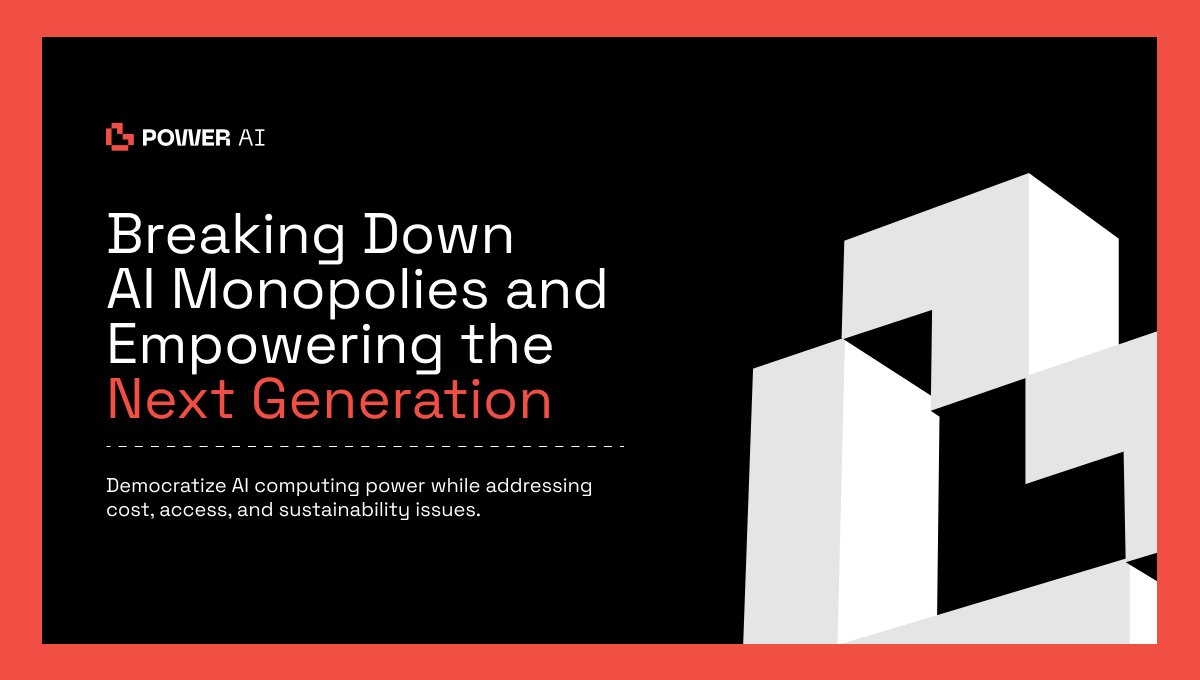
Power AI Project: Breaking Down AI Monopolies and Empowering the Next Generation
Artificial intelligence is evolving at a breakneck pace, but the resources required to train and deploy advanced models remain painfully concentrated in the hands of a few tech giants.
Power AI aims to disrupt this imbalance by decentralizing high‑performance computing and transforming idle GPUs around the world into a unified, eco‑friendly network.
The AI Compute Bottleneck
The explosion of AI applications has created an insatiable demand for computing power.
Cutting‑edge models require expensive GPUs or TPUs, and these resources are largely controlled by major corporations.
Smaller startups, research labs, and independent developers struggle to compete because the cost barrier is so high.
This centralization not only stifles innovation but also raises environmental concerns: large data centers consume enormous amounts of energy and contribute to carbon emissions.
Power AI recognized these pain points and designed a platform to democratize AI computing power while addressing cost, access, and sustainability issues.
By joining their network, anyone can contribute unused GPU cycles and earn tokens, opening the door to a new ecosystem of shared resources.
Key Features of Power AI
1.Decentralized GPU Network
Power AI invites users to install its software and connect idle GPUs to a global network.
When developers submit AI tasks, the platform distributes the workload across thousands of available GPUs, enabling large‑scale training and inference without reliance on expensive centralized servers.
2. Incentive and Rewards System
Contributing GPU power is rewarded with $PowerAi tokens. The system uses smart contracts to ensure that payouts are fair and transparent: the more compute power you provide and the longer you stay online, the more tokens you earn.
These tokens also serve as a means of payment for AI services and can be staked for governance and voting rights.
3. Sustainability and Resource Efficiency
By tapping into idle GPUs rather than building new data centers, the network aims to reduce energy consumption and carbon emissions. The project claims that efficient resource utilization can both lower costs and minimize electronic waste.
4. Interoperability and Flexibility
Power AI supports popular machine‑learning frameworks like TensorFlow, PyTorch, and Keras, and it provides standard APIs for seamless integration. The platform is designed to run on multiple operating systems (Windows, macOS, Linux) and mobile devices, making it accessible from anywhere.
5. Security and Privacy Focus
All data transmitted and stored within the network is encrypted, and fine‑grained access controls protect sensitive information. Distributed storage also means user data isn’t tied to a single vulnerable data center, reducing the risk of breaches.
6. Transparent Tokenomics
The project allocates a fixed supply of 69 million tokens: 90 % is reserved for liquidity on decentralized exchanges, while the remaining 10 % goes toward centralized exchange listings.
This structure is meant to ensure stable trading and accessible token distribution.
7. Real‑World Impact and Use Cases
Power AI isn’t just for crypto enthusiasts. Because it lowers the barrier to high‑performance computing, it opens the door to:
- Affordable AI model training for startups and research labs that previously couldn’t afford data‑center rentals.
- Collaborative projects where universities and smaller firms can share computational resources and accelerate innovation.
- Rapid prototyping and model deployment without the overhead of spinning up specialized hardware.
Community‑driven development through token grants and bounties for developers who build tools and integrations.
8. Candid Considerations
While Power AI’s vision is compelling, it’s important to stay grounded. The project is still in development, and its success depends on network adoption and the real market value of its token.
Power AI presents a bold approach to leveling the AI playing field. By turning idle GPUs into a collaborative computing grid and incentivizing participation with a native token, it addresses the steep cost and inequitable access that plague the AI industry.
English