
Prashant Pansare

13.7K posts

Prashant Pansare banner
Prashant Pansare

Prashant Pansare

@PrashantPansare

Scaling AI/SaaS Business as CRO Ex @Airmeet , Philips, TI, Cisco, 4x Founder Life at intersection of 3S - Startups, Spirituality & Sports Learner, Seeker

Bengaluru, India Katılım Haziran 2009
2.1K Takip Edilen2.1K Takipçiler
Shashi Kumar
Shashi Kumar@thiruka·
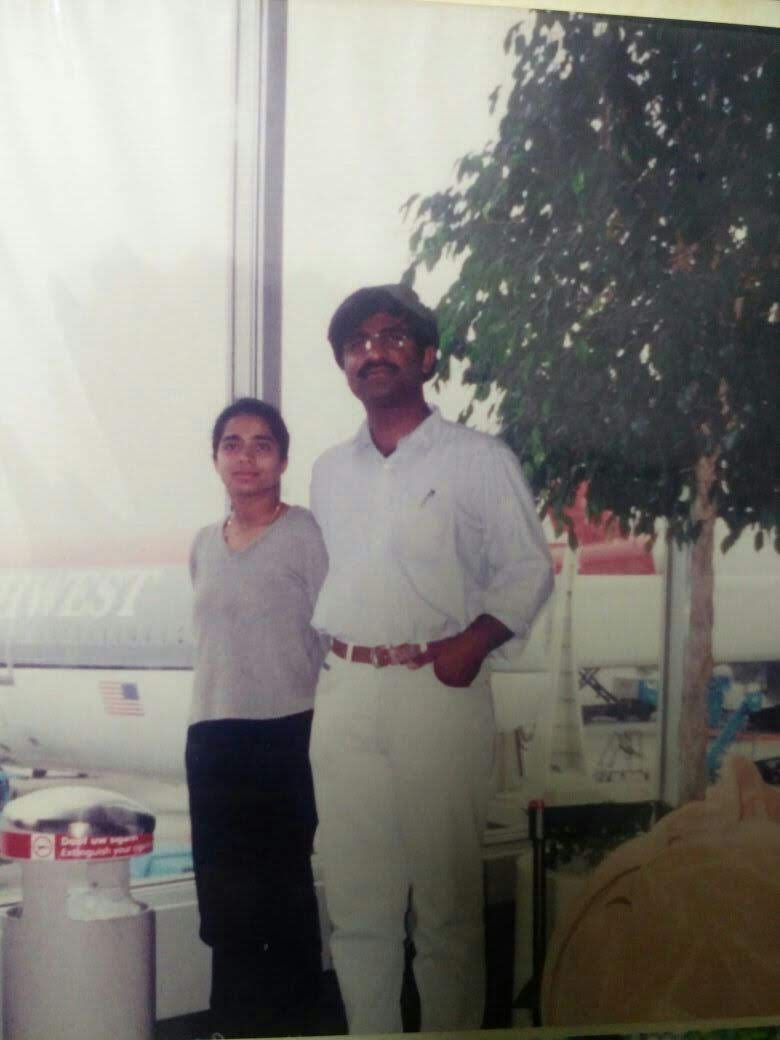
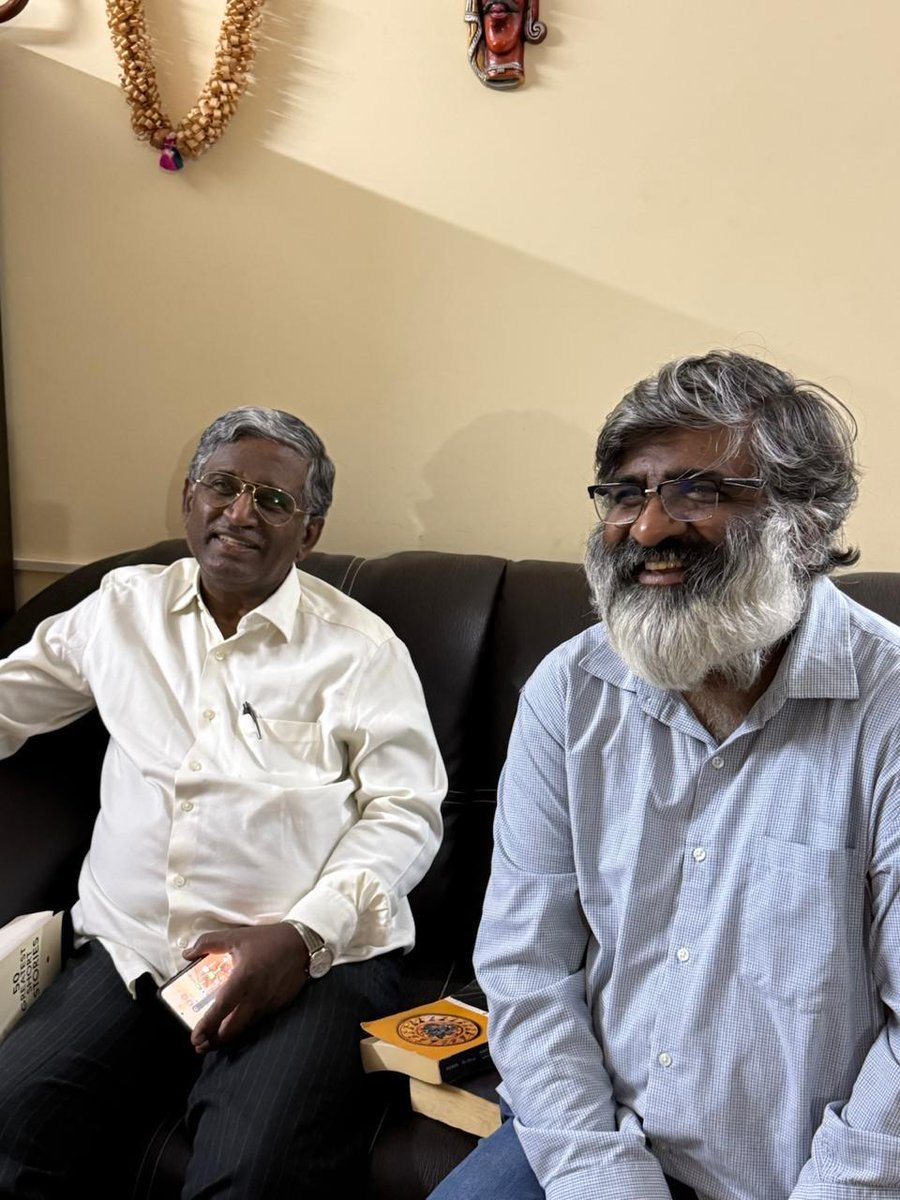
By September 2016, Akshayakalpa was done. Investors had walked away. Well-wishers had stopped calling. I had nothing left to offer, and nothing left in me to keep asking. Two people made a different choice. Shilpa put in Rs. 30 lakhs. Not spare money. Not surplus. It was the last of our savings, money we could not afford to lose, put into something the world had written off. Her own decision. Her own faith. No guarantees asked for, none given. My uncle, Dr. Muni Reddy, put in Rs. 10 lakhs. He had watched this struggle up close for years. And still, he believed. Still, he put his money in. That Rs. 40 lakhs kept Akshayakalpa from shutting down. I never asked either of them why they did it. There was no logic to it. They simply chose to believe when no one else would. If that money had been lost, it would have been more than a business failure. It would have been a personal catastrophe. Some things in life cannot be explained. They can only be honoured. And sometimes, all it takes is one person willing to back you when you are cornered. Shilpa and I at Newark Airport. Dr. Muni Reddy and I, recently.
Shashi Kumar tweet mediaShashi Kumar tweet media
English
27
61
562
42.6K
Prashant Pansare
Prashant Pansare@PrashantPansare·
English terminology is easy to confuse. the challenges are due to gotra. girls postmarriage shift to new lineage and gotra and so do the kids born. the Gotra is associated often with surname same gotra marriages are avoided for genetic challenges due to inbreeding. and of course the not changing surname is a starting point and it rarely stops there.
English
2
0
5
2.1K
Jasveer Singh
Jasveer Singh@jasveer10·
In India, inter-caste marriage is not easy. But the reason here was not what you think. Both are well educated. The guy is from the Ivy League earning 1Cr+, and the girl is from IIT earning 70L. The issue the guy raised was very weird. I don’t think you’ve heard this before. The girl did not want to adopt his surname after marriage. Fair enough. But this is where things got interesting. The guy was ready to drop the entire marriage conversation just because of this. So we tried to understand his reasoning deeply. And what he said next actually blew my mind. Let’s break it down from scratch. In India, it’s been simple. After marriage, the woman takes the man’s surname. The child takes the father’s surname. One straight line. No confusion. Now enter a different scenario. Two people marry. The woman does not change her surname. First problem. The man is already uncomfortable. Second problem. What happens when they have a child, Whose surname will the child take. If the child takes both surnames, it becomes long, messy, and honestly most people feel it looks weird. If the child takes the father surname, then what was the point of the mother not changing hers. And this is where the real conflict comes in The man logic was simple. If you believe in equality, why should only I adjust on this. And the reverse almost never happens. A man is not going to take the woman’s surname. So what exactly changed - And this is where things get messy. Because this is not just about a name. It’s about identity, ego, equality, family expectations, and legacy all mixed together And yes, the guy actually walked away from the marriage conversation because of this one issue. Let that sink in - In India, arranged marriage is not just about two people liking each other. It’s about caste, family, surname, identity, legacy, and a hundred invisible expectations People think inter-caste marriage is the hard part, it’s not. The real problem starts after that. And most people don’t even realise it until they are in it.
English
152
20
210
140.1K
Prashant Pansare retweetledi
Leila Hormozi
Leila Hormozi@LeilaHormozi·
The hardest part of building something isn't the work. It's staying committed to the vision on the days the work feels pointless.
English
220
221
1.6K
30.9K
Tejeshwi Sharma 🇮🇳
Tejeshwi Sharma 🇮🇳@tejeshwi_sharma·
Consumer AI in India is being throttled by inference cost. Even open-source isn’t cheap enough at scale. Low-cost inference layer for India unlocks a wave of apps across education, health, fitness, wealth, entertainment, recruiting, and chatbots for the next 1B users. Distribution rails are already built (UPI, cheap data, smartphones). Demand is not a constraint, unit economics is. The moment cost drops 10x, we will see an explosion.
English
17
6
152
12.1K
Aloke Bajpai
Aloke Bajpai@alokebajpai·
Agla station ixigo New Delhi Metro Station hai ! NDLS, you're welcome ...
Aloke Bajpai tweet media
English
27
61
1.4K
60.2K
Prashant Pansare retweetledi
Hitesh Oberoi
Hitesh Oberoi@hitobs·
My current mental model basis what I am seeing around me and at InfoEdge in all our verticals - Naukri, 99acres, Jeevansathi and Shiksha. 1) AI is fundamentally deflationary for businesses. 2) When the cost of intelligence drops toward zero, the cost of doing many things drops with it. 3) Everyone becomes more productive but no one stays differentiated for long. 4) The natural outcome? Price compression. Margin pressure, Commoditization. 5) We’ve seen this with the internet, cloud, SaaS. AI is doing it to cognition itself. But this is only half the story. 6) AI is deflationary for existing markets and expansionary for new ones The big mistake 7) Using AI just to do the same things cheaper. That’s a race to the bottom. 8) The real question is, What becomes possible now that was previously impossible? Three ways I see AI creating real advantage 1) Solving problems that were too expensive to solve or not solvable earlier 2) Serving customers who couldn’t be served before 3) Delivering experiences and quality that wasn’t possible to deliver before In other words Don’t just lower costs. Expand the market. Because when capabilities commoditise , value shifts to, – Distribution and Customer Relationships – Brand – Trust – Proprietary data – Ecosystems The winners in the AI era won’t be the most companies which are the most efficient. They’ll be companies with the best imagination
English
51
184
1.8K
781.3K
Prashant Pansare
Prashant Pansare@PrashantPansare·
@ajdduggan The AI era demands thinking AI first processes than managing existing processes that evolved pre-AI era The bottleneck for Agents to scale efficiency lies in this.
English
1
0
1
8
Andrew Duggan
Andrew Duggan@ajdduggan·
> Everyone's building AI automations. Almost nobody asks 'should this process exist at all?' > I've spent 25 years watching enterprises automate broken workflows. > The ROI isn't in connecting tools. > It's in killing the step that shouldn't be there.
English
1
0
0
98
Prashant Pansare
Prashant Pansare@PrashantPansare·
@paraschopra revenue or horizontal expansions are indicators of this being done right, conversely, the churn in first cycles shows a poor oversold product premise
English
0
0
0
132
Paras Chopra
Paras Chopra@paraschopra·
The folk understanding of sales is that it requires making superlative promises that the product can’t fulfil. However, if you spend time with great sales people, you understand that the skill is really about making it easy for the other party to appreciate the value they can get. A badly sold product focuses on its features which requires the customer to decipher the hidden value prop, while a well sold product has its value prop is extremely obvious. The focus on value is why great sales people care deeply about the customer, sometimes to the extent of recommending a competitor product when that’s a better fit. (The product here can mean anything - from a piece of writing to software to a shampoo and even your CV)
English
22
8
259
14.1K
Prashant Pansare retweetledi
Jason
Jason@mytechceoo·
CEO obsessed with token maxxing
English
282
1K
13K
1.9M
Prashant Pansare
Prashant Pansare@PrashantPansare·
So, Anthropic just dropped Claude Designand the design world is currently having a collective "wait, what?" moment. It’s not just another AI image generator; it’s a full-blown workspace that tries to turn a text prompt into a functional prototype faster than you can say "make the logo bigger." Think of it as a creative partner that lives somewhere between a product manager’s brain and a designer's canvas. Prompt-to-Prototype: You tell Claude you need a "SaaS dashboard for tracking interstellar freight," and it doesn't just give you a picture, it builds a structured layout with buttons, sliders, and nav bars The "Design-to-Dev" wall is finally starting to crumble, and the industry is reacting in real-time Figma & Adobe are on notice. Figma’s stock took a 7.5% hit right after the announcement. Why? Because Anthropic’s Chief Product Officer, Mike Krieger, literally quit Figma’s board three days before launch. Accessibility over Artistry It’s shifting the focus from how to build (the tool skills) to what to build (the vision). It makes design accessible to "non-designers" like founders and marketers who used to be gatekept by complex software such as Photoshop / Figma
Prashant Pansare tweet media
Claude@claudeai

Introducing Claude Design by Anthropic Labs: make prototypes, slides, and one-pagers by talking to Claude. Powered by Claude Opus 4.7, our most capable vision model. Available in research preview on the Pro, Max, Team, and Enterprise plans, rolling out throughout the day.

English
0
0
0
176
Prashant Pansare retweetledi
Ramanuj Mukherjee
Ramanuj Mukherjee@law_ninja·
A few years ago a criminal lawyer in Delhi was defending a celebrity client in a false rape case. The prosecution's story was airtight on paper. The complainant had filed a detailed FIR. Timestamps. Locations. A narrative that was internally consistent. The media had already convicted his client. The lawyer did not start with case law. He did not start with drafting arguments. He started with a question most lawyers never ask: what evidence exists in the world that nobody has looked at yet? First he pulled CCTV footage from public cameras near the location the complainant mentioned. The footage showed his client was not there at the time the FIR claimed. He was somewhere else entirely. On camera. With a timestamp. But the footage only proved his client was not at the location. It did not explain why the complaint was filed. That is where the second thread started. The lawyer checked property registration records. Found that a luxury property had been registered in the complainant's name just days after the FIR was filed. That one record changed the entire case. The complainant's known income could not explain a purchase like that. Not even close. The lawyer looked at the sale deed. The payment was made in cash. A large sum of unaccounted cash used to buy a luxury property within days of filing a case against a wealthy public figure. Now there was a trail to follow. Through his investigator he traced backwards. Where did the cash come from? Who was involved? The answers pointed to exactly what you would suspect. This was not a crime being reported. It was a crime being committed. The case fell apart. Acquittal. The lawyer did not win because he knew more sections of the IPC than the prosecution. He won because he went looking for evidence that was sitting in records and nobody had bothered to check. This is the part of lawyering that almost nobody teaches and almost nobody does. Most lawyers prepare a case from whatever the client brings them. Some WhatsApp messages. A few documents. An oral account. They file based on what they have. Argue based on what they have. They never go looking for what else is out there. Not because they are lazy. Because there was never enough time. 40 other matters on the board. The hearing is next week. You work with what you have. But India in 2026 produces more digital exhaust about every person and every business than at any point in history. Some of it is freely public. Some requires a nominal fee. Some requires a court order or RTI. Almost none of it is being used systematically by lawyers. And this is where AI changes the game. Not by finding the data. By reading it. A single lawyer cannot spend 3 days cross-referencing MCA records for 7 companies. Cannot go through 2,000 pages of bank statements looking for 3 transactions. Cannot check property registrations across 4 states. The time does not exist. The fees do not justify it. Give Claude Code the annual returns of 7 companies. It finds common directors, related party transactions, unusual capital movements in minutes. Give it 2,000 pages of bank statements. It flags every transaction above 5 lakhs, every cash deposit that does not match known income, every transfer to a specific set of counterparties. A paralegal takes a week. AI takes an hour. Give it the client's scattered evidence: WhatsApp messages, invoices, emails, bank statements and it builds a timeline. What happened in what order. Where are the gaps. What documents should exist but are missing. The AI does not replace the lawyer's judgment. It replaces the 200 hours of reading that the lawyer was never going to do because no case pays enough for that. The lawyer who does this walks into court with a case built on evidence, not allegations. Their interim application has annexures that make the judge sit up. Their Section 94 BNSS applications are precise because they already know what they are looking for. Now here is the resource list every lawyer should have saved on their phone. Most of this has been available for years. Almost nobody uses it systematically. FREELY PUBLIC: NO PERMISSION NEEDED MCA portal: director search free, documents Rs 100 per set. Directors, shareholding, annual returns, charges, related party disclosures. Every company a person has ever been director of. Vahan (vahan.parivahan.gov.in): vehicle registration. Owner name, registration date, hypothecation details showing which bank financed it. Search by vehicle number. Property registrations: digitized in Maharashtra, Karnataka, Tamil Nadu, Telangana, AP, Kerala and others. Buyer, seller, price, payment mode. eCourts (services.ecourts.gov.in): party name search across district courts. Case history, hearing dates, orders, judgments. Check if the opposing party has prior litigation and what patterns emerge. Domain WHOIS records: who registered a domain, when, with what email and phone number. If someone registered a competing business domain 2 months before resigning, that is premeditation. Wayback Machine (web.archive.org): historical snapshots of any website. Deleted social media posts, old company websites, changed LinkedIn profiles. What was someone saying 2 years ago that they are denying today. Social media: Instagram, Facebook, LinkedIn posts. Luxury spending during claimed hardship. Employment they denied. Locations they said they never visited. Truecaller: how a person is saved in thousands of phones. If someone claims no business relationship but Truecaller shows they are saved as "XYZ Company Vendor" in 40 phones, that is evidence. SEBI SCORES: complaints filed against companies. Consumer forum database (ncdrc.nic.in): searchable orders from consumer disputes. IP India (ipindia.gov.in): trademark and patent filings. Who filed what, when. Proves someone was planning a competing business. RERA portal: real estate project registrations and agent registrations by state. Udyam Registration: MSME registration. Publicly searchable. Shows business existence and declared turnover range. FSSAI license search: food business registrations. ICAI/BCI/NMC: professional body registrations for CAs, lawyers, doctors. OBTAINABLE THROUGH COURT ORDER Bank statements: Section 94 BNSS. Specify the bank, branch, account, and period. Precise applications get granted. Vague ones get rejected. WhatsApp chat backups: court order to Google (for Android backups on Google Drive) or Apple (for iCloud backups). WhatsApp messages are encrypted in transit but the backups stored on cloud are accessible through court orders. This is often easier than going to Meta directly. CIBIL records: court direction to TransUnion CIBIL. Self-declared income on loan applications vs what they tell the court. Mobile tower location (CDR): IO in criminal cases, court order in civil. Places a phone at a cell tower with timestamp. Approximate location within 500 metres. Toll plaza FASTag records: court order to NHAI or FASTag issuing bank. Every crossing logged with timestamp. UPI transaction history: court order to NPCI or the payment app (PhonePe, GPay, Paytm). Payment gateway records: Razorpay, PayU, Cashfree. Court order. Shows actual transaction volumes vs what the business claims. Demat and trading records: court order to Zerodha, Groww, or the depository (CDSL/NSDL). Someone claiming no income but actively trading. Mutual fund holdings: court order to CAMS or KFintech. Consolidated statement of every mutual fund investment. Form 26AS: court order to Income Tax Department. TDS across all income sources. Reveals employment, property transactions, bank interest they have not disclosed. Email metadata: court order to Google or Microsoft. Who emailed whom, when, from what IP address. Airline PNR records: court order to airlines. Proves travel that someone denies. Immigration entry-exit records: court order. Passport stamps prove international travel. Google Maps location history: court order to Google. Everywhere a person's phone has been. Insurance policies: court order to IIB (Insurance Information Bureau). Every policy a person holds. Contradicts claims of no assets if they have high-value term plans or property insurance. OBTAINABLE THROUGH RTI Land revenue records. Municipal property tax records. Building permissions. Water and electricity connections. DGFT import-export data. EPFO records (own records easily, third-party may need court order). The evidence is not hidden. It is just unread. Some of it is free and nobody checked. Some requires a court order but nobody knew what to ask for. AI reads what is available faster than any human can. And it tells you exactly what to ask the court to order because it has already found the gaps. Save this list. Use it on your next case. The lawyer on the other side almost certainly will not.
English
16
109
450
55.7K
Prashant Pansare
Prashant Pansare@PrashantPansare·
@law_ninja transformation in the legal process if judges can use these insights to deliver faster and accurate judgements eliminating biases.
English
0
0
1
83
Ramanuj Mukherjee
Ramanuj Mukherjee@law_ninja·
A lawyer in Patiala House told me something last month that I have not been able to stop thinking about. He said "I have appeared very frequently before 12 judges in the last few years. I know exactly how each of them thinks. That ability to read a judge and predict their actions took me 15 years to build. My junior will never have that luxury because judges transfer every 3 years now." The institutional knowledge of how a specific judge thinks, what arguments work in front of them, what irritates them, how they handle bail, how they approach interim relief, all of that used to live inside a lawyer's head. Built over decades of appearing in the same court. That knowledge was the moat. The reason a senior could charge Rs 5,00,000 for a bail hearing and a junior could not. Not because the senior knew more law. Because the senior knew the judge. Now two things are happening at the same time. First, judge transfers are faster than ever. A judge who used to sit in one court for 5 years now moves in 2 to 3. By the time a lawyer builds a profile of the judge in their head, the judge is gone. The institutional knowledge resets. Second, every order that judge passes is now on eCourts. Public. Free. Searchable. The knowledge that used to take 15 years to build by appearing before a judge 200 times is now available to anyone who can read 200 orders (not perfectly, there is more than is done and said in the court room that does not show up in orders). The problem was always that no human could read 200 orders in a useful timeframe. AI can read 200 orders in 4 minutes. A 2-year call lawyer with Claude Code and a folder full of a judge's orders can now build the same profile that a 15-year senior has in his head. Not a vague sense of "this judge is strict." A detailed analysis of how this judge reasons about specific issues. You can add their publicly available data to your analysis to understand how the think, act and reason. This does not replace the senior's courtroom presence. It does not replace oral advocacy. It does not replace the relationships built over years. But it eliminates the information asymmetry. The junior who walks into court knowing that this judge grants bail in 70% of DV cases where the victim has filed for divorce, that he always asks about community roots, that he rejected bail twice when the accused had a prior pending case, that junior is not guessing anymore. They are making the same informed decisions the senior makes. They just got there differently. Now here is where this becomes a business. There are roughly 700 district courts in India. Each has 10 to 50 judges. Each judge passes thousands of orders. This data refreshes constantly as judges transfer in and out. Nobody is building judge intelligence profiles systematically. The analytics tools that exist in the US (Lex Machina, Trellis) do not exist for Indian courts. Not because the data is not there. Because nobody has built it. The person who builds a judge intelligence service for Indian district courts will not need to sell to large law firms. They will sell to every litigation lawyer who walks into a courtroom they have never appeared in before. That is 14 lakh lawyers. Not 200 firms. At LawSikho we now teach lawyers to build these profiles for their own cases using Claude Code. Not as a product. As a personal tool. Put the judge's orders in a folder. Let Claude Code read them. Ask it questions. Correct its understanding. Then draft your arguments for that specific judge. The skill takes weeks to learn. The advantage it gives lasts a career. The senior in Patiala House was right. His junior will never have the luxury of 15 years in front of the same judge. But that junior might not need 15 years anymore.
English
28
80
552
82.3K
Prashant Pansare
Prashant Pansare@PrashantPansare·
Imagine someone without business acumen investing in a company and advising, interfering with the day to day operations and instructing CEO, criticising the team.. No Corporate CEO / Chairman would love it. Same applies to Cricket. You invest, You sit on sidelines and let professional cricketers, Coaches run the show. DON'T INTERFERE and make things worse! Goenka
English
0
0
0
269
Prashant Pansare
Prashant Pansare@PrashantPansare·
@NamanSr Excellent perspective. The discount factor should be determined by the churn rate imo that blanket one. Do you incentivise monthly to annual plan with that discount ?
English
1
0
2
633
Naman Sarawagi
Naman Sarawagi@NamanSr·
Emergent claiming $240 ARR against $1 realised revenue hurts everyone who is looking to get funded. OpenAI claiming the same will hurt Indian startups lesser. So Indian founders talking against it is absolutely fine. We have a very similar situation in SaaS. Monthly subscription is $10. Annual is $90. Our rack rate is $150/annum. 1% of users pay this but we get to claim that as our ACV, if we want. We can easily say $10 of incoming revenue is $150 ARR and rest is marketing discount. Similar to what Ecommerce did with GMV and selling price. Think of this - A monthly subscribing user is 33% more valuable in ARR terms than annual user. All founders know how wrong that is in real business terms. In India monthly subscribing users are a complete PITA. How do we account for this internally. 1. We started treating monthly users as trial users. "Curiosity revenue". Not real revenue. 2. We steadily made the difference bigger. So that it is very clear that taking monthly plan is unintelligent. Since our users are intelligent (India SME), monthly subscription means they don't trust us, yet. 3. For internal MIS we discount monthly user's ARR by 40%. and Quarterly by 25%. Reflecting the lower chances of retention and that the quality of revenue is different. Just so that we don't get very happy for the wrong reasons.
English
12
4
98
10.7K
Yann
Yann@yanndine·
I'll probably regret leaking this but screw it: Full guide on how to run Claude Code as a GTM engineering system. Setup, CLAUDE.md, skills, MCP servers, parallel agents, slash commands, and the exact GTM workflows to actually build. For 24h, I'm sending it to EVERYONE who likes + comments "BIBLE" (must be connected for priority access)
Yann tweet media
English
55
3
46
1.7K
Prashant Pansare
Prashant Pansare@PrashantPansare·
@law_ninja Deep domain hands on knowledge with AI skills is going to be killer combinations. Either in isolation will be killed sooner
English
0
0
2
534
Ramanuj Mukherjee
Ramanuj Mukherjee@law_ninja·
The most dangerous person in any industry right now is not the AI expert. It is the domain expert who learned AI. And almost nobody understands why. Let me explain. India produces roughly 1.5 million engineers every year. A huge number of them are now learning AI. Watching YouTube tutorials. Getting certifications. Building chatbots that talk to PDFs. LinkedIn is full of them. "AI/ML enthusiast." "Prompt engineering certified." "Building the future with Gen AI." Most of them are unemployable. Not because they lack technical skill. But because they lack context. They know how the tool works. They have no idea what problem to point it at. Now look at the other side. A CA with 15 years of experience who spent 2 months learning AI tools: he knows exactly where the pain is in an accounting workflow. He has felt it in his bones. He knows that the real bottleneck isn't the balance sheet. It is the 47 WhatsApp messages it takes to collect one client's documents and various OTPs. He doesn't need someone to explain the problem. He lived the problem for 15 years. When this person learns AI, something terrifying happens. He doesn't just optimize. He eliminates. A litigation lawyer in Kolkata who handles bail matters. She spent 20 years drafting the same kind of applications with minor variations. She learned Claude Code in 3 weeks. Now she generates first drafts in 4 minutes that used to take her junior 4 hours. Also, she can map evidence and find contradictions in the prosecution case that would have taken a team of 20 juniors without AI. She can even simulate how a judge may react based on a judicial profile model she creates of a judge. She didn't learn "AI." She learned how to give a machine the context she already had in her head. That is a completely different thing. The AI expert builds a generic document summarizer. Impressive demo. Works on anything. Understands nothing. The domain expert builds a bail application drafter that knows the difference between what Prosecutor A argues v Advocate B. Knows which judges want shorter arguments. Knows that the medical ground needs to be in the second paragraph, not the fifth. No AI course teaches this. No certification covers this. This is 20 years of courtroom experience compressed into a prompt. This is why the domain expert is more dangerous. The AI expert sees technology. The domain expert sees the bottleneck. And the bottleneck is where all the money is. Real example. A garment exporter in Tirupur. He processes 200 orders a week. Each order requires email parsing, PO data entry into Tally, production schedule updates, shipping documents, buyer follow-ups. Currently: 2 data entry operators. 8 hours each. 5 days a week. Errors constant. Follow-ups missed. Buyers frustrated. An AI engineer looks at this and says "let me build a custom NLP pipeline." The exporter's son, a 24-year-old commerce graduate who spent 6 weeks learning Claude Code, looks at this and says "Papa, I'll build you a system that reads your buyer emails and whatsapp queries, enters PO data into Tally, and sends WhatsApp follow-ups automatically." Not with drag-and-drop. With actual code. Written by AI. Guided by a kid who understands his father's Tuesday afternoon better than any engineer ever will. He didn't write the code himself. He described the problem to Claude Code and it built the connectors, the parsers, the integrations. In days, not months. Built in 3 weeks. Runs on a Rs 200 per month GCP server. No data entry operators needed. The AI engineer would have quoted Rs 15 lakh and taken 6 months to make something remotely usable. The commerce graduate did it for almost nothing. Because he wasn't solving a technology problem. He was solving his father's business. This is the pattern everywhere. And the tools available today make it absurd. Claude Code and Cursor don't just help you code. They build entire applications from a conversation. You describe what you want. It writes, tests, and deploys. The barrier between "I understand the problem" and "I built the solution" has collapsed to near zero. But coding tools are just the beginning. Look at what else exists right now: HeyGen and ElevenLabs. A single domain expert can now create professional video content and voiceovers in any language. That CA in Jaipur? He can create a client onboarding video in Hindi, English, and Marathi. Personalized. Professional. Without a camera, a studio, or a production team. Kling and Runway. Generate product videos, explainer content, visual demos. The Tirupur exporter can send his international buyers a product showcase video generated from photographs of fabric samples. No videographer. No editor. No 2-week turnaround. No filming budget. OpenClaw and similar AI agent platforms. Build autonomous agents that don't just automate a task but run entire workflows end to end. Client intake to document generation to follow-up. Without a human in the loop. Hermes and open-source models you can run locally. Process sensitive client data without sending it to the cloud. A law firm that won't put case files on ChatGPT can run Hermes on a local machine and get the same AI power with full confidentiality. This is the new stack. Not no-code drag-and-drop. Not Zapier. Not "if this then that." The stack is: AI that builds software + AI that creates content + AI that runs autonomously + AI that runs privately. And any domain expert can learn it. The doctor who learns this stack will build better diagnostic workflows than any health-tech startup. Because she knows that the real problem is not diagnosis. It is that patients lie about their symptoms, forget their medication history, and bring reports from 3 different labs in 3 different formats. She uses Claude Code to build a patient intake system. ElevenLabs to create voice-guided instructions in the patient's language. An AI agent to chase lab reports automatically. The teacher who learns this stack will build better learning tools than any ed-tech company. Because he knows that the problem is not content delivery. It is that a student who failed the last test is too embarrassed to ask a doubt in front of 40 classmates. He uses Claude Code to build a private doubt-clearing bot. HeyGen to create video explanations that feel personal. Kling to generate visual demonstrations of physics concepts that no textbook can show. The HR manager who learns this stack will build better hiring workflows than any recruiting platform. Because she knows that the problem is not resume screening. It is that hiring managers don't read the JD they approved, and then reject candidates for not matching a JD they never actually wanted. She uses an AI agent to align JDs with actual team needs before posting. Claude Code to build a candidate evaluation system tuned to what actually predicts success in her company. Domain knowledge is the moat. This new AI stack is the weapon. The combination is unstoppable. Here is what this means for you. If you are a domain expert in any field, your 10 or 15 or 20 years of experience just became the most valuable asset in the market. Not less valuable. More. Every frustration you had. Every broken process you complained about. Every time you said "there has to be a better way." That was training data. Your training data. You don't need to become a programmer. You don't need a CS degree. You don't need to understand transformer architectures. You need to learn the new stack: 1. How to talk to AI and get what you want (prompting): 2 weeks 2. How to build apps and tools with Claude Code or Cursor: 3-4 weeks 3. How to create content with HeyGen, ElevenLabs, Kling: 1-2 weeks 4. How to deploy AI agents that work autonomously: 2-3 weeks 5. How to read a business process and map it: you already know this The entire stack. Under 3 months. No CS degree. No coding bootcamp. The AI experts are competing with each other. Fighting over the same startup jobs. Building demos that impress other AI experts. The domain expert who learns this stack has no competition. Because nobody else has their context. The CA who builds his own practice management system with Claude Code. The lawyer who runs case research on a local Hermes model with full confidentiality. The factory owner's daughter who creates multilingual buyer presentations with HeyGen and closes international orders her father never could. These people are not on AI Twitter. They are not posting demos. They are not collecting certifications. They are quietly making themselves irreplaceable. The most dangerous person in any room is not the one who knows the most about AI. It is the one who knows the most about the problem. And just learned enough AI to solve it
English
29
68
308
38.3K