Miguel Errasti Argal

26K posts

Miguel Errasti Argal banner
Miguel Errasti Argal

Miguel Errasti Argal

@PresidenteANEI

Asociación Nacional de Empresas de Internet, ANEI. "Internet es una forma de vida"

Madrid Katılım Şubat 2010
896 Takip Edilen1.9K Takipçiler
Miguel Errasti Argal retweetledi
Santi Torres
Santi Torres@SantiTorAI·
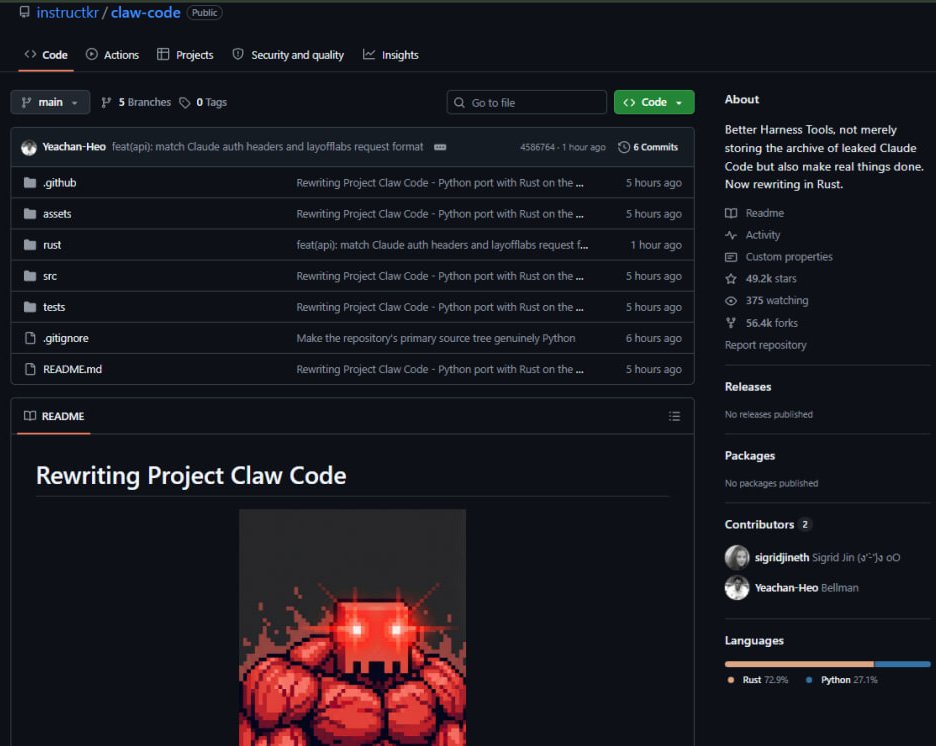
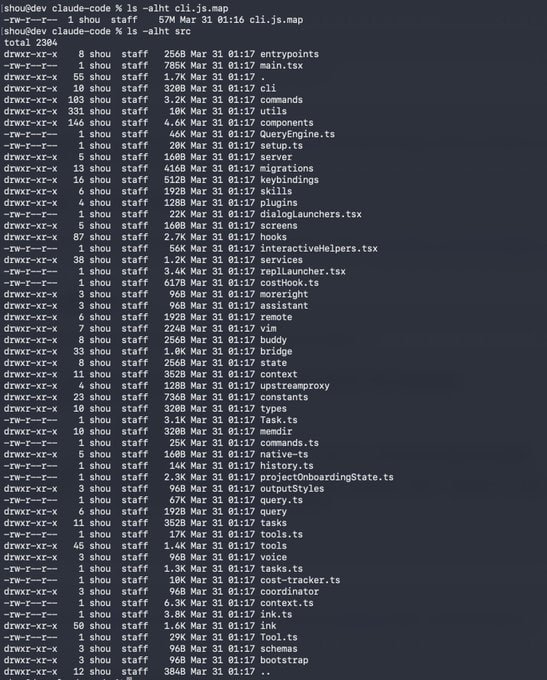
Anthropic filtró accidentalmente todo su código fuente ayer. Lo que pasó después es una de las historias más locas en la historia de la tecnología. > Anthropic lanzó una actualización de software para Claude Code a las 4AM. > Un archivo de depuración se incluyó accidentalmente dentro de ella. > Ese archivo contenía 512.000 líneas de su código fuente propietario. > Un investigador llamado Chaofan Shou lo detectó en cuestión de minutos y publicó el enlace de descarga en X. > 21 millones de personas han visto el hilo. > Toda la base de código fue descargada, copiada y replicada en GitHub antes de que el equipo de Anthropic siquiera se hubiera despertado. > Anthropic retiró el paquete y empezó a enviar notificaciones DMCA a cada repositorio que lo alojaba. > Fue entonces cuando un desarrollador coreano llamado Sigrid Jin se despertó a las 4AM con su teléfono explotando de notificaciones. > Es el usuario más activo de Claude Code en el mundo, y el Wall Street Journal informó que personalmente utilizó 25 mil millones de tokens el año pasado. > Su novia estaba preocupada de que lo demandaran solo por tener el código en su máquina. > Así que hizo lo que haría cualquier ingeniero. > Reescribió todo desde cero en Python antes del amanecer. > Lo llamó claw-code y lo subió a GitHub. > Una reescritura en Python es una nueva obra creativa. El DMCA no puede tocarla. > El repositorio alcanzó 30.000 estrellas más rápido que cualquier repositorio en la historia de GitHub. > No quedó satisfecho. Empezó a reescribirlo otra vez en Rust. > Ahora tiene 49.000 estrellas y 56.000 forks. > Alguien replicó el original en una plataforma descentralizada con un solo mensaje: "nunca será eliminado." > El código ahora es permanente. Anthropic no puede recuperarlo. Anthropic construyó un sistema llamado Undercover Mode específicamente para evitar que Claude filtrara secretos internos. Y luego filtraron su propio código fuente ellos mismos. Esto no se puede inventar.
Santi Torres tweet mediaSanti Torres tweet media
Español
48
693
3.5K
239K
Miguel Errasti Argal retweetledi
Siemens España
Siemens España@siemens_es·
Más del 75% de los #residuos eléctricos y electrónicos no se gestiona de forma segura ♻️ Sin embargo, contamos con un sitio que se encarga de darles una segunda vida, impulsando así una #innovación más responsable y sostenible 📲 sie.ag/3RiGgy #Sostenibilidad
Siemens España tweet media
Español
0
2
5
126
Miguel Errasti Argal retweetledi
Jason Bassler
Jason Bassler@JasonBassler1·
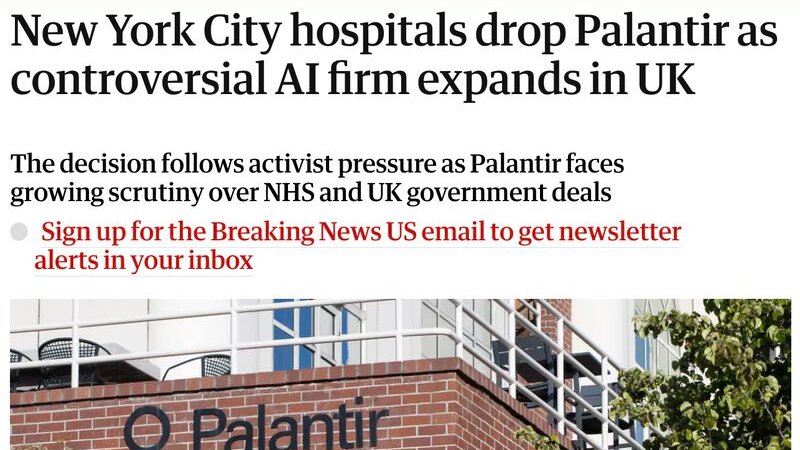
Good news! NYC just ditched Palantir. Last week the NY public hospital system announced it won't be renewing its contract after October 2026 after public backlash over giving a surveillance company access to patient data. The outrage worked. Privacy wins... for now.
Jason Bassler tweet media
English
62
2.1K
5.7K
56.2K
Miguel Errasti Argal retweetledi
elhacker.NET
elhacker.NET@elhackernet·
[Blog] Taiwán experimenta la peor escasez de agua de los últimos 75 años y la zona más afectada es donde están las fábricas de TSMC blog.elhacker.net/2026/04/taiwan…
Español
0
6
8
1.6K
Miguel Errasti Argal retweetledi
xataka
xataka@xataka·
La IA está generando una paradoja en el mercado laboral tecnológico: más ofertas de empleo pero es más difícil encontrar trabajo xataka.com/empresas-y-eco…
Español
0
4
16
3.8K
Miguel Errasti Argal retweetledi
ComputerWorld España
ComputerWorld España@ComputerworldES·
45.363 despidos en tecnología hasta el 11 de marzo. Salesforce, Atlassian, Oracle, Amazon. Con ingresos creciendo, la IA se cita como causa principal. Pero diferentes expertos avisan: "La relación entre IA y despidos se está planteando de forma simplista". bit.ly/4tkIuHT
ComputerWorld España tweet media
Español
0
3
2
177
Miguel Errasti Argal retweetledi
Shanaka Anslem Perera ⚡
Shanaka Anslem Perera ⚡@shanaka86·
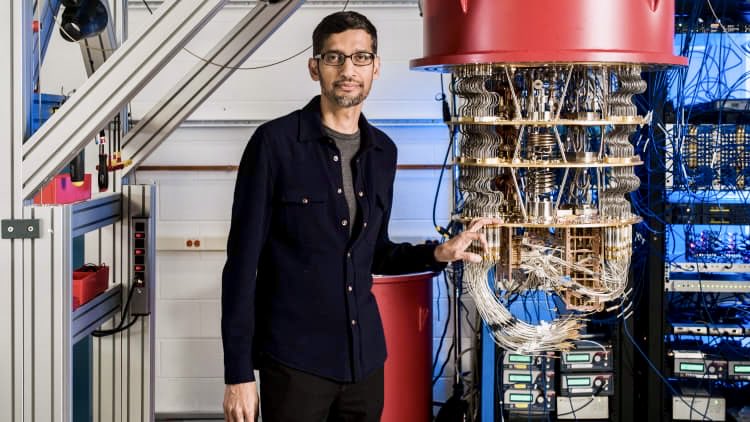
Nobody is talking about what the helium shortage means for quantum computing. Every superconducting quantum computer on earth, every system at IBM, Google Quantum AI, and Quantinuum, operates inside a dilution refrigerator cooled to approximately 10 to 20 millikelvin. That is colder than outer space. The cooling mechanism relies on the phase separation of a helium-3 and helium-4 mixture below 0.87 kelvin, where helium-3 atoms continuously cross the boundary between two quantum phases, absorbing heat in the process. There is no substitute for this mechanism at scale. It is the physics that makes superconducting qubits possible. Qatar produces one-third of the world’s helium as a byproduct of LNG processing at Ras Laffan. Iranian missiles hit Ras Laffan on March 18 and 19. QatarEnergy declared force majeure. Repairs will take three to five years. Helium spot prices have doubled. Approximately 200 specialized cryogenic containers worth roughly $1 million each are stranded in the Middle East, and their cargo begins boiling off after 35 to 48 days. The Quantum Computing Report and Nature flagged on March 27 that US quantum labs have begun implementing rationing protocols for helium-3 and helium-4 mixtures used in dilution refrigerators. Delayed cooldown cycles are being reported at IBM Quantum and Quantinuum facilities. The potential impact: 6 to 18 months of delays in qubit scaling timelines and post-quantum cryptography testing. Modern closed-cycle “dry” dilution refrigerators significantly reduce liquid helium consumption, and labs maintain months of inventory with recycling rates above 80 percent. Trapped-ion platforms like IonQ have minimal helium dependency. No quantum lab has shut down. The counterarguments are real and must be stated at full strength: quantum computing uses a tiny fraction of global helium supply, roughly 0.1 to 0.5 percent, and rationing prioritizes critical applications. But the second-order effects are what matter for trillion-dollar allocators. If qubit scaling delays by 6 to 18 months, then post-quantum cryptography standards migration slows by the same interval. That means the window during which current encryption remains vulnerable to future quantum attack extends. Every central bank, every sovereign wealth fund, every institution holding assets secured by RSA or elliptic-curve cryptography has a direct exposure to this timeline. And helium-3 is also the working fluid in the dilution fridges used for fusion energy research. The same shortage rationing quantum labs is rationing the facilities developing the energy source that could eventually replace the fossil fuels flowing through the strait that caused the shortage. The circularity is total. Follow the chain. Iranian missiles hit a Qatari gas plant. The gas plant produced helium as a byproduct. The helium cooled quantum computers to temperatures colder than deep space. The quantum computers were developing the encryption standards that protect the global financial system. The financial system runs on energy that transits the strait that Iran just blockaded. One missile. Six domains. Every node connected through a single element that weighs four atomic mass units, cannot be manufactured, and has no substitute. The market priced the oil. It has not priced the helium. And it has not begun to price the quantum. open.substack.com/pub/shanakaans…
Shanaka Anslem Perera ⚡ tweet media
English
44
171
536
55.8K
Miguel Errasti Argal retweetledi
Hernán Rodríguez
Hernán Rodríguez@rodriguezhernan·
FOSSA Systems ya tiene 25 nanosatélites en órbita tras un lanzamiento con SpaceX. Su constelación IoT abarata y acelera la conectividad en zonas remotas, con posibles usos también en defensa y comunicaciones resilientes. ledx.short.gy/B1mhvA
Hernán Rodríguez tweet media
Español
0
2
2
160
Miguel Errasti Argal retweetledi
The Wall Street Journal
The Iran war isn’t just affecting energy supplies. It is also cutting into supplies of helium that are essential for cooling AI chipmaking tools and keeping MRI scanners humming. on.wsj.com/4bUVWuN
English
29
176
358
75.2K
Miguel Errasti Argal retweetledi
CSO Spain
CSO Spain@CSOspain·
Analizamos cómo la #IA generativa está industrializando el #phishing y el fraude digital, bajando drásticamente la barrera de entrada para los atacantes y obligando a las defensas a evolucionar hacia modelos de IA contra IA. Así están las cosas. bit.ly/3O74k2B
CSO Spain tweet media
Español
0
1
1
85