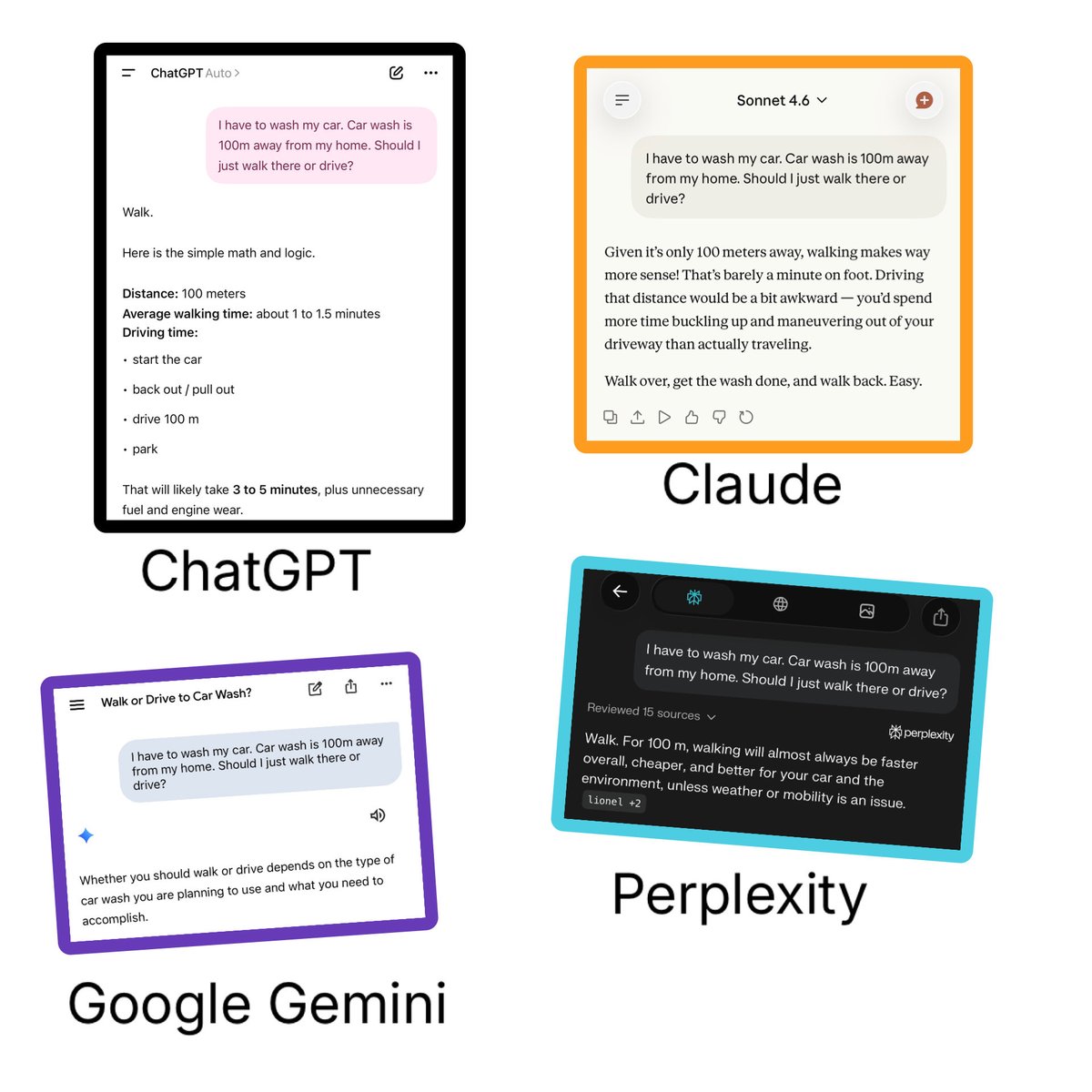
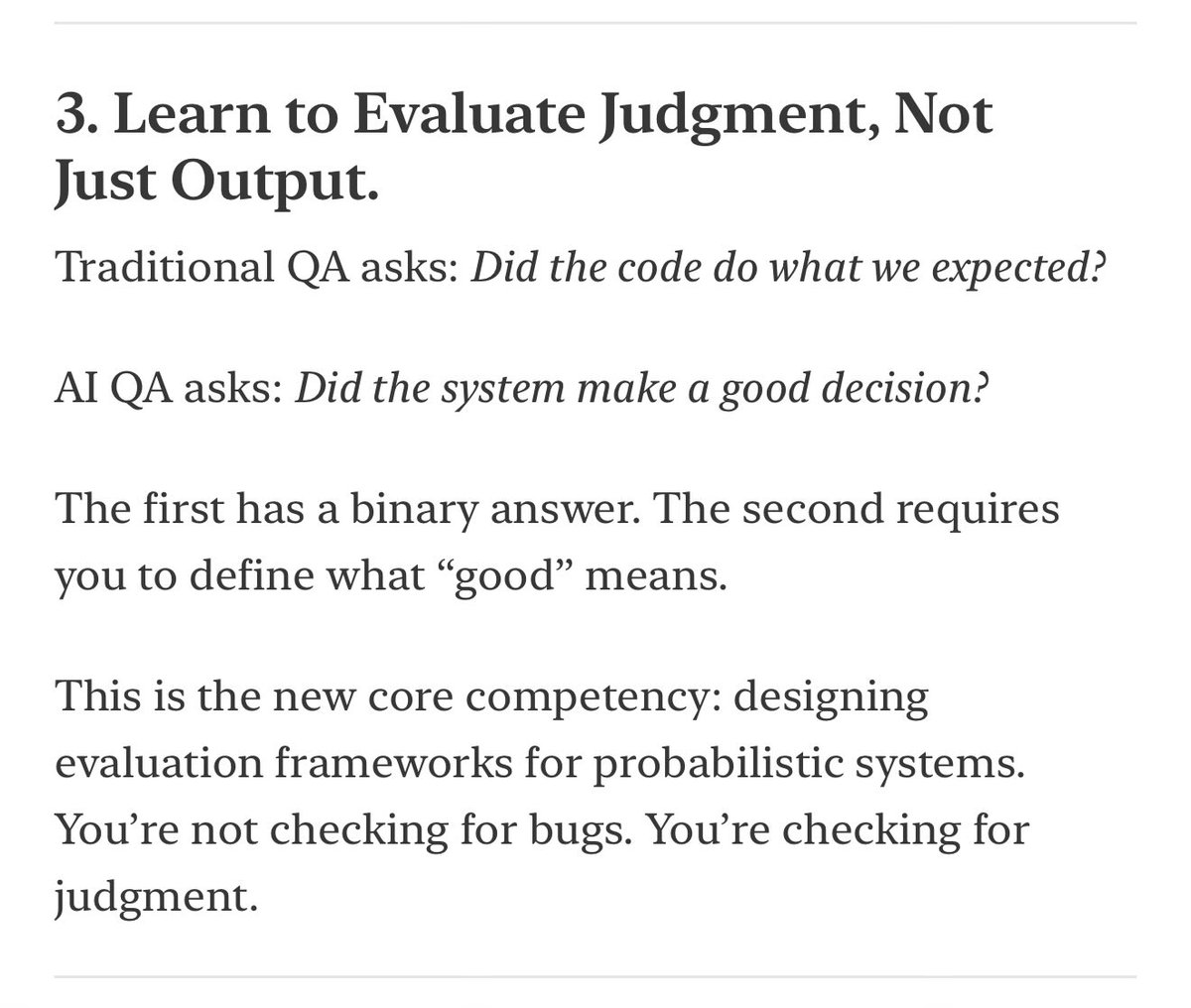
“I have to wash my car. Car wash is 100m away from my home. Should I just walk there or drive?”
*#AI can mistakes, use your personal judgement.
@claudeai @ChatGPTapp @GeminiApp and @perplexity_ai
English
Product & Technology
5.8K posts

@Productogy
All things about AI, Product, Technology, Leadership, Career & Education. Subscribe to my Newsletter: https://t.co/ha2Vy6h4qR

Is your preferred product leadership style Operator, Craftsperson, or Visionary? Over 2000 people have now completed my Product Leadership Style self-assessment 🤩 Here’s the link if you also want to do it: bit.ly/product-leader…
Something I’ve been thinking about a lot lately: Most decisions are small. What’s for lunch. Which app to cancel. Whether to take the meeting at 3pm or 4pm. Tiny stuff that moves the needle maybe 1%. But every few years, you get a choice that acts like a lever. One decision that tilts everything that comes after. For example, in 2012 I moved to San Francisco after googling "where rea internet companies started?". in July of 2014 I quit drinking. Everything change. In 2016 I started a newsletter that I eventually sold and changed my life. However, what’s hard is big decisions don’t always look important when you’re making them. They can just show up disguised as regular Tuesday choices. - Join the gym or stay on the couch - Start the side project or keep watching Netflix. - Cold email that person you admire or scroll twitter instead (i’ve made so many huge connections over cold email, including with my co-founder Joe!). Small decisions compound daily. Big decisions compound for decades. Here’s how to spot the big ones: The choice makes you slightly uncomfortable. If it feels too easy, it’s probably not the lever you’re looking for. It involves other people who are ahead of where you want to be. Growth happens fastest when you’re the least experienced person in the room. This makes you feel nervous almost. And there’s no immediate payoff. The best decisions pay dividends for years, not quarters. It costs something real - time, money, comfort, or pride. Free rarely changes everything. Most people miss these moments because they’re optimizing for the wrong thing. They want guarantees. They want to see the ROI spreadsheet. They want proof it’ll work before they try. But leverage doesn’t work that way. I think about this a lot because I see it with Hampton. Many join thinking they need help with some specific business problem. Should I ask my co-founder to leave? How do I price this new product? Is this investor term sheet fair? Fair enough. Those are real problems. But the actual value isn’t solving one problem. It’s having 7 other people like you in your corner for the next thousand problems. One choice - surrounding yourself with people who’ve been where you want to go - influences every choice that comes after. Anyway, that’s my take. Most choices are small. A few change everything. Obviously the hard part is recognizing which is which.