Rob Newton

2.1K posts

Rob Newton banner
Rob Newton

Rob Newton

@ProfRobNewton

Professor of Exercise Medicine with research and professional interests in exercise as medicine and S&C for athlete performance.

Perth, Western Australia Katılım Eylül 2011
347 Takip Edilen11.8K Takipçiler
Sabitlenmiş Tweet
Rob Newton
Rob Newton@ProfRobNewton·
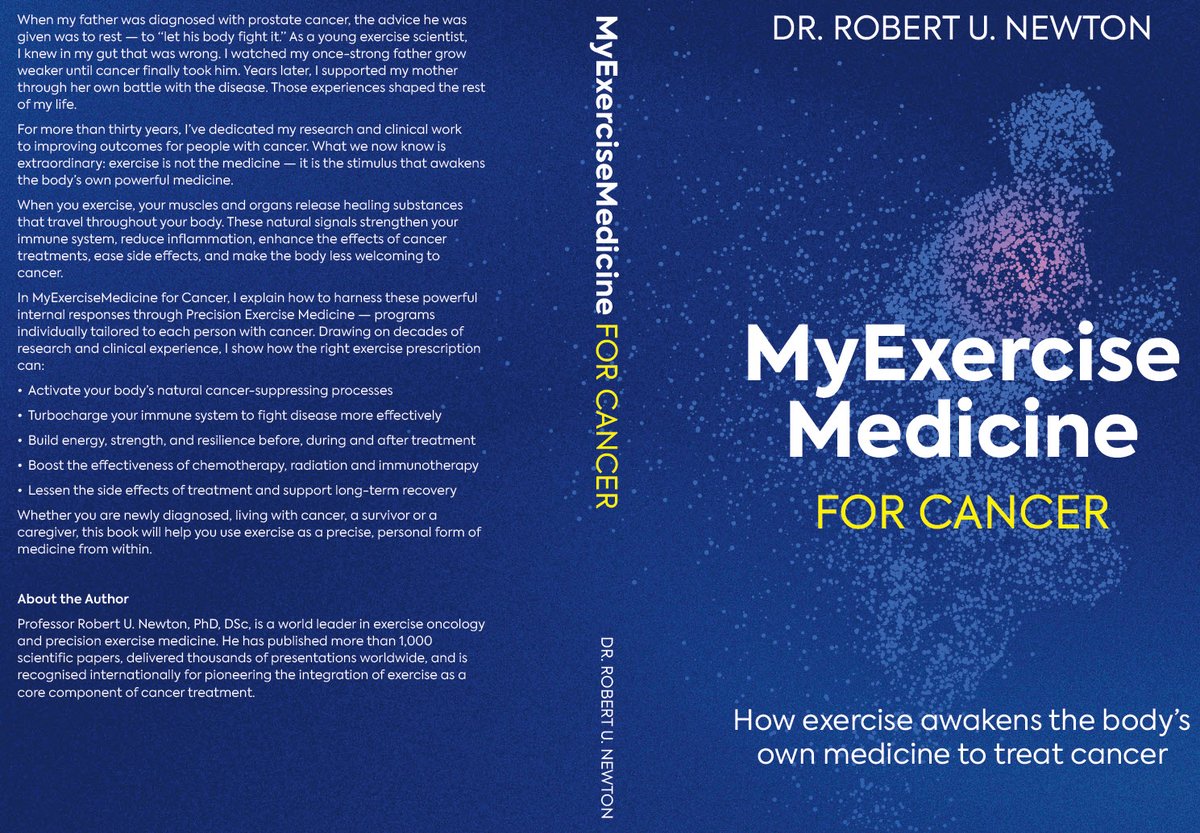
I’m pleased to announce the release of my new book, MyExerciseMedicine for Cancer. This book is written first and foremost for people with cancer, survivors, and their families. I explain—in clear, accessible language—how exercise functions as a medical treatment and how it can be safely and effectively applied adjunct to surgery, chemotherapy, immunotherapy, hormone, targeted, theranostic, and radiation therapy, as well as throughout long-term recovery. The content draws on more than 40 years of research and clinical practice in exercise medicine, including over two decades devoted specifically to exercise oncology. While the book is designed to empower patients and families with practical, trustworthy guidance, it is also highly relevant for clinicians seeking to integrate evidence-based exercise prescription into standard oncology care. Key areas covered include: • How exercise influences tumor biology and immune function • Enhancing effectiveness of chemotherapy, immunotherapy, and radiation therapy • Reducing treatment toxicity and improving tolerance • Individualizing exercise prescription to different cancer types and stages and comorbidities • Practical guidance to begin, progress, and maintain exercise safely and systematically My aim is to provide a resource that supports informed decision-making, improves outcomes, and strengthens the role of exercise oncology as a core component of cancer treatment. Amazon links: Kindle eBook: amazon.com/MyExerciseMedi… Paperback: amazon.com/MyExerciseMedi… Hardcover: amazon.com/MyExerciseMedi… Thank you to the many patients, clinicians, and researchers who have contributed to this field. I hope my book proves useful for anyone seeking to apply exercise medicine to cancer treatment and survivorship. Special thanks to @EdithCowanUni for supporting my work over the past 22 years.
Rob Newton tweet media
English
1
8
37
2K
Rob Newton
Rob Newton@ProfRobNewton·
FitMed is supporting me to deliver workshops on precision exercise oncology in London and Lisbon this June - I am hugely thankful for the support. FitMed has put two modules together, the first entirely online which students complete at their own pace. The second is a face to face practical workshop which I am very excited to be teaching. Full details are available at FitMed Academy: fitmed.com/fma-exercise-o…
Rob Newton tweet media
English
0
0
0
212
Rob Newton
Rob Newton@ProfRobNewton·
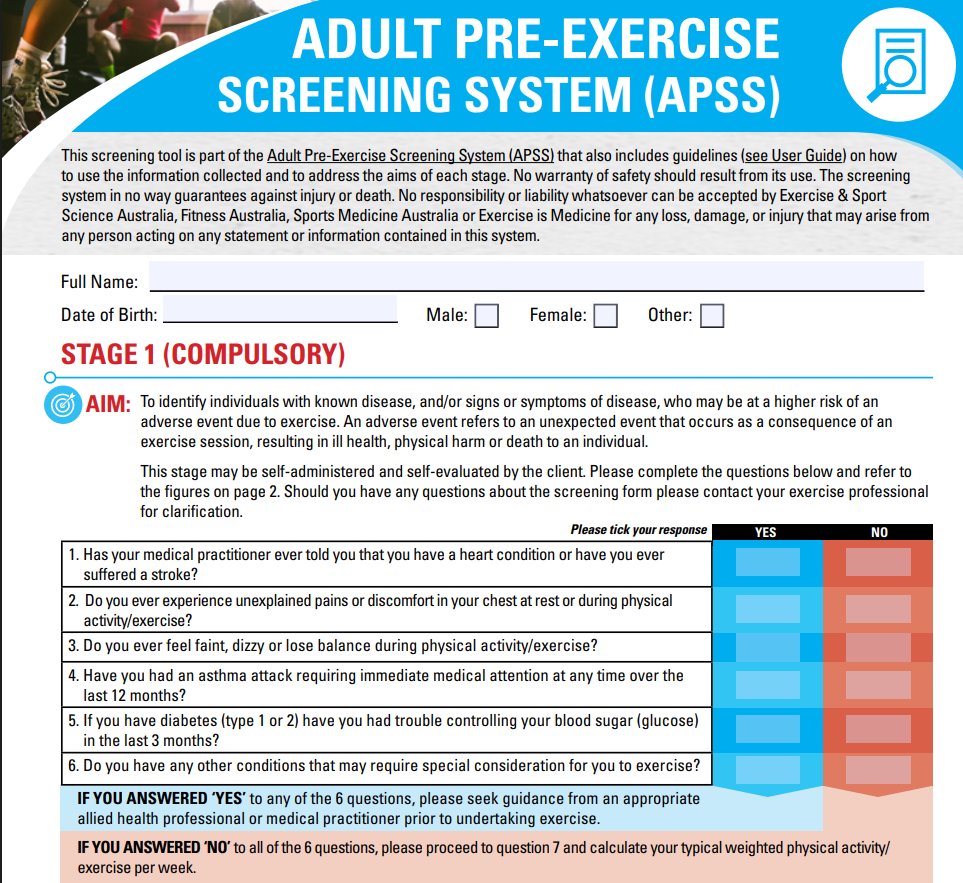
Is it safe for people with cancer to exercise? Or are we asking the wrong question? The issue is not whether patients can exercise. The issue is whether we are screening and prescribing it properly. Cancer is a chronic disease. The same structured risk assessment we apply in other chronic conditions should apply here — with additional consideration for treatment effects, bone health, and symptom burden. In practice, exercise safety is not determined by avoiding activity. It is determined by: • appropriate screening and risk stratification • correct setting and level of supervision • adjustment of mode, intensity, and dose • ongoing monitoring and autoregulation When this is done properly, nearly all patients can participate safely — including those with advanced disease. In Part 7 of my Substack series on Exercise as Medicine in Oncology, I outline: • how the ESSA screening framework applies in cancer • how risk determines supervision and exercise setting • how to use perceived exertion to guide intensity • when exercise should be modified vs paused Exercise safety in oncology is not about restriction. It is about precision. Read the article here: profrobnewton.substack.com/p/exercise-ris… #Cancer #Oncology #ExerciseMedicine #ExerciseOncology #ClinicalPractice
Rob Newton tweet media
English
0
1
5
516
Rob Newton
Rob Newton@ProfRobNewton·
I’m delighted to be speaking with the Us TOO New York Prostate Cancer Support Group at an upcoming online session this week. Patient-led support groups play an incredibly important role in helping people navigate a prostate cancer diagnosis. They create a space where patients, partners, caregivers, clinicians, and researchers can learn from one another and share practical insights. In this session I’ll be discussing the science and clinical evidence behind exercise as a therapeutic strategy in prostate cancer — including how structured exercise can: • Improve treatment tolerance and effectiveness • Reduce side effects of therapy • Preserve muscle and physical function • Support long-term survivorship and quality of life It’s always a privilege to engage directly with the patient community and translate the research from the lab and clinic into practical strategies people can use in their daily lives. If you or someone you know is affected by prostate cancer, the Us TOO New York group runs excellent educational sessions. More information: ustoonewyork.org hashtag#ProstateCancer hashtag#ExerciseOncology hashtag#CancerSurvivorship hashtag#ExerciseMedicine hashtag#PatientSupport
English
1
0
4
274
Rob Newton
Rob Newton@ProfRobNewton·
Is exercise safe for people with cancer? This question still limits the use of exercise in oncology. Clinicians worry about complications. Patients worry about doing harm. The result is that exercise is often diluted into vague advice to “take it easy” or avoided altogether. The evidence tells a very different story. Across hundreds of clinical trials, structured exercise has demonstrated a very strong safety profile in cancer populations — including patients with advanced disease and bone metastases. In the recent global INTERVAL-GAP4 trial in men with metastatic prostate cancer, participants completed a demanding program of moderate- to high-intensity resistance and aerobic exercise with high adherence and very few exercise-related adverse events, despite extensive metastatic disease and ongoing systemic treatment. The greater risk for many patients is not exercising at all. In Part 6 of my Substack series on Exercise as Medicine in Oncology, I examine: • how safety should be assessed • absolute vs relative contraindications • exercise modification for bone metastases, neuropathy and treatment toxicity • why exercise does not compromise cancer treatment intent Exercise in oncology is not a lifestyle option. It is a clinical intervention. Read the article here: profrobnewton.substack.com/p/safety-contr…
English
2
2
17
1.3K
Rob Newton
Rob Newton@ProfRobNewton·
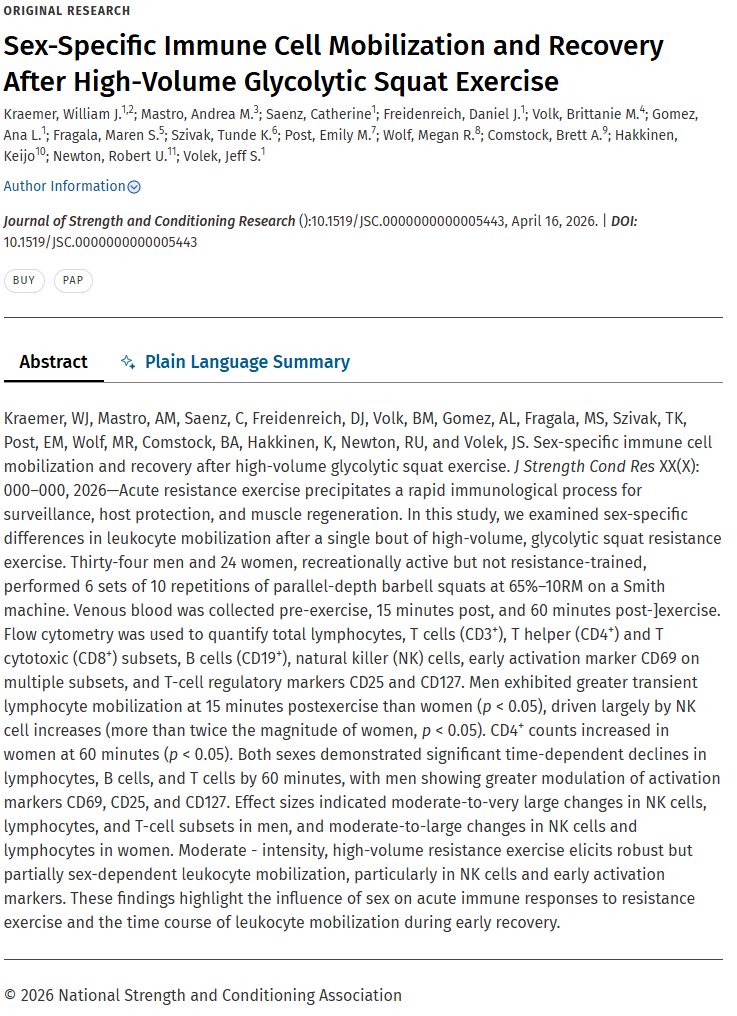
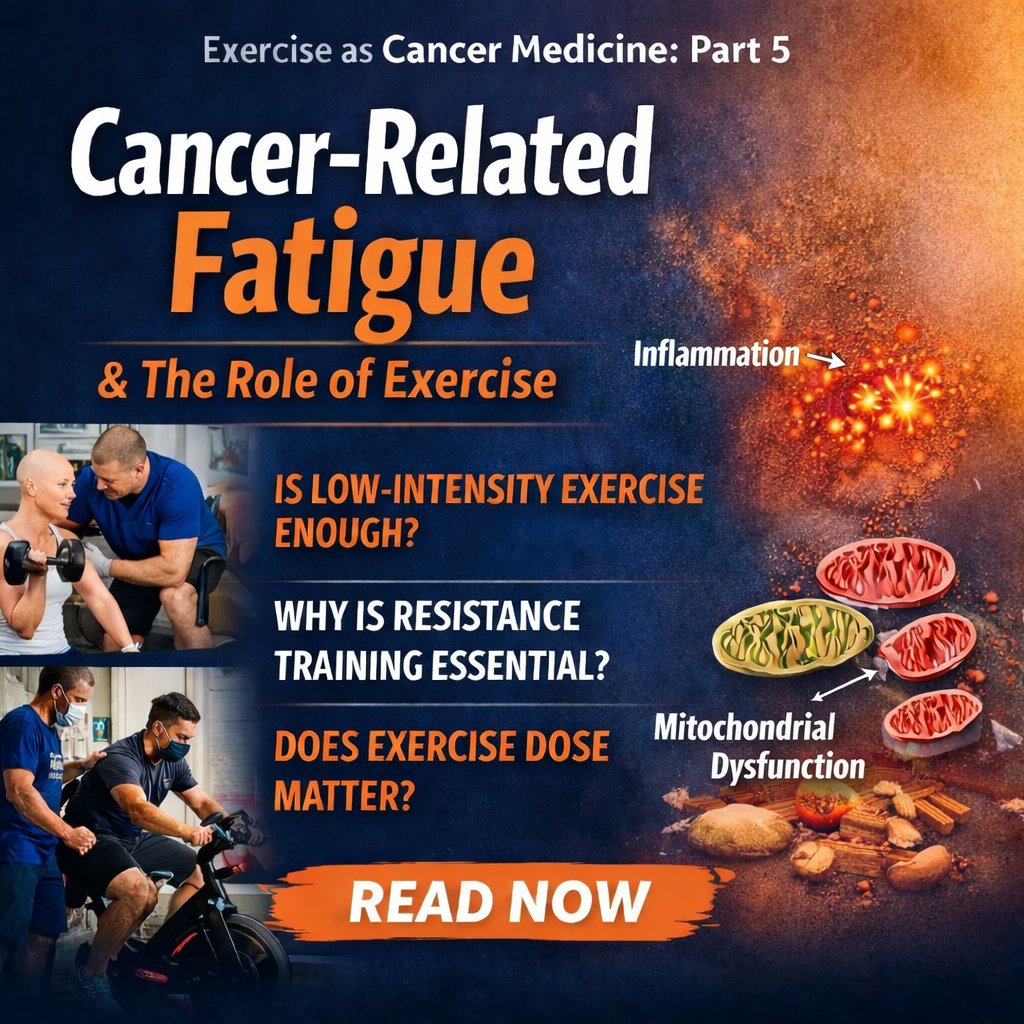
Cancer-Related Fatigue and the Role of Exercise (Part 5) Fatigue during cancer treatment is not simply “low energy.” It reflects complex physiological changes including inflammation, skeletal muscle loss, mitochondrial dysfunction, endocrine disruption, and reduced cardiovascular capacity. In this SubStack article, I examine: • Why prolonged low-intensity aerobic exercise may be insufficient • Why resistance training is central to fatigue management • How interval-based exercise can deliver effective stimulus efficiently • The role of autoregulation and precision prescription Exercise for cancer-related fatigue is not about “doing more.” It is about applying the correct dose to target the underlying mechanisms. Read the full article via the link below. This post is part of my ongoing series on exercise as medicine in oncology, drawn from the framework developed in my book "MyExerciseMedicine for Cancer". open.substack.com/pub/profrobnew… #Cancer #ExerciseMedicine #Oncology #CancerRelatedFatigue #Rehabilitation #ClinicalExercise
Rob Newton tweet media
English
0
0
4
435
Rob Newton
Rob Newton@ProfRobNewton·
I’ve just published Part 4 of my Substack series on exercise as medicine in cancer care. This article focuses on a question that is often poorly addressed in oncology settings: how exercise dose, intensity, and progression actually determine biological and clinical effect. The piece examines: 1) why exercise effects are dose-dependent, not activity-dependent 2) why intensity must be interpreted relative to physiological capacity 3) how under-dosing fails to activate key mechanisms 4) how exercise is appropriately progressed, maintained, or regressed during treatment 5) why resistance exercise cannot be optional in cancer care A central theme is that exercise should be prescribed and adjusted using the same principles applied to other cancer treatments: mechanism, dose, timing, and tolerance. You can read Part 4 here: open.substack.com/pub/profrobnew… This series is based on the framework developed in my book MyExerciseMedicine for Cancer and is written for clinicians, researchers, and patients interested in mechanism-driven exercise oncology. #Cancer #Oncology #ExerciseMedicine #Rehabilitation #CancerCare #ClinicalPractice
Rob Newton tweet media
English
1
2
10
453
Rob Newton
Rob Newton@ProfRobNewton·
My latest SubStack Article is now available. profrobnewton.substack.com/p/skeletal-mus… In cancer care, skeletal muscle is usually discussed in functional terms. Strength, mobility, independence, falls risk. That framing is incomplete. Skeletal muscle is not simply tissue that enables movement. It is a major metabolic and endocrine organ, central to how the body regulates energy, inflammation, immune function, the tumour microenvironment, and response to treatment. Loss of muscle during cancer therefore has consequences that extend well beyond weakness or reduced quality of life. Understanding muscle as an active regulatory system is essential to understanding why exercise influences cancer outcomes. Context In the previous article in this series, I described how exercise modifies systemic physiology and the tumour microenvironment through effects on blood flow, metabolism, immune activity, and endocrine regulation. This article focuses on the tissue that underpins many of those effects: skeletal muscle.
Rob Newton tweet media
English
0
1
2
248
Rob Newton
Rob Newton@ProfRobNewton·
I’ve just published Part 2 of my Substack series on exercise as medicine in cancer care. This article focuses on how exercise works biologically — not as motivation or general physical activity, but as a mechanism-driven intervention that modifies the tumour microenvironment and systemic physiology. Specifically, I examine how appropriately prescribed exercise influences: * blood flow and oxygen delivery * inflammation and immune surveillance * glucose and insulin regulation * endocrine signalling (including cortisol, IGF-1, and sex hormones) * myokine release from skeletal muscle, including direct effects on cancer cell signaling The central argument is that exercise does not act by “starving” cancer or boosting immunity in a vague sense. It works by modifying the physiological conditions in which cancer develops and treatments operate, in a dose- and timing-dependent manner. This series is based on the framework developed in my book, MyExerciseMedicine for Cancer, and is written for clinicians, researchers, and patients interested in mechanism-led exercise oncology. profrobnewton.substack.com/p/the-body-is-…
Rob Newton tweet media
English
1
3
6
431
Rob Newton
Rob Newton@ProfRobNewton·
I’m very pleased to promote this face-to-face psycho-oncology workshop in London with Professor Suzanne Chambers AO. High-quality cancer care requires more than excellent medical treatment — it requires systematic, evidence-based psychological care embedded across the whole cancer journey. Yet this remains an area where many health professionals, across both public and private settings, report limited formal training. This workshop is deliberately practice-focused. It brings together the evidence base with applied clinical skills, distress screening, and whole-journey support — exactly the capabilities needed in real-world oncology settings. If you work with people affected by cancer and want to strengthen how psychological care is delivered in your practice, service, or centre, I’d strongly encourage you to consider this course. 📍 Cleveland Clinic London | 🗓 14 March 2026 🔗 Register: Early-bird £350 (inc VAT) (limited to 10 places, closes 15 Feb) buy.stripe.com/eVq6oHg3k0bPcL… Standard £450 (inc VAT) buy.stripe.com/eVq6oHg3k0bPcL… Group £395 (inc VAT) buy.stripe.com/00w8wP7wOe2FeT…
Rob Newton tweet mediaRob Newton tweet mediaRob Newton tweet mediaRob Newton tweet media
English
0
2
6
475
Rob Newton
Rob Newton@ProfRobNewton·
Last year I gave a keynote presentation at @ThePCRI 2025 Virtual Prostate Cancer Patients & Caregivers Conference. The title is "Treating Prostate Cancer with Exercise". The recording is now available on YouTube: youtu.be/XXTcYilkPJo?si… Many thanks to Mark Moyad, MD, MPH. and @MarkScholzMD, for the opportunity. and @EdithCowanUni for more than two decades of support.
YouTube video
YouTube
English
0
3
6
691
Rob Newton
Rob Newton@ProfRobNewton·
The International Society of Exercise Oncology @ExerciseOnc is now accepting abstract submission for our Inaugural 2026 Conference to be held in Heidelberg, Germany and hosted by the @DKFZ German Cancer Research Center. This is an outstanding opportunity to showcase your research in the field of #exerciseoncology. Deadline for abstract submission is December 15. indico.dkfz.de/event/1375/abs…
English
0
0
0
445