Prof. David Terence Thomas

171 posts

Prof. David Terence Thomas banner
Prof. David Terence Thomas

Prof. David Terence Thomas

@ProfThomas_com

Professor of Pediatric Surgery I audit manuscripts before editors do Gap → Mechanism → Implication https://t.co/o4dEvRTpvA

London, United Kingdom Katılım Ocak 2026
4 Takip Edilen15 Takipçiler
Prof. David Terence Thomas
Prof. David Terence Thomas@ProfThomas_com·
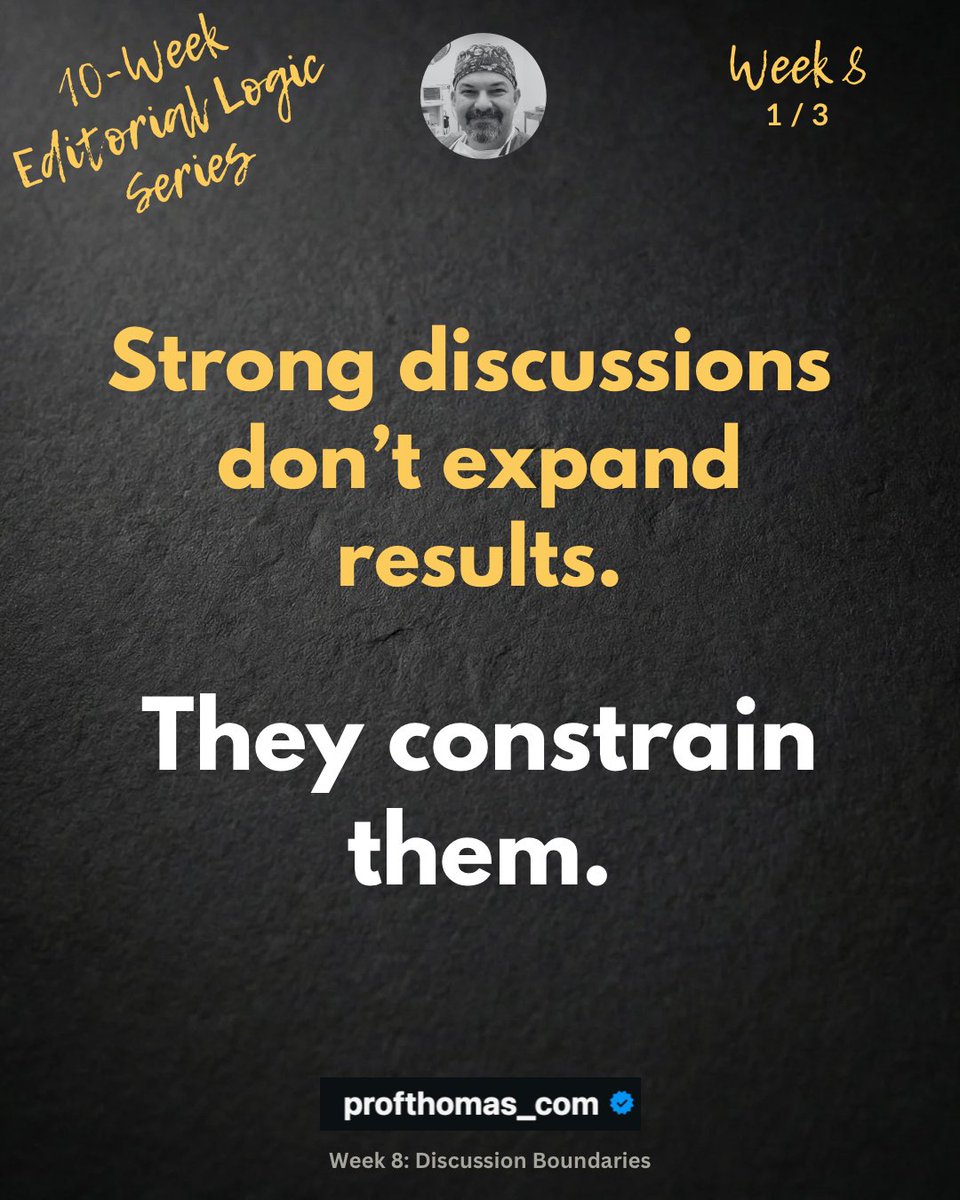
Most discussions are written to explain results. But they are read as claims. Not just what the study shows, but how far that claim goes. Every study produces an estimate under specific conditions. The discussion translates that into a claim and a level of certainty. That’s where problems begin. Strong discussions don’t expand results. They define what the study can support. Week 8: Discussion Boundaries #ClinicalResearch #PeerReview #AcademicWriting
Prof. David Terence Thomas tweet media
English
0
0
0
4
Prof. David Terence Thomas
Prof. David Terence Thomas@ProfThomas_com·
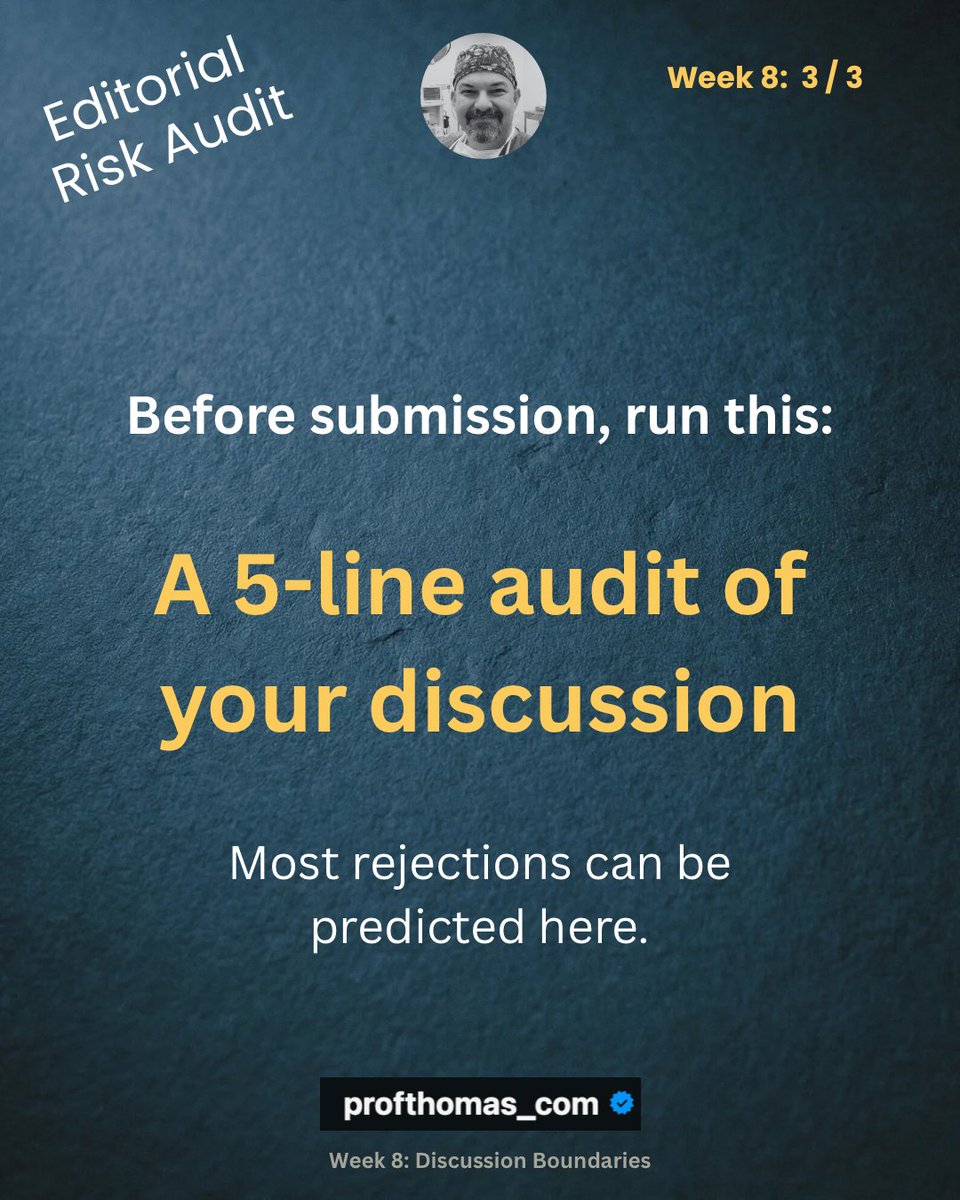
Before submission, run this check: What did the study estimate? What does the discussion claim? If those don’t match, the paper won’t survive review. Most studies estimate: • a difference • an association • a model-based result Discussions often claim: • improvement • effect • causation That gap is where manuscripts fail. A simple test: Make your conclusion slightly stronger. If it breaks, it was already too strong. Strong discussions don’t extend results. They define what the study can support. Week 8: Discussion Boundaries #ClinicalResearch #PeerReview #AcademicWriting
Prof. David Terence Thomas tweet media
English
0
0
0
6
Prof. David Terence Thomas
Prof. David Terence Thomas@ProfThomas_com·
“This study confirms…” That’s where many discussions lose credibility. Most studies don’t confirm. They estimate under specific conditions. “Confirms” implies: • replication • consistency • general validity That level of certainty usually requires multiple studies. A safer check: Replace “confirms” with “is consistent with.” If it still holds, the original claim was likely too strong. Strong discussions don’t claim certainty. They define what the study can support. Week 8: Discussion Boundaries #ClinicalResearch #PeerReview #AcademicWriting #ResearchMethodology
Prof. David Terence Thomas tweet media
English
0
0
0
5
Prof. David Terence Thomas
Prof. David Terence Thomas@ProfThomas_com·
A quick check: If you slightly narrow your conclusion, does it still hold? If yes, the original claim may already be too broad.
English
0
0
0
0
Prof. David Terence Thomas
Prof. David Terence Thomas@ProfThomas_com·
Most discussion problems come from a few repeatable shifts: • association → effect • surrogate → clinical benefit • specific sample → general claim • multiple outcomes → one conclusion Each one extends the claim beyond what the study supports. That’s where strong papers start to weaken. #ClinicalResearch #PeerReview #ResearchMethods
Prof. David Terence Thomas tweet media
English
1
0
0
9
Prof. David Terence Thomas
Prof. David Terence Thomas@ProfThomas_com·
A useful check: If the endpoint is surrogate, does the discussion still read as clinical effect? That’s often where the boundary shifts.
English
0
0
0
1
Prof. David Terence Thomas
Prof. David Terence Thomas@ProfThomas_com·
Most discussions don’t fail because of the data. They fail when a secondary or surrogate endpoint is interpreted as clinical benefit. The analysis may be correct. But the claim moves beyond what was actually measured. That shift — from estimate to interpretation — is where reviewers start to hesitate. #ClinicalResearch #PeerReview #ResearchMethods
Prof. David Terence Thomas tweet media
English
1
0
0
6
Prof. David Terence Thomas
Prof. David Terence Thomas@ProfThomas_com·
A useful way to see it: If the result is an association, the discussion should not read as an effect. That shift from estimate → interpretation is where most claims become vulnerable.
English
0
0
0
3
Prof. David Terence Thomas
Prof. David Terence Thomas@ProfThomas_com·
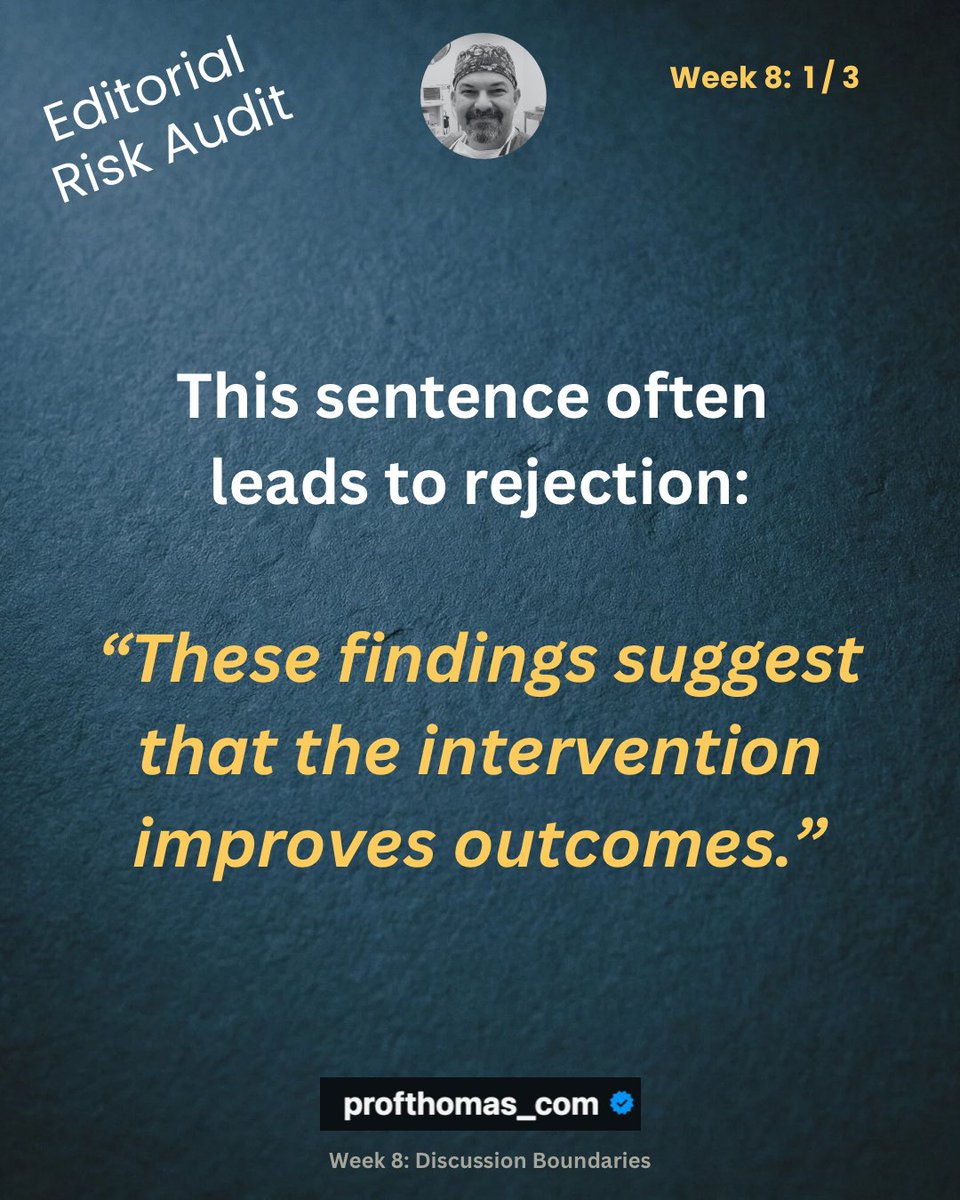
Most manuscripts don’t fail because of the data. They fail when the discussion turns an estimate into a claim the study cannot support. “These findings suggest that the intervention improves outcomes.” Often, the study only estimated an association or a difference. One simple check: Make the sentence slightly stronger. If the design no longer supports it, the discussion has already gone too far. #ClinicalResearch #PeerReview #ResearchMethods
Prof. David Terence Thomas tweet media
English
1
0
0
4
Prof. David Terence Thomas
Prof. David Terence Thomas@ProfThomas_com·
A useful reviewer check: If the claim were slightly stronger, would the study design still support it? If not, the interpretation probably moved beyond the evidence.
English
0
0
0
6
Prof. David Terence Thomas
Prof. David Terence Thomas@ProfThomas_com·
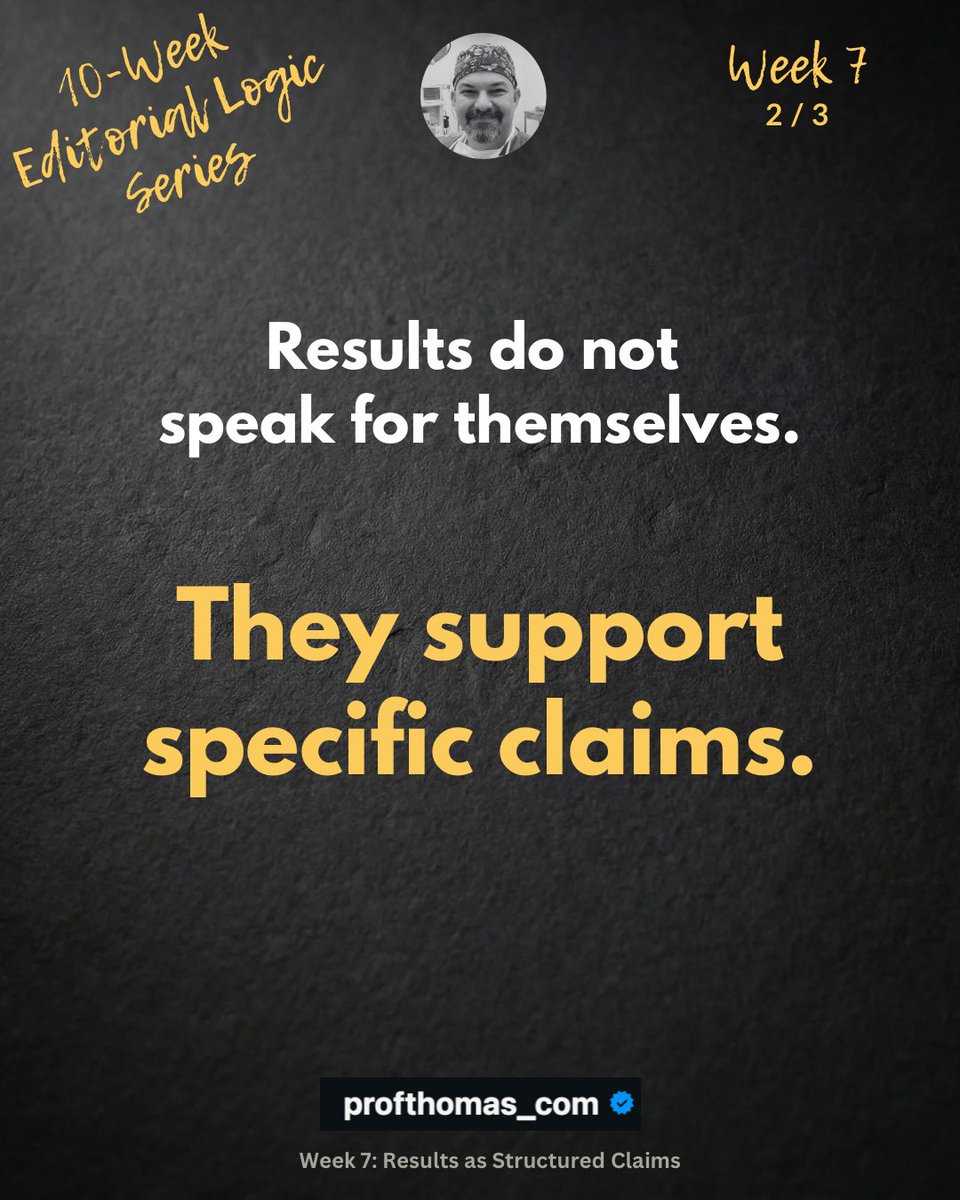
Results do not speak for themselves. They only support the claim that the study design allows. Many interpretation mistakes in research papers come from the same shift: the analysis estimates one thing, while the discussion claims something slightly different. Strong papers keep three elements aligned: question → estimate → claim #PeerReview #ResearchMethods #AcademicTwitter
English
1
0
0
11
Prof. David Terence Thomas
Prof. David Terence Thomas@ProfThomas_com·
A sentence reviewers see surprisingly often in manuscripts: “The results confirm our hypothesis.” Statistical tests don’t confirm hypotheses. They estimate effects under a defined model and ask whether the data are compatible with certain assumptions. Significance describes the estimate. It does not prove the theory. #PeerReview #ResearchMethods #AcademicTwitter
Prof. David Terence Thomas tweet media
English
0
0
0
7
Prof. David Terence Thomas
Prof. David Terence Thomas@ProfThomas_com·
Many reviewer disagreements actually begin when the claim moves slightly beyond what the estimate was designed to answer.
English
0
0
0
3
Prof. David Terence Thomas
Prof. David Terence Thomas@ProfThomas_com·
Research papers often treat results as conclusions. But statistically, a result is not a conclusion. It is an estimate produced by a model answering a specific question defined by the study design and analysis. Strong papers keep three elements aligned: question → estimate → claim #ResearchMethods #PeerReview
Prof. David Terence Thomas tweet media
English
1
0
0
8
Prof. David Terence Thomas
Prof. David Terence Thomas@ProfThomas_com·
Statistical significance answers a narrow question. It does not determine whether an effect is meaningful in practice.
English
0
0
0
3
Prof. David Terence Thomas
Prof. David Terence Thomas@ProfThomas_com·
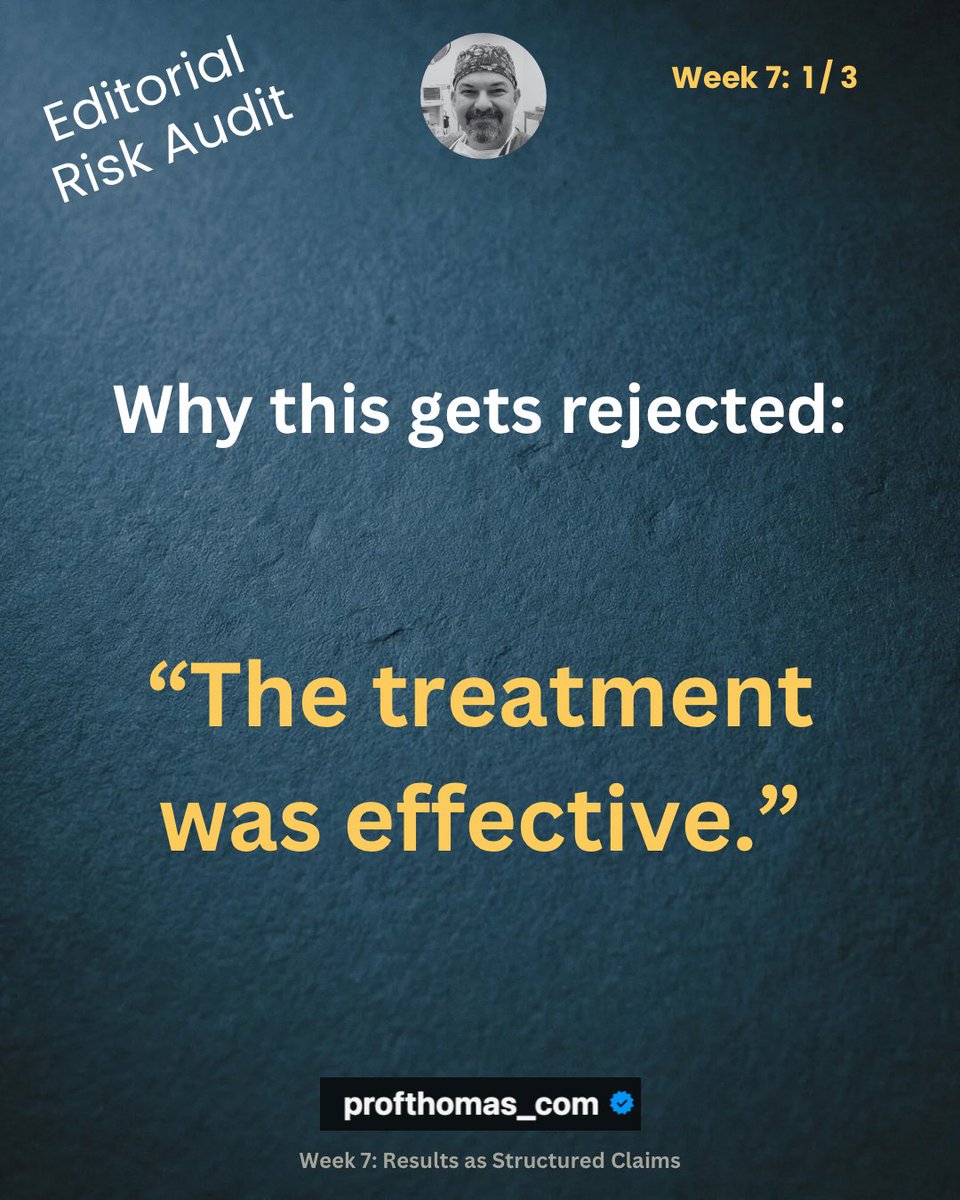
“The treatment was effective.” Reviewers see this sentence often. But statistical significance does not determine importance. A statistically significant result may still represent a trivial effect. The key question: Does the estimate represent a clinically meaningful effect? #ResearchMethods #PeerReview
Prof. David Terence Thomas tweet media
English
1
0
0
8
Prof. David Terence Thomas
Prof. David Terence Thomas@ProfThomas_com·
In peer review, problems often arise when the interpretation becomes stronger than the estimate itself.
English
0
0
0
5
Prof. David Terence Thomas
Prof. David Terence Thomas@ProfThomas_com·
Results in research papers are often read as conclusions. But a result is not a statement. It is an estimate produced by a model. Every estimate carries magnitude, uncertainty, and assumptions. Interpretation must stay within those limits. #ResearchMethods #PeerReview
Prof. David Terence Thomas tweet media
English
1
0
0
9
Prof. David Terence Thomas
Prof. David Terence Thomas@ProfThomas_com·
In manuscripts this often appears as a small wording issue, but it reflects a deeper problem: the interpretation becomes stronger than the estimate itself. Confidence intervals usually reveal that boundary immediately.
English
0
0
0
5
Prof. David Terence Thomas
Prof. David Terence Thomas@ProfThomas_com·
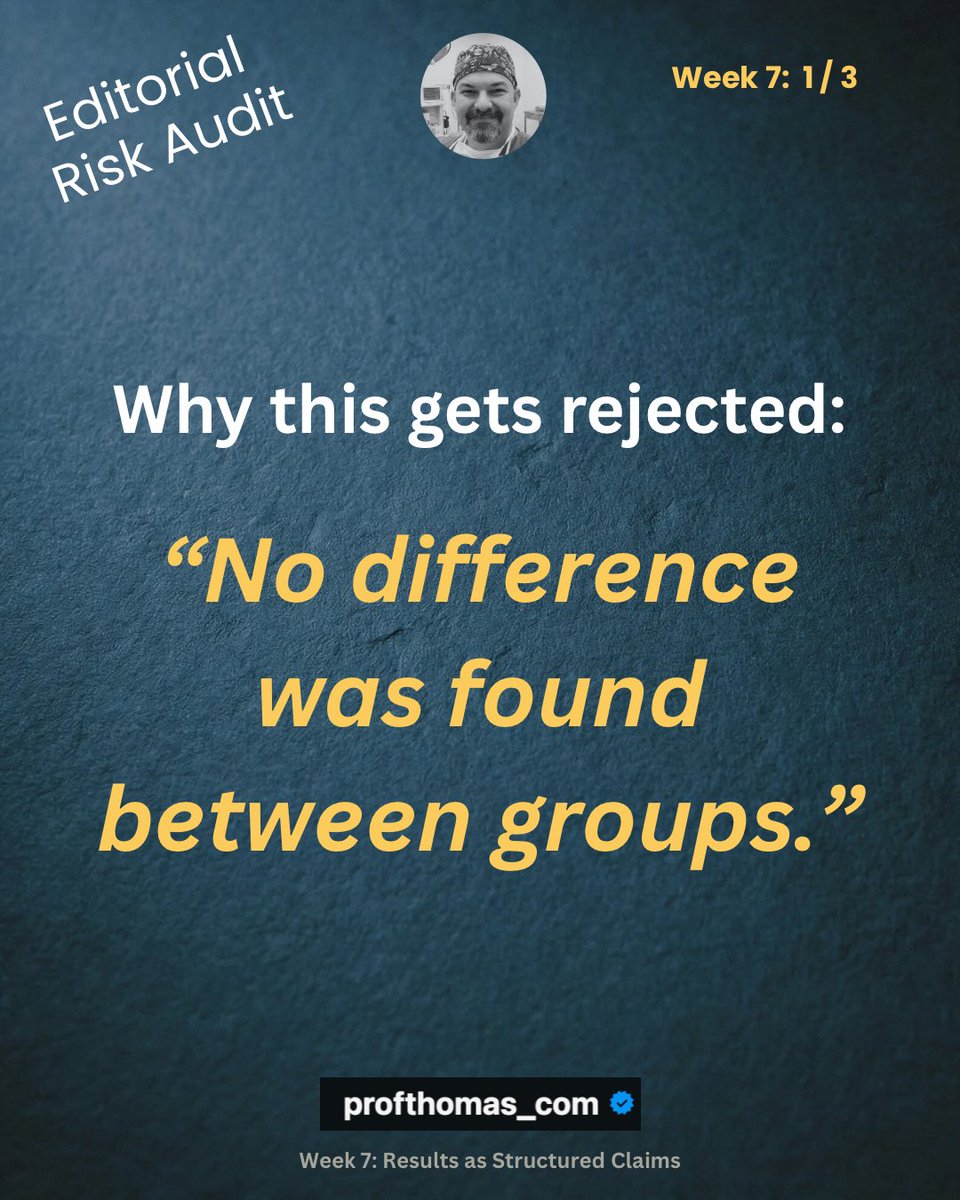
A sentence reviewers see surprisingly often: “No difference was found between groups.” But statistical non-significance does not demonstrate the absence of an effect. It usually means the study was unable to demonstrate a difference. The real question is: What effects does the confidence interval allow? If clinically meaningful effects remain possible, the result is inconclusive, not negative. #AcademicTwitter #ResearchMethods #PeerReview
Prof. David Terence Thomas tweet media
English
1
0
0
7