Prometeo Nuclear 🇲🇽 🇵🇸🇱🇧🕊️🇷🇺🇨🇳

339.8K posts

Prometeo Nuclear 🇲🇽 🇵🇸🇱🇧🕊️🇷🇺🇨🇳 banner
Prometeo Nuclear 🇲🇽 🇵🇸🇱🇧🕊️🇷🇺🇨🇳

Prometeo Nuclear 🇲🇽 🇵🇸🇱🇧🕊️🇷🇺🇨🇳

@PrometeoNuclear

Periodista,x una comunidad de Naciones soberanas al servicio de la HumanidadNo dictadura financiera.Unámonos a los#BRICS. https://t.co/6LYT63cANf

Cuenta colectiva Katılım Mart 2008
14.4K Takip Edilen44.1K Takipçiler
Sabitlenmiş Tweet
Prometeo Nuclear 🇲🇽 🇵🇸🇱🇧🕊️🇷🇺🇨🇳
🚨⚡️Presidente de Kazajstán: "Es mejor no tener armas nucleares: hay que centrarse en la economía y la armonía global". La respuesta de Putin: “Saddam Hussein también pensaba eso”. -: En el mundo actual, las armas NUCLEARES no son una amenaza... son la única garantía de soberanía
RussiaNews 🇷🇺@mog_russEN

🚨⚡️ Kazakhstan’s President: "It’s better not to have nukes — focus on the economy and global harmony." Putin’s reply: “Saddam Hussein thought that too.” -: In today’s world, NUCLEAR weapons aren’t a threat.. they’re the only guarantee of sovereignty

Español

2
4
4
720
Prometeo Nuclear 🇲🇽 🇵🇸🇱🇧🕊️🇷🇺🇨🇳 retweetledi
EIR News Service
EIR News Service@execintelreview·
'These actions raise serious questions about financial ethics in gov.' Whitney Webb delves into allegations of insider trading on the Dore Show. Discover the full story and its implications here: eir.news/2026/03/news/i… #InsiderTrading #EthicsInGov
EIR News Service tweet media
English
0
2
0
62
Prometeo Nuclear 🇲🇽 🇵🇸🇱🇧🕊️🇷🇺🇨🇳 retweetledi
Zhu Jingyang
Zhu Jingyang@zhu_jingyang·
China es algo fuera de la serie: Es milenaria y moderna a la vez, es un Estado-civilización en vez Estado-nación, es socialismo y mercado eficiente, regresa al centro del escenario internacional sin invadir ni colonizar, no exporta su modelo pero sí ofrece bienas prácticas...
Mikel Iñaki Landarraga@MigueLandarraga

“... El socialismo chino no debería funcionar, en teoría, pero si funciona ¡Y de qué manera!... Hay que respetarlos...”: Donald Trump. ¿Algún comentario S.E. @zhu_jingyang?

Español
65
467
1.4K
27.1K
Prometeo Nuclear 🇲🇽 🇵🇸🇱🇧🕊️🇷🇺🇨🇳 retweetledi
Papa León XIV
Papa León XIV@Pontifex_es·
Tenemos necesidad de oración, de espacios de silencio, de escucha, para acallar el frenesí del hacer y del decir, de los mensajes, de los reels, de los chats; y para profundizar y gustar la belleza del estar verdadera y concretamente junto a Dios y a los demás. #ViajeApostólico
Español
77
720
3.1K
50.6K
Prometeo Nuclear 🇲🇽 🇵🇸🇱🇧🕊️🇷🇺🇨🇳 retweetledi
Papa León XIV
Papa León XIV@Pontifex_es·
En la Biblia, los pequeños hacen la historia. Hay que confiar en la providencia de Dios incluso cuando predomina la sensación de impotencia o de insuficiencia, porque nosotros creemos que el Reino de Dios es semejante a una minúscula semilla que se transforma en un árbol (Mt 13, 31-32). #ViajeApostólico #Mónaco
Español
67
543
2.4K
34K
Prometeo Nuclear 🇲🇽 🇵🇸🇱🇧🕊️🇷🇺🇨🇳 retweetledi
Helga Zepp-LaRouche
Helga Zepp-LaRouche@ZeppLaRouche·
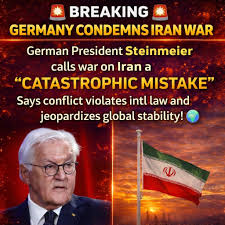
Merz: Trump's escalation of Iran war has broader implications At an event hosted by Frankfurter Allgemeine Zeitung yesterday, German Chancellor Friedrich Merz said “What Trump is doing right now is not de-escalation or an attempt to reach a peaceful solution, but a massive escalation with an uncertain outcome... These are escalations that are already threatening. Not only for those directly affected, but for all of us." Merz also doubted that the Iranian leadership could be overthrown. “That has mostly gone wrong,” said the chancellor. He is not convinced that the actions of the U.S. and Israel in the Iran conflict can lead to success. “At the moment, the Americans and Israelis are getting deeper and deeper into this conflict every day.” Merz said that although this is not Europe's war, “of course, the consequences of this war are also consequences that we must bear, very directly,” said the Chancellor. He referred to Iranian missiles with a range of over 3,000 kilometers which could include targets in Europe.“ (rap) Steinmeier: Iran war is against international law “Our foreign policy does not become more convincing simply because we refuse to call a violation of international law a violation of international law,” the German president said Tuesday in his speech marking the 75th anniversary of the reestablishment of the Federal Foreign Office in Berlin. “This war is a violation of international law—there is little doubt about that,” he said.“This war is “a politically disastrous mistake,” Steinmeier continued. “And—this is what frustrates me the most—an avoidable, unnecessary war, if its goal was to stop Iran on the path to the atomic bomb,” said the Federal President, recalling the international agreement with Iran of 2015 as a basis for talks which the US and Israel however disrupted. Steinmeier also equated Russia’s invasion of Ukraine with the inauguration of U.S. President Donald Trump. “Just as I believe that there will be no going back to the way things were before February 24, 2022, in relations with Russia, so I believe that there will be no going back to the way things were before January 20, 2025, in transatlantic relations,” said the Federal President. Germany and Europe must respond to this “double turning point” in a united manner and become more independent of Russia and the U.S. One shold however see to it, he added, that justified rearmament was not mounting into militarism: “Germany wanted to be a force for peace, without military strength, perhaps shaping the world through wise diplomacy alone. And today? Today, it sometimes seems to me that the pendulum is swinging in the exact opposite direction. (Allegedly) References to international law are naive, diplomacy is ineffective, foreign cultural policy is dispensable—military strength is the only thing that matters.” (rap)
Helga Zepp-LaRouche tweet mediaHelga Zepp-LaRouche tweet media
English
0
1
1
147
Vero Islas
Vero Islas@LOVREGA·
No pensé que en el México de los ochenta Michael Jackson fuera casi un desconocido y la opinión negativa que muchos tenían de su música e imagen. Ver para creer.
Español
36
38
284
4.9K
Prometeo Nuclear 🇲🇽 🇵🇸🇱🇧🕊️🇷🇺🇨🇳 retweetledi
Helga Zepp-LaRouche
Helga Zepp-LaRouche@ZeppLaRouche·
eirna.de/ein-chor-der-v… Während sich der Iran-Krieg immer mehr ausweitet, sind grundlegende und unumkehrbare Risse in der heutigen Weltordnung deutlich geworden. Der Iran trotzt weiterhin dem illegalen und unprovozierten Krieg der USA und Israels, der inmitten von Verhandlungen begonnen wurde, und es gibt keine Anzeichen dafür, dass das Land kurz vor dem Zusammenbruch steht. Laut Berichten der New York Times hat der Iran inzwischen viele der mehr als ein Dutzend US-Militärstützpunkte in der Region „unbewohnbar“ gemacht. Der wirtschaftliche Schaden, den die Sperrung der Straße von Hormus verursacht, ist hingegen noch gar nicht absehbar. Einfache Berechnungen zeigen zudem, dass die Kosten für die Verteidigung amerikanischer und israelischer Standorte in der Region die Fähigkeit des Iran, offensive Angriffe auf diese zu führen, bei weitem übersteigen – und das zusätzlich zu den schwindenden Beständen an Raketenabwehrsystemen. Das bedeutet: Je länger der Konflikt andauert, desto stärker sind die Länder dort gefährdet. Doch es zeichnet sich auch ein moralischer und zivilisatorischer Riss ab, denn die selbsternannten „Verteidiger der Demokratie“ greifen zu den brutalsten und barbarischsten Methoden, um ihre Ziele zu erreichen: Lügen über diplomatische Verhandlungen, während ein Präventivschlag vorbereitet wird; die Bombardierung von Schulen, Krankenhäusern und ziviler Infrastruktur; die Duldung der Ankündigung Israels, den Libanon wie Gaza zu zerstören – und das alles, während die kriminellen Mitglieder der Epstein-Klasse mit Samthandschuhen angefasst werden. Es ist dieser Riss in der vermeintlichen Legitimität und Moral der vom Westen geprägten Weltordnung, der die weitreichendsten Auswirkungen haben wird – über Jahre und Jahrzehnte hinweg. Am 26. März, nach einem besonders schlechten Tag für die Öl- und Aktienmärkte, kündigte US-Präsident Donald Trump eine Verlängerung der Aussetzung von Angriffen auf die iranische Energieinfrastruktur bis Ostern an. Gleichzeitig würden die Verhandlungen mit dem Iran andauern, und diese würden „sehr gut laufen“. Dies ist längst kein überzeugendes Argument mehr, angesichts der Gewohnheit der US-Regierung, Verhandlungen als Deckmantel für die Vorbereitung militärischer Angriffe zu nutzen, und angesichts der Tatsache, dass derzeit mehrere Tausend amerikanische Soldaten auf dem Weg in die Region sind, vermutlich für eine Bodeninvasion. Noch am 27. März startete Israel einen massiven Angriff auf iranische Stahlwerke, Kraftwerke und Nuklearanlagen, was einen offensichtlichen Verrat an Trumps verlängertem Moratorium darstellt. Sollte der Iran dies als Eskalation des Krieges wahrnehmen und mit gleicher Münze zurückzahlen, indem er Energie-, Industrie- und Nuklearanlagen in ganz Israel und den Golfstaaten angreift, kann dieser Konflikt rasch außer Kontrolle geraten und katastrophale Zerstörungen anrichten – bis hin zu einem Atomkrieg. Nach einer Darstellung der aktuellen strategischen Lage sagte Helga Zepp-LaRouche auf der Sitzung der Internationalen Friedenskoalition am Freitag: „Deshalb sollten wir die Situation nicht nur beobachten und analysieren… Wir sollten alles tun, um zu versuchen, die Alternative auf den Tisch zu bringen.“ In Wirklichkeit sei die heutige Krise eine Manifestation von Samuel Huntingtons widerlichem Dogma vom „Kampf der Kulturen“, mit dem nach dem Zusammenbruch der Sowjetunion in den 1990er Jahren das Feindbild des Kommunismus durch das des Islam ersetzt werden sollte. Die einzige Alternative zu dieser verkommenen Sichtweise auf unsere Mitmenschen sei die Idee des ehemaligen iranischen Präsidenten Khatami für einen „Dialog der Zivilisationen“ aus dem Jahr 2000, um die Grundlage für Frieden zwischen allen Nationen der Erde zu schaffen. „Es ist höchste Zeit, dass wir diese Idee wiederbeleben“, sagte Zepp-LaRouche und warnte, dass atomar bewaffnete Wahnsinnige den Planeten andernfalls in den Untergang treiben würden. Für eine solche Perspektive sei aber auch eine wirtschaftliche Dimension erforderlich – der Oasenplan zur Entwicklung der gesamten Region mit nuklearer Wasserentsalzung und Energieerzeugung. „In der Antike war diese Region der Ort der alten Seidenstraße, ein Knotenpunkt, der drei Kontinente durch Handel, den Austausch von Wissenschaft, Technologie, Kunst, Ideen und Philosophie miteinander verband. Und genau das kann diese Region wieder werden“, sagte sie. „Wir müssen den Chor derer verstärken, die diese Art friedlicher Entwicklung als Alternative zum endlosen Krieg fordern.“ Die unübersehbaren Risse, die den moralischen Bankrott der heutigen herrschenden Eliten offenbaren, werden von Tag zu Tag größer. Es ist an der Zeit, dass ein wachsender Chor der Vernunft das Blatt wendet. Dieses Thema wird im Mittelpunkt einer bevorstehenden internationalen EIR-Paneldiskussion am 6. April stehen. Bleiben Sie dran!
Helga Zepp-LaRouche tweet media
Deutsch
0
2
2
193
Prometeo Nuclear 🇲🇽 🇵🇸🇱🇧🕊️🇷🇺🇨🇳 retweetledi
Papa León XIV
Papa León XIV@Pontifex_es·
Una fe viva es siempre profética, es capaz de suscitar preguntas y ofrecer provocaciones: ¿estamos defendiendo verdaderamente al ser humano? ¿Estamos protegiendo la dignidad de la persona mediante la custodia de la vida en todas sus fases? ¿El modelo económico y social vigente es realmente justo y está marcado por la solidaridad?
Español
52
413
1.4K
25.9K
Prometeo Nuclear 🇲🇽 🇵🇸🇱🇧🕊️🇷🇺🇨🇳 retweetledi
Helga Zepp-LaRouche
Helga Zepp-LaRouche@ZeppLaRouche·
eir.news/2026/03/daily-… by Stewart Battle (EIRNS) — Mar. 27, 2026 As the Iran War continues to play out, it has revealed fundamental and irrevocable cracks in today’s global order. Iran continues to defy the illegal and unprovoked U.S.-Israeli war, launched at the height of negotiations, with no indication that it is on the brink of collapsing. Reporting by the New York Times found that Iran has now caused many of America’s more than a dozen military bases in the region to become “uninhabitable,” while the economic damage inflicted by Iran’s closure of the Strait of Hormuz seems only to be just beginning. In addition, simple calculations show that Iran’s ability to produce offensive attacks on American and Israeli locations in the region are far outweighed by the costs to defend them, on top of the declining missile interceptor stocks available, meaning the longer the conflict goes on the more exposed those nations will be. But there is also the moral and civilizational crack emerging, wherein the self-anointed “defenders of democracy” have resorted to the most brutal and barbaric methods to accomplish their aims. Lying about diplomatic negotiations to cover for a preemptive strike; bombing schools, hospitals, and civilian infrastructure; condoning Israel’s announcement to give Lebanon the “Gaza treatment” as it begins its ground invasion there—all while defending the criminal members of the Epstein class. It is this crack in the perceived legitimacy and morality of the Western-centered world order that will have the most far-reaching implications, for years and decades to come. On March 26, after a particularly bad day for the oil and stock markets, U.S. President Donald Trump announced an extension on the pause for strikes on Iranian energy infrastructure until April 6. He said this, while at the same time insisting negotiations with Iran are ongoing, and that “they are going very well.” This is already an unconvincing argument given this administration’s penchant to use the cloak of negotiations to prepare military strikes, and the fact that multiple thousands of American troops are currently on their way to the region, presumably for an Iranian ground invasion. However, later in the day on March 27, Israel began a massive attack on Iranian steel factories, power plants, and nuclear power facilities, in an apparent betrayal of Trump’s extended moratorium. If Iran perceives this as a new escalation in the war, and decides to respond in kind by hitting energy, industrial, and nuclear facilities across Israel and the Gulf States, this conflict can quickly spiral out of control to a catastrophic level of destruction—up to and including nuclear war. After reviewing the current strategic situation during Friday’s meeting of the International Peace Coalition on March 27, Helga Zepp-LaRouche said: “This is why we should not just observe the situation and analyze it... We should escalate the situation to try to put the alternative on the table.” In reality, today’s crisis is a manifestation of Samuel Huntington’s evil “Clash of Civilization” dogma, proposed after the fall of the Soviet Union in the 1990s to replace the enemy image of Communism with that of Islam. The only alternative to this depraved view of your fellow man is that proposed by former Iranian President Khatami’s idea for a “Dialogue of Civilization,” which he proposed around 2000 in order to create the basis for peace between all nations on Earth. “It is high time that we revive this idea,” Zepp-LaRouche said, warning that nuclear-armed madmen are otherwise bringing the planet toward doom. This kind of outlook demands an economic dimension as well—the Oasis Plan of high-technology water and energy development of the region as a whole. “In ancient times, this region was the place of the ancient Silk Road, and at that time it was the hub for connecting the three continents through trade, exchange of science, of technology, of art, of ideas, of philosophy. And that is what that region can become again,” she said. We must increase the chorus of those calling for this kind of peaceful development as the alternative to endless war. The cracks which have opened to expose the moral bankruptcy of today’s ruling elites are growing wider by the day. Now is the time for a growing chorus of reason to shift the tide. This topic will be the focus of an upcoming EIR international roundtable event on April 6. Stay tuned.
Helga Zepp-LaRouche tweet media
English
0
2
4
98
Prometeo Nuclear 🇲🇽 🇵🇸🇱🇧🕊️🇷🇺🇨🇳 retweetledi
Helga Zepp-LaRouche
Helga Zepp-LaRouche@ZeppLaRouche·
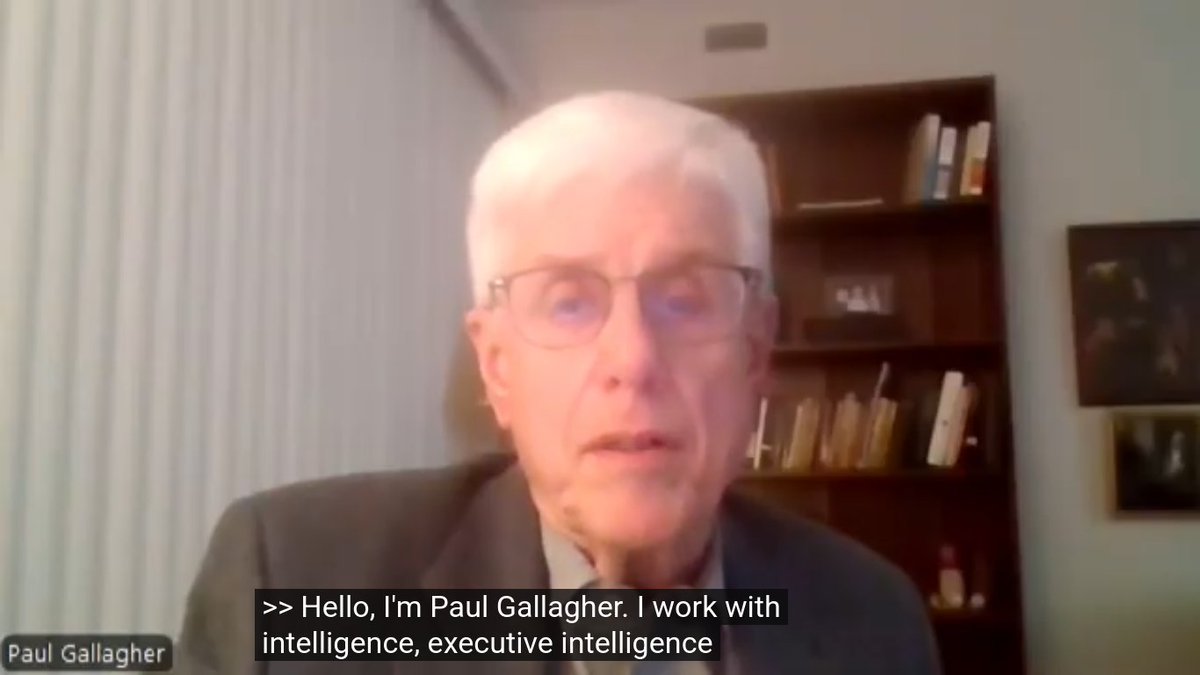
youtube.com/live/y4z4YFSy8… EIR's Paul Gallagher investigation into the $200+ billion War Production Slush Fund modeled on Hitler's banker Hjalmar Schacht and the Nazi cannabilization of the physical economy:
YouTube video
YouTube
Helga Zepp-LaRouche tweet media
English
0
5
5
170
Prometeo Nuclear 🇲🇽 🇵🇸🇱🇧🕊️🇷🇺🇨🇳 retweetledi
Helga Zepp-LaRouche
Helga Zepp-LaRouche@ZeppLaRouche·
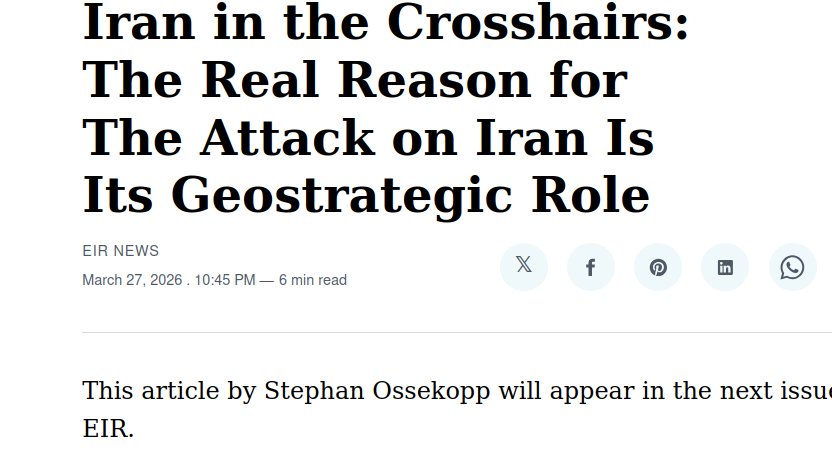
eir.news/2026/03/news/i… This article by Stephan Ossekopp will appear in the next issue of EIR. For decades, the West has subjected Iran to devastating sanctions and vilified it as its greatest adversary and a rogue state. Currently, Israel and the U.S.A., in particular, are attempting to destroy the country through horrific warfare. This barbarity can hardly be adequately explained solely by motives such as controlling oil, raw materials, or preventing nuclear enrichment, or even the alleged “democratic liberation” of the country. There must be deeper and more comprehensive reasons for these continuous efforts to destroy or control Iran’s infrastructure and institutions. One must look at Iran’s strategic and geographical position, its significance as a long-term partner of China and Russia, its alignment with the BRICS and a “multipolar” order of the Global South—and, not least, its long-standing culture and civilization. The BRICS countries, which Iran joined in 2024, are explicitly aiming to establish a new international order for collective security and development, as well as a trade and financial system from which all nations benefit. From the perspective of the global hegemonic power, i.e., the Anglo-American elite, Iran represents an obstacle on the path to greater global control—especially if one wants to directly undermine the core interests of Russia and China. Despite long-standing externally imposed violence and sanctions, Iran’s population has grown from slightly over 15 million in 1950 to 90 million today. Life expectancy has also risen during the same period, from below 40 years to well over 80. The proportion of industrial jobs is relatively high at 35%. Without relying on Western technological aid, Iran has become a major producer and consumer of natural gas. There has also been a significant increase in oil production and refining capacity. Exports of oil and oil products through the Strait of Hormuz go one-third to China; another third to India, South Korea, and Japan; and 15% to other Asian countries. Thus, contrary to all attempts at containment, Iran has become one of the world’s leading exporters of energy resources. The intended complete dismemberment of the country has therefore largely failed in this respect, however brutal the methods employed so far may have been. Iran as a Crossroads Iran’s geographical location makes it a crucial crossroads: On the one hand, there are land connections to the Arabian Peninsula and Africa, as well as to Europe via Türkiye; on the other hand, there are connections to Pakistan, India, and via Afghanistan to China, and via Turkmenistan to Central Asia. Since Iran is bordered to the north by the Caspian Sea and to the south by the Persian Gulf and the Arabian Sea, it must be traversed to establish efficient freight transport from west to east and vice versa. Indeed, just weeks before the recent U.S.-Israeli attacks, the Iranian Minister of Railways visited the Afghan capital, Kabul, to discuss precisely this optimal Silk Road connection between Iran, Afghanistan, and China. This southern branch of the Eurasian land bridge, or the New Silk Road, would give Iran a key position in the development of Eurasian infrastructure corridors and provide it with all the advantages of a hub for global land and sea trade. Iranian companies would become sought-after investment targets within the framework of the Belt and Road Initiative (BRI). Iran joined this project in 2018 through a memorandum of understanding (MoU). On the other hand, Iran, via the Caucasus, represents Russia’s most direct connection to the southern seas. Iran possesses a number of ports, such as Bandar Abbas and Chabahar, through which the populous and growth-oriented countries of India and the ASEAN states in Southeast Asia can be reached. Russia is investing billions and providing loans to Iran to expand this freight corridor. Most recently, India also invested hundreds of millions of dollars in a terminal at the port of Chabahar. This transportation route, called the International North-South Transport Corridor, is Russia’s most important strategic initiative for redirecting freight traffic, formerly directed towards Europe, to Asia. Russia is seeking new markets, having temporarily suspended trade and political relations with its formerly most important European partners. Instead, Russia is now pursuing the Greater Eurasian Partnership, which aims to link all civilizations and regional organizations of the Eurasian continent into a major cooperative project. Iran is explicitly named as one of the cornerstones of this concept. Russia-China Partnership In January 2025, Russia and Iran signed a comprehensive 20-year strategic partnership agreement. This established their relationship—albeit fluctuating since the time of Persia and the Soviet Union—on a permanent basis of constructive cooperation. The agreement covers political, economic, cultural, scientific, technological, and military spheres. While Russia is not currently one of Iran’s largest trading partners, the agreement was intended to define the outlook for the coming decades. In comparison, cooperation between Iran and China is considerably more extensive. After Iraq, China is Iran’s most important export market, particularly for energy resources. In 2021, Iran and China signed a 25-year agreement to intensify joint projects in trade, infrastructure, and raw materials. Following the U.S. military strikes on Iranian nuclear facilities in June 2025, China even increased its crude oil imports from Iran to almost two million barrels per day. This new Eurasian interconnectedness, with Iran as a hub, is a thorn in the side of the foreign policy establishment in Washington and London. The idea of ​​military power, resource wealth, and high technology cooperation in a strategic triangle, as in this case between Russia, Iran, and China, had already caused sleepless nights for the London financial establishment. The centers of influence for Western liberal elites, such as the weekly magazine The Economist, had already described this constellation as the “stuff of nightmares” back in 2024. If Eurasia could build an infrastructure, resource, energy, trade, and even financial system outside the control of London and Washington, unaffected by their sanctions, then it would be a catastrophe for the British. It was viewed with suspicion that Iran’s Defense Minister Aziz Nasirzadeh met with his counterparts from the Shanghai Cooperation Organization (SCO) in Qingdao, China, in June 2025, after the 12-Day War. Even though the SCO is not a military alliance but a multilateral cooperation forum for security and development policy issues, it can be assumed that behind the scenes, every effort is being made to prevent Iran from imploding in the face of the serious attacks. At the SCO Council of Heads of State in Tianjin, China, in September of that year, Iranian President Masoud Pezeshkian declared that the SCO represents “a new global security and development order that prioritizes the Global South.” The SCO, he said, is a “pillar of the multipolarity of the international system.” Iran and BRICS Although Iran was not a founding member of the BRICS group of nations, which focuses on economic cooperation, it became a full member on January 1, 2024. A few months earlier, Iran had normalized its diplomatic relations with Saudi Arabia—mediated by China. Saudi Arabia has also moved significantly closer to the BRICS group but is not yet considered a full member. The BRICS countries have demonstrated their ability to unite countries with considerable geographical, economic, and cultural differences based on the principle of peaceful coexistence and cooperation for mutual benefit. The United Arab Emirates, Egypt, and Ethiopia also joined BRICS at the same time as Iran. In the long term, this would have led to the establishment of a paradigm of mutual recognition, as increasing interconnectedness would have led to the recognition of the benefits of economic cooperation throughout the Gulf region. The war waged by the United States and Israel against Iran, as before against Palestine, Yemen, Jordan, Syria, and so on, can only be interpreted as a means of preventing any bridge-building between the nations and cultures of Southwest Asia. From the Anglo-American perspective, chaos and devastation are perversely desirable, as they allow it to play the various factions off against each other and consolidate its own position. Divide and conquer. If the entire region is to climb back from the brink and gradually normalize its relations, the spheres of influence of hegemonic elites—be they comprising the British Empire in its historical role or in its new incarnation as the Anglo-American Empire—must be eliminated. This applies particularly to their military bases. The common interests of all states and peoples of the region should instead be discussed and enshrined through a trustworthy multilateral mechanism, including at the UN General Assembly. The collective Global South, representing the Global Majority, should mediate an end to the conflict, as the West has lost all credibility in this regard. Currently, proposals are circulating that the BRICS countries, representing roughly half the world’s population and more than 40% of global GDP, should assume this mediating role. Their credibility, economic weight, and tradition as non-hegemonic, non-aligned states could provide the necessary rationality and bring an end to the violence. However, this must also be linked to large physical-economic development programs that eliminate the region’s geographical disadvantages—the vast sand deserts and the general lack of water and agricultural land, as well as the lack of modern infrastructure—and create a lasting development dynamic. A Civilization Thousands of Years Old Furthermore, an inter-civilizational dialogue must be established, incorporating Iran’s rich cultural heritage. This region was the center of the Islamic Golden Age in the Eighth and Ninth Centuries AD. At that time, education and knowledge were so highly valued, that the rulers in Baghdad built the largest library of world knowledge of the era called the House of Wisdom (Bayt al-Hikmah). Many classical works of antiquity would have been lost had they not been collected and translated into Arabic. Iran is among the oldest continuously existing great civilizations, dating back to the Fifth Millennium BC. Persian literature, philosophy, medicine, and art experienced a golden age as early as the time of the country’s Islamization in the Seventh Century. This legacy continues to have a tangible impact today. The people see themselves as bearers of a civilization spanning millennia and their country as a crossroads between the communication lines of great cultures. Any negotiations for lasting peace must be accompanied not only by the prospect of economic prosperity but also by a future of respectful interaction that acknowledges their great achievements and contributions to the universal history of humankind. Only in this way can the deep war wounds be permanently healed.
Helga Zepp-LaRouche tweet media
English
0
5
10
194
Prometeo Nuclear 🇲🇽 🇵🇸🇱🇧🕊️🇷🇺🇨🇳 retweetledi
Helga Zepp-LaRouche
Helga Zepp-LaRouche@ZeppLaRouche·
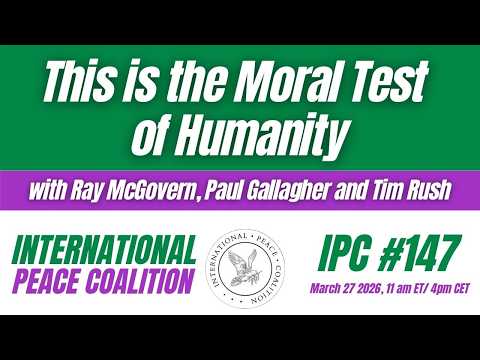
AGENDA -Helga Zepp-LaRouche, Schiller Institute founder, International Peace Coalition initiator -Ray McGovern, former CIA analyst, co-founder of Veteran Intelligence Professionals for Sanity (VIPS) -Brian McGinis, retired Marine, Green Party candidate for Senate, NC -Paul Gallagher, co-editor of Executive Intelligence Review (EIR) Eduardo Fernandez, -Eduardo Gabriel Fernández, Graduate of the Advanced Course in National Defense; Member of the General Jorge Edgar Leal Observatory on Argentine Sovereignty -Tim Rush, report on DC organizing -General Discussion Period, reports and initiatives, 3 minutes per person
Helga Zepp-LaRouche@ZeppLaRouche

Register here for the Zoom link providing simultaneous translation--Spanish, French, German, English--and access to the Q&A session: schillerinstitute.nationbuilder.com/ipc_meeting

English
0
3
4
195
Prometeo Nuclear 🇲🇽 🇵🇸🇱🇧🕊️🇷🇺🇨🇳 retweetledi
Helga Zepp-LaRouche
Helga Zepp-LaRouche@ZeppLaRouche·
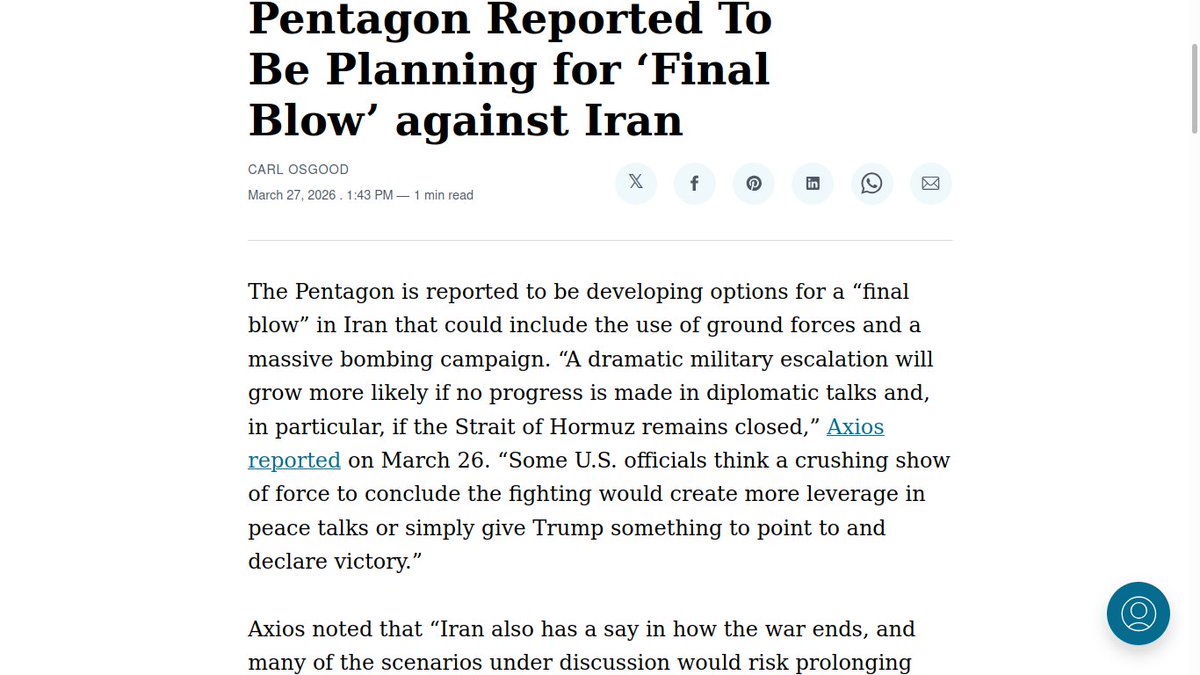
eir.news/2026/03/news/p… The Pentagon is reported to be developing options for a “final blow” in Iran that could include the use of ground forces and a massive bombing campaign. “A dramatic military escalation will grow more likely if no progress is made in diplomatic talks and, in particular, if the Strait of Hormuz remains closed,” Axios reported on March 26. “Some U.S. officials think a crushing show of force to conclude the fighting would create more leverage in peace talks or simply give Trump something to point to and declare victory.” Axios noted that “Iran also has a say in how the war ends, and many of the scenarios under discussion would risk prolonging and intensifying the fight rather than bringing it to a dramatic conclusion.” In interviews with Axios, officials and sources familiar with the internal discussions describe four major “final blow” options that U.S. President Donald Trump could choose from: • Invading or blockading Kharg Island, Iran’s main oil export hub. • Invading Larak, an island that helps Iran solidify its control of the Strait of Hormuz. The strategic outpost hosts Iranian bunkers, attack craft that can blow up cargo ships, and radars that monitor movements in the Strait. • Seizing the strategic island of Abu Musa and two smaller islands, which lie near the western entrance to the Strait and are controlled by Iran, but also claimed by the U.A.E. • Blocking or seizing ships that are exporting Iranian oil on the eastern side of the Strait of Hormuz. The U.S. military has also reportedly prepared plans for ground operations deep inside the interior of Iran to secure the highly enriched uranium buried within nuclear facilities. Instead of conducting such a complicated and risky operation, the U.S. could instead carry out large-scale air strikes on the facilities to prevent Iran from ever accessing the material. Axios’ sources claim that Trump hasn’t made a decision yet on pursuing any of these scenarios, and White House officials describe any potential ground operations as “hypothetical,” but they also say he’s ready to escalate if talks with Iran don’t yield tangible results soon. Trump could first implement his threat to bomb power plants and energy facilities in Iran, for which Tehran has threatened massive retaliation across the Gulf. Axios adds that more reinforcements are on the way, not only U.S. Marines and troops from the 82nd Airborne, but also additional fighter squadrons.
Helga Zepp-LaRouche tweet media
English
0
1
2
92
Prometeo Nuclear 🇲🇽 🇵🇸🇱🇧🕊️🇷🇺🇨🇳 retweetledi
Helga Zepp-LaRouche
Helga Zepp-LaRouche@ZeppLaRouche·
eir.news/2026/03/news/i… American investigative journalist and author Whitney Webb, who appeared as a guest on Jimmy Dore’s YouTube platform, maintained that the Trump Administration has “turned the White House into a trading desk.” This refers both to crypto pumping for the holdings of the Trump family, and now, with the President’s constant shifts in war pronouncements which manipulate stock, bond, and “prediction” markets, to the advantage of bettors who have even brief advance notice of his pronouncements. In one excerpt from her interview, which was posted by the X user “sensereceptor,” Webb said that beyond “endless wars, it will be the downstream economic devastation that the destabilizing effect of this war will have on oil markets, that will cause a lot of problems for the rest of us. But not like Trump, not for Trump and his billionaire friends or for the people that are insider-trading the information on Polymarket, where insider trading is now legal. Or on Kalshi, where Don—you know, which is also a prediction market where people can bet on world events, and Don [Trump] Jr. is on the board of that, I believe. So, you know, it’s basically plutocracy.” Webb otherwise insisted on the importance of the influence at the Pentagon, of Deputy “War Secretary” Stephen Feinberg, a longtime CEO of the Cerberus Capital Management hedge fund, through which he controlled Chrysler/Stellantis and several defense companies, and who is reorganizing the Pentagon’s “Office of Strategic Capital” under the leadership of two of his Cerberus subordinates. Compared to Feinberg, Webb said, “Pete Hegseth is a clown, but he’s not actually in charge.” Feinberg, she noted, “is very good friends with Peter Thiel,” and awards key AI and related contracts to Palantir and other firms connected to Thiel. One of the first thorough exposés of Thiel’s significance to immorality and evil acts among neo-conservatives was published in 2022 by the late Renée Sigerson for EIR.
Helga Zepp-LaRouche tweet media
English
0
2
2
105
Prometeo Nuclear 🇲🇽 🇵🇸🇱🇧🕊️🇷🇺🇨🇳 retweetledi
Celeste Sáenz
Celeste Sáenz@CelesteSaenzM·
share.google/WcuvEVdU7BvhGs… AL AIRE EN LA NETA NOTICIAS CON NOEL ALVARADO POR AKUSTIK RADIO 1150 DE AM EN CADENA NACIONAL...
Celeste Sáenz@CelesteSaenzM

@liusivaya#LiuSivaya #PremioInternacionalDePeriodismo 2022 . ¡Por fin en tus manos Liu tan admirada! #ClubDePeriodistasDeMéxico ⁦@GuillermoRocaf1⁩ ⁦@MourisSalloum@verdadinvicta1@CelesteSaenzM⁩ por la #LibertadDeExpresiónResponsable 🕊️

Español
0
6
7
170