punitkumar

23 posts

punitkumar banner
punitkumar

punitkumar

@Punit_Ai_World

AI tools | Tech hacks | Productivity Making you smarter & faster every day 🚀

Katılım Nisan 2026
1 Takip Edilen5 Takipçiler
Sabitlenmiş Tweet
punitkumar
punitkumar@Punit_Ai_World·
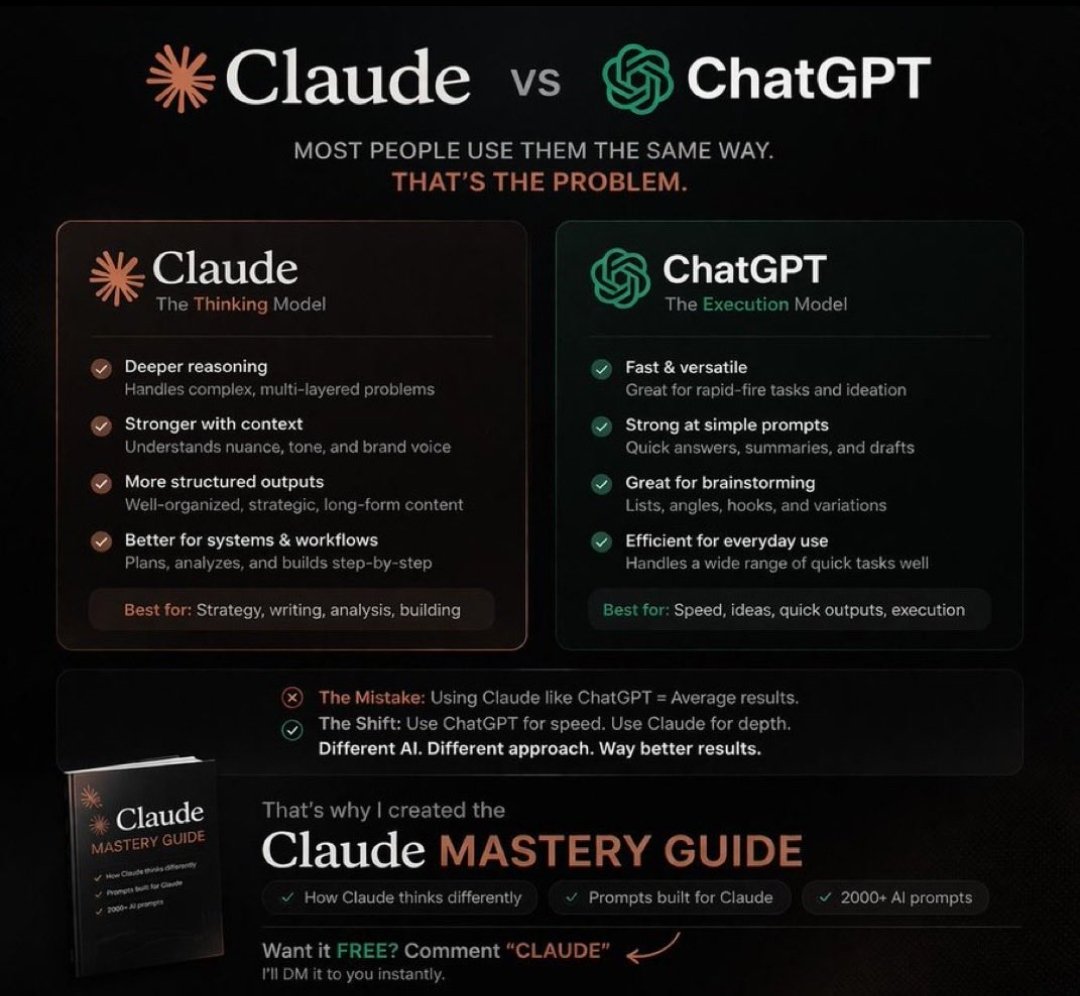
Claude Sonnet 4.6 is the smartest Al right now. But 90% of people prompt it like ChatGPT. That's why I made the Claude Mastery Guide: → How Claude thinks differently → Prompts built for Claude → 2000+ Al Prompts Comment" Claude " and I'll DM it free.
punitkumar tweet media
English
1
2
4
16
punitkumar
punitkumar@Punit_Ai_World·
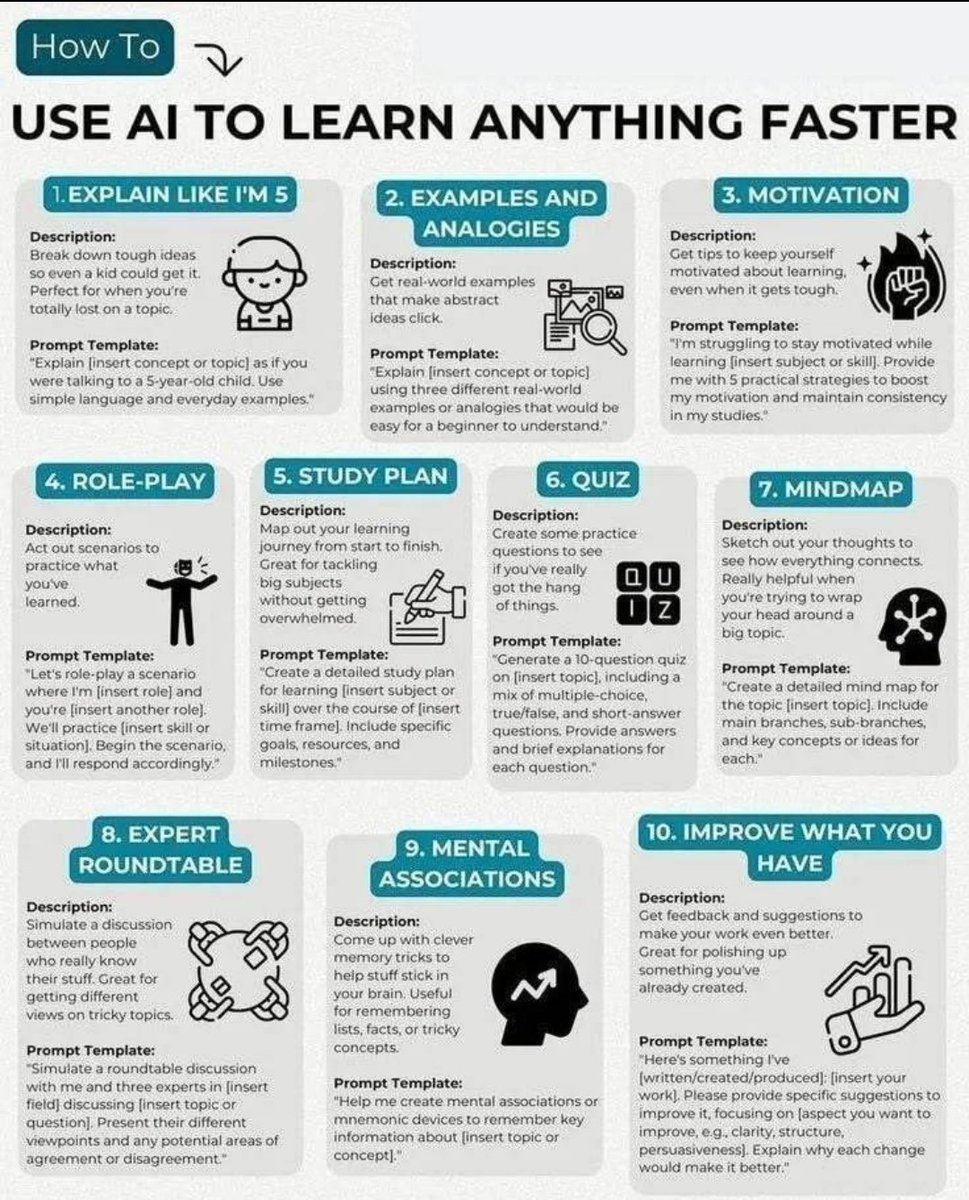
How to use Al to learn anything faster?
punitkumar tweet media
English
0
1
2
5
punitkumar
punitkumar@Punit_Ai_World·
Here are some sharper caption options you can use: 1. Clean & catchy Master Agentic Al like a pro 📚 Your ultimate cheat sheet starts here 👇 2. More viral tone Still using Al like Google? You're already behind. Master Agentic Al with this cheat sheet 📚👇
punitkumar tweet media
English
4
5
14
50
punitkumar
punitkumar@Punit_Ai_World·
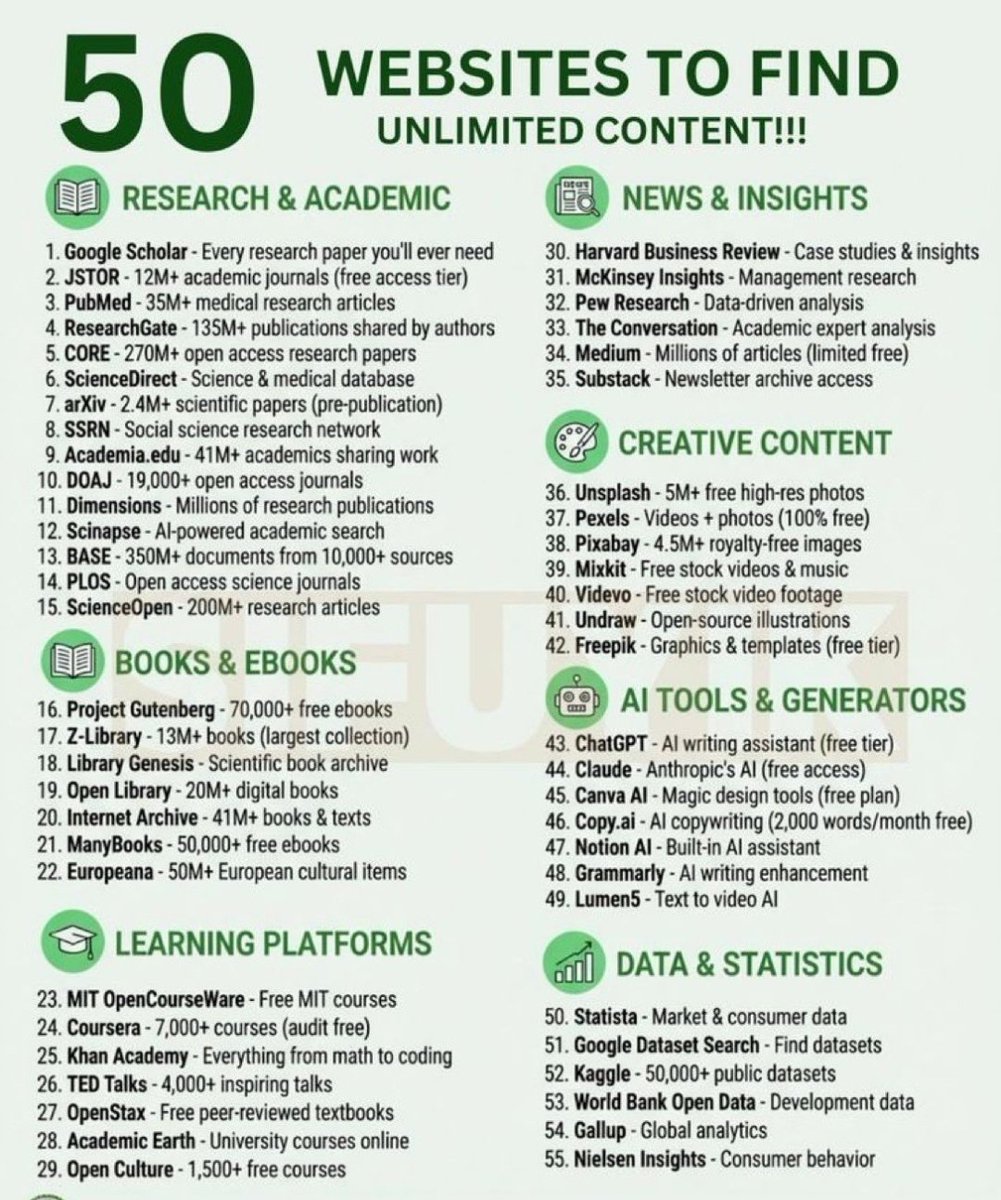
50 useful website to find content Follow for more
punitkumar tweet media
English
10
16
54
215
punitkumar
punitkumar@Punit_Ai_World·
@goyalshaliniuk It is interesting how tools and frameworks are becoming as important as core theory
English
0
0
0
0
Shalini Goyal
Shalini Goyal@goyalshaliniuk·
The world of AI is overwhelming! So much of advancement in such a short span of time that everyone is playing a 'catching up' game. But can we break it down in some way to simplify the learning roadmap and help you focus on the topics you need to learn? Whether you're looking to master computer vision, natural language processing, or scalable AI deployment, there are some core topics that you need to know about to allow you to lead the AI applications. Let's explore them below and share back what all among these you are using or need to learn. Connect with me Shalini Goyal for more! 1. AI Tools & Frameworks Includes workflow tools, model training platforms, vector databases, and AI-powered DevOps. 2. Computer Vision Covers image recognition, face detection, medical imaging AI, and 3D vision applications. 3. Natural Language Processing (NLP) Encompasses sentiment analysis, text summarization, retrieval-augmented generation, and speech-to-text. 4. AI Scalability & Deployment Focuses on cloud AI, serverless AI, model monitoring, and chatbot integration. 5. Deep Learning & Neural Networks Explores GANs, reinforcement learning, self-supervised learning, and federated learning. 6. Machine Learning & Model Optimization Includes feature engineering, model evaluation, hyperparameter tuning, and AI bias mitigation. 7. AI Fundamentals Covers data preprocessing, probabilistic AI, decision-making models, and explainability in AI. Explore more in the image below.
GIF
English
27
31
77
950
Priyanshu
Priyanshu@Priyanshu07_07·
Most people: – Follow tips – Watch random YouTube videos – Chase “hot stocks” Smart people: – Ask better questions – Use AI for clarity – Think like analysts I use claude for stock research for free. Comment “Claude” & I’ll share the prompts some references are in comments 👇
Priyanshu tweet media
English
36
4
38
301
punitkumar
punitkumar@Punit_Ai_World·
@goyalshaliniuk It’s interesting how the choice of algorithm often depends more on the data quality than the problem itself
English
0
0
0
0
Shalini Goyal
Shalini Goyal@goyalshaliniuk·
Machine learning algorithms are categorized based on how they learn from data. Here’s a breakdown of key algorithms across different types of learning: 1. Supervised Learning Algorithms that learn from labeled data to make predictions, widely used in classification and regression tasks. 2. Unsupervised Learning Learn from unlabeled data by pattern recognition and clustering in the data, helping uncover hidden structures. 3. Reinforcement Learning Agents learn by interacting with an environment and optimizing actions to maximize rewards over time. 4. Semi-Supervised Learning Combines labeled and unlabeled data to improve learning efficiency, bridging the gap between supervised and unsupervised methods. Explore more in the image below. What are the algorithms you are using or have seen being used?
GIF
English
18
36
103
1.5K
punitkumar
punitkumar@Punit_Ai_World·
@techxmanoj Parking + entrance insights are super practical. Huge time saver.
English
0
0
0
3
Manoj Kumar Shah
Manoj Kumar Shah@techxmanoj·
🚨 BREAKING: Google Maps just rolled-out a massive upgrade. This will be the biggest upgrade in over a decade. Here are 7 Mind-blowing features that will surprise you:
English
18
37
110
25.1K
punitkumar
punitkumar@Punit_Ai_World·
@goyalshaliniuk It’s refreshing to see reliability and fault tolerance given equal importance as scaling
English
0
0
0
0
Shalini Goyal
Shalini Goyal@goyalshaliniuk·
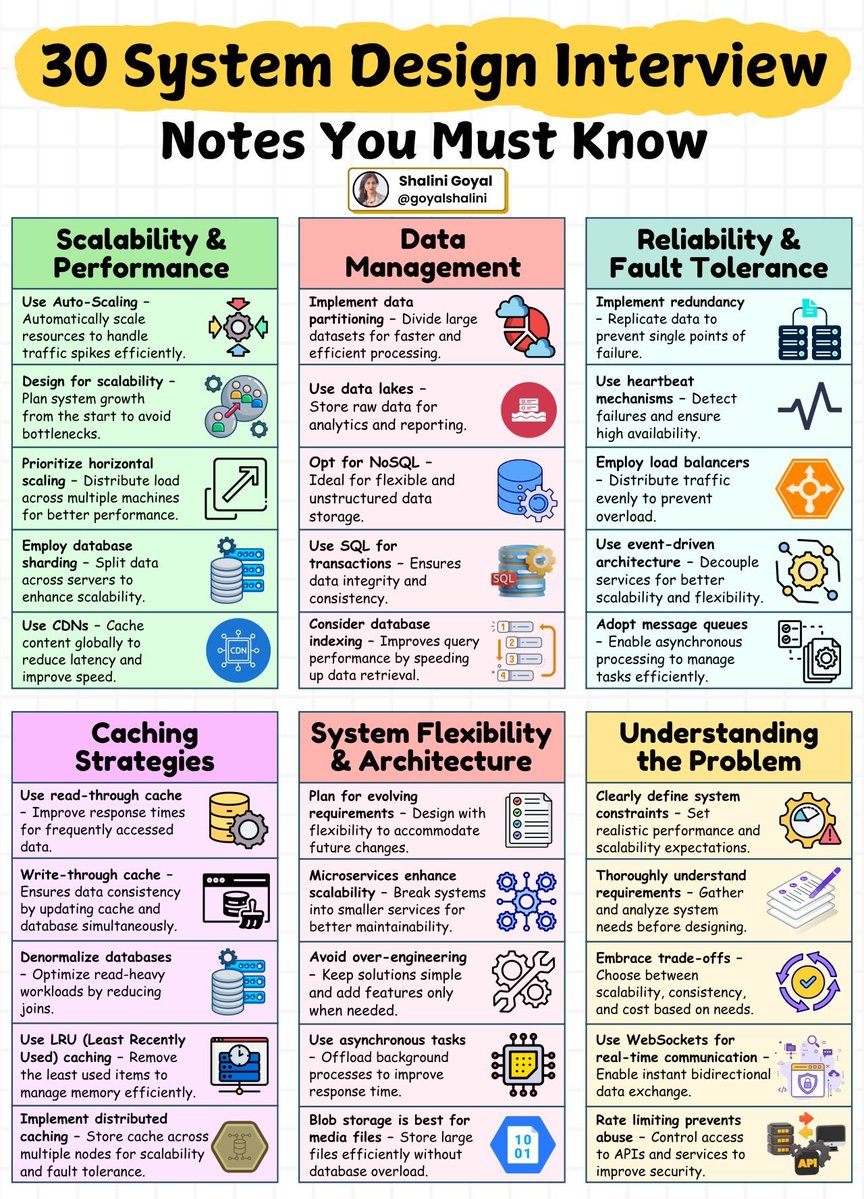
A clear understanding of some basic concepts can make a huge difference in the way you tackle any system design problem. After analyzing 30 key system design concepts, I’ve put together this one-page cheat sheet to help you: 1. Scale like a pro – Auto-scaling, horizontal scaling, database sharding, and CDN strategies. 2. Manage data efficiently – Data partitioning, NoSQL, SQL transactions, and indexing best practices. 3. Ensure reliability & fault tolerance – Load balancing, redundancy, heartbeat mechanisms, and event-driven architecture. 4. Master caching strategies – Read-through vs. write-through caching, Denormalise Databases, and Distributed Caching. 5. Design flexible architectures – Microservices, async tasks, and avoiding over-engineering. 6. Define problems before jumping into solutions – System constraints, trade-offs, WebSockets, and security. This is the ultimate cheat sheet I wish I had before my system design interviews. Save this post for your next interview prep. Share it with a friend who’s preparing for system design interviews. What’s the hardest part of system design interviews for you? Let’s discuss in the comments.
Shalini Goyal tweet media
English
24
27
109
1.3K
punitkumar
punitkumar@Punit_Ai_World·
@Parul_Gautam7 This post hit at the right time for me. I have been wrestling with this exact problem, and your framing gives me a clear next step to test.
English
0
0
0
4
Parul Gautam
Parul Gautam@Parul_Gautam7·
Trillion-parameter models are no longer impressive just for their size < The real breakthrough is doing more with fewer tokens < Intelligence is now judged by efficiency, not just capability < Fast-thinking systems shift AI from heavy compute to usable execution This feels like the start of efficiency-first intelligence, not scale-first AI.
Ant Ling@AntLingAGI

🚀 Today, we are launching Ling-2.6-1T, a trillion-parameter flagship model designed for precise instruct task execution. By prioritizing a "Fast-Thinking" mechanism, it delivers SOTA intelligence with ultra-low token overhead, making token efficiency a first-class citizen.

English
21
18
63
21.3K
punitkumar
punitkumar@Punit_Ai_World·
@PayUindia Investor mindset is evolving with the maturity of startups.
English
0
0
0
1
PayU India
PayU India@PayUindia·
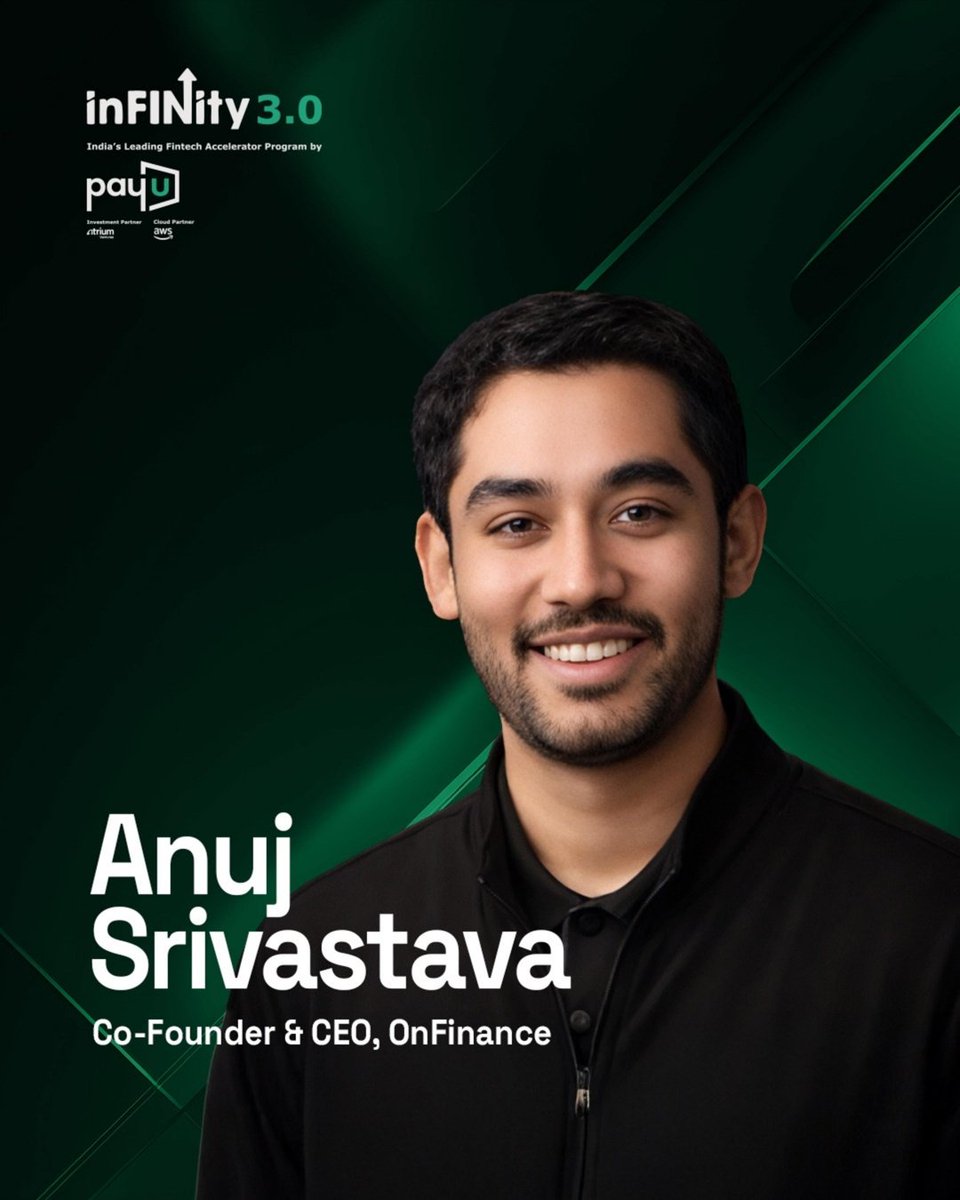
From hype to real impact, AI in fintech is no longer a future bet, it’s a present advantage. At inFINity 3.0, industry leaders decode how AI is driving measurable ROI, transforming financial services, and shaping the next wave of innovation. Featuring insights from Nitin Jain, Anuj Srivastava, and Aman Goel. Because in today’s fintech landscape, intelligence isn’t optional it’s everything. #inFINity3 #AIinFintech #PayU #FintechInnovation #StartupIndia
PayU India tweet mediaPayU India tweet mediaPayU India tweet mediaPayU India tweet media
English
2
0
2
85
punitkumar
punitkumar@Punit_Ai_World·
@goyalshaliniuk The comparison between traditional AI and generative AI is explained in a very simple way
English
0
0
0
0
Shalini Goyal
Shalini Goyal@goyalshaliniuk·
Generative AI isn’t just about text generation - it's redefining how not just content but also images, videos, and even music are created. Unlike traditional AI, which analyzes data, GenAI creates entirely new content based on patterns it learns. Here’s a basic structured breakdown of how GenAI works and the key models powering it: 1. How Generative AI Works – Uses neural networks, pattern recognition, and pre-trained models to generate new outputs. 2. Applications – AI-generated content in marketing, gaming, healthcare, and education. 3. Challenges & Ethics – Bias, misinformation, deepfakes, copyright issues, and privacy concerns. 4. Types of Generative AI Models: - Transformer Models – Powering chatbots and AI writing assistants (GPT-4, Gemini, Llama). - Diffusion Models – Turning random noise into realistic visuals (Stable Diffusion, DALL·E). - GANs – Creating hyper-realistic AI-generated images and videos. - VAEs – Enhancing and reconstructing image data. - RNN & LSTM – Generating AI-powered speech, music, and handwriting. Mastering these AI models opens new possibilities for automation, creativity, and innovation. Save this for reference. Share it with someone exploring the world of Generative AI. Which GenAI model have you worked with the most? What are the related topics on which you would like an infographic like this? Let’s discuss in the comments.
Shalini Goyal tweet media
English
16
20
98
1.1K
Markandey Sharma
Markandey Sharma@TechByMarkandey·
what annoys me about runable is there's no reason to complain. the stuff i don't like about it is stuff i don't like about every AI tool, occasional weird output, generic design sometimes, video isn't amazing yet. but none of those are runable-specific problems. they're just where AI is right now. and runable handles them better than most. so i have nothing original to complain about and that's frustrating
Umesh Kumar@itsumeshk

The power to create anything is now in your pocket. Runable is now live on the App Store. Try it, tell us what sucks.

English
13
19
79
15K
Priyanshu
Priyanshu@Priyanshu07_07·
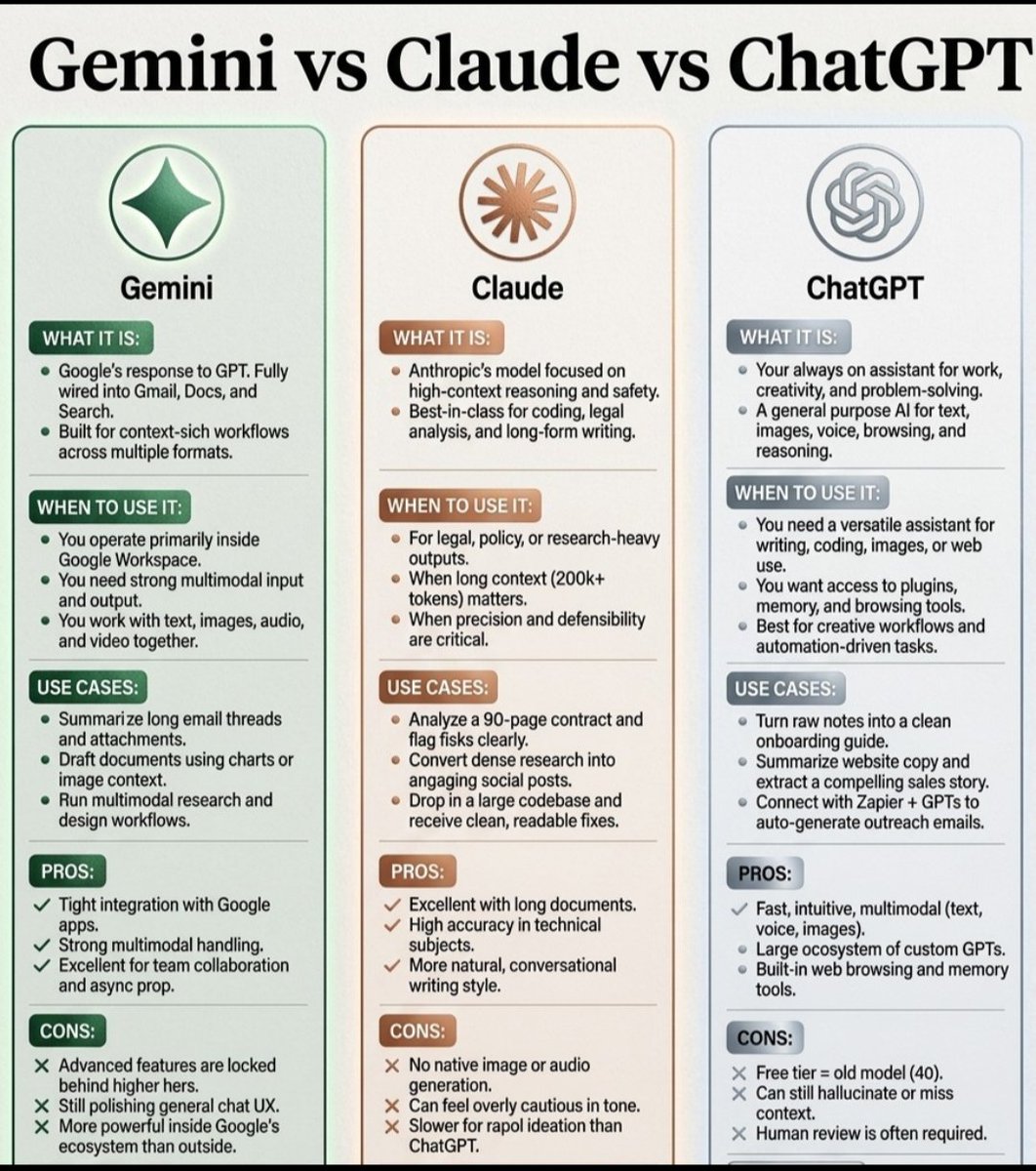
Confused between which AI to use in 2026? My stack Gemini = Best for Google workflow Claude = Deep thinking & long docs ChatGPT = Speed, creativity & execution The winners aren’t choosing one. They’re stacking all three. Which one do you use the most and why?
Priyanshu tweet media
English
29
10
40
492
punitkumar
punitkumar@Punit_Ai_World·
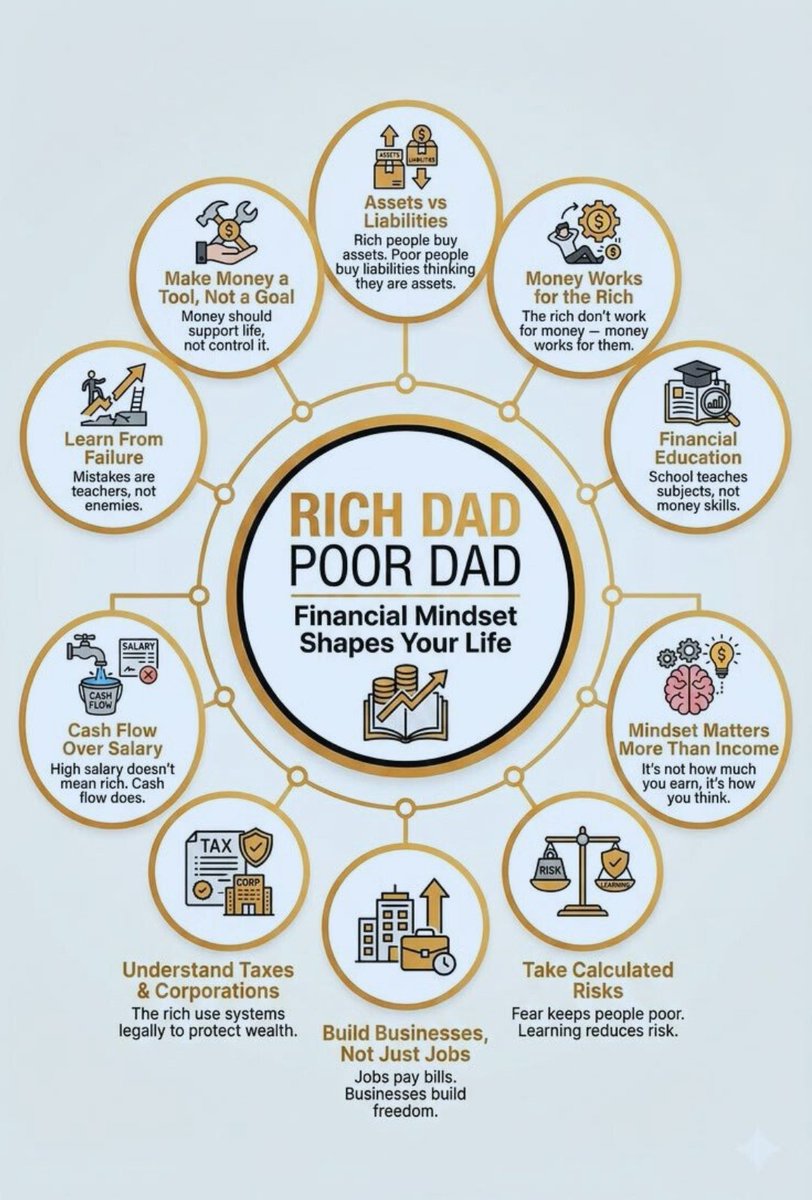
Rich Dad Poor Dad. Follow for more,
punitkumar tweet media
English
0
2
13
42
punitkumar
punitkumar@Punit_Ai_World·
@manishkumar_dev Big step forward. Tools like this are changing how fast ideas turn into reality.
English
0
0
0
0
Manish Kumar Shah
Manish Kumar Shah@manishkumar_dev·
i've been freelancing for 4 years and runable is the first tool that made me feel like a bigger operation than i am. client asks for a quick mockup? 10 minutes. need a proposal site? 15 minutes. social content for the week? 20 minutes. i'm one person but my output looks like a small team now. that's worth more than any single feature
Umesh Kumar@itsumeshk

The power to create anything is now in your pocket. Runable is now live on the App Store. Try it, tell us what sucks.

English
10
14
36
5.7K
punitkumar
punitkumar@Punit_Ai_World·
@goyalshaliniuk Logistic regression is still one of the most reliable models for baseline classification tasks
English
0
0
0
0
Shalini Goyal
Shalini Goyal@goyalshaliniuk·
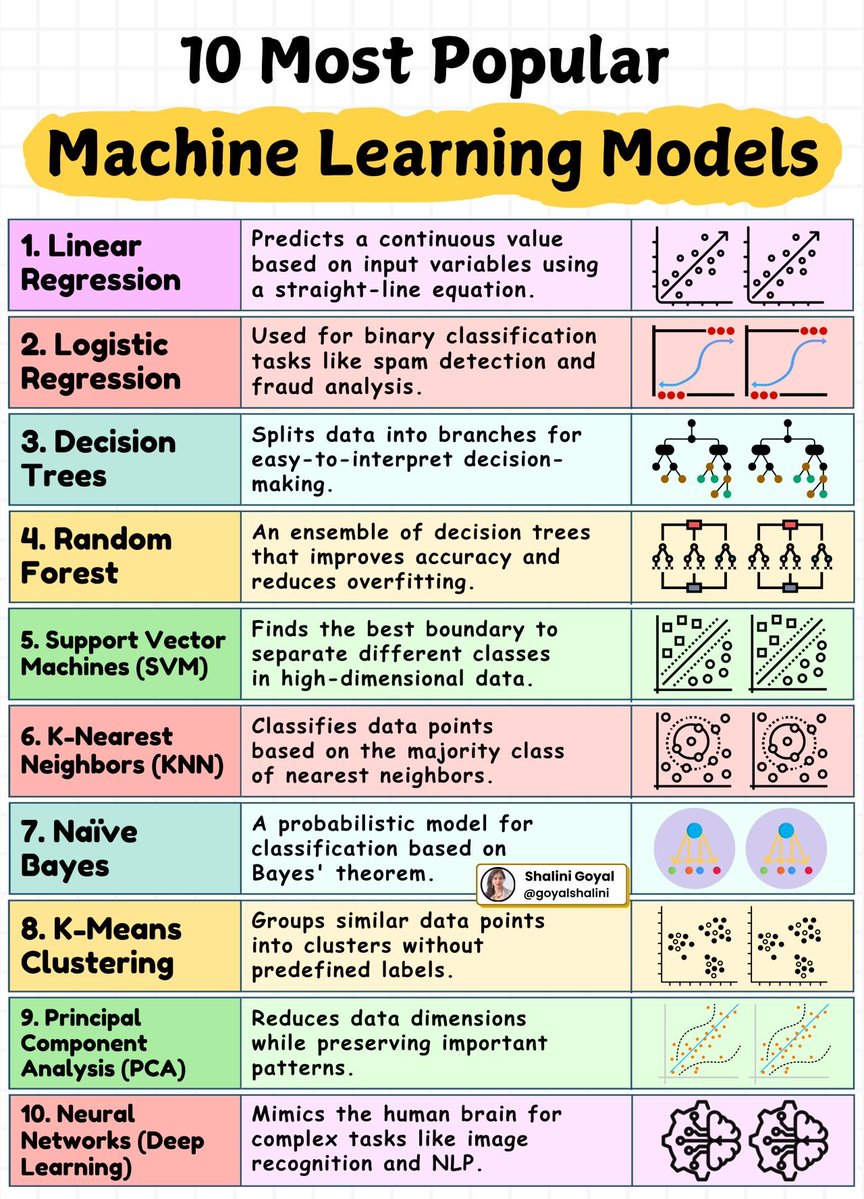
Machine learning isn’t just about training models - it’s about choosing the right model for the right task. Understanding how different ML models work can make all the difference in solving real-world problems efficiently. Here’s a breakdown of 10 essential ML models every data scientist should know: 1. Linear Regression – Predicts continuous values using a straight-line equation. 2. Logistic Regression – Used for binary classification tasks like spam detection and fraud analysis. 3. Decision Trees – Splits data into branches for interpretable decision-making. 4. Random Forest – An ensemble of decision trees that improves accuracy and reduces overfitting. 5. Support Vector Machines (SVM) – Finds the best boundary to separate different classes in high-dimensional data. 6. K-Nearest Neighbors (KNN) – Classifies data points based on the majority class of nearest neighbors. 7. Naïve Bayes – A probabilistic classification model based on Bayes' theorem. 8. K-Means Clustering – Groups similar data points into clusters without predefined labels. 9. Principal Component Analysis (PCA) – Reduces data dimensions while preserving important patterns. 10. Neural Networks (Deep Learning) – Mimics the human brain for tasks like image recognition and NLP. Mastering these models helps in building scalable, accurate, and efficient AI solutions. Save this post for quick reference. Share it with someone getting started with machine learning. Which ML model do you use the most? Let’s discuss in the comments.
Shalini Goyal tweet media
English
18
38
152
3.1K