

🇫🇷 Numéro 6 🥩
4.8K posts

The Cholesterol Science "Behind the Scenes" 👀
If you think this case report "Seven Years of 700 Cholesterol Without Coronary Atherosclerosis" is popping off on social media, you have no idea what’s happening behind the scenes.
I just got back from a conference at @UniofOxford where the response to our cholesterol research was true curiosity, engagement, and excitement.
I’ve also had multiple academics, cardiologists, lipidologists, and researchers express interest in learning more, collaborating, and investing their intellectual energy into Lean Mass Hyper-Responder research. Pictured is one potential slide for an upcoming academic lecture.
Now, yes, there’s still plenty of tribalism, defensiveness, and closed-mindedness on social media.
That will continue.
But for those of you watching this space with bona fide curiosity, let me just say this: This corner of cholesterol research — ignored for far too long — is finally starting to receive serious attention.
And honestly? This is just the warm-up.

Nick Norwitz MD PhD@nicknorwitz
🚨New Paper: "Seven Years of 700 Cholesterol Without Coronary Atherosclerosis: A Lean Mass Hyper-Responder Case Report" Link: doi.org/10.3390/diseas… For the past 7 years, I’ve been running what is essentially a natural experiment in cholesterol and heart health. During that time, I’ve largely lived with: 👉Total cholesterol around 700 mg/dl 👉LDL cholesterol between 500–600 mg/dL I recently underwent advanced coronary CT angiography imaging with AI-guided analysis. This is not a CAC. It measures all plaque (soft + calcified), with expert interpretation and AI-guided analysis capable of quantifying plaque down to the cubic millimeter (mm3). Now, to address the obvious question: Am I too young for plaque? In brief: No. The clearest comparison is individuals with homozygous familial hypercholesterolemia, who often have similarly extreme LDL/ApoB levels and can develop advanced plaque as toddlers, and even heart attacks as early as age 8. Also, nutrition influencers in their 30s have publicly shared quantified plaque scores from these same imaging technologies. In one recent case, a plant-based influencer in his thirties was found to have 61.3 mm³ of plaque despite having far lower lifetime LDL exposure. (He can identify himself if he so chooses.) My case also isn’t a one-off. There are many individuals like me, including older individuals with similar LDL-C and ApoB without any plaque. The difference is that I’m an unusually well-characterized subject, with extensive metabolic data and health markers tracked over time. You can learn more at the newsletter or open-access paper, linked above. The science of heart health is not settled. And cholesterol is not a simple story. 🚨 If you want to help spread the word... Quote Tweet this post (or create an original post) including the article link with a thought. Academic papers are increasingly evaluated using attention metrics. Original posts from unique users are one way to increase these metrics and help ultimately increase its reach. 🚨 If you want to learn more, I'll include more learning resources below 👇
English
@Ondrackula @nicknorwitz No. I live in France. There is not a lot of choices on Amazon. Mostly there are only products for bodybuilders, of which I’m not.
English

@Pyjam3 @nicknorwitz Thanks!
Did you ever try n1o1 ?
It apparently releases nitric oxide as it dissolves.
I currently use organic arugula, for the nitrates.
n1o1.com/product/n1o1-n…
English
The Heart Supplements I Recommend to Family 🧵 👇
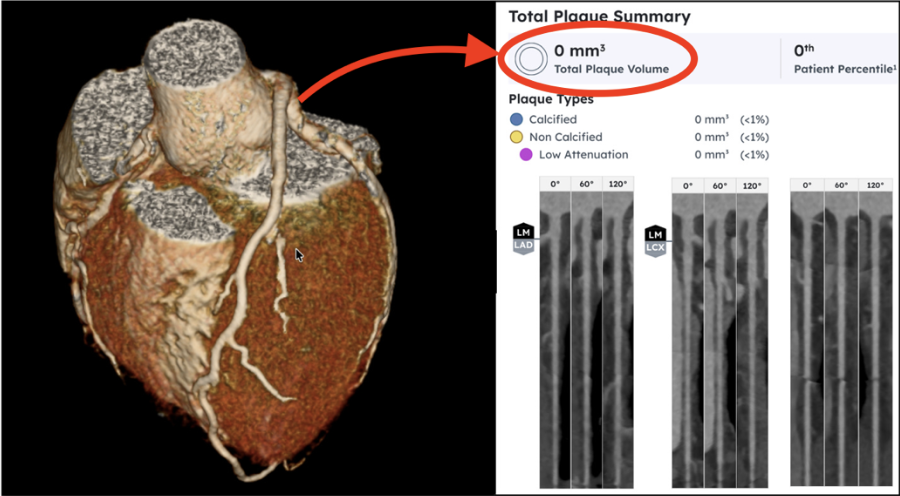
1/7) I have astronomically high cholesterol (>700 mg/dl) and high Lp(a) (194), but my arteries are perfectly clear. I mean perfect! 0 mm³ of any measurable plaque upon expert read and AI-guided quantification of my coronary CT angiogram—a finding that left several cardiologists stunned.
English
@Ondrackula @nicknorwitz Nitralis by DoNotAge.org
It's expensive, but nitric oxide precursors like citrulline or arginine are expensive too because you have to take a lot of capsules, and they're less effective.
English
@CoachDeVente On ne peut pas dire qu’il existe beaucoup d’options pour renverser l’atherosclérose.
Français
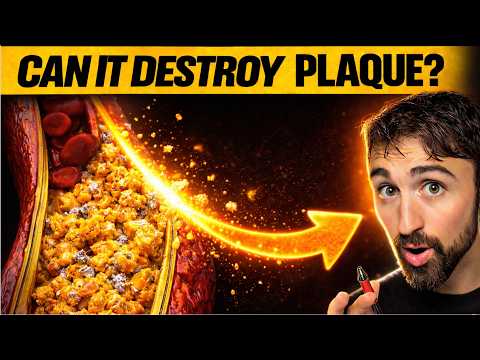
@CoachDeVente En effet, les preuves sont minces. Mais ce n’est jamais que du soja fermenté. Il est peu probable que je me détruise la santé avec ça. C’est pourquoi j’en prends tout de même en prévention. Je pense que ce n’est pas cher payé.
Une vidéo sur ce sujet ⤵️
youtube.com/watch?v=LGQO22…
YouTube
Français
Prenez de la nattokinase 💊 pour la santé de votre cœur. 8 000 unité par jour, soit 4 gélules. C’est en vente libre (pour le moment 😏).
Et n’oubliez pas de prendre vos omega-3. En poissons 🐟 ou en gélules 💊. Tous les jours.
Ce n’est pas négociable.
Nick Norwitz MD PhD@nicknorwitz
4/7) Take Nattokinase, an enzyme derived from Japanese fermented soybeans. It's been shown to lower blood pressure in randomized controlled trials, and at higher doses may even reverse atherosclerosis. It reduces blood pressure, reduces blood clotting, and increases antioxidant defenses. Dosing is key to efficacy.
Français
Repentez-vous !
Plus que 7 mois avant la fin du monde.
MAZE@mazemoore
2016. Guy McPherson (a climate change expert, scientist, and professor from the University of Arizona) says that there will not be any humans on the planet by 2026 due to the effects of climate change. Trust the scientists. 😜🤣
Français
🇫🇷 Numéro 6 🥩 retweetledi

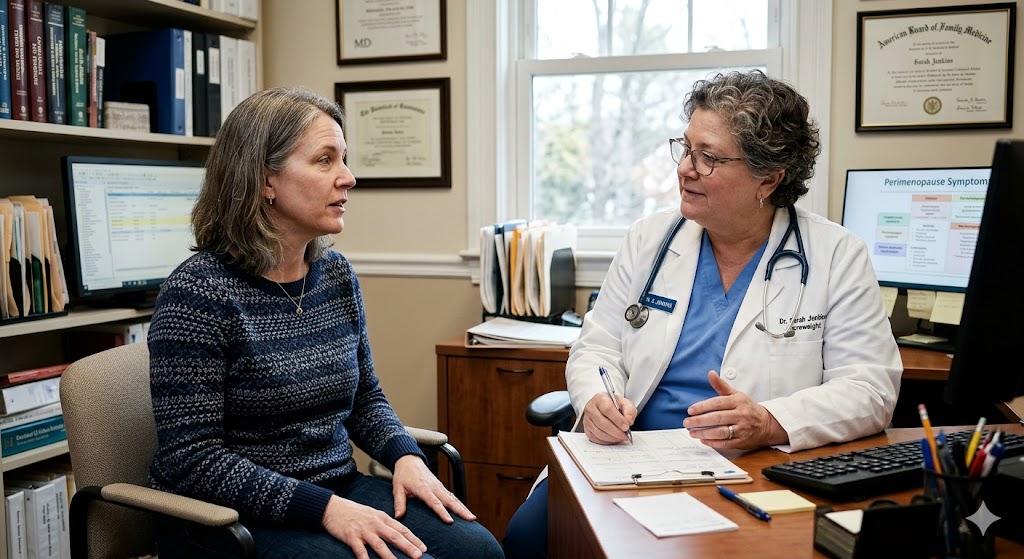
Doctor: "You're in perimenopause. Let's discuss management."
Patient: "I've been losing muscle. I was thinking of lifting weights."
Doctor: "Be careful. Cardio is gentler. Try yoga."
Patient: "Resistance training prevents osteoporosis better than anything else."
Doctor: "We have bisphosphonates for that."
Patient: "I'm exhausted. Red meat has been helping."
Doctor: "Red meat raises your cardiovascular risk. Limit it."
Patient: "Red meat has the iron, B12, zinc, choline, and cholesterol my body needs to make hormones."
Doctor: "Try wholegrains, legumes, soy."
Patient: "Soy gives me hot flushes."
Doctor: "Phytoestrogens are protective."
Patient: "Against the symptoms I'm having from the soy?"
Doctor: "..."
Patient: "What about HRT?"
Doctor: "There are risks. We prefer not to."
Patient: "The SSRI you mentioned has risks. So does the bisphosphonate."
Doctor: "..."
Patient: "So no meat for the hormones. No lifting for the bones. No HRT for the hormones again. Just porridge, a yoga mat, and a pill for the mood I don't yet have."
Doctor: "I'll book you in for six months."
Patient: "And until then?"
Doctor: "Have you tried mindfulness?"
English
@SamaHoole There are two cases:
- glucose → fuel for the mitochondria
- fructose → causes fatty liver (like alcohol)
English
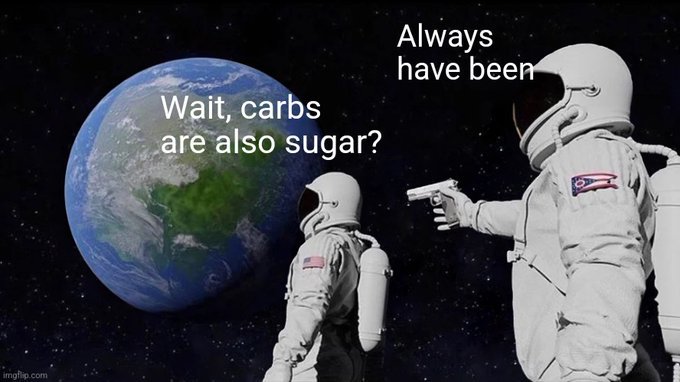
For anyone who still hasn't had the memo:
- Oatmeal = sugar
- Quinoa = sugar with a marketing degree
- Brown rice = sugar wearing a tiny bran cardigan
- Wholewheat bread = sugar that went to a wholesome photoshoot
- Sweet potato = sugar the wellness influencers agreed to forgive
"Complex carbohydrate" is one of the great triumphs of food branding. It sounds like something that takes effort to break down. Something virtuous. Something earned.
It's a chain of glucose molecules holding hands. The chain breaks in your gut within minutes. By the time it crosses into your blood, it's the same glucose as a spoon of table sugar.
Your pancreas has never once read a label. It doesn't care that the oats were steel-cut, organic, and recommended by a man in running shoes. It sees the glucose. It pumps the insulin. Same response. Every time.
The packaging is for you. The bloodstream isn't fooled.
English
🇫🇷 Numéro 6 🥩 retweetledi
Activist: "Your cows are putting carbon into the atmosphere."
Farmer: "Where did they get it?"
Activist: "What?"
Farmer: "The carbon. Where did the cow get it before it put it anywhere."
Activist: "From... eating?"
Farmer: "From eating grass. And where did the grass get it."
Activist: "The soil?"
Farmer: "The air. The grass pulled it out of the air last spring. The cow ate the grass. The cow breathed some of it back out. It went back into the air it came from."
Activist: "But it's still going into the atmosphere."
Farmer: "It's going back. There's a difference between a thing going somewhere and a thing going back. You've described a circle and you're frightened of it."
Activist: "Then just don't have the cow."
Farmer: "The grass still dies in autumn. It rots where it falls. The carbon goes back into the air either way, just without anyone getting fed in the middle."
Activist: "It's not that simple."
Farmer: "It's grass, cow, breath, grass. Or it's grass, rot, air, grass. Same circle, fewer dinners. If that's complicated for you I'd stay away from the water cycle. That one's got clouds in it."

English
🇫🇷 Numéro 6 🥩 retweetledi

🇫🇷 Numéro 6 🥩 retweetledi

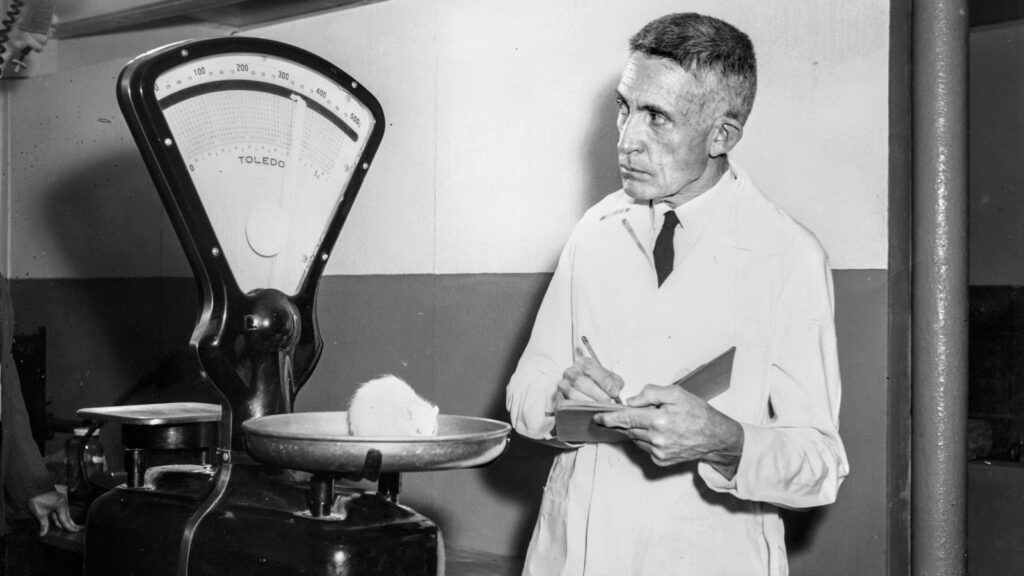
In the 1930s, Clive McCay at Cornell University discovered what would later turn out to be the largest non-genetic lifespan extension ever seen in animals.
McCay noticed that rats stayed healthier and lived significantly longer when they were fed less food as long as they avoided malnutrition. (PMID: 20484554).
Nearly a century later, calorie restriction remains one of the most powerful interventions ever discovered in aging biology.⬇️⬇️

English
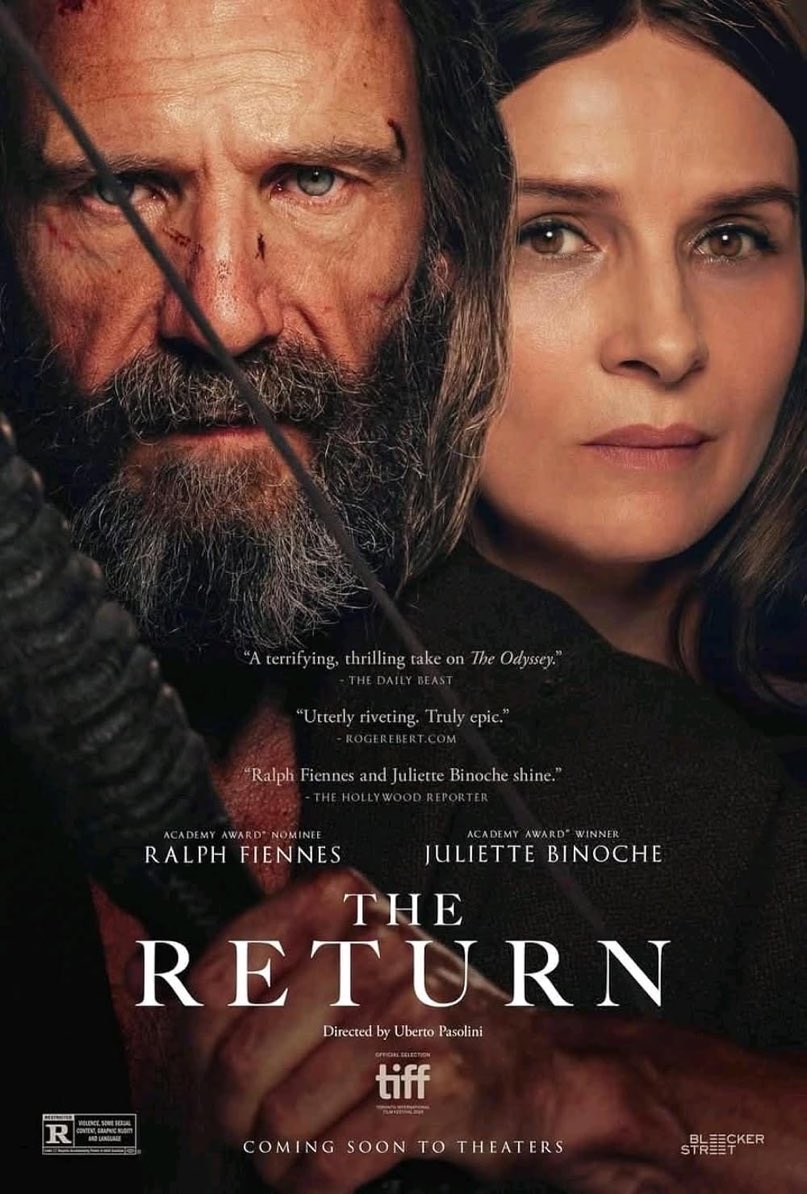
@richardstoicj @elonmusk @Variety Ralph Fiennes is an outstanding actor. Why doesn't he already have three Oscars? 🤔
English


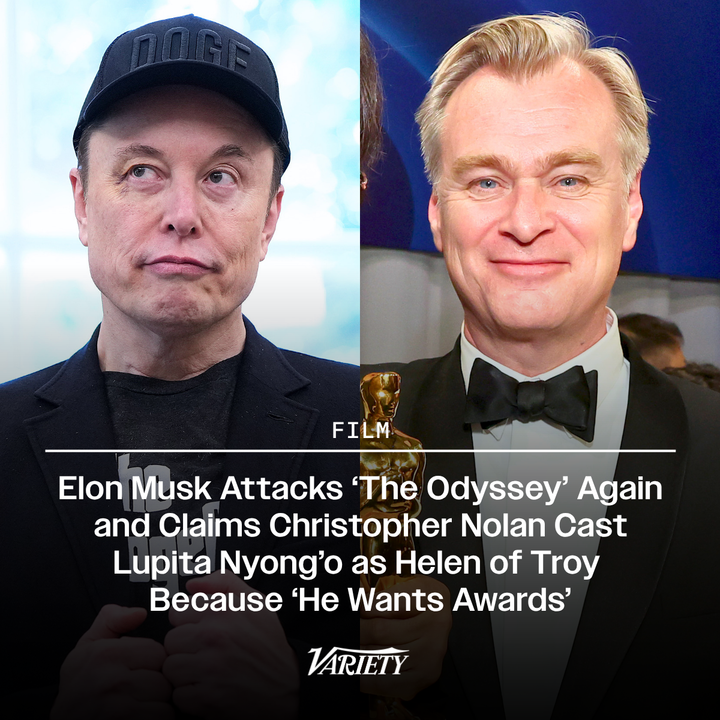
Elon Musk is bashing Christopher Nolan for #TheOdyssey casting, alleging the director cast Lupita Nyong’o as Helen of Troy because he “wants the awards.”
In additional X posts, Musk re-tweeted posts that mocked Elliot Page’s masculinity and claimed that Nolan was stomping all over Homer’s grave because of his casting choices.
variety.com/2026/film/news…
English
🇫🇷 Numéro 6 🥩 retweetledi
In 1999, Merck launched a new anti-inflammatory drug called Vioxx. A triumph of marketing. Easier on the stomach than ibuprofen, the adverts said. Suitable for arthritis, back pain, period pain, anything that ached. By 2003 it was earning Merck around 2.5 billion dollars a year and had been prescribed to roughly 80 million people worldwide.
Internal Merck documents would later show that the company had evidence by the year 2000 that Vioxx significantly increased the risk of heart attack and stroke.
They knew. They had the data. They had emails between executives discussing how to manage the data. In one memorable email, a Merck scientist describes what to do about researchers raising concerns: "We may need to seek them out and destroy them where they live."
Vioxx was withdrawn in 2004. A peer-reviewed analysis published in The Lancet by an FDA whistleblower estimated that the drug had caused between 88,000 and 140,000 serious cardiovascular events in the United States. Tens of thousands of people died.
Merck paid roughly five billion dollars in settlements. The drug had earned them more than that.
Nobody went to prison. The company is still trading. Its shareholders did not lose money. Its executives did not lose their jobs. The medical journals that published the favourable trials were slow to retract anything, and in several cases never did.
The doctors who prescribed Vioxx were not told the data had been concealed. The patients were not told either. They are simply not here any more.
Every time someone asks why I'm sceptical of the next blockbuster drug being pushed through with thin trial data and aggressive marketing, I think of Vioxx.
Look it up. It isn't a conspiracy. It's a court record.

English
🇫🇷 Numéro 6 🥩 retweetledi


@silvano_trotta Rien de ce que raconte Shadow of Ezra ne s’est réalisé. Jamais.
Français
Le milliardaire juif Michael Milken met en garde que le monde entier sera bientôt contraint de charger ses dossiers médicaux numériques sur ses téléphones et de dépendre d’un médecin IA pour les soins médicaux dans un avenir très proche.
Bien sûr, vous devrez être à jour de tous les vaccins, et il vous surveillera 24h/24 (ce qu'il ne dit pas).
Shadow of Ezra@ShadowofEzra
Jewish billionaire Michael Milken warns that the entire world will be forced to load their digital health records onto their phones and rely on an AI physician for medical care in the very near future. “It won’t be long before you have a medical teammate who has all your clinical information and all your medical information.” “These will be available to every single person on the planet someday.”
Français
🇫🇷 Numéro 6 🥩 retweetledi
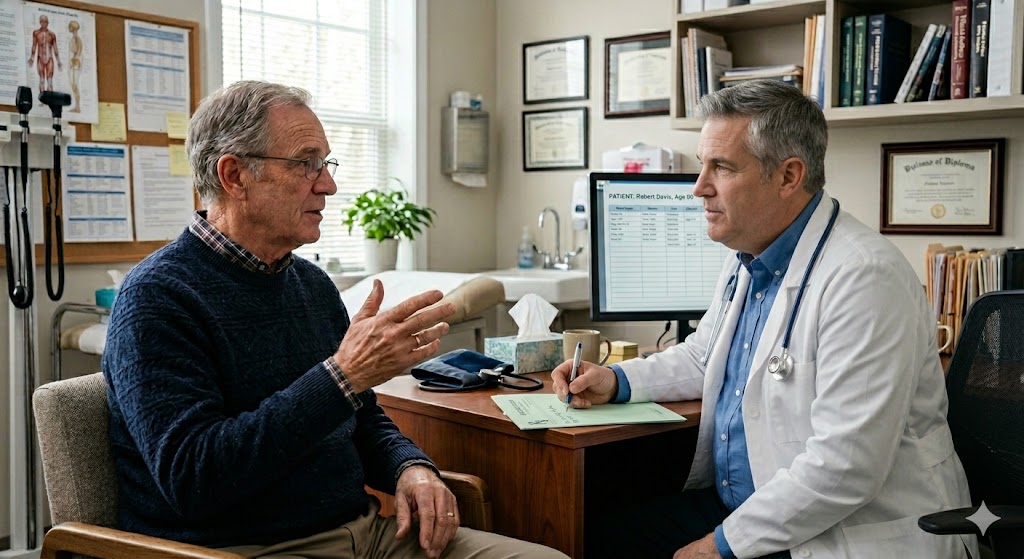
Doctor: "Your LDL is still high. I'm adding a second statin."
Patient: "I'm already on one. My legs ache."
Doctor: "That's a known side effect. I'll add CoQ10."
Patient: "And I'm tired all the time."
Doctor: "Fatigue is common. I'll add modafinil."
Patient: "My memory is foggy."
Doctor: "Cognitive effects can occur. Donepezil should help."
Patient: "I have a cough now."
Doctor: "That'll be the ACE inhibitor I prescribed last visit. We'll swap it for an ARB."
Patient: "I'm not sleeping."
Doctor: "Zopiclone."
Patient: "Heard that's addictive."
Doctor: "We'll taper you with mirtazapine when the time comes."
Patient: "My blood sugar has gone up."
Doctor: "Statins can do that. Metformin."
Patient: "I get diarrhoea on metformin."
Doctor: "Loperamide."
Patient: "I've gained weight."
Doctor: "Ozempic."
Patient: "I feel nauseous."
Doctor: "Ondansetron."
Patient: "I don't want to be on twelve medications."
Doctor: "Anxiety is common at this stage. I'll add sertraline."
Patient: "What if I just stopped the statin?"
Doctor: "Absolutely not."
English
Confiner des personnes sur un bateau de croisière c’est pas humain…
On m’aurait demandé, j’aurais pourtant été volontaire pour prendre leur place.
AlertesInfos@AlertesInfos
🦠⛴️ FLASH | Le directeur de l’OMS justifie le choix de ne pas maintenir les infectés et cas contacts de l’hantavirus en quarantaine sur le bateau de croisière, estimant qu’une telle mesure "aurait été inhumaine et inutile". (OMS)
Français
🇫🇷 Numéro 6 🥩 retweetledi
🚨New Paper: "Seven Years of 700 Cholesterol Without Coronary Atherosclerosis: A Lean Mass Hyper-Responder Case Report"
Link: doi.org/10.3390/diseas…
For the past 7 years, I’ve been running what is essentially a natural experiment in cholesterol and heart health.
During that time, I’ve largely lived with:
👉Total cholesterol around 700 mg/dl
👉LDL cholesterol between 500–600 mg/dL
I recently underwent advanced coronary CT angiography imaging with AI-guided analysis. This is not a CAC. It measures all plaque (soft + calcified), with expert interpretation and AI-guided analysis capable of quantifying plaque down to the cubic millimeter (mm3).
Now, to address the obvious question:
Am I too young for plaque?
In brief: No.
The clearest comparison is individuals with homozygous familial hypercholesterolemia, who often have similarly extreme LDL/ApoB levels and can develop advanced plaque as toddlers, and even heart attacks as early as age 8.
Also, nutrition influencers in their 30s have publicly shared quantified plaque scores from these same imaging technologies. In one recent case, a plant-based influencer in his thirties was found to have 61.3 mm³ of plaque despite having far lower lifetime LDL exposure. (He can identify himself if he so chooses.)
My case also isn’t a one-off.
There are many individuals like me, including older individuals with similar LDL-C and ApoB without any plaque.
The difference is that I’m an unusually well-characterized subject, with extensive metabolic data and health markers tracked over time. You can learn more at the newsletter or open-access paper, linked above.
The science of heart health is not settled. And cholesterol is not a simple story.
🚨 If you want to help spread the word...
Quote Tweet this post (or create an original post) including the article link with a thought. Academic papers are increasingly evaluated using attention metrics. Original posts from unique users are one way to increase these metrics and help ultimately increase its reach.
🚨 If you want to learn more, I'll include more learning resources below 👇

English