Shitong Qiao

836 posts

Shitong Qiao

Shitong Qiao

@QST85

Professor @dukelaw interested in "order without law." Author of Chinese Small Property; Finance against Law; and The Authoritarian Commons.

Durham, North Carolina Katılım Temmuz 2013
654 Takip Edilen992 Takipçiler
Shitong Qiao retweetledi

Wᴀsʜ. U. L. Rᴇᴠ.
Wᴀsʜ. U. L. Rᴇᴠ.@WashULRev·
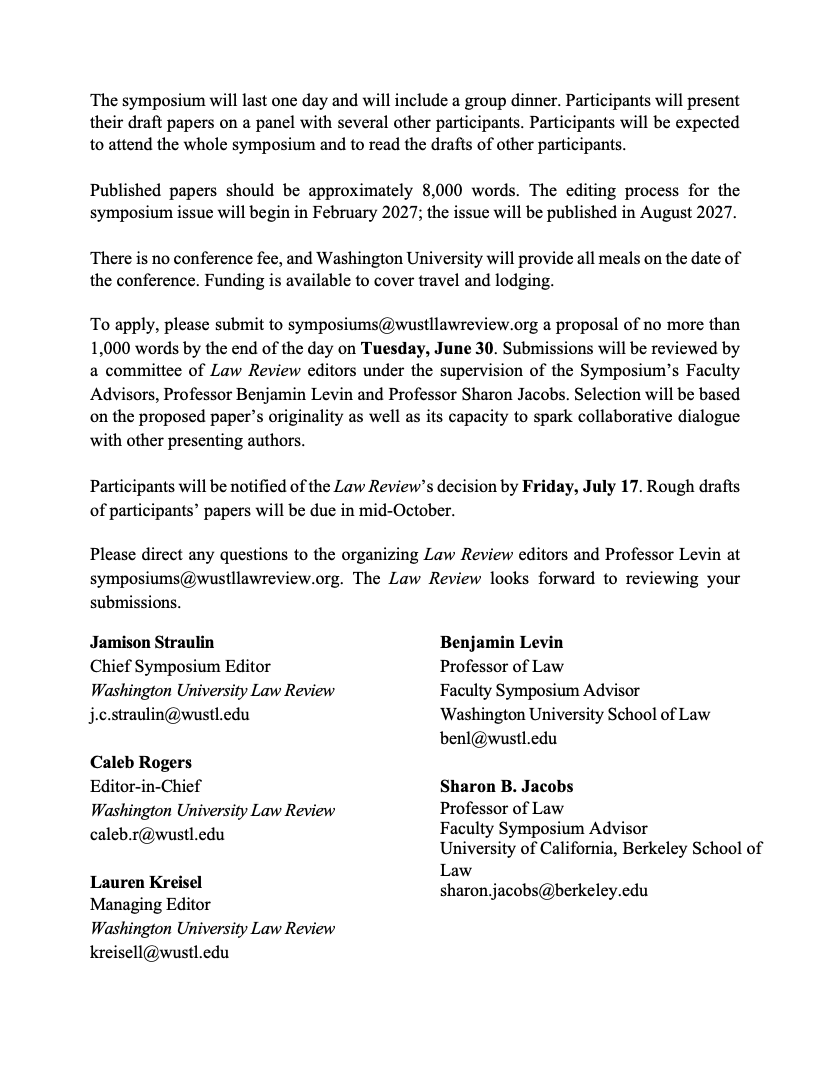
The Washington University Law Review invites submissions for its 2026 symposium, “The Many Faces of the State.” Proposals (≤1,000 words) due June 30, 2026: symposiums@wustllawreview.org. See attached.
Wᴀsʜ. U. L. Rᴇᴠ. tweet mediaWᴀsʜ. U. L. Rᴇᴠ. tweet media
English
1
20
62
9.7K
Shitong Qiao retweetledi
Jan Vogler
Jan Vogler@Jan_Vogler·
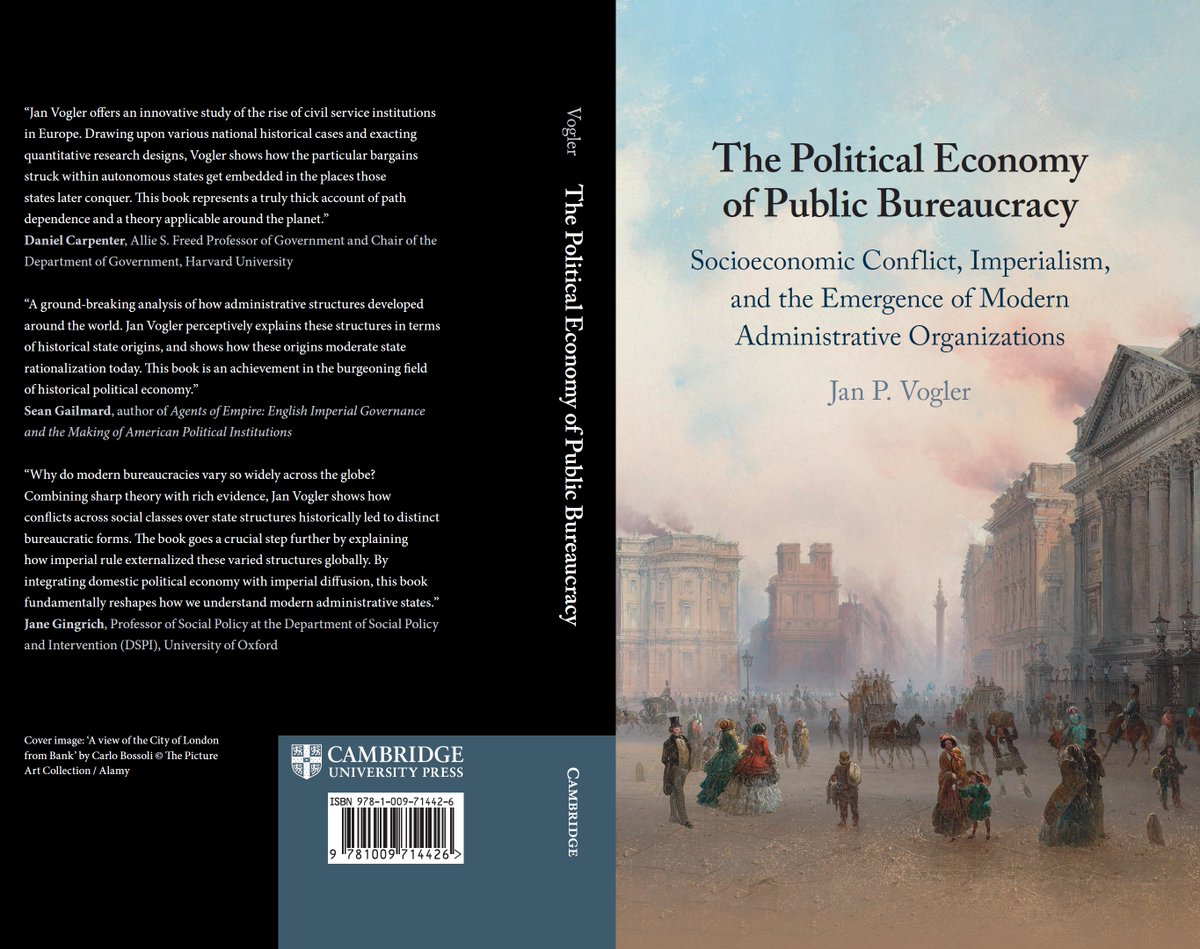
🚨 Coming soon: “The Political Economy of Public Bureaucracy” 🚨 My book is forthcoming in 2026 with @CambridgeUP! A preview of the cover art is below. Thanks to Dan Carpenter, @SeanGailmard, & @jrgingrich for their endorsements! 🙏 More details will follow in future posts. 😊
Jan Vogler tweet media
English
26
202
1K
61.2K
Shitong Qiao retweetledi
The Nobel Prize
The Nobel Prize@NobelPrize·
"The perfect is the enemy of the very good." Joel Mokyr gives some important advice that can be applied to most subjects aside from mathematics – don't expect perfection. He says he does his best, acknowledges what he does not know and moves on. Mokyr was awarded the 2025 prize in economic sciences for having identified the prerequisites for sustained growth through technological progress. Watch our full interview: bit.ly/4bYtmJ2
English
22
227
853
118.6K
Shitong Qiao
Shitong Qiao@QST85·
This NYT report marks the 10th review/interview about my book "The Authoritarian Commons: Neighborhood Democratization in Urban China." I'm grateful that people are still paying attention to everyday life in China. nytimes.com/2026/04/27/wor…
English
0
0
0
44
Shitong Qiao retweetledi
Bo Wang
Bo Wang@BoWang87·
This is probably the best paper I have read about causal reasoning for quite some time. Really a great weekend read! "Causal Persuasion" (Burkovskaya & Starkov) models how much evidence you need to establish vs. rule out a causal link. The result is stark: To prove X causes Y: 1-2 well-chosen variables often suffice. To prove X does NOT cause Y: you must account for every possible common cause. Arbitrarily many confounders. Practically unfalsifiable. This inverts the Humean intuition: in causal reasoning, positive claims are cheap to sell and negative ones are almost impossible to rebut. Now think about what this means for Virtual Cell models. Most perturbation datasets cover a thin slice of the combinatorial space — a few hundred gene knockouts, maybe a few contexts. A model trained on that data can confidently "learn" gene X drives phenotype Y. But if the true structure is X←C→Y , and C was never systematically varied — the model will never see its own confounding. It has no mechanism to distinguish causal signal from correlated noise. The paper formalizes exactly why: the model is a sophisticated receiver that accepts whatever causal story is consistent with the data it's seen. And if the data omits the right confounders, even a "sophisticated" model is manipulable. This is the deepest argument for perturbation diversity. Not just more data, but also more axes of variation. Vary the context. Vary the genetic background. Vary the timing. You're not just collecting samples; you're systematically eliminating alternative causal explanations. This is why we need “scale” the training data with more contexts including cell types, spatial, and temporal variations. Paper: aburkovskaya.com/pdf/causality.…
Bo Wang tweet media
English
18
204
968
106.8K
Shitong Qiao retweetledi
Luiza Jarovsky, PhD
Luiza Jarovsky, PhD@LuizaJarovsky·
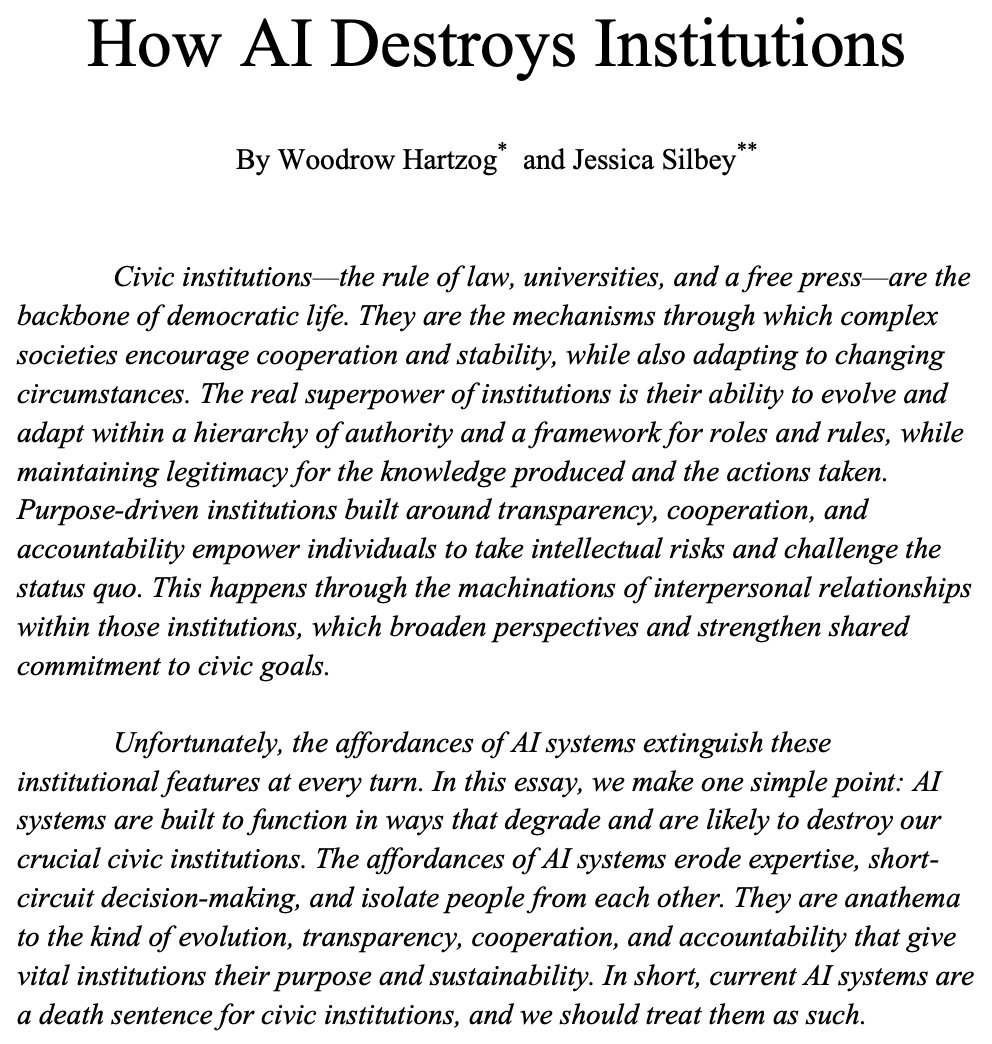
🚨 Last week, I sat with Profs. @hartzog and @JSilbey to discuss their excellent new paper, "How AI Destroys Institutions." The paper has been downloaded 30,000+ times, and it discusses some of AI's most important negative consequences. Watch our 56-minute conversation below:
Luiza Jarovsky, PhD tweet media
English
27
276
862
54K
Shitong Qiao retweetledi
Robert Youssef
Robert Youssef@rryssf·
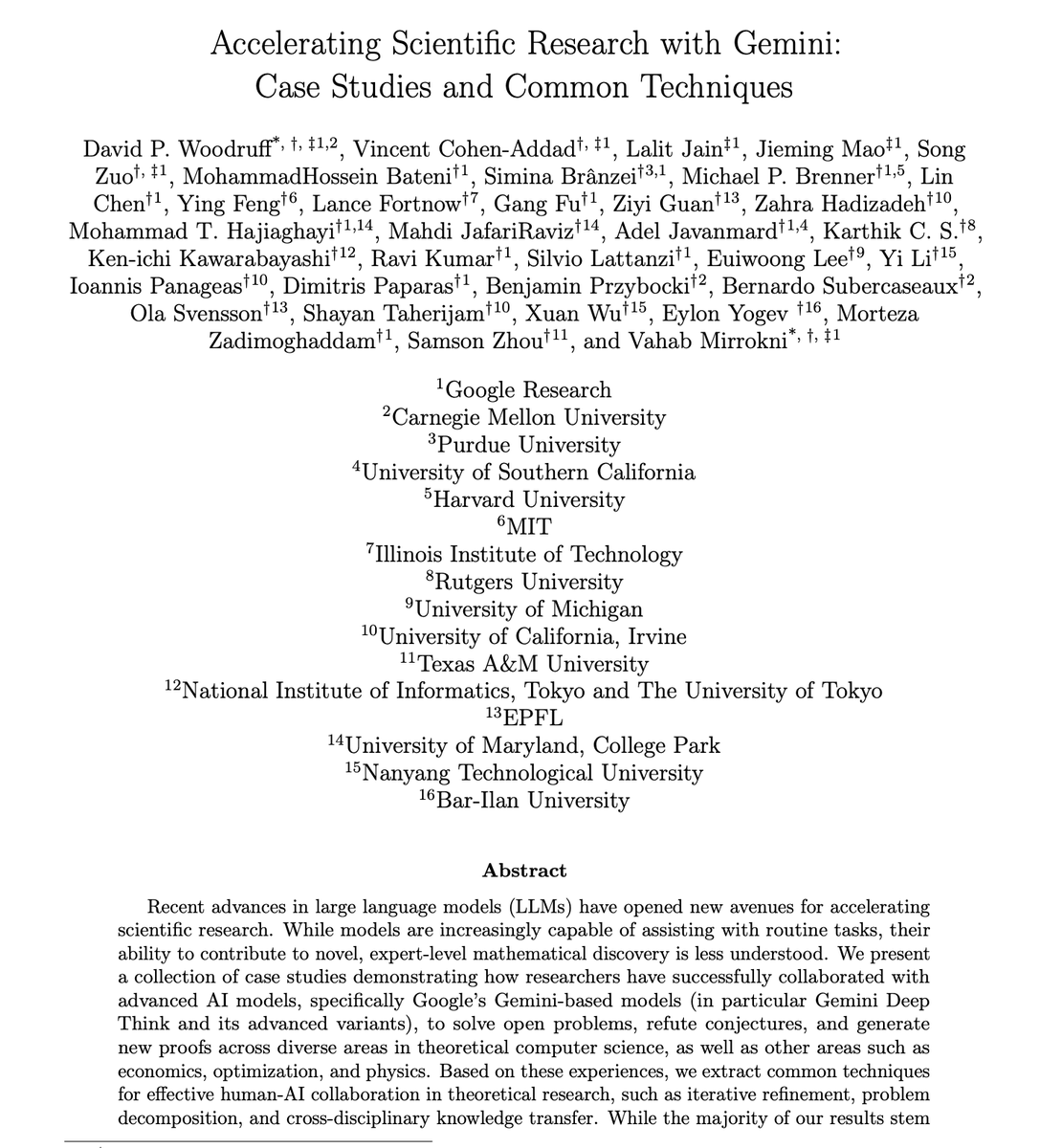
Google just mass-published how 34 researchers actually use Gemini to solve open math and CS problems. not benchmarks. not demos. real unsolved problems across cryptography, physics, graph theory, and economics. 145 pages of case studies. here's what actually matters:
Robert Youssef tweet media
English
36
239
1.4K
118.6K
Shitong Qiao retweetledi
Rafael Dix-Carneiro
Rafael Dix-Carneiro@dix_rafael·
🚨 Forthcoming in Econometrica! How does trade liberalization affect developing countries with large informal sectors? Informality fundamentally changes how we think about the gains from trade. (1/5)
Econometrica@ecmaEditors

In settings with high informality, the gains from trade are significantly amplified by reductions in misallocation. During economic downturns, the informal sector acts as a buffer against unemployment but leads to larger aggregate real-income losses. econometricsociety.org/publications/e…

English
27
204
1K
205.5K
Shitong Qiao retweetledi
Richard Albert
Richard Albert@RichardAlbert·
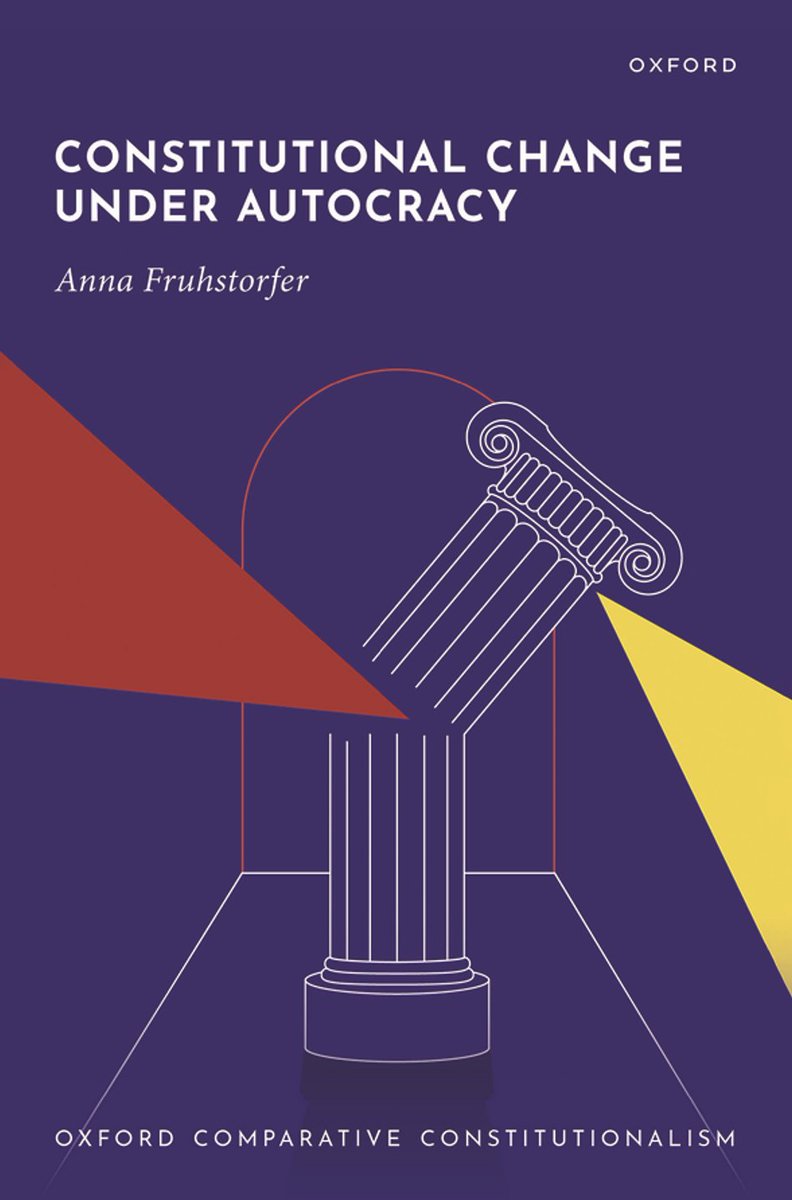
🎉 Congratulations to @AnnaFruhstorfer on her new book "Constitutional Change Under Autocracy." 🤩 We are proud to publish it in our Oxford Series in Comparative Constitutionalism. It is a model for comparative constitutional studies, and certain to become an invaluable resource for scholars of constitutional change. 📚 Check out the book here: global.oup.com/academic/produ…. It is now available for pre-order.
Richard Albert tweet media
English
5
70
195
13.3K
Shitong Qiao retweetledi
Science News
Science News@SciencNews·
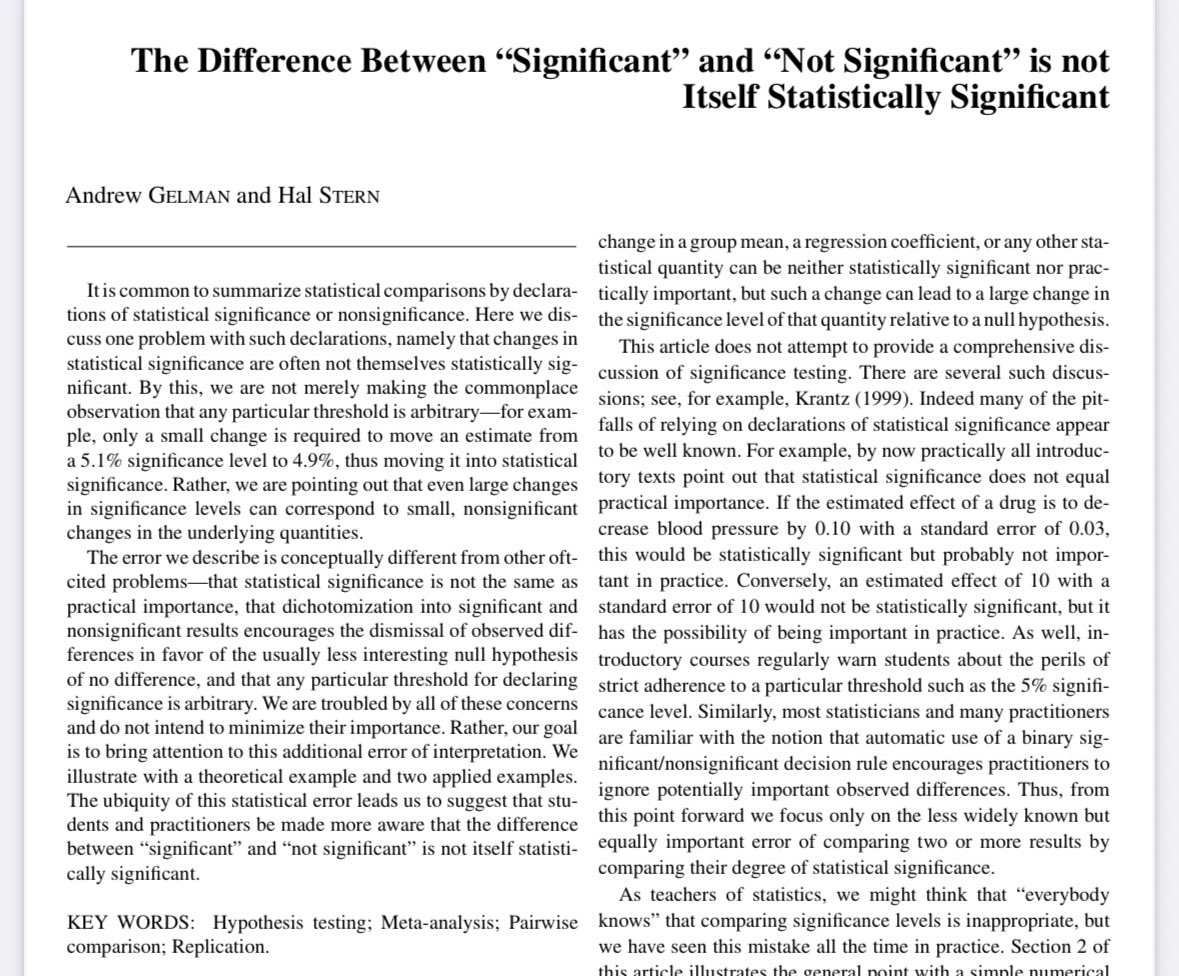
The Difference Between "Significant" and "Not Significant" is not Itself Statistically Significant
Science News tweet media
English
9
172
758
38.5K
Shitong Qiao retweetledi
Oona Hathaway
Oona Hathaway@oonahathaway·
My latest, with @scottjshapiro: "A world in which the powerful no longer feel the need to justify themselves is not merely unjust. It is barbaric . . . . That world does not have a legal order at all. It has only force, guided by one man’s whims." foreignaffairs.com/united-states/…
Oona Hathaway tweet media
English
20
327
749
64K
Shitong Qiao retweetledi
Webb-site
Webb-site@webbhk·
It is with great sadness that we share that David M. Webb MBE passed away peacefully in Hong Kong on Tuesday January 13th, 2026 from metastatic prostate cancer. David will be missed by family, many friends, and supporters. The family request privacy at this difficult time.
English
131
166
855
128.1K
Shitong Qiao retweetledi
Joachim Schork
Joachim Schork@JoachimSchork·
Did you know you can calculate the exact sample size you need before you even start your study? A sample size calculation — also called a power analysis — helps you determine the optimal number of observations for your statistical analysis. It ensures your study is large enough to detect meaningful effects, but not so large that you waste resources. Key advantages of performing a power analysis: ✔️ Avoid underpowered studies that might miss real effects ✔️ Save time and costs by avoiding unnecessarily large samples ✔️ Tailor your sample size to the effect size you care about detecting ✔️ Choose your desired confidence level and statistical power for robust results ✔️ Works for a wide range of statistical tests, from t‑tests to ANOVA and regression ✔️ Supported by many free R packages, such as pwr The image shows on the left side how the required sample size changes depending on the expected effect size — smaller effects require much larger samples. On the right side, you see an example of a calculated sample size for comparing two groups using a t-test, showing exactly how many participants are needed per group for the desired confidence level and statistical power. Sign up for my newsletter to get more practical tips on statistics, data science, R, and Python. Check out this link for more details: eepurl.com/gH6myT #pythonprogramming #programmer #DataAnalytics #RStats #Python #datastructure #DataAnalytics
GIF
English
8
189
1.2K
162.9K
Shitong Qiao retweetledi
Molly Brady
Molly Brady@mollyxbrady·
CFP: Oxford Studies in Private Law Theory, Volume V. We're seeking contributions in contract, property, tort, fiduciary, equity, unjust enrichment, and remedies law. Submissions are 12,000 words, and you get a trip to Cape Town! Deadline August 1, 2026! philevents.org/event/show/142…
English
0
12
19
2.4K
Shitong Qiao retweetledi
Alex Prompter
Alex Prompter@alex_prompter·
This paper from Harvard and MIT quietly answers the most important AI question nobody benchmarks properly: Can LLMs actually discover science, or are they just good at talking about it? The paper is called “Evaluating Large Language Models in Scientific Discovery”, and instead of asking models trivia questions, it tests something much harder: Can models form hypotheses, design experiments, interpret results, and update beliefs like real scientists? Here’s what the authors did differently 👇 • They evaluate LLMs across the full discovery loop hypothesis → experiment → observation → revision • Tasks span biology, chemistry, and physics, not toy puzzles • Models must work with incomplete data, noisy results, and false leads • Success is measured by scientific progress, not fluency or confidence What they found is sobering. LLMs are decent at suggesting hypotheses, but brittle at everything that follows. ✓ They overfit to surface patterns ✓ They struggle to abandon bad hypotheses even when evidence contradicts them ✓ They confuse correlation for causation ✓ They hallucinate explanations when experiments fail ✓ They optimize for plausibility, not truth Most striking result: `High benchmark scores do not correlate with scientific discovery ability.` Some top models that dominate standard reasoning tests completely fail when forced to run iterative experiments and update theories. Why this matters: Real science is not one-shot reasoning. It’s feedback, failure, revision, and restraint. LLMs today: • Talk like scientists • Write like scientists • But don’t think like scientists yet The paper’s core takeaway: Scientific intelligence is not language intelligence. It requires memory, hypothesis tracking, causal reasoning, and the ability to say “I was wrong.” Until models can reliably do that, claims about “AI scientists” are mostly premature. This paper doesn’t hype AI. It defines the gap we still need to close. And that’s exactly why it’s important.
Alex Prompter tweet media
English
379
2.1K
8.2K
1.2M