

QANplatform
1.3K posts

QANplatform
@QANplatform
Quantum-resistant Layer 1 hybrid #blockchain platform. 👨💻Code smart contracts in any language. 🆕 QAN TestNet is LIVE! #QANplatform
Katılım Temmuz 2019
29 Takip Edilen47.1K Takipçiler
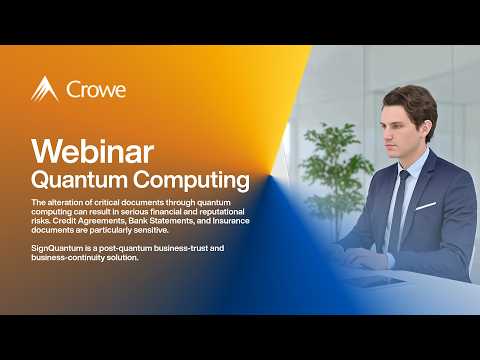
A loan agreement. One digit changed. Millions of euros at risk. No court can prove which version is authentic.
That's not a hypothetical, it's the document integrity crisis that quantum computers will make possible by breaking RSA and ECC cryptography.
SignQuantum addresses this with the help of QANplatform's post-quantum technology:
- it generates a cryptographic hash of every signed document and
- anchors it to QANplatform's quantum-resistant blockchain using ML-DSA (NIST FIPS 204) creating a mathematically provable, tamper-proof timestamp that survives the post-quantum era.
Crowe Portugal, a member of one of the world’s largest consulting and top-10 global accounting firms, hosted a 48-minute deep dive on the quantum threat, the regulatory landscape, and how to act before Q-Day arrives.
Link in the comments 👇

English
The myth
My assets are safe because the quantum computer powerful enough to break ECDSA does not exist yet.
The reality
Harvest-now-decrypt-later means the exposure already happened. The moment your public key was broadcast on-chain, the attack surface was created. The quantum computer does not need to exist at broadcast time. It only needs to exist at some point in the future.
English
Download from qanplatform.com/xlink/
Share your experience. Fill in the feedback form 👉 forms.gle/cAbgVKyjPd2Xoa…
English
Mac users, the wait is over.
The QAN XLINK desktop app is now available on macOS! Quantum-safe security, now on every major platform.
Linux ✅ Windows ✅ macOS ✅
Download it and let us know what you think.
Link in the comments 👇
English
4/🧵If you are a regular user with assets on-chain
The exposure is not immediate. But keys generated today on quantum-vulnerable chains will be recoverable by sufficiently advanced quantum hardware in the future. The wallets do not update themselves. The chains do not migrate on your behalf. This is worth knowing.
NIST publishing was not a warning shot. It was a starting gun.
English
3/🧵If you are an enterprise evaluating blockchain for serious deployment
Your security team already knows about the NIST standards. The question is whether they have connected it to your blockchain infrastructure evaluation yet. When they do, the question becomes simple, what is this chain's migration path and what does it cost us? If the answer is unclear, that is a procurement risk. And enterprise procurement people are paid to find those risks.
English
The cryptography securing every major blockchain got an expiration notice. Most missed it.
NIST published its post-quantum cryptographic standards on August 13, 2024. Most of crypto either missed it or filed it under future problem.
Here is what it actually means, cut by who you are. 🧵
English
4 million.
That is the estimated number of Bitcoin sitting in wallets where the full public key is permanently exposed on-chain.
No encryption.
Just the raw material a sufficiently advanced quantum computer needs. Sitting there. Forever.
English
Q-Day will not be announced with a headline. There will just be wallets draining. Here is how it actually plays out for the people holding assets when it happens.
It is a Tuesday morning in 2029.
A security researcher in Geneva, let us call her Laura, is running a routine audit on a post-quantum migration report for a mid-sized European bank.
The bank did the work. They migrated their internal comms two years ago. Updated their certificate infrastructure. Rotated keys. They went through the checklist and signed off. Their CISO presented it to the board as done.
But buried in Laura's audit is a single line item she almost skips, Legacy transaction signatures, 2019 to 2023. Not re-signed under PQC. Archived, not active.
She pauses.
Those transactions are not active. The bank is not using them. They are just sitting in the archive, like old files in a folder nobody opens. Except this is not a folder on a hard drive in a server room the bank controls. This is a blockchain.
Archived does not mean gone. Archived means permanently stored, publicly accessible, readable by anyone with an internet connection, forever.
A quantum computer powerful enough to run Shor's algorithm does not care that those transactions are old. It does not need permission to access them. It does not need to break into anything.
The public keys are right there on-chain. As they always were. As they were designed to be. And a public key, to a sufficiently advanced quantum computer, is just the beginning of the calculation.
The exposure did not happen in 2029. It happened the day each transaction was broadcast. The quantum computer just has to show up.
Laura types slowly now. Because the question she is adding to her report is not "could this happen." It is "how many other ledgers have this same line item and do not know it yet."
English
March Milestones: New QAN XLINK Release, TestNet Fixes, and Status Page
This month's update highlights the release of a refined QAN XLINK Beta version with a smoother user experience, alongside essential TestNet fixes. We've also taken steps to increase transparency with our new public Status Page and addressed documentation gaps to make integration easier for developers.
Read the full recap on our blog, link in the comments 🔗👇

English
4/🧵 Google's conclusion is unambiguous: "We urge all vulnerable cryptocurrency communities to join the migration to PQC without delay."
This is exactly why we're building quantum-safe infrastructure from the ground up.
English
3/🧵 It's not just Bitcoin. Ethereum's Proof-of-Stake validators, smart contracts, and tokenized real-world assets all introduce new attack surfaces that go far beyond Bitcoin's exposure.
And 2.3M+ BTC in dormant wallets? Exposed with no easy path to migrate without coordinated protocol intervention.
English
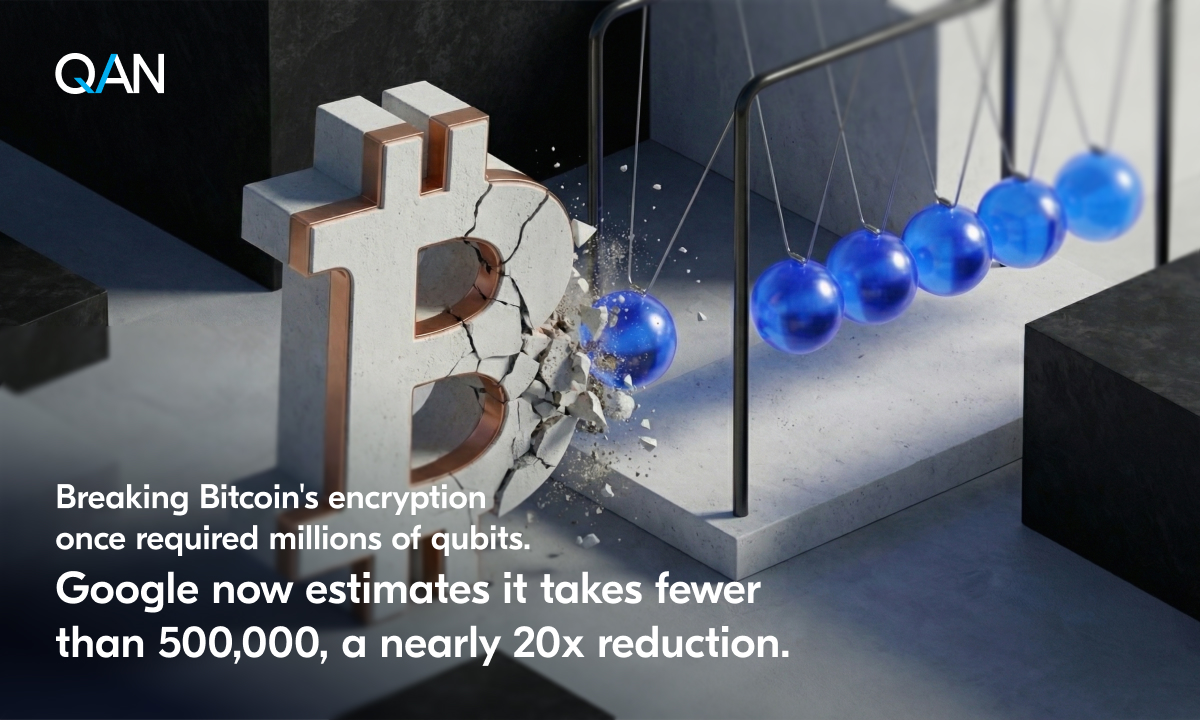
Google Quantum AI just published a landmark paper on quantum threats to cryptocurrency and the numbers are sobering.
Here's what every blockchain builder needs to know 🧵
English
Read Hacken's case study on their comprehensive cybersecurity audit of the QAN XLINK protocol. 👇
Hacken🇺🇦@hackenclub
Quantum computing is forcing a rethink of how Web3 systems are secured. We audited @QANplatform’s QAN XLINK, a protocol enabling Ethereum wallets to migrate to post-quantum security without breaking compatibility. 31 findings. 0 critical / 0 high. 29 resolved.
English