Qi Liu retweetledi
Qi Liu
16 posts

Qi Liu retweetledi
Qi Liu retweetledi

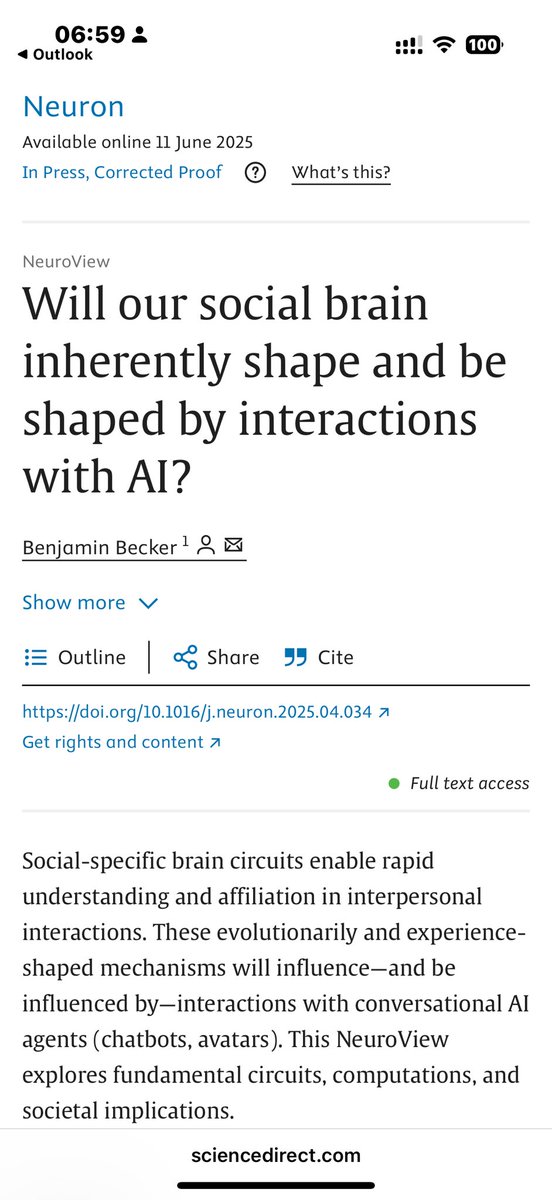
How does our #social #brain inherently shape - and be shaped by - interactions with #AI ? Some ideas from #neuroscience now out in @NeuroCellPress #chatgpt #deepseek sciencedirect.com/science/articl…


English
Qi Liu retweetledi

In our recent paper, we identified two MDD subtypes via normative modeling that showed distinct neural representations during empathic processing, despite demonstrating no significant differences during implicit face processing.
doi.org/10.1038/s41398…
English
Qi Liu retweetledi

Our recent work, which aims to investigate the cognitive and neural mechanisms underlying the differences in suppression between self-related and other-related memories, has been published in IJCHP. Please refer to doi.org/10.1016/j.ijch…
English
Qi Liu retweetledi

Our recent work, which investigated hypoconnectivity in the structure-function coupling of white matter in autism spectrum disorder, has been published in Molecular Autism. Here is the link: doi.org/10.1186/s13229…
English
Qi Liu retweetledi

Who is the best person to talk to about #AI – a computer scientist, a psychologist or a philosopher? Learning about AI is important, because it is now everywhere. Using AI, scientists make breakthroughs once considered impossible. AI is changing how we create art, socialise, study. AI skills are becoming a must-have on a CV. The University of Hong Kong is at the forefront of the AI revolution. Our science editor interviewed HKU’s researchers and educators who work with AI in a wide range of disciplines - from philosophy and filmmaking to mathematics and computer science. To learn more about what AI is, what it can do, and what we can do using AI, follow this new series: Conversations about AI.
#HKU #香港大學 #UniversityofHongKong #AI #AIsecurity #AIvshuman #AIpower #LLM #Chatbot #ChatGPT
English
Qi Liu retweetledi

Our recent paper, which identifies an Autism Spectrum Disorder subtype that is more responsive to chronic oxytocin treatment, has been published in Translational Psychiatry. Here is the link: doi.org/10.1038/s41398…
English
Qi Liu retweetledi

Our new work is out in Computers in Human Behavior! Thank you @bn_becker, @ChrisMontag77, @WeihuaZhaoUU, and all co-authors! 50 days free access to download the article: authors.elsevier.com/a/1j8EB_G-sG2f…

English
Qi Liu retweetledi

HKU @bn_becker and collaborators @stephenXinQZ @ChrisMontag77 show for the first time that the same brain regions that form the basis of habitual behaviour also mediate Internet addiction. More: sciencedirect.com/science/articl…

English
Qi Liu retweetledi

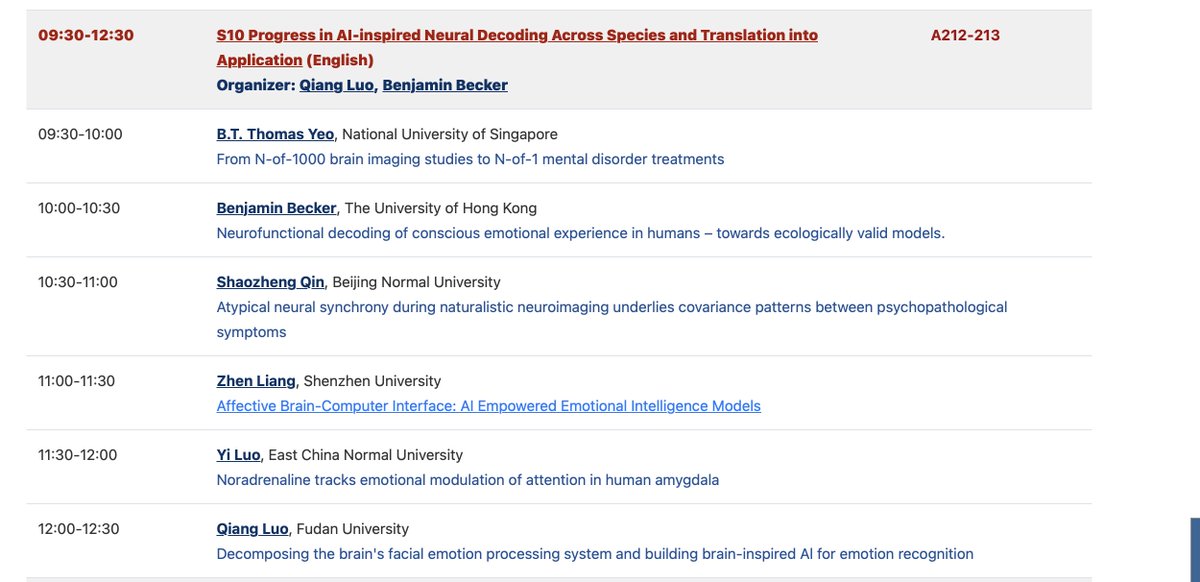
join us in September on the Chinese #Neuroscience Society meeting for #AI #decoding of #brain and #translation across species with @vitaminbrain and @bttyeo Shaozheng Qin, Yi Luo and Zhen Liang
cns.org.cn/2024/program07…


English
Qi Liu retweetledi

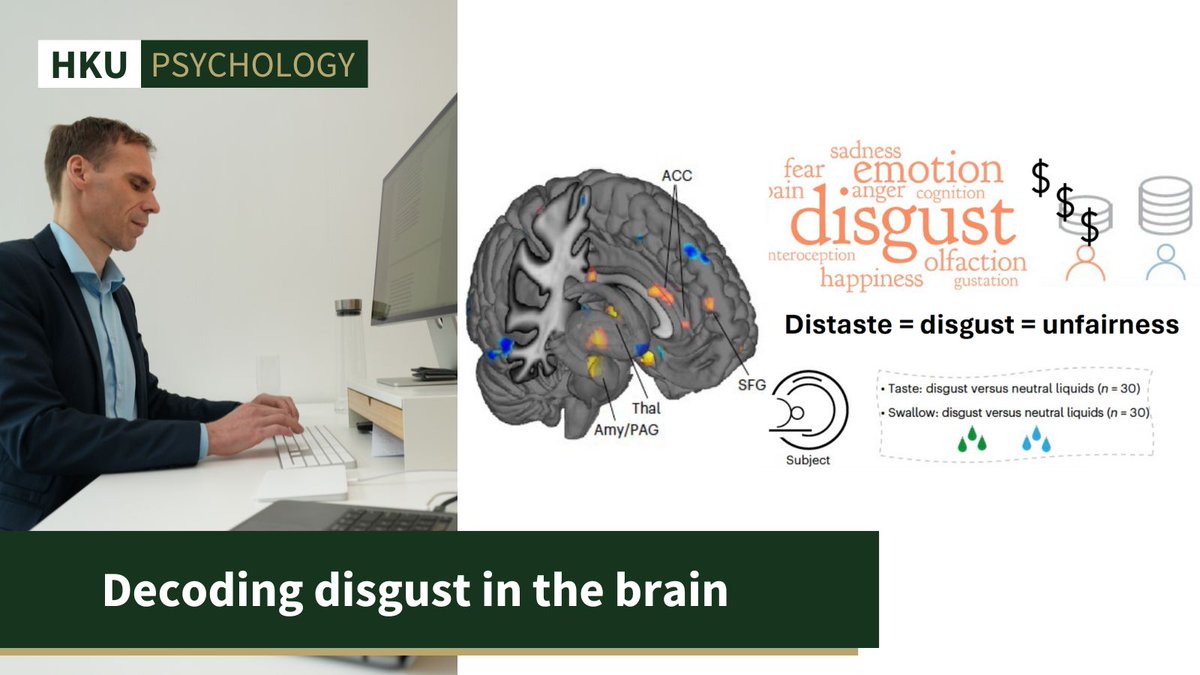
Disgust keeps us away from harmful substances, but are brain pathways involved the same that protect us from harmful social interactions? @bn_becker & collaborators combined fMRI & machine-learning based modelling to answer this. nature.com/articles/s4156…

English
Qi Liu retweetledi

The #brain mechanisms of #disgust generalize across #distate #social #conscious disgust experience #emotion. Now out in @NatureHumBehav – big congrats to @ganxianyang @FengZhou_ @HKUniversity @UESTC1956
nature.com/articles/s4156…
English
Qi Liu retweetledi

🤩My first work now out in medRxiv, supervised by @bn_becker
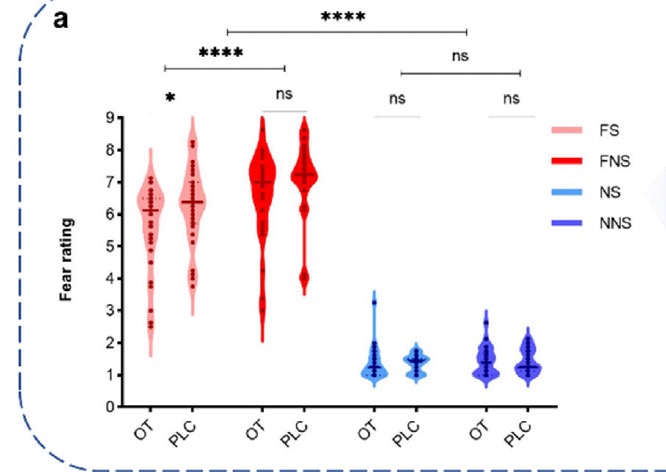
We found that oxytocin reduced subjective fear in naturalistic social contexts by enhancing cross-scale neural activity, helping us understand the mechanism and treatment of #anxiety #PTSD medrxiv.org/content/10.110…
English

Our team’s new out in IJCHP 10.1016/j.ijchp.2024.100462. We combined computational modeling and fNIRS-based dynamic functional connectivity to interstage the potential behavioral and neural mechanisms for taVNS to enhance emotional inhibitory control. Congrats to @Thelma_Zhu.
Weihua Zhao@WeihuaZhaoUU
New one from team is out at IJCHP! We combined taVNS and HDDM with an emotional face Go/No-Go paradigm and found a potential for taVNS to improve emotional inhibitory control. Congrats to @Thelma_Zhu and thanks to all co-authors! Great team work! Link 👇👇sciencedirect.com/science/articl…
English
Qi Liu retweetledi

Decoding the spatiotemporal dynamic neural representation of repetitive facial expression imitation biorxiv.org/cgi/content/sh… #biorxiv_neursci
English