QuSecure

1.2K posts

QuSecure banner
QuSecure

QuSecure

@QuSecure

Post-Quantum Cryptography Made Simple

San Mateo Katılım Ekim 2019
115 Takip Edilen419 Takipçiler
Sabitlenmiş Tweet
QuSecure
QuSecure@QuSecure·
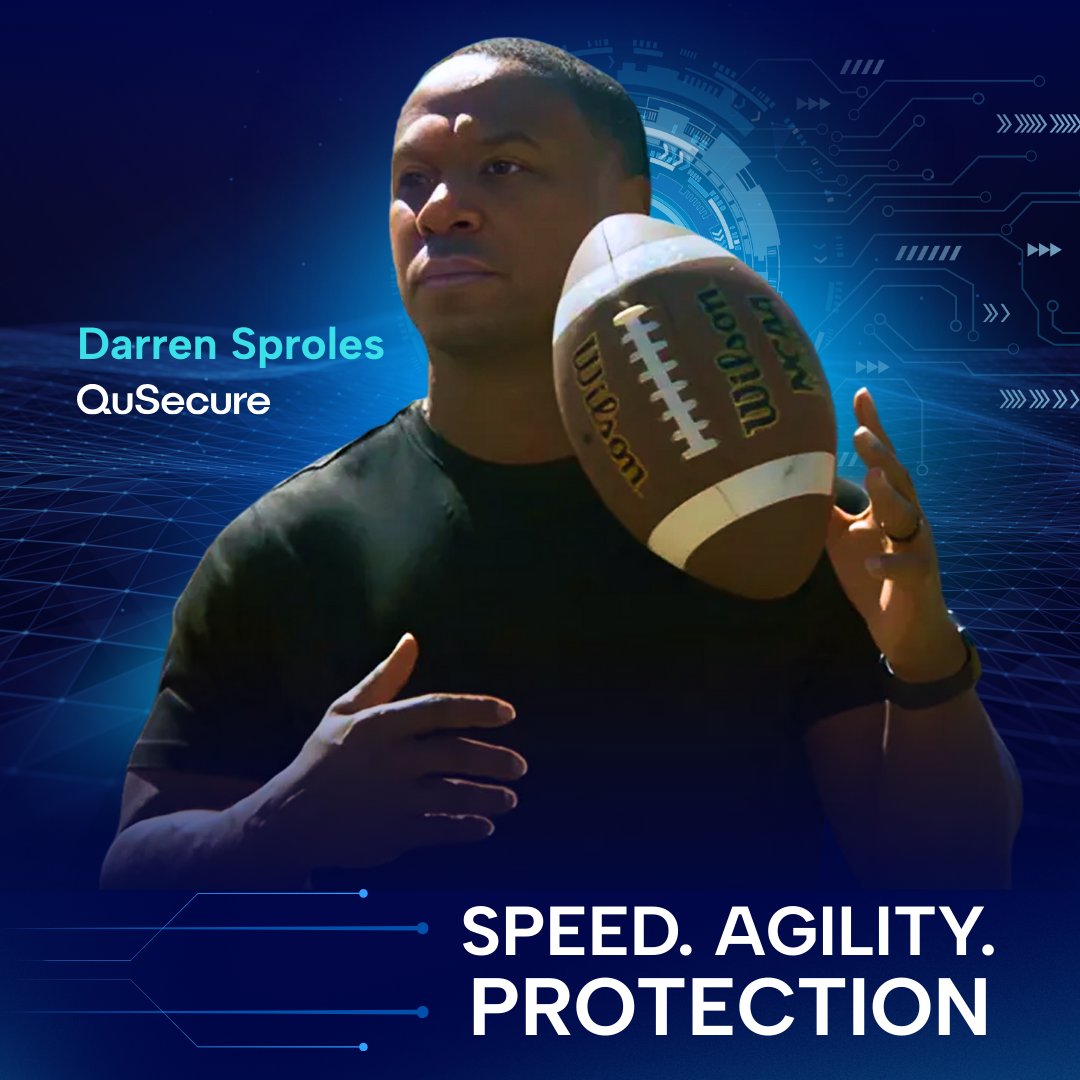
Cybersecurity doesn’t need louder voices. It needs clearer ones. That’s why we partnered with NFL Legend @DarrenSproles, because the way he built his career mirrors the way modern security has to work. See what matters early. Adapt without friction. Trust your protection under pressure. That’s not branding. That’s operating discipline. As quantum computing moves from theory to timeline, cryptography stops being a background concern. It becomes infrastructure leadership. And leadership means making smart moves before you’re forced to. This partnership is one of those moves. Darren represents a mindset most organizations say they want — speed, adaptability, resilience — but rarely operationalize. QuProtect R3 makes that mindset real: cryptographic discovery, crypto-agility, and continuous reporting in one system. No theatrics. No panic. Just readiness. That’s what this is about. Full Release Available Here: hubs.la/Q03-NPlw0
QuSecure tweet media
English
0
3
13
4K
QuSecure
QuSecure@QuSecure·
QuSecure has been recognized as a Sample Vendor for crypto agility in three Gartner Hype Cycle reports covering Zero Trust Technology, Application Security, and Data Security Technologies. na2.hubs.ly/H06-b6-0 As organizations prepare for post-quantum cryptography, crypto agility is becoming essential for managing cryptographic change, adopting new standards, and reducing migration complexity. See why crypto agility is becoming a foundational requirement for post-quantum readiness and what this recognition means for organizations planning their migration. #CryptoAgility #PostQuantumCryptography #PQC #Cybersecurity #QuantumSecurity
QuSecure tweet media
English
0
0
2
52
QuSecure
QuSecure@QuSecure·
New U.S. quantum executive orders are accelerating the move to post quantum cryptography. Read QuSecure CEO and Co-Founder Rebecca Krauthamer's perspective in The Quantum Insider on why organizations should prioritize cryptographic inventory, crypto agility, and quantum readiness today. Read more: na2.hubs.ly/H06ZnwB0
QuSecure tweet media
English
0
0
0
47
QuSecure
QuSecure@QuSecure·
Discovery without chaos. Transition without disruption. Readiness without uncertainty. Post-quantum security doesn’t need drama. It needs structure. It needs, QuProtect R3
QuSecure tweet media
English
0
0
0
23
QuSecure
QuSecure@QuSecure·
New blog from our VP of Engineering, Scott Kawaguchi at QuSecure: Why cryptography should be recognized as a first-class pillar of Zero Trust. Read the blog here : na2.hubs.ly/H06QrnC0 Every Zero Trust function, including identity, devices, networks, applications, and data, depends on cryptographic integrity. As organizations prepare for post-quantum migration, crypto agility and continuous cryptographic management must become central architectural priorities.
English
0
0
0
42
QuSecure
QuSecure@QuSecure·
The conversation around quantum computing often swings toward urgency without structure. That’s how organizations end up with rushed decisions and fragile outcomes. Effective security leadership is calm, measured, and methodical. Control comes from understanding exposure, sequencing transition, and tracking progress over time. The goal isn’t fear. It’s command.
QuSecure tweet media
English
0
1
0
38
QuSecure
QuSecure@QuSecure·
The strongest security programs don’t rely on urgency or noise. They rely on visibility, structure, and deliberate action. Leadership is measured by preparation — not reaction. And by outcomes that never make headlines. Quiet readiness is a signal of maturity.
QuSecure tweet media
English
0
0
0
31
QuSecure
QuSecure@QuSecure·
MeriTalk examines how the latest quantum executive orders are accelerating federal quantum readiness and cryptographic modernization. The new directives reinforce the need for post-quantum cryptography, crypto agility, and cryptographic inventory as agencies and contractors prepare for long-term quantum resilience. Read more: na2.hubs.ly/H06zzYX0
English
0
0
0
35
QuSecure
QuSecure@QuSecure·
SMBtech highlights Eman Blair joining QuSecure's U.S. Federal Advisory Board as federal agencies accelerate quantum security initiatives. Blair brings more than 20 years of leadership in cybersecurity, digital innovation, and technology modernization. Her expertise will help support organizations preparing for post-quantum cryptography and long-term cyber resilience. Read more: na2.hubs.ly/H06zlc20
English
0
0
0
44
QuSecure
QuSecure@QuSecure·
Nextgov examines how two new executive orders are accelerating federal quantum readiness and post-quantum cryptography migration. The new directives reinforce the importance of cryptographic inventory, crypto agility, and early planning. Organizations that begin preparing today will be better positioned to meet future federal requirements and strengthen long-term cyber resilience. Read more: na2.hubs.ly/H06z2v30
QuSecure tweet media
English
0
0
0
49
QuSecure
QuSecure@QuSecure·
QuSecure QuProtect R3 is now listed in the AWS Marketplace for the U.S. Intelligence Community (ICMP), expanding access for U.S. federal and intelligence community organizations. QuProtect R3 helps organizations discover, inventory, manage, and enforce cryptographic policy while accelerating the transition to post-quantum cryptography and crypto agility across existing environments. Read the Press Release: na2.hubs.ly/H06D_340 #PostQuantumCryptography #PQC #CryptoAgility #AWS #FederalIT #Cybersecurity
QuSecure tweet media
English
0
0
0
39
QuSecure
QuSecure@QuSecure·
Dave Krauthamer, Co-Founder and Field CTO at QuSecure, shares his latest insights in Forbes Technology Council on how AI is transforming the cybersecurity landscape. As AI enables attacks at machine speed, organizations need security strategies that can adapt just as quickly. Post-quantum cryptography, crypto agility, and cryptographic visibility are key components of long-term cyber resilience. Read the full article: na2.hubs.ly/H06z2nv0
English
0
0
1
59
QuSecure
QuSecure@QuSecure·
Citybiz highlights Eman Blair joining QuSecure's Federal Advisory Board as federal agencies accelerate post-quantum security initiatives. Blair brings more than 20 years of intelligence community leadership in cybersecurity, digital innovation, and technology modernization. Her experience will help support organizations preparing for post-quantum cryptography and long-term cyber resilience. Read more: na2.hubs.ly/H06z2kG0
English
0
0
0
82
QuSecure
QuSecure@QuSecure·
TechNadu examines one of the biggest challenges facing organizations as post-quantum security standards become available: migration. Deploying new cryptographic algorithms is only part of the process. Organizations also need cryptographic visibility, crypto agility, and a phased migration strategy to strengthen long-term cyber resilience. Read more: na2.hubs.ly/H06yQ_V0
English
0
0
0
50
QuSecure
QuSecure@QuSecure·
Most people hear the word cryptography and immediately tune out. The easiest way to think about it is as a translator. Imagine I only speak English and you only speak Spanish. I send a message, but before it reaches you, it passes through a translator who converts it into Spanish. When you receive it, you can understand it.  Anyone else listening in just sees gibberish they cannot make sense of. That is essentially what cryptography does. Your message starts in plain text. A cryptographic key transforms it into something unreadable. Someone with the right key can transform it back. The entire digital world relies on this process. Every online purchase. Every bank transfer. Every medical record. Every private message. Most people never think about cryptography because, when it is working, it is invisible. But the cryptography protecting those systems now needs to be upgraded to quantum-resistant standards. Organisations also need the ability to adapt as cryptographic requirements change. That is why the transition to post-quantum cryptography matters. The translator has served us well for decades. Now it is time to teach it a new language.
English
0
0
0
77
QuSecure
QuSecure@QuSecure·
Most people hear the word cryptography and assume it is highly technical. One of the simplest ways to understand it is to think of it as a translator. Imagine someone writes a message in English for a colleague who speaks Spanish. Before the message is sent, it passes through a translator who converts it into a version only the  intended recipient can understand. Anyone intercepting the message would see something they cannot interpret. That is essentially how cryptography works. Information starts in a human-readable form, then a cryptographic key transforms it into unreadable data. Only someone with the correct key can convert it back into the original message. This process underpins the modern digital world. Online purchases, bank transfers, medical records and private messages all rely on cryptography operating quietly in the background. For decades, we have trusted the mathematics behind modern cryptography because solving it without the proper key would take today’s computers an impractically long time. Large-scale quantum computers are expected to solve some of those mathematical problems far more efficiently than conventional computers. Encryption will not suddenly stop working, but some of the algorithms protecting today’s communications will no longer provide the level of security they were designed to deliver. That is why organisations need to replace vulnerable cryptographic algorithms with ones designed to withstand both today’s computers and tomorrow’s quantum computers. The work also needs to leave room for cryptography to keep evolving.
QuSecure tweet media
English
0
0
0
48
QuSecure
QuSecure@QuSecure·
New blog from Rebecca Ilett, Forward Deployed Engineer at QuSecure: a practical guide to executing OMB's M-26-15 and meeting federal #postquantumcryptography requirements. Learn how agencies can use automated cryptographic inventory, #cryptoagility, and continuous reporting to build a successful #PQC migration strategy and stay on track for the 2030 deadline. Read the guide: na2.hubs.ly/H06yNCc0
English
0
0
1
73
QuSecure
QuSecure@QuSecure·
Irene joined QuSecure this summer by way of Stanford where she is studying Economics and Comparative Literature and is an officer in Stanford BASES, their entrepreneurship org. Her curiosity and interest in understanding how product and business decisions are made in tandem brought great perspective to how we analyze and glean insights on our customer journey. With an inherent empathy for customer needs and sharp analytical skills, she has laid the foundations for automated insights that will continue to enable deeper understanding of our customers. "QuSecure is working on a pressing and ubiquitous problem: data protection in the age of quantum threats. Over the course of my internship, I had the opportunity to contribute to that mission by building a customer journey insights system that systematically extracts and makes usable data from sales calls. I got real experience doing real work that will shape how the sales, product, and executive teams interact with customers and make decisions." — Irene Irene, it was a genuine pleasure. We'll be watching what you build next. #QuSecure #Internship #Stanford #CryptoAgility
QuSecure tweet media
English
0
0
0
69
QuSecure
QuSecure@QuSecure·
na2.hubs.ly/H06vqW60 explores industry reaction to the recent AI executive order and what it could mean for cybersecurity. As AI capabilities continue to advance, organizations should also strengthen the security of the data and systems that power AI. Preparing with post-quantum cryptography, crypto agility, and cryptographic visibility can help build long-term cyber resilience. Read more: na2.hubs.ly/H06vrzY0
QuSecure tweet media
English
0
0
0
68
QuSecure
QuSecure@QuSecure·
Dark Reading explores why meeting the 2030 deadline for post-quantum migration will require significant planning and investment. Organizations that establish cryptographic visibility, implement crypto agility, and begin adopting post-quantum cryptography today will be better positioned to meet future compliance requirements and strengthen long-term cyber resilience. Read more: na2.hubs.ly/H06wMFS0
QuSecure tweet media
English
0
1
0
93
QuSecure
QuSecure@QuSecure·
Retired U.S. Navy Rear Admiral Doug Small is joining QuSecure's Federal Advisory Board as federal agencies accelerate post-quantum security initiatives. With more than 35 years of leadership in Navy information warfare and defense modernization, Admiral Small brings deep operational expertise at a pivotal time as agencies implement new Executive Order and Department of War post-quantum cryptography requirements. Learn more: na2.hubs.ly/H06vrdF0
QuSecure tweet media
English
0
0
0
88