QuantosAurus

3.8K posts

QuantosAurus banner
QuantosAurus

QuantosAurus

@QuantosaurusNL

https://t.co/kqLtX4vjR1 #Quant #QuantFlow #PayScript #Overledger #QuantFusion #QuantNet $QNT Gold (Au) No financial advice - DYOR

NL Katılım Kasım 2020
19 Takip Edilen896 Takipçiler
Sabitlenmiş Tweet
QuantosAurus
QuantosAurus@QuantosaurusNL·
$QNT Did anybody make a based estimation what a single Tier-1 bank will need to pay for a Quant license? (hint: ~6 months to positive ROI, as per quant.network/perspectives/w…) Next, what will be the impact on the QNT token price?
English
6
10
89
4.7K
QuantosAurus
QuantosAurus@QuantosaurusNL·
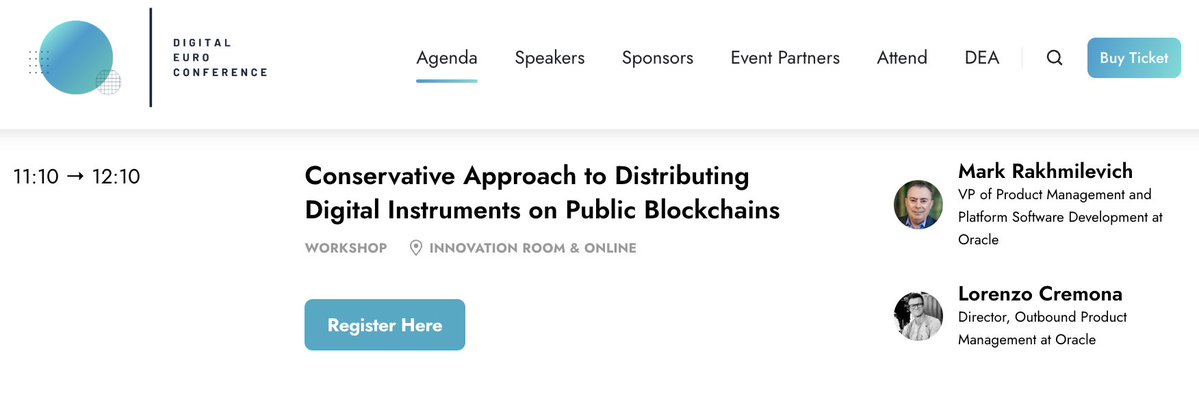
$QNT Digital Euro Conference - Innovation Room
QuantosAurus tweet media
Italiano
1
5
55
962
QuantosAurus
QuantosAurus@QuantosaurusNL·
$QNT Digital Euro Conference
QuantosAurus tweet media
Español
0
3
54
1.3K
Swift
Swift@swiftcommunity·
What if sending money across borders felt as seamless as sending it domestically? Last year, we set out to transform the cross‑border payment experience with the launch of a new Swift payments scheme – designed to deliver fast, predictable and transparent payments worldwide. #CrossBorderPayments #SwiftScheme
Swift tweet media
English
194
272
1.2K
225.3K
QuantosAurus
QuantosAurus@QuantosaurusNL·
@WatcherGuru Nobody takes this serious, 15 years is eternity in tech, this guy just promotes his business plan Stablecoins will be seashells 🐚🐚🐚 soon, good luck! The future is teleporting, A2AAA DYOR $QNT
English
0
1
10
296
Watcher.Guru
Watcher.Guru@WatcherGuru·
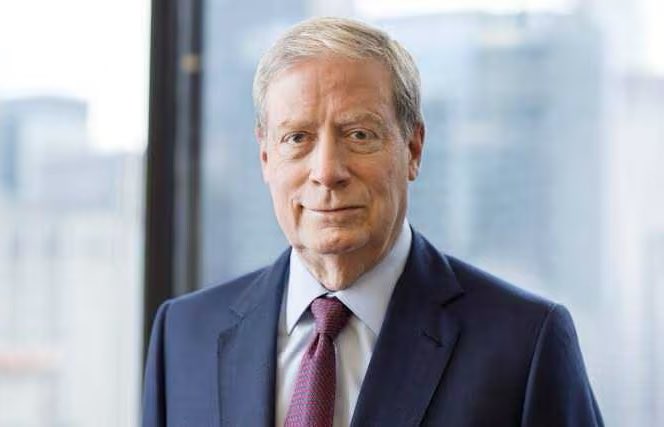
JUST IN: Billionaire Stanley Druckenmiller says the global payment system will run on crypto stablecoins within 15 years because they are more efficient.
Watcher.Guru tweet mediaWatcher.Guru tweet mediaWatcher.Guru tweet media
English
551
966
8.1K
967.8K
QuantosAurus retweetledi
Gilbert Verdian
Gilbert Verdian@gverdian·
A decade in the making, we have published an ISO standard for blockchain interoperability. This is a milestone I've been working towards since 2015, Remitt was founded with the conviction that blockchains could transform financial services but only if the industry solved interoperability and harmonised around global standards. Without that, blockchain would remain fragmented, siloed, and locked out of mainstream institutional adoption. In April 2016, we published what was the world's first proposal for a blockchain standard (remitt.com/blog/2016/04/2…) a bold move at a time when the industry was still largely focused on proofs of concept and competing protocol narratives, not standardisation. The idea was simple but ambitious: if blockchains were going to serve global markets, they needed a common framework that transcended any single protocol or vendor. Central to this thinking from the very beginning was the concept of a multi-gateway architecture, leveraging the know-how of 20 years of experience in cybersecurity to frame the principle that interoperability shouldn't depend on a single bridge or point-to-point connection, but on a layered gateway model that could abstract away the differences between underlying DLTs and connect them through a common interface. This was the architectural foundation of what would become Overledger, and it was also the design philosophy we brought to the standards process. The belief was that a viable international standard for blockchain interoperability had to be protocol-agnostic and gateway-driven, enabling any DLT to communicate with any other DLT (any-to-any) and with existing networks, without requiring those ledgers to change how they operate. The standard and the technology were born from the same insight. That same year, I worked closely with the team from @standardsaus (Standards Australia), who had the foresight in 2015 to champion the initiative at the international level. Together, we pushed for ISO to establish a dedicated Technical Committee for blockchain and not to be absorbed into an existing committee, but to stand on its own as a recognition that this technology warranted its own global standards programme. The industry demand was there, the use cases were multiplying, and the fragmentation was becoming a real barrier. In September 2016, the New Work Item Proposal (NWIP) received global approval, and ISO formally gave the green light to establish a new Technical Committee (remitt.com/blog/2016/09/1…). TC 307 — Blockchain and Electronic Distributed Ledger Technologies — was born (remitt.com/wp-content/upl…). The inaugural meeting was held in Sydney in April 2017, and from that moment the real work began. As the standards work progressed internationally, the mission at Remitt was evolving too. What started as an effort to use blockchains for financial services and solve interoperability grew into something far larger, a full enterprise infrastructure platform for connecting any blockchain to any network. Remitt became Quant, and we built Overledger, the world's first blockchain operating system to deliver on that original vision. The multi-gateway architecture that informed the standards thinking became the core of Overledger's design: a technology layer that sits above all blockchains, providing institutions with a single integration point to access any DLT, any network, and any existing system. The interoperability challenge that drove the standards work was the same challenge we set out to solve commercially and the two efforts reinforced each other throughout. For close to a decade since TC 307's formation, subject matter experts across the world have contributed their time and expertise to Working Group 7 — Interoperability is the committee I chair. International standards are not built quickly they are built through consensus, technical debate, and relentless refinement. The same methodology and rigour that created the Internet, through publishing standards. The result is a published international standard for blockchain interoperability. 🔗 iso.org/standard/82098… A huge thank you to @isostandards as the international standards developing organisation, to the team at @standardsaus who started the initiative in 2015 and worked tirelessly to get TC 307 approved and established globally, and to every subject matter expert who contributed to Working Group 7 over the years. This would not exist without that collective effort. From a blog post proposing the world's first blockchain standard in 2016, to a published ISO standard in 2026 and from Remitt to Quant, from an architectural concept of multi-gateway interoperability to Overledger and a global standard, this has been a decade-long journey of building both the standards and the technology to make blockchain interoperability a reality for institutions worldwide. There is still much more work ahead. More standards to develop, more to evolve, and more to build. But today, we mark a significant milestone. #Blockchain #ISO #Interoperability #Standards #TC307 #DLT #Quant #Overledger
English
112
397
1.4K
195.8K
Swift
Swift@swiftcommunity·
What if the future of finance wasn’t just digital, but truly interoperable? Our latest trials show how Swift is helping make that a reality. We’ve completed pioneering digital asset interoperability trials with leading institutions, including BNP Paribas Securities Services, Intesa Sanpaolo and Societe Generale – FORGE, showcasing how Swift can orchestrate tokenised asset transactions across multiple platforms. This milestone builds on a broader set of recent trials, such as: ✅ ISO 20022 interoperability between blockchains with HSBC and Ant International ✅ Fiat and digital currency settlement with Citi ✅ Digital asset transaction exchange with Northern Trust and the Reserve Bank of Australia ✅ Bridging tokenised assets with UBS Asset Management and Chainlink Labs With these trials complete, we’re now adding a blockchain-based ledger to our infrastructure stack to enable real-time, 24/7 cross-border payments, in collaboration with more than 40 global banks. 👉 Read the full story: swift.com/news-events/ne… #DigitalAssets #Blockchain #Interoperability #SwiftLedger
English
236
531
1.9K
649.7K
QuantosAurus retweetledi
Not a Cult ✝️ Crypto
Not a Cult ✝️ Crypto@NotaCult89·
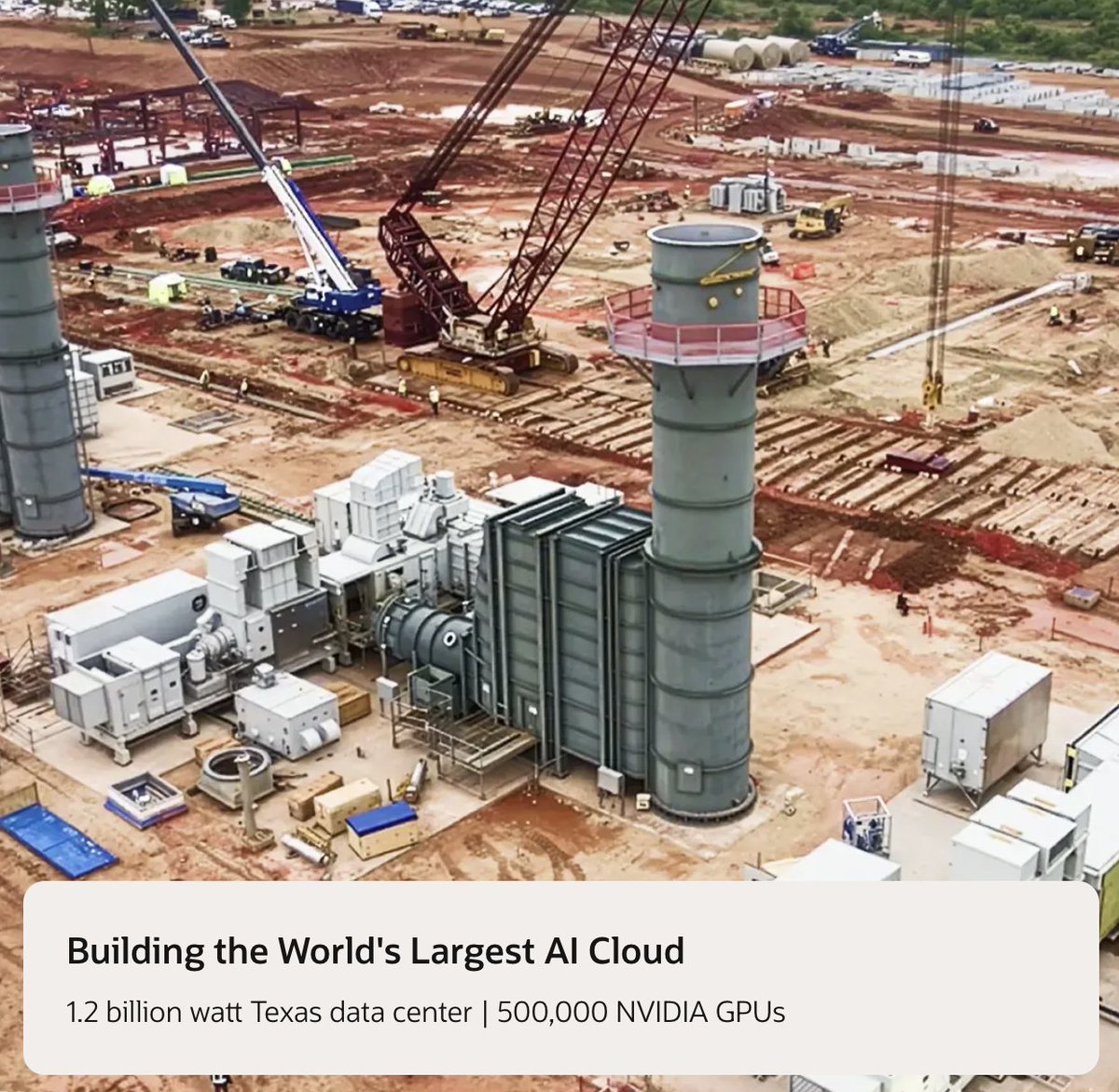
Everyone’s focused on AI models. Oracle just reminded the market that the real power sits in private enterprise data. If AI starts reasoning over bank balance sheets, loan books, treasury positions and settlement flows in real time, then the next step is execution. And execution in finance means secure, interoperable, atomic movement of value across institutions. That’s where infrastructure like $QNT becomes interesting. AI can analyze the system. But someone still has to connect it, synchronise it, and settle it safely across banks, ledgers and jurisdictions. Private AI + tokenised deposits + CBDCs + real-time rails is not a sci-fi stack anymore. It’s being built layer by layer. Most people are watching the model wars. The real leverage might sit in the rails underneath.
Not a Cult ✝️ Crypto tweet media
StockMarket.News@_Investinq

Oracle just told every AI company on earth the same thing. Your models are worthless. Not the technology, talent or the billions spent training them. But the data they were trained on. Larry Ellison, the man who built Oracle into the backbone of global enterprise just dropped a bombshell. He said ChatGPT, Gemini, Grok, and Llama, all of them are training on the exact same data.​ The entire public internet, every Wikipedia page, Reddit thread and every news article. That means they're all converging essentially becoming the same product with different logos.​ Ellison's word for it is commodities. But here's where it gets dangerous. He says the real gold isn't public data, It's private data.​ The medical records in hospital systems, the financial data in bank vaults. The supply chain secrets of every Fortune 500 and guess where most of that data already lives. Not Google, Amazon or Microsoft but inside Oracle.​ Oracle databases hold most of the world's high value private enterprise data. So Oracle just launched something called AI Database 26ai.​ It lets the top AI models, ChatGPT, Gemini, Grok, Llama reason directly over a company's private data, without that data ever leaving the vault.​ They're using a technique called RAG, Retrieval Augmented Generation. The AI doesn't train on your data, it searches it in real time.​ Think about what that means. A bank could ask AI to analyze every loan it's ever made without exposing a single customer record. A hospital could have AI diagnose patients using its full medical history without violating HIPAA.​ A defense contractor could let AI reason across classified operations without data leaving a secure environment.​ Ellison is betting this is bigger than the training market. Bigger than the GPU boom. Bigger than the data center buildout.​ He called it the largest and fastest growing market in history.​ The numbers back the ambition. Oracle's remaining performance obligations just hit $523 billion. That's contracted revenue not yet delivered and $300 billion of it comes from OpenAI alone.​ Cloud revenue hit $8 billion in a single quarter, OCI grew 66 percent and GPU revenue surged 177 percent.​ But here's the part nobody's talking about. If private data becomes the real AI moat, then whoever controls the database controls the future of AI.​ And that's a level of power that should make everyone uncomfortable.

English
4
17
100
5.2K
Michael A. Arouet
Michael A. Arouet@MichaelAArouet·
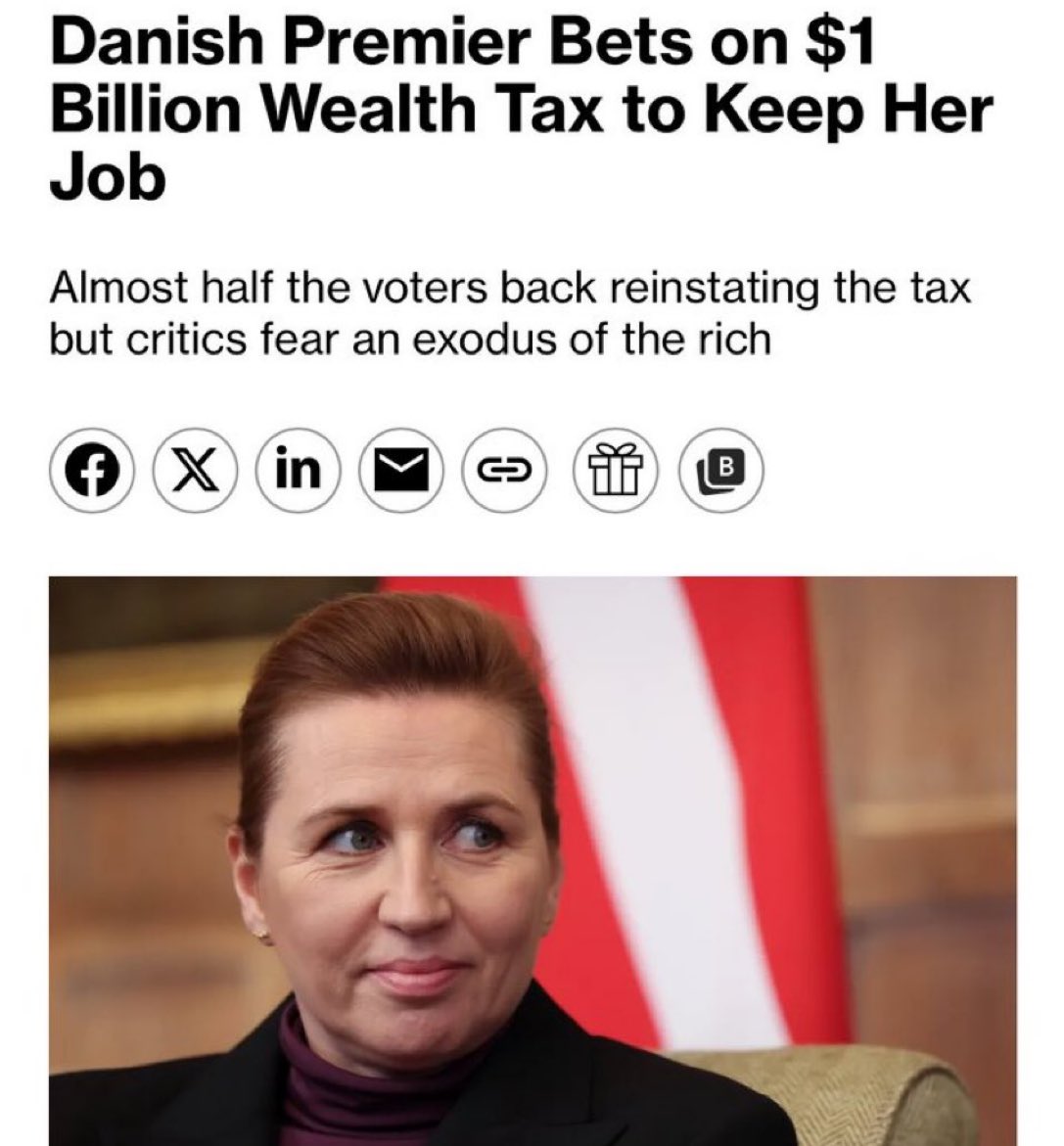
The top marginal income tax rate in Denmark is 60.5%, and then you pay 25% VAT when you buy anything. Now they want to add a wealth tax on top? Seriously, as an entrepreneur, would you want to live and create jobs in Denmark, or would you emigrate?
Michael A. Arouet tweet media
English
148
131
993
46.4K
QuantosAurus
QuantosAurus@QuantosaurusNL·
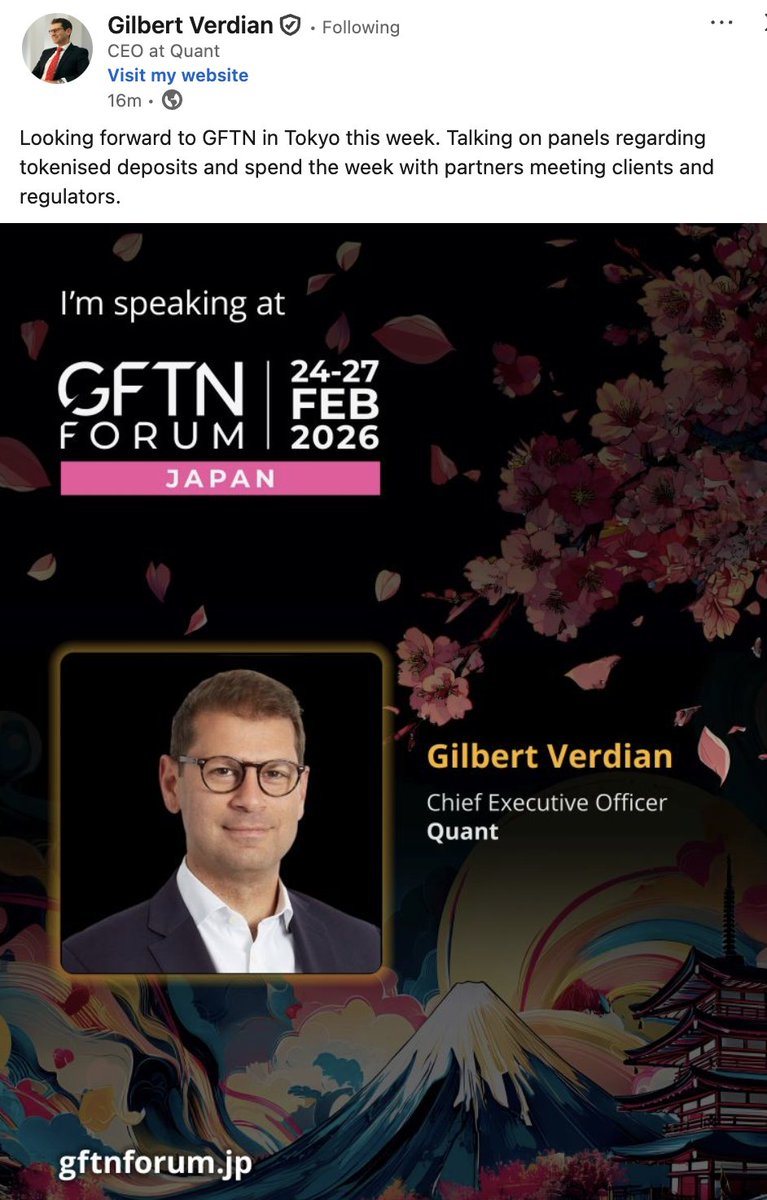
$QNT | Quant in Japan
QuantosAurus tweet media
English
1
3
63
995