Quantum

1.9K posts

Quantum banner
Quantum

Quantum

@QuantumFDN

The Post-Quantum Standard For Digital Assets

Katılım Mayıs 2024
0 Takip Edilen59.2K Takipçiler
Sabitlenmiş Tweet
Quantum
Quantum@QuantumFDN·
The @GoogleQuantumAI whitepaper reshaped the quantum conversation. We sat down with Benjamin Villalonga from @GoogleQuantumAI to walk through the full quantum computing stack from first principles - where the hardware meets classical simulation. 1 hour. Full conversation ↓
English
52
35
689
6.1M
Quantum
Quantum@QuantumFDN·
Our CEO and Co-Founder, @ivanmiskovic, will be speaking on Wednesday, July 22nd at the Out East Summit hosted by @TheTieIO. He'll be discussing whether “Crypto is Running Out of New Buyers, or New Narratives”
Quantum tweet media
English
27
2
130
9.3K
Quantum
Quantum@QuantumFDN·
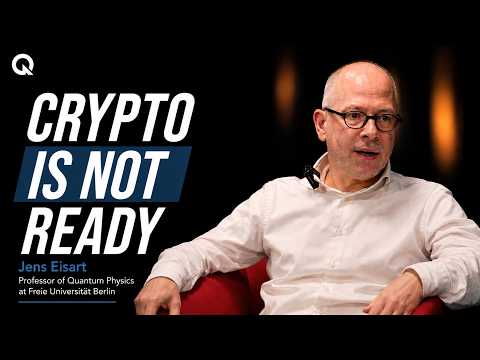
The full conversation covers quantum machine learning, the road to a quantum internet, and Eisert's timeline for fault tolerance. Watch it here: youtube.com/watch?v=URZcRr…
YouTube video
YouTube
English
0
1
52
3K
Quantum
Quantum@QuantumFDN·
The number of noisy qubits needed to break RSA has fallen from 20 million in 2019 to under one million today. Professor @jenseisert, co-author of "Mind the Gaps" with John Preskill, sits down with @ivanmiskovic to explain why on our latest episode.
English
21
1
143
9.8K
Quantum
Quantum@QuantumFDN·
Quantum joins @TheTieIO's Out East Summit next week as one of the summit's partners. Co-founders @ivanmiskovic and @ledgersaur will be on Long Island's North Fork, July 20 to 22 joining 300 executives from the world's leading institutional digital asset firms. If you're attending, let's connect.
Quantum tweet media
English
26
2
134
9.5K
Quantum
Quantum@QuantumFDN·
7 million BTC, a third of the supply, are already exposed to a future quantum attack. The public keys sit exposed on-chain and cannot be re-hidden. Nothing stands between them and an attacker except the absence of a capable machine. Here's the breakdown: quantum.systems/blog/how-many-…
English
25
4
141
9.6K
Quantum
Quantum@QuantumFDN·
The upgrade only does half the work. A quantum-safe protocol still leaves every application, validator, and user to migrate on their own, and that coordination is where timelines get complex. Teams that inventory their exposure now will be better prepared to migrate than teams who don't.
English
0
1
41
2.9K
Quantum
Quantum@QuantumFDN·
The overhaul rebuilds verification around recursive STARKs and swaps out the quantum-vulnerable cryptography (BLS signatures, KZG commitments, ECDSA) for post-quantum alternatives by 2029. Quantum safety, in his words, "has shifted up a LOT in priority."
English
1
1
36
3K
Quantum
Quantum@QuantumFDN·
Vitalik just released an updated roadmap for Lean Ethereum, calling it the network's third major iteration with post-quantum migration a top priority.
vitalik.eth@VitalikButerin

Two weeks ago, Ethereum researchers met in Berlin to continue charting the protocol's long-term trajectory, following along discussions with client teams in Svalbard in April. The updated strawmap is at strawmap.org, and I attached a picture of it to this post. My own high-level takeaways: * "Lean Ethereum" is not a single one-shot upgrade, it is a collection of improvements that will come online to the Ethereum network over the course of three or four years. But make no mistake, this IS the third major iteration of Ethereum in the same way that the Merge was the second. Almost every major piece of the protocol will be replaced: - Verification through recursive STARKs, rather than direct re-execution. Recursive STARKs become an enshrined first-class core component of the protocol - Replacing everything quantum-vulnerable with quantum-safe alternatives - Consensus: decoupled available chain and finality, one or two-round finality. Theoretically optimal security properties, simpler than today, and faster than today - Multidimensional gas - State: not just tree structure, but what *types* of state are available - Changes to client architecture ... At the same time, simplification, cleanup and future-proofing. And this will all be done in a way that minimizes disruption to existing application. We've done this before (the Merge), we can do it again. * H-star (aka Hegota) is probably Ethereum's last thematically "pre-Lean" fork. Starting from I-star, most of everything we do will have a very strong "Lean" feel to it in one way or another. * Privacy is no longer an afterthought, it is a first class goal. When designing Frames, the mempool, additions to the state tree, we explicitly ask the question "okay, how do quantum-safe, intermediary-free privacy protocol transactions go through this, and what is the overhead?" * Formal verification of everything for security. * FV also makes us much more comfortable with canonicalization (having pieces of the protocol that are directly defined as a piece of bytecode expressed in some language). evm-asm is being written in part to become a canonical proof system for the EVM. * Quantum safety has shifted up a LOT in priority. This adds a lot of work (eg. finalizing a quantum-safe blobs design has become urgent; this work has already been ongoing for months) * Probably the single most disruptive part of the plan is the changes to state. There is growing consensus around leaving present-day-style "dynamic state" mostly unchanged, but scaling it only a medium amount, and adding new types of state that are more scalability-friendly (eg. no need for builders to sync/store all of it) but more restrictive, and that will scale a large amount. eg. possible Ethereum in 2030: 2 TB of present-day-style (dynamic) state, and 100 TB of new-style (scalable but restrictive) state This "new-style" state would work very well for ERC20s, NFTs, many defi use cases, but not eg. highly "central" objects like Uniswap contracts, or onchain order books, or other complex things (which are crucial for Ethereum but which only take up a small percentage of state) Hence, it will not be *necessary* to rewrite any apps, but it will be *very cost-effective* to eg. rewrite an ERC20 token into a newer design that uses a new type of UTXO storage that is currently being explored, so that it will have >10x lower txfees. Design of these new state types (current ideas: keyed nonces, ring buffers, UTXOs, statically accessible state, temp state) is an area where we will need a lot of feedback from application developers (incl. privacy-friendly application developers) and probably several rounds of rethinking and iteration. * In the context of a much larger total state size, we need to figure out the incentive issues around who stores this state and what motivates them to. Even saying "each node stores 1%" is not good enough - why do they store that 1% and why are they willing to serve it? This is being elevated as a first-class research area. * Ethereum will need to have a "VM" other than EVM in one form or another - at the very least, we need something like leanISA for recursive STARKs - and the gains are large in exposing it to users so that we support programmable privacy and better scalability. Right now, the most likely contenders are leanISA and RISC-V. My own ideal is that in this world, we adjust the protocol so that the EVM becomes a high-level-language compiler-level feature, and the protocol only "sees" RISC-V / leanISA directly. But this is still far away. * Gas limit increases, blob increases and slot time decreases will happen many times over the next ~5 years. We expect a large gas limit increase with Glasterdam. Each step of increased scale or decreased slot time is a matter of getting to the point where it is safe to do it, which comes from a combination of client optimization and protocol changes. Ethereum is CROPS. Ethereum is scaling. Ethereum is reinventing itself. Onward.

English
23
1
141
9.8K
Quantum
Quantum@QuantumFDN·
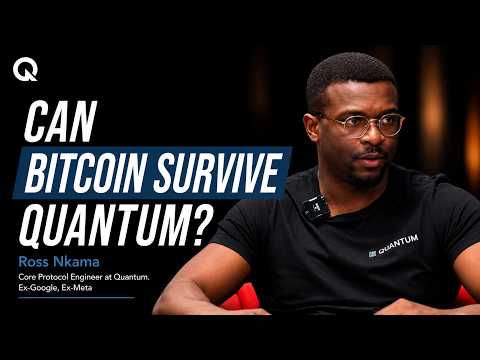
A quantum computer will crack the encryption guarding Bitcoin, Ethereum, and nearly every blockchain. We sat down with Ross Nkama, Senior Software Engineer at @QuantumFDN, to discuss the threat & the infrastructure that survives it. Full episode in the comments.
English
22
3
135
9.5K
Quantum
Quantum@QuantumFDN·
2028 is the target for Libra, @QueraComputing's first fault-tolerant quantum computer on AWS. 256 logical qubits, with a 1,000+ qubit system behind it. It won't break ECDSA yet, but the gap is closing from both sides. Read the breakdown of the roadmap, and what it means for institutions: quantum.systems/blog/quera-roa…
English
24
4
129
9.2K
Quantum
Quantum@QuantumFDN·
4/ For enterprises, the starting point is cryptographic visibility. Know where public-key cryptography exists across your systems, vendors, data flows, and long-lived records. The organizations that build that visibility now will be better positioned as PQC requirements continue to evolve.
English
1
0
18
2.6K
Quantum
Quantum@QuantumFDN·
3/ The implication for industry is immediate: Quantum-safe security will increasingly show up in procurement, vendor assessments, infrastructure planning, and board-level cyber risk conversations. This affects software, cloud, telecom, finance, defense, and critical infrastructure.
English
1
0
15
2.7K
Quantum
Quantum@QuantumFDN·
1/ Big quantum policy update from Washington. The White House has signed two Executive Orders: one focused on accelerating U.S. quantum innovation, and another focused on moving federal systems toward post-quantum cryptography. Together, they give the industry a much clearer policy signal.
White House OSTP 47@WHOSTP47

x.com/i/article/2069…

English
21
2
65
11.3K
Quantum
Quantum@QuantumFDN·
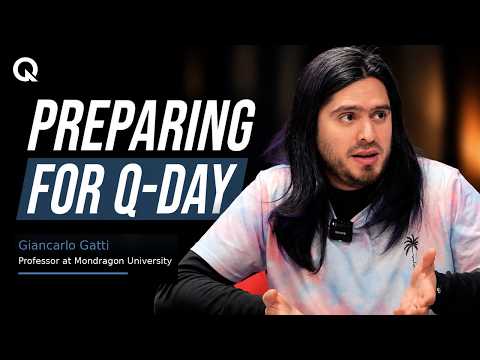
The full conversation is a grounded look at what quantum cryptography can actually enable, what is still missing, and how industry should think about the road ahead. Watch the full interview with Professor Giancarlo Gatti: youtube.com/watch?v=V7B52K…
YouTube video
YouTube
English
0
0
14
2.7K
Quantum
Quantum@QuantumFDN·
Giancarlo explains how quantum systems can support privacy-preserving communication, including user privacy and data privacy. We also cover Q-Day, RSA, post-quantum security, benchmarking, HHL, and why quantum should complement classical systems rather than replace them.
English
1
0
12
2.6K
Quantum
Quantum@QuantumFDN·
Quantum computing is often framed through extremes: either as an imminent disruption to every system, or as a technology too distant to matter. In our interview with Professor @Gatgian, we take a more grounded view: What primitives does quantum mechanics actually provide?
English
28
2
50
10.4K