
Ralph B. McLaughlin

6.7K posts

Ralph B. McLaughlin banner
Ralph B. McLaughlin

Ralph B. McLaughlin

@RB_McLaughlin

Chief Economist @OpenBrandAI. Formerly @haus, @trulia, @corelogic, and @realtordotcom. FAA Certified Flight Instructor and Commercial Pilot.

Groveland CA Katılım Nisan 2013
815 Takip Edilen3.7K Takipçiler
Ralph B. McLaughlin
Ralph B. McLaughlin@RB_McLaughlin·
@TraceyRyniec I recommend reading my full post if you haven’t, but gist is I’m not convinced it is the worst since the GFC. At least yet as far as nominal volumes are concerned. But things are definitely soft and it’s not out of the question things could head that way.
English
0
0
0
11
Tracey Ryniec
Tracey Ryniec@TraceyRyniec·
@RB_McLaughlin So you're saying the management team at Whirlpool is exaggerating? Housing bust ended in 2012. It's been pretty good for appliance industry since then. It makes sense that this would be the "worst" since the housing bust period.
English
1
0
0
42
Ralph B. McLaughlin
Ralph B. McLaughlin@RB_McLaughlin·
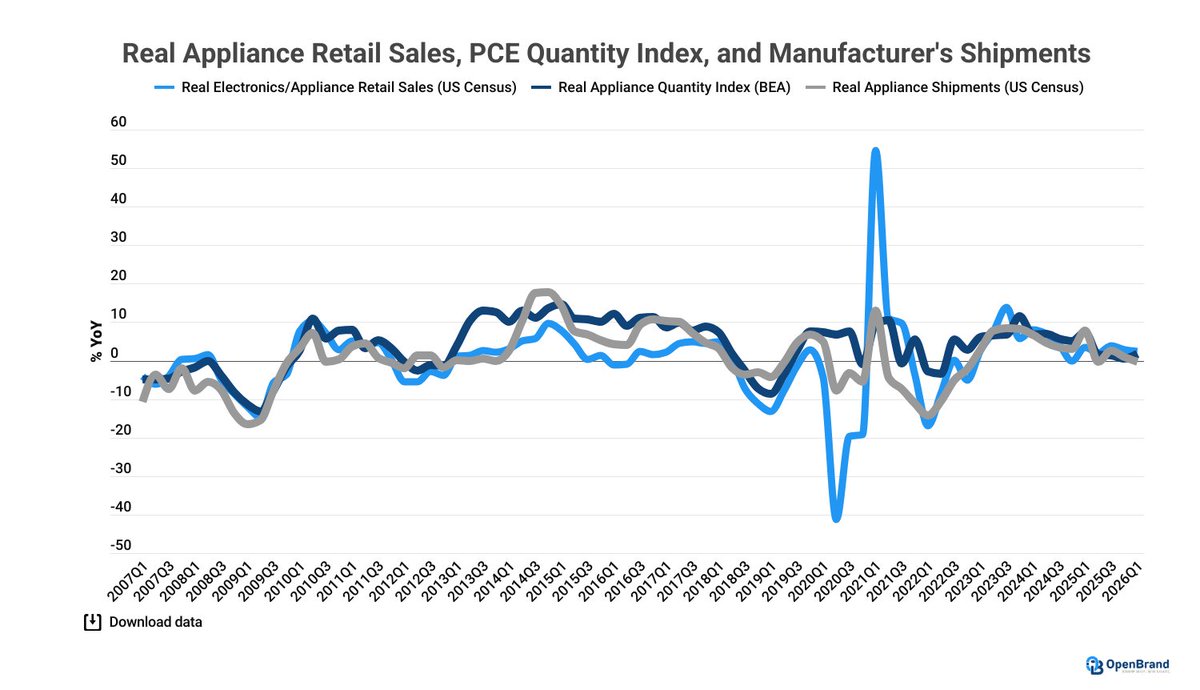
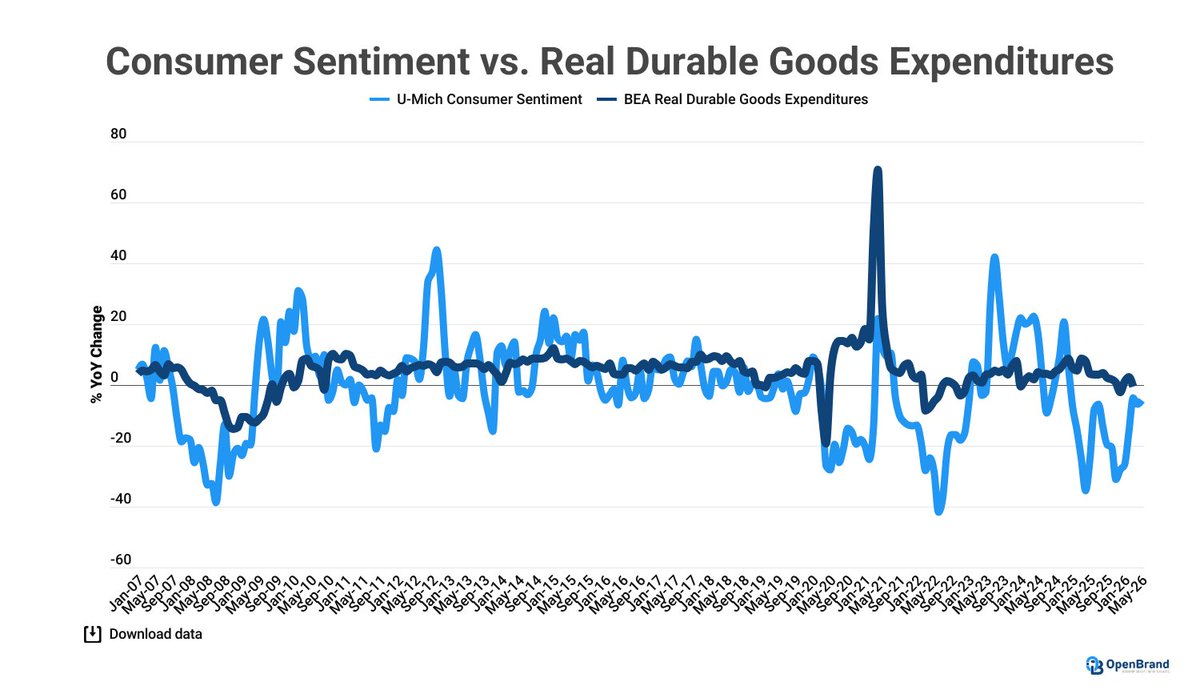
New blog post out today! Here's the TL,DR (and link to the full post with a deeper dive into other publicly available data): Appliance demand is soft, but “worst since the GFC” feels overstated. Yes, the sector has real headwinds: weak housing turnover, tariff uncertainty, higher energy costs, and elevated inventories. But when you compare 2026Q1 with the GFC and pandemic shocks, the public data does not point to collapse. In the latest quarter, real electronics/appliance retail sales were still positive, the BEA appliance quantity index was positive, and real appliance shipments were roughly flat. That is very different from the double-digit declines seen during the GFC, or the pandemic-era retail air pocket. The real risk is inventories. Manufacturer-side inventory pressure looks elevated, and that can hit pricing, production schedules, and margins. But elevated inventory is not the same thing as end-market demand falling apart. The upside case is also worth keeping in view: a housing rebound, a calmer energy backdrop, resolution of the Iran conflict, and a more predictable tariff environment could all help stabilize demand. Full report here: openbrand.com/newsroom/blog/…
Ralph B. McLaughlin tweet mediaRalph B. McLaughlin tweet media
English
1
0
1
158
Ralph B. McLaughlin
Ralph B. McLaughlin@RB_McLaughlin·
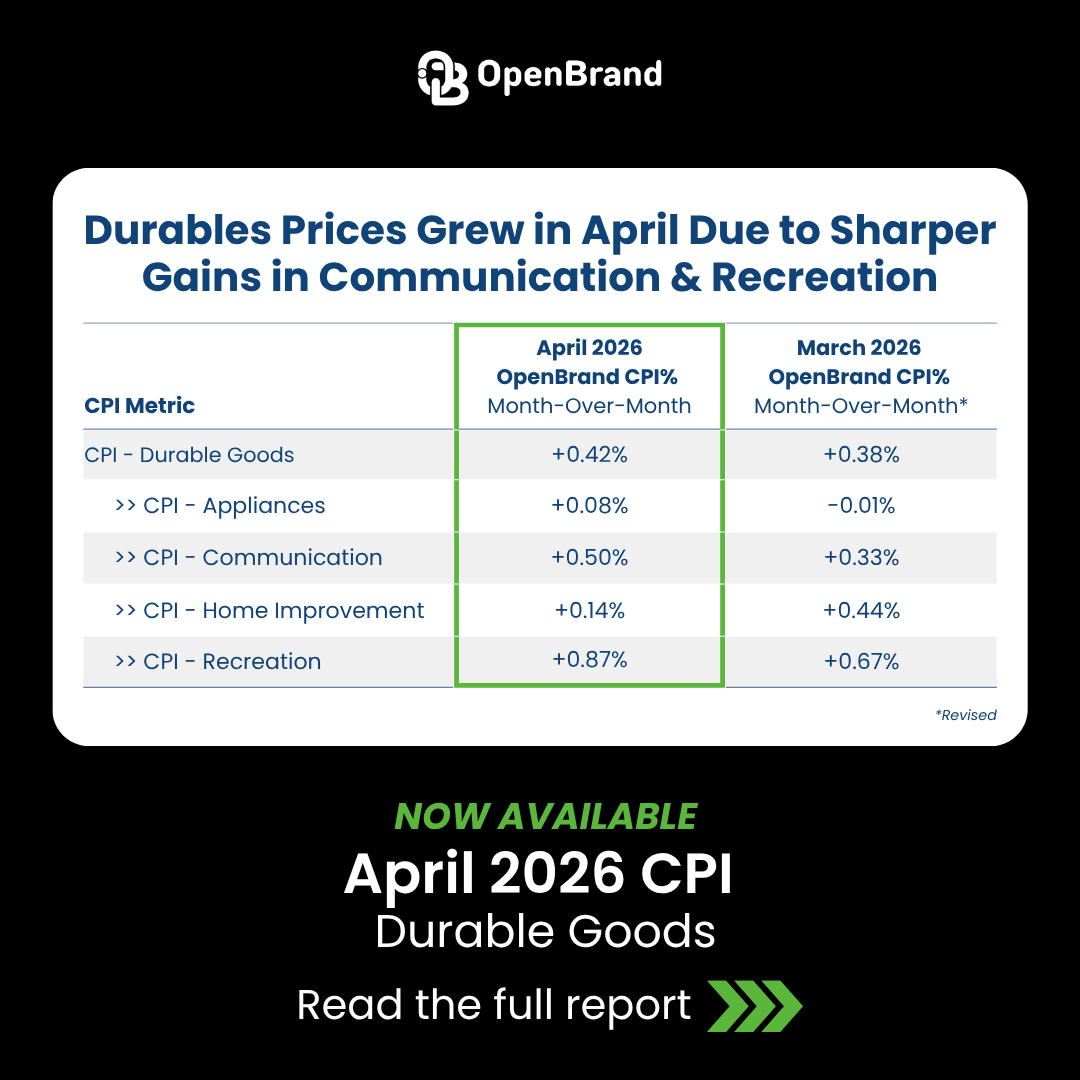
OpenBrand CPI-DG for April 2026: We’re seeing price acceleration across many durable goods categories on a month-over-month (SA) basis. Promotional activity continues to play a major role in keeping overall durables inflation more subdued than many would expect given the broader cost environment. Appliances are a good example. Despite higher energy, transportation, and input costs, pricing has remained relatively stable as manufacturers and retailers continue to rely on promotions, supply chain adjustments, and margin compression to remain competitive. The key question now is how sustainable that dynamic is. At OpenBrand, we’re closely watching: • Ongoing pressure across materials, components, and logistics • Consumer confidence and labor market conditions that shape discretionary demand • Interest rates and monetary policy impacts on big-ticket purchases The broader takeaway is that pricing pressure is not flowing through uniformly across durables. Competitive intensity and promotional strategy are still heavily influencing the prices consumers ultimately see in the market. We’ll continue monitoring when — and where — elevated costs begin translating more meaningfully into durable goods inflation. Full breakdown here: lnkd.in/gjsxpV5U
Ralph B. McLaughlin tweet media
English
0
1
1
133
Ralph B. McLaughlin
Ralph B. McLaughlin@RB_McLaughlin·
When input costs rise, the natural reaction is to assume higher consumer prices will follow immediately. But in durable goods, pricing dynamics are rarely that straightforward. Whether costs get passed through depends on the category, the competitive environment, the necessity of the purchase, and whether firms view the pressure as temporary or structural. For higher-ticket durables, there’s also a longer-term consideration around brand equity and consumer trust. Many manufacturers and retailers are reluctant to risk market share or customer relationships over cost increases that may prove short-lived. That’s one reason we haven’t yet seen broad-based price acceleration across many durable categories, even amid rising energy costs and ongoing supply chain pressures. In OpenBrand’s latest State of Durables macroeconomic update, our CEO @munves and I break down what we’re watching across pricing, promotions, and consumer demand in Q2.
English
0
0
3
142
Ralph B. McLaughlin
Ralph B. McLaughlin@RB_McLaughlin·
The sharp downward movement of the BLS CPI of Durable Goods from December to February reversed course in March, and is now +0.08% MoM SA. This is now directionally the same as the OpenBrand CPI-DG, but significantly less in magnitude (OB CPI-DG showed +0.37% in March MoM SA). Though some of the differences are due to basket composition, the big deviation appears to be among appliances. The BLS is reporting a decrease of 1.56% MoM SA in major appliances, while we report just a 0.04% decrease. Stay tuned for an early April read of durable goods inflation next week as we release the OpenBrand NowCast with prices updated through April 10.
Ralph B. McLaughlin tweet media
English
0
0
2
175
Ralph B. McLaughlin
Ralph B. McLaughlin@RB_McLaughlin·
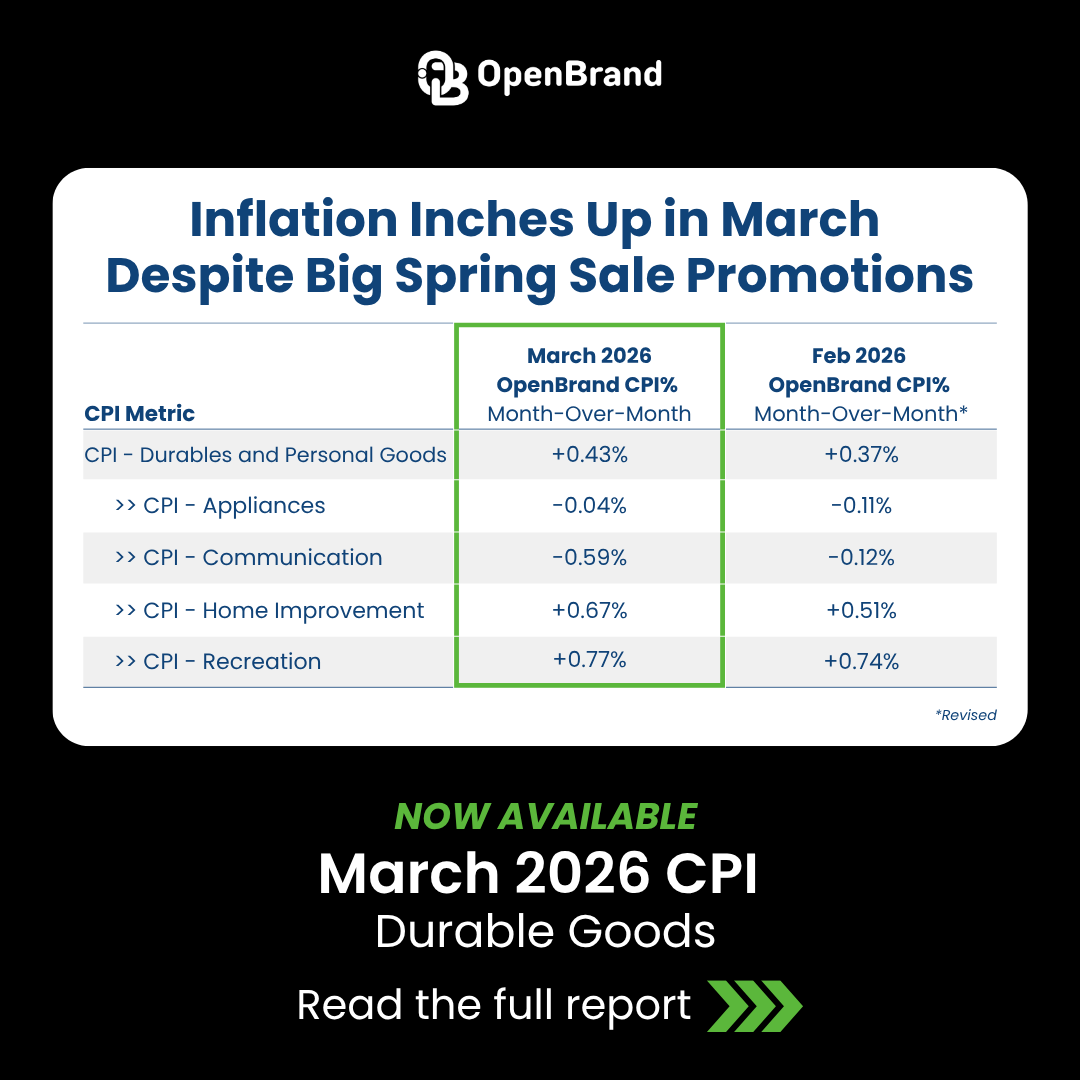
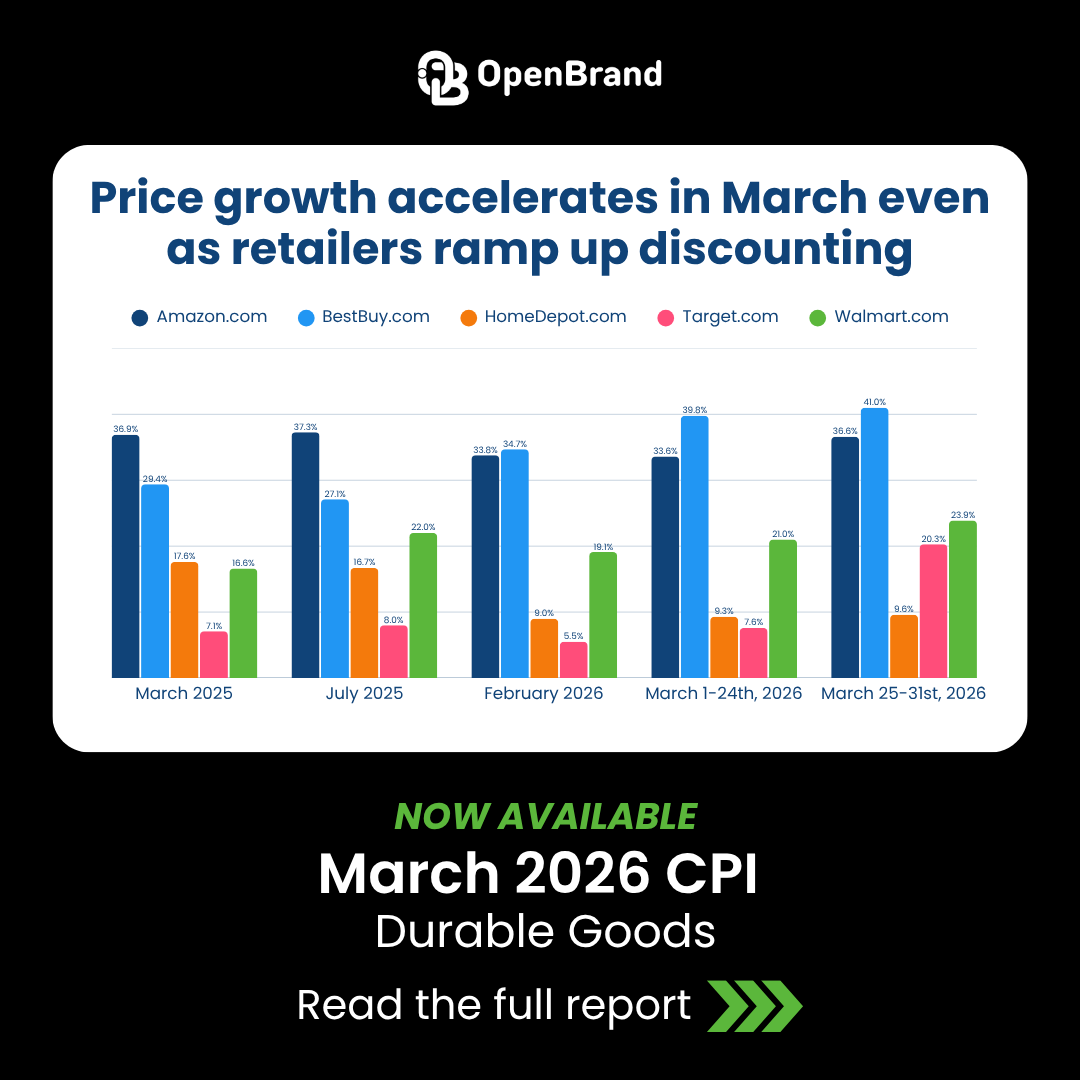
Today, we release the March OpenBrand CPI of Durable Goods. We find that price growth across consumer durable goods accelerated in March, with a month-over-month seasonally adjusted increase of +0.43%, a slight uptick from February. While there has been some speculation that inflation would accelerate more significantly in March due to spiking oil prices, some of the muted rise could have been due to a barrage of discounting events at the end of the month, led by Amazon. The standout shift came from Target.com, where discounts surged from 7.6% in early March to over 20% during the Spring event, signaling a decisive late-month promotional push.
Ralph B. McLaughlin tweet mediaRalph B. McLaughlin tweet media
English
0
0
0
139
Ralph B. McLaughlin
Ralph B. McLaughlin@RB_McLaughlin·
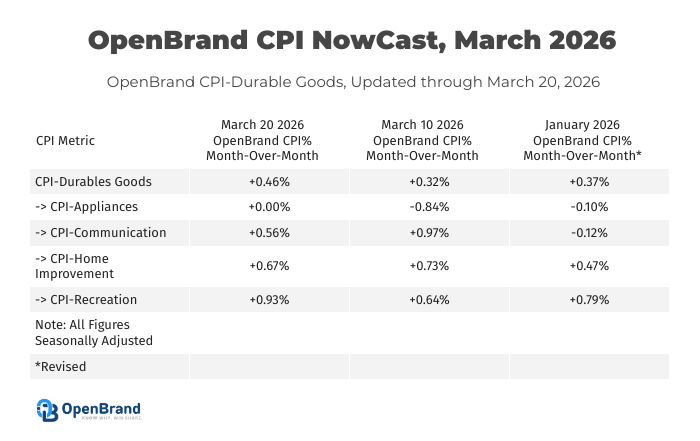
Today we release the OpenBrand CPI-Durable Goods NowCast through March 20th, which is showing signs of price growth acceleration from a seasonally adjusted +0.32% in February to +0.46% in March. What's more, we're seeing acceleration across all four of our durable goods groups, led by the communications group. These gains come as concerns of broader price inflation grow due to elevated energy prices and fiscal stimulus from the One Big Beautiful Bill Act (via tax refunds).
Ralph B. McLaughlin tweet media
English
0
0
2
136
Ralph B. McLaughlin
Ralph B. McLaughlin@RB_McLaughlin·
As mentioned above, we have two major changes as of today: (1) Our headline numbers are seasonally adjusted using X-13ARIMA-SEATS. NSA will remain available to the public. (2) We are now the OpenBrand CPI-DG, focusing exclusively on price movements of durable goods. This methodological update reflects a strategic refinement of the OpenBrand CPI’s core objective: to measure price and discount trends exclusively within the consumer durable goods sector. While personal care products provided valuable insight into broader retail pricing dynamics, their pricing behavior and promotional cycles differ meaningfully from those of durable goods. Removing these categories will enhance the precision and interpretability of the index as a focused measure of durable goods inflation and discounting activity.
English
0
0
0
96
Ralph B. McLaughlin
Ralph B. McLaughlin@RB_McLaughlin·
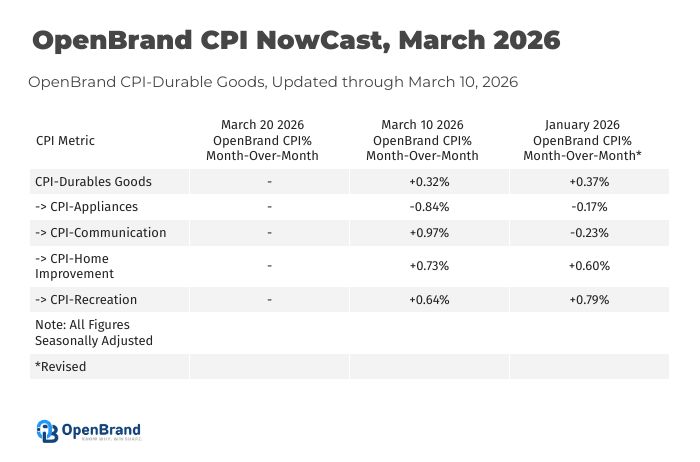
Here's the OpenBrand CPI-DG NowCast through March 10th (now seasonally adjusted and focused just on durable goods, more on that below). March is trending towards a slight deceleration from February, driven by appliances and recreational electronics.
Ralph B. McLaughlin tweet media
English
1
0
0
115
Ralph B. McLaughlin
Ralph B. McLaughlin@RB_McLaughlin·
If energy price increases remain contained and the conflict does not significantly disrupt global supply, the broader trend of moderating goods inflation is likely to continue through 2026. But a prolonged or escalating conflict that drives oil substantially higher would pose a renewed upside risk to overall inflation.
English
0
0
0
87
Ralph B. McLaughlin
Ralph B. McLaughlin@RB_McLaughlin·
For durable and personal goods, the impact of higher energy prices would likely be indirect but meaningful. Elevated fuel and shipping costs can raise production and distribution expenses, potentially slowing or temporarily reversing the moderation in goods inflation. At the same time, higher gasoline prices reduce disposable income, which could dampen demand for discretionary items such as home furnishings and electronics - limiting retailers’ ability to pass along higher costs.
English
1
0
0
96
Ralph B. McLaughlin
Ralph B. McLaughlin@RB_McLaughlin·
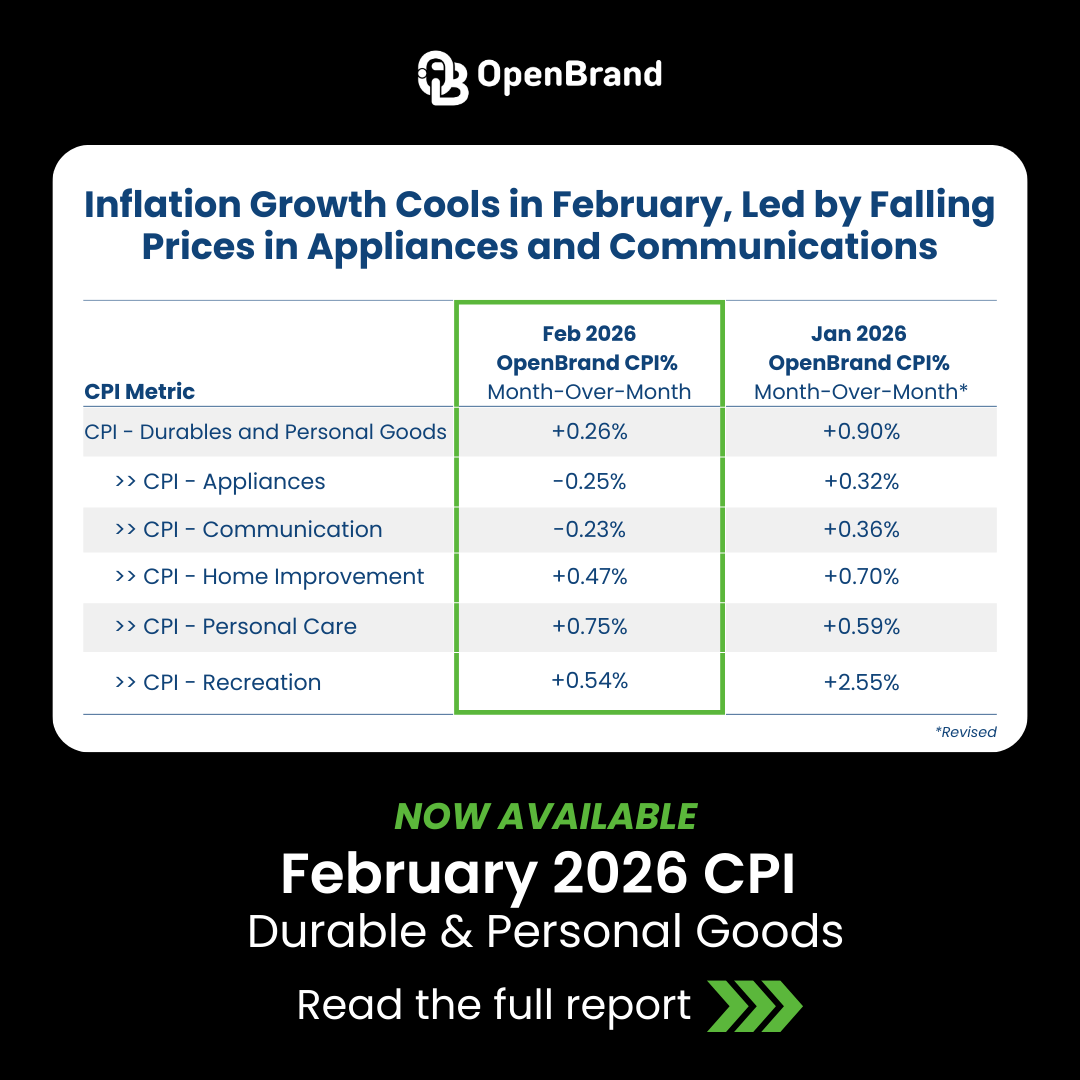
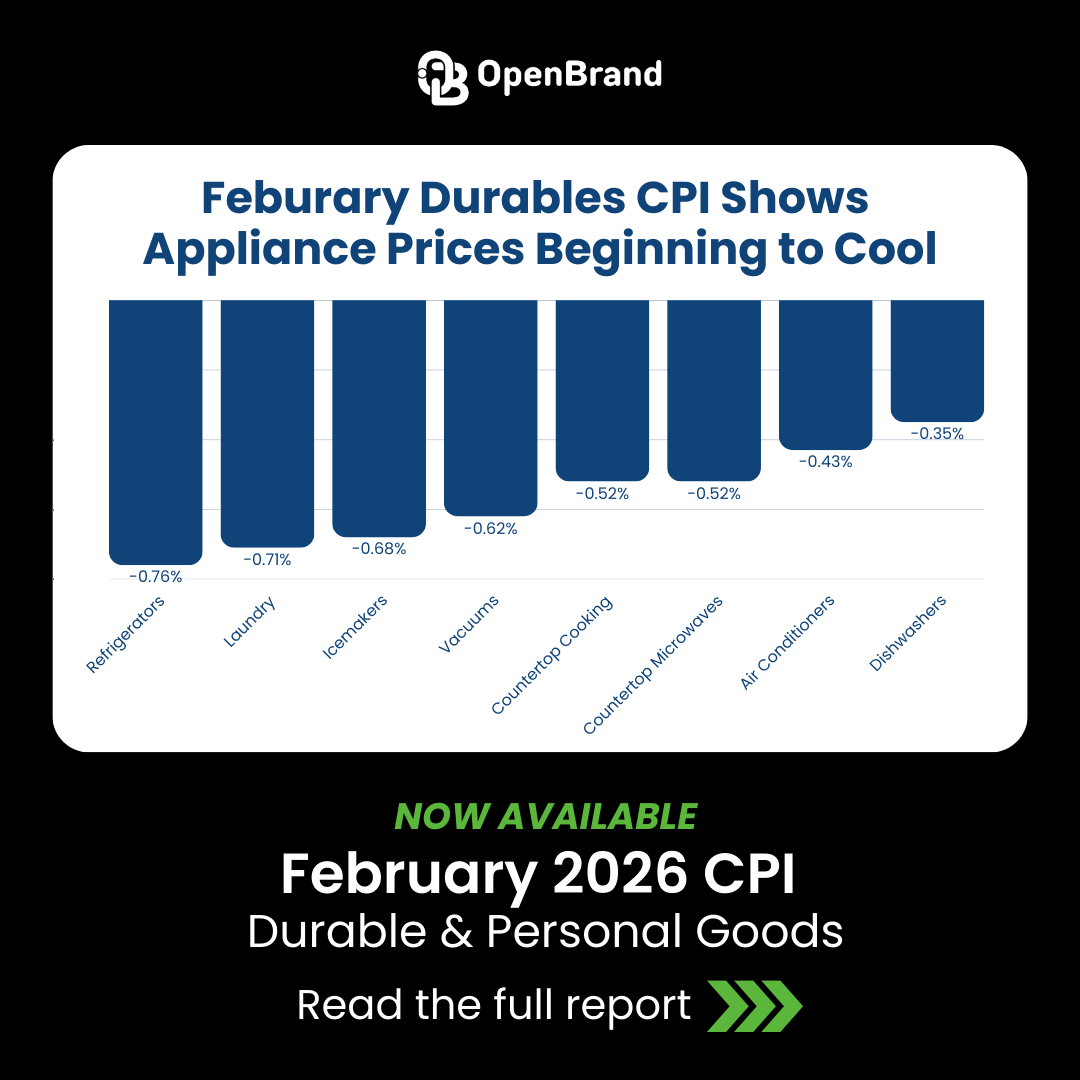
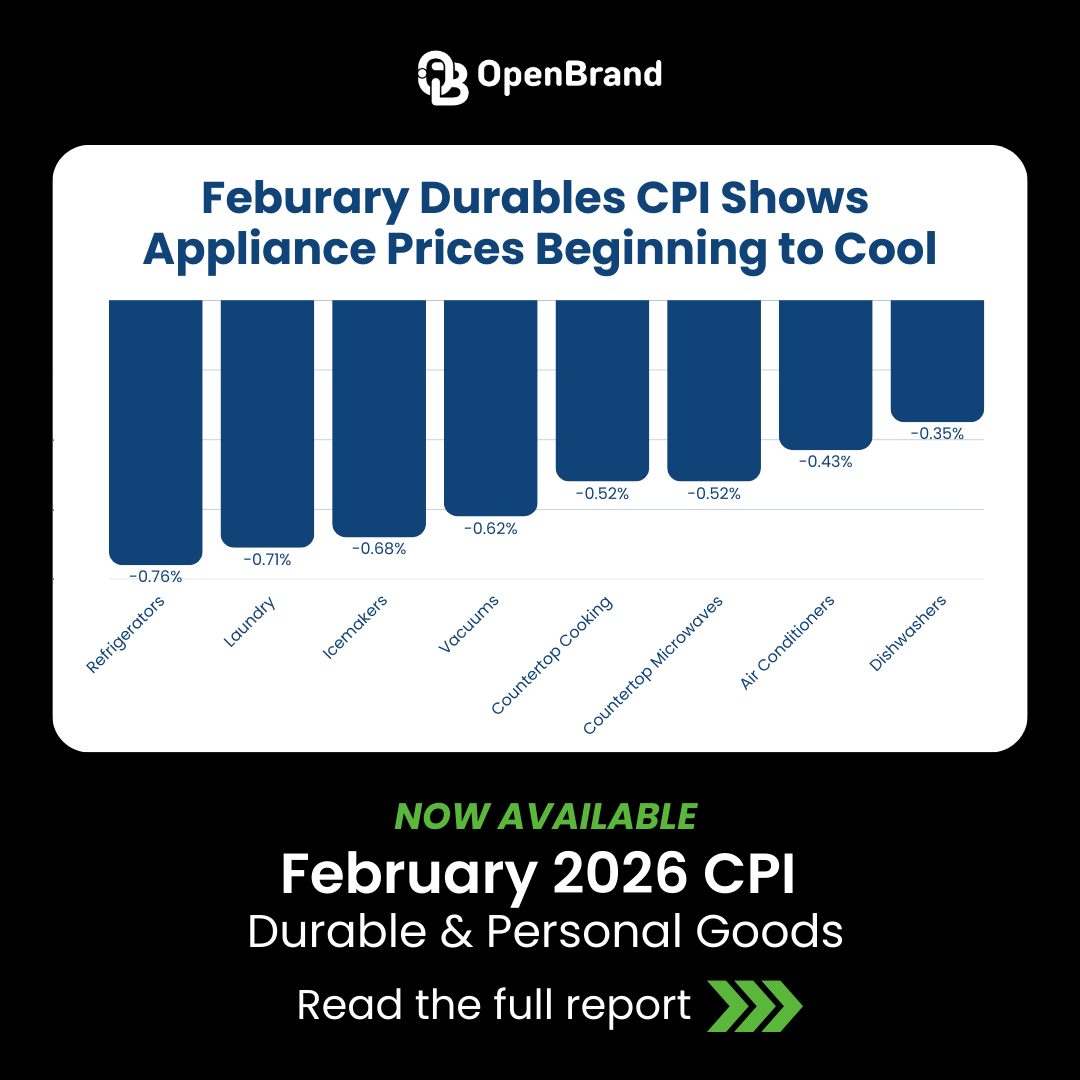
The latest OpenBrand CPI shows consumer durable and personal goods price growth slowing in February after a typical January bump. After rising +0.90% MoM in January (revised), prices increased a more modest +0.26% MoM in February. More importantly, four of the five major product groups we track showed decelerating price growth, signaling broader cooling across goods categories. A few notable takeaways: • Appliance prices declined month-over-month, continuing a trend of easing price pressure in large household goods. • Appliance categories with the largest monthly declines include refrigerators (-0.76%), laundry (-0.71%), icemakers (-0.68%), vacuums (-0.62%), and countertop cooking (-0.52%). • Communications products also saw moderate price declines, helping pull overall goods inflation lower. For manufacturers, retailers, and analysts tracking goods inflation, this is another reminder that pricing power across many durable categories remains limited heading into the spring selling season. The full February OpenBrand CPI report breaks down the categories driving these movements and what they signal for pricing trends in the months ahead.
Ralph B. McLaughlin tweet mediaRalph B. McLaughlin tweet media
English
1
0
1
241
Ralph B. McLaughlin retweetledi

Greg Munves
Greg Munves@munves·
The latest OpenBrand CPI shows appliance prices fell -0.25% in February, with 14 of 16 categories declining. That lines up with our earlier forecast that appliance prices would begin moderating through 2026. #cpi #economy
Greg Munves tweet media
English
0
1
0
227
Ralph B. McLaughlin
Ralph B. McLaughlin@RB_McLaughlin·
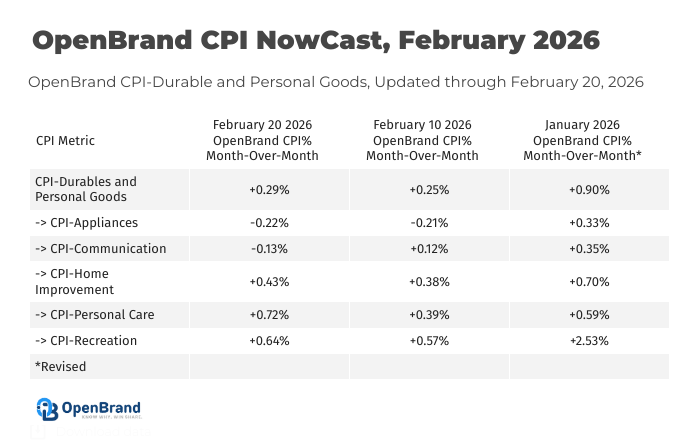
OpenBrand CPI NowCast through February 20, 2026: very slight uptick in February CPI-DPG inflation, driven by gains in Home Improvement, Personal Care, and Recreation. Though the SCOTUS ruled against the Trump Administration's Liberation Day tariffs, the future path of inflation is uncertain in the short run as the administration uses other powers to keep tariff rates at, or near, 15%.
Ralph B. McLaughlin tweet media
English
1
0
0
155
Ralph B. McLaughlin
Ralph B. McLaughlin@RB_McLaughlin·
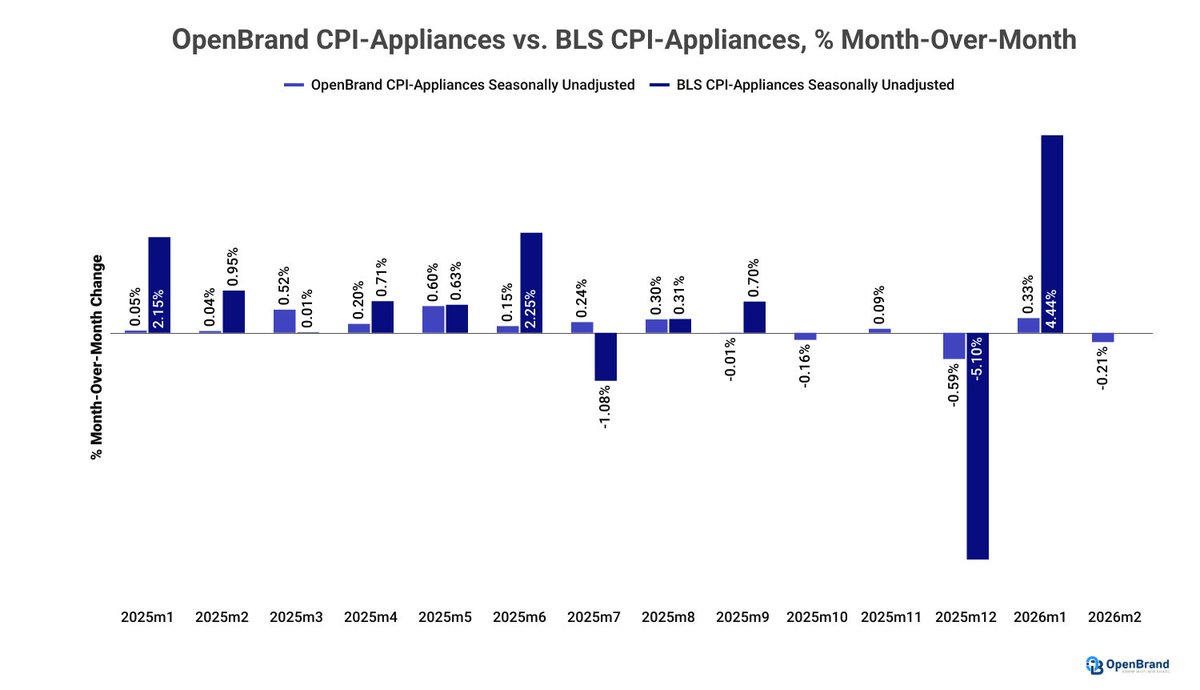
Noticing some interesting and recent deviations between the OpenBrand CPI-Appliances and the BLS CPI-Appliances, MoM NSA. Can't help but think the shutdown also affected the collection of appliance prices and/or hedonic adjustments.
Ralph B. McLaughlin tweet media
English
0
1
0
127
Ralph B. McLaughlin
Ralph B. McLaughlin@RB_McLaughlin·
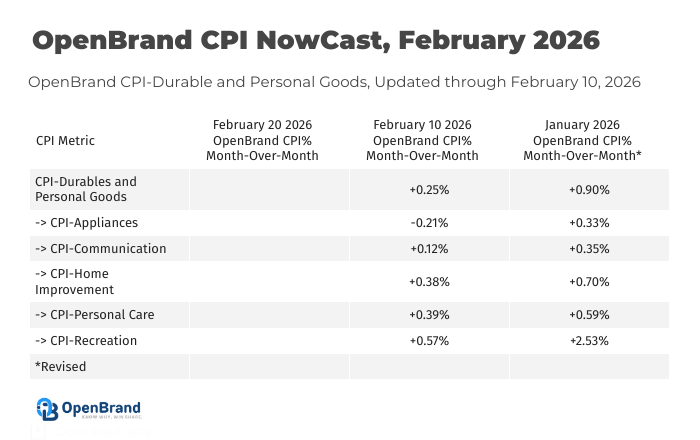
OpenBrand CPI NowCast of Durable Goods slowed to +0.25% MoM in the first 10 days of February, down sharply from a revised +0.90% in January (all figures NSA). The slowdown in the first 10 days in February, however, was less than the typical flat MoM change between the two months. The next OpenBrand CPI NowCast will be released on Monday, February 23.
Ralph B. McLaughlin tweet mediaRalph B. McLaughlin tweet media
English
0
0
0
131