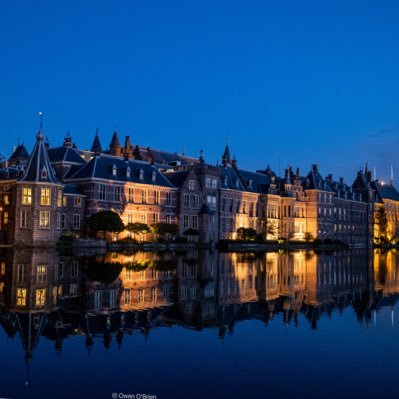
@ajboekestijn Maar ze zijn behoorlijk aanwezig, vind je niet?
Schilderswijk, 50%.
Weleens geweest?
Leerdam, 18%.
En wat is het percentage moslims in Doorn?
Nederlands
C.
495 posts

Lifting the blockade provides Iran some relief, but absent broad secondary sanctions waivers, the underlying structural damage goes well beyond the blockade itself. Several factors now fundamentally differentiate Iran’s position, here are some exampels: 1. UAE is not as nearly a permissible financial hub and lifeline for the regime. The UAE was Iran's #1 or #2 trade partner for decades, roughly 1/3 of all Iranian imports transited Dubai. UAE has now frozen Iranian exchange house accounts, shut offices, and even launched airstrikes against the regime. 2. Oil extraction capacity is permanently degraded. Iran's oil fields were already declining 5–8% annually and now 500K–750K in the production drop. Iran's oil sector has been undermaintained for decades; unlike the Iran-Iraq war era when US companies had built robust infrastructure, today's fields can't snap back. 3. Petrochemical & refining capacity is structurally broken. Iran's domestic petrochemical nodes were struck early in the conflict. A minimum 12 months to restore to pre-war levels, if everything goes right. Refining capacity has gone down from ~2.4M bpd to 1.5M bpd. 4. Re-opening triggers immediate inflation. Iran enters any opening with ~50% pre-war baseline inflation. Pent-up demand flooding in from a reopened market means inflationary pressure compounds, leading to a much deeper inflation crisis. 5. Iran must replenish depleted reserves first. Iran is already tapping its sovereign wealth fund for basic imports, sugar, rice, meat, animal feed, pharma. Even the $40B National Development Fund is being drained for basic goods and industrial reconstruction simultaneously. 6. No reputable bank will touch Iran's revenues. Even under JCPOA, Iran couldn't repatriate oil revenues, banks globally refused. That compliance environment is much worse for Iran today.