Lucius Apuleius

4K posts

Lucius Apuleius banner
Lucius Apuleius

Lucius Apuleius

@RPH969

Numidia 🏛

Madauros - Algeria Katılım Nisan 2010
97 Takip Edilen1.7K Takipçiler
Sabitlenmiş Tweet
Lucius Apuleius
Lucius Apuleius@RPH969·
Marble statue of Emperor Augustus from the ancient city of Julia Caesarea (Cherchell), Algeria; circa 1st century AD, height: 2.35 m, discovered in 1916. The artist showed a great concern for realism in detail; on display at the Archaeological Museum of Cherchell, Algeria.
Lucius Apuleius tweet media
English
4
137
567
20.9K
Lucius Apuleius
Lucius Apuleius@RPH969·
@GerardAraud « Puisque vous savez aussi bien que nous que le droit, dans l’état actuel du monde, n’est en jeu qu’entre égaux en puissance, tandis que les forts font ce qu’ils peuvent et les faibles souffrent ce qu’ils doivent. » - Thucydide
Français
0
0
0
93
Raph. H.
Raph. H.@Rapahelz·
@sama Generative AI is like genes: their “expression” depends entirely on the environment (prompt/context). Change the surroundings, and they produce different outputs.
English
5
1
9
4.9K
Lucius Apuleius retweetledi
Lucius Apuleius
Lucius Apuleius@RPH969·
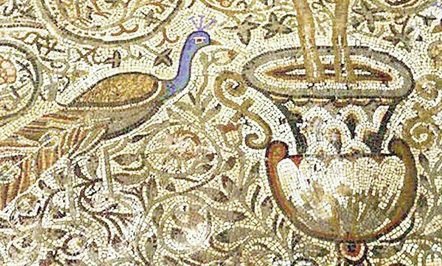
Mosaic of the Peacock from the ancient city of Timgad, circa 3rd century AD; on display at the Archaeological Museum of Timgad, Algeria. #Algeria #Numidia #MosaicMonday
Lucius Apuleius tweet media
English
1
16
47
706
Lucius Apuleius
Lucius Apuleius@RPH969·
Mosaic of the Captives, from the ancient city of Tipasa; the central panel is surrounded by twelve portraits and an elaborate geometric decoration in the form of crescent-shaped shields, c. AD 200-300; on display at the Archaeological Museum of Tipaza, Algeria. #MosaicMonday
Lucius Apuleius tweet media
English
1
6
19
200
Lucius Apuleius
Lucius Apuleius@RPH969·
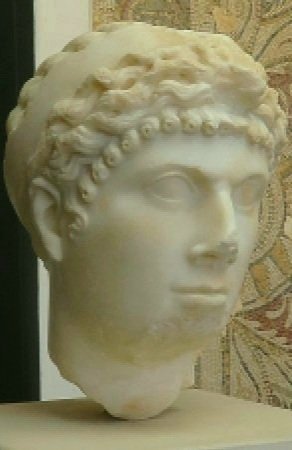
Cleopatra Selene, from the ancient city of Julia Caesarea (present-day Cherchell, Algeria), first half of the first century AD; the only daughter of Cleoptra and Mark Antony and wife of the Numidian King Juba II; on display at the Archaeological Museum of Cherchell, Algeria.
Lucius Apuleius tweet media
English
0
3
17
197
Lucius Apuleius
Lucius Apuleius@RPH969·
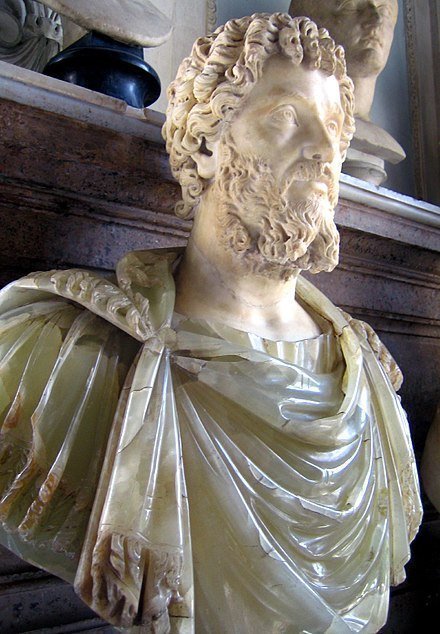
@Civixplorer Septimius Severus, Emperor from 193 to 211; he was born at Leptis Magna in today's Libya. He is considered the first provincial Emperor as he was the first Emperor born into a provincial family of non-Italian origin.
Lucius Apuleius tweet media
English
0
1
17
1.6K
Civixplorer
Civixplorer@Civixplorer·
📍 The birthplace of Roman emperors in modern countries. Present-day 🇮🇹 Italy (27) and 🇷🇸 Serbia (17) have been the cradle of most of them.
Civixplorer tweet media
English
116
375
3.1K
201.5K
Lucius Apuleius retweetledi
World's Amazing Things
Mushroom Rock Desert of Tamanrasset, Algeria 🇩🇿
World's Amazing Things tweet media
Eesti
17
164
1K
19.2K
Lucius Apuleius retweetledi
IbnAugustin_Deus ex Machina
Pavillon de l'Algérie 🇩🇿 dans la Casbah d'Alger - Gravure ancienne de 1858
IbnAugustin_Deus ex Machina tweet media
Français
1
13
47
555
Lucius Apuleius
Lucius Apuleius@RPH969·
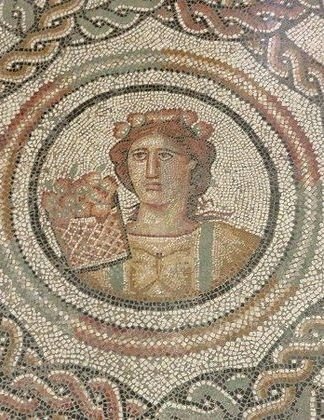
Spring, details of the Mosaic of the Four Seasons from Ain Beida near Timgad, Algeria, 2nd Century AD; on display at the National Museum of Antiquities, Algiers, Algeria. #Algeria #Numidia #Mosaic
Lucius Apuleius tweet media
English
2
4
28
365
Lucius Apuleius retweetledi
Archaeo - Histories
Archaeo - Histories@archeohistories·
These rocks in the Algerian desert sounds like an empty metal tank....🇩🇿 Ringing rocks are a fascinating geological phenomenon where specific rocks resonate with a bell-like sound when struck. These seemingly ordinary rocks hold a hidden musicality, captivating scientists and music enthusiasts alike. Although scientists don’t have a definitive answer as to why the rocks ring, they do have a name for ringing rocks. They are called with sonorous rocks or lithophonic rocks. These are terms that are given to rocks that resonate with bell-like sound when they are struck. Ringing rocks can be found in various locations worldwide, often in clusters within specific geological formations. Sonorous rocks are rocks that resonate like bell when struck. These chime-like sounds come from geological phenomena known as ringing rocks. Physically, they look no different from regular rocks, but it’s not until you lightly strike them with hammer that rocks reveal their sonic secret. Stones do not usually ring, but when these particular stones are struck lightly with hammer, they will vibrate and make a sound not unlike that of a bell. Why they do this is still a mystery to science. Rocks themselves are composed of diabase, same type of rock that makes up most earth's crust. Another part of mystery is while all rocks seem to be made of same material (mostly iron and hard minerals) only one-third of them generate ringing sound when hit. Rocks that ring are known as "live" rocks and those that don't are referred to as "dead" rocks. Key lies in rock's composition and structure. Ringing rocks are typically fine-grained, silica-rich rocks like quartzite, rhyolite or basalt. These materials have a dense, homogeneous structure with minimal internal flaws, allowing sound waves to travel efficiently. When struck, rock vibrates at its natural resonant frequencies, producing a clear, ringing tone. The specific pitch depends on the rock's size, shape, and composition. There has been a great deal of controversy concerning the ringing ability of boulders; conversely, there has been an almost complete lack of testing to support the conjectures. Conditions such as size and shape of boulders and the way that the boulders are supported or stacked certainly influence sounds that boulders make but do not in themselves impart the ringing ability. Although sound is often described as metallic, it is most likely due to a combination of the density of the rock and a high degree of internal stress. Sound can be duplicated on small scale by tapping handle of ceramic coffee cup. The iron content of the diabase is often identified as the source of the ringing ability. Actual chemical analysis of Coffman Hill diabase shows that iron content (ferric oxide) of rock ranges from 9-12%. Although comparatively high for an average igneous rock (3% is typical for granite), it is within the normal range for a basalt. This point suggests that iron content is not a primary factor in the ringing ability. So far, there has been only one published scientific experiment on source of ringing ability. In 1960s, a Rutgers University professor did an informal experiment where specimens of "live" and "dead" ringing rock boulders from Bucks County park site were sawed into thin slices and then measured for changes in shape. Rock slices were measured with delicate foil strain gauges, which could measure minute changes in size. Another theory is that elastic stresses remained in rock when boulder fields formed and slow weathering rate keeps stresses from dissipating. A possible source of stresses would likely be loading stresses from time when rock crystallized. Diabase sill formed at roughly 1.2–1.9 miles beneath the surface. This "relict stress" theory implies that ringing rock boulders act much like guitar string. When guitar string is limp it does not resonate, but a plucked string will provide a range of sounds depending on level of applied tension. 🎥© Lone Wolf #archaeohistories
English
12
218
1K
45.6K
Gérard Araud
Gérard Araud@GerardAraud·
Le bombardement par Israel du côté iranien du champ gazier de Pars est une escalade majeure du conflit. Immédiatement, en représailles, l’Iran a frappé le côté qatarien. Ce qui est en jeu c’est 8% de la production mondiale de gaz.
Français
12
163
644
37.4K
Lucius Apuleius
Lucius Apuleius@RPH969·
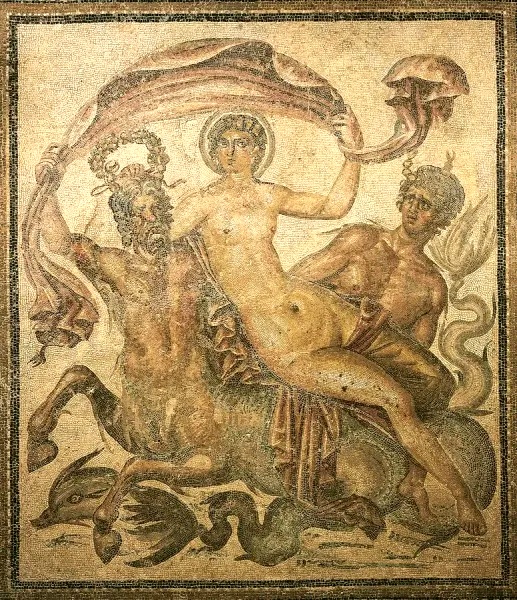
Venus riding a centaur mosaic. From the ancient city of Timgad, Algeria, circa 2rd century AD; on display at the Archaeological Museum of Timgad, Algeria. #Algeria #Numidia #Mosaic
Lucius Apuleius tweet media
English
0
8
32
455
Lucius Apuleius retweetledi
Lucius Apuleius
Lucius Apuleius@RPH969·
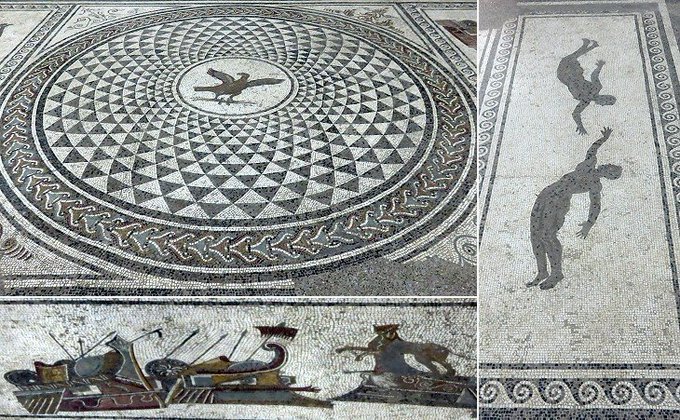
#MosaicMonday with a central geometric pattern, scenes of naval fights and swimmers; it shows different typologies of mosaics: geometric with an optical effect, coloured, black and white; found in the villa of a wealthy landowner named Pompianus. Museum of Constantine, Algeria.
Lucius Apuleius tweet media
English
1
13
45
1.7K
Lucius Apuleius retweetledi
Following Hadrian
Following Hadrian@carolemadge·
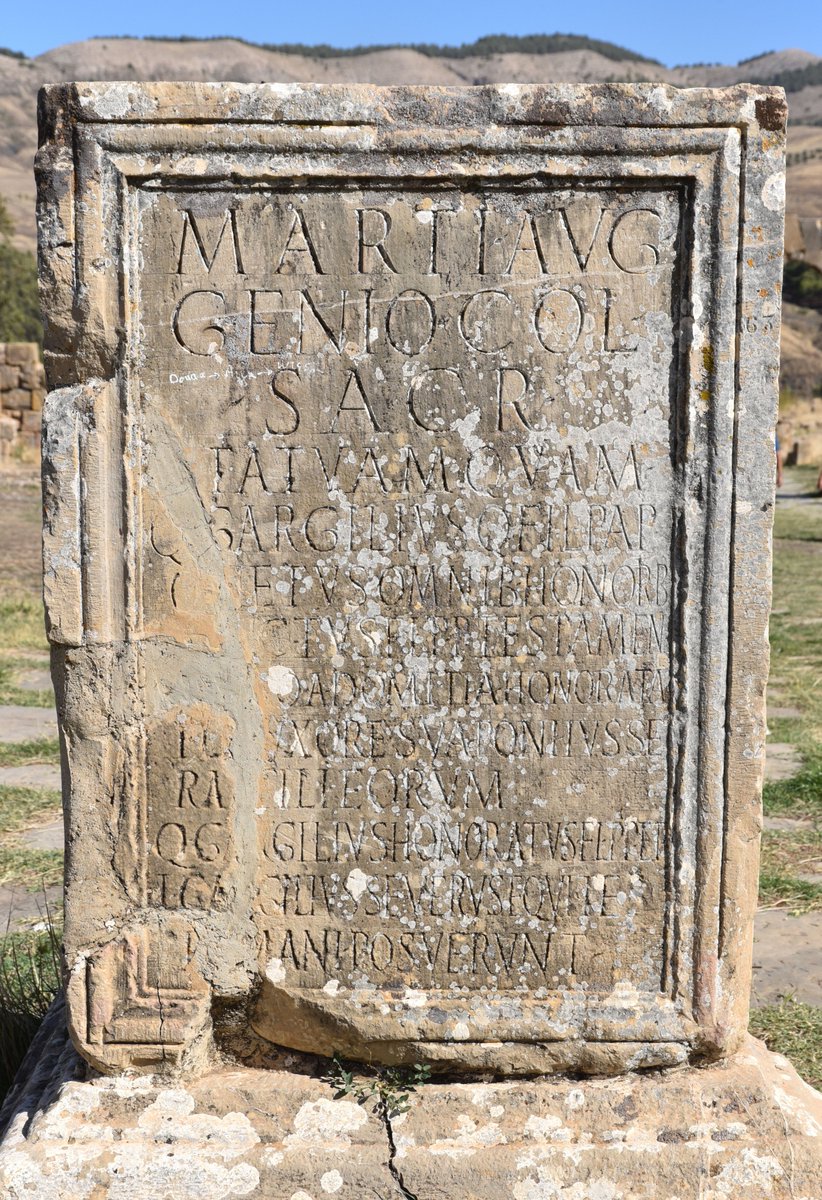
#EpigraphyTuesday - Dedicatory inscription from Cuicul (Djémila, Algeria) dedicated to Mars Augustus and the protective spirit (genius) of the colony. AE 1912, 0026 edh.ub.uni-heidelberg.de/edh/inschrift/… Marti Aug(usto) / genio col(oniae) / sacr(um) / statuam quam / Q(uintus) Gargilius Q(uinti) fil(ius) Pap(iria) / Quietus omnib(us) honorib(us) / functus fl(amen) p(er)p(etuus) testamen/[to s]uo a Domitia Honorata / uxore sua poni iusse/[rat] fili eorum / [- Ga]rgilius Honoratus fl(amen) p(er)p(etuus) et / [- Gar]gilius Severus equites / [Ro]mani posuerunt “Sacred to Mars Augustus and to the Genius of the colony. The statue of Quintus Gargilius Quietus, Son of Quintus, of the Papiria tribe, having held all public offices, and perpetual priest, had ordered in his will to be set up by his wife Domitia Honorata, his sons, Gargilius Honoratus, perpetual priest, and Gargilius Severus, Roman knights, set it up.”
Following Hadrian tweet media
English
1
14
78
1.6K
Lucius Apuleius
Lucius Apuleius@RPH969·
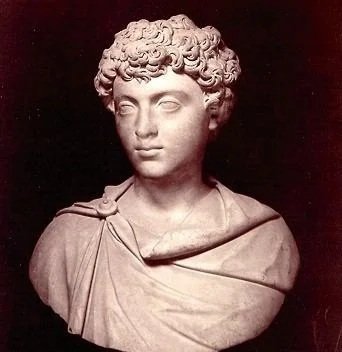
Emperor Marcus Aurelius died on this day in AD 180. When he was young, Marcus Aurelius' teacher of Latin oratory was Marcus Cornelius Fronto (AD 100 - 170), an eminent rhetorician and grammarian of Numidian origin from Cirta (modern-day Constantine in Algeria).
Lucius Apuleius tweet media
English
0
6
15
271