OldRailwayAccidents

41.2K posts

OldRailwayAccidents banner
OldRailwayAccidents

OldRailwayAccidents

@RWLDproject

Welcome to the 'Railway Work, Life & Death' project, on British & Irish railway staff accidents pre-1939. Tweets by Mike Esbester. @RWLDproject.bsky.social

United Kingdom Katılım Ekim 2017
856 Takip Edilen4.4K Takipçiler
Sabitlenmiş Tweet
OldRailwayAccidents
OldRailwayAccidents@RWLDproject·
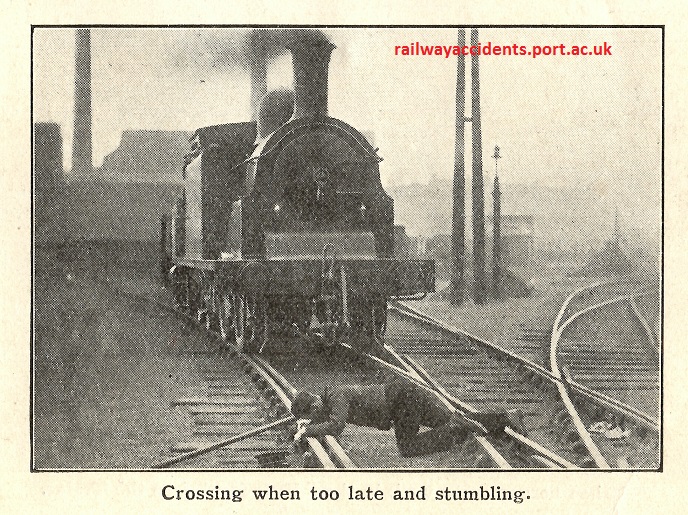
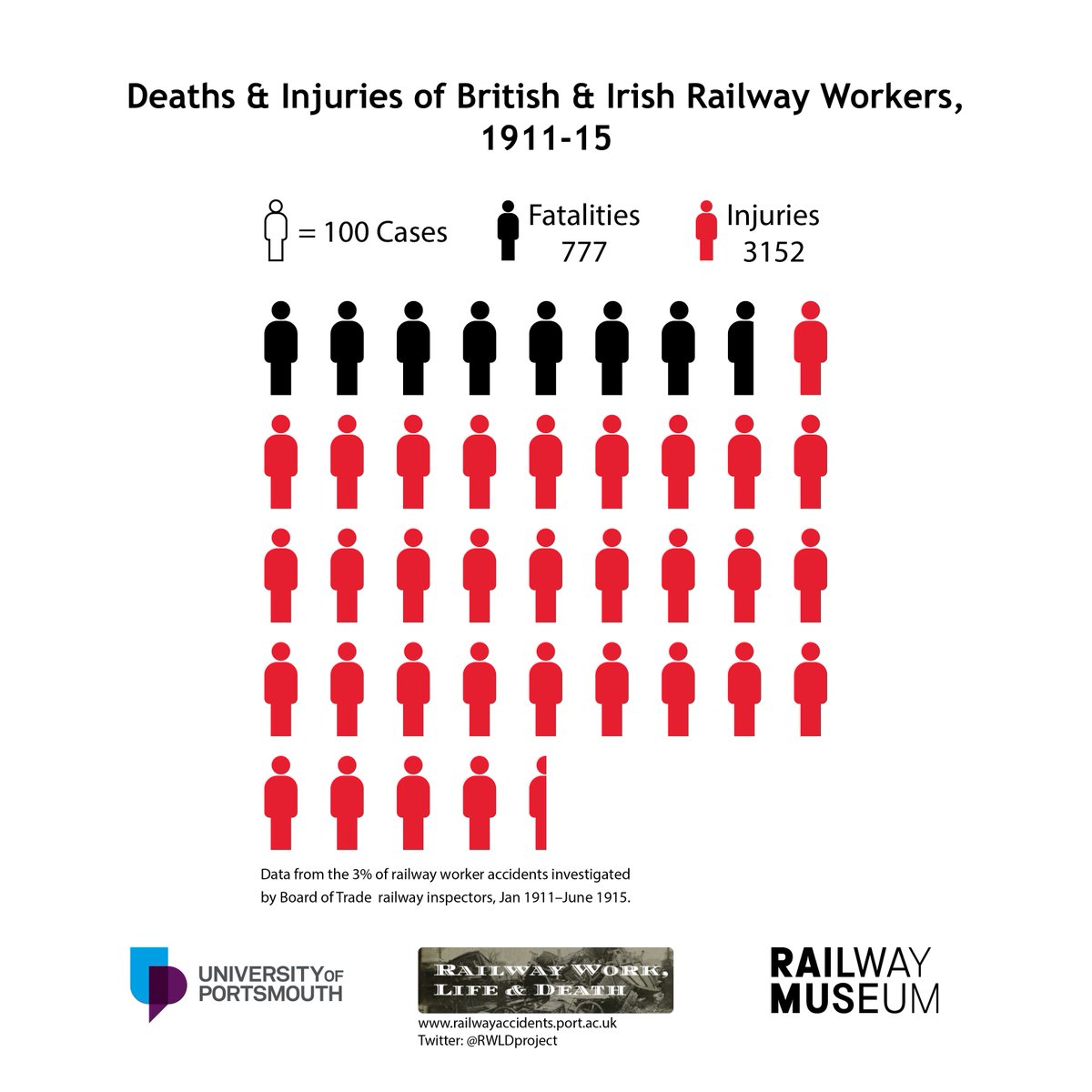
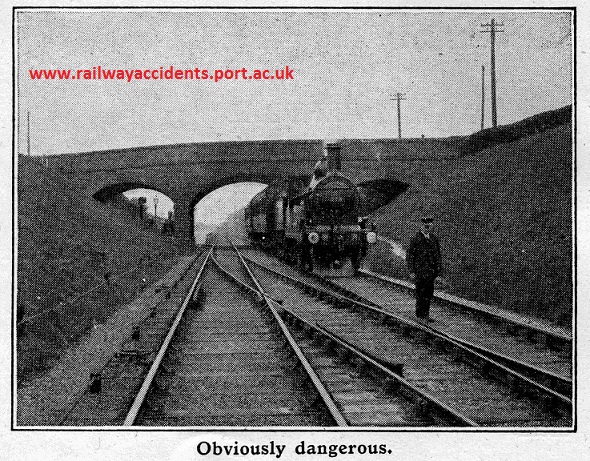
Welcome to the 'Railway Work, Life & Death' project account! Check our expanding database of British & Irish railway worker accidents, covering 1855-1939 - all free! Currently over 117,000 cases, with more to come. railwayaccidents.port.ac.uk
OldRailwayAccidents tweet mediaOldRailwayAccidents tweet mediaOldRailwayAccidents tweet mediaOldRailwayAccidents tweet media
English
1
7
38
5.5K
OldRailwayAccidents retweetledi
Friends of Hafod Morfa Copperworks
To find out about Swansea’s once vast & thriving copper industry🏭 join us for a free, 2 hour guided tour of the old Hafod Morfa Copperworks on Saturday 28 March at 11am. 🚶‍♂️🚶🚶‍♀️ Meet us opposite Landore Park & Ride SA1 2LQ. Please wear sturdy footwear.
Friends of Hafod Morfa Copperworks tweet media
English
1
4
7
2.1K
OldRailwayAccidents retweetledi
Harry Eccles
Harry Eccles@Heccles94·
Return your unwanted Reform UK flyers to this address and it costs them £2.50 a pop. Pop this address on an envelope with the flyer in, and pop it in a post box! The more we return, the less they will send!
Harry Eccles tweet media
English
1K
5.4K
17.5K
583.2K
OldRailwayAccidents retweetledi
Centre of Excellence for Heritage Innovation
On the final day of our co-creation workshop in Sardinia the students presented ideas for the conservation of 3 sites of Nuragic Heritage - including digital preservation, utilising the surrounding landscape and exploring architectural design. @portsmouthuni @arch_port @univca
Centre of Excellence for Heritage Innovation tweet mediaCentre of Excellence for Heritage Innovation tweet mediaCentre of Excellence for Heritage Innovation tweet mediaCentre of Excellence for Heritage Innovation tweet media
English
0
1
1
77
Great Eastern Railway Society
Great Eastern Railway Boiler Policy: Holden's Rigid System and Its Wartime Collapse Until James Holden became Locomotive Superintendent in 1883, the Great Eastern Railway possessed only two or three boiler designs versatile enough to be fitted to more than one locomotive class. Boilers almost invariably stayed with the engine to which they had been originally allocated, although swaps between members of the same class were relatively common during repairs at Stratford Works. Reasonable records exist for work carried out at Stratford from 1875 onwards, but many major repairs, including complete boiler changes, were also undertaken at the GER’s Norwich shops, for which virtually no documentation survives. The surviving Stratford documentation does, however, reveal several intriguing cases in which boilers were effectively “shoe-horned” into engines of an entirely different class, usually by modifying mounting brackets, smokebox arrangements or even frame stretchers. A significant change came with the passing of the Boiler Explosions Acts of 1882 and 1890, which became law around the time Holden took office. These important pieces of safety legislation were a direct response to a series of catastrophic boiler failures on Britain’s railways and introduced strict requirements for every locomotive boiler to carry its own unique identification number together with comprehensive records of all repairs and modifications. To simplify administration and ensure compliance, the GER adopted a straightforward but inflexible policy: each boiler was given the same number as the locomotive to which it was fitted. The intention was that engine and boiler would remain together for the whole of their working lives. Should the locomotive later be renumbered, the boiler plates would be altered to match. When an engine eventually required a completely new replacement boiler, the fresh boiler would again take the engine’s number. This system worked reasonably well during the earlier part of Holden’s long reign (1883–1907), a period in which he pursued one of the most thorough standardisation programmes seen on any British railway. By the turn of the century, the majority of the GER’s expanding fleet relied on just a handful of standard boiler designs, many of them featuring Holden’s characteristic two-ring telescopic barrels with the dome positioned well forward on the barrel, sloping grates on later examples for improved combustion, and working pressures typically between 160 and 180 lb per square inch. Larger classes gradually received Belpaire fireboxes from around 1902 onwards, giving greater steam space above the crown sheet and allowing higher pressures without increasing the risk of priming. By the years immediately before the First World War, the policy was beginning to cause serious delays in getting overhauled engines back into traffic. Holden’s standardisation had been so successful that the number of different boiler types in regular use had been reduced to about half a dozen, while the total locomotive stock had almost doubled. The inevitable result was a classic workshop logjam at Stratford: completed boilers of a particular type would sit waiting while their designated engines were still undergoing frame or motion repairs, and vice versa. From the beginning of 1913, the GER therefore relaxed the rules. Henceforth, locomotives would be out-shopped with whichever boiler of the correct type happened to be available and ready. Existing boilers retained their original numbers, and boilers fitted to brand-new engines continued to carry the same number as their locomotive. Replacement boilers built for existing engines, however, were numbered in a new series commencing at 2000. This simple but effective measure ensured that no two boilers on the system would ever carry duplicate numbers, allowing far greater flexibility in allocation. For example, if locomotive 478 received an entirely new boiler, that boiler might be numbered 2338, releasing the original No. 478 boiler for use on another engine. Previously, the GER (and later the LNER) had regarded an engine as having been “rebuilt” when it received a brand-new replacement boiler, and this fact was recorded on the locomotive’s numberplate. The new, more pragmatic system made this distinction largely meaningless. Whether an engine received a brand-new boiler or a second-hand one now depended largely on what was to hand at the time. As a result, some locomotives were recorded as “rebuilt” two or even three times in just a few years, while others never received the accolade despite extensive work. Even this revised arrangement began to break down under the immense pressures of the First World War. From 1916 onwards, a growing number of new locomotives were turned out with what enthusiasts would describe as “the wrong” boiler—either one intended for another member of the same class or one carrying a number from the replacement series. A striking example occurred with the powerful S69 class 4-6-0s (later LNER B12), three of which were completed with boilers that had been built and numbered for the D81 class 0-6-0 goods engines (later J20). In practice, new boilers were now only nominally allocated to specific engines; as long as numbers were not duplicated, the physical pairing became secondary. This fascinating evolution from strict one-to-one pairing to wartime pragmatism gives a revealing insight into the practical challenges of running a busy railway with limited workshop capacity and ever-growing traffic demands. It also explains why, by the Grouping era, GER number plates and “rebuild” dates on surviving engines could sometimes tell a rather more complicated story than first appears. Photo (C) GERS A55 (Decapod) frames at Stratford Works.
Great Eastern Railway Society tweet media
English
2
3
20
597
Kathryn Baird
Kathryn Baird@Kathryn11Baird·
Since November I've been researching these five men and the circumstances of their tragic deaths on 22 March 1943 in Fotheringhay. Today I received letter (not shared here) from HRH The Prince of Wales for the families of these 5 men and all those who will be at Sunday's service.
Kathryn Baird tweet media
English
4
5
32
715
OldRailwayAccidents retweetledi
Bluebell Railway
Bluebell Railway@bluebellrailway·
The Bluebell Railway Museum – Southern Railways Archive has launched its new website, reflecting the full range of material held within the Archive – including documents, photographs & more relating to the railways of Southern England. Find out more: southern-railways-archive.com
Bluebell Railway tweet media
English
0
10
31
983
OldRailwayAccidents retweetledi
RMT
RMT@RMTunion·
RMT members, Tony Carter-Leay, Colin Hall and Ross Marshall attended the memorial service for Joseph “Julius” Stephen today at West Ham station to mark 50 years since the West Ham station attack.
RMT tweet mediaRMT tweet mediaRMT tweet media
English
2
14
55
3.9K