

Raw Material
20.8K posts

Raw Material
@RawMaterialNYC
01000010 01110101 01111001 00100000 01000010 01101001 01110100 01100011 01101111 01101001 01101110 #StackingSats
Katılım Temmuz 2014
3.2K Takip Edilen562 Takipçiler
Raw Material retweetledi

The parents of 26-year-old OpenAI whistleblower Suchir Balaji, who was found dead in his San Francisco home a month after he went public accusing the company of breaking laws to train ChatGPT, are intensifying their efforts to challenge the official ruling of suicide. abc7.la/cq7WB1

English
Raw Material retweetledi

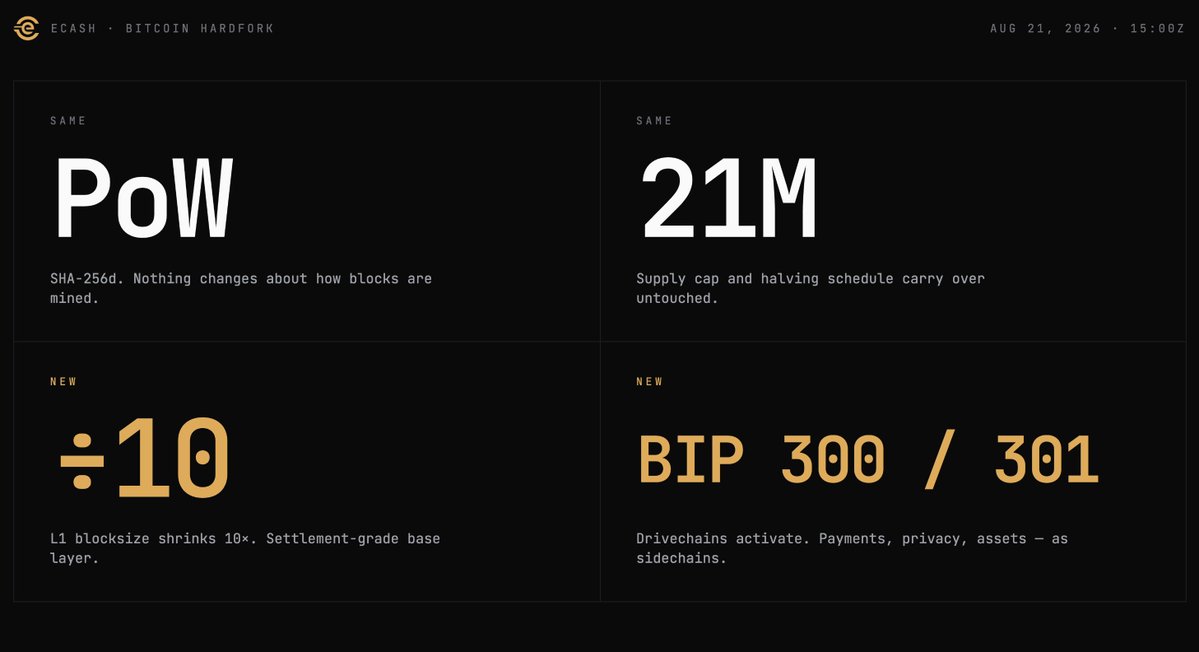
eCash is a hardfork of Bitcoin, scheduled for August 2026.
It activates Drivechains (BIP300/301) and shrinks L1 blocksize 10x. Same PoW, same 21M cap. Every BTC holder gets eCash 1:1 on fork day.
This account explains the bet, the risks, and what happens if it works.
English
Raw Material retweetledi

🔥
*goes and grabs a JPro board
Printer ⚡@Printer_Gobrrr
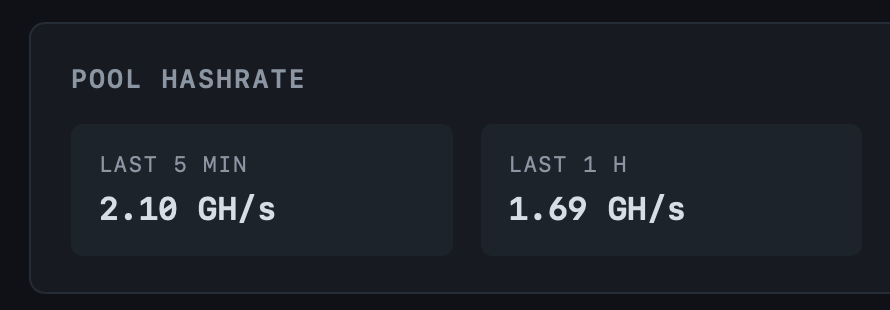
Conclusion after two weeks of testing TNA OS alpha on my BitChimney equipped with an S19 Jpro hashboard PSU bypass mode ☑️ Multipool hashing with custom quota ☑️ Reckless overclocking mode ☑️ Immersion mode ☑️ Stratum V2 ☑️ Desperately needs some UI improvements ☑️ No dev fee ☑️
English


Below, I present "SimplePool" -- v 0.1
A key Bitcoin problem is **mining centralization** -- both the centralization itself -- but (more importantly) the misplaced FUD about it. Poor thought leadership, has derailed the mining conversation, as well as other much more important mission critical Bitcoin projects. This **disturbing lack of honesty**, may even kill off the BTC project as a whole -- eventually.
Anyway, to fix that, I proposed that we create:
1. open source **pool** software, maintained as a community project
2. open source **pool hopper** software -- so that Hashers can just point their hash at the Pool Hopper -- which will automatically give them the best price, the healthiest blocks, w/ the least censorship
3. an incentive compatible, scalable, safe, non-custodial way for small miners (up to 8 billion individual miners) to safely collect $ from a pool
We have now shipped a **preliminary** version, of this.
It is brand new -- but let me give you an idea of where it is going.
Important: I do **not** think this software will ever replace today's existing pools. Pools are **brands** -- so Foundry, Luxor etc aren't going anywhere. And they collect $ based on their **reputation**.
But --hopefully-- we can (eventually) make the SimplePool software so good -- that it takes the software maintenance problem off of their hands. While also increasing overall pool competitiveness. Especially if we obsessively focus on revenue maximization (which we will).
This is an effective way to punish censorship -- if a pool censors for too long, it will be starved of $ and hashrate. It is also an effective way to recover from a situation where there is only 1 pool (or only 2 pools or 0 pools) -- since [1] the open source pool software makes it easy to create a new pool, and [2] the hopper will automatically feed hash to this new pool (if it pays extra high $ "introductory rate" PPS).
In general, we do not want "closed source" software in Bitcoin. Instead we want openness and transparency.
----
Unfortunately, most of the Bitcoin dev industry is lazy / corrupt. Most of their time is spent conspiring, to form monopolist guilds -- so as to further enhance their collective laziness. So they have negative productivity. Basically everything you hear on Twitter / on stage at conferences / on the mailing lists (these days) is a lie -- other than that, they are really great people, I guess.
Here are some examples of deranged mining beliefs:
1. Luke/Ocean's misguided abandonment of PPS. Luke believes each miner should hand-craft each block -- and not outsource this task to the pool. But he is wrong. Efficiency, specialization of labor, and accountability are --by far-- more important. There is zero conflict of interest between the pool and hasher -- both want to maximize the block's txn fee revenue. So the whole issue is a total waste of everyone's time, and an enormous source of confusion -- all to prop up Luke's misguided pet project, Ocean.
2. Worse than that, a large portion of the bitcoin-dev mailing list believes that up is down. According to them, any extra $ flowing to miners -- (merged mining, heat reuse, business side deals [ercot credits]) is misinterpreted as "changing mining incentives". But that is wrong. The truth is: it has always been possible (and desirable) to pay miners $. We can pay them extra fees, or we can have a business contract with them, or an enemy could "bribe" them (etc). Satoshi invented merged mining, and was an ardent believer of the (common sense) idea that miners should make as much $ as possible. This keeps them loyal to us -- the users.
3. Most of the claims made by Statum V2 are untrue. Also, that project has been active for like 7 years ... why isn't it done yet??
More details below.
English

The NerdQaxe++ Revision 7 is at Solo Satoshi headquarters.

English
Raw Material retweetledi

Bitcoin Mining is NOT Solving Complex Math Problems
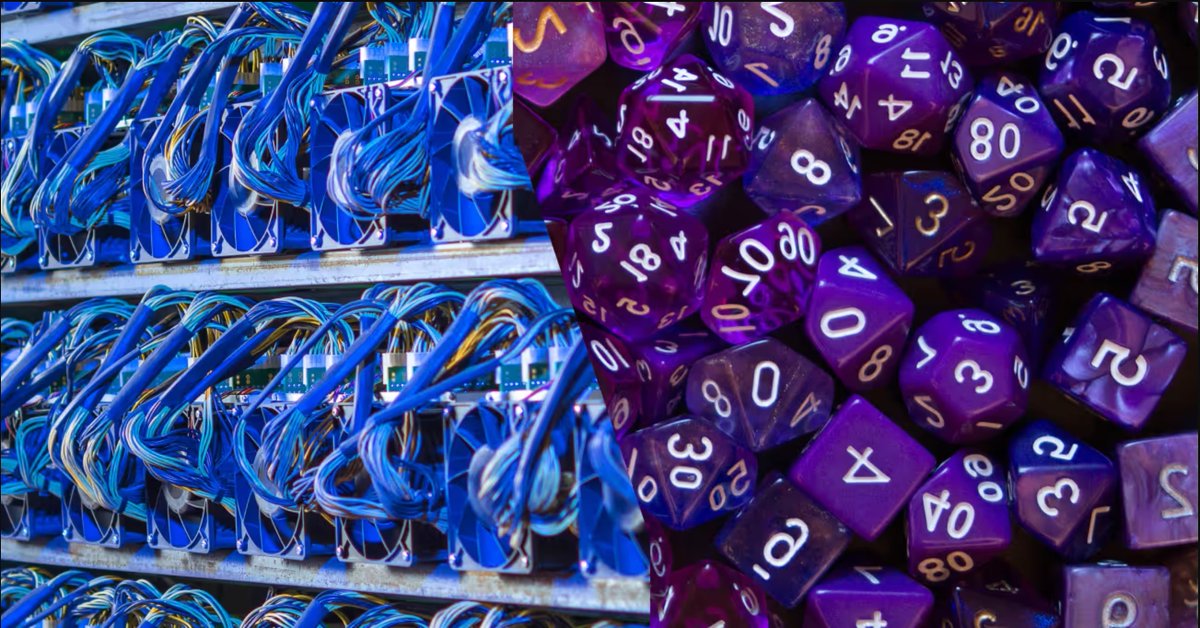
🎲 Beginner's guide to bitcoin mining and difficulty adjustment using a simple dice analogy.
Most people misunderstand what bitcoin miners actually do, and as a result they don't fully grasp the level of security provided by bitcoin's hashrate. In this article, we'll explain proof of work in a non-technical way so that you’ll be able to counter the misinformation about supercomputers and quantum computers attacking the bitcoin network in the future.
Simply put, mining is a lottery to create new blocks in the bitcoin blockchain. There are two main purposes for mining:
— To permanently add transactions to the blockchain without the permission of any entity.
— To fairly distribute the 21 million bitcoin supply by rewarding new coins to miners who spend real world resources (i.e. electricity) to secure the network.
To understand what is actually happening in this lottery system, let's look at a simple analogy where every bitcoin hash is equivalent to a dice roll.
🍀 Luck, Gambling, and SHA256
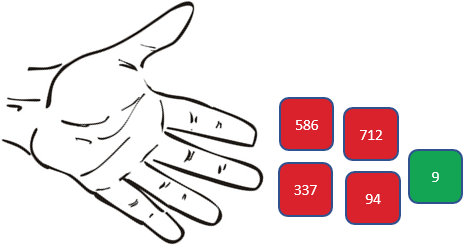
Imagine that miners in the bitcoin network are all individuals gambling at a casino. In this example, each of these gamblers have a 1000 sided dice. They roll their die as quickly as possible, trying to get a number less than 10. Statistically, this may take a very long time, but as more gamblers join the game, the time it takes to hit a number less than 10 gets reduced. In short, more gamblers equals quicker rounds.
Once somebody successfully rolls a number less than 10, all gamblers at the table can look down and verify the number. This lucky gambler takes the prize money and the next round begins.
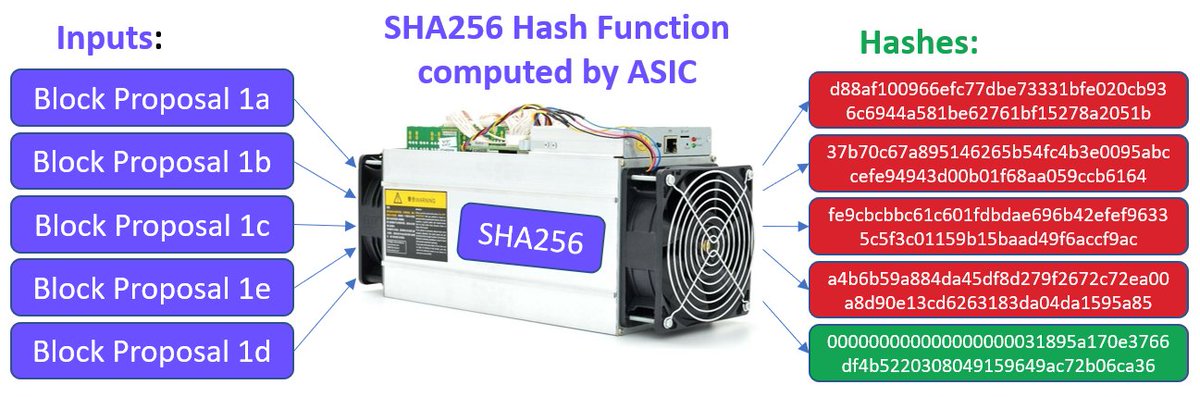
Ultimately, the process of mining bitcoin is very similar. All miners on the network are using Application Specific Integrated Circuits (ASICs), which are specialized computers designed to compute hashes as quickly as possible. To “compute a hash” simply means plugging any random input into a mathematical function and producing an output.
More hashes per second (i.e. higher hashrate) is equivalent to more dice rolls per second, and thus a greater probability of success. Miners propose a potential bitcoin block of transactions, and use this for an input. The block is plugged into the SHA256 hash function which yields a fixed-sized output, known as a hash. A single hash can be computed in less than a millisecond, as it involves no complex math.
If the hash value is lower than the bitcoin network difficulty, then the miner who proposed the block wins. If not, then the miner continues trying by computing more hashes. The successful miner’s block is then added to the blockchain, the miner is rewarded with newly issued bitcoin and transaction fees for their work, and the “next round” begins.
⚡️ ASICs vs. Supercomputers
Assigning the most powerful supercomputer to mine bitcoin would be comparable to hiring a grandmaster chess player to move a pile of bricks by hand. The job would get done eventually but the chess player is much better at thinking and playing chess than exerting energy to repetitively move bricks.
Likewise, combining the computing power of the most powerful supercomputers in the world and using them to mine bitcoin would essentially be pointless when compared to the ASIC machines used today. ASICs are designed to do one thing as quickly and efficiently as possible, whereas a supercomputer is designed to do complicated tasks or math problems. Since bitcoin mining is a lottery based on random trial and error rather than complex math, specialization (ASICs) beats general excellence (supercomputers) everytime.
🕰 Network Difficulty and 10-Minute Block Times
Now that you understand the randomness of miners finding a block, it is important to understand block time and difficulty. In our gambling example, imagine that anybody can join or leave the table at any time. If one person is rolling a 1000 sided die trying to get less than a 10 it will take them an average of 10 minutes to hit that number. Sometimes they’ll hit in 1 minute, other times it might take them 30.
If a new person steps up to the table and starts rolling, collectively it will take them an average of 5 minutes for somebody to win the round. If 20 people step up to the table, this time is significantly shortened. In order to keep the game interesting we want to average a winner every 10 minutes. To do this, we can simply adjust the dice target. As additional gamblers step up to the table, the rules will change (e.g. gamblers must now roll a number less than 5 to win) so that the average remains 10 minutes per round. As more gamblers join, the casino makes winning harder. If gamblers leave, they make it easier.
This is exactly how the bitcoin network regulates mining to maintain a steady issuance schedule of new BTC. Miners compute hashes below the target difficulty every 10 minutes on average. Every 2016 blocks (~2 weeks) the average for those blocks is calculated and the difficulty is adjusted to bring block times back to 10 minutes. If more miners join the network in this ~2 week period, the hashrate and difficulty will increase as a result.
Note: Nobody knows exactly why these arbitrary numbers were chosen. That said, it’s important that 10 minutes is long enough for miners and nodes to pass information around the world without internet speeds causing significant issues, and 2016 blocks is long enough to get a statistically accurate block time needed for the difficulty adjustment.
📉 Truly Transparent Supply
The difficulty adjustment described above make bitcoin the only asset with a truly fixed and known supply schedule. Since inception, we’ve known two things:
— There will never be more than 21 million coins.
— Every 10 minutes more bitcoin is newly issued as we approach that 21 million number.
In every other industry, (gold, auto, or even sandwich bags) the supply fluctuates based on demand. If demand increases for automobiles, then the manufacturer can increase production to match the demand. In bitcoin, supply is locked in and cannot change, therefore demand and price are tied more closely than any other industry or asset classes. This sounds very cut and dry, but it gets interesting when you try to understand what miners do with their newly issued coins and the impact this has on the market.

English
Raw Material retweetledi

Raw Material retweetledi

The dam was Hezbollah. The hospitals are Hezbollah. The farms are Hezbollah. The apartment buildings are Hezbollah. The churches are Hezbollah. The mosques are Hezbollah. The bridges are Hezbollah. The water treatment plants are Hezbollah. The journalists are Hezbollah. The paramedics are Hezbollah. The clinics are Hezbollah. The civilians are Hezbollah. The
Middle East Observer@ME_Observer_
⚡️🚨 Israeli terror in Lebanon: In a dangerous move, Israeli aircraft bomb the Qaraoun Dam in Beqaa, which contains a large amount of water, and its collapse means the drowning of entire villages. According to Israel, there was a Hezbollah fighter inside the water
English

I’m in transition again in my life. I have done this many times and they are all a bit painful as a person goes from being successful & certain about what you’re doing and having to learn again.
English
Raw Material retweetledi

Raw Material retweetledi

You can hire Parman to set up "rented" mining at home with Datum/Ocean, or lazy way, rent the rented hash...
privatehash.net
Either way, it helps Bitcoin.
English

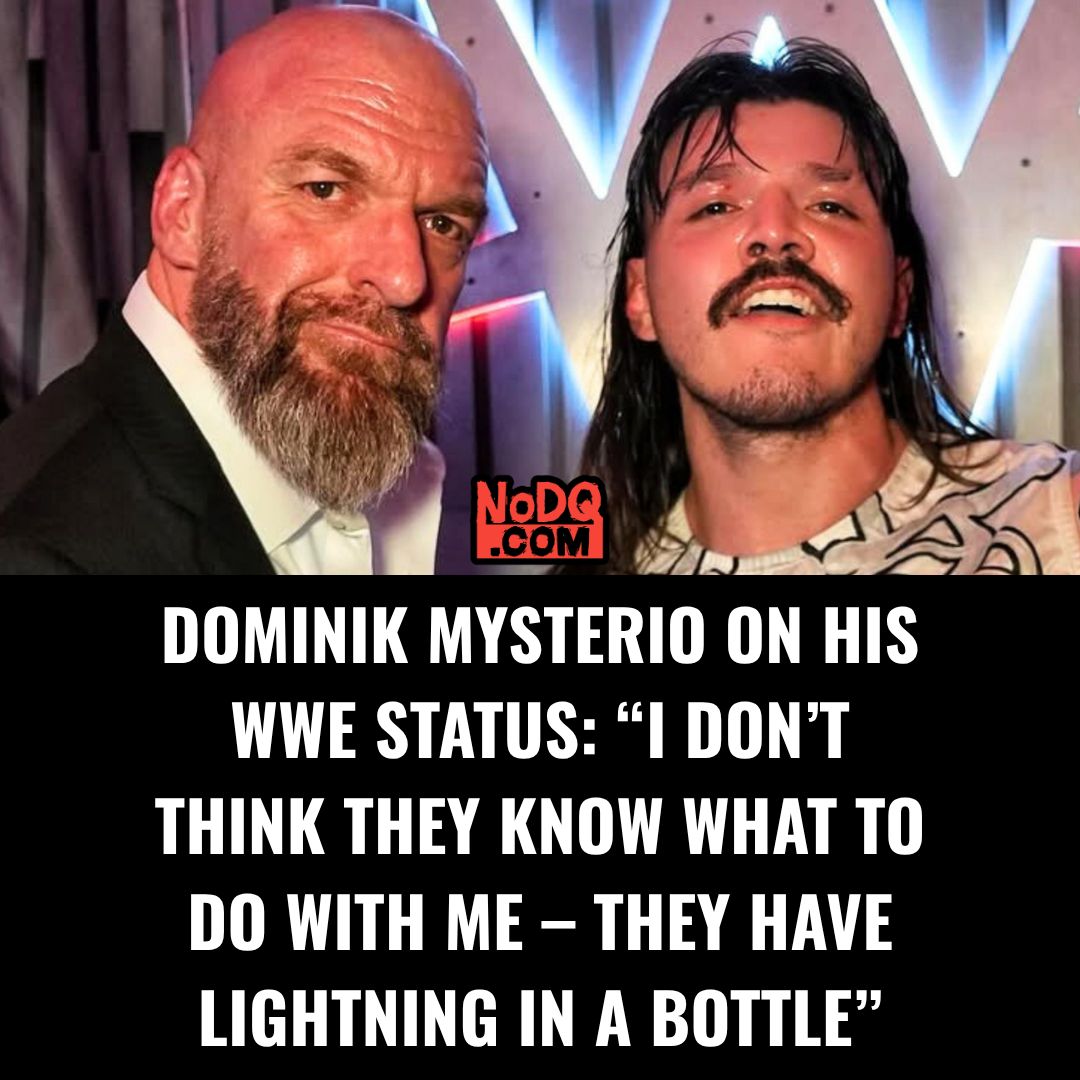
Dominik Mysterio on his WWE status: “I don’t think they know what to do with me – they have lightning in a bottle” nodq.com/news/dominik-m…
English
Raw Material retweetledi

Today I did the thing every other BTC podcast is afraid to do
Interviewed the long-lost brothers from BCH and spoke about the stuff they’ve been building
You won’t be hearing this on any other Bitcoin podcast
And I challenge @TheBCHPodcast to interview BTC devs for 8 hours!
VLAD HOSTS THE BEST PODCAST IN BITCOIN@Vladcostea
What's going on with Bitcoin Cash? feat. @cculianu @stevethurmond (Bitcoin Takeover Podcast S17 E26) x.com/i/broadcasts/1…
English
Raw Material retweetledi

yo ⚡
we plugged 2 bitaxes into a dumb little game and now they pay out lightning sats to whoever plays
stupid? probably. but the sats are real
lightningtoe.com — top score gets 1k sats
roast away ⛏️
English
Raw Material retweetledi

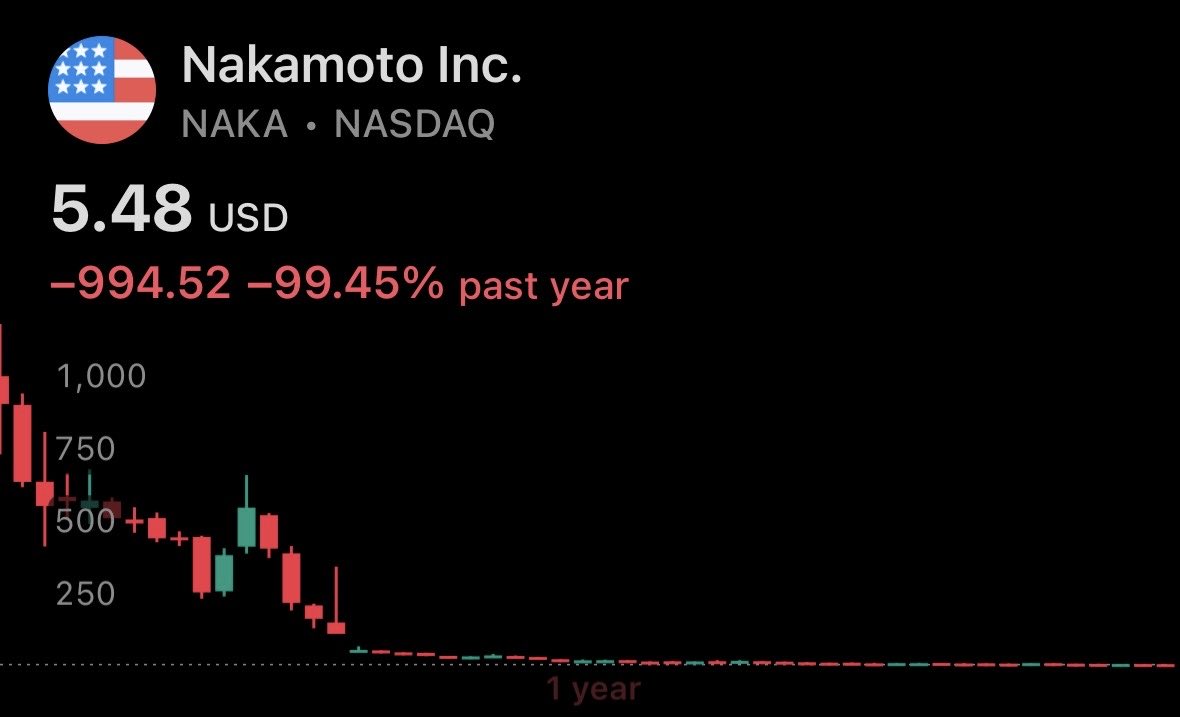
⚠️⚠️⚠️ Trading has been halted on $NAKA after plunging another 25% today. 💀
English
Raw Material retweetledi

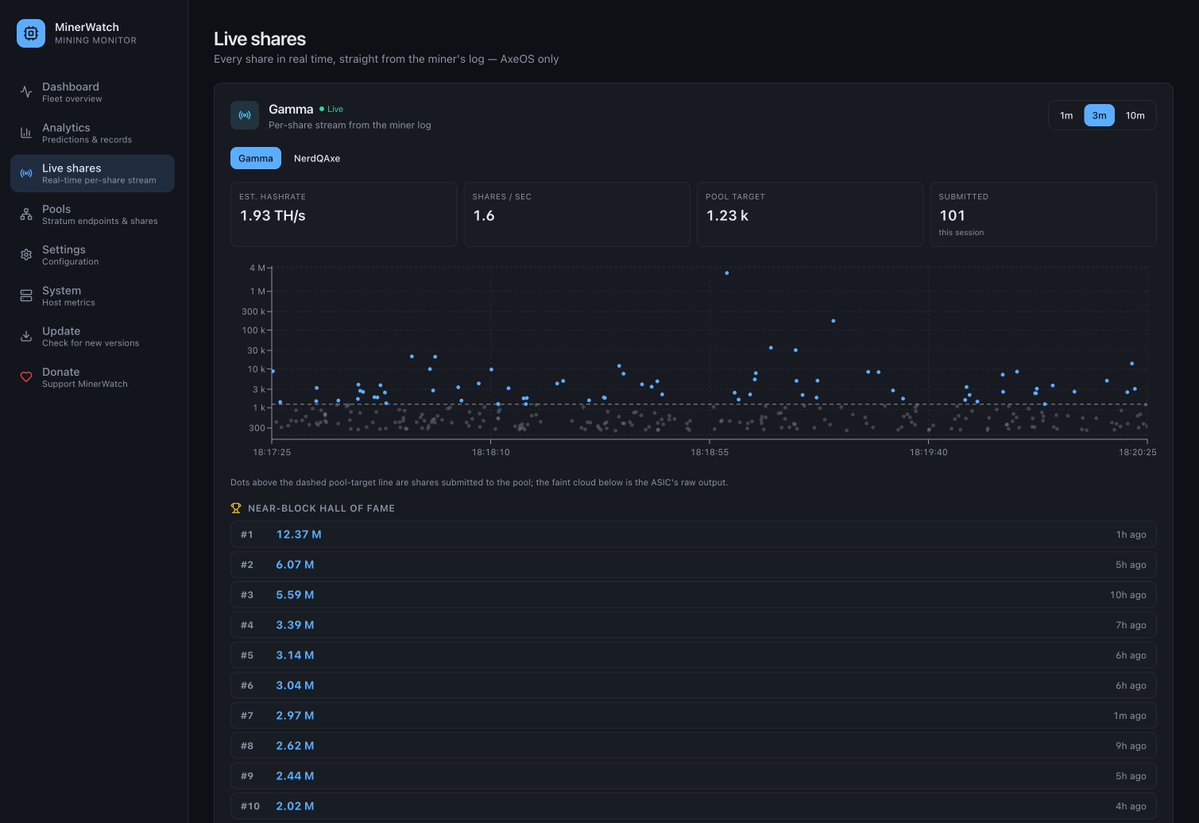
Live Share Difficulty is now on #MinerWatch
It shows in real time the shares we send to the pool and creates a TOP 25 of the best shares submitted by each of our #Bitaxe /Nerd* devices, FREE & OpenSource.
github.com/imlenti/MinerW…
#solomining #bitcoinmining #nerdqaxe #nerdoctaxe
English
Raw Material retweetledi

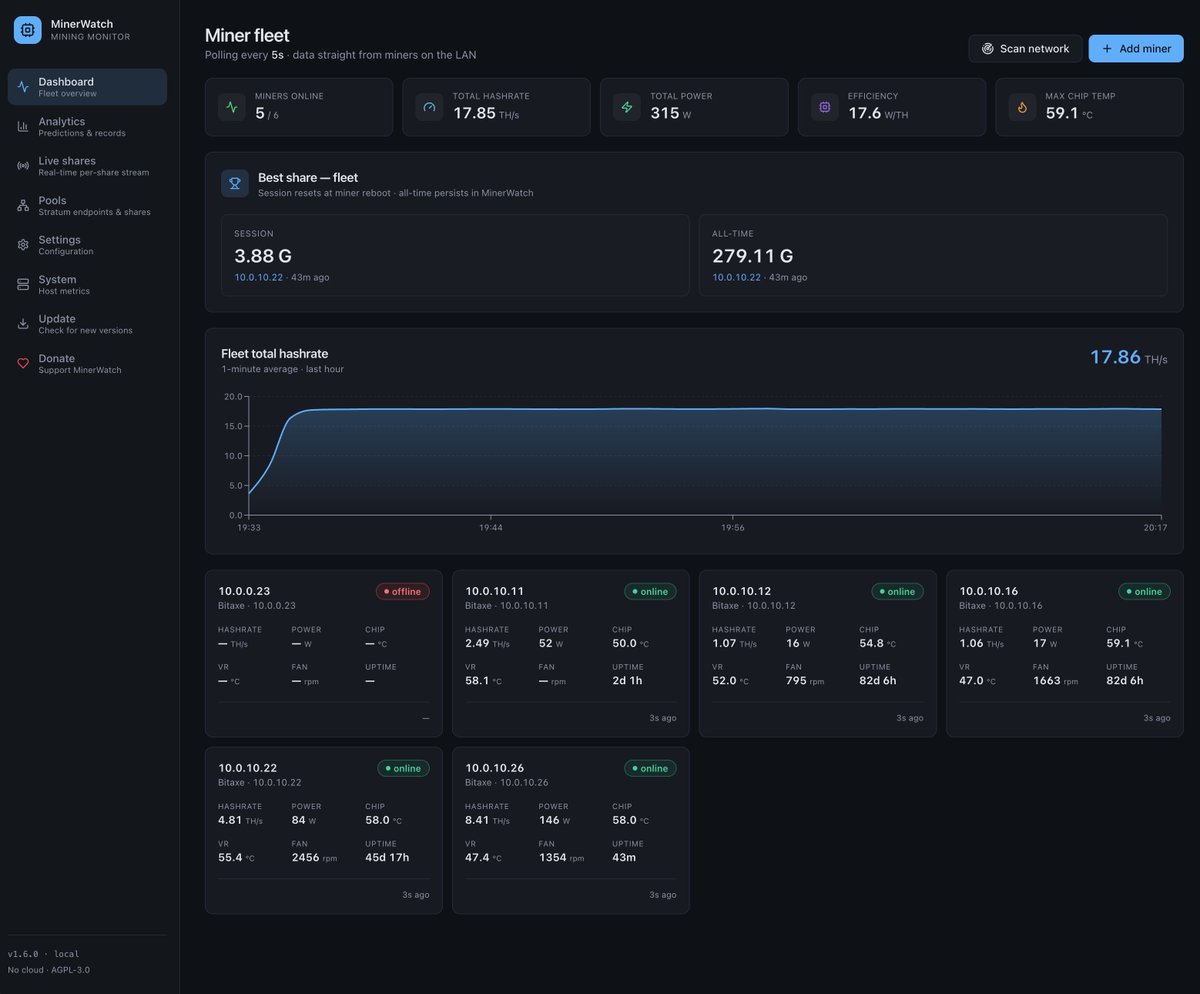
There are many ways to monitor your miner rigs, from Grafana to custom implementations. But overall, none of them really appealed to me because they always felt a bit weird and cumbersome.
@imlenti brought it to my attention that he’d developed something. So I had to check it out, and I have to say, it really works very well. There are still a few minor bugs here and there, but MinerWatch is still actively under development. Even in its current state, it’s already very user-friendly and informative - as soon as it’s available in the Umbrel store, I’d definitely use it.
Above all, the well-thought-out UI/UX really stands out as a positive. Compared to other projects, you can see Italian flair for truly good design here.
English
Raw Material retweetledi

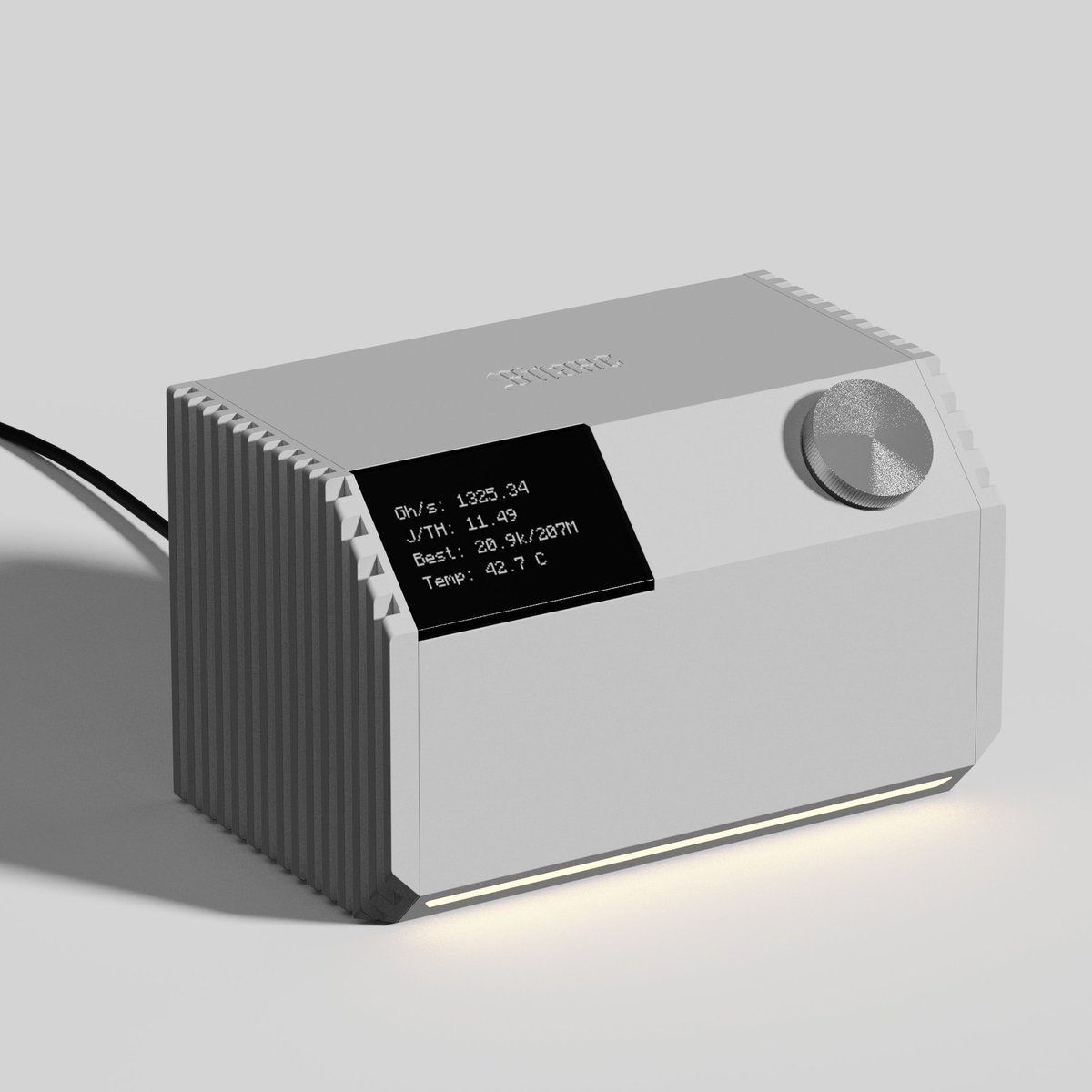
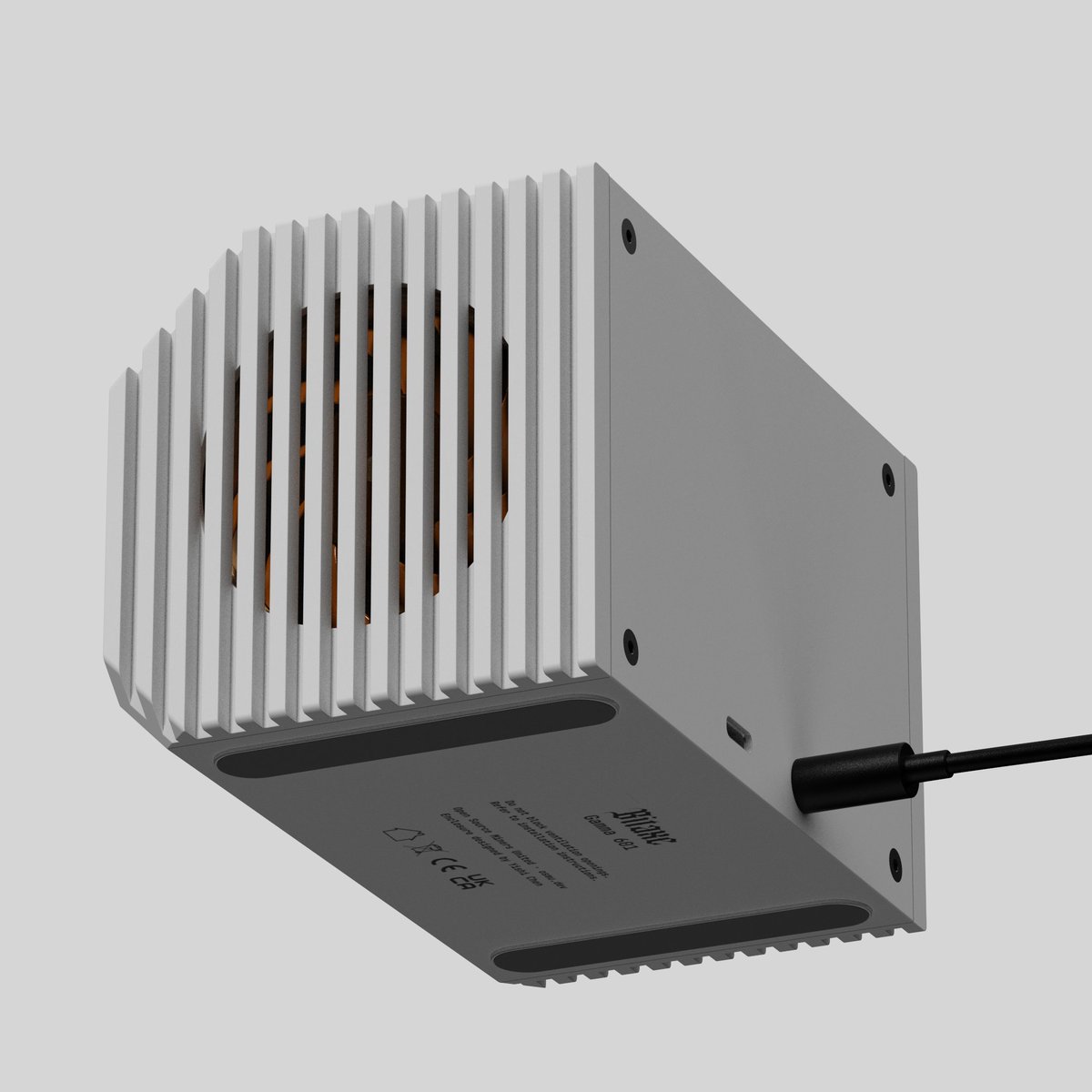
Most Bitcoin mining hardware looks like it belongs in a server room.
This is my redesign of the Bitaxe — an open source home miner — because it should look good on your desk too.
Engineering still in progress. More at yishi-bitcoin.framer.website

English
Raw Material retweetledi

TNA-OS in the house with s19j pro hashboard!
running on @SatStackingPleb slim19
firmware @MolonLabeVC
Freedom never felt so good!
#SoloMining #HomeMining


English