Dr John Read

19.6K posts

Dr John Read

Dr John Read

@ReadReadj

Professor, Clinical Psychology, University of East London. Chair, International Institute for Psychiatric Drug Withdrawal https://t.co/LRU5M9fsPz. Opinions my own


London Katılım Şubat 2014
2K Takip Edilen12.8K Takipçiler
Dr John Read retweetledi
Radoslaw Stupak
Radoslaw Stupak@RadoslawStupak·
Norwegian health authorities have established dedicated units for medication-free mental health treatment (MFT) to enhance patient choice. MFT is not associated with inferior short-term treatment outcomes in the population currently receiving this care. journals.sagepub.com/doi/10.1177/00…
English
5
30
74
11.9K
Dr John Read retweetledi
Prof James Davies 💭
Prof James Davies 💭@JDaviesPhD·
'When asked if they would consider someone experiencing typical fluctuations in mood (described as broad happiness but occasional moments of worry, frustration or loss of confidence) as having a mental illness, more than half of young Americans say yes...' ft.com/content/063b7e…
English
8
19
58
3.8K
Dr John Read retweetledi
Laura Delano
Laura Delano@LauraDelano·
In 16 years of doing this work, I have never told anyone to stop taking their psychiatric medication. I do not know what is right for another person, and I have never claimed to. I share my story, basic facts about the mental health industry, and why informed choice matters. Here’s the problem: Most people never get to make a true choice regarding psychiatric diagnoses or treatments. They aren’t told about the unscientific underpinnings of the DSM, the comprehensive list of risks that come with taking psychiatric drugs, how absent their long-term safety and efficacy data is, or how hard it can be to get off them. Without that as a starting point, informed choice is impossible. @DrJosefWD
English
19
32
180
17.2K
Dr John Read retweetledi
Dr Sanil Rege FRANZCP | MRCPsych
After Jauhar et al showed how leaky your umbrella review was ; you and your fellow authors concluded 👇 1️⃣“We would agree that many brain processes, including the serotonin system, likely play a complex, though poorly understood, role in emotion and behaviour, including depression." 2️⃣ "We did not include reviews of circulating tryptophan described by Jauhar, and Maes and Almulla...." You dismissed circulating tryptophan, even though it directly influences central serotonin synthesis. This omission is critical, as evidence shows reduced plasma tryptophan in especially in unmedicated individuals. Selective reporting! 3️⃣ "Although Jauhar et al. and Jacobsen are correct to point out that there are 5HT1A heteroreceptors as well as autoreceptors..." Your admission highlights an oversimplification in your original review by ignoring the role of a complex system in favour of a reductionist argument. 4️⃣"Some abnormalities in the serotonergic system identified after long-term antidepressant treatment are consistent with adaptive changes that reduce the potency of serotonin."
Dr Sanil Rege FRANZCP | MRCPsych tweet media
Dr Joanna Moncrieff@joannamoncrieff

We also discuss the pushback to our umbrella review, and how it came down to saying because there is serotonin in the brain, and you have to have a brain to feel depressed, therefore serotonin is involved in depression. This is like suggesting that blood causes depression because there is blood in the brain.

English
2
10
35
8.8K
Dr John Read retweetledi
Carrie Clark
Carrie Clark@cwestonclark·
Of course they feel better: they are taking a daily dose of amphetamine. We would ALL feel better if we took a daily dose of amphetamine. They may be less pleased when they realise the drugs stunt growth and cause physical dependence, tolerance and withdrawal. The project to redefine recreational drugs as ‘medical treatments’ is so absurd. Medical researchers are out there giving people ketamine infusions and then acting as though they’ve made a groundbreaking discovery when people say it improved their mood. There’s no mystery here. Any drug dealer on any street corner in the country could tell you that recreational drugs really perk people up. The question is whether we think medically sanctioned recreational drug use represents a healthy strategy for managing problems of living.
English
1
11
31
2K
Dr John Read retweetledi
Medicating Normal
Medicating Normal@MedicatingNorm1·
"In truth, the actual FDA approval process does not ensure clinically significant effects. It doesn’t ensure drugs that equal or beat existing drugs. In many cases, it doesn’t even ensure overall efficacy." #MentalHealth #depression #FDA buff.ly/RJQJQZ8
English
0
11
32
851
Dr John Read retweetledi
Medicating Normal
Medicating Normal@MedicatingNorm1·
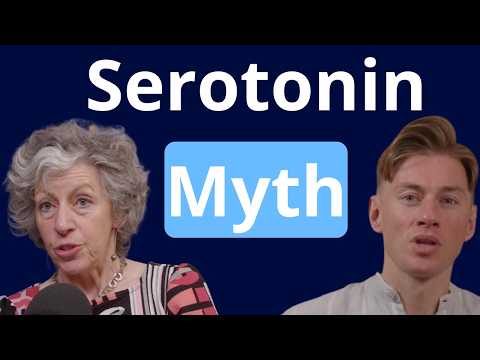
"If you've been told your depression is a chemical imbalance or a problem with your serotonin, what the science actually says might give you more hope than a diagnosis ever could. Welcome to Reconnect, the podcast for people who want to heal and grow from life's tough times. In this episode, I'm joined by Joanna Moncrieff, professor of Critical and Social Psychiatry at University College London, a consultant psychiatrist for the NHS, and lead author of the 2022 review into the serotonin theory of depression. We chat about: why the chemical imbalance story was never backed by the evidence, what the umbrella review actually found, and what might actually cause depression." LINK: youtube.com/watch?v=0r1hy4…
YouTube video
YouTube
English
0
14
37
2.2K
Dr John Read retweetledi
Mad In America
Mad In America@Mad_In_America·
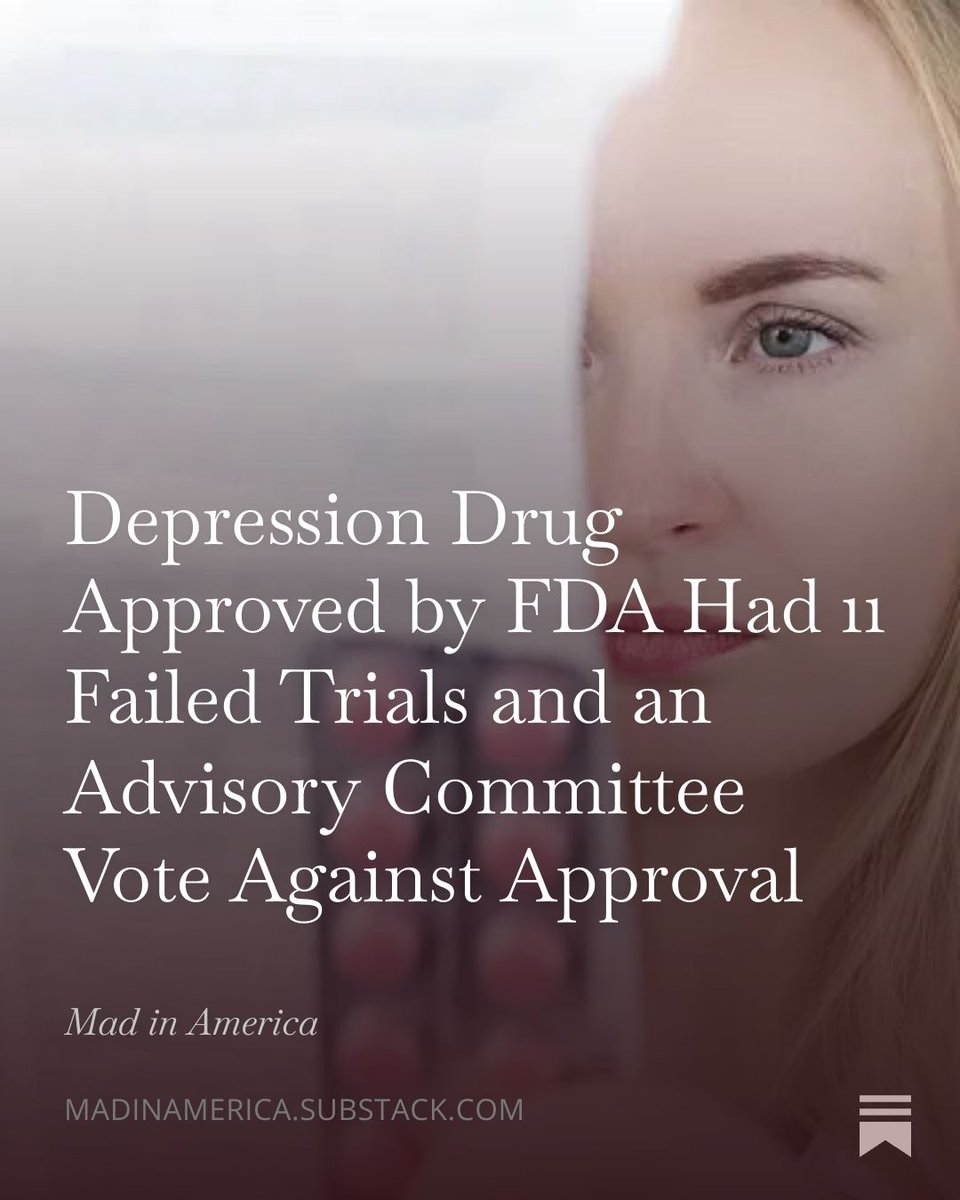
Depression Drug Approved by FDA Had 11 Failed Trials and an Advisory Committee Vote Against Approval by Peter Simons on the Mad in America Substack Two positive studies out of 13 conducted. Rejected by the FDA four times. buff.ly/cupIIWm
Mad In America tweet media
English
1
21
39
1.7K
Dr John Read retweetledi
Renata Rykowska
Renata Rykowska@RenataRykowska·
Exactly. “Severe mental illness” is often treated as an explanation when it is actually only a label. Fear after violence, despair after loss, hypervigilance after trauma, or a desperate need for control after chaos may be understandable human responses to what happened. But once someone is labelled “schizophrenic,” their history can disappear. Their words become “symptoms,” their fear becomes “paranoia,” resistance becomes “lack of insight,” and coercion is presented as care. The most important question should not be: “What is wrong with you?” It should be: “What happened to you—and what do you need to feel safe?” #TraumaInformedCare #PsychiatricSurvivors #PatientRights #MedicalEthics #DoNoHarm
Berlin, Germany 🇩🇪 English
0
4
15
322
Dr John Read
Dr John Read@ReadReadj·
Home, already missing my old & new ISPS friends, after another wonderful conference, celebrating 70 years! @isps_int @ISPSUS @ISPSUK As a said in my opening address (thanks for the standing ovation, I felt the love…its mutual) ‘hardest struggle but you meet the best people’
English
0
0
5
248
Dr John Read
Dr John Read@ReadReadj·
What a great conference!
Dr John Read tweet media
English
1
1
7
402