Sabitlenmiş Tweet

Pre Cinema History 📷🎞️🇨🇦 🏴
121.8K posts
@RealPreCinema
Paul Burns, Pre Cinema Historian, Autodidact. Author, researcher and compiler of THE HISTORY OF THE DISCOVERY OF CINEMATOGRAPHY. I post daily here on X.


Documents show it suffered the same fate three times-- violent gales off the English Channel washed it to the ground--the 1st being 12 November 1840. Appeals for funding twice brought the camera back to life but in 1889 the Camera Obscura was demolished in the name of progress. This folded Panorama postcard shows Plymouth Sound, England in the 19th century with the Camera Obscura prominently displayed. Image Bright Bytes via Brian Moseley.


THIS IS NOT THE FIRST CAMERA OBSCURA IN PLYMOUTH One hundred and twenty-six years earlier in 1827, a machinist named William Sampson built the first camera in what is called Plymouth Hoe. It stood on top of what is now the Belvedere. An image of Plymouth Sound was projected from the mirror at the top and angled by another mirror onto a white surface within the dimly lit room below. The white surface was a table-cloth on a table. Pictured: an undated photograph of the Camera Obscura.


The camera has a 1.8 metre diametre viewing table, which gives 360-degree full Panorama views over Plymouth Sound, Mount Edgcumbe and the city centre. The project included a surround sound installation to listen as you look. Right: original entrance. Funded by the University of Plymouth @PlymUni, the air raid shelter where the Camera Obscura was built has been reinvented as an interactive art installation. Listen to the sea and birds while you enjoy the scenes. The camera is a periscope-type device.
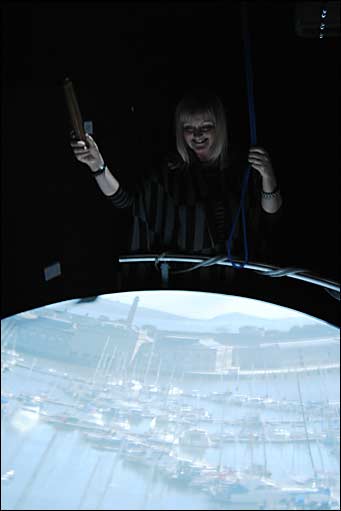
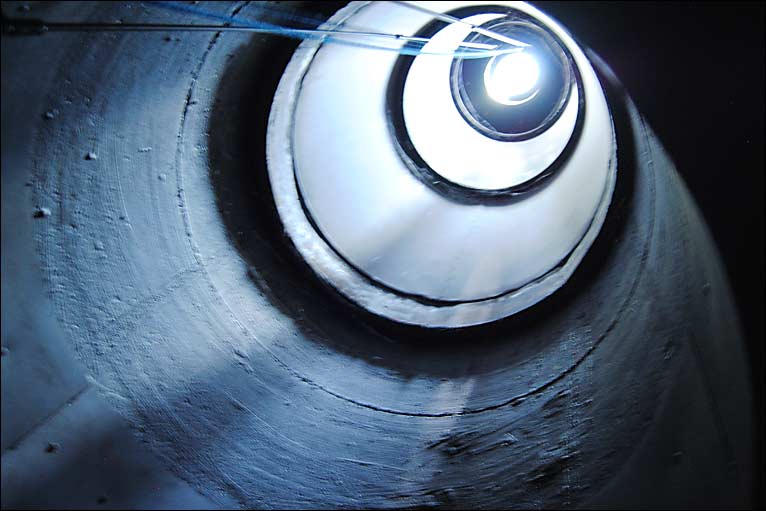
As part of a huge international festival called Balance-Unbalance, Jane was commissioned to create a piece of work specifically for a Camera Obscura; janegrant.org/this-excited-s…

GIANT CAMERA OBSCURAS AROUND THE WORLD What may be the only underground Camera Obscura in Europe was a project of Jane Grant @janegrant100 who took a WWII air raid shelter at Mount Wise, Plymouth and adapted it into a working giant camera. When it was opened in 2003, the Mount Wise Camera Obscura was the only permanent fully-operational device accessible to the public in the South West of England. The entire conversion cost £140k ($175K US).


Left Figure 39 on page 62 of Moigno’s book. Children and adults being taught about the French gift to the US, the Statue of Liberty. Figures 86 and 87 on pages 110 and 112 of Moigno’s book in 1872. Today we will lean about insects.
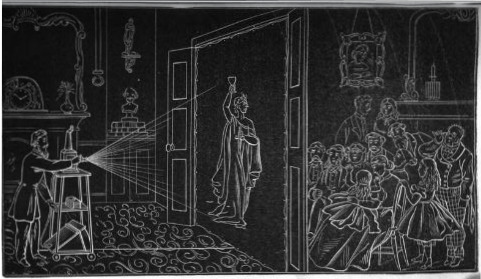
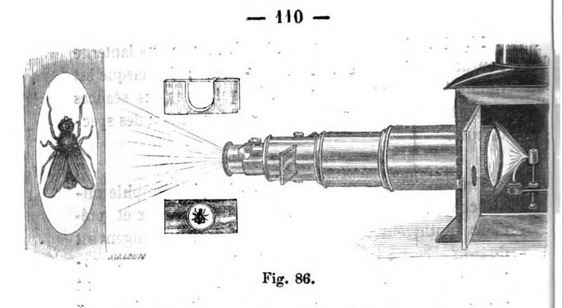

Below, an excerpt from 'The Art of Projections,' 1872 by François-Napoléon-Marie Moigno, on his outlook on how the Magic Lantern could be used to teach;

1872 FRANÇOIS-NAPOLÉON-MARIE MOIGNO (1804-1884) Not the first (Kircher and Martini may have been), but one of the earliest to promote teaching using the Magic Lantern in the established age, was Moigno who gave us ‘The Art of Projections’ published in 1872. Moigno was a learned man of 19th century France. He wrote frequent scientific articles for the press. Persecuted by the church for not believing the right things, from 1843 on, he became scientific editor of the journal ‘Presse’ in 1850, focusing on modern optics.


Hayley Mills and Deborah Kerr in "The Chalk Garden", 1964
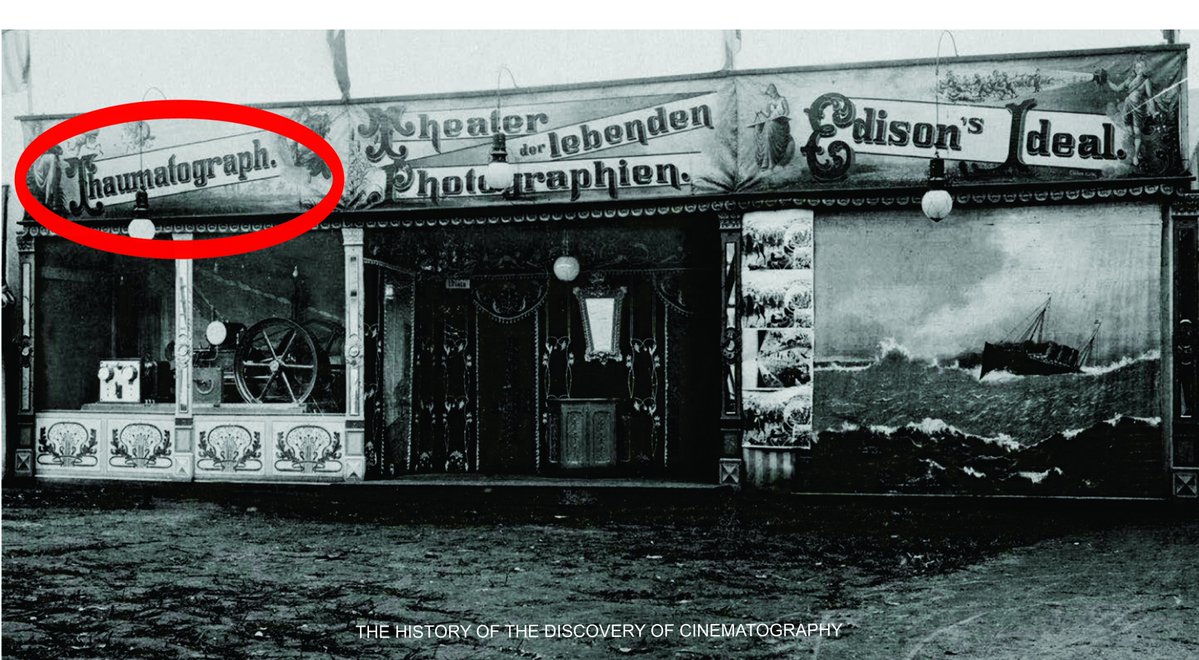

1890s THE THAUMATOGRAPH OSKAR MESSTER (1866-1943) The Thaumatograph was a commercial film projector developed in Germany and made by Oskar Messter’s firm (Ed. Messter / Messter-Projection) from the 1890s into the 1910s. It was a 35mm apparatus sold in a number of model versions over a number of years that used the standard intermittent / stop-frame mechanism (Maltese-cross / Geneva style) and a lamp-house for illumination. Light was modulated by counter-rotating shutter blades to expose frames sequentially and prevent flicker. Film was guided and protected by slide rails to minimize wear and jamming. Additional safety features included pre- and post-wind reels, pressure rollers for tension, and a fireproof drum enclosure to mitigate nitrate film risks. Messter’s line of Thaumatograph projectors became a standard German market model by the 1910s.


These two excerpts (pp11 and 12 below) are taken from ‘A History of Photography, Written as A Practical Guide and An Introduction to Its Latest Developments,’ by Jerome Harrison, Scovill, NY, 1887. Harrison ponders the very same question;
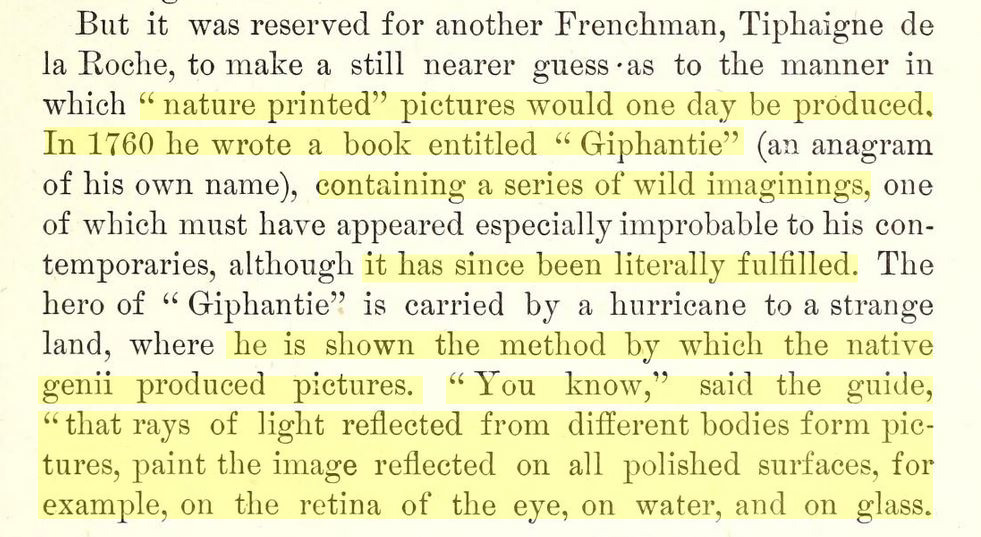

In 1760 when the de la Roche book Giphantie was written, photography had not yet become a name, coined by Antoine Hércules Romuald Florence when he called it "Photographie." And, it was still a dream, a thought, a hope. The need for an emulsion was just now beginning to be realised. Beyond photography, Giphantie contains other forward-looking ideas: 📺 Television-like Displays: The novel describes “mirrors” that project moving images of distant events, resembling live broadcasts.


PHOTOGRAPHIC ALIGNMENT This description aligns strikingly with the #principles of photography: a light-sensitive medium (like silver halide in early photography) captures an image formed by light. Tiphaigne attributes this to the work of "elementary spirits" but his explanation is rooted in a quasi-scientific understanding of optics and chemistry, likely informed by his medical background and contemporary experiments with light and substances like silver nitrate. This passage has cemented Giphantie’s #reputation as a combined proto pre cinema and, proto science fiction work. Scholars, such as Clarke (2005), argue that Tiphaigne’s vision was not mere coincidence but a logical extrapolation of 18th century scientific #knowledge, including Newton’s optics and early chemical experiments.

GLUTINOUS SUBSTANCE The most celebrated passage in Giphantie is its description of a process that uncannily anticipates photography, 65 years before its invention by Joseph Nicéphore Niépce in 1825-1826. In the novel, the Prefect shows the narrator a “faithful picture” created by fixing images from nature. The process is described as follows (paraphrased from the 1761 English translation): 📸 Light rays reflected from objects are collected on a specially prepared canvas. 📸 A “glutinous substance” on the canvas, sensitive to light, captures and retains these rays. 📸 The image forms instantly and remains fixed, creating a perfect replica of the scene.
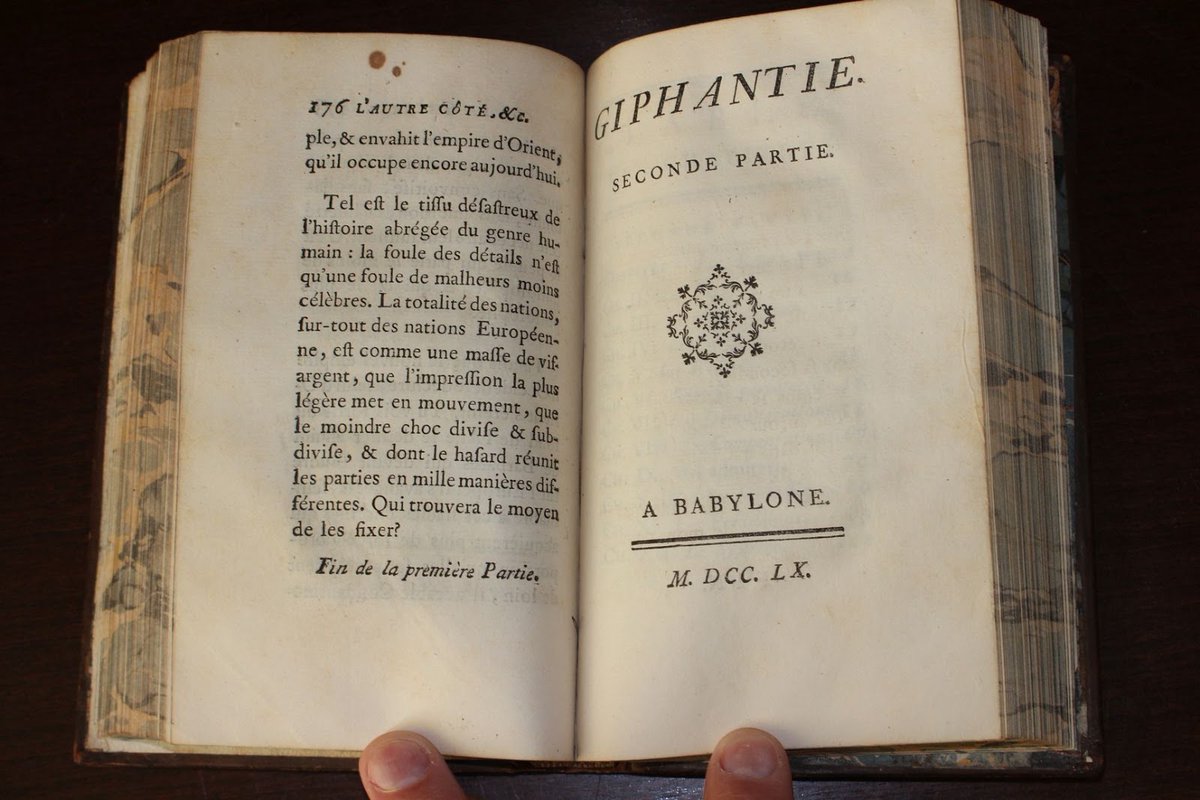
PHOTOGRAPHIC DREAM Giphantie is framed as a fantastical travel narrative, a popular genre in the 18th century. The story begins with the unnamed #narrator, swept away by a storm to a mysterious land called Giphantia, a utopian realm #governed by "elementary spirits" who possess advanced knowledge and abilities. The novel is divided into two parts: 📸 First Part (Utopian Exploration): The narrator explores Giphantia, guided by a spirit called the Prefect. This section describes the society, customs, and technologies of the land, which contrast with European norms of 1760. The tone is #satirical, critiquing human folly, vanity, and societal flaws through the lens of an idealized #civilization. 📸 Second Part (Visionary Insights): The narrative shifts to a more #philosophical and speculative tone, with the narrator receiving revelations about science, nature, and human behavior. This includes the famous description of a process resembling photography and other #futuristic concepts like television.