Alasdair Murray

88K posts

Alasdair Murray banner
Alasdair Murray

Alasdair Murray

@RecruitmentCopy

Retired copywriter who specialised in recruitment comms. I also post about injustices & political clowns - of which there are so many. Long time #cpfc fan.

Saarf London Katılım Mayıs 2009
2K Takip Edilen4.4K Takipçiler
Alasdair Murray
Alasdair Murray@RecruitmentCopy·
@ewenmurray77 Enjoy your retirement. Youre right, the behaviour of certain sections of the golf crowd is appalling. As recently as at the Players where Matt Fitpatrick had to endure morons chanting USA for the last few holes. He may have laughed it off but it's so wrong.
English
0
0
0
15
Ewen Murray
Ewen Murray@ewenmurray77·
To clarify: I will be with Sky for several events this year. The world feeds are now part of the DPWT and PGAT and operate most weeks but not the Players or majors. They are solely Sky with the full Sky commentary team which I’m fortunate to be part of. Roll on the Masters.👍🏽
English
81
11
1.1K
57.9K
Alasdair Murray
Alasdair Murray@RecruitmentCopy·
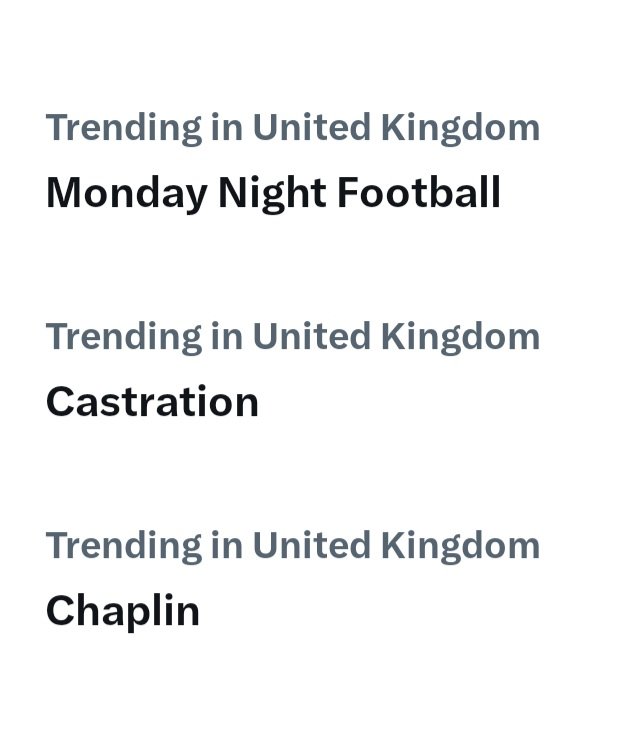
X certainly throws up a weird combo of trending topics sometimes.
Alasdair Murray tweet media
English
0
0
0
30
Alasdair Murray
Alasdair Murray@RecruitmentCopy·
@HLTCO The entertainment on the pitch is more important to me. When that's dire,everything is. I'd ditch the crystals and the ridiculously lame halftime challenge. The one improvement today was that some of the messages read out corresponded with what was on the screen, but only some.
English
0
0
0
163
HLTCO
HLTCO@HLTCO·
Whilst the football itself definitely won’t be helping, the atmosphere at Selhurst has been pretty dire all season long. It feels to me as though the club are seeking to sensationalise the matchday build-up etc and are actually killing it as a consequence.
English
44
21
526
52.3K
Kevin Hunter Day
Kevin Hunter Day@kevinhunterday·
Actually got quite nostalgic at Selhurst last night. Watching them was like watching us away in the Prem for the first ten years #CPFC
English
6
2
115
8.5K
Alasdair Murray
Alasdair Murray@RecruitmentCopy·
Just watched a couple of episodes of #TheApprentice. What a farce. How does making bunches of flowers or cooking food test their ability in business? Its become a car crash watching programme @Lord_Sugar
English
0
0
1
422
Alasdair Murray
Alasdair Murray@RecruitmentCopy·
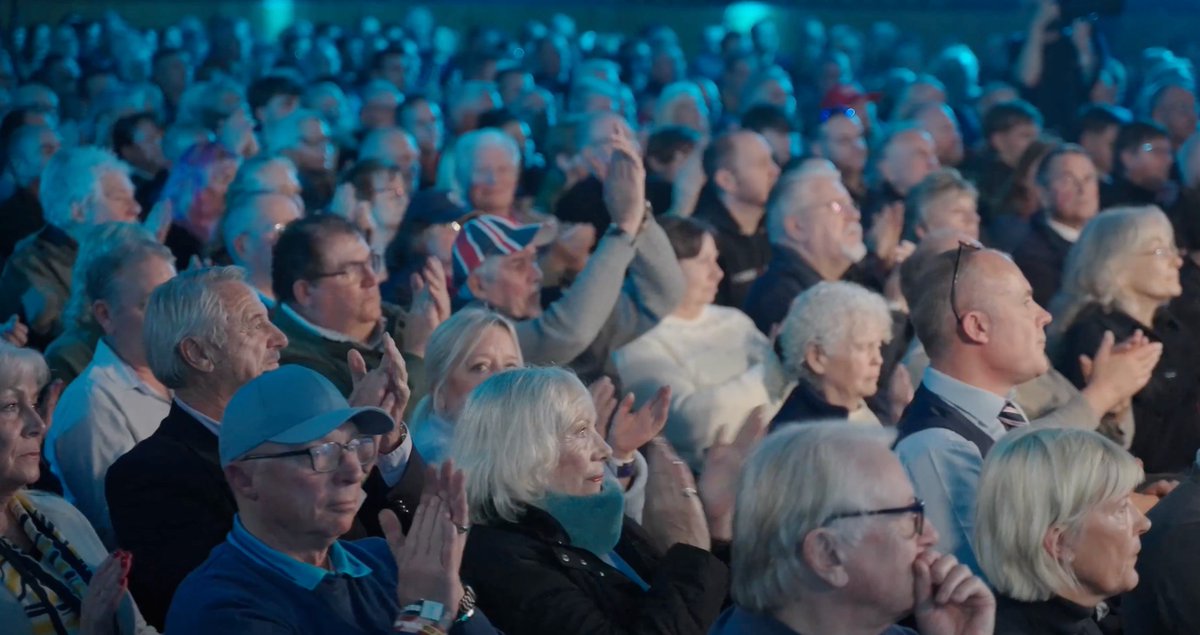
Saw this earlier. Is Britain really being flooded with millions of fighting age men from countries that hate us?
Alasdair Murray tweet media
English
0
0
0
15
Reform UK
Reform UK@reformparty_uk·
🚨LIVE: Swindon | Reform Will Fix It Local Election Tour Join Nigel Farage & Danny Kruger in Wiltshire with Dr David Bull and Darren Grimes x.com/i/broadcasts/1…
English
44
74
349
42K
Alasdair Murray
Alasdair Murray@RecruitmentCopy·
I bet a lot of people couldn't tell you off te top of their head, which banknote Churchill is on, or indeed who any of the other people currently featured are. That's how unimportant this is, in a world where we use cash less and less.
Oliver@OWS1892

@Nigel_Farage What's more English than our wildlife? It was decided after public consultation. Why do you hate our country so much?

English
0
0
0
22
Alasdair Murray
Alasdair Murray@RecruitmentCopy·
@donmcgowan Most people couldn't name who's on what banknote currently. I vaguely remember Duke of Welllington used to be on one, as did Shakespeare, Dickens and Flo Nightingale, but don't ask me to tell you which one. It really isn't an issue, in a world where cash is used less & less.
English
0
0
0
32
Don McGowan
Don McGowan@donmcgowan·
🤑Banknotes🤑 ARGH! The country has collectively lost the plot. Banknote images being changed to countryside animals is NOT a 'leftist plot'. It really isn't and BBC Question Time should be ashamed of themselves for allowing this culture warrior a question about it. Since the 1970s, pictures on banknotes have regularly changed. In the 70s, they went with a historical series featuring: £1 – Isaac Newton £5 – Arthur Wellesley, 1st Duke of Wellington £10 – Florence Nightingale £20 – William Shakespeare In the 90s, they changed to update security features and picked: £5 – George Stephenson £10 – Charles Dickens £20 – Michael Faraday £50 – John Houblon In 2007, the updated the last series of paper notes with: £5 – Elizabeth Fry £10 – Charles Darwin £20 – Adam Smith £50 – Matthew Boulton & James Watt And in 2016 when the new polymer notes began: £5 – Winston Churchill £10 – Jane Austen £20 – J. M. W. Turner £50 – Alan Turing So we can see that this is regular procedure and for security and counterfeiting reasons, the notes need to be regularly updated. We have never had a permanent fixture on our banknotes, aside from the monarch, of course. If there was a decision to replace Chuckie Sausage Fingers with a Peregrine Falcon, then I could see the issue. The most recent decision was put out to public consultation, and a collection based on Nature/Wildlife received 60% of the vote. Compared to 38% for historical figures. Not even close. This confected anger over Churchill is endemic of our clickbait culture — the faux outrage over something that means nothing, and it's disgraceful that the BBC are now partaking in this GB News style rubbish. So please, for the love of all that is sane, stop wanging on about banknotes. Embrace our new badger overlords, they really couldn't do a worse job than we are right now.
Don McGowan tweet media
Farrukh@implausibleblog

Man is upset that Churchill might be removed from currency notes, then blames the Greens for it Even though it was just a consultation, and the Greens weren't responsible for it

English
38
153
460
11.3K
Alasdair Murray
Alasdair Murray@RecruitmentCopy·
The fake outrage over the banknote images being changed is ridiculous. Most people couldn't even name who's on what note currently. I vaguely remember Duke of Welllington used to be on one, as did Shakespeare, Dickens and Flo Nightingale, but don't ask me to tell you which one...
English
0
0
0
36
Alasdair Murray
Alasdair Murray@RecruitmentCopy·
@WhyteleafeEagle ....upgrading my experience to £375 per person. You'd have to be minted and/or mad to consider doing that.
English
0
0
0
21
Alasdair Murray
Alasdair Murray@RecruitmentCopy·
@WhyteleafeEagle We have four season tickets but didn't go as I couldn't justify the cost. On TV the atmosphere came across as poor to say the least. Could hear distant singing of the Holmesdale, but other than that it seemed quiet. Funniest thing is Palace keep sending me emails about....
English
1
0
1
165
Jason 🦅
Jason 🦅@WhyteleafeEagle·
Disgraceful pricing of the conference league games at Selhurst this season. The board should hang their heads in shame. Selhurst should be a sell out every game if anything the crowds are getting worse as we get further into the competition. The value for money is so so poor. Should at least be a family package for the Whitehorse and a reduction for those sitting in the Arthur Wait or early bird pricing #cpfc
English
21
8
164
12.7K
Kevin Hunter Day
Kevin Hunter Day@kevinhunterday·
Back to Selhurst for the first time tonight! 🥳 What should I take, walking stick or umbrella? #CPFC
English
42
3
133
8.2K
Alasdair Murray
Alasdair Murray@RecruitmentCopy·
@RAGunner72 @GoodwinMJ The response shows most people don't give a shit what's on a banknote as long as it's legal tender. Seriously, the fucking nonsense some people will complain about these days is beyond sad. It's just a banknote!
English
0
0
0
4
DirtySecret
DirtySecret@RAGunner72·
Fair point on the consultation. But let's look at what it actually was. 44,000 responses from 67 million people. The question wasn't "remove Churchill." It asked people to pick a theme from a list. Historical figures came third. And the chief cashier was already signalling the direction before the responses were even counted. That's 0.066% of the country being used to justify a decision that was already made. Nobody is saying banknotes never change. They're saying that isn't a mandate. Not even close to one. Do you actually have a view on this or are you just here to defend the paperwork?
English
8
0
1
269
Matt Goodwin
Matt Goodwin@GoodwinMJ·
The removal of historical figures such as Winston Churchill from English banknotes may appear trivial to some. But it isn’t. It matters far more than many people realise. Because what we are witnessing is not an isolated decision about banknote design. It is part of something much larger: a slow but relentless erosion of our national culture, identity, and collective memory. As Professor Frank Furedi has observed, we are living through what he calls “the War Against the Past.” Across the Western world, an assortment of Diversity, Equity and Inclusion bureaucrats, radical activists, and increasingly compliant public institutions are engaged in a cultural project that seeks to delegitimise our national histories and strip away the symbols that once anchored our collective identity and memory. The pattern is now familiar. Statues are toppled. Historical figures are reframed as morally suspect or “divisive”. Public institutions rename buildings, spaces, Tube lines. School and university reading lists are “decolonised”. The past itself is rewritten to emphasise only its sins while ignoring its achievements. Even the quiet symbolism of everyday life — the images on our currency, the names of our streets, the monuments in our squares — is steadily edited and sanitised. What replaces these symbols is rarely anything meaningful. Instead of historically significant figures who helped shape the nation, we are offered neutral, universal imagery that stands for almost nothing at all — landscapes, wildlife, abstractions. On the surface this seems harmless. But symbolism matters. For centuries, historical figures served as cultural signposts, reminders of the history, struggles and achievements that shaped the nation and its people. Remove those signposts, and something subtle but important begins to change. The past becomes distant. Then contested. And then disposable. Gradually, the story of a nation — its triumphs, failures, and defining moments — is hollowed out. In its place emerges a new idea of national identity that is deliberately thin: one that defines Britain not through its history or traditions but through the abstract celebration of diversity itself. In other words, the only thing that is meant to define us is that we have no defining identity at all. The endpoint of this cultural project is not inclusion but historical amnesia, or cultural erasure. A society that is detached from its past, uncertain of its traditions, and unsure of what binds it together. This is what Sir Roger Scruton meant when he wrote: “A society that loses its memory loses its identity.” And that loss happens gradually, through thousands of seemingly small decisions — a statue removed here, a curriculum altered there, a historical figure quietly replaced on a banknote. Each individual change may appear insignificant. But taken together they represent something far more profound: the slow disconnection of a people from their own history and collective memory. A people who no longer really know who “we” are. I doubt the bureaucrats who made this decision at the Bank of England fully grasp the cultural significance of what they are doing. But intention is not the point. The effect is what matters. When we remove the symbols of our past, we further weaken the very foundations of our identity. Or Orwell warned: “The most effective way to destroy people is to deny and obliterate their own understanding of their history.” This is what is happening and accelerating around us. This is what Furedi meant by the “War Against Our Past”. And this is why it really matters. Not because of one banknote. But because of the much larger cultural story it represents.
English
1.2K
2.9K
11.5K
257.5K
Alasdair Murray
Alasdair Murray@RecruitmentCopy·
Is it any wonder this verbose clown lost his bid to become an MP? Who else could write a thousand word essay on a subject most people don't give a shit about?
Matt Goodwin@GoodwinMJ

The removal of historical figures such as Winston Churchill from English banknotes may appear trivial to some. But it isn’t. It matters far more than many people realise. Because what we are witnessing is not an isolated decision about banknote design. It is part of something much larger: a slow but relentless erosion of our national culture, identity, and collective memory. As Professor Frank Furedi has observed, we are living through what he calls “the War Against the Past.” Across the Western world, an assortment of Diversity, Equity and Inclusion bureaucrats, radical activists, and increasingly compliant public institutions are engaged in a cultural project that seeks to delegitimise our national histories and strip away the symbols that once anchored our collective identity and memory. The pattern is now familiar. Statues are toppled. Historical figures are reframed as morally suspect or “divisive”. Public institutions rename buildings, spaces, Tube lines. School and university reading lists are “decolonised”. The past itself is rewritten to emphasise only its sins while ignoring its achievements. Even the quiet symbolism of everyday life — the images on our currency, the names of our streets, the monuments in our squares — is steadily edited and sanitised. What replaces these symbols is rarely anything meaningful. Instead of historically significant figures who helped shape the nation, we are offered neutral, universal imagery that stands for almost nothing at all — landscapes, wildlife, abstractions. On the surface this seems harmless. But symbolism matters. For centuries, historical figures served as cultural signposts, reminders of the history, struggles and achievements that shaped the nation and its people. Remove those signposts, and something subtle but important begins to change. The past becomes distant. Then contested. And then disposable. Gradually, the story of a nation — its triumphs, failures, and defining moments — is hollowed out. In its place emerges a new idea of national identity that is deliberately thin: one that defines Britain not through its history or traditions but through the abstract celebration of diversity itself. In other words, the only thing that is meant to define us is that we have no defining identity at all. The endpoint of this cultural project is not inclusion but historical amnesia, or cultural erasure. A society that is detached from its past, uncertain of its traditions, and unsure of what binds it together. This is what Sir Roger Scruton meant when he wrote: “A society that loses its memory loses its identity.” And that loss happens gradually, through thousands of seemingly small decisions — a statue removed here, a curriculum altered there, a historical figure quietly replaced on a banknote. Each individual change may appear insignificant. But taken together they represent something far more profound: the slow disconnection of a people from their own history and collective memory. A people who no longer really know who “we” are. I doubt the bureaucrats who made this decision at the Bank of England fully grasp the cultural significance of what they are doing. But intention is not the point. The effect is what matters. When we remove the symbols of our past, we further weaken the very foundations of our identity. Or Orwell warned: “The most effective way to destroy people is to deny and obliterate their own understanding of their history.” This is what is happening and accelerating around us. This is what Furedi meant by the “War Against Our Past”. And this is why it really matters. Not because of one banknote. But because of the much larger cultural story it represents.
English
0
0
0
37
Alasdair Murray
Alasdair Murray@RecruitmentCopy·
@GoodwinMJ How to write a thousand words about nothing. The public voted for what they want in a banknote. No one cares. Its just a banknote.
English
0
0
0
7
Tom Dutton
Tom Dutton@TomDutty·
When we're nostalgic about old-school commentators - Barry Davies, Clive Tyldesley, Jon Champion - is it because they were good, or because they happened to be around when we fell in love with football? Are my kids going to feel the same about Matterface and Fletcher?
English
4
0
6
1.2K
Alasdair Murray
Alasdair Murray@RecruitmentCopy·
"These Councillors have been thrown in the deep end, often with minimal political experience" - therein lies the problem surely. That's how Warwickshire ended up with a 19 year old running the council. It's farcical.
Ben Bradley@Ben_Bradley_32

This notion that Reform Councils are badly run is total BS. These Councillors have been thrown in the deep end, often with minimal political experience, and with unprecedented levels of scrutiny and people digging for any grain of dirt they can find. They've risen to the challenge in a million different ways. They've delivered the lowest Council tax position of any party (almost all are in the lowest 10% in the country) alongside hundreds of millions in savings, in just 9 months. Lancashire are an examplar in digital innovation, North Northants has been nominated for 'Most Improved Council', Durham has the lowest Council Tax rises of any equivalent Council in the country... And on and on. Yes in one case tax has gone up by more, in a Council that was already insolvent and in receipt of emergency funding when we took it over, and where we don't actually have a majority - the opposition refused to agree to millions of additional savings that could have reduced the tax! - but this idea that Reform are generally doing a poor job is 100% concocted by people who want to see us fail! Yes there are sometimes issues. Yes everyone is on a steep learning curve. No we're not perfect. Nor is any other party or any other Council. If the same scrutiny was applied to others you'd find the same. But huge credit is due (and never given) to people who have taken on this challenge, coming in to Councils for the first time in many cases, wanting to do good for their communities and who have not only kept the show on the road but in many cases made significant steps forward compared to what came before!

English
0
0
0
76