
Sabitlenmiş Tweet
Red 🎸
37.8K posts


Red 🎸
@RedGuit
Guitarist & Truth Seeker | Shredding Dogma | Dropping Songs, Memes, & Ideas | Join the Conversation & Learn Guitar at https://t.co/bu8iTEuGsC
United States Katılım Mayıs 2022
3.1K Takip Edilen8.5K Takipçiler


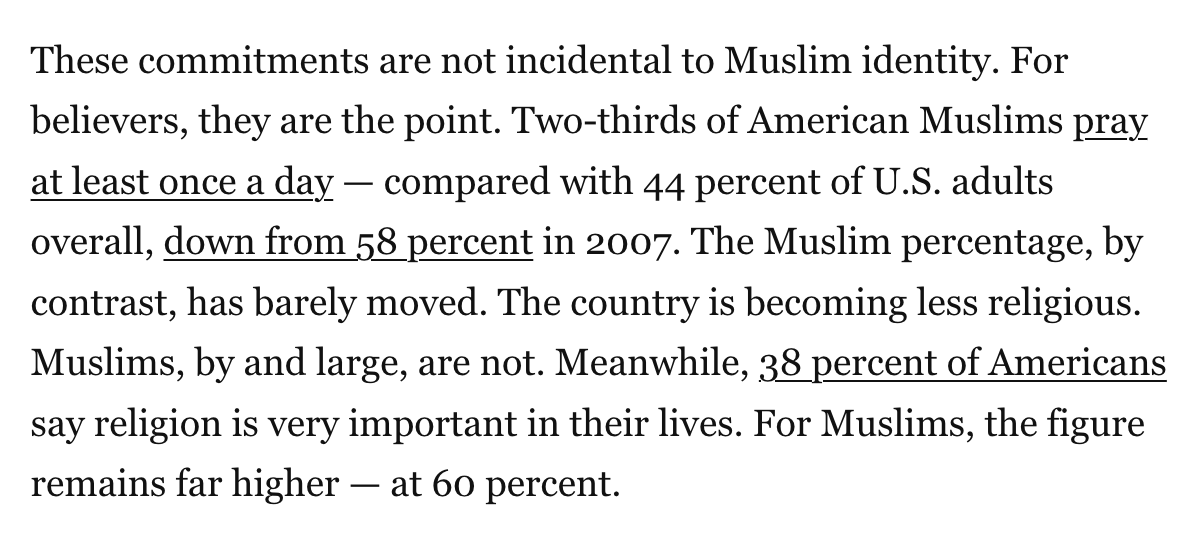
Muslims are significantly more religious and observant than the rest of the American population. Is this a problem? No. Republicans are also significantly more religious than the overall population and we don't ask them to "assimilate."
English
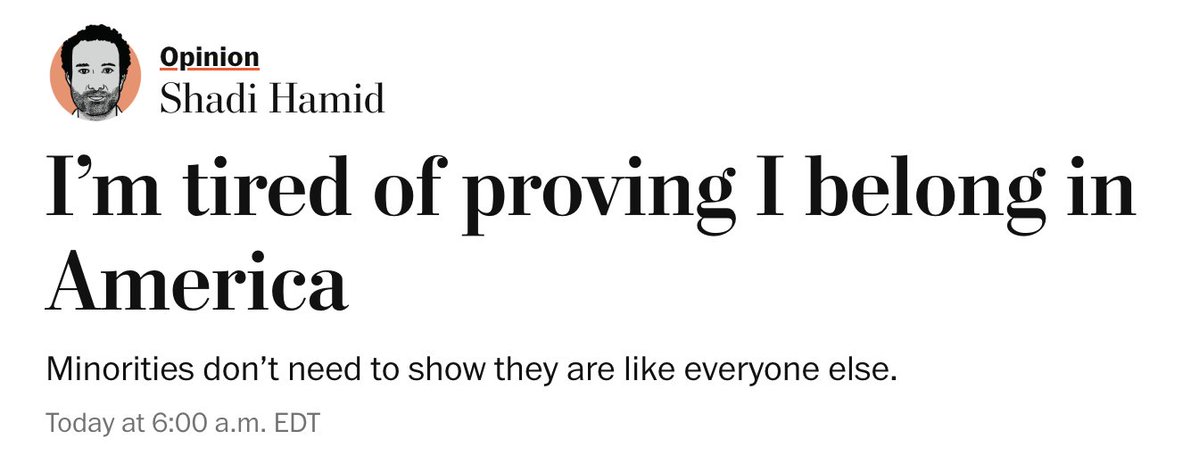
My new @washingtonpost column:
Why do Muslims need to be like everyone else? A case against assimilation.
washingtonpost.com/opinions/2026/…
English
Red 🎸 retweetledi

@Rainmaker1973 @grok does Artemis save fuel by looping around the gravity well? What’s the point of that maneuver?
English

Red 🎸 retweetledi

Red 🎸 retweetledi

The City of Festus, MO canceled their Council meeting for tonight following last night's election whereby citizens voted out of office every single member who voted for the data center there that the people did not want.
Micro to macro, that is how we hold them accountable.
English
Red 🎸 retweetledi

This little boy figured out how to lay flooring while his dad was outside taking a break….
English
Red 🎸 retweetledi

American Medical Association to potentially lose its tax exempt status for discrimination against white people.
Tyler O'Neil@Tyler2ONeil
🚨EXCLUSIVE The American Medical Association should face an investigation and potentially lose its tax-exempt status, @donoharm says in an official complaint to the IRS. 🧵1/10 dailysignal.com/2026/04/08/exc…
English
Red 🎸 retweetledi


Red 🎸 retweetledi

🇮🇪 ÚLTIMA HORA: Irlanda se ha sumido esta noche en una GUERRA CIVIL a gran escala, con manifestantes antigubernamentales tomando el control de las principales ciudades del país, incluyendo Dublín.
Han amenazado con paralizar la economía si no se cumplen sus demandas. NO QUIEREN MÁS IMIGRANTES💪💪💪
Español
Red 🎸 retweetledi

Your kid's piano teacher was reshaping their brain. A Harvard-led team tracked children from age 6 to 9 and found that kids who practiced an instrument at least 2.5 hours a week grew the corpus callosum (the cable connecting the left and right halves of the brain) by about 25% in the region that handles movement planning. Kids who practiced less or quit showed zero growth there.
USC ran a separate study starting in 2012 that followed children from low-income LA neighborhoods. One group learned violin through the LA Philharmonic's youth orchestra program. A second did soccer. A third had no structured after-school program. Two years in, only the music group showed brain changes: stronger white-matter connectivity, faster maturation of auditory processing, and greater activation in networks involved in decision-making and impulse control. The soccer and no-program groups looked the same on brain scans.
A randomized trial at the University of Toronto tested 144 six-year-olds assigned to keyboard lessons, voice lessons, drama, or nothing for a full school year. The music kids gained about 7 IQ points on average. Drama and no-lessons kids gained 4-5. That roughly 3-point gap showed up across every subtest, including reading and math.
Now the language side. Bilingual kids outperform monolingual kids on task-switching tests (jumping between different sets of rules quickly), and it holds regardless of which second language they speak. Brain scans of nearly 1,300 children and young adults from a 2021 Georgetown and University of Reading study showed that bilinguals kept more grey matter (the layer where the brain's processing cells live) as they grew up than kids who spoke one language.
The long game is where this gets serious. A 2025 Monash University study of 10,893 Australians over 70 found that people who regularly played an instrument had 35% lower odds of developing dementia. Bilingualism shows an even sharper effect. Studies across India, Canada, and the US consistently find that bilingual adults develop dementia symptoms 4 to 5 years later than monolingual adults. A 2024 door-to-door survey of 1,234 people over 60 in Bengaluru, India, found dementia in 4.9% of monolinguals and just 0.4% of bilinguals.
Both piano and a second language work through a similar mechanism. They force the brain to manage competing systems at once, left hand versus right hand, one language versus another. That constant switching strengthens the frontal regions responsible for planning, focus, and filtering distractions, building what neurologists call cognitive reserve: a buffer that lets the brain keep working even as age-related damage accumulates.
Those parents running their kids between piano on Tuesdays and Mandarin on Thursdays were basically running a two-front neuroplasticity program without knowing it.
English
Red 🎸 retweetledi


Red 🎸 retweetledi


Red 🎸 retweetledi

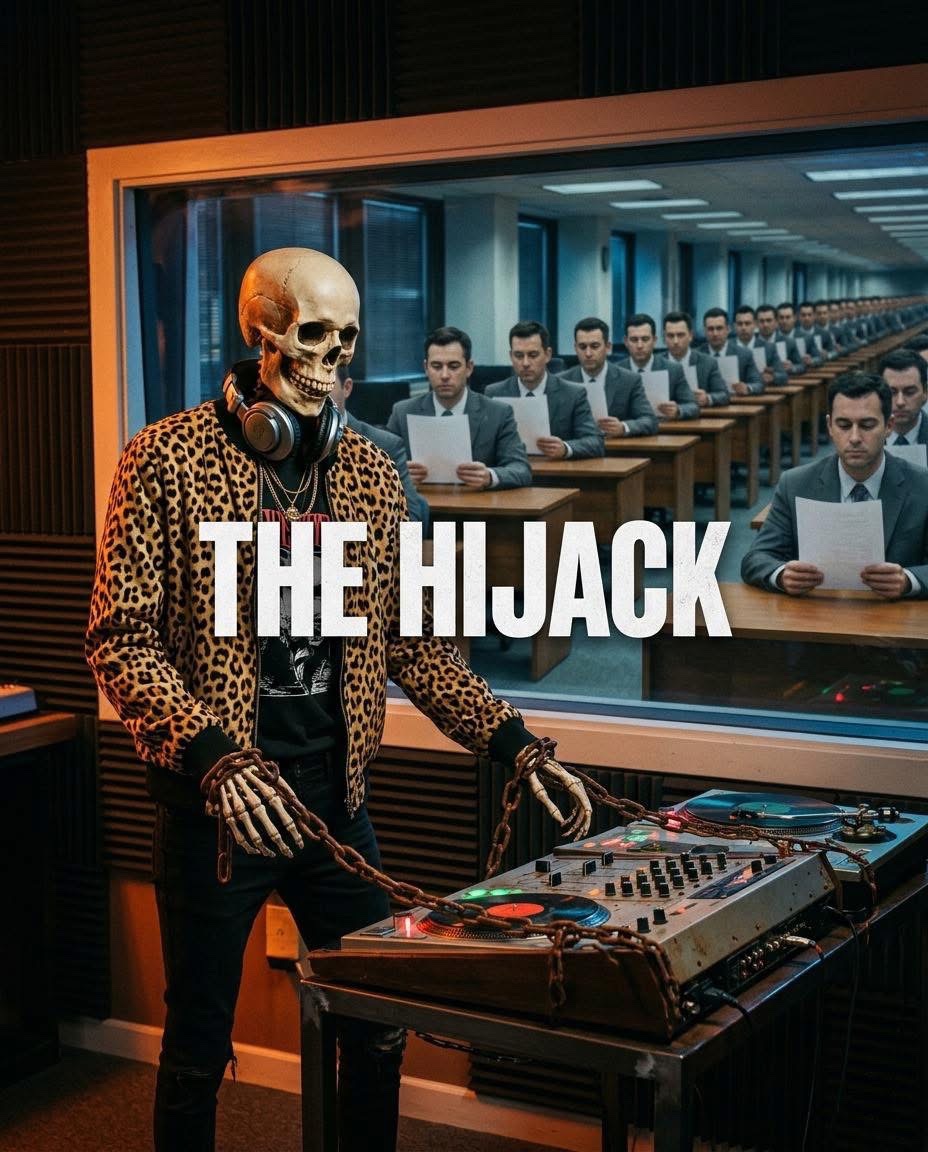
The last time you heard a song you truly loved from an artist you had never heard of was probably before 1996.
That is not a coincidence.
In 1996, Bill Clinton signed the Telecommunications Act.
It was sold as a law that would “increase competition” in media.
It did the opposite.
Before 1996, a single company could own a maximum of 40 radio stations in the entire country.
After 1996, there was no limit.
One company saw the opportunity of a lifetime.
Clear Channel Communications went from owning 40 stations to over 1,200 in six years.
They didn’t buy radio stations.
They bought the ears of America.
And the first thing they did was fire the people who decided what you heard.
Before consolidation, every city had local DJs and program directors who chose the music.
They knew their audience.
They took risks on unknown artists.
They broke new sounds because they could feel what their community wanted.
A DJ in Tampa played a song on a whim because he liked it.
It went regional.
Then national.
That is how music used to spread.
One human being with taste and courage.
Clear Channel replaced those humans with centralized playlist managers operating from distant offices.
One person in a corporate headquarters now decided what 1,200 stations played.
The result was devastating.
Research from the Future of Music Coalition found that playlist overlap between supposedly “different” radio formats reached as high as 76%.
Alternative, Top 40, Rock, and Adult Contemporary were all playing the same songs.
Different names.
Same playlist.
Different cities.
Same sound.
Music didn’t become generic because artists stopped being creative.
Music became generic because the distribution system was captured by a handful of corporations who needed safe, predictable, homogenized content to service debt and sell ads.
The art didn’t fail.
The pipeline was hijacked.
And here is the part that connects to something deeper.
When you control what people hear, you control what people feel.
Music is not entertainment.
It is emotional programming.
A population fed a steady diet of the same frequencies, the same themes, the same emotional range becomes emotionally predictable.
You don’t need to censor music.
You just need to make sure the only music that reaches the masses is music that keeps them passive, consuming, and emotionally shallow.
The most dangerous music has always been the music that made people think.
That music didn’t disappear because people stopped making it.
It disappeared because the pipeline stopped carrying it.
The DJ who would have played it was fired.
The local station that would have aired it was bought.
The community that would have discovered it was given the same playlist as every other community in the country.
They didn’t ban the music.
They just made sure you never heard it.
The revolution wasn’t censored.
It was simply never added to the playlist.
~ Andre Gonsalves
✨🙌🏽💫
English
Red 🎸 retweetledi

🚨Fighting breaks out between British patriots and Islamic immigrants in London. The UK is about to erupt into civil war and we ALL know it and feel it..
Lord guide our hands
English
Red 🎸 retweetledi

Red 🎸 retweetledi

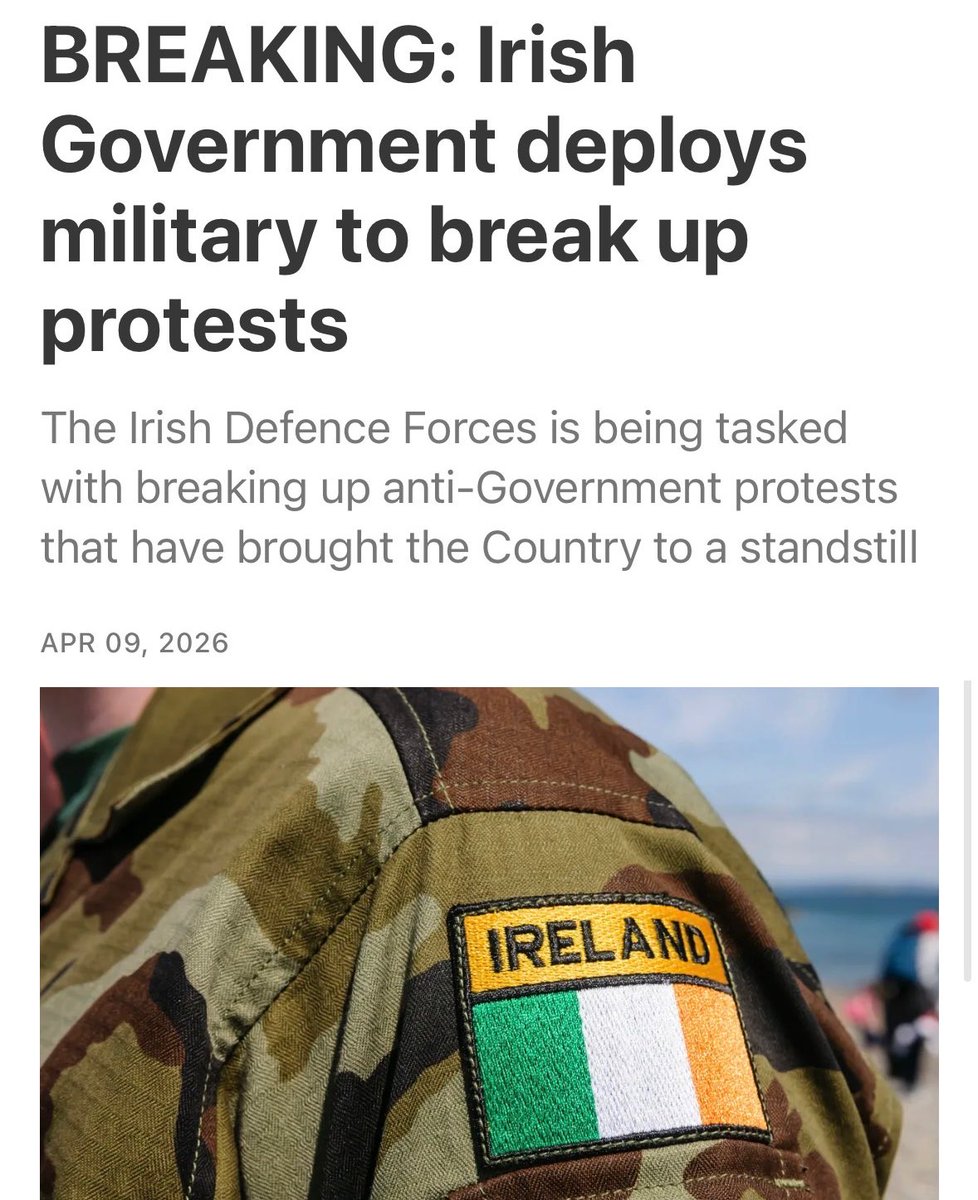
Something has shifted in Ireland. What simmered beneath the surface has broken through. You can feel it in the air, a country pushed too far, now moving with purpose. People are awake, resolute, & pressing forward, demanding accountability & real change from those in power. 🇮🇪❤️
English
Red 🎸 retweetledi

